Monthly Archives: July 2023

Elizabethton birding group will celebrate 80th anniversary in 2024

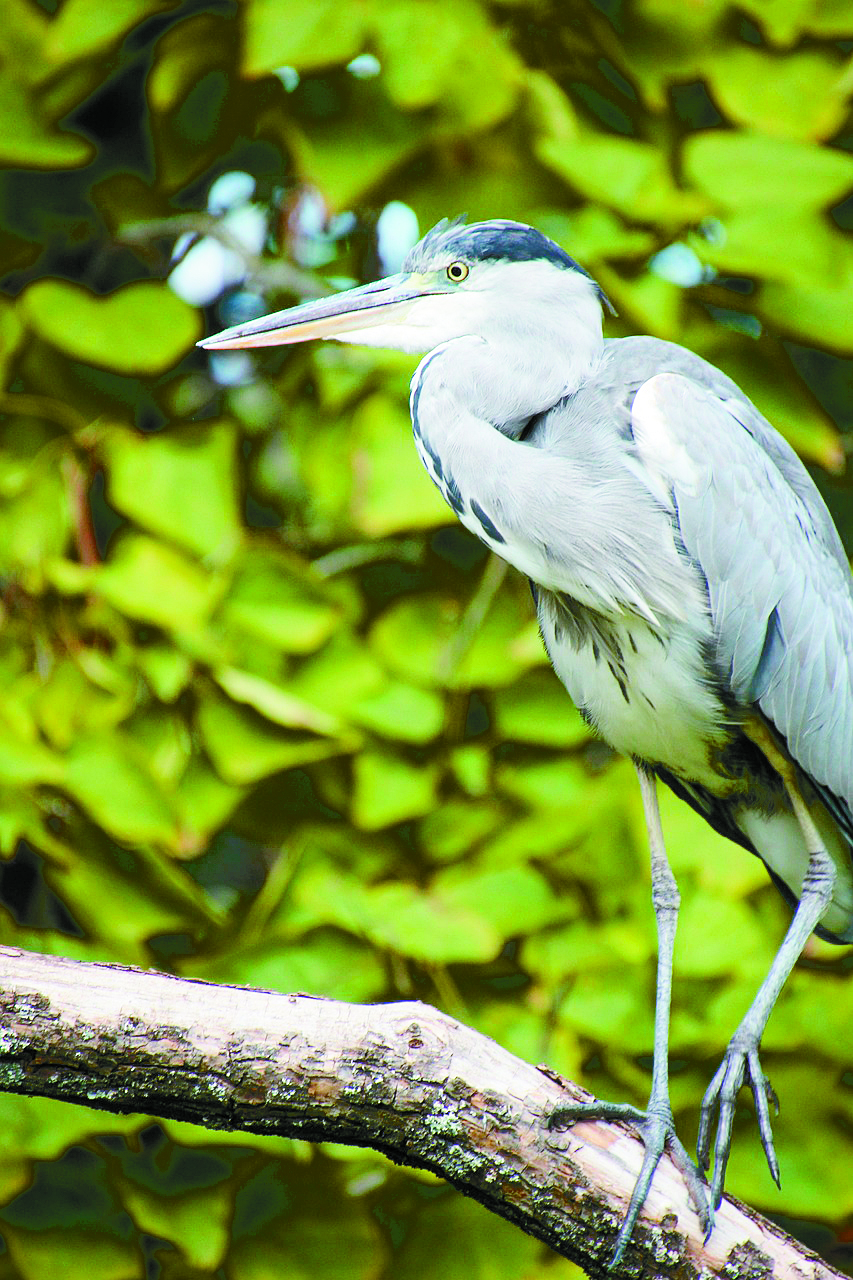
Photo by Dominik Rheinheimer/Pixabay * Members of a birding club are always willing to help newcomers learn to identify some great birds, such as this great blue heron.

To support and nurture new birders as they test their wings and take flight into the pastime, three different birding organizations exist in the region.

An article written by Gustave Axelson and published Sept. 19, 2018, on the website, All About Birds, provides some recent information about the American enthusiasm for birding.

Forty-eight million Americans 16 and older are bird watchers. It’s a staggering figure that also includes the more than 16 million birders who travel beyond their home to watch birds and 10 million more who specifically travel to seek out songbirds.
Birders spend, benefitting the economy. For instance, $1.7 billion is spent on equipment and another $4 billion is spent on food for birds.

Regional birding organizations headquartered in Bristol, Elizabethton and Kingsport are always ready to welcome new members into the ever-growing flock of birders.
Beginning this week with the Elizabethton Bird Club, I will spotlight each of these birding organization in my weekly column.

Photo by Pixabay.com • A good pair of binoculars will bring birds much closer.

The Elizabethton Bird Club, also known as the Lee and Lois Herndon Chapter of the Tennessee Ornithological Society, will celebrate its 80th anniversary in 2024.
Dave Gardner took office as the club’s newest president in June.

“As a still relatively new birder, I think the biggest advantage to being in a birding organization is just the opportunity to learn from other birders,” Gardner said. “It’s somewhat embarrassing to admit now, but when I began birding I didn’t know that ravens and crows were different birds. I was a complete novice.”

His interest in the pastime grew with repeated exposure to birding activities and events.

“Furthermore, I didn’t realize that birding was something I was interested in,” he said. “It took going out on field trips and bird counts to awaken that interest.”
A friendship with Kim Stroud, who recently finished up her tenure as president of the Elizabethton Bird Club, as well as some other members of the group, helped foster Gardner’s growing interest in birds and birding.
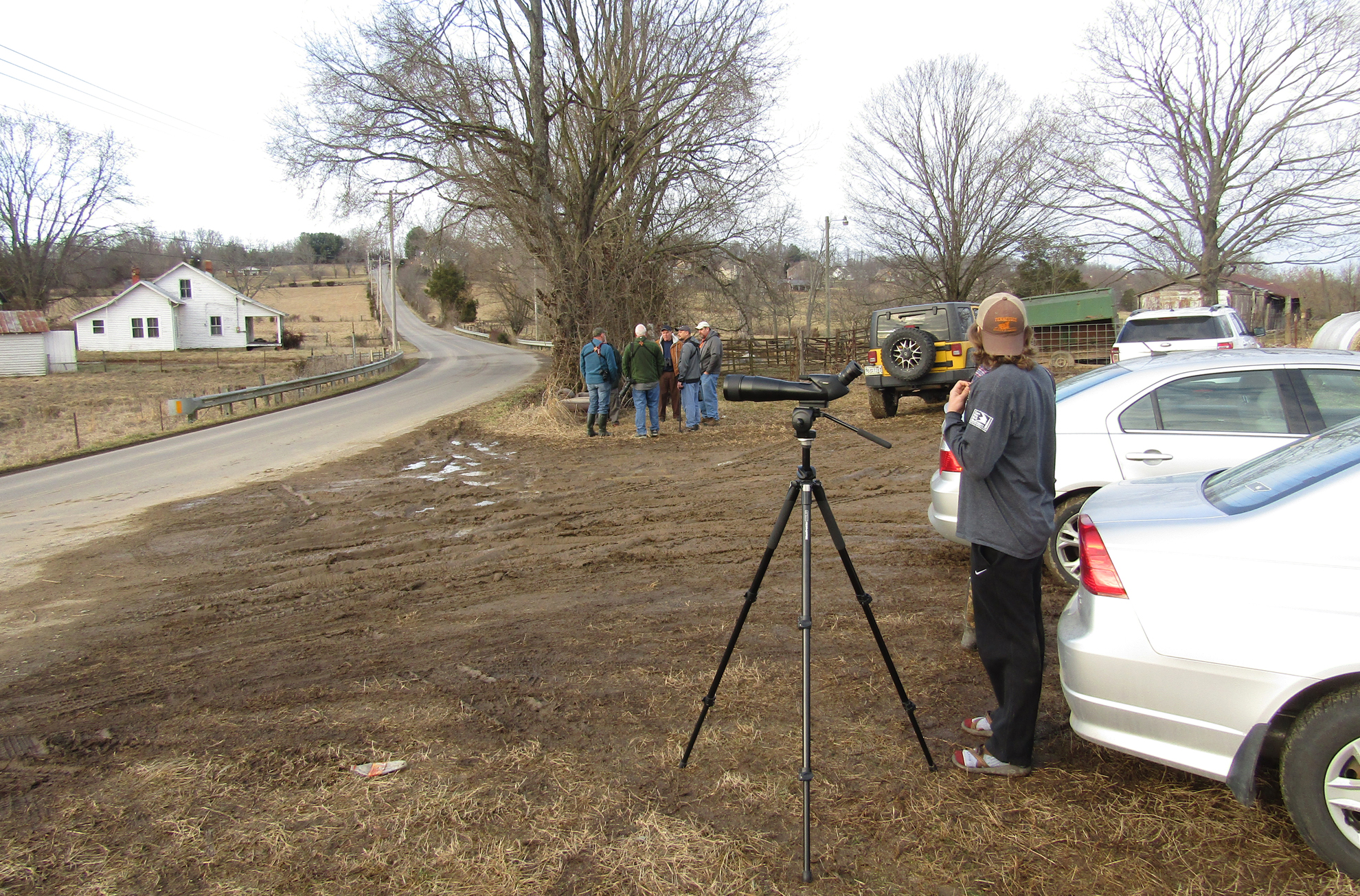
Photo by Bryan Stevens • Birders will come from near and far to look for rarities that make an unexpected appearance in the region.

“Without the guidance of more experienced birders, I would have quickly become frustrated by how much I didn’t know,” he said. “For a new birder, there’s no better way to learn than by going birding with more experienced people.”

Even with a few years of birding experience under his belt, he said he is still amazed by the vast wealth of knowledge in the club. He also noted that the knowledge is not limited to birds but also covers history, nature and many other topics.

“The other great benefit from being in the club is the simple camaraderie,” Gardner said. “I’ve met people through the bird club that I now consider friends, and I’ve traveled to places I never would have even thought to go, like the Okefenokee Swamp and Hiwasee National Wildlife Refuge. Two of our members recently got married, after meeting on a club trip to Charleston, South Carolina.”
Gardner also believes the long history of the Elizabethton Bird Club in the region is not to be overlooked.

“I think the advantage of having such a long history is the institutional knowledge that comes with it,” he said. “We have records that go back to the 1940s, which helps with tracking trends in populations and migration patterns.”
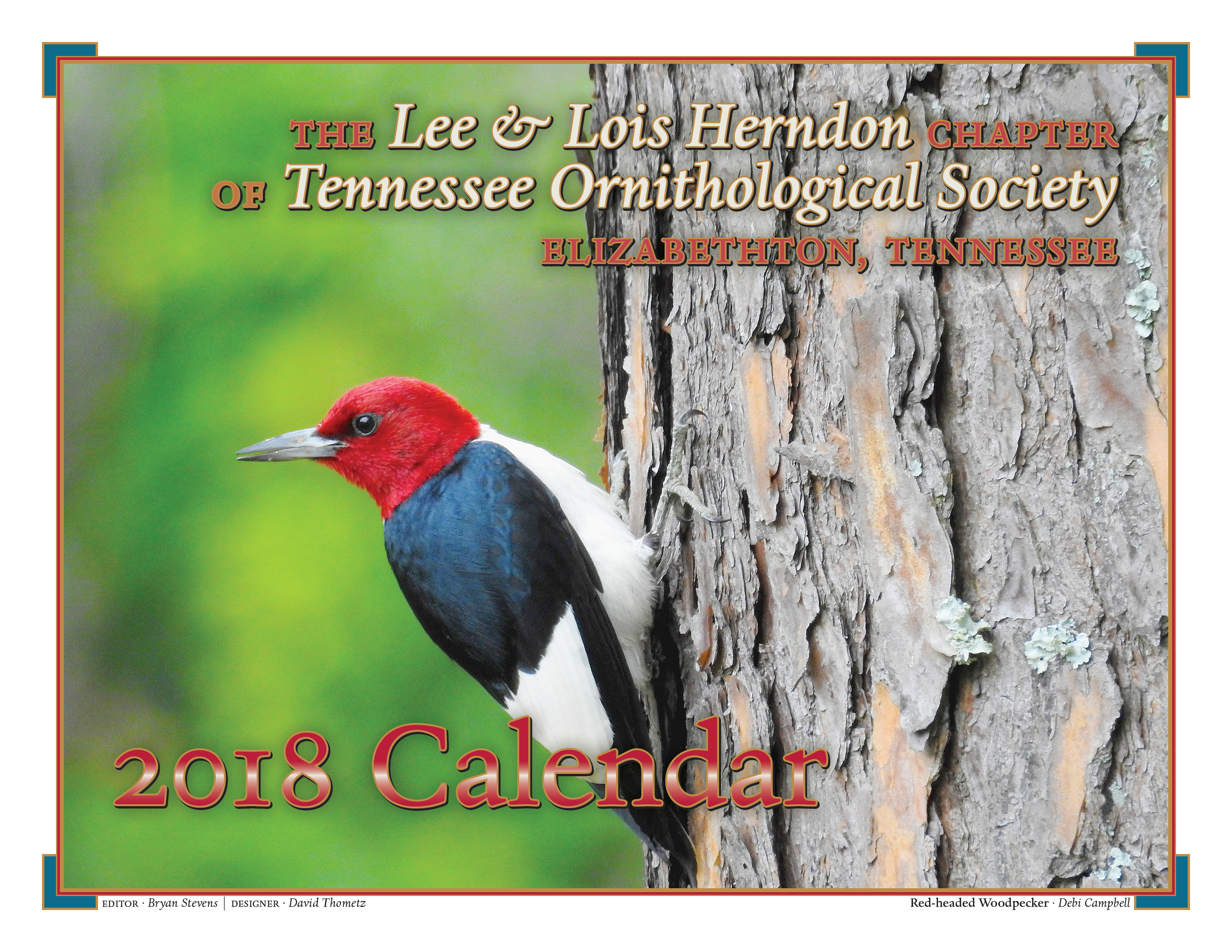
The chapter publishes a yearly calendar with photos taken by members.

Gardner noted that being a long-standing organization also helps the club and its leaders to develop good working relationships with local governments, parks and landowners.

Kim Stroud said that she believes there are two main benefits to joining a birding organization.

“The first is that it is a great educational opportunity,” she explained. “For beginning birders, being surrounded by experienced birders is a great way to learn more about birds — not just their field marks and calls, but also what habitats they occur in and what seasons certain species are here.”

These organizations also offer many benefits to experienced birders who are new to the region.

“Clubs like ours can show newcomers where the great local birding sites are.” Stroud said.

She noted that some birders from outside the region are not accustomed to birding in the mountains.

“For example, one transplant from the flat part of Ohio was amazed to learn that some birds, like black-throated blue warbler and black-throated green warbler, occur at different elevations.

“The idea that some birds only occur at specific elevations was not something she ever had to consider before, because everything was about the same elevation,” Stroud said. “Information like this can be crucial when trying to target specific bird species.”

According to Stroud, the second benefit of joining an active birding organization is social.

“Joining a club offers the opportunity to meet new people and make new friends, who have similar interests,” she said. “Our chapter is very active and provides many different types of events, including interesting programs at our meetings and banquets, social gatherings like picnics and Christmas parties, field trips to local birding hotspots and opportunities for travel, like trips to the Outer Banks, coastal South Carolina and Georgia and even a planned trip to Texas.”
“The Lee & Lois Herndon Chapter dates all the way back to 1944,” Stroud said.
The Herndons were a couple that helped found the group and provided leadership to the group for many years.

“Because members of our chapter have been birding this area for almost 80 years, we have an extensive knowledge about the birds in the local area.”
She noted that members know what species of birds to expect, where to go to find these species, and even when migrant species should return each year.
Much of the localized information is highlighted in a book by chapter member Rick Knight titled “The Birds of Northeast Tennessee.”

Stroud noted that the chapter also has a long history of performing seasonal bird counts.

“We just completed our 80th Spring Bird Count,” Stroud said. “Count data that covers such a great span of time is invaluable to scientists who are studying long-term population trends in bird species, which is crucial work given the effect of climate change and the recent studies indicating a massive decline in American birds.”

•••

To ask a question, make a comment or report a sighting, email me at ahoodedwarbler@aol.com.
Annual summer bird count nets 110 species

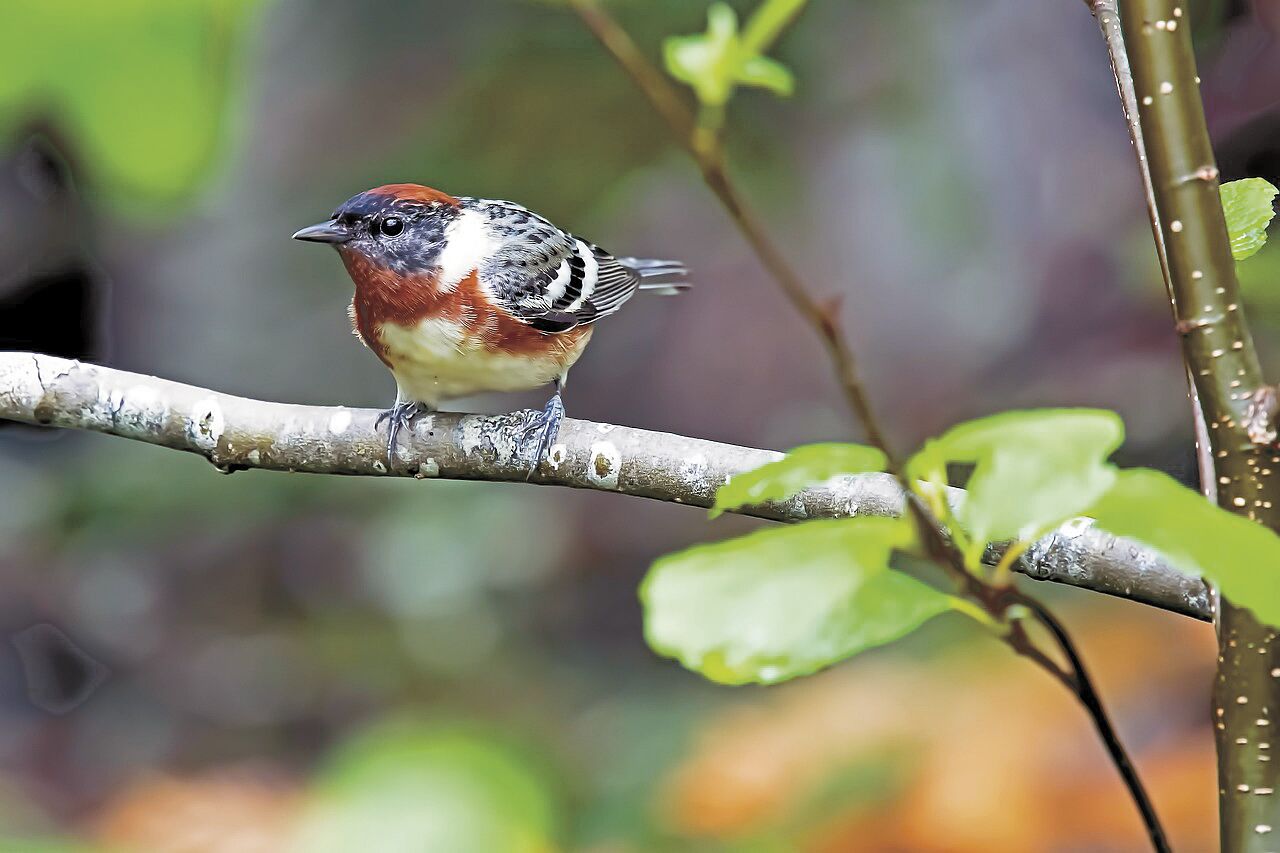
Photo by Hans Toom/Pixabay * A single bay-breasted warbler was likely a late migrant traveling through Unicoi County to reach nesting territory in Canada.


The 10th Unicoi County Summer Bird Count was held Saturday, June 3, with 19 observers in five parties. Participants tallied 110 species, which was slightly above the average of 108 species.

The weather was good: clear to partly cloudy with a temperature range from 48 to 84 degrees and little wind.

I counted close to home in Limestone Cove and along Highway 107 to the North Carolina state line. I was accompanied by Brookie and Jean Potter.

As always, the count had some unexpected misses, including chuck-will’s-widow, Cooper’s hawk, great horned owl, yellow- throated vireo, Baltimore oriole, common yellow-throat and prairie warbler.

Three Northern bobwhites represented only the second record for the species in the history of this count.

Osprey also made its debut on this year’s count.

https://www.google.com/search?client=firefox-b-1-d&q=Youtube+bay-breasted+warbbler#fpstate=ive&vld=cid:72fa665c,vid:Zj3T5O5SlqU

The list
Canada goose, 40; wood duck, 2; mallard, 13; Northern bobwhite, 3; ruffed grouse, 1; and wild turkey, 10.

Rock pigeon, 37; mourning dove, 81; yellow-billed cuckoo, 2; Eastern whip-poor-will, 11; chimney swift, 27; and ruby-throated hummingbird, 8.

Killdeer, 6; great blue heron, 4; green heron, 2; black vulture, 4; and turkey vulture, 43.

Osprey, 1; bald eagle, 1; red-shouldered hawk, 1; broad-winged hawk, 5; and red-tailed hawk, 1.

Eastern screech-owl, 6; barred owl, 1; belted kingfisher, 9; red-bellied woodpecker, 20; yellow-bellied sapsucker, 2; downy woodpecker, 12; hairy woodpecker, 1; Northern flicker, 11; and pileated woodpecker, 18.

American kestrel, 1; great crested flycatcher, 1; Eastern kingbird, 1;

Eastern wood-pewee, 9; Acadian flycatcher, 33; least flycatcher, 5; and Eastern phoebe, 56.

White-eyed vireo, 5; blue-headed vireo, 48; warbling vireo, 1; and red-eyed vireo, 165.

Blue jay, 82; American crow, 111; fish crow, 3; and common raven, 4.

Tree swallow, 73; Northern rough-winged swallow 41; purple martin, 41; barn swallow, 39; and cliff swallow, 47.

Carolina chickadee, 56; tufted titmouse, 75; red-breasted nuthatch, 4; white-breasted nuthatch, 9; and brown creeper, 2.

House wren, 22; winter wren, 8; Carolina wren, 98; blue-gray gnatcatcher, 16; and golden-crowned kinglet, 8.

Eastern bluebird, 55; veery, 14; hermit thrush, 2; wood thrush, 16; American robin, 239; gray catbird, 16; brown thrasher, 9; and Northern mockingbird, 23.

European starling, 264; cedar waxwing, 22; house sparrow, 20; house finch, 30; red crossbill, 1; and American goldfinch, 41.

Chipping sparrow, 52; field sparrow, 5; dark-eyed junco, 19; song sparrow, 141; Eastern towhee, 53; and yellow-breasted chat, 3.

Eastern meadowlark, 10; orchard oriole, 2; red-winged blackbird, 74; brown-headed cowbird 19; and common grackle, 119.

Ovenbird 44; worm-eating warbler, 11; Louisiana waterthrush, 11; black-and-white warbler, 23; Swainson’s warbler, 13; Kentucky warbler, 2; hooded warbler, 91; American redstart, 4; Northern parula, 21; magnolia warbler, 1; bay-breasted warbler, 1; Blackburnian warbler, 6; yellow warbler, 6; chestnut-sided warbler, 9; black-throated blue warbler, 30; pine warbler; 1; yellow-throated warbler, 20; black-throated green warbler, 23; and Canada warbler, 15.

Scarlet tanager, 24; Northern cardinal, 87; rose-breasted grosbeak, 1; blue grosbeak, 1; and indigo bunting,106.

•••

Bryan Stevens has birded in Northeast Tennessee since the early 1990s. He has written about birds and birding since 1995. To ask a question, make a comment or share a sighting, email him at ahoodedwarbler@aol.com.

New York trip in 2002 allowed time to find 15 species of birds

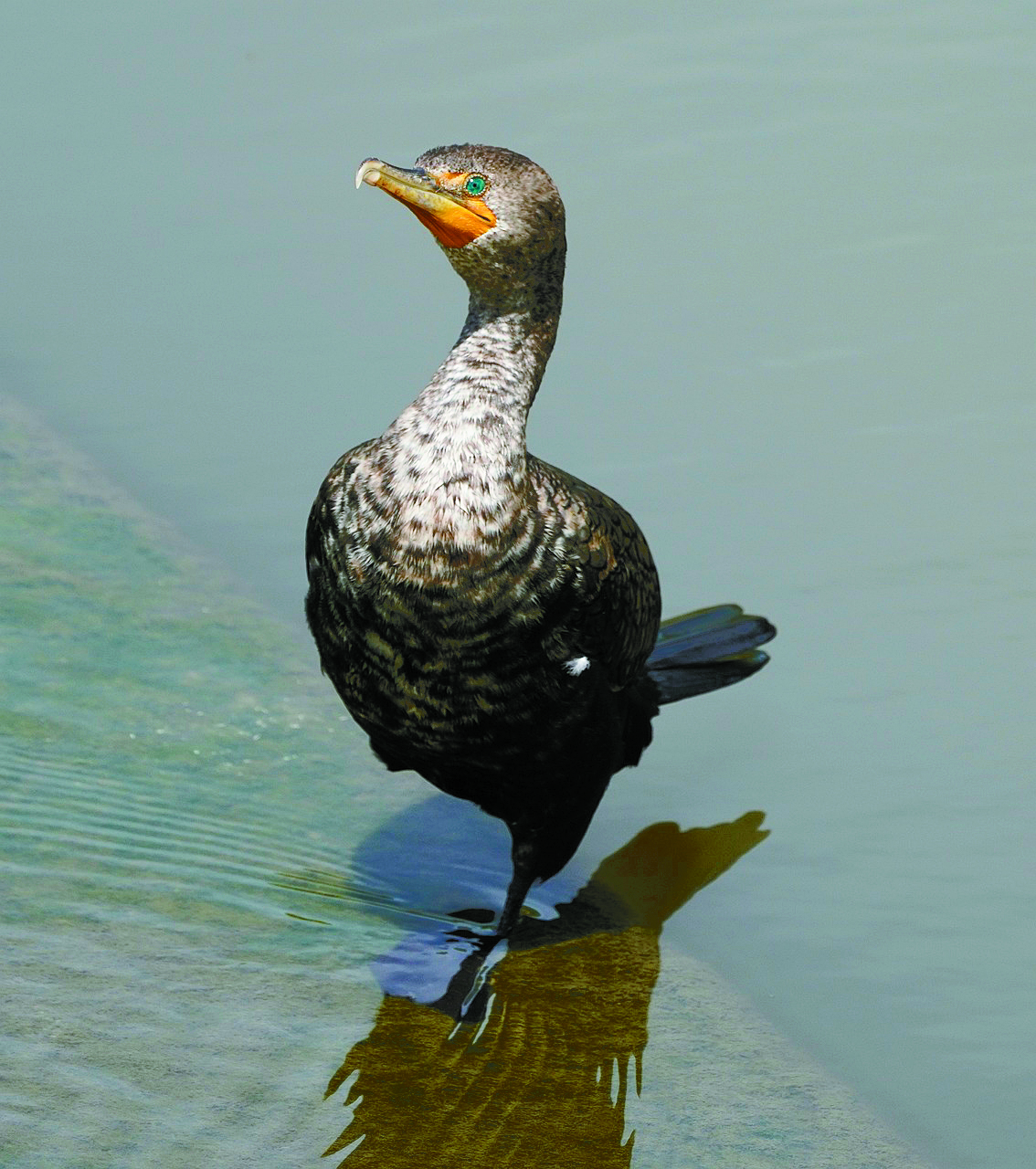
Photo by stephmcblack/Pixabay • A double-crested cormorant stands at attention on a submerged perch.

I originally wrote this week’s column about my birding experiences in the “Big Apple” for the Herald & Tribune of Jonesborough, Tennessee, in July of 2002. The column won a second-place Tennessee Press Association award for “Best Personal Column” the following year.

Has it really been 21 years? Wow! Time flies.

While the column is about birds I saw during my brief New York stay in July of 2002, the trip didn’t allow for the time to dedicate to serious birding. The birds I saw were all incidental to the other activities I crowded into the narrow window of time I had for experiencing New York City.

Here’s the original column:

During a recent trip to New York City, mainly for the purpose of visiting friends and seeing the sights, I also availed myself of the opportunity of trying to see a few birds in the Big Apple.

At first glance, New York City doesn’t seem a haven for birds or any other sort of wildlife. Without any serious effort on my part, however, I managed to see 15 different species of birds. My tour guide and friend, David, remained courteous enough to indulge my occasional lapses into birding. David, perhaps like many New Yorkers, is familiar on a daily basis with the Big Apple’s three most prominent members of the bird family — the house sparrow, the European starling and the rock dove, or pigeon.

Everyone who has visited a city park, whether in Jonesborough or New York City, is probably familiar with the rock dove. Commonly called pigeon, the rock dove is not a native American bird. But their introduction to this continent paralleled the arrival of European colonists. Pigeons came to this country along with other farmyard animals, such as cattle and sheep. But, once here, the rock dove, which is a wild bird in Africa and in the Mediterranean, also managed to establish itself outside the farmyard. Nevertheless, more than most other birds, the rock dove still only thrives in the company of humans. In New York City, pigeons are a part of the landscape. They are everywhere! As a result, these birds can cause some problems. Their droppings can damage buildings and statues. They can also spread various diseases to humans. Efforts have been made to curb their numbers, but the pigeon looks to be a permanent part of the New York City landscape.

It’s no longer a paradise for pigeons in the Big Apple, however. The peregrine falcon, once endangered, has rebounded with protection from the government. The skyscrapers of New York City have replaced cliff faces as nesting sites for these sleek, aerodynamic predators. While I wasn’t fortunate enough to see a peregrine falcon while in New York City, they are there. Their presence has put some balance back into the food chain. The pigeons now have a natural predator.

Earlier this summer, David called me looking for advice about a problem with birds. Seems that a pair of house sparrows had built a nest beneath his air conditioning unit at his apartment. The problem involved timing. David recently moved to a new apartment and he needed to take the air conditioner with him. In the end, David’s need for the air conditioner outpaced the nesting progress of the sparrows. Now, he’s convinced that the sparrows, like the gulls, are out to get him. More about the gulls later.

The house sparrow is a non-native species introduced to the United States. The house sparrow was released intentionally in the United States in the 1850s at different points between New York and New England. Other introductions of this species occurred at other points in the United States. The introductions were huge mistakes. By 1910, the house sparrow had invaded the entire continent. The house sparrow is also an aggressive bird. Soon, the house sparrow came into conflict with a beloved American favorite, the Eastern bluebird. The major competition between Eastern bluebirds and house sparrows is for nesting cavities. House sparrows have the tenacity to evict even the larger Easter bluebirds from occupied nests. Occasionally, the sparrows even kill nestlings or adult bluebirds. I found the house sparrow almost as numerous as rock doves in most areas of New York City.

Photo by U.S. Fish & Wildlife Service
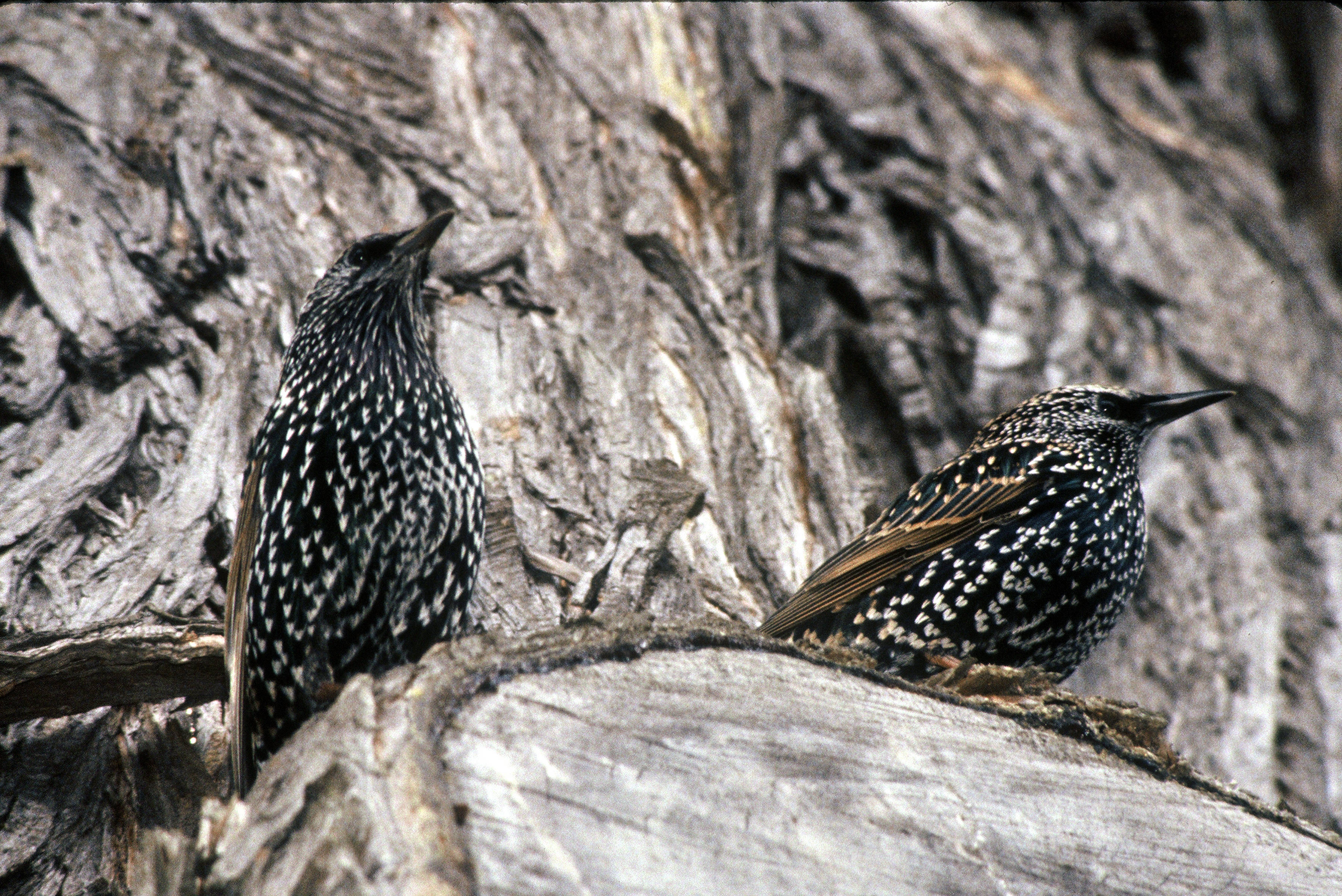
The European Starling is prevalent in New York City and the surrounding area.

But, there was still a third common bird — the European starling. I encountered the first starlings of my trip in New York City’s famous Central Park. Ironically, Central Park is where the European starling, now considered the most numerous bird in North America, got its start. The rock dove and house sparrow got here first, but the European starling didn’t waste any time once the first starlings were released in 1890. The first European starlings were released at that time in Central Park because some fans of William Shakespeare wanted to release all the birds mentioned in The Bard’s plays. Apparently, only the release of the European starling from that list of birds had any lasting consequence. Even today, starlings and Shakespeare are very much associated with Central Park. During the summer there is a popular Shakespeare festival held in Central Park. And, on any summer day, there will always be plenty of starlings in the park.

Those were three of the 15 birds I managed to observe on my trip. The remaining 12 species comprised a diverse and at times surprising list. I found American robin, American crow, blue jay, chimney swift, Carolina wren and downy woodpecker within Central Park. In addition, at a large pond within the park I also observed a green heron and mallards. The robins, in particular, appeared as they would in any park setting. They hopped about on grassy lawns while foraging for food. David told me he recently saw a roadrunner in the park. I told him that would be an extraordinary discovery since that bird is native to the western United States.

There’s a lot of water in and around New York City. Perhaps it isn’t a surprise to discover birds such as double-crested cormorants swimming in the East River. I also saw plenty of gulls. In fact, I saw three different species of gulls — herring gulls, ring-billed gulls and laughing gulls.

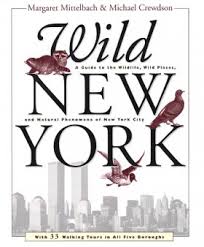
The cover of the book Wild New York: A Guide to the Wildlife, Wild Places and Natural Phenomena of New York City by Margaret Mittelbach and Michael Crewdon

Surprisingly, gulls haven’t always been common in the vicinity of New York City. According to the book “Wild New York: A Guide to the Wildlife, Wild Places and Natural Phenomena of New York City” by Margaret Mittelbach and Michael Crewdon, gulls did not frequent New York City 100 years ago. Now, there are as many as one million gulls in New York City. The book also mentions one of the attractions: Staten Island’s Fresh Kills Landfill, the largest garbage dump in the world.

My friend David considers gulls evil omens. I tried to do some research into the role of gulls in folklore. I turned to the book by Laura C. Martin titled “The Folklore of Birds.” Her entry on gulls proved sketchy. Here’s some of what I learned. The word “gull” comes from a Welsh word, “gwylan,” which can be translated as “wailing.” The term “gull” apparently derived from the bird’s wailing or plaintive call. The Latin genus name, Larus, for gull is translated as “ravenous seabird.” So, that leaves us with a ravenous, wailing seabird. Apt descriptions, but not exactly a rich folklore. Birds such as crows and the various species of owls have much more ominous superstitions surrounding them.
•••
New York City has a “New York Rare Bird Alert.” If you would like to know what rare birds are being seen in New York City, dial (212) 979-3070. I dialed the number during my visit and received information about excitement regarding large flocks of migrating shorebirds, a common raven and nesting blue grosbeaks.
(Note: The number is still in use. So, if you’re planning any New York visits and would like to bird, the phone number is still valid.)
•••
My friend David now lives in Baltimore. I haven’t visited him there, but he has visited me in the mountains near Asheville, North Carolina. I’d like to thank him again for my taste of the Big Apple.
•••
I love to hear from readers. Email me at ahoodedwarbler@aol.com with comments, questions or sightings to share.

Indigo bunting’s blue appearance is a trick of the light

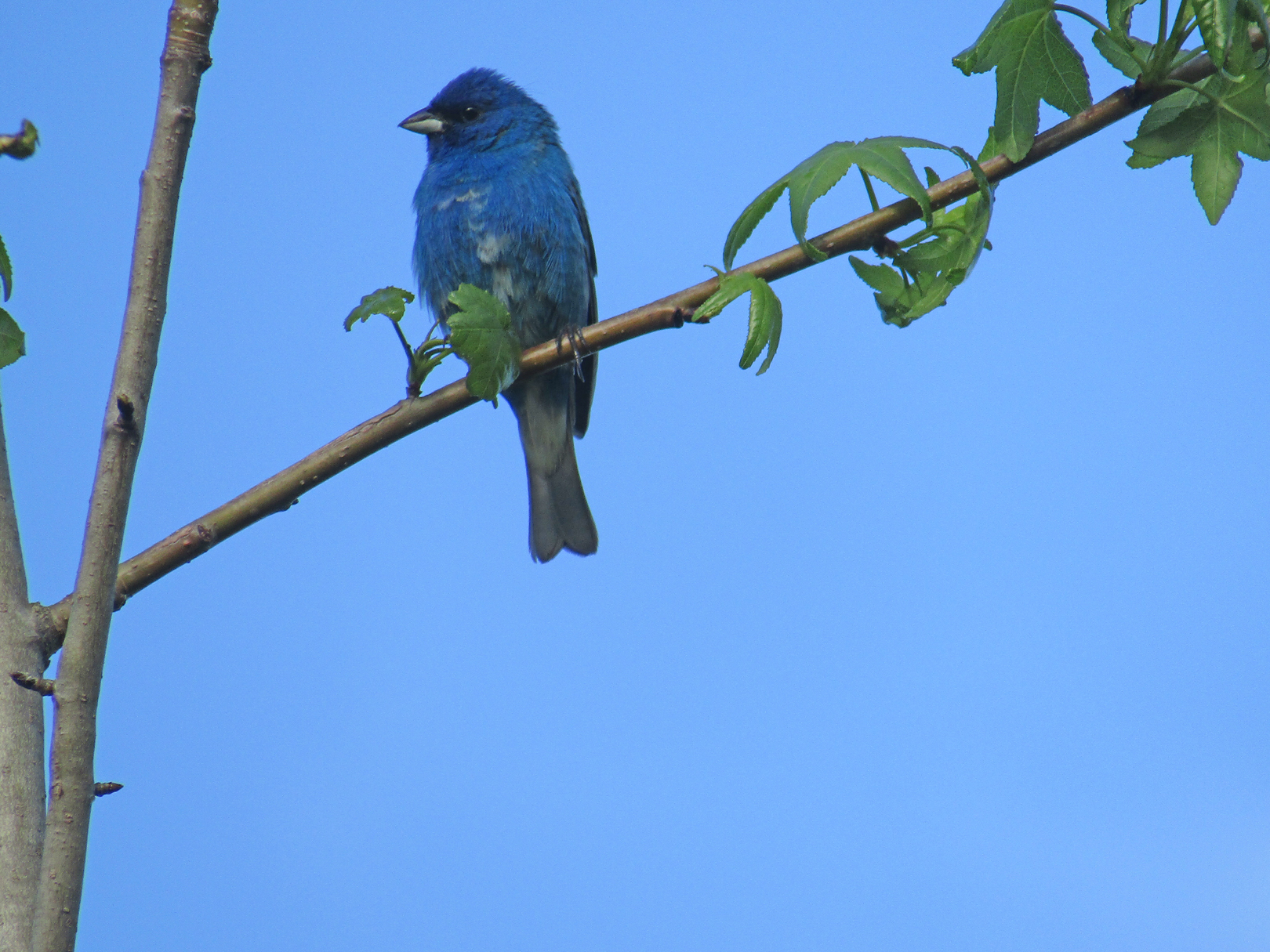
Photo by heronworks/Pixabay • A male indigo bunting visits a feeder for a meal of seeds. These birds are fairly common in the region during the summer months.


The indigo bunting is one of the reasons I love to pay attention to the clientele visiting my feeders. This small songbird likes to reside in the boundary region where forests and woodlands meet fields and pastures. Personally, the indigo bunting has always been a bird that is suggestive of the long, hot days of summer.

One of my earliest and still quite vivid birding memories is a recollection of a shockingly blue bird atop a blue spruce tree in my yard. Several decades later, the tree is no longer standing, but these beautiful birds — I now know those long-ago summer visitors were indigo buntings — still return each year to my yard and gardens.

Indigo buntings usually arrive in the region in late April, and I’ve seen them linger until late October, although most indigo buntings have left the region by late September.

Upon arrival, male indigo buntings become tenacious singers, repeating their jumbled notes even during the hottest hours of summer afternoons. The preference of this small songbird is to sing from the tops of tall trees, where they are often concealed by the green leaves. When I do get a glimpse of the obscured songster, often all I see is a dark shape silhouetted against the bright sky. Sometimes, if he plunges from the upper branches into the woodland understory, I get that telltale glimpse of blue feathers.

The male indigo bunting is the only solid blue bird in the eastern United States, but it’s all an illusion — literally a trick of the light. The indigo bunting’s feathers are not really blue; the male’s brilliant azure plumage is caused by the process of diffraction of light around the structure of the bird’s feathers. This process scatters all but the blue light, and the resulting color shifts from black to blue to turquoise as the angle of reflected light changes. In bright light, it can even look unnaturally vivid blue. In poor light, however, an indigo bunting male can appear black. Fortunately, indigo buntings have both a characteristic body shape and song, so even if the birds are not seen in their best light, they can still be recognized.

Like many species of songbirds, the male is by far the most colorful. In this instance, the male is also responsible for the species’ name. Indigo is a blue dye that was once an important crop in the South. The drab female may boast some blue highlights in her plumage. Juvenile birds just out of the nest also resemble the female. Pay close attention to any indigo buntings you observe as summer progresses. Juvenile birds will look mostly brown with just a hint of blue in the wings and the tail. These will be the young buntings that were hatched in spring and early summer. They will often accompany their parents to feeders.

Photo by Bryan Stevens • The male indigo bunting is a resplendent bird.

Indigo buntings are particularly fun birds to observe in late summer. Indigo bunting juveniles, like the young of many other birds, beg for tidbits from parents by “bowing,” spreading their wings and shivering. These actions usually prompt a parent to pop some morsel into an impatient youngster’s open bill. Indigo buntings are relatively easy to view. They frequent weedy fields and roadside brush.

The indigo bunting belongs to a genus of birds known as Passerina, which is included the family Cardinalidae, which includes birds like Northern cardinal and rose-breasted grosbeak. They are often lumped into a group known as North American buntings, although they are not closely related to such birds as snow bunting and lark bunting. The latter is even recognized as the official state bird for Colorado, a unique honor for this group of birds. The other members of the Passerina genus include lazuli bunting, varied bunting, painted bunting, rose-bellied bunting, orange-breasted bunting and blue grosbeak.

Worldwide, other birds known as buntings include such descriptively named species as slaty bunting, corn bunting, white-capped bunting, gray-necked bunting, cinereous bunting, lark-like bunting, cinnamon-breasted bunting, chestnut-eared bunting, little bunting, yellow-throated bunting, golden-breasted bunting, black-headed bunting, red-headed bunting and yellow bunting.

The male indigo bunting is one of the most colorful birds to visit feeders in the region. This species is also extremely fond of millet seed. I like to have some feeders stocked with millet when the buntings begin to return each spring. They will also feed on thistle and sunflower seeds. Away from our feeders, they also devour plenty of seeds from various noxious weeds. Because of the indigo bunting’s appetite for the seeds of destructive weeds, it is considered a beneficial bird.
••••
Bryan Stevens has been birding since the 1990s and has written about birds and birding since 1995. Email him at ahoodedwarbler@aol.com to share sightings, ask questions or make comments.

Photo by Bryan Stevens • Newly-returned neotropical migrants, such as this Indigo Bunting, increased the total number of species for the annual spring count.

Great crested flycatchers select some interesting nest material

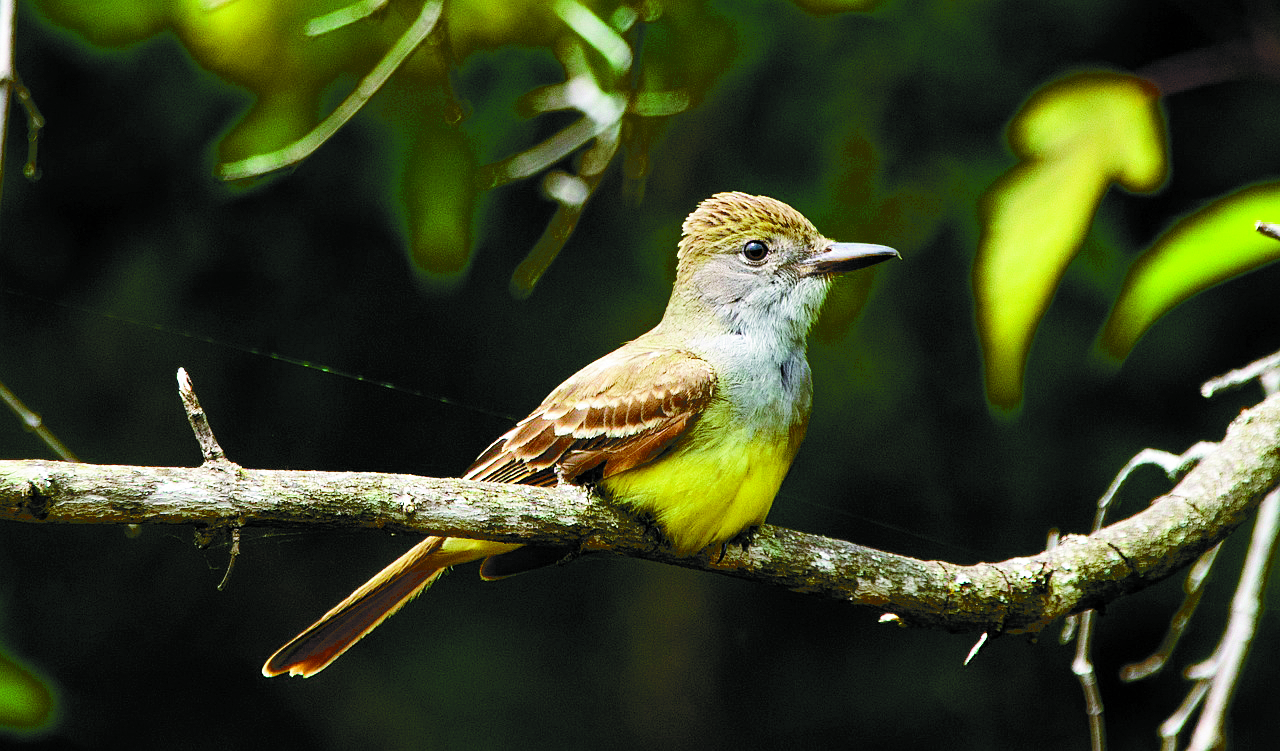
Photo by simardfrancois from Pixabay * The great crested flycatcher is indeed crested and a member of the flycatcher family. The descriptive term “great,” however, is subjective but supported by the fact that this species possesses many interesting traits and behaviors.

Many of my friends and family members are afflicted with a fear of snakes. They’re in good company. Statistics indicate that about a third of the population has this particular phobia. Scientifically, this phobia is known as ophidiophobia.

Before anyone reads further, this is not a column about snakes. There’s only one solid connection between snakes and this week’s featured bird. More on that shortly.

I’ve been writing about flycatchers for the past couple of columns, including the Eastern kingbird and scissor-tailed flycatcher. This week, I am introducing readers to another member of the family.

The great crested flycatcher has an impressive name. Like many species of birds, this one has been given a puzzling common name considering the bird’s appearance doesn’t really justify such a grandiose name.

The great crested flycatcher does indeed sport a raggedy crest. For a flycatcher, it is almost a showy bird with its brown and dull yellow plumage. There’s not much to explain the adjective “great” in this bird’s name. It’s only about eight inches long. Helped by the shaggy crest, this flycatcher looks like it has a head slightly too large for its body.

The great crested flycatcher is unique among the region’s flycatchers in nesting inside natural cavities, in the same fashion as such popular cavity-nesting birds as Eastern bluebird and tree swallow. The great crested flycatcher will also nest inside bird boxes, although the entrance hole needs to be slightly larger than the ones required for bluebirds and other small songbirds.

It’s this flycatcher’s nesting habits that provide the tenuous connection to snakes. Great crested flycatchers almost invariably weave a shed snakeskin into the nest during the construction process.

This flycatcher has become quite famous for its incorporation of a snakeskin into the construction of its nest. This prevalent tendency on the part of great crested flycatcher isn’t practiced as a whim. Studies suggest that the snake skin serves as a deterrent to ward off potential predators that might seek to eat the flycatcher’s eggs. With the advent of the era of mass production, the great crested flycatcher occasionally substitutes cellophane or other varieties of clear plastic in place of the traditional snake skin. The speculation is that the bird mistakes the cellophane for the remnant left behind when a snake sheds its old skin.

During spring visits to coastal South Carolina, I’ve observed these flycatchers attempting to nest inside wooden paper delivery boxes. I’m not sure what the newspaper subscribers thought of these clever attempts to take up residence in the boxes.

You’ll probably hear a great crested flycatcher before you see it. Even when hidden in the forest canopy, the great crested flycatcher betrays its presence with its loud “Wheep!” call. They’re not skittish birds, however, and some patience will often result in a visual observation of the bird.

Like with most other flycatchers, insects are the focus of the dietary preference of this bird. However, the great crested flycatcher will also eat some seasonally available fruit, including various berries. The bird’s favored way to forage for insects is to perch on a branch until an insect wanders into range. Once it spots an insect, the flycatcher swoops down to capture its prey.

The great crested flycatcher belongs to the Myiarchus genus of flycatchers, which consists of about two dozen species ranging throughout Central, South and North America. In the United States, the other two members of the genus are the ash-throated flycatcher, which resides in the western United States, and the brown-crested flycatcher, a resident of southern California, southern Nevada, central Arizona and southern Texas. Both of these species also range into Mexico and Central America.

The island of Jamaica is home to another member of the genus with a claim to a rather unusual name. The sad flycatcher, better known in Jamaica as “little Tom Fool,” is considered a common resident of Jamaican forests.

The tyrant flycatchers (Tyrannidae) are a family of passerine birds which occur throughout North and South America. They are considered the largest family of birds, with more than 400 species. They are the most diverse avian family in every country in the Americas, except for the United States and Canada, where they are present but without the diversity seen south of the U.S. border.

Other descriptively named tyrant flycatchers include rufous flycatcher, stolid flycatcher, black-capped flycatcher, yellow-bellied flycatcher, fork-tailed flycatcher, golden-winged tody-flycatcher, flammulated flycatcher, boat-billed flycatcher, ornate flycatcher, cinnamon flycatcher and vermilion flycatcher. The latter is a bit of a standout among flycatchers in having brilliant red plumage.

Listen for that loud “wheep” call, often coming from the upper levels of the woodland canopy. The hidden singer often produces the call repeatedly. Once the summer nesting season ends, these birds are typically silent. On occasion, however, an individual bird will not remain mute, and I have heard the loud “wheep” call even in September and October during fall migration.

Although the great crested flycatcher is found in the region, I have observed this bird with more frequency farther south in states like Georgia and South Carolina. You just have to use a little more effort to observe this interesting bird closer to home.

I have had the chance to observe nesting great crested flycatchers at the homes of friends and family members. More than 20 years ago, a family of great crested flycatchers took up residence in a box mounted to the garage at the home of my uncle, Ray Sneyd, in Limestone Cove.

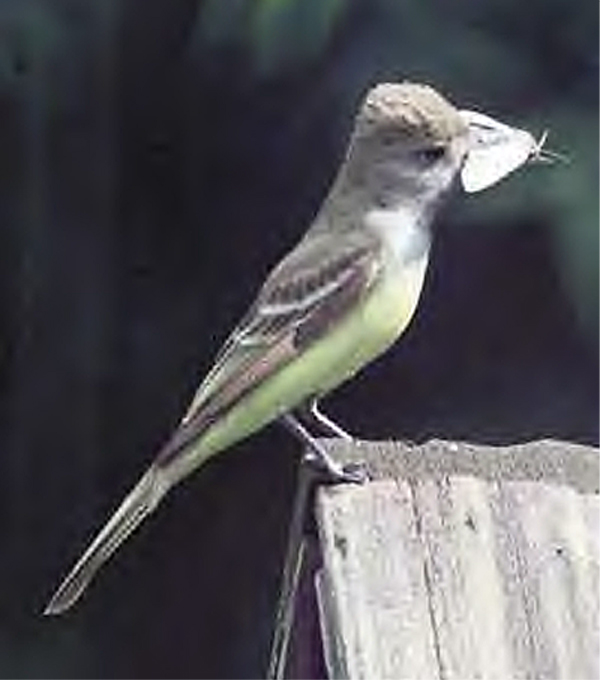
A Great Crested Flycatcher holds a moth in its beak prior to feeding the insect to its hungry young.

Back in the late 1990s, I also made the acquaintance of Brookie and Jean Potter, who reside at Wilbur Lake in Carter County, when they sought out help identifying a great crested flycatcher nesting in a bird box at their home. The experience also set the Potters on their own path into birding. We have had many fun birding adventures in the subsequent years.

To share a sighting, ask a question or make a comment, email me at ahoodedwarbler@aol.com.