

Photo by Bryan Stevens • Keep hummingbirds happy with a sugar water solution of four parts water to one part sugar.
Thomas Hood, who lives near Burnsville, North Carolina, shared a note about his summer hummingbirds.
“We have a bunch of ruby-throated (hummingbirds),” Thomas wrote in an email.
He noted that last year, he hosted as many as 40 individual hummingbirds. This year he estimates he has hosted as many as 20.
“Late visitors this year, but they put on a great airshow,” he added.
He said that he has two feeders up and two handheld ones that he uses to attract hummingbirds to his home in the North Carolina mountains.
Thomas also shared a video of his tiny flying visitors.
In a follow-up email, he noted that the hummingbird population continues to grow.
“We love the entertainment they provide,” he wrote. “After the big storm yesterday, we estimated there are now near 30.”
•••
Thomas’s email was another reminder that it has been a busy season for female hummingbirds. Those that have been successful with their nesting were able to fledge twin hummingbirds and encourage them to spread their wings and leave the nest.
For hummingbirds, it’s invariably two eggs per nest for some good reasons. First, the nest is so small — about the size of a walnut half-shell — that there is barely room for two eggs, let alone more. Second, once the young hatch, the nest has just enough room to accommodate them as they grow, fed well by their mother. Third, feeding two hungry young hummingbirds is a demanding task. A female hummingbird has to find enough food to fuel her own body and help her young in the nest grow and thrive. It’s a full-time job during the daylight hours. She’s pressed hard to succeed at raising two young. Attempting to care for more would most likely prove impossible.
Now that many female hummingbirds have finished the task of bringing forth a new generation of hummingbirds, the leisurely fall migration can begin.
Hummingbirds are not as frantic about moving south in the fall as they are single-minded about heading north every spring. Numbers of these birds always reach a peak in late summer and early fall at my home, and this year’s shaping up to be a repeat of past ones.
Hummingbird species number around 340, making the family second in species only to the tyrant flycatchers in sheer size. Both of these families consist of birds exclusive to the New World.
With so many hummingbird species, people have been hard pressed to give descriptive names to all these tiny gems. Some of the dazzling array of names include little hermit, hook-billed hermit, fiery topaz, sooty barbthroat, white-throated daggerbill, hyacinth visorbearer, sparkling violetear, horned sungem, black-eared fairy, white-tailed goldenthroat, green mango, green-throated carib, amethyst-throated sunangel, green-backed firecrown, wire-crested thorntail, festive coquette, bronze-tailed comet, black-breasted hillstar, black-tailed trainbearer, blue-mantled thornbill, bearded mountaineer, colorful puffleg, marvelous spatuletail, bronzy inca, rainbow starfrontlet, velvet-purple coronet, pink-throated brilliant, coppery emerald, snowcap, golden-tailed sapphire and violet-bellied hummingbird.
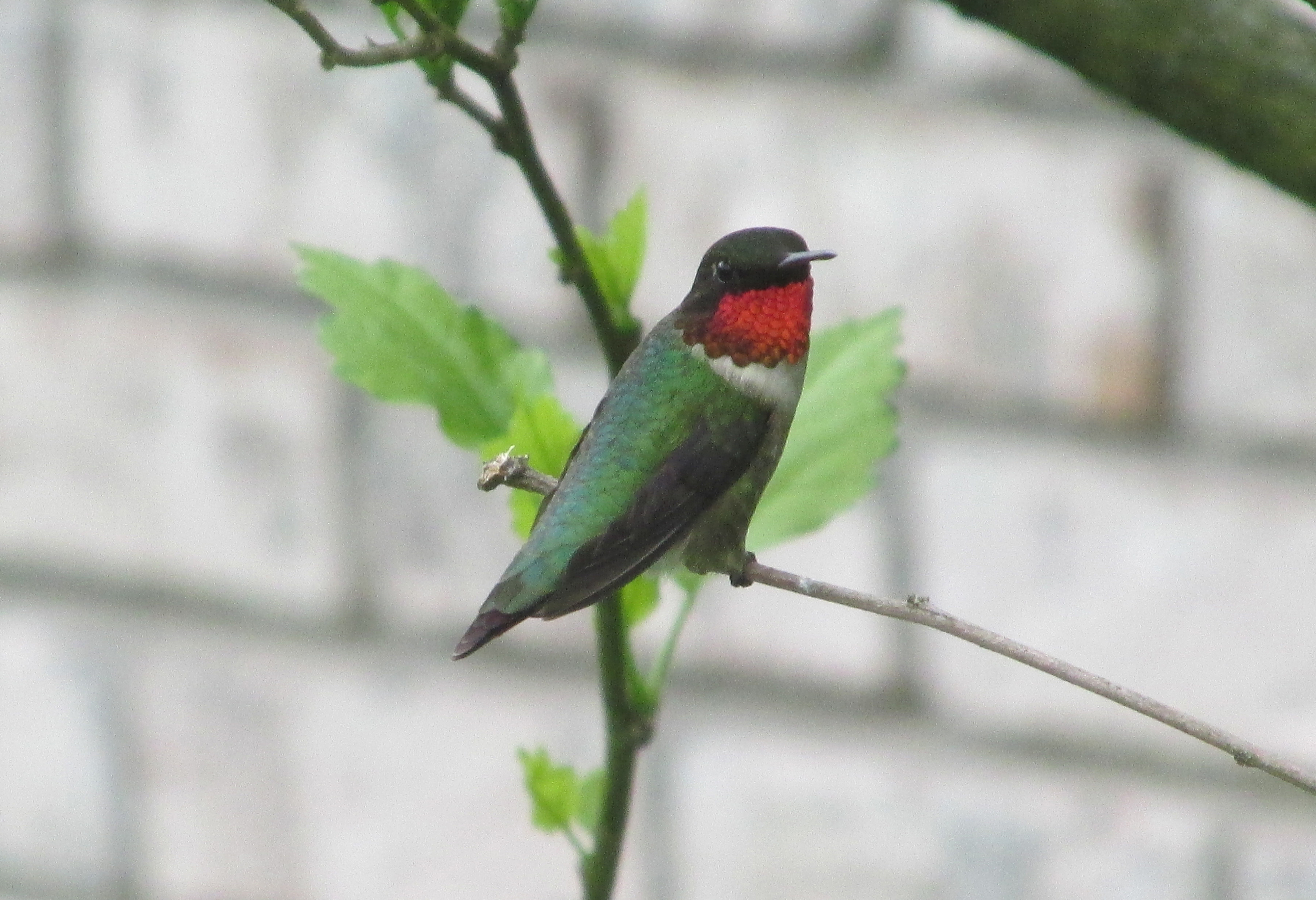
Photo by Bryan Stevens • Male ruby-throated hummingbird show the namesake red throat. The feathers on a male’s throat are iridescent, which means they can change when seen from different angles. In poor light, the ruby-red throat can look almost black.
Our own hummingbird, which we can claim from April through October every year, is the ruby-throated hummingbird. Ruby-throats are remarkable birds that nest throughout the eastern United States, as well as southern Canada. In winter, most ruby-throats withdraw to Central America and Mexico, although a few winter in Florida. They are famous for the amazing feat of crossing the Gulf of Mexico twice each year as they travel to their nesting grounds and then back to their overwintering homes.
The next generation of hummingbirds always helps swell the number of these tiny birds in our yards in late summer and early fall. It’s our duty as hosts to keep them safe as they stop in our yards and gardens during their fall migration. Many of the hummingbirds in the fall will be making their first migration, so they will need all the help we can provide to make a successful journey.
Perhaps consider enhancing your plantings of summer flowers while also continuing to offer multiple sugar water feeders. Keep the sugar water mix at a four parts water to one part sugar ratio. Don’t offer honey in your feeders. When mixed with water, it can spoil and spread fungal diseases.
Remember that hummingbirds don’t subsist on sugar water alone. They also eat numerous tiny insects and spiders to obtain the protein they need for their dietary needs, so don’t use insecticides near feeders or flowers that hummers are likely to visit.
So, until October frosts eventually drive them out of the region, enjoy the ruby-throated hummingbirds while you can.
•••
Bryan Stevens has written about birds since 1995. Share a sighting, make a comment or ask a question by emailing him at ahoodedwarbler@aol.com.

Photo by Bryan Stevens • A ruby-throated hummingbird lifts its wings to shake water droplets off its back.
 Our Fine Feathered Friends