
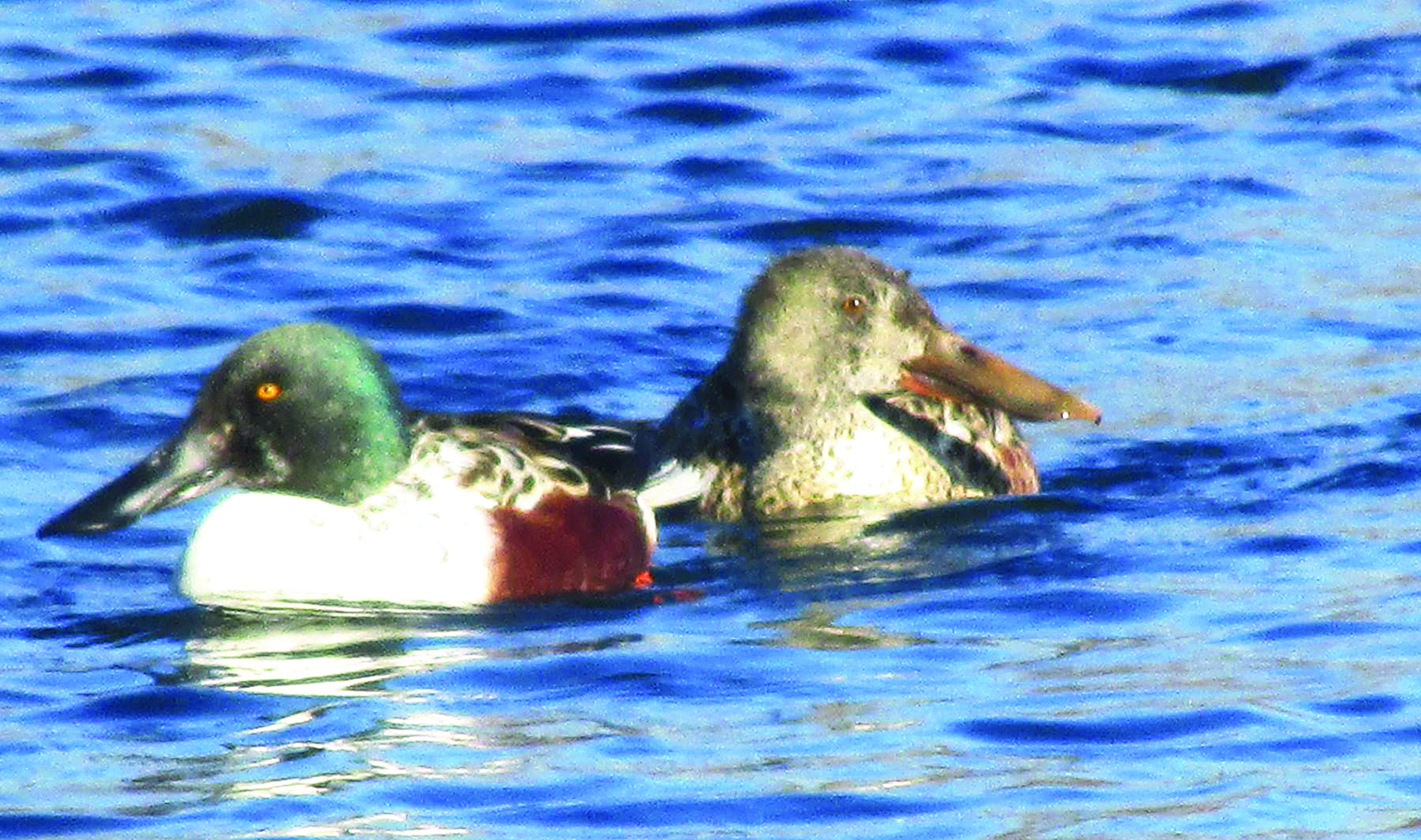
Photo by Bryan Stevens • A pair of Northern shovelers made a stop at the pond at Erwin Fishery Park in a previous winter season.
The website Ducks Unlimited reported that there may be fewer ducks and other waterfowl flying south in late fall and early winter, according to the recently released 2023 Waterfowl Population Status report by the U.S. Fish and Wildlife Service.
The report, based on surveys conducted in May and early June by FWS, Canadian Wildlife Service and other partners,
Total populations were estimated at 32.3 million breeding ducks in the traditional survey area, a 7% drop from 2022’s estimate of 34.7 million and 9% below the long-term average compiled since 1955.
While most duck species showed declines, two species actually boosted their numbers. The population of canvasback, a species of diving duck, increased by 6% from 2022. Northern pintail, a species of dabbling duck, showed an even more dramatic increase with total numbers of this duck spiking by 24% since last year’s survey.
In Northeast Tennessee, Western North Carolina and Southwest Virginia both canvasback and Northern pintail are uncommon winter visitors, so this report gives cause for some optimism for birders hoping to see these two species during the winter of 2023-24.
In addition, North America’s smallest duck – green-winged teal – saw a 17% increase in its population. This pint-sized duck is only about 14 inches long and weighs 17.5 ounces at the most. To put that in some perspective, this duck weighs just a little more than a regulation football.
Waterfowl migration is rather erratic in the region. It’s usually possible to see a variety of waterfowl species between November and March in the region. Lake, rivers and ponds are essential habitat for finding these birds.
Some well-known waterfowl observation locations in Northeast Tennessee include Wilbur Lake in Carter County and Osceola Island Recreation Area near Bristol. In Erwin, the large pond at Fishery Park has attracted some unusual ducks in past winters.
If water remains open and unfrozen farther north, some ducks are reluctant to fly south. So, hoping for a successful waterfowl viewing season in our region requires hoping for a severe winter farther north around the Great Lakes and in Canada.
I enjoy turning my attention to waterfowl when the winter season arrives and there are fewer birds present at my home and my favorite birding spots. Some of my favorite ducks include Northern shoveler, canvasback, bufflehead and ring-necked duck.
A few species of ducks nest in the region. These breeding ducks include mallard, wood duck and common merganser. I hope the cold weather is not too early this year, but the arrival of ducks and other waterfowl is always a silver lining that takes the edge off the arrival of ice and snow.
•••
At home, I am still enjoying the frantic daily antics of several ruby-throated hummingbirds. I’m still waiting for fall warblers, but I know I can expect to see them fairly soon. Join me in keeping alert and enjoying the possibilities of some unexpected avian visitors during the coming migratory seasons.
•••
To ask a question, make a comment or share a sighting, please email me at ahoodewabler@aol.com.
 Our Fine Feathered Friends