Monthly Archives: November 2023

What’s in a name? Many American birds will get renamed by AOS

Photo by Veronika Andrews from Pixabay • Anna’s hummingbird, a species of hummingbird native to the coastal regions of western North America, is named after a 19th-century duchess. The bird, as well as almost 80 other species, will be renamed by the American Ornithological Society in the future.

What’s in a name? To paraphrase the Bard, a bird’s tweet would still sound as sweet, regardless of the name of the bird.

That theory’s about to get tested. The American Ornithological Society has decided to rename about 80 species of birds named for people. The birds, which can be found in the United States and Canada, range from songbirds to shorebirds, as well as woodpeckers and jays.

The best I can determine after some research is that the new names for some of our birds will be based on appearance or habitat preferences. I’d be more optimistic if it wasn’t the AOS that gave us the boring name of Eastern towhee and took away the accurate and descriptive name of rufous-sided towhee for a familiar backyard bird.

The towhee was renamed in 1995. Some of my birding friends have long memories, because I still hear people refer to this bird as “rufous-sided towhee.”

Photo by Bryan Stevens • A male Eastern towhee forages in the grass beneath a feeder.

I’m sure I will miss some of the former names. I’ll be waiting to see what name is given to Anna’s hummingbird, a species named for Anna Masséna, Duchess of Rivoli. As far as I can determine, the duchess had no particular strikes against her character. A French princess, the duchess was married to amateur ornithologist Prince Victor Masséna, the owner of an impressive collection of bird specimens.

Even royalty needs its hobbies, and birding’s certainly a worthy pursuit in my eyes. I do think the trivia associated with birds named for people can make interesting reading. For example, the duchess served as the Mistress of Robes for the Empress Eugénie, wife of Napoleon III.

Be careful what you find when doing online research. I found one article claiming that the duchess met John James Audubon, the famous American naturalist and painter, in Paris in 1882.

If true, it would have been quite the feat as Audubon died in 1857 in New York.

Then there’s Nuttall’s woodpecker. As explained on the website All About Birds, William Gambel named the small black-and-white woodpecker after Thomas Nuttall, an English botanist and ornithologist, back in 1843.

Photo by Bryan Stevens • The Wilson’s snipe is one of many birds likely to be renamed in the near future.

Nuttall was perhaps better known as a botanist, according to All About Birds, but he also published an early field guide on birds titled “A Manual of the Ornithology of the United States and Canada.”

All About Birds also notes that Nuttall’s book and his passion for nature also inspired the formation of the first organization in North America dedicated to birds in 1873, the Nuttall Ornithological Club.

It seems a shame to me to remove the woodpecker’s name when it honors such a relevant figure in the early history of birding.

Even birds — Clark’s nutcracker and Lewis’s woodpecker — named for the famed Meriwether Lewis and William Clark of the historic Lewis and Clark Expedition will likely lose their long-standing names.

Gambel’s quail also faces renaming. This small desert quail is named for William Gambel, an American naturalist, ornithologist and botanist from Philadelphia. As a young man Gambel worked closely with the renowned naturalist Thomas Nuttall, basically becoming an apprentice to the older man.

Photo by AZArtist from Pixabay • Gambel’s quail is named after William Gambel, an American naturalist, ornithologist and botanist from Philadelphia.

At the age of 18, Gambel traveled to California, becoming the first botanist to collect specimens in Santa Fe, New Mexico, as well as many parts of California. In late 1838, Gambel and Nuttall traveled together on a collecting trip to the Carolinas and the southern Appalachians.

Gambel accomplished a lot in his short lifespan. He tried unsuccessfully to establish a medial practice in Philadelphia and decided, like many Americans, to head west. Shortly after reaching California, he tried to help miners afflicted with typhoid at a camp along the Yuba River. He became sick himself and died Dec. 13, 1849, at age 26.

Animals named in the young man’s honor include Gambel’s quail and Gambelia, a genus of lizards. Also in 1848, a genus of flowering plants, Gambelia, native to California and Mexico, was named after him.

I feel that Shakespeare had it right. The names may change, but the stories of the birds and their namesakes will still be there for anyone who wants to do a little digging.

Some of the stories you might uncover make for interesting reading.

•••

Email Bryan Stevens at ahoodedwarbler@aol.com to share a bird sighting, ask a question or make a comment.
Column, which is turning 28 years old, began with a profile on juncos

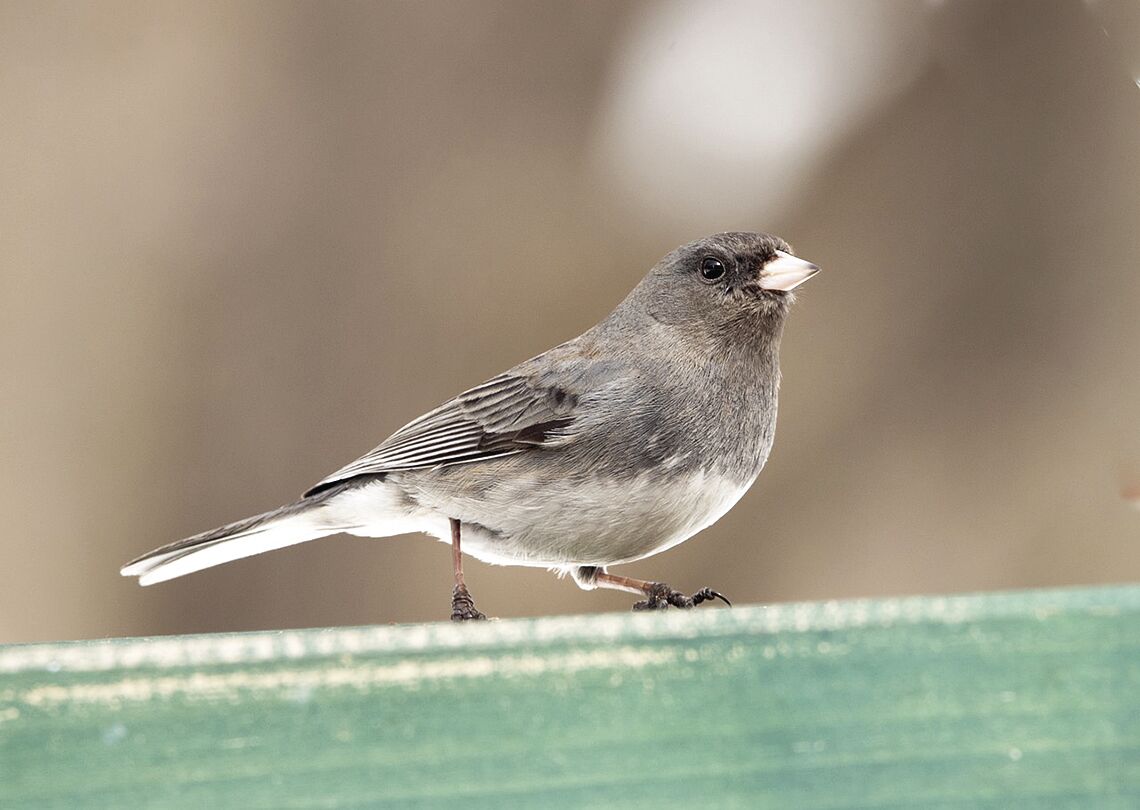
Photo by simardfrancois from Pixabay • The dark-eyed junco is a winter visitor at many bird feeders in the region, but this bird also nests every summer on some high elevation mountains in the region.

I wrote my first bird column on Sunday, Nov. 5, 1995, which means this weekly column is marking its 28th anniversary this week.

This column has appeared in a total of six different newspapers, which I regard as a personal achievement, as well as an accomplishment for our feathered friends. It’s on their behalf that I pen these weekly efforts to promote conservation and good will toward all birds. I have also posted the column as a weekly blog posting since February 2014 at http://www.ourfinefeatheredfriends.com.

I’ve played detective, helping people identify everything from “rain crows,” or cuckoos, to Muscovy ducks, chukars and double-crested cormorants. I’ve observed unusual birds, including white pelicans, brants and roseate spoonbills, in Northeast Tennessee, Southwest Virginia and Western North Carolina and spotlighted them in these columns.

While I’ve had some vision challenges this past year, I still take delight in the kaleidoscopic parade of colorful warblers that pass through the region each spring and fall as well as the fast-paced duel of ruby-throated hummingbirds and the occasional rufous hummingbirds straying through the region.

At my home, I also provide sunflower seed and other supplemental food for the resident birds like Carolina chickadees, white-breasted nuthatches, song sparrows and downy woodpeckers.

Even as I tweak my anniversary column for “Feathered Friends,” parts of the region just experienced the first heavy frost. This prognostication of approaching winter weather is a perfect time to dust off this week’s column, which is a revision of the first bird column I ever wrote. This column focused on a common visitor to yards and feeders during the winter months. In fact, dark-eyed juncos should be returning to the region any day. Here, with some revisions I have made through the years, is that first column.

Photo by Ken Thomas • A dark-eyed junco perches on some bare branches on a winter’s day.

•••

Of all the birds associated with winter weather, few are as symbolic as the dark-eyed junco, or “snow bird.” The junco occurs in several geographic variations.

John V. Dennis, author of “A Complete Guide to Bird Feeding,” captures the essence of the junco in the following description: “Driving winds and swirling snow do not daunt this plucky bird. The coldest winter days see the junco as lively as ever and with a joie de vivre that bolsters our sagging spirits.” The dark-eyed junco’s scientific name, hyemalis, is New Latin for “wintry,” an apt description of this bird.

Most people look forward to the spring return of some of our brilliant birds — warblers, tanagers and orioles — and I must admit that I also enjoy the arrival of these birds. The junco, in comparison to some of these species, is not in the same league. Nevertheless, the junco is handsome in its slate gray and white plumage, giving rise to the old saying “dark skies above, snow below.”

Just as neotropical migrants make long distance journeys twice a year, the junco is also a migrating species. But in Appalachia, the junco is a special type of migrant. Most people think of birds as “going south for the winter.” In a basic sense this is true. But some juncos do not undertake a long horizontal (the scientific term) migration from north to south. Instead, these birds merely move from high elevations, such as the spruce fir peaks, to the lower elevations. This type of migration is known as vertical migration. Other juncos, such as those that spend their breeding season in northern locales, do make a southern migration and, at times, even mix with the vertical migrants.

During the summer months, a visit to higher elevations mountaintops is almost guaranteed to produce sightings of dark-eyed juncos. Juncos may nest as many as three times in a season. A female junco usually lays three to six eggs for each nest, which she constructs without any assistance from her mate.

Juncos are usually in residence around my home by early November. Once they make themselves at home I can expect to play host to them until at least late April or early May of the following year. So, for at least six months, the snow bird is one of the most common and delightful feeder visitors a bird enthusiast could want.

Juncos flock to feeders where they are rather mild-mannered — except among themselves. There are definite pecking orders in a junco flock, and females are usually on the lower tiers of the hierarchy. Females can sometimes be distinguished from males because of their paler gray or even brown upper plumage.

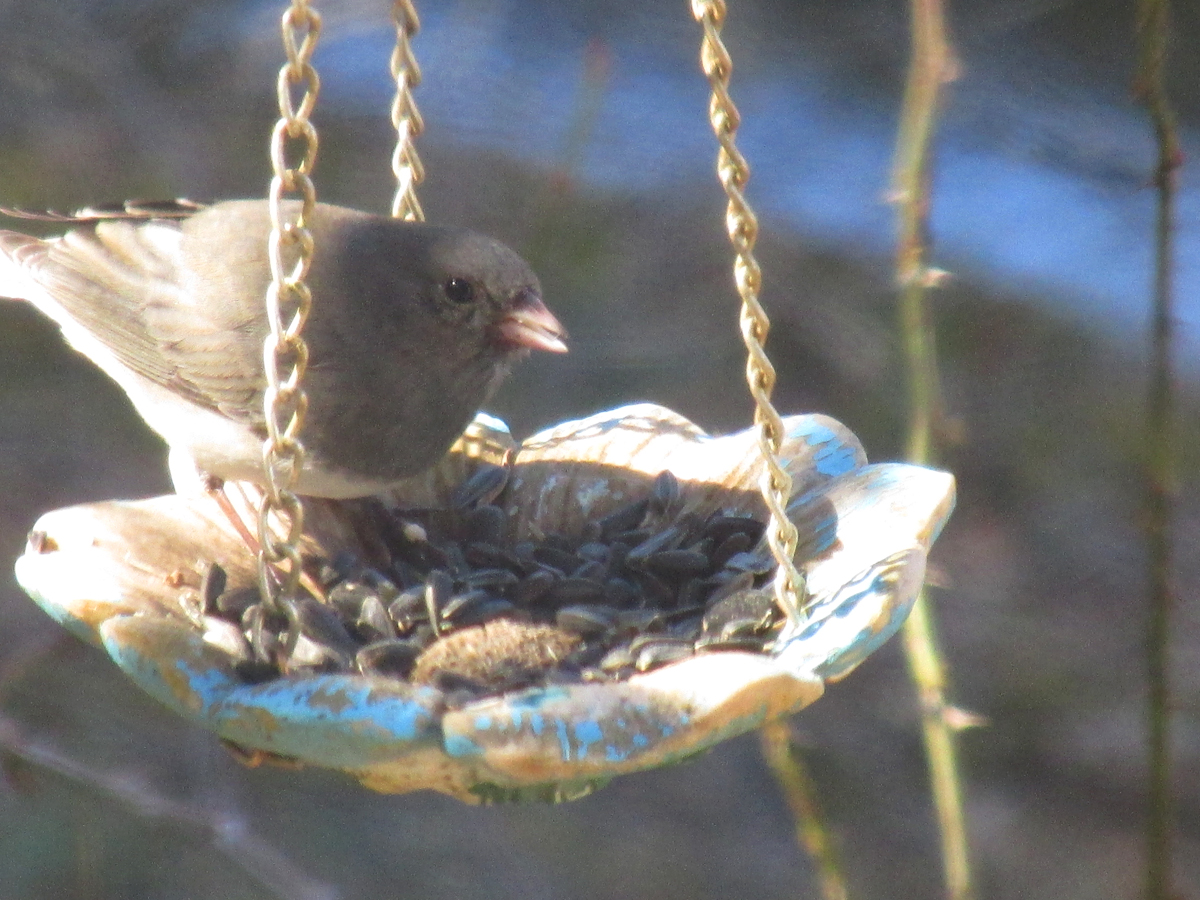
Since juncos are primarily ground feeders they tend to shun hanging feeders. But one winter I observed a junco that had mastered perching on a hanging “pine cone” feeder to enjoy a suet and peanut butter mixture.

Dark-eyed juncos often are content to glean the scraps other birds knock to the ground. Juncos are widespread. They visit feeders across North America. The junco is the most common species of bird to visit feeding stations. They will sample a variety of fare, but prefer such seeds as millet, cracked corn or black oil sunflower.

The juncos are a small branch of the sparrow clan. Some of the other juncos include the endangered Guadalupe junco, yellow-eyed junco, Baird’s junco and volcano junco. The last one on the list is endemic to the Talamancan montane forests of Costa Rica and western Panama. Baird’s junco is named for Spencer Fullerton Baird, an American ornithologist and naturalist.

Photo by Bryan Stevens • A dark-eyed junco visits a hanging feeder.

Baird served as secretary for the Smithsonian Institution from 1878 until his death in 1887. He greatly expanded the natural history collections of the Smithsonian from 6,000 specimens in 1850 to over two million by the time of his death.

I hope you’ve enjoyed this introduction to juncos. There’s something about winter that makes a junco’s dark and light garb an appropriate and even striking choice, particularly against a backdrop of newly fallen snow.

Of course, the real entertainment from juncos come from their frequent visits to our backyard feeders. When these birds flock to a feeder and began a furious period of eating, I don’t even have to glance skyward or tune in the television weather forecast. I know what they know. Bad weather is on the way!

••••

I’ve not seen the first junco of the season, but I did observe a close relative (white-throated sparrow) on the morning of Oct. 24 at my home.

If you’d like to share your first sighting this season of dark-eyed juncos, email me at ahoodedwarbler@aol.com. As always, the column is also a line of communication with fellow bird enthusiasts. I’ve enjoyed sharing stories about birds with countless readers over the past 28 years. I can also be reached on Facebook at https://www.facebook.com/ahoodedwarbler.

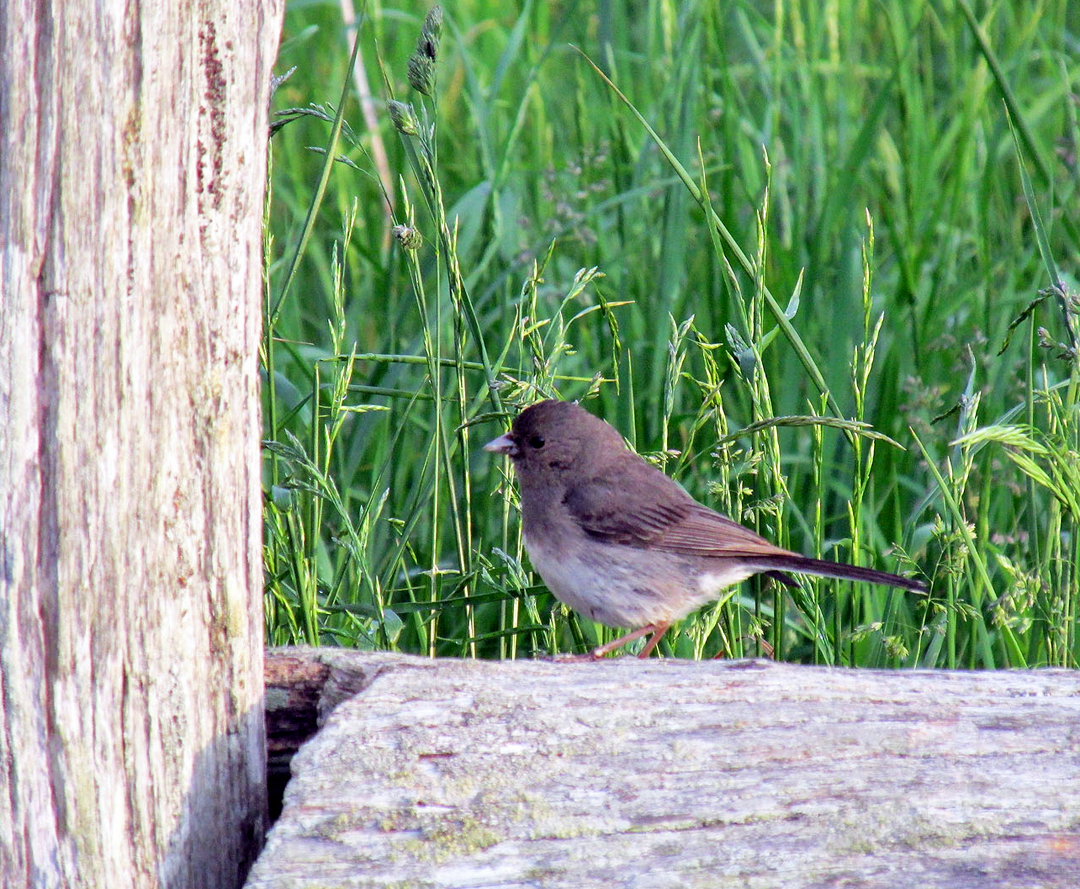
Photo by Bryan Stevens • Dark-eyed junco nests on high mountain slopes during the summer month. This dark-eyed junco was photographed at Carver’s Gap on Roan Mountain during the summer nesting season.

Some birds expert at conjuring thrills and chills

Photo from Pixabay • The great tit, a bird related to titmice and chickadees, has acquired a taste for bat brains. Scientists have documented great tits in the mountains of Hungary killing a small species of bat to consume their brains.

NOTE: This column originally ran in November of 2018.

The ultimate coma victim is the fabled zombie, but that’s not likely to afflict any of our feathered friends, right? Well, consider the great tits of Hungary, which are relatives of our tufted titmouse and Carolina chickadee. These birds — at least the Hungarian ones — have apparently acquired a taste for brains.

Not human brains, thankfully. The victims of these brain-hungry great tits are a species of bat — a flying creature often associated with the modern celebration of Halloween, as well as legends about vampires — that shared the habitat of these birds in the Bükk Mountains of Hungary. As it turns out, the tits only hunted bats, in this case a tiny species known as common pippistrelle, out of dire necessity.

Bat ecologists Péter Estók and Björn M. Siemers, after observing the odd behavior of the great tits during some winter seasons, conducted a study to see if great tits are consistent devourers of bats’ brains. They discovered that the birds did hunt the bats and had even learned to detect a special call the bats make as they emerge from hibernation. The ecologists conducted their study over two years and learned that the great tits teach others of their kind the special art of hunting bats. They also learned that the birds made efficient killers, dragging the bats from their roosts and cracking their skulls to get at their brains.

However, when provided with plenty of alternative food, including such favorite items as bacon and sunflower seeds, the great tits chose to eat these items rather than actively hunt bats. The researchers concluded that great tits only resort to harvesting the brains of small bats during times of scarcity during harsh winters. The bizarre story is even featured in the title of a fascinating book by Becky Crew titled “Zombie Birds, Astronaut Fish, and Other Weird Animals.”

So, if humans have nothing to fear from brain-hungry birds, are there any birds that we should fear? Some experts suggest that precautions might be in order if one expects to come into close proximity with a southern cassowary, which is the third-tallest and second-heaviest living bird, smaller only than the ostrich and emu.

The cassowary, a native of New Guinea and northeastern Australia, has developed a reputation as a fearsome bird capable of injuring or killing humans. According to ornithologist Ernest Thomas Gilliard, cassowaries deserve their reputation. In his 1958 book, “Living Birds of the World,” he explained that the second of the three toes of a cassowary is fitted with a long, straight, dagger-like claw which can sever an arm or eviscerate an abdomen with ease. According to Gilliard, there have been many records of natives being killed by this bird.

A thorough study, however, has partly exonerated the cassowary from these misdeeds. In a total of 150 documented attacks against humans, cassowaries often acted in self-defense or in defense of a nest or chicks. The only documented death of a human took place in 1926 when two teenaged brothers attacked a cassowary with clubs. The 13-year-old brother received a serious kick from the bird, but he survived. His 16-year old brother tripped and fell during the attack, which allowed the cassowary to kick him in the neck and sever the boy’s jugular vein.

So we can rest easier knowing that murderous birds that reach a height of almost six feet tall are unlikely to terrorize us should we travel to the lands down under. A more ancient relative of the cassowary, however, might have been a different story had humans lived during the same time period.

Phorusrhacids, also known as “terror birds,” were a group of large carnivorous flightless birds that once had some members reign as an apex predator in South America before they went extinct around two million years ago. The tallest of the terror birds reached a height of almost 10 feet. Titanis walleri, one of the larger species, even ranged into what is now the United States in Texas and Florida.

Terror birds were equipped with large, sharp beaks, powerful necks and sharp talons. Their beaks, which would have been used to kill prey, were attached to exceptionally large skulls. Despite their fearsome appearance, these birds probably fed on prey about the size of rabbits. Perhaps not knowing this, Hollywood has cast these birds as monsters in such films as 2016’s “Terror Birds” and 2008’s “10,000 BC.”

Besides, casting birds as the villains had already been done back in 1963 when Alfred Hitchcock released his film, “The Birds,” based loosely on a short story by Daphne du Maurier. The film, which starred some big Hollywood names such as Rod Taylor, Tippi Hedren, Jessica Tandy, Suzanne Pleshette and Veronica Cartwright, cast a whole new light on a “murder” of crows. Today, the film has achieved the status of a Hollywood classic. I guess it just goes to show that werewolves, zombies and other Halloween monsters have nothing on our fine feathered friends.