
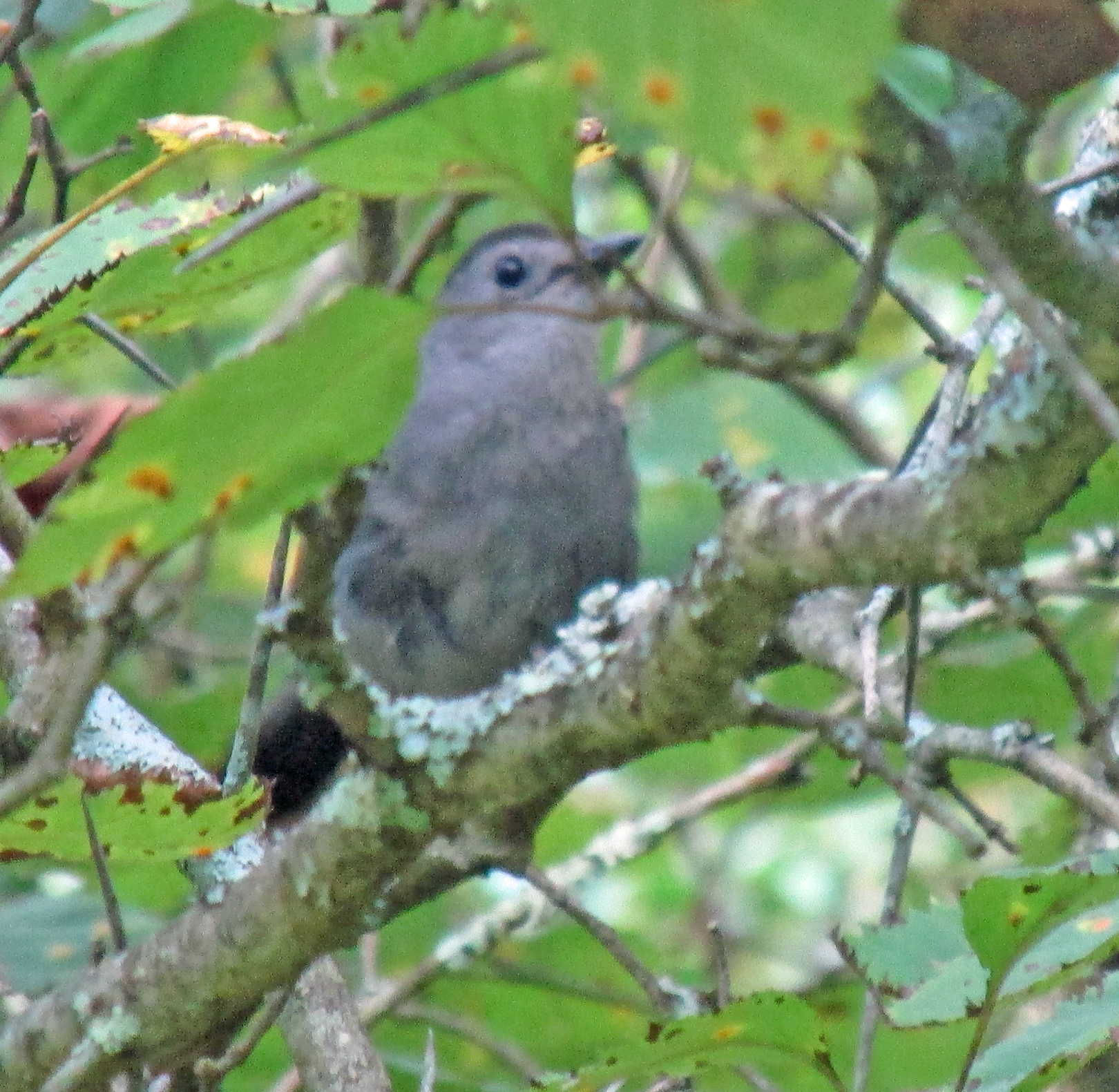
Photo by Bryan Stevens A curious Gray Catbird peeks from dense cover. Attendees at the fall rally can look for catbirds and other species at any of the offered bird hikes.
(NOTE: Hurricane Helene disrupted my weekly posting. I’ve still been writing, so catching up now on the posting.)
I wrote last week about brown thrashers. This week I’m turning the spotlight on a close relative of the thrashers, the gray catbird.
As summer has waned and autumn’s approach has become more inevitable with each passing day, I’ve become more aware of both thrashers and catbirds skulking around the edges of the yard and the nearby woodlands.
These birds have been lured closer by polk berries, wild grapes and pin cherries. Both thrasher and catbirds are fond of fruit. One summer my mom and I “trained” a catbird to come to the discards left behind when strawberries are “capped.” Not as picky as people, the catbird thought the discarded scraps of strawberries provided an unexpected treat.
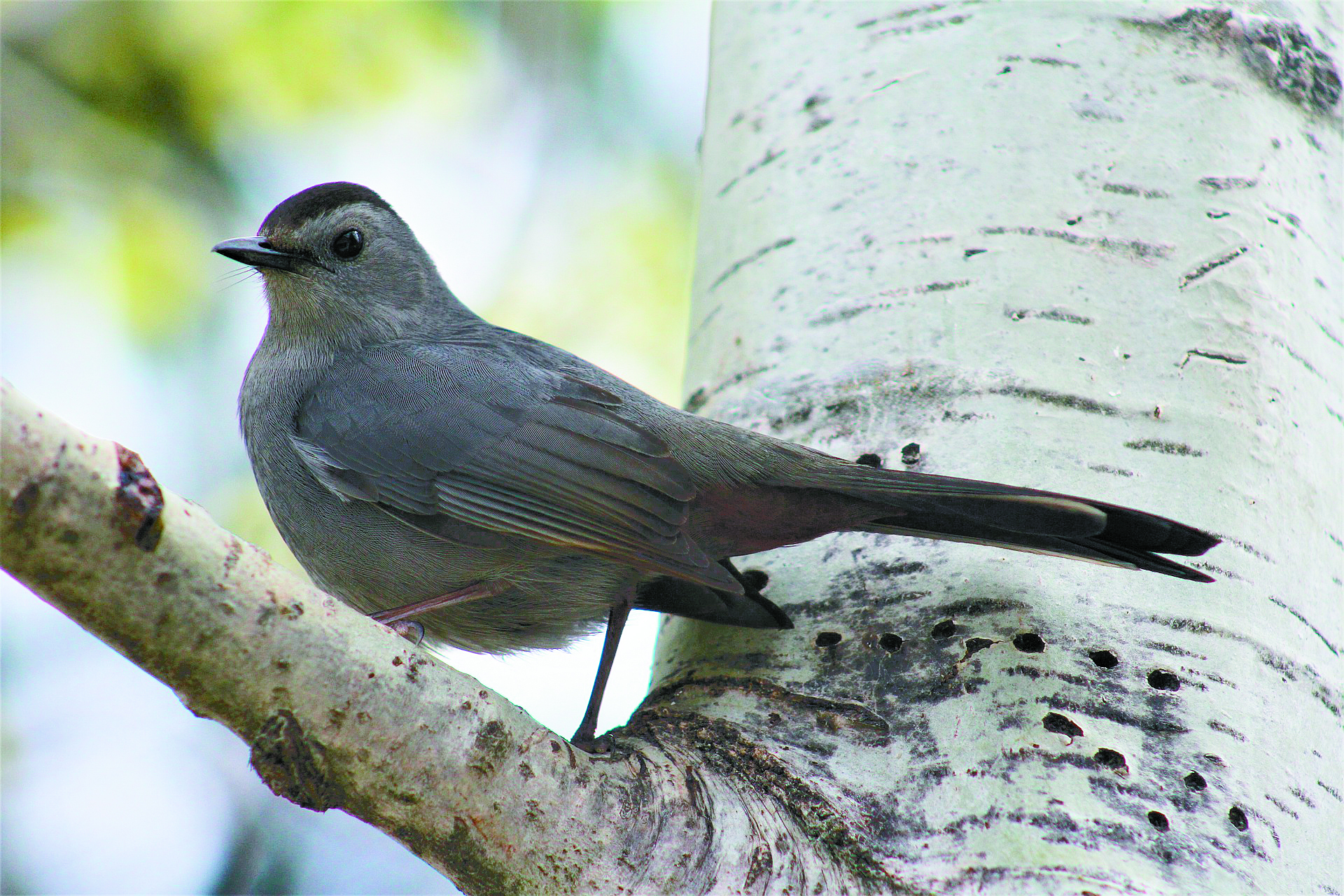
Catbirds are part of a family related to thrushes that are known as “mimic thrushes.” Besides its surprisingly accurate rendition of a feline, the catbird has several other common vocalizations. Despite their shy nature, they’re extremely curious. Imitating their calls or simply producing a squeaky sound will usually persuade the bird to move out of cover and search for the source of the noise.
Catbirds are part of the annual fall exodus that includes species like rose-breasted grosbeaks, scarlet tanagers, Baltimore orioles and indigo buntings, but because they lack the brilliant plumages of these other birds their passage would probably go unnoticed if not for the fact they are extremely noisy.
Catbirds do get quieter during the nesting season when they take up the serious business of raising young, but after that annual task is completed they immediately slide back into their crotchety vocal habits.
Catbirds are experts at concealing themselves from prying eyes. The bird’s charcoal gray plumage, unbroken except for a patch of maroon feathers beneath the tail, blends into the shadowy sections of the tangles and thickets where they like to lurk. However, even when gray catbirds are reluctant to be seen, they’re almost eager to be heard. As indicated, the catbird is extremely vocal with several calls and songs in its repertoire, including the rather faithful rendering of a fussy cat’s meow that provides this bird its common name.
They are related to thrashers and mockingbirds, but scientists find them just different enough to warrant placing the gray catbird in its own genus.
A relative known as the black catbird, which ranges throughout the Yucatan Peninsula of Mexico as well as northern Guatemala and northern Belize, also belongs to a genus of its own. Both catbirds are classified as “mimic thrushes,” or Mimidae, of which there are about 30 species in the New World.
There is also a totally unrelated family of catbirds that ranges through Australia, Asia and parts of Africa. Some of these birds include the ochre-breasted catbird, tooth-billed catbird and spotted catbird.
The gray catbird is not as an accomplished mimic as some of its relatives, such as the Northern mockingbird. Nevertheless, experts have documented that the gray catbird can produce more than 100 different sounds. Males have motivation to constantly expand their repertoire, however, as doing so increases the likelihood of attracting a mate. They imitate other birds, but some have been recorded imitating frogs and other non-avian singers.
An occasional catbird enjoys surprising longevity. The oldest known gray catbird was at least 17 years, 11 months old when it was recaptured and rereleased during banding operations in New Jersey in 2001, according to the website All About Birds. That individual had been banded originally in Maryland in 1984.
I will miss the catbirds once they depart farther south for the winter, although occasionally a few hardy individuals linger into November and December in the region.
Other birds, including warblers, hummingbirds and most flycatchers will soon take their leave until next spring. Try to enjoy them before they decamp.
•••
To share a sighting, ask a question or make a comment, please email me at ahoodedwarbler@aol.com.

 Our Fine Feathered Friends