Monthly Archives: February 2024

Region is home for several species of hawks

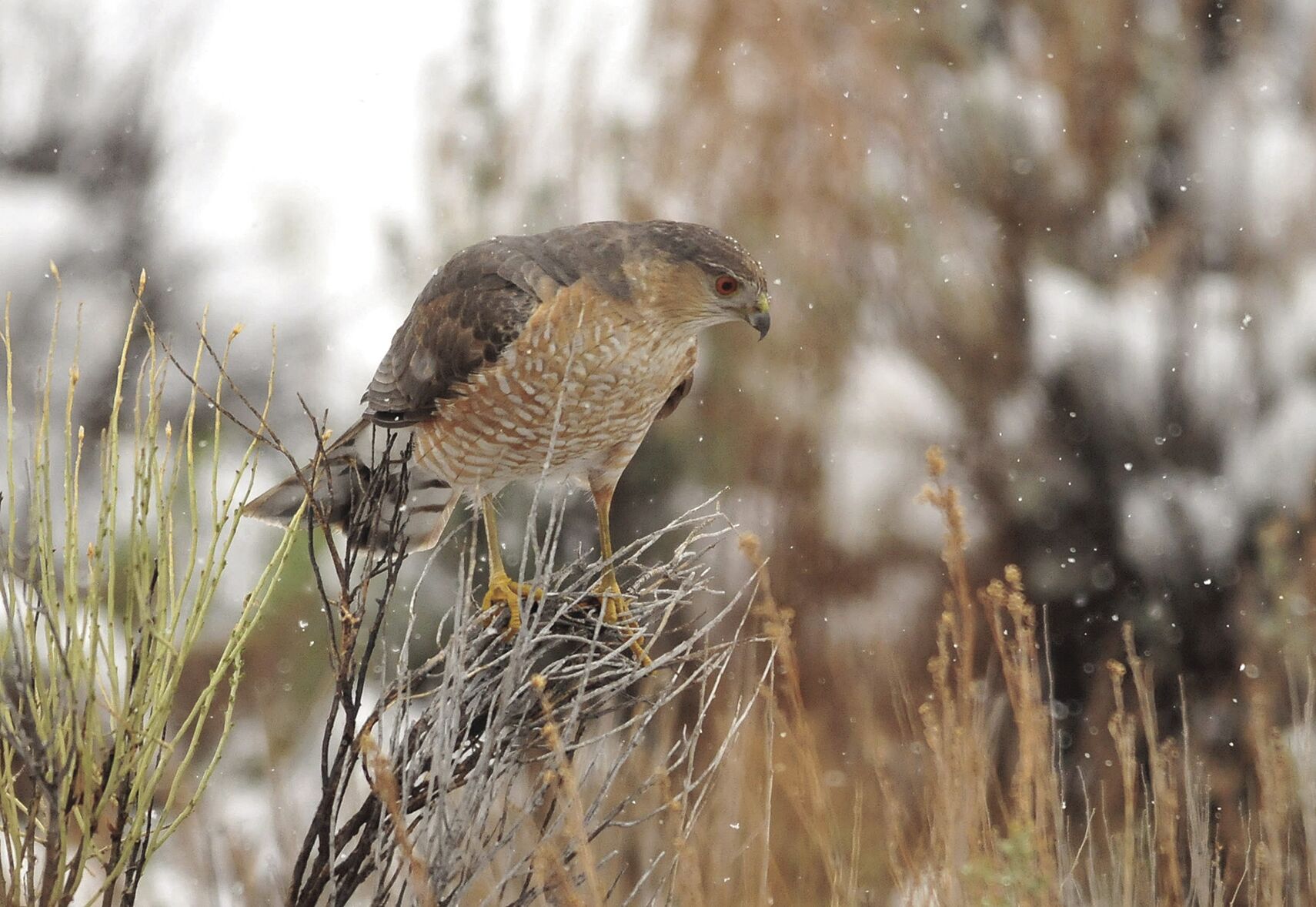
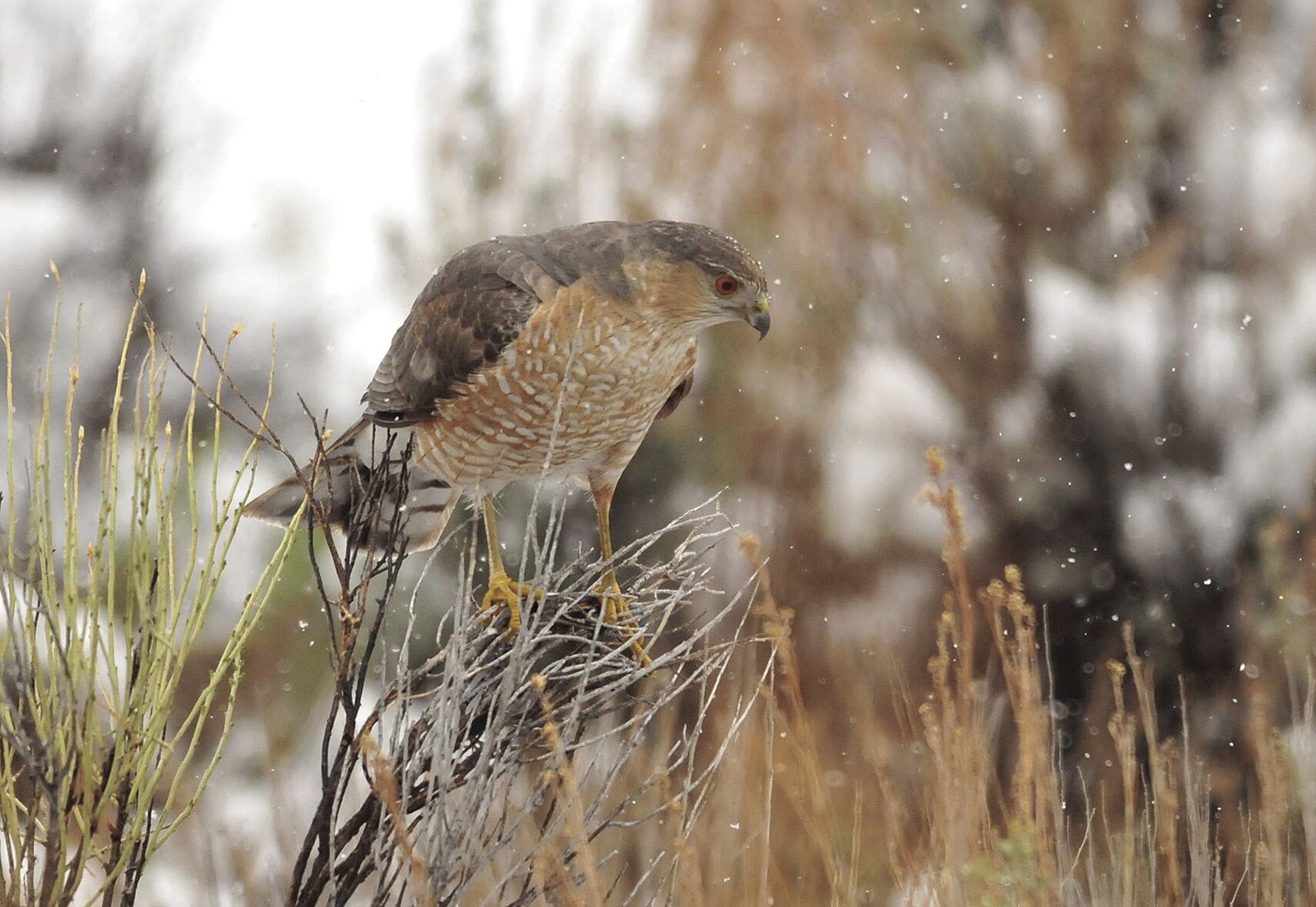
Tom Koerner/USFWS • An adult Cooper’s hawk, such as this individual, is a crow-sized woodland raptor that breeds throughout much of the United States, southern Canada and northern Mexico.

Barbara Lake, a resident in Hampton, emailed me recently to share a sighting of a large hawk in her yard.

“This hawk was in our yard today and flew up to a tree when I opened the door,” she wrote. “(Its) back and the back of the head are black and the rest appears to be white. He didn’t cooperate by turning around.”

Barbara enclosed some photos with her email. I’ve known Barbara for about 20 years. We first met when she invited me to her home to view some nesting bluebirds on a television screen. She had placed nest cams in some of her bluebird nesting boxes, capturing real-time footage of the nesting activity of these songbirds.

I’ve enjoyed some observations of the region’s larger raptors, including red-tailed hawks and red-shouldered hawks, as winter has settled in for the long haul. I’ve also spotted a few American kestrels.

Based on the raptor’s relatively long tail in the photos provided by Barbara, I hazarded a guess that her visiting raptor was a Cooper’s hawk.

Anyone who travels along the region’s Interstate Highway System has probably noticed hawks perched in trees or on utility lines adjacent to the roadway. The section of Interstate 26 that runs between Unicoi and Johnson City is often a productive area for keeping alert for raptors. The raptor I have most often observed along this stretch of road is the red-tailed hawk, although I have also observed Cooper’s hawk, sharp-shinned hawk and American kestrel. In the time of spring and fall migration, it’s also possible to observe broad-winged hawks.
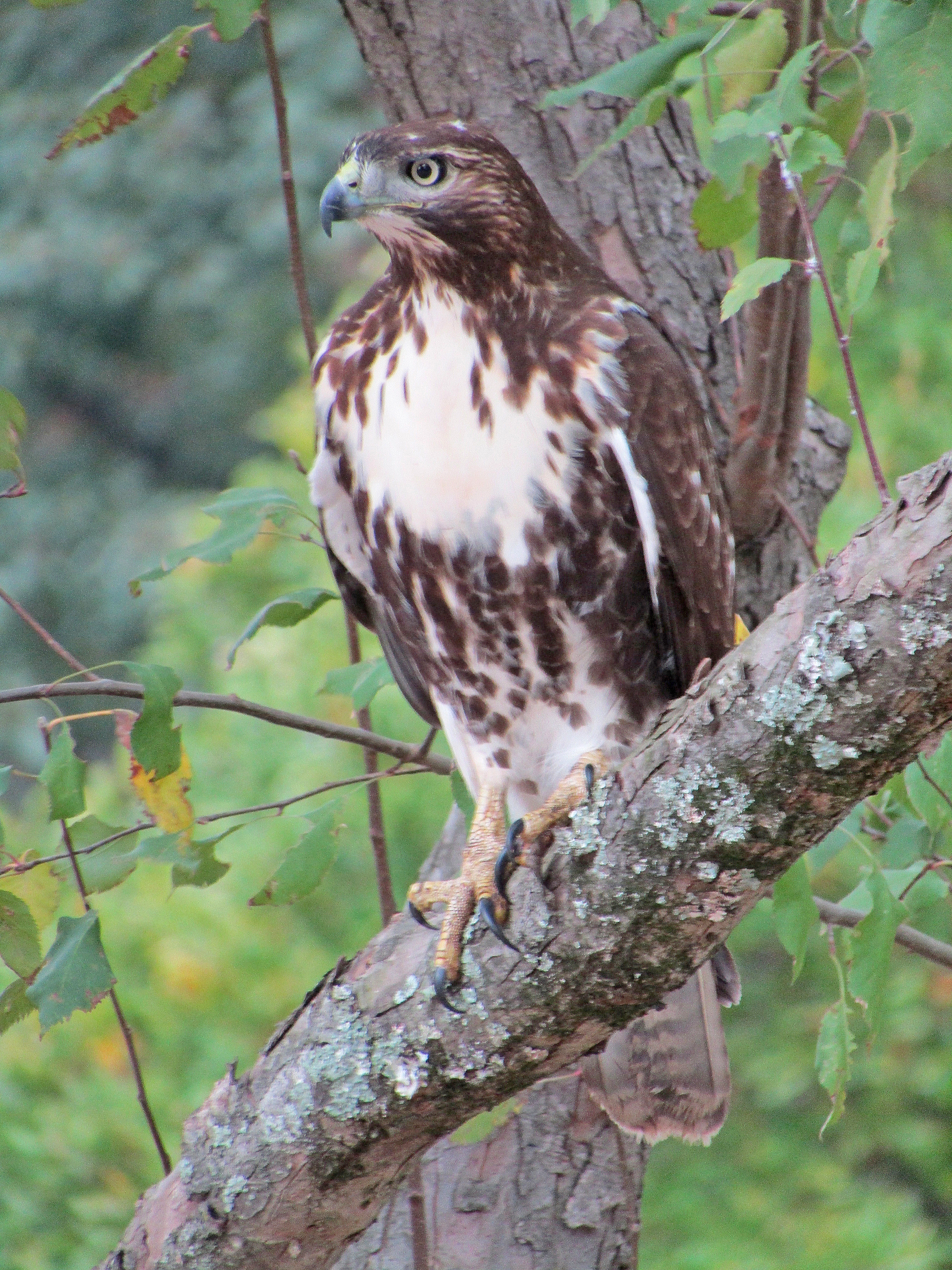
Photo by Bryan Stevens • Raptors, like this red-tailed hawk, are  plentiful oin the region.

The red-tailed hawk is named for its prominent red tail. However, only adults show the characteristic red tail. The affinity red-tailed hawks demonstrate for roadsides is a double-edged sword. Viewing a large hawk from your car is an easy way to watch birds. For inexperienced or careless raptors, however, roadside living is often rife with the chance for a collision with a car or truck. The red-tailed hawk, which prefers open countryside, is attracted to the margins of roads and highways because these locations also attract their favorite prey, which includes rodents like rats, squirrels and mice and other small mammals such as rabbits.

Human behavior contributes to some of the problems that hawks encounter in the zone that brings them too close for comfort to motorized vehicles. When people toss trash from a car, the scent of the litter will lure curious and hungry rodents. In turn, hunting hawks are brought to the edges of roads in search of their preferred prey, increasing the likelihood of colliding with automobiles.

The Cooper’s hawk is a large accipiter hawk. A smaller relative, the sharp-shinned hawk, is also found in the region. The accipiter hawks are graceful and aerodynamic, designed to pursue prey through woodlands. Buteo hawks, such as the red-tailed hawk and red-shouldered hawk, are more of an ambush predator and not designed for the agile maneuvers that the accipiters can use to capture prey.

Some of the buteo species have adapted to life on islands, including the Galapagos hawk and the Hawaiian hawk. Some of these hawks have quite descriptive names, including the white-throated hawk, gray-lined hawk, zone-tailed hawk and short-tailed hawk. Outside the United States, raptors in the buteo genus are often known as “buzzards.” When the first European colonists came to the New World, they applied the term buzzard to types of native vultures as well as the large raptors like Swainson’s hawk and broad-winged hawk that reminded them of the ones back in Europe.

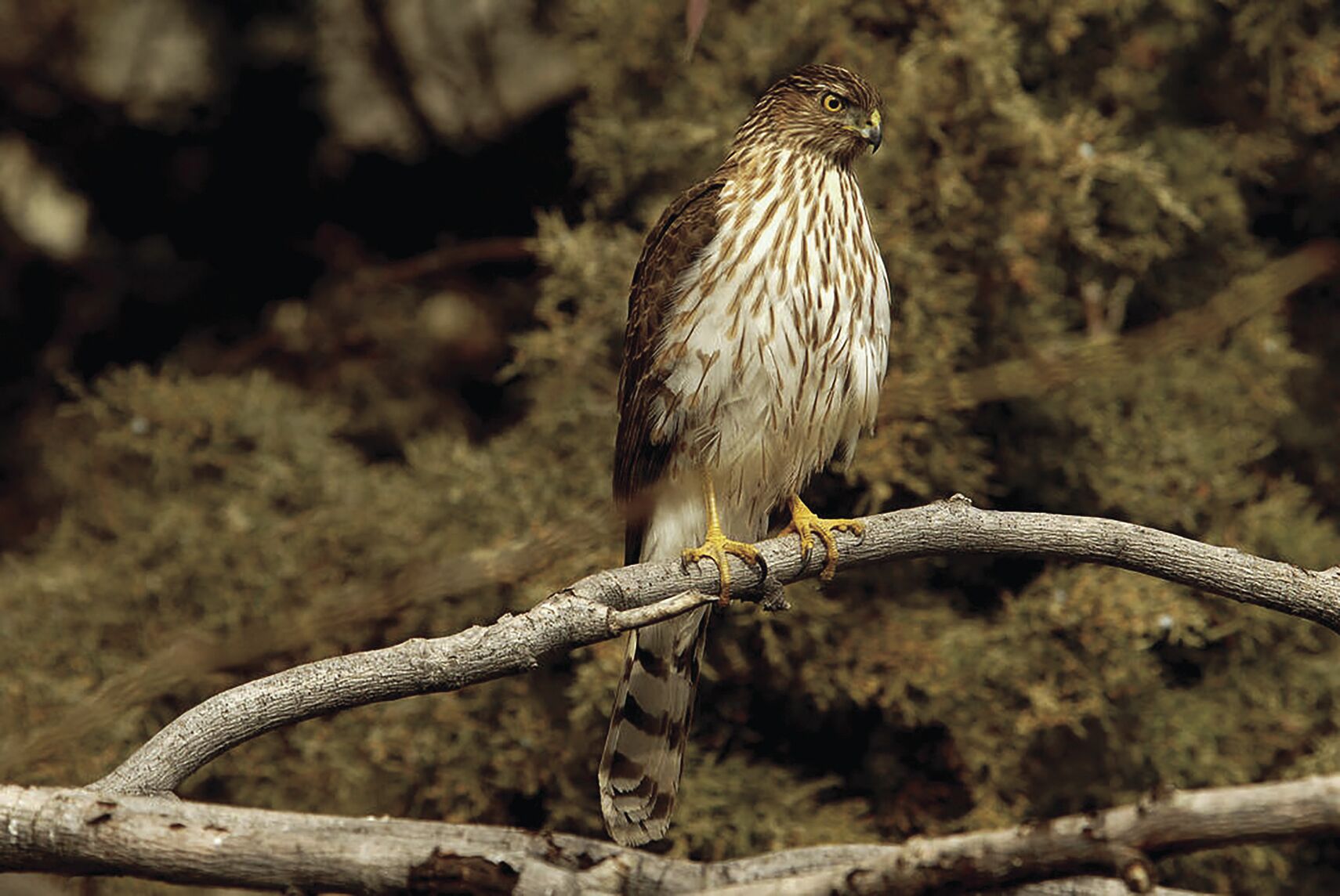
USFWS • An immature Cooper’s hawk perches on a branch in a tree located in the Klamath Basin National Wildlife Refuge Complex.

Accipiter hawks are also widespread. Accipiter is a genus of birds of prey in the family Accipitridae. With 49 recognized species, it is the most diverse genus in its family. Most species are called goshawks or sparrowhawks, although almost all New World species (excepting the Northern goshawk) are simply known as hawks.

Most accipiter hawks, including Cooper’s and sharp-shinned, prey mostly on other birds. The website All About Birds notes that small songbirds are usually safe around a Cooper’s hawk. Medium-sized birds, however, are not. Studies list European starlings, mourning doves and rock pigeons as common prey. Other birds that are often targeted by Cooper’s hawk include American robins, blue jay, Northern flicker, quail, grouse and pheasants. Cooper’s hawks sometimes rob nests and also eat chipmunks, rabbits, mice, squirrels and bats. According to All About Birds, mammals are more common in diets of Cooper’s hawks in the western United States.

Some of the more descriptively named accipiter hawks include crested goshawk, grey-bellied hawk, spot-tailed sparrowhawk, plain-brested hawk and little sparrowhawk.

All too often, our large hawks don’t receive the love they deserve from the public. They may even run afoul of misinformed individuals who may regard all predatory birds as “bad.” The reality is that all hawks are valuable components of a healthy, working ecosystem, with each species filling a certain niche.

•••

To share a sighting, ask a question or make a comment, email me at ahoodedwarbler@aol.com.


Couple achieves birding milestone with help of red-breasted nuthatch

Photo from Pixabay • The red-breasted nuthatch is more common some winters but can be absent in others.

Two good friends and fellow members of the Elizabethton Bird Club, Brookie and Jean Potter, achieved a personal birding milestone at the end of January.

Both Brookie and Jean managed to see 100 birds in the first month of 2024 in the five-county area. Brookie had already accomplished this feat many years ago, but Jean had never been able to do it — until now.

“We did it today on the last day of the month,” she shared in an email.

Brookie ended the month with 101 species of birds, and Jean reached 100.

Their final bird of the month was the red-breasted nuthatch. They had to put in some effort to find the species, finally traveling to Carver’s Gap on the state line between North Carolina and Tennessee on Roan Mountain.

Photo by Bryan Stevens • A red-breasted nuthatch seeks a morsel from seeds and peanuts at a feeder.

“We kept waiting for this bird to come to our feeder, but when it didn’t come, we had to go to Carver’s Gap, which had snow, fog and a temperature of 29 degrees,” she said.

According to Jean, they located two of these little nuthatches close to the parking area.

“The things we do to find birds,” Jean remarked.

If they can find another 100 or more species of birds in the remaining 11 months of 2024, the couple will be eligible for the Howard P. Langridge Award. The Elizabethton Bird Club presents this award to any member who manages to see 200 or more species in a single year in the five-county area.

The award commemorates the contributions of the late Langridge to birding in the region. In 2000, Langridge broke the record for most species seen in a single year in Northeast Tennessee. The record was later broken again by Rick Knight.

In our region, the stubby red-breasted nuthatch is another member of a family that often finds its way to our yards. Smaller than the related white-breasted nuthatch and, as far as I can tell, complacent in the company of chickadees and titmice, the red-breasted nuthatch is always a welcome visitor.

This little feeder visitors has a telltale “yank yank” call that it produces when excited that sounds very much like a little tin horn. The red-breasted nuthatch, perhaps because it spends so much of the year in more remote areas, can also be amazingly tame when it pays a winter visit.

Photo by Bryan Stevens • A red-breasted nuthatch clings to the mesh of a feeding tube to get at the peanuts contained within.

Both red-breasted and white-breasted nuthatches can be attracted to feeders by offering peanuts, sunflower seeds and suet. They are also cavity- nesting birds but are more reluctant about accepting a nesting box as a place to rear young. They will gladly accept an old woodpecker hole or other natural cavity in a tree.

The website All About Birds notes that red-breasted nuthatches are common, and their populations have increased throughout most of their range between 1966 and 2019, according to the North American Breeding Bird Survey.

The website also points out that Partners in Flight estimates a global breeding population of 20 million and rates the species a 6 out of 20 on the Continental Concern Score, indicating a species of low conservation concern.

While the red-breasted nuthatch is a small bird, some members of its family aren’t so petite. On the other end of the size scale is the appropriately named giant nuthatch, which reaches a length of almost 8 inches. The giant nuthatch ranges through China, Thailand and Burma and is bigger than a downy woodpecker, another of our more common visitors at backyard feeders in our region.

Worldwide, there are about 25 species of nuthatches, some of which have surprisingly descriptive names for birds that spend most of their lives creeping in obscurity along the trunks and branches of trees. Some of the more creative common names for these little birds include beautiful nuthatch, velvet-fronted nuthatch, sulphur-billed nuthatch, chestnut-bellied nuthatch, snowy-browed nuthatch and chestnut-vented nuthatch.

These birds are named “nuthatch” for the habit of some species to wedge a large seed in a crack and hack at it with their strong bills.

In some winters, red-breasted nuthatches can be quite common in the region. That’s not been the case this winter, as shown by the difficulty Brookie and Jean had in locating this bird.

•••

For those interested, there’s a great chance to get outdoors and look for red-breasted nuthatches and other birds. The annual Great Backyard Bird Count will be held Friday, Feb. 16, through Monday, Feb. 19.

It’s easy to take part in this global survey of bird populations all around the planet.

The first step is to choose a location for looking.

A favorite park, walking trail or your own backyard will work.

Next, actively watch for birds for 15 minutes or more, at least once over the four days from Feb. 16-19.

You will need to identify all the birds you see or hear within your planned time/location and use the best tool for sharing your bird sightings.

For a beginning bird admirer and those who are new to bird identification, try using the Merlin Bird ID app to pinpoint what birds you are seeing or hearing.

If you have participated in previous GBBCs before and want to record numbers of birds, try the eBird Mobile app or enter your bird list on the eBird website using a desktop/laptop computer.

If you already contribute to Merlin or eBird, continue what you are doing. All entries over the 4-day period count towards GBBC.

For more information on the GBBC, visit www.birdcount.org.

•••

To share a sighting, ask a question or make a comment, email me at ahoodedwarbler@aol.com.

Red-breasted nuthatch helps couple achieve milestone

Photo by Bryan Stevens • A red-breasted nuthatch clings to the mesh of a feeding tube to get at the peanuts contained within.

Good friends and fellow members of the Elizabethton Bird Club, Brookie and Jean Potter achieved a personal birding milestone at the end of January.

Both Brookie and Jean managed to see 100 birds in the first month of 2024 in the five-county area. Brookie had already accomplished this feat many years ago, but Jean had never been able to do it – until now.

“We did it today on the last day of the month,” she shared in an email.

Brookie ended the month with 101 species of birds, and Jean reached 100.

Their final bird of the month was red-breasted nuthatch. They had to put in some effort to find the species, finally traveling to Carver’s Gap on the state line between North Carolina and Tennessee on Roan Mountain.

“We kept waiting for this bird to come to our feeder, but when it didn’t come, we had to go to Carver’s Gap, which had snow, fog and a temperature of 29 degrees,” she said.

According to Jean, they located two of these little nuthatches close to the parking area.

“The things we do to find birds,” Jean remarked.

If they can find another 100 or more species of birds in the remaining 11 months of 2024, the couple will be eligible for the Howard P. Langridge Award. The Elizabethton Bird Club presents this award to any member who manages to see 200 or more species in a single year in the five-county area. The award commemorates the contributions of the late Langridge to birding in the region. In 2000, Langridge broke the record for most species seen in a single year in Northeast Tennessee. The record was later broken again by Rick Knight.

Photo by Bryan Stevens • A red-breasted nuthatch picks through seeds and peanuts at a feeder.

In our region, the stubby red-breasted nuthatch is another member of a family that often finds its way to our yards. Smaller than the related white-breasted nuthatch and, as far as I can tell, complacent in the company of chickadees and titmice, the red-breasted nuthatch is always a welcome visitor.

This little feeder visitors has a tell-tale “yank yank” call that it produces when excited that sounds very much like a little tin horn. The red-breasted nuthatch, perhaps because it spends so much of the year in more remote areas, can also be amazingly tame when it pays a winter visit.

Both red-breasted and white-breasted nuthatches can be attracted to feeders by offering peanuts, sunflower seeds and suet. They are also cavity-nesting birds, but are more reluctant about accepting a nesting box as a place to rear young. They will gladly accept an old woodpecker hole or other natural cavity in a tree.

The website All About Birds notes that red-breasted nuthatches are common, and their populations have increased throughout most of their range between 1966 and 2019, according to the North American Breeding Bird Survey.

The website also points out that Partners in Flight estimates a global breeding population of 20 million and rates the species a 6 out of 20 on the Continental Concern Score, indicating a species of low conservation concern.

While the red-breasted nuthatch is a small bird, some members of its family aren’t so petite. On the other end of the size scale is the appropriately named giant nuthatch, which reaches a length of almost eight inches. The giant nuthatch ranges through China, Thailand and Burma and is bigger than a downy woodpecker, another of our more common visitors at backyard feeders in our region.

Worldwide, there are about 25 species of nuthatches, some of which have surprisingly descriptive names for birds that spend most of their lives creeping in obscurity along the trunks and branches of trees. Some of the more creative common names for these little birds include beautiful nuthatch, velvet-fronted nuthatch, sulphur-billed nuthatch, chestnut-bellied nuthatch, snowy-browed nuthatch and chestnut-vented nuthatch.

These birds are named “nuthatch” for the habit of some species to wedge a large seed in a crack and hack at it with their strong bills.

In some winters, red-breasted nuthatches can be quite common in the region. That’s not been the case this winter, as shown by the difficulty Brookie and Jean had in locating this bird.

•••

For those interested, there’s a great chance to get outdoors and look for red-breasted nuthatches and other birds. The annual Great Backyard Bird Count will be held Friday, Feb. 16, through Monday, Feb. 19.

It’s easy to take part in this global survey of bird populations all around the planet.

The first step is to choose a location for looking. A favorite park, walking trail or your own back yard will work.

Next, actively watch for birds for 15 minutes or more, at least once over the four days from February 16–19.

You will need to identify all the birds you see or hear within your planned time/location and use the best tool for sharing your bird sightings.

For a beginning bird admirer and those who are new to bird identification, try using the Merlin Bird ID app to pinpoint what birds you are seeing or hearing.

If you have participated in previous GBBCs before and want to record numbers of birds, try the eBird Mobile app or enter your bird list on the eBird website using a desktop/laptop computer.

If you already contribute to Merlin or eBird, continue what you are doing. All entries over the 4-day period count towards GBBC.

For more information on the GBBC, visit http://www.birdcount.org.

•••

To share a sighting, ask a question or make a comment, email me at ahoodedwarbler@aol.com.


Melodic song sparrow makes a good neighbor in any season

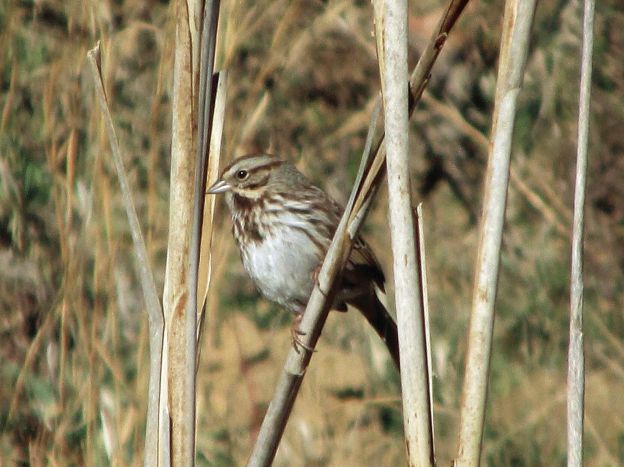
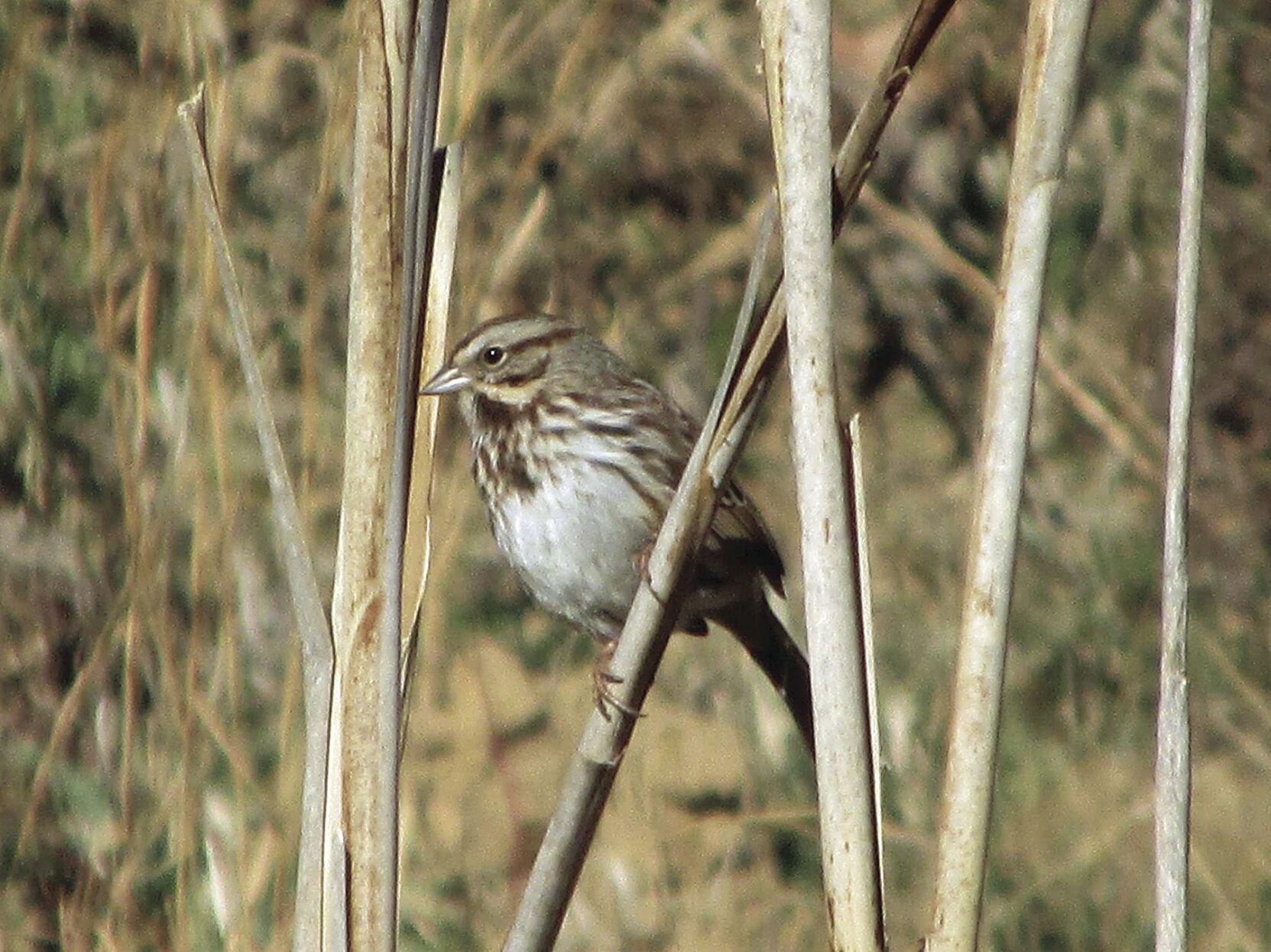
Photo by Bryan Stevens • Song sparrows show a stripe breast that comes together in a large, central dot. This field mark is diagnostic in distinguishing the song sparrow from other little brown birds.

Recent cold and snow meant elevated activity at my bird feeders. Among the birds flocking to my feeders were several species of sparrows, including white-throated sparrow, song sparrow and dark-eyed junco.

Other sparrows in the region include field sparrow, chipping sparrow, swamp sparrow and white-crowned sparrow.

The white-crowned sparrow and the white-throated sparrow are both members of the genus known as Zonotrichia, which refers to two ancient Greek words for zone and hair, which refers to the pattern of streaks on the backs of these five sparrow species. The Zonotrichia sparrows belong to a large group of birds known as Passerellidae, or American sparrows, which also includes birds such as juncos, towhees and brush finches.

The song sparrow, unlike some of the other sparrows that made appearances at my feeders, is a year-round resident in the region.

Song sparrows, according to the website All About Birds, eat many insects and other invertebrates in the summer, as well as seeds and fruits in all seasons.

All About Birds also makes note of the fact that this widespread sparrow occurs in a variety of habitats, including tidal marshes, arctic grasslands, desert scrub, pinyon pine forests, aspen parklands, prairie shelterbelts, Pacific rainforest, chaparral, agricultural fields, overgrown pastures, freshwater marsh and lake edges, forest edges and suburbs.

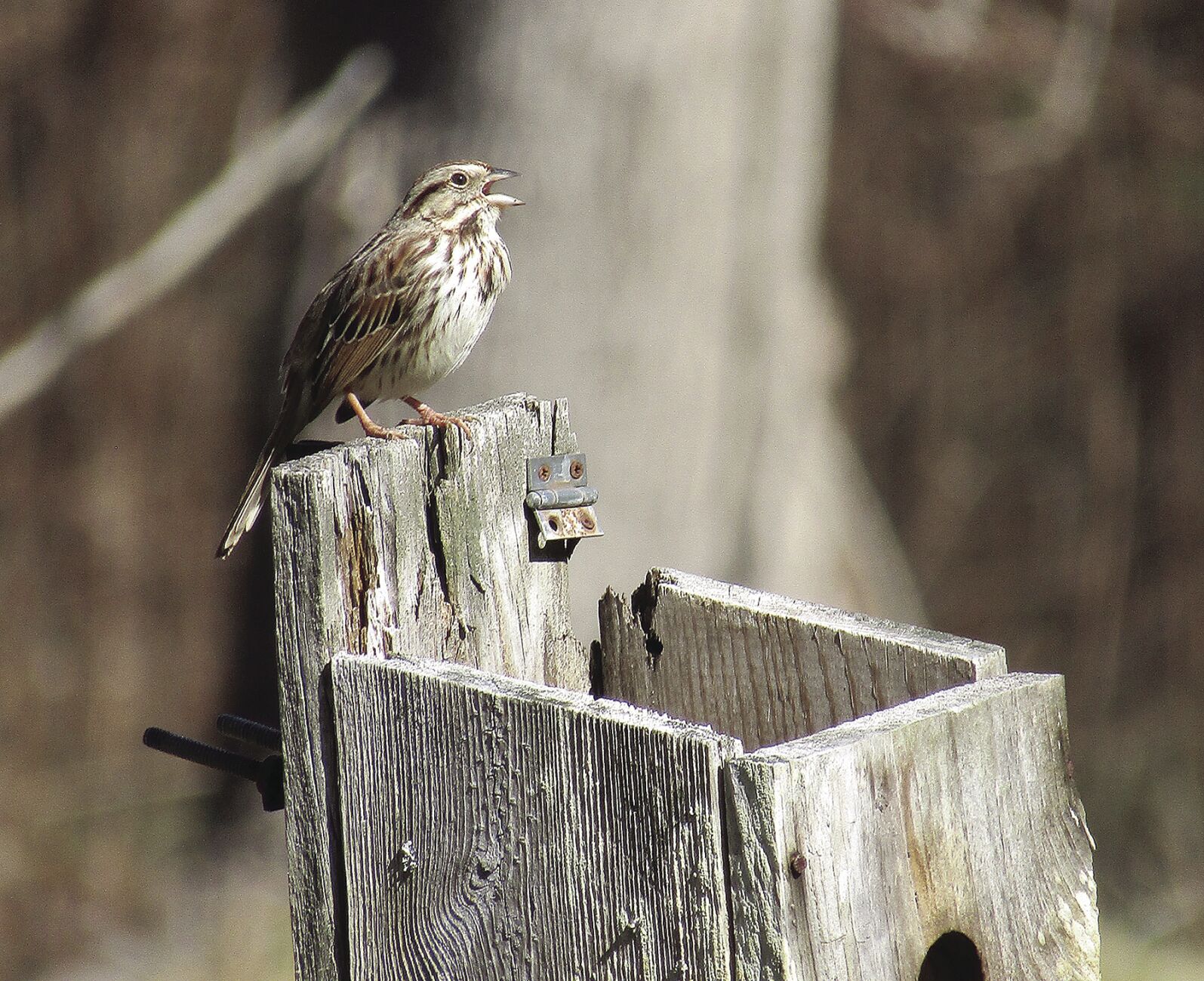
Photo by Bryan • A song sparrow sings from the perch of a dilapidated bird box.

The scientific name for the song sparrow is Melospiza melodia, which translated from the Greek means “melodic song-finch.” It’s an apt name for a persistent, enthusiastic singer. The commonplace nature of the bird also makes it easy to learn to detect and identify the bird by its song alone.

According to All About Birds, male song sparrow use song to attract mates as well as defend territory. Laboratory studies have shown that the female song sparrow is attracted not just to the song itself, but to how well it reflects the ability of the male to learn.

Other sparrows produce well-known songs. Many Americans render the song of the white-throated sparrow as “Ol’ Sam Peabody, Peabody, Peabody.” For those living north of the border, however, the white-throated sparrow sings “O Canada, O Canada, O Canada.”

No matter how you translate this sparrow’s song, it’s a sweet and welcome addition to the spring aural landscape.

Some of the more descriptive names for American sparrows include orange-billed sparrow, white-eared ground sparrow, green-backed sparrow, olive sparrow, cinnamon-tailed sparrow, five-striped sparrow and golden-winged sparrow.

Many sparrows prefer to forage for food on the ground. It’s often helpful to purchase a supply of millet seed. When filling feeders with sunflower seeds, scatter a couple of handfuls of millet seed on the ground beneath the feeders or at the edge of a brushy area. Sparrows like to have quick access to dense cover, so they will feed more securely if the scattered seeds are within quick reach of shelter.

Although they are fairly common winter visitors in the region, white-throated sparrows, dark-eyed juncos and white-crowned sparrows depart the area in spring.

With the song sparrow, it’s not difficult to realize why the sparrows are often lumped together under the categorization of “little brown birds.”

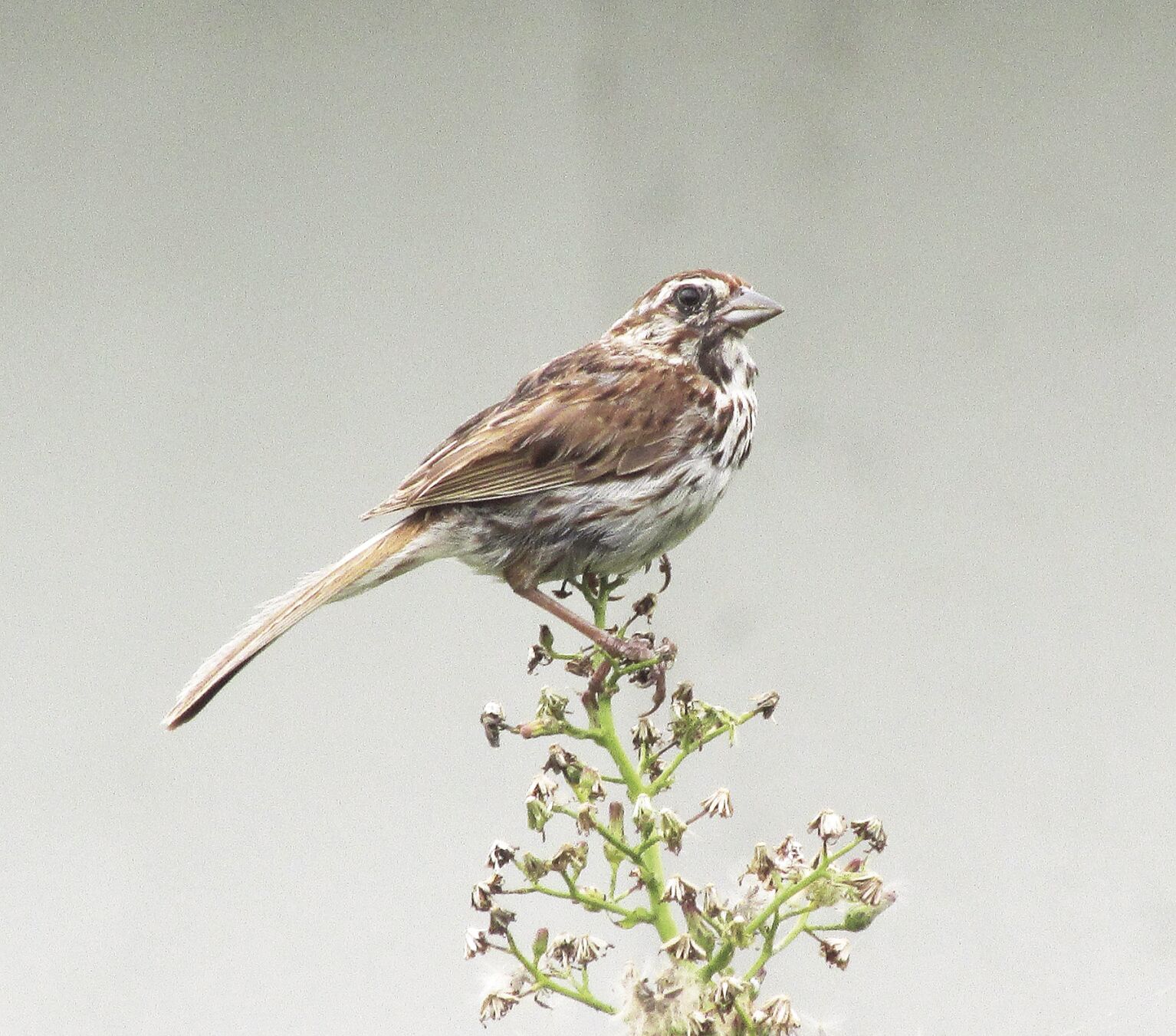
The adult song sparrow has brown upperparts with dark streaks on the back and are white underneath with dark streaking and a dark brown spot in the middle of the breast. That dark spot is often considered a field mark that makes identifying this bird easier in the field. The song sparrow has a brown cap and a long brown rounded tail. Their face is gray with a brown streak through each eye.

White-crowned sparrows, in contrast to the song sparrow, are medium-sized birds with considerable gray on the breast and back of the neck. Adults of both sexes are adorned with bold black and white head stripes, which gives this bird its common name. Thanks to this distinctive feature, this sparrow truly stands out among a family of rather drab birds.

The white-crowned sparrow is known by the scientific name Zonotrichia leucophrys, which translates into English from Ancient Greek as “white eyebrow.”

Sparrows can be a challenge for beginners, but the winter season is a good time to learn how to differentiate these feeder visitors. The lure of food makes it possible to draw the sparrows in close for observation.

The sparrows will eat a variety of seeds, but I’ve had the best luck with black oil sunflower seeds. Just keep in mind that sparrows are ground feeders. It pays to also scatter some seeds directly on the ground for them. They will scratch and kick with their legs as they forage for the seeds we provide them during wintry days.

Once spring arrives, song sparrows will remain in your yards and gardens. They nest several times a season, so there’s the added opportunity of watching these little birds tend their young. They’re never going to compete with our more colorful birds, but song sparrows make great neighbors.

•••

Mary Anna Wheat will present a program on a trip to Arizona, Utah, Colorado and New Mexico in late September and early October 2023 at the next meeting of the Elizabethton Bird Club.

She traveled with a friend and former co-worker from Sept. 19 to Oct. 16, 2023, in those four states. Their focus was on scenery, archeology (Wheat’s friend is an archaeologist with experience doing archaeological work at Canyon de Chelly National Monument) and the annular solar eclipse. Birding was incidental, although Wheat noted that they saw or heard more than 60 species.

The club’s meeting will be held Tuesday, Feb. 6, at the Northeast State Community College’s Elizabethton campus at 7 p.m. The front desk can direct visitors to the meeting room.

•••

Photo by Bryan Stevens • A song sparrow perches on a weed stalk near a river.

Bryan Stevens has been writing about birds and birding since 1995. Email him at ahoodedwarbler@aol.com to ask a questing, share a sighting or make a comment.

Region provides home for several species of hawks

Tom Koerner/USFWS * An adult Cooper’s hawk, such as this individual, is a crow-sized woodland raptor that breeds throughout much of the United States, southern Canada and northern Mexico.

Barbara Lake, a resident in Hampton, emailed me recently to share a sighting of a large hawk in her yard.

“This hawk was in our yard today and flew up to a tree when I opened the door,” she wrote. “(Its) back and the back of the head are black and the rest appears to be white. He didn’t cooperate by turning around.”

Barbara enclosed some photos with her email. I’ve known Barbara for about 20 years. We first met when she invited me to her home to view some nesting bluebirds on a television screen. She had placed nest cams in some of her bluebird nesting boxes, capturing real-time footage of the nesting activity of these songbirds.

I’ve enjoyed some observations of the region’s larger raptors, including red-tailed hawks and red-shouldered hawks, as winter has settled in for the long haul. I’ve also spotted a few American kestrels.

Based on the raptor’s relatively long tail in the photos provided by Barbara, I hazarded a guess that her visiting raptor was a Cooper’s hawk.

Anyone who travels along the region’s Interstate Highway System has probably noticed hawks perched in trees or on utility lines adjacent to the roadway. The section of Interstate 26 that runs between Unicoi and Johnson City is often a productive area for keeping alert for raptors. The raptor I have most often observed along this stretch of road is the red-tailed hawk, although I have also observed Cooper’s hawk, sharp-shinned hawk and American kestrel. In the time of spring and fall migration, it’s also possible to observe broad-winged hawks.

USFWS * An immature Cooper’s hawk perches on a branch in a tree located in the Klamath Basin National Wildlife Refuge Complex.

The red-tailed hawk is named for its prominent red tail. However, only adults show the characteristic red tail. The affinity red-tailed hawks demonstrate for roadsides is a double-edged sword. Viewing a large hawk from your car is an easy way to watch birds. For inexperienced or careless raptors, however, roadside living is often rife with the chance for a collision with a car or truck. The red-tailed hawk, which prefers open countryside, is attracted to the margins of roads and highways because these locations also attract their favorite prey, which includes rodents like rats, squirrels and mice and other small mammals such as rabbits.

Human behavior contributes to some of the problems that hawks encounter in the zone that brings them too close for comfort to motorized vehicles. When people toss trash from a car, the scent of the litter will lure curious and hungry rodents. In turn, hunting hawks are brought to the edges of roads in search of their preferred prey, increasing the likelihood of colliding with automobiles.

The Cooper’s hawk is a large accipiter hawk. A smaller relative, the sharp-shinned hawk, is also found in the region. The accipiter hawks are graceful and aerodynamic, designed to pursue prey through woodlands. Buteo hawks, such as the red-tailed hawk and red-shouldered hawk, are more of an ambush predator and not designed for the agile maneuvers that the accipiters can use to capture prey.

Some of the buteo species have adapted to life on islands, including the Galapagos hawk and the Hawaiian hawk. Some of these hawks have quite descriptive names, including the white-throated hawk, gray-lined hawk, zone-tailed hawk and short-tailed hawk. Outside the United States, raptors in the buteo genus are often known as “buzzards.” When the first European colonists came to the New World, they applied the term buzzard to types of native vultures as well as the large raptors like Swainson’s hawk and broad-winged hawk that reminded them of the ones back in Europe.

Accipiter hawks are also widespread. Accipiter is a genus of birds of prey in the family Accipitridae. With 49 recognized species, it is the most diverse genus in its family. Most species are called goshawks or sparrowhawks, although almost all New World species (excepting the Northern goshawk) are simply known as hawks.

Most accipiter hawks, including Cooper’s and sharp-shinned, prey mostly on other birds. The website All About Birds notes that small songbirds are usually safe around a Cooper’s hawk. Medium-sized birds, however, are not. Studies list European starlings, mourning doves and rock pigeons as common prey. Other birds that are often targeted by Cooper’s hawk include American robins, blue jay, Northern flicker, quail, grouse and pheasants. Cooper’s hawks sometimes rob nests and also eat chipmunks, rabbits, mice, squirrels and bats. According to All About Birds, mammals are more common in diets of Cooper’s hawks in the western United States.

Some of the more descriptively named accipiter hawks include crested goshawk, grey-bellied hawk, spot-tailed sparrowhawk, plain-brested hawk and little sparrowhawk.

All too often, our large hawks don’t receive the love they deserve from the public. They may even run afoul of misinformed individuals who may regard all predatory birds as “bad.” The reality is that all hawks are valuable components of a healthy, working ecosystem, with each species filling a certain niche.

•••

To share a sighting, ask a question or make a comment, email me at ahoodedwarbler@aol.com.