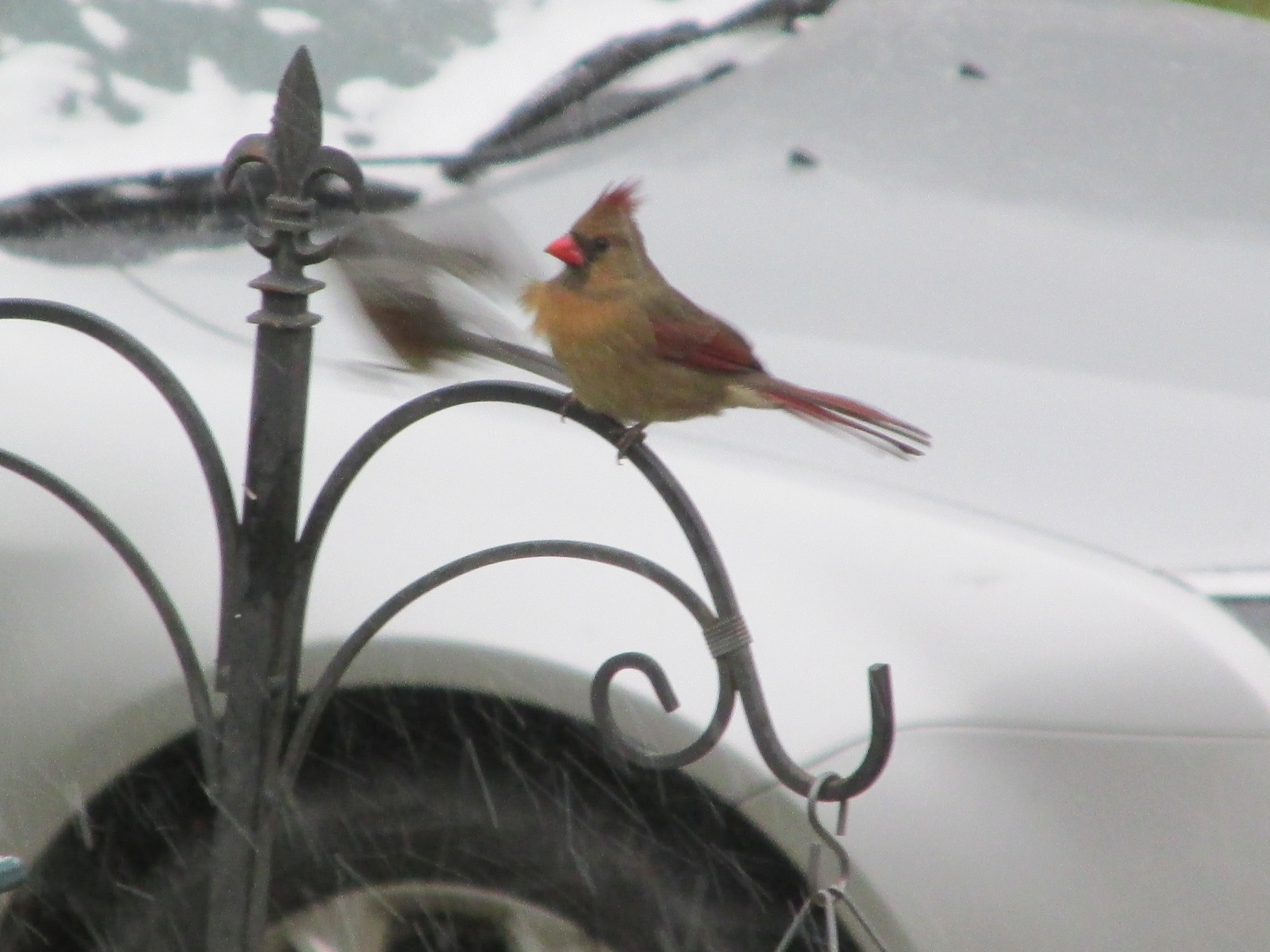
Category Archives: Cardinalis cardinalis

County’s Summer Bird Count finds 104 species

Members and friends of the Lee & Lois Herndon Chapter of the Tennessee Ornithological Society enjoyed a busy June, conducting its two annual summer bird counts last month. To the satisfaction of everyone involved, these counts encountered normal temperature after a spring count this past May that actually saw some snowfall when it was held on May 6.
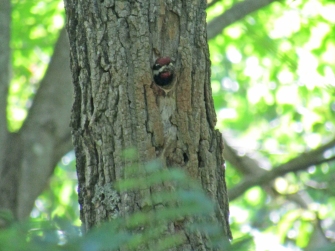
IMG_4140

Photo by Bryan Stevens • Nesting Yellow-bellied Sapsuckers can be found at higher elevations in Unicoi County. This woodpecker is usually considered a winter bird in the region, but a few nest in the mountains.

According to long-time compiler Rick Knight, the chapter holds these summer counts in the counties of Carter and Unicoi to provide a set of baseline data on the diversity and numbers of breeding birds in these two local counties. This supplements other summertime data collection projects, such as the long-running Breeding Bird Survey (one route in Carter County) and the Nightjar Survey (three local routes).

The Carter County Summer Bird Count was initiated shortly after the conclusion of the Tennessee Breeding Bird Atlas project. The Unicoi County Summer Bird Count’s origins are more recent, with this survey making its debut in June of 2014. The fourth consecutive Unicoi County Summer Count was held June 17 with 21 observers in five parties looking for birds on Unaka Mountain, as well as such locations as Erwin, Limestone Cove and Flag Pond. Morning weather was favorable, but scattered rain in the afternoon hindered some efforts. A total of 104 species were tallied, down slightly from the three-year average of 111 species. Highlights included a Bald Eagle, Merlin and six Yellow-bellied Sapsuckers, including a nest with young. A total of 20 species of warblers were tallied, including Swainson’s Warbler, Magnolia Warbler, Blackburnian Warbler and Prairie Warbler. Other notable birds include Hermit Thrush and Blue Grosbeak.

I took part on the count, looking for birds in the Limestone Cove area of the county with Brookie and Jean Potter, Charles Moore, and David and Connie Irick. Beyond bird, we saw other wildlife, including skunks, white-tailed deer, rabbits, groundhogs and various butterflies.

IMG_4146

Photo by Bryan Stevens • A young Red-winged Blackbird begs food from its attentive mother.

A highlight of our count took place near the Appalachian Trail along Highway 107 at Iron Mountain Gap where we found a pair of Yellow-bellied Sapsuckers delivering food to young inside a nesting cavity in a tree easily viewed from the roadside. In addition, a singing Chestnut-sided Warbler put on quite a show for a group of admiring birders enchanted with this bird’s dazzling plumage and energetic antics.

The total for the count follows:

Canada Goose, 73; Wood Duck, 22; Mallard; Wild Turkey, 19; Great Blue Heron, 13; and Green Heron, 3.
Black Vulture, 300; Turkey Vulture, 28; Sharp-shinned Hawk, 2; Cooper’s Hawk, 1; Bald Eagle, 1; Broad-winged Hawk, 7; Red-tailed Hawk, 4; American Kestrel, 2; and Merlin, 1.
Rock Pigeon, 67; Mourning Dove, 87; Great Horned Owl, 1; Barred Owl, 2; Chuck-will’s-Widow, 4; Whip-poor-will, 9; and Chimney Swift, 61.
Ruby-throated Hummingbird, 15; Belted Kingfisher, 4; Red-bellied Woodpecker, 13; Yellow-bellied Sapsucker, 6; Downy Woodpecker, 10; Hairy Woodpecker, 3; Northern Flicker, 7; and Pileated Woodpecker, 8.
Eastern Wood-Pewee, 7; Acadian Flycatcher, 24; Eastern Phoebe, 30; Great Crested Flycatcher, 3; and Eastern Kingbird, 14.
White-eyed Vireo, 4; Yellow-throated Vireo, 1; Blue-headed Vireo, 26; Red-eyed Vireo, 95; Blue Jay, 53; American Crow, 88; Fish Crow, 7; and Common Raven, 7.
Northern Rough-winged Swallow, 36; Purple Martin, 14; Tree Swallow, 70; Barn Swallow, 77; and Cliff Swallow, 149.
Carolina Chickadee, 51; Tufted Titmouse, 43; Red-breasted Nuthatch, 1; White-breasted Nuthatch, 18; Brown Creeper, 3; House Wren, 14; Carolina Wren, 42.
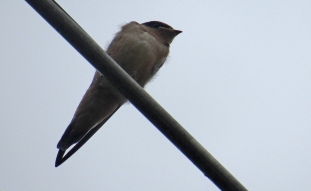
IMG_4172

Photo by Bryan Stevens • Most swallows, like this Barn Swallow, have fledged and will join their parents in migrating south in the coming weeks of late summer.

Blue-gray Gnatcatcher, 5; Golden-crowned Kinglet, 7; Eastern Bluebird, 33; Veery, 25; Hermit Thrush, 4; Wood Thrush, 37; American Robin, 281; Gray Catbird, 31; Brown Thrasher, 12; Northern Mockingbird, 24; European Starling, 534; and Cedar Waxwing, 49.
Ovenbird, 29; Worm-eating Warbler, 2; Louisiana Waterthrush, 4; Black-and-white Warbler, 12; Swainson’s Warbler, 6; Common Yellowthroat, 2; Hooded Warbler, 37; American Redstart, 4; Northern Parula, 19; Magnolia Warbler, 3; Blackburnian Warbler, 2; Yellow Warbler, 1; Chestnut-sided Warbler, 15; Black-throated Blue Warbler, 29; Pine Warbler, 1; Yellow-throated Warbler, 3; Prairie Warbler, 3; Black-throated Green Warbler, 16; Canada Warbler, 9; and Yellow-breasted Chat, 2.
Eastern Towhee, 55; Chipping Sparrow, 49; Field Sparrow, 8; Song Sparrow, 120; Dark-eyed Junco, 37; Scarlet Tanager, 27; Northern Cardinal, 83; Rose-breasted Grosbeak, 4; Blue Grosbeak, 2; and Indigo Bunting, 82.
Red-winged Blackbird, 84; Common Grackle, 58; Eastern Meadowlark, 9; Brown-headed Cowbird, 29; and Orchard Oriole, 1.
House Finch, 33; American Goldfinch, 96; and House Sparrow, 17.
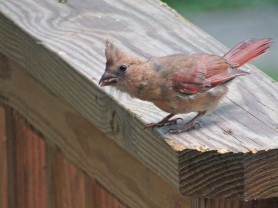
YoungCardinal

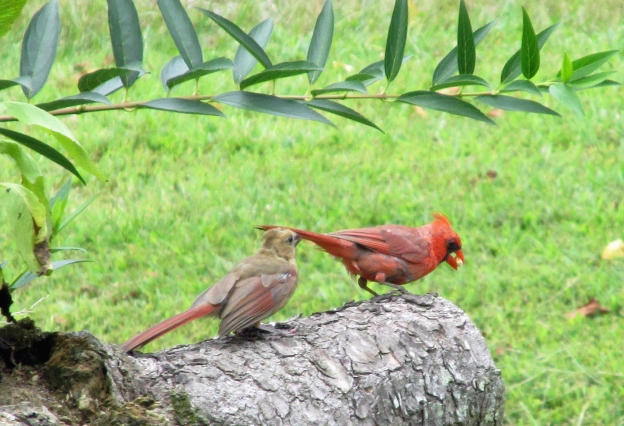
Photo by Bryan Stevens • Young birds, like this Northern Cardinal, point to a successful nesting season for most of the region’s birds.

Next week, I’ll post results from the Elizabethton Summer Bird Count.


••••••

To ask a question, make a comment or share a sighting, email ahoodedwarbler@aol.com or friend Stevens on Facebook.
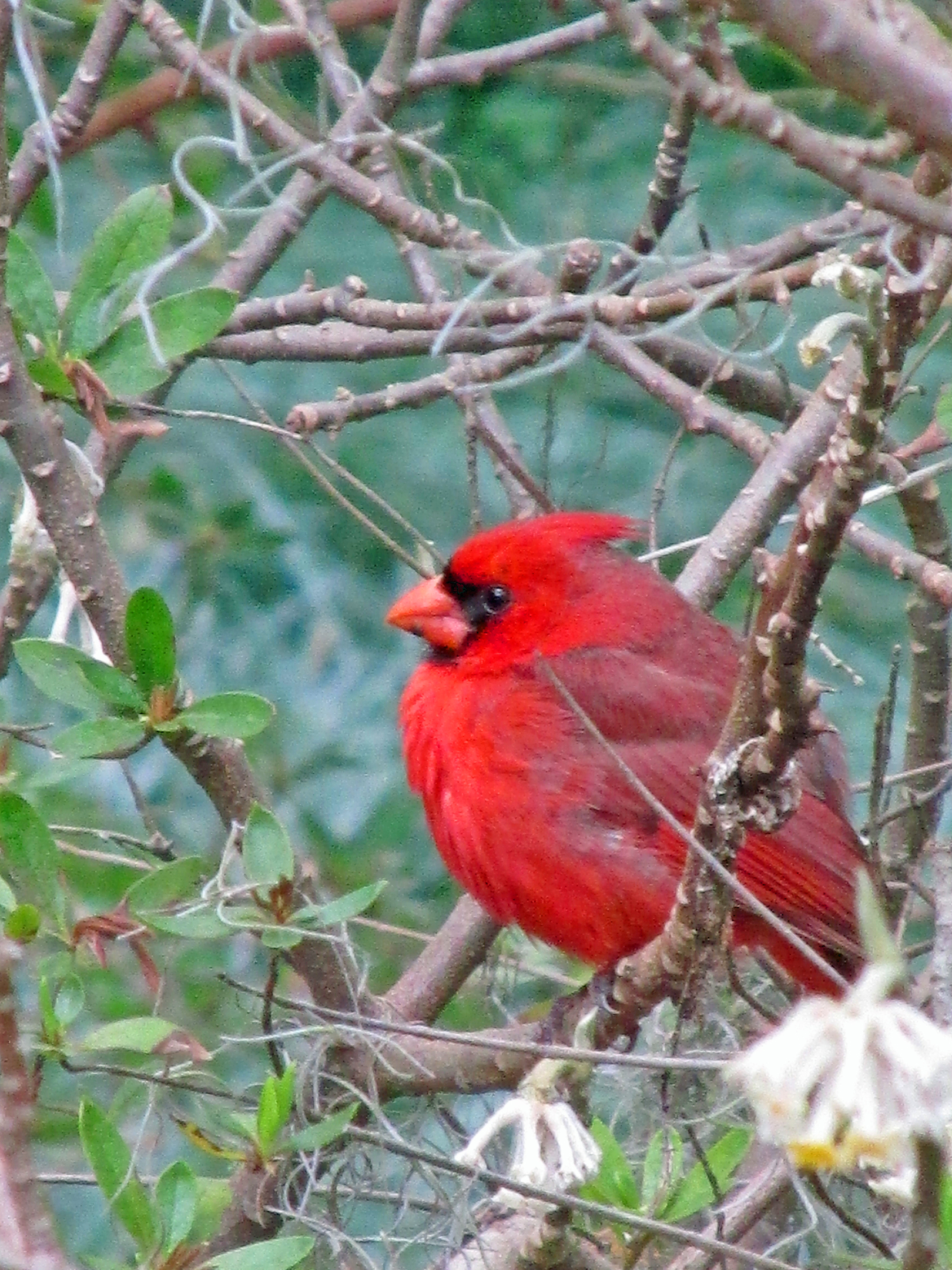
Cardinals provide perfect symbol for Christmas holiday

cardinal-brookgreen

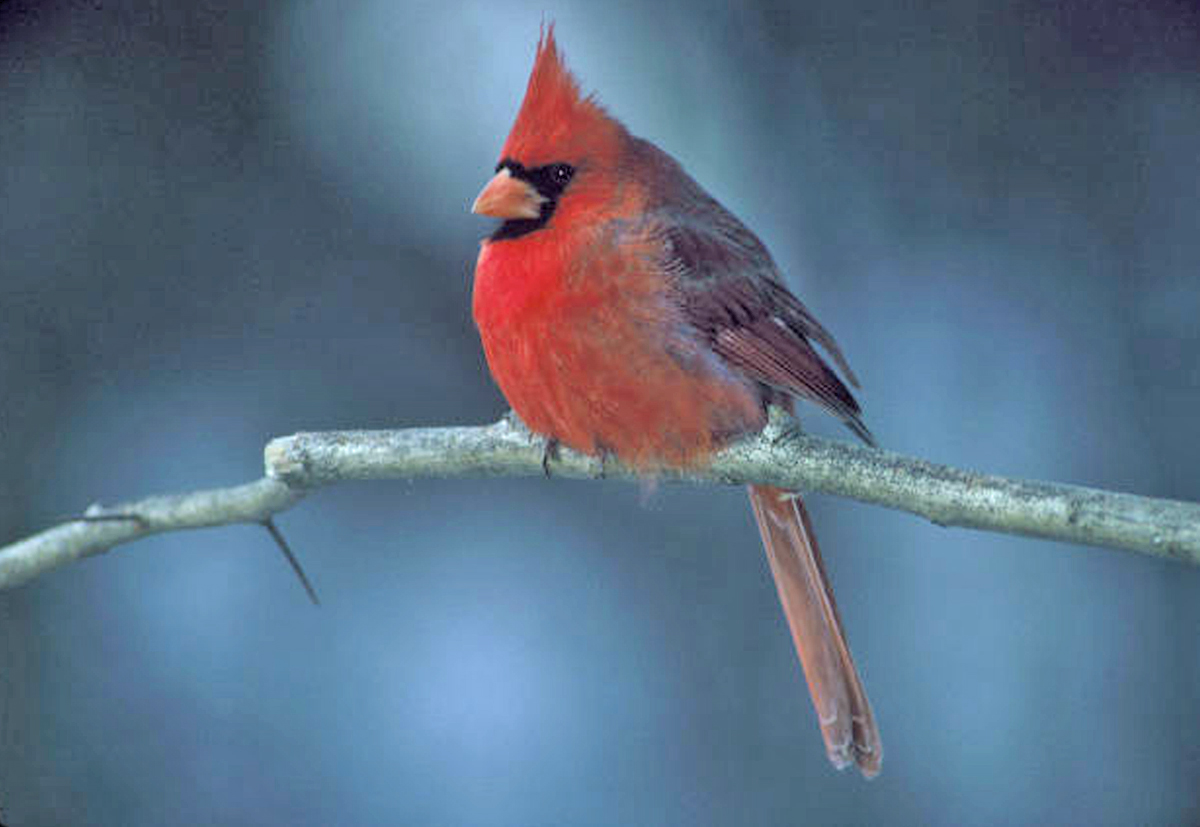
Photo by Bryan Stevens • Male Northern cardinals are among the most showy of North American birds.

Often, when people think of the birds of the winter season, their thoughts focus on some of the less-than-colorful feeder visitors — the brown sparrows and wrens, the black and white chickadees, the drab American goldfinches so unlike their summer appearance of bright yellow and black.

There’s one bird, however, that stands out in any season. The Northern cardinal, especially the brilliant red male, stands out against a winter backdrop of snow white, deep green or drab gray. Over the years, the cardinal has also become associated with the Christmas season. How many Christmas cards have you received this holiday season with a cardinal featured in the artwork? I’d wager that at least a few cards in any assortment of holiday greetings will feature the likeness of a Northern cardinal.

cardinal-2

Photo by U.S. Fish & Wildlife Service • Male Northern cardinals are welcome birds in a bleak winter landscape.

There’s some more evidence to put forward as testimony to the popularity of the Northern Cardinal. It’s the official state bird of seven states: North Carolina, West Virginia, Ohio, Illinois, Indiana, Kentucky and Virginia. Only the Northern mockingbird, which represents five states as official state bird, even comes close to the Northern cardinal in this respect.

The Northern cardinal belongs to a genus of birds known as Cardinalis in the family Cardinalidae. There are only two other species in this genus, and they range across North America and into northern South America.

The two relatives are the pyrrhuloxia, or Cardinalis sinuatus, of the southwestern United States, and the Vermilion cardinal, or phoeniceus, a bird found in Colombia and Venezuela. Two other South American birds — red-crested cardinal and yellow-billed cardinal — are more closely related to tanagers than to our familiar Northern cardinal. Both the Northern cardinal and red-crested cardinal have been introduced into the state of Hawaii, so two non-native birds from different parts of the globe are now resident in the Aloha State.

bs-cardinalinsnow

Photo by Bryan Stevens • A female Northern cardinal visits a feeder for a meal of black oil sunflower seeds.

The Northern cardinal is a native and abundant bird. Cardinals are a widespread species, ranging westward to the Dakotas and south to the Gulf Coast and Texas. The southeastern United States was once the stronghold of the cardinal population. In the past century, however, cardinals have expanded their range into New England and Canada.

The cardinal accepts a wide variety of food at feeders. Sunflower seed is probably their favorite, but they will also sample safflower seed, cracked corn, peanuts, millet, bakery scraps and even suet. While we may get the idea that cardinals feed largely on seed, that is a misconception based on our observation of the birds at our feeders. Cardinals away from our feeders eat insects and fruit, including the berries of mulberry, holly, pokeberry, elderberry, Russian olive, dogwood and sumac.

froze-femcardinal

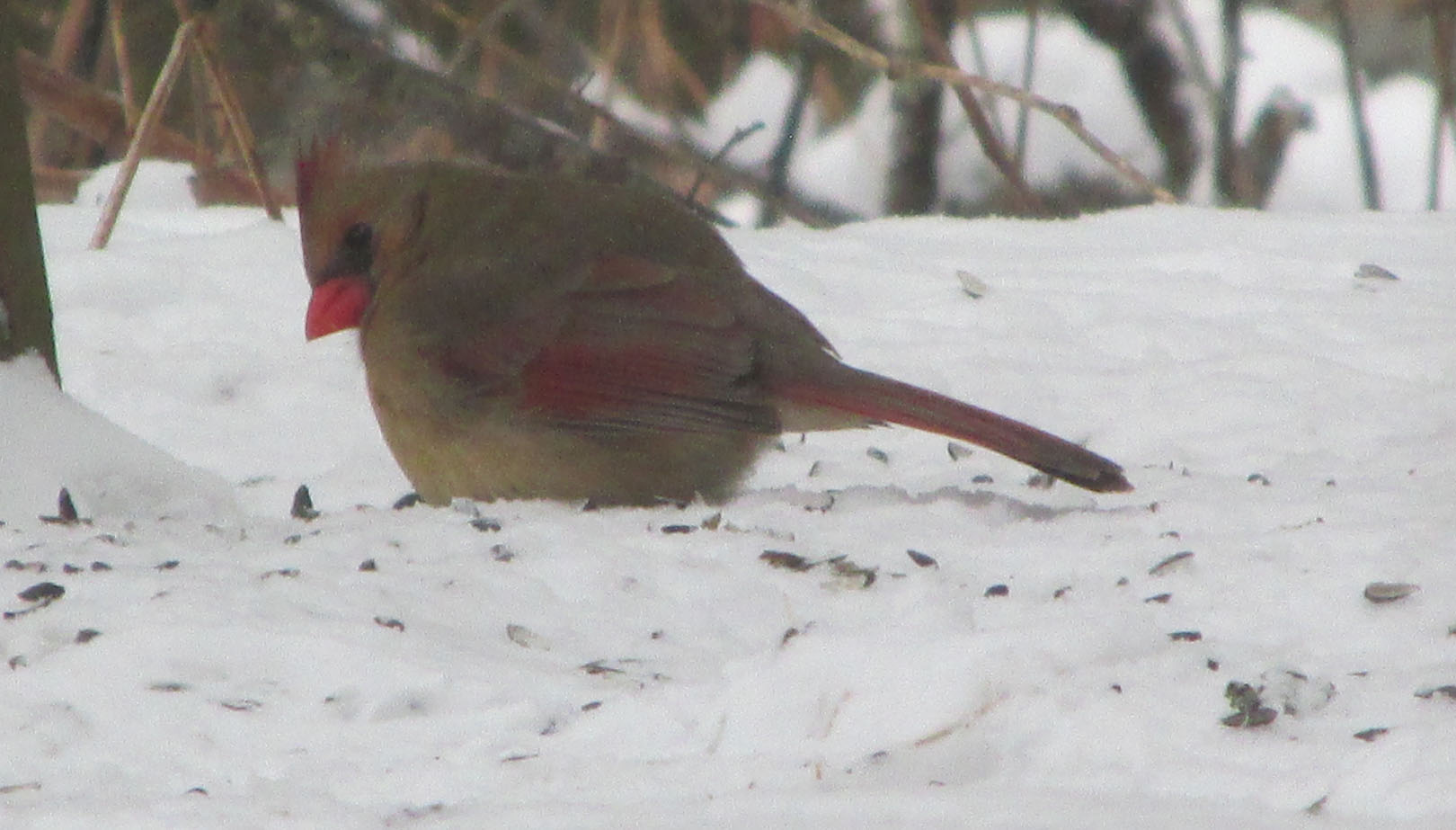
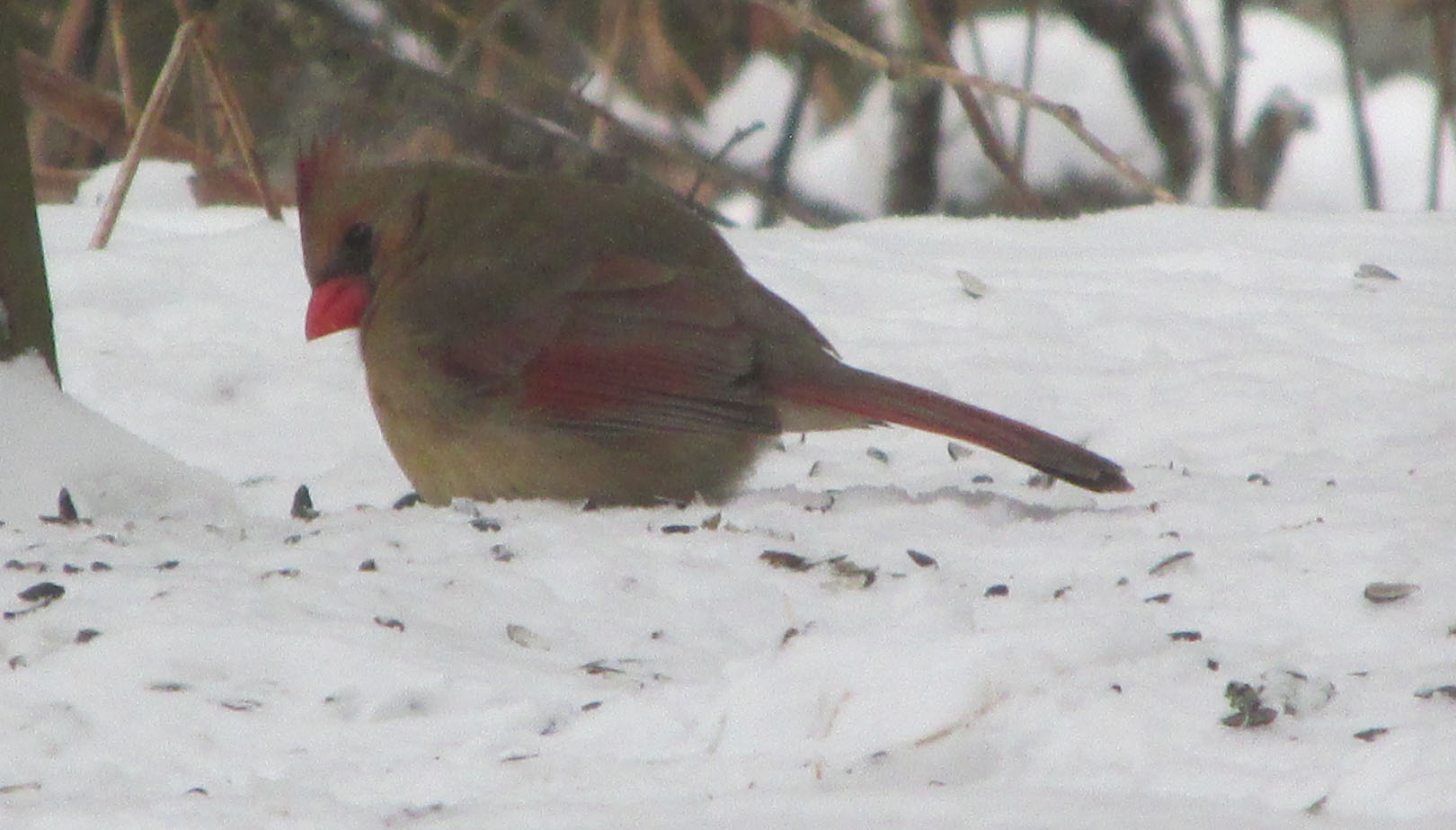
Photo by Bryan Stevens • Female cardinals scans the snow’s surface for seeds dropped by other birds.

Even once the holidays are past, there’s nothing like a glimpse of a Northern cardinal to add some cheer to a bleak winter day. People can also choose to further the cause of science by taking part in studies such as Project FeederWatch, a nationwide survey of bird populations focused on birds coming to feeders maintained by project participants.

In the 2015-16 winter season, 1,373 individuals participated in Project FeederWatch in the southeastern United States. The most common birds reported by observers were Northern cardinal, Carolina chickadee, mourning dove, American goldfinch and tufted titmouse. Finishing out the Top 10 feeder birds in this section of the nation were Carolina wren, house finch, blue jay, red-bellied woodpecker and downy woodpecker. Almost 98 percent of participants reported Northern cardinals at their feeders, which means the cardinal has become an almost universal feeder visitor in the southeast.

The roots of Project FeederWatch extend back to 1976 Ontario, Canada, when Dr. Erica Dunn with Canada’s Long Point Bird Observatory established the Ontario Bird Feeder Survey. After a successful 10-year run, its organizers realized that only a continental survey could accurately monitor the large-scale movements of birds. Therefore, Long Point Bird Observatory decided to expand the survey to cover all of North America.

The expansion launched in the winter of 1987-88, when more than 4,000 people enrolled. FeederWatchers represented every state in the U.S. except Hawaii, as well as most Canadian provinces. Project FeederWatch continues to be a cooperative research project of the Cornell Lab of Ornithology and Bird Studies Canada (formerly the Long Point Bird Observatory) on an annual basis. To learn more, visit http://feederwatch.org/

il_fullxfull.56973554

Early naturalist and artist John James Audubon painted this pair of Northern Cardinals.

It’s not surprising that such a popular bird has also become associated with many trappings of the Christmas season.

“You see cardinals on greeting cards, stationery, paper plates, paper napkins and tablecloths, doormats, light switch plates, candles, candle holders, coffee mugs, plates, glasses, Christmas tree ornaments and lights, bookmarks, mailboxes, Christmas jewelry,” writes June Osborne in her book The Cardinal. “And the list goes on. Cardinals have become an integral part of the way that many people celebrate the holiday season.”

cardinals-dec18

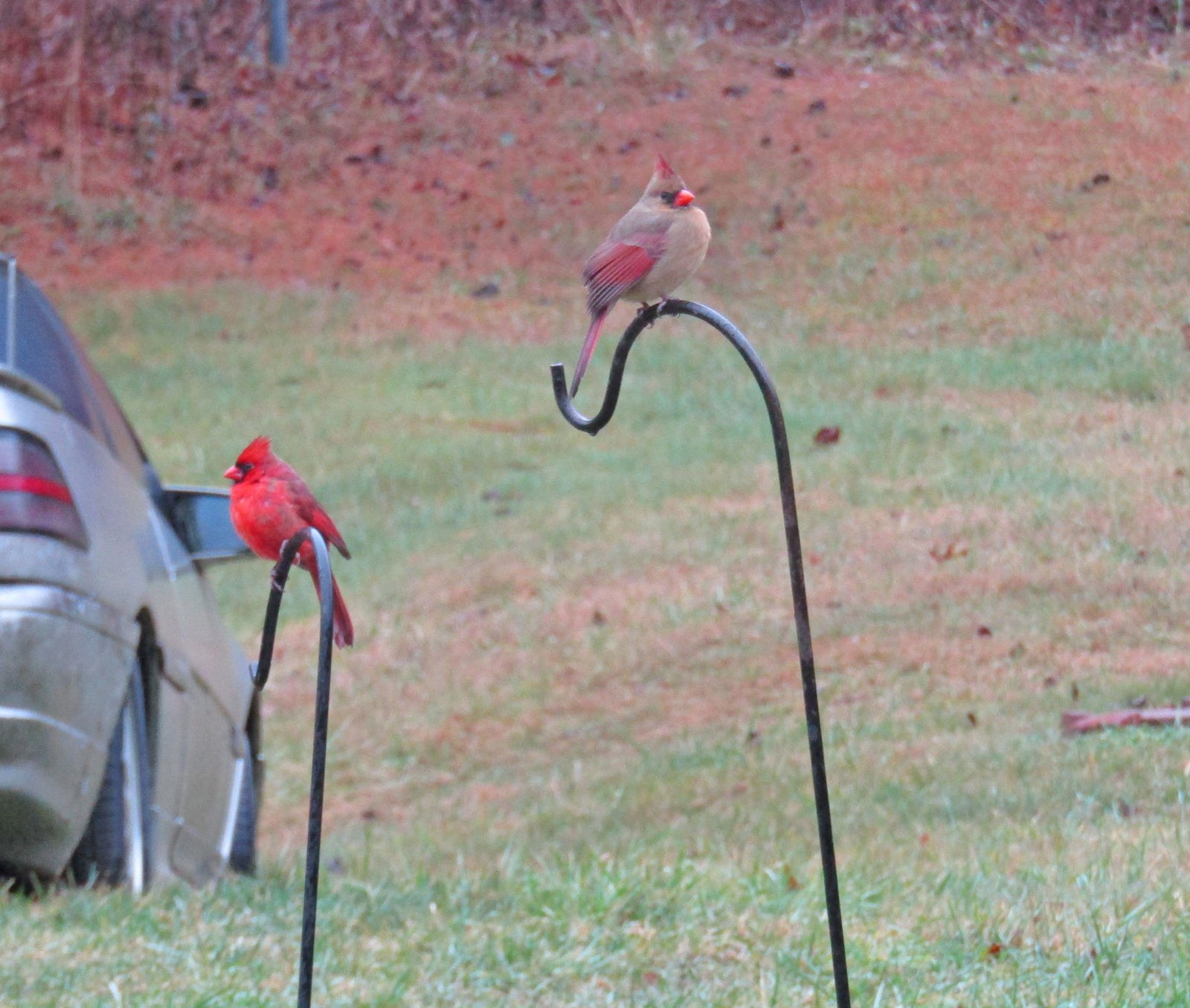
Photo by Bryan Stevens • A pair of Northern Cardinals claim perches near a feeder.

I can be included among such people. My Christmas decorations include an assortment of cardinal figurines and ornaments. There are other birds — doves and penguins for example — associated with the holiday season, but for me the holidays magnify the importance of one of my favorite birds. The cardinal, in its festive red plumage, appears made to order for a symbol of the holiday season.

Here’s some additional cardinal trivia to increase your knowledge of this fascinating bird:

• Cardinals are also known by such common names as redbird and Virginia nightingale.

• Cardinals differ in appearance based on gender. The male boasts crimson plumage, a crest, a black face and orange bill. The female, although less colorful, is also crested. Female cardinals are soft brown in color, with varying degrees of a reddish tinge in their feathers, particularly in their wings.

• The cardinal’s preference for dense cover makes them likely neighbors for such birds as Carolina wrens and brown thrashers.

• The oldest recorded Northern Cardinal was a female, and she was 15 years, nine months old when she was found in Pennsylvania, according to the website, All About Birds.

Northern cardinal brightens holiday season and every other day of the year


Froze-FemCardinal

Photos by Bryan Stevens                                        A female Northern Cardinal visits a feeder during a snowstorm.

The shopping days before Christmas are getting fewer, so I hope everyone has had time to find gifts for everyone on their lists. My own sincere wish to readers is that everyone gets to enjoy a great holiday that just might also include watching some birds.


Cardinal-MorePlease

A male cardinal investigates a feeder.

Although I hate to see the colorful birds of spring and summer — scarlet tanagers, Baltimore orioles, indigo buntings, rose-breasted grosbeaks — depart every fall, the winter season offers some compensation.
Often, when we think of the birds of the winter season, our thoughts focus on some of the less-than-colorful feeder visitors — the brown sparrows and wrens, the black and white chickadees, the drab American goldfinches so unlike their summer appearance.


Cardinal-Enclosed

A male cardinal stays concealed within a thicket.

There’s one bird, however, that makes an impression in any season. The Northern cardinal, especially the brilliant red male, stands out against a winter backdrop of snow white, deep green or drab gray.
Over the years, the Northern cardinal has also become associated with the Christmas season. How many Christmas cards have you received this holiday season with a cardinal featured in the artwork? I’d wager that at least a few cards in any assortment of holiday greetings will feature the likeness of a bright red cardinal.


il_fullxfull.56973554

Early naturalist and artist John James Audubon painted the Northern Cardinal.

Cardinals, also known by such common names as redbird and Virginia nightingale, are easily recognized backyard birds. I never tire of observing these colorful birds. Cardinals are easily lured to any backyard with plentiful cover to provide a sense of security and a generous buffet of sunflower seed.
Cardinals accept a wide variety of food at feeders. Sunflower seed is probably their favorite, but they will also sample cracked corn, peanuts, millet, bakery scraps and even suet. The cardinal is also one of only a few birds that I have noticed will consistently feed on safflower seed.
While we may get the idea that cardinals feed largely on seed, that is a misconception based on our observation of the birds at our feeders. When away from our feeders, cardinals feed on insects and fruit, including the berries of mulberry, holly, pokeberry, elderberry, Russian olive, dogwood and sumac.


Cardinal-Blur

A flash of red signal a visit from a male Northern cardinal.

There’s no difficult in identifying a cardinal. The male boasts crimson plumage, a crest, a black face and orange bill. The female, although less colorful, is also crested. Female cardinals are soft brown in color, with varying degrees of a reddish tinge in their feathers, particularly in their wings. Immature cardinals resemble females except young cardinals have dark bills.


Cardinal-Two 2

A male Northern cardinal perches on a feeder.

Cardinals are a widespread species, ranging westward to the Dakotas and south to the Gulf Coast and Texas. The southeastern United States was once the stronghold of the cardinal population. In the past century, however, cardinals have expanded their range into New England and Canada.
At feeders, cardinals mingle with a variety of other birds. Their preference for dense, tangled habitat is one they share with such birds as brown thrashers, Eastern towhees, Carolina wrens and song sparrows. In general, however, cardinals directly associate only with their own kind. Cardinals will form loose flocks during the winter, but these flocks are never as cohesive as those of such flocking birds as American goldfinches. Cardinals are more often observed in pairs.
For such a bright bird, the male cardinal can be surprisingly difficult to detect as he hides in the thick brush that conceals his presence. Cardinals are nervous birds, however, and usually betray their presence with easily recognized chip notes.


Cardinales

A male Northern cardinal on a gray December day.

It’s not surprising that such a popular bird has also become associated with many trappings of the Christmas season. “You see cardinals on greeting cards, stationery, paper plates, paper napkins and tablecloths, doormats, light switch plates, candles, candle holders, coffee mugs, plates, glasses, Christmas tree ornaments and lights, bookmarks, mailboxes, Christmas jewelry,” writes June Osborne in her book The Cardinal. “And the list goes on. Cardinals have become an integral part of the way that many people celebrate the holiday season.”

IMG_2431

Female cardinal grasps a perch on a blustery afternoon.

I can be included among such people. My Christmas decorations include an assortment of cardinal figurines and ornaments. There are other birds — doves and penguins for example — associated with the holiday season, but for me the holidays magnify the importance of one of my favorite birds. The cardinal, in its festive red plumage, appears made to order for a symbol of the holiday season.

 
There’s additional evidence to put forward as testimony to the popularity of the Northern cardinal. It’s the official state bird of seven states: Virginia, North Carolina, West Virginia, Ohio, Illinois, Indiana and Kentucky. Only the Northern mockingbird, which represents five states as official state bird, even comes close to the Northern cardinal in this respect.
Even once the holidays are past, there’s nothing like a glimpse of a Northern cardinal to add some cheer to a bleak winter day.
•••••
To learn more about birds and other topics from the natural world, friend Stevens on Facebook at https://www.facebook.com/ahoodedwarbler. He is always posting about local birds, wildlife, flowers, insects and much more. If you have a question, wish to make a comment or share a sighting, email ahoodedwarbler@aol.com.