Category Archives: Erwin Record

First-ever Unicoi County Summer Bird Count tallies 111 species

Members of the Lee and Lois Herndon Chapter of Tennessee Ornithological Society conducted the first-ever Unicoi County Summer Bird Count on Saturday, June 14.

Photo by Bryan Stevens A young Eastern Bluebird slowly gains independence after leaving the nest.

Photo by Bryan Stevens
A young Eastern Bluebird slowly gains independence after leaving the nest.

Rick Knight, a long-time compiler for the chapter’s seasonal bird counts, organized and launched the count as a means to collect valuable information about the local distribution of birds in an often overlooked county in the region.

Nineteen observers in five parties logged 53 party hours, plus three nocturnal party hours, searching for birds from Flag Pond to Limestone Cove within Unicoi County.

 A total of 111 species were tallied during the count by the following observers: Jim Anderson, Rob Armistead, Harry Lee Farthing, Don Holt, Rick Knight, Roy Knispel, Richard Lewis, Vern Maddux, Joe McGuiness, Tom McNeil, Charles Moore, Cathy Myers, Kathy Noblet, Brookie and Jean Potter, Bryan Stevens, Kim Stroud, Gary Wallace and John Whinery.

 Species found during the count included:

Canada Goose, 76; Wood Duck, 17; Mallard, 31; Ruffed Grouse,1; Wild Turkey, 29; Great Blue Heron, 12; and Green Heron, 6.

Black Vulture, 3; Turkey Vulture, 28; Bald Eagle, 3 ; Sharp-shinned Hawk, 1; Cooper’s Hawk, 1; Red-shouldered Hawk, 1; Broad-winged Hawk, 3; Red-tailed Hawk, 5; American Kestrel, 2; and Peregrine Falcon, 3.

Killdeer,17; Rock Pigeon,  75; Mourning Dove, 77; Yellow-billed Cuckoo,  3; Eastern Screech-Owl,  2; Great Horned Owl, 1; Chuck-will’s-widow, 6; Eastern Whip-poor-will,  3; Chimney Swift,  44; Ruby-throated Hummingbird, 17; and Belted Kingfisher,  4.
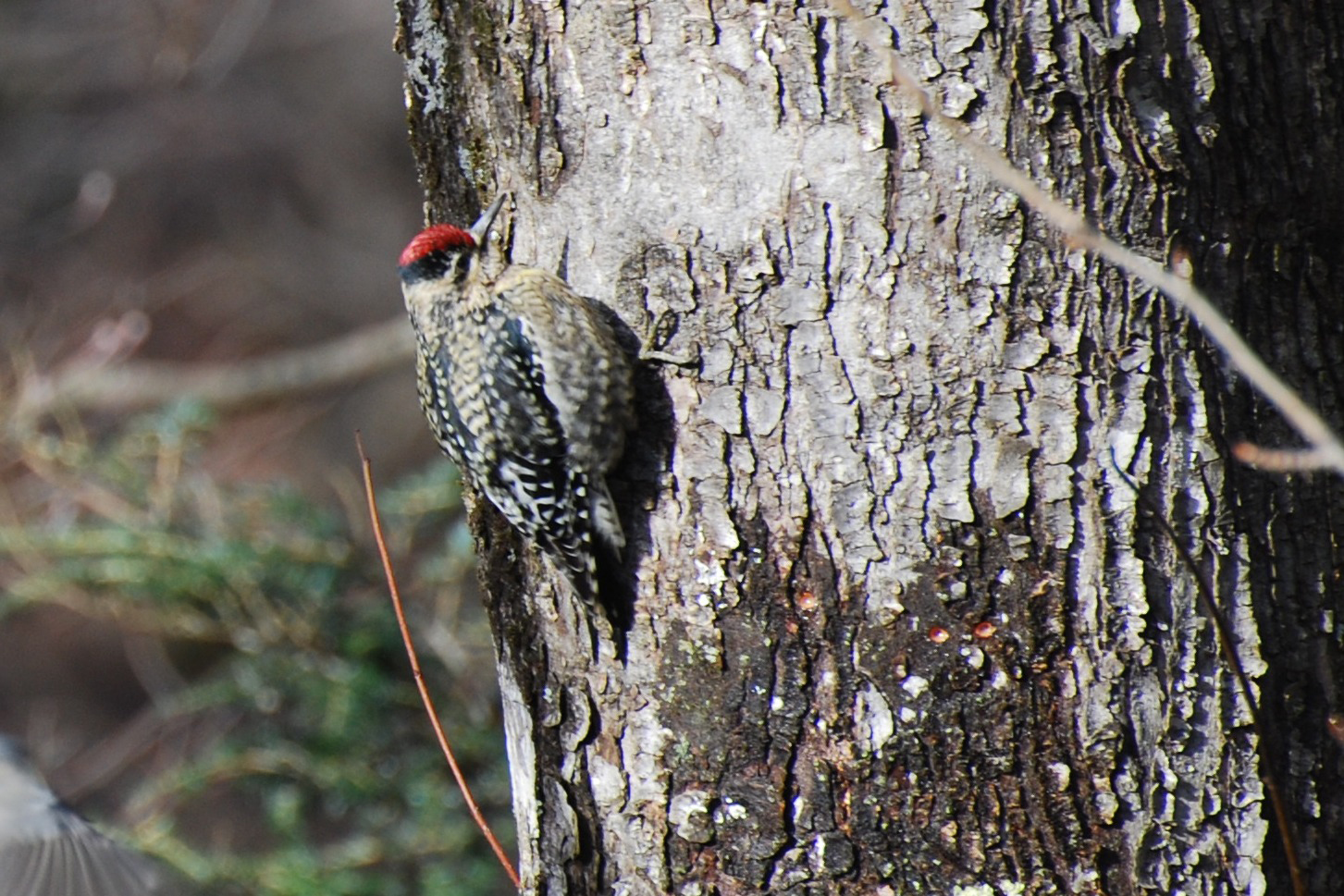
Photo Courtesy of Jean Potter The Yellow-bellied Sapsuckers found during the count indicate that this species is nesting at high-elevation locations in Unicoi County.

Photo Courtesy of Jean Potter
The Yellow-bellied Sapsuckers found during the count indicate that this species is nesting at high-elevation locations in Unicoi County.

Red-bellied Woodpecker,  20; Yellow-bellied Sapsucker  3; Downy Woodpecker  15; Hairy Woodpecker  5; Northern Flicker,  12; Pileated Woodpecker, 16;  Eastern Wood-Pewee  8; Acadian Flycatcher  29; Least Flycatcher  5; Eastern Phoebe,  44; Great Crested Flycatcher,  2; and Eastern Kingbird,  13.

White-eyed Vireo,  1; Yellow-throated Vireo,  1; Blue-headed Vireo,  29; Warbling Vireo,  1; Red-eyed Vireo,  157; Blue Jay, 59; American Crow, 139; Common Raven, 8; Purple Martin, 36; Tree Swallow, 94; Northern Rough-winged Swallow, 68; Cliff Swallow, 64; and Barn Swallow, 139.

Carolina Chickadee,  63; Tufted Titmouse,  47; Red-breasted Nuthatch,  3; White-breasted Nuthatch,  20; Brown Creeper, 1; Carolina Wren, 80; House Wren,  31; Winter Wren,  2; and Blue-gray Gnatcatcher, 27.

Eastern Bluebird, 46; Veery, 35; Wood Thrush, 37; American Robin, 435; Gray Catbird, 37; Northern Mockingbird, 37; Brown Thrasher, 14; European Starling, 464; and Cedar Waxwing,  71.

Ovenbird, 56; Worm-eating Warbler, 9; Louisiana Waterthrush, 5; Golden-winged Warbler, 1; Black-and-white Warbler, 19; Swainson’s Warbler, 6; Kentucky Warbler, 1; Common Yellowthroat,  2; Hooded Warbler, 78; American Redstart,  8; Northern Parula, 13; Magnolia Warbler, 1; Blackburnian Warbler, 2; Yellow Warbler, 1; Chestnut-sided Warbler,  23; Black-throated Blue Warbler, 20; Yellow-throated Warbler, 4; Prairie Warbler, 7; Black-throated Green Warbler,  30; Canada Warbler, 9; and Yellow-breasted Chat, 5.
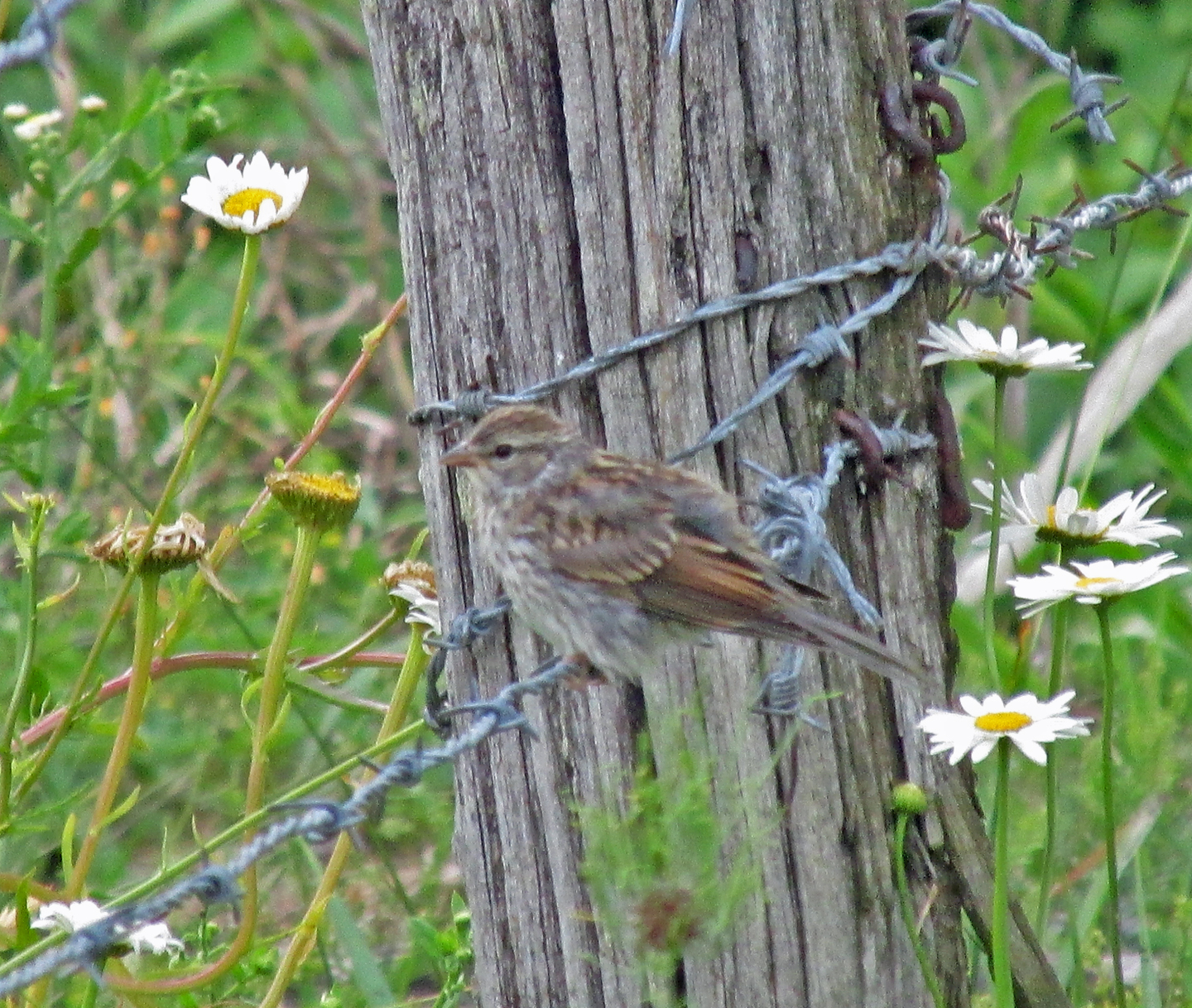
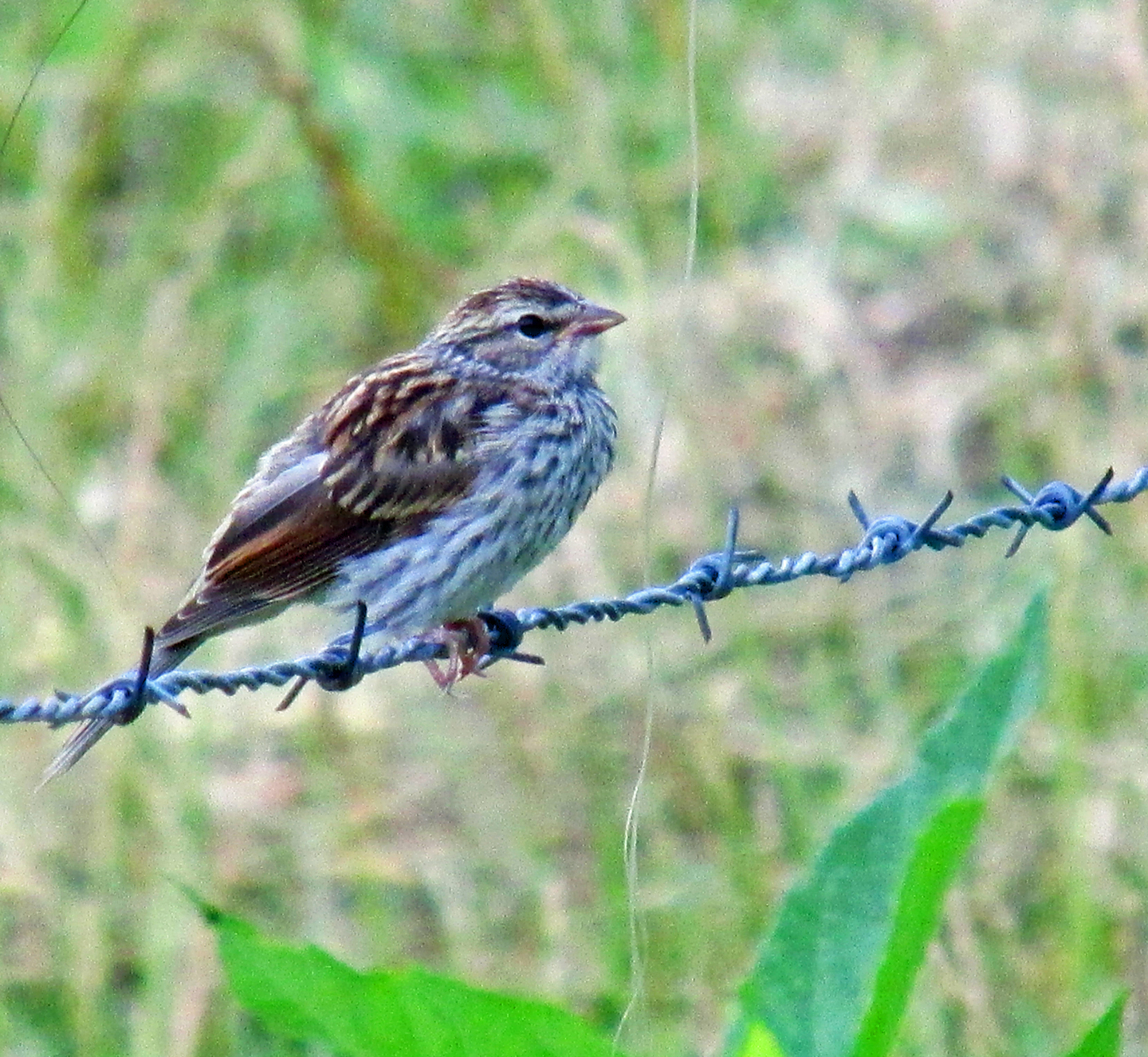
Photo by Bryan Stevens A young Chipping Sparrow perches on a barbed wire fence at the Bell Cemetery in Limestone Cove.

Photo by Bryan Stevens
A young Chipping Sparrow perches on a barbed wire fence at the Bell Cemetery in Limestone Cove.

Eastern Towhee,  70; Chipping Sparrow,  60; Field Sparrow,  12; Song Sparrow,  214; Dark-eyed Junco,  28; Scarlet Tanager,  20; Northern Cardinal,  138; Rose-breasted Grosbeak, 2; Blue Grosbeak, 1; and Indigo Bunting, 197.

Red-winged Blackbird,  101; Eastern Meadowlark,  13; Common Grackle,  94; Brown-headed Cowbird,  34; Orchard Oriole,  1; Baltimore Oriole,  1; House Finch,  8; American Goldfinch,  84; and House Sparrow,  64.

Knight noted that all 111 species found during the count are known or suspected to nest in Unicoi County. For instance, the three Bald Eagles found on the count included an adult bird and two recently fledged young. Eagles have been documented nesting near the Devil’s Looking Glass above the Nolichucky River for the past couple of years.

•••••

During the count, I stayed close to home with the territory of Limestone Cove and the portion of Sciota Road located within Unicoi County. Gary Wallace and John Whinery joined me for several hours of productive birding.

We found some birds I would never have expected to find so close to home, including singing Prairie Warblers and a noisy, scolding Yellow-breasted Chat. On Bean Creek Road near the state line with North Carolina, we also found a male Yellow-bellied Sapsucker while walking a section of the Appalachian Trail. This was my first summer sighting of what is normally a winter bird in the region. In recent years, however, a few sapsuckers have started nesting in some of the local mountains.

We also missed some target birds. We checked out every pond we could view in our territory and failed to find a Green Heron.

Summer is also an extremely busy time of year for birds as they go about the business of bringing up a new generation of birds. Most birds have completed spring migration and have settled into locations they will call home for the next few months. During the recent Summer Bird Count in Unicoi County, we saw numerous young birds, ranging from Chipping Sparrows and Eastern Bluebirds to American Robins and Barn Swallows.
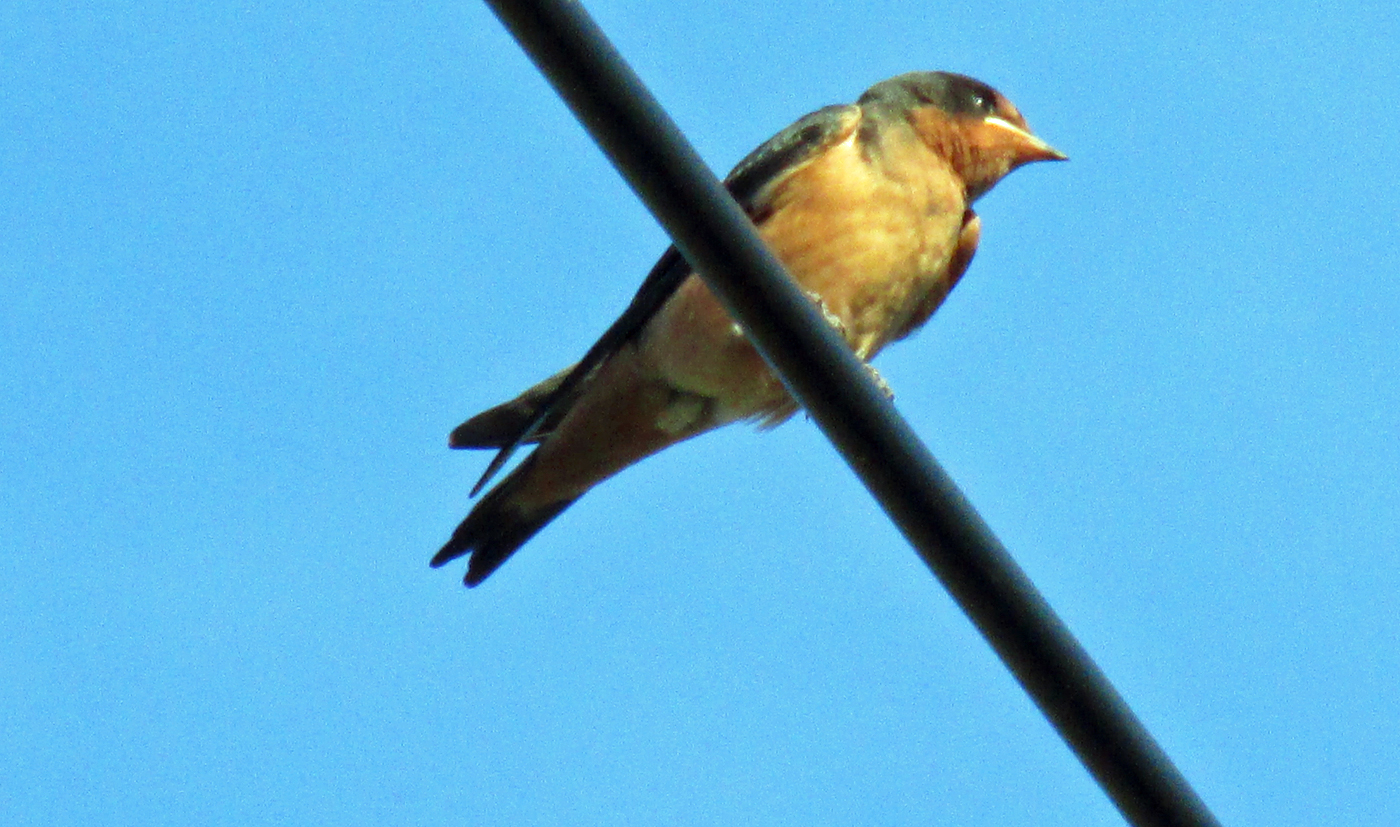
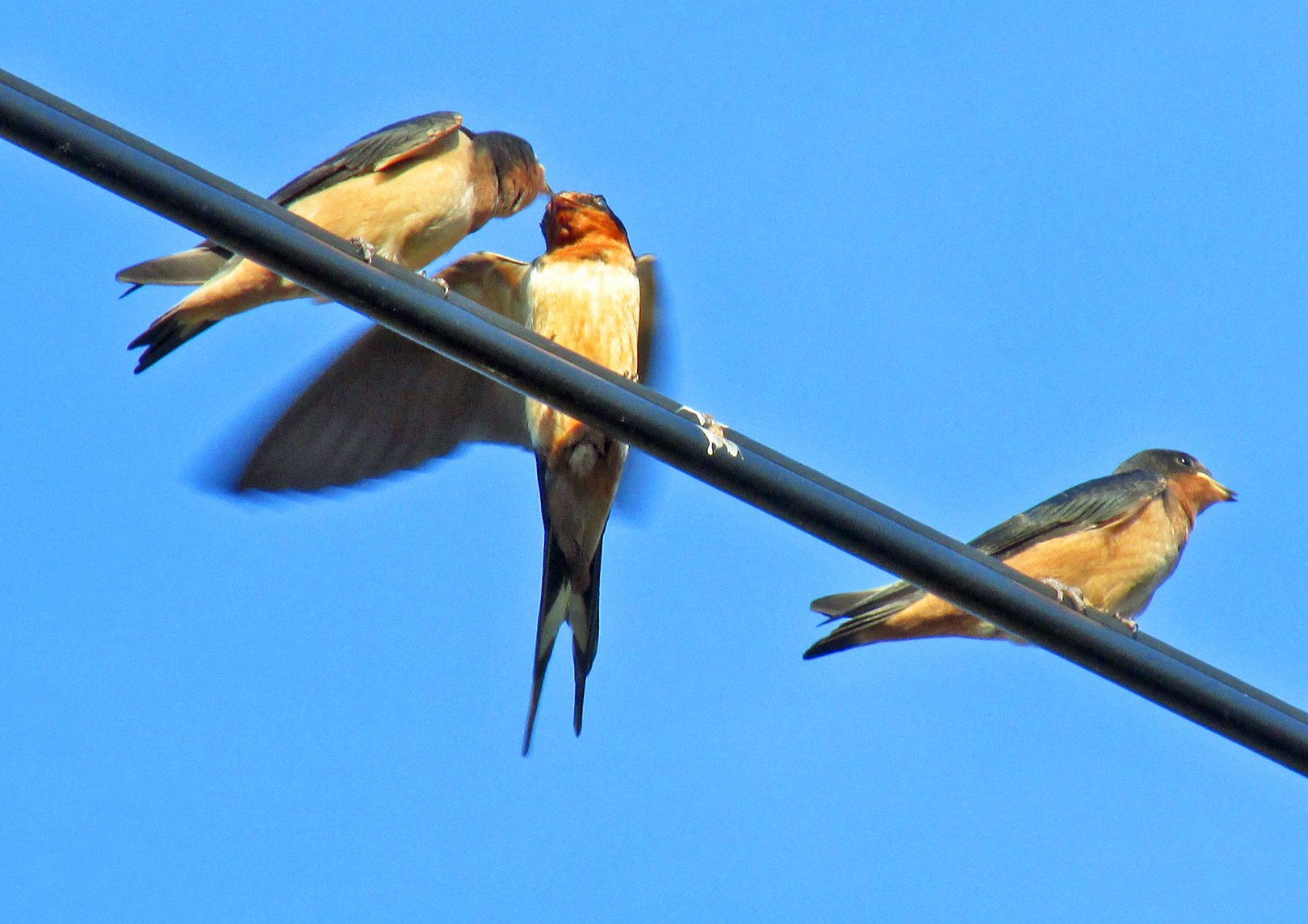
Photo by Bryan Stevens A young Barn Swallow perched on a utility line at the Bell Cemetery in Limestone Cove awaits a delivery of food from its parents.

Photo by Bryan Stevens
A young Barn Swallow perched on a utility line at the Bell Cemetery in Limestone Cove awaits a delivery of food from its parents.

•••••

To ask a question, make a comment or share an observation, email me at ahoodedwarbler@aol.com or leave a remark here at “Our Fine Feathered Friends.”


Summer counts reflect busy time of year for local birds

Photo by Bryan Stevens  Many young birds, such as this Chipping Sparrow on a barbed wire fence in Limestone Cove in Unicoi County, look almost nothing like their parent.

Photo by Bryan Stevens
Above: Many young birds, such as this Chipping Sparrow on a barbed wire fence in Limestone Cove in Unicoi County, look almost nothing like their parent. Upper: Young Tree Swallows test perching skills.

I took part in the two Summer Bird Counts conducted recently by the Lee and Lois Herndon Chapter of Tennessee Ornithological Society in Carter County and Unicoi County on consecutive June Saturdays.

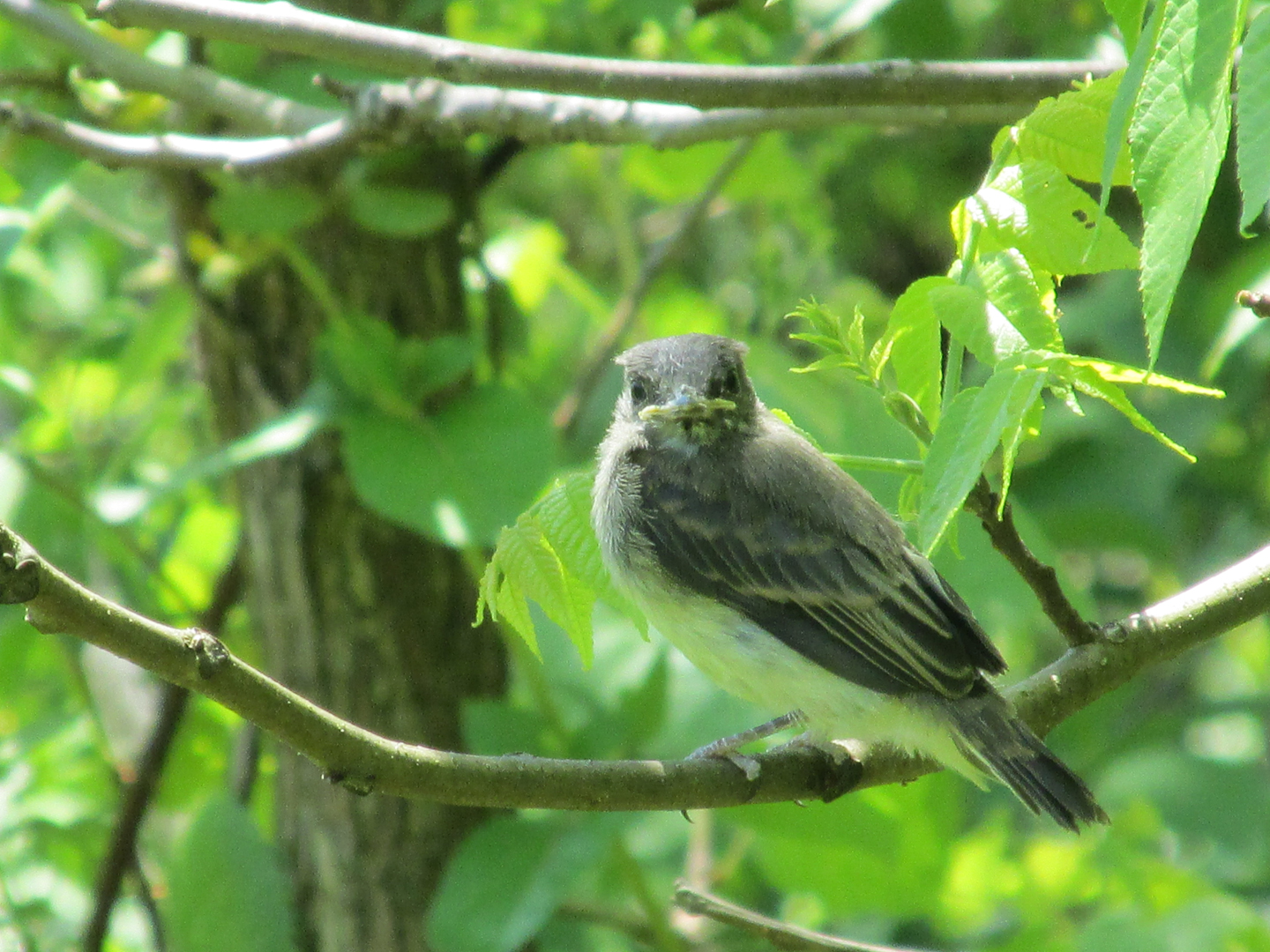
Photo by Bryan Stevens A young Eastern Phoebe perches patiently on a branch while waiting for a parent to bring food.

Photo by Bryan Stevens
A young Eastern Phoebe perches patiently on a branch while waiting for a parent to bring food.

One thing I enjoy about participating in Summer Bird Counts is the prevalence of young birds. It’s only to be expected since the summer season is the time when most local birds build nest, lay eggs and rear young. Some birds got started with the business of raising young back in April and are already attempting second nestings.

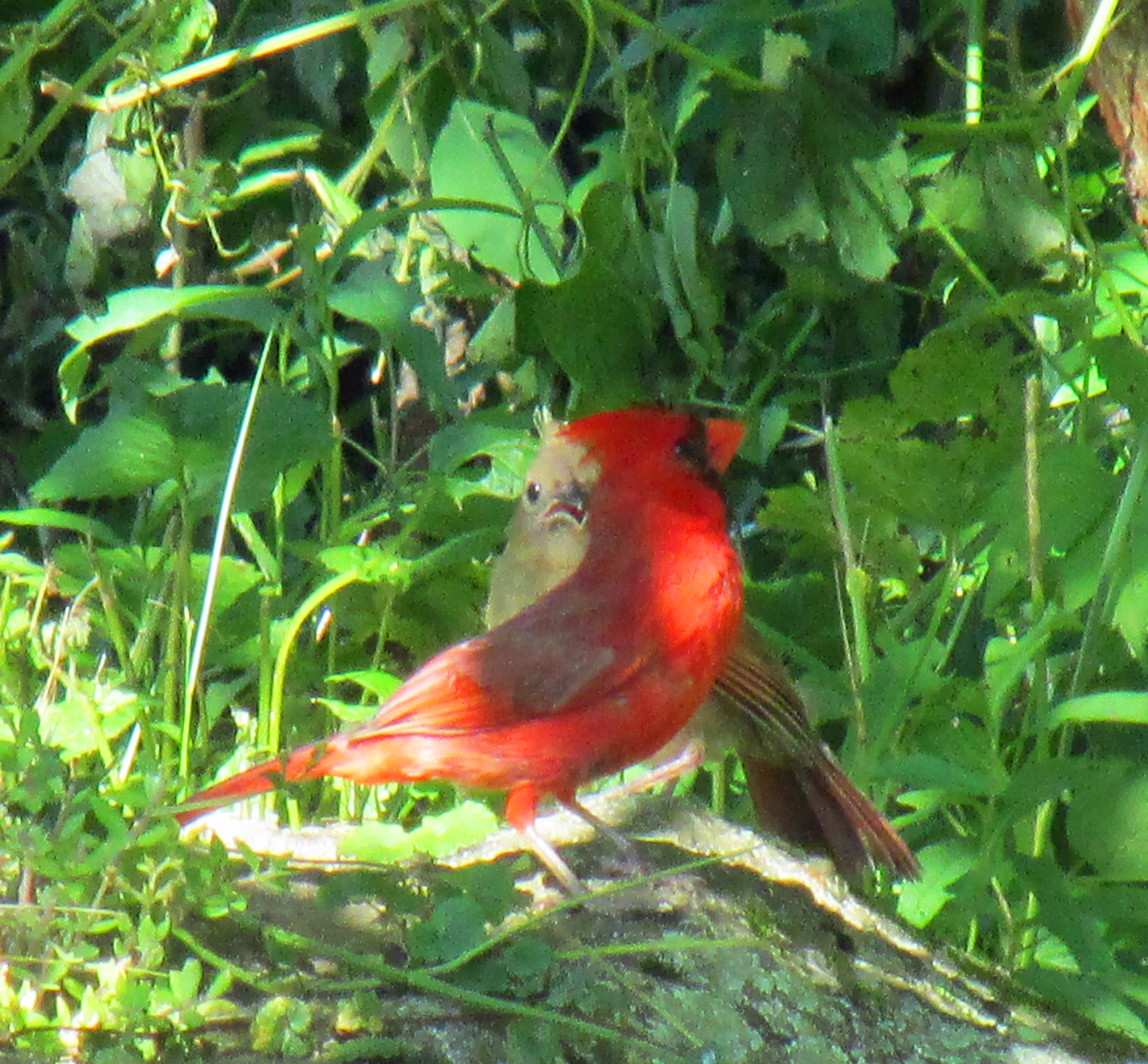
Photo by Bryan Stevens A male Northern Cardinal tends to a fledgling hidden near the ground in thick brush.

Photo by Bryan Stevens
A male Northern Cardinal tends to a fledgling hidden near the ground in thick brush.

This year’s counts reported a variety of young birds among the totals, including numerous Wild Turkey poults, as well as species as diverse as Ruffed Grouse and Chipping Sparrow to Northern Cardinal and Barn Swallow.

I counted birds on Holston Mountain in Elizabethton with Chris Soto and Robert Armistead during the Carter County survey. For the Unicoi County, I teamed with Gary Wallace and John Whinery to count birds in the community of Limestone Cove.

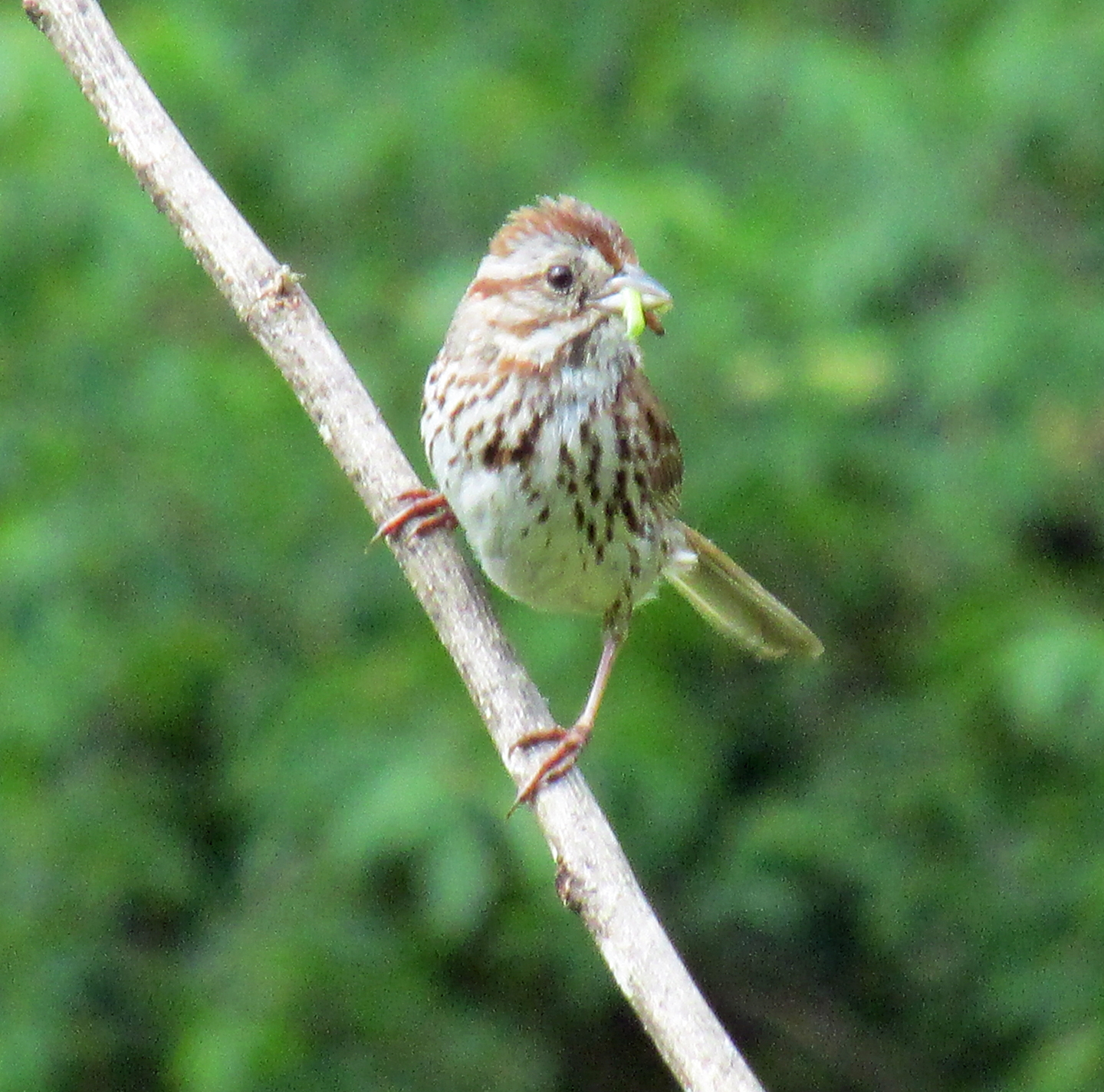
Photo by Bryan Stevens A Song Sparrow brings a beakful of caterpillars back to the nest to feed young.

Photo by Bryan Stevens
A Song Sparrow brings a beakful of caterpillars back to the nest to feed young.

The Carter County and Unicoi County Summer Bird Counts are the only surveys conducted during the summer in Northeast Tennessee and Southwest Virginia. Christmas Bird Counts are more common and include the long-running Bristol CBC and more recent surveys such as the Glade Spring CBC and Shady Valley CBC.

In next week’s post, I will explore the results of the counts in more detail. You might very well be surprised what birds can be found in the region. I know I always am!

Photo by Bryan Stevens A Barn Swallow makes a food delivery to young waiting somewhat patiently on a utility line.

Photo by Bryan Stevens
A Barn Swallow makes a food delivery to young waiting somewhat patiently on a utility line.

Northeast Tennessee Spring Bird Count finds 157 species

Members of the Lee and Lois Herndon Chapter of Tennessee Ornithological Society held the annual Spring Bird Count on Saturday, May 3. The count has now been held for several decades and is conducted in the five-county area of Northeast Tennessee that includes the counties of Carter, Johnson, Sullivan, Unicoi and Washington.

10296052_10202842919586443_3829607003488944484_o

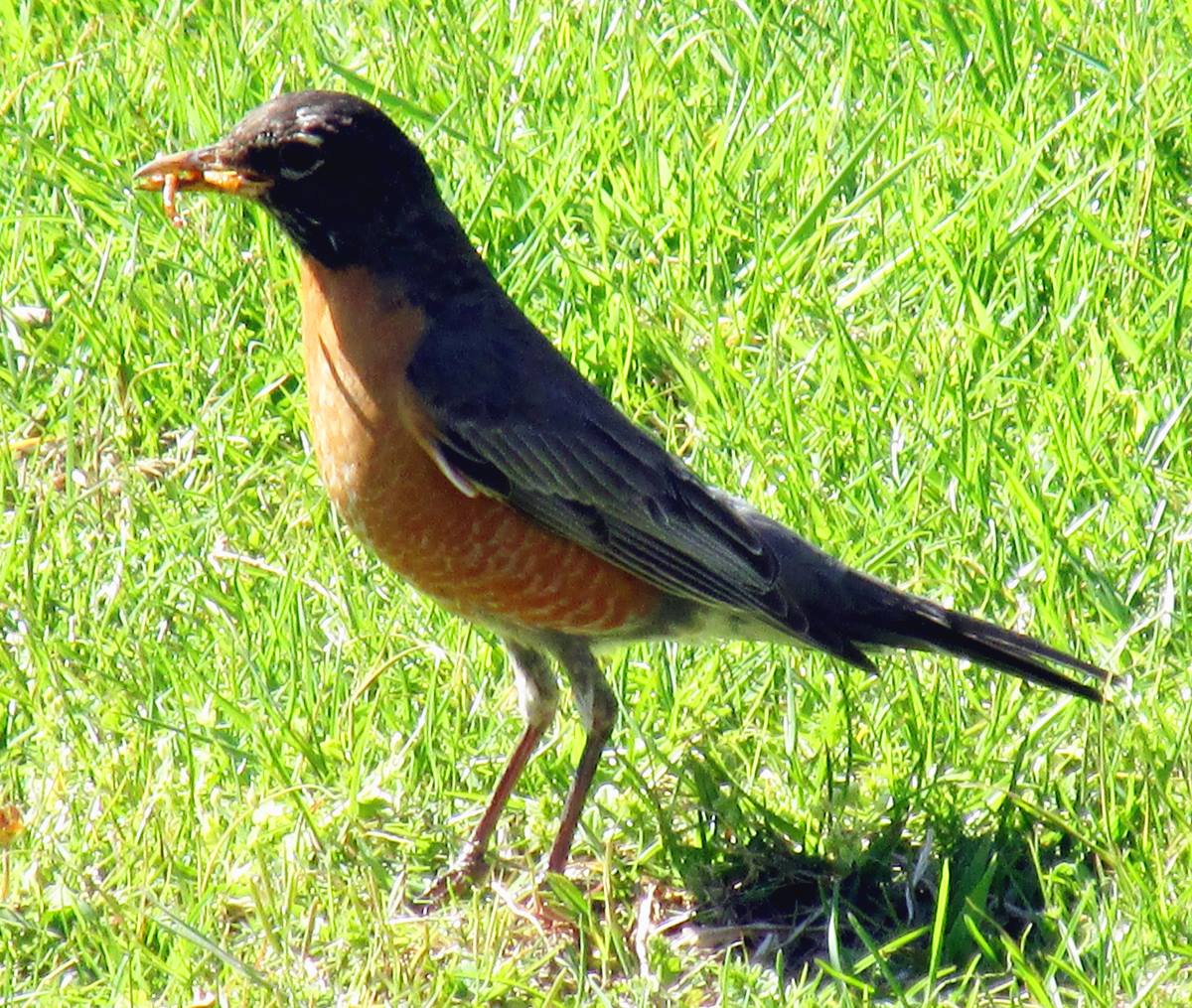
Photo by Bryan Stevens The American Robin ranked as the most abundant bird on this year’s Spring Bird Count for Northeast Tennessee.

A total of 40 individuals in nine parties looked for birds on a beautiful May day, which in itself was a slight change from the way the count has been conducted in the past. The count has traditionally been conducted the last weekend in April but was moved back this year so as not to compete with the Roan Mountain Spring Naturalists Rally, which was held a week earlier than its usual date.

Those taking part in the count were Fred and JoAnn Alsop, Jim Anderson, Paul and Emily Bayes, Jerry Bevins, Rob Biller, Kevin and Dallas Brooks, Ron Carrico, Harry Lee Farthing, Paul Haynes, Don Holt, Heather Jones, Caitlyn King, David Kirschke, Rick Knight (compiler), Roy Knispel, Tom Laughlin, Richard Lewis, Vern Maddux, Larry McDaniel, Joe McGuiness, Tom McNeil, Charles Moore, Cathy Myers, Kathy Noblet, Brookie and Jean Potter, Amy and Scott Reys, Chris Soto, Bryan Stevens, Kim Stroud, Byron Tucker, Gary and Brenda Wallace, Mary Anna Wheat, John Whinery and Rex Whitfield.

I know I am always enthusiastic on the day of a spring count, and I suspect the same holds true for other participants. You never know what unexpected bird might make an appearance for this annual survey. Some of my own good finds this year included Yellow-crowned Night-heron, Yellow-breasted Chat, Yellow-billed Cuckoo and Orchard Oriole.

A total of 157 species found fell somewhat short of the all-time record of 161 species, which was established back in 2005. The average number of species for this count is 147.

My friend, Byron Tucker, who was visiting from Atlanta, Ga., got to take part and also make his first visit to Holston Mountain in Carter County. He said he enjoyed the outing. We counted with Elizabethton residents Gary and Brenda Wallace.

My favorite warbler – Hooded Warbler – tied with Ovenbird as the most abundant warbler tallied for this year’s spring count with 173 individuals counted for both these species. A total of 27 warbler species made the count, as well as one Brewster’s Warbler, which is a hybrid between a Blue-winged Warbler and Golden-winged Warbler.

I’m thrilled to report that the most abundant bird on the count wasn’t the European Starling. That honor went to the American Robin with 960 individuals reported by counters. The European Starling came in second with 865 individuals.

Other common species included Cliff Swallow (806), Canada Goose (580), Red-winged Blackbird (469), Common Grackle (401) and American Crow (341).

A Canvasback found on a pond in Washington County established a new late date for this duck in Northeast Tennessee. Other species of interest making the count included Western Sandpiper, Gray-cheeked Thrush, Blackpoll Warbler and Sora.

The total number of species follows:

Canada Goose, 580; Wood Duck, 53; Mallard, 183; Blue-winged Teal, 11; Canvasback, 1; Lesser Scaup, 1; Hooded Merganser, 1; Ruffed Grouse, 4; Wild Turkey, 40; Common Loon, 11; Horned Grebe, 1; and Double-crested Cormorant, 53.

Great Blue Heron, 79; Green Heron, 11; Black-crowned Night-heron, 1; Yellow-crowned Night-heron, 1; Black Vulture, 62; and Turkey Vulture, 214.

Osprey, 11; Sharp-shinned Hawk, 3; Cooper’s Hawk, 10; Bald Eagle, 11; Red-shouldered Hawk, 3; Broad-winged Hawk, 10; Red-tailed Hawk, 41; American Kestrel, 11; and Merlin, 2.

Virginia Rail, 1; Sora, 1; American Coot, 1; Killdeer, 32; Spotted Sandpiper, 68; Solitary Sandpiper, 43; Greater Yellowlegs, 1; Lesser Yellowlegs, 2; Western Sandpiper, 1; Least Sandpiper, 21; White-rumped Sandpiper, 4; and Wilson’s Snipe, 4.

Bonaparte’s Gull, 3; Ring-billed Gull, 54; Rock Pigeon, 182; Eurasian Collared-Dove, 1; Mourning Dove, 204; and Yellow-billed Cuckoo, 2.

Eastern Screech-Owl, 8; Great Horned Owl, 6; Barred Owl, 10; Northern Saw-whet Owl, 2; Common Nighthawk, 4; Chuck-Will’s-Widow, 8; and Whip-Poor-Will, 31.

Chimney Swift, 238; Ruby-throated Hummingbird, 28; Belted Kingfisher, 19; Red-headed Woodpecker, 2; Red-bellied Woodpecker, 82; Yellow-bellied Sapsucker, 5; Downy Woodpecker, 20; Hairy Woodpecker, 10; Northern Flicker, 41; and Pileated Woodpecker, 42.

Eastern Wood-Pewee, 11; Yellow-bellied Flycatcher, 1; Acadian Flycatcher, 27; Willow Flycatcher, 3; Least Flycatcher, 7; Eastern Phoebe, 54; Great Crested Flycatcher, 11; and Eastern Kingbird, 82.

White-eyed Vireo, 17; Yellow-throated Vireo, 10; Blue-headed Vireo, 63; Warbling Vireo, 6; Red-eyed Vireo, 151; Blue Jay, 225; American Crow, 341; and Common Raven, 16.

Horned Lark, 2; Northern Rough-winged Swallow, 223; Purple Martin, 61; Tree Swallow, 271; Barn Swallow, 284; and Cliff Swallow, 806.

Image

Photo by Bryan Stevens
The Northern Rough-winged Swallow was represented on the spring count by 223 individuals.

Carolina Chickadee, 147; Tufted Titmouse, 165; Red-breasted Nuthatch, 7; White-breasted Nuthatch, 25; and Brown Creeper, 7.
House Wren, 45; Winter Wren, 5; Carolina Wren, 134; Blue-gray Gnatcatcher, 84; Golden-crowned Kinglet, 2; and Ruby-crowned Kinglet, 8.

Eastern Bluebird, 151; Veery, 12; Gray-cheeked Thrush, 1; Wood Thrush, 67; American Robin, 960; Gray Catbird, 37; Northern Mockingbird, 128; Brown Thrasher, 43; European Starling, 865; and Cedar Waxwing, 59.

Ovenbird, 173; Worm-eating Warbler, 25; Louisiana Waterthrush, 19; Northern Waterthrush, 2; Golden-winged Warbler, 1; Black-and-white Warbler, 53; Swainson’s Warbler, 6; Kentucky Warbler, 4; Common Yellowthroat, 22; Hooded Warbler, 173; American Redstart, 10; Cape May Warbler, 2; Northern Parula, 28; Magnolia Warbler, 2; Blackburnian Warbler, 12; Yellow Warbler, 10; Chestnut-sided Warbler, 25; Blackpoll Warbler, 1; Black-throated Blue Warbler, 61; Palm Warbler, 3; Pine Warbler, 9; Yellow-rumped Warbler, 42; Yellow-throated Warbler, 34; Prairie Warbler, 3; Black-throated Green Warbler, 97; Canada Warbler, 30; Yellow-breasted Chat, 19; and Brewster’s Warbler, a hybrid of Blue-winged and Golden-winged Warblers, 1.

Eastern Towhee, 179; Chipping Sparrow, 166; Field Sparrow, 55; Savannah Sparrow, 3; Song Sparrow, 259; Swamp Sparrow, 2; White-throated Sparrow, 11; White-crowned Sparrow, 24; and Dark-eyed Junco, 56.

Summer Tanager, 4; Scarlet Tanager, 78; Northern Cardinal, 212; Rose-breasted Grosbeak, 40; and Indigo Bunting, 69.

Bobolink, 1; Red-winged Blackbird, 469; Eastern Meadowlakrk, 100; Common Grackle, 401; Brown-headed Cowbird, 88; Orchard Oriole, 27; and Baltimore Oriole, 27.

House Finch, 38; Pine Siskin, 1; American Goldfinch, 301; and House Sparrow, 93.


Rose-breasted Grosbeaks provide splash of springtime excitement


Other than Ruby-throated Hummingbirds, the one bird whose return in the spring is guaranteed to generate excitement is the Rose-breasted Grosbeak. Every spring, I get phone calls and emails from people wanting to share the thrill of seeing these vibrant birds in their back yards.

Photo by Bryan Stevens A Rose-breasted Grosbeak finds a meal of sunflower seeds at a feeder.

Photo by Bryan Stevens
A Rose-breasted Grosbeak finds a meal of sunflower seeds at a feeder.

The spring arrival of Rose-breasted Grosbeaks is a temporary visit. Finding the arrangements, which can consist of well-stocked feeders and perhaps a convenient water source, the migrating birds may linger for several days. These birds nest at higher elevations, however, and are usually impatient to continue the journey to where they will spend the summer months tending to their young.

This year, my first Rose-breasted Grosbeak arrived at my home on Simerly Creek Road in Hampton around 3:30 p.m. on Friday, April 25. I saw a glimpse of black and white with a hint of red that lifted my spirits instantly. I had been hoping for about a week that migrating grosbeaks would visit as they often do in the spring. The lone male settled onto a small hanging feeder and began enjoying an offering of black-oil sunflower seeds. He made repeated trips throughout the afternoon and evening, allowing me to take several photos through a window.

Some of my posted photos drew enthusiastic comments from my Facebook friends. Dani Sue Thompson shared that the beautiful Rose-breasted Grosbeak is one of her favorite birds. Her mother, the late Donna Adams, was a huge fan of the related Blue Grosbeak, which is a less common visitor to Northeast Tennessee than the related Rose-breasted Grosbeak. Donna and I share many a grosbeak story over the years.

Byron Tucker, a friend from Atlanta, notified me on Facebook the day before the Rose-breasted Grosbeak arrived at my home that he was hosting them in Georgia. From a single bird to a flock of three males and three females, these visitors were a first for Byron. He was excited to host these colorful birds for several days at his feeders.

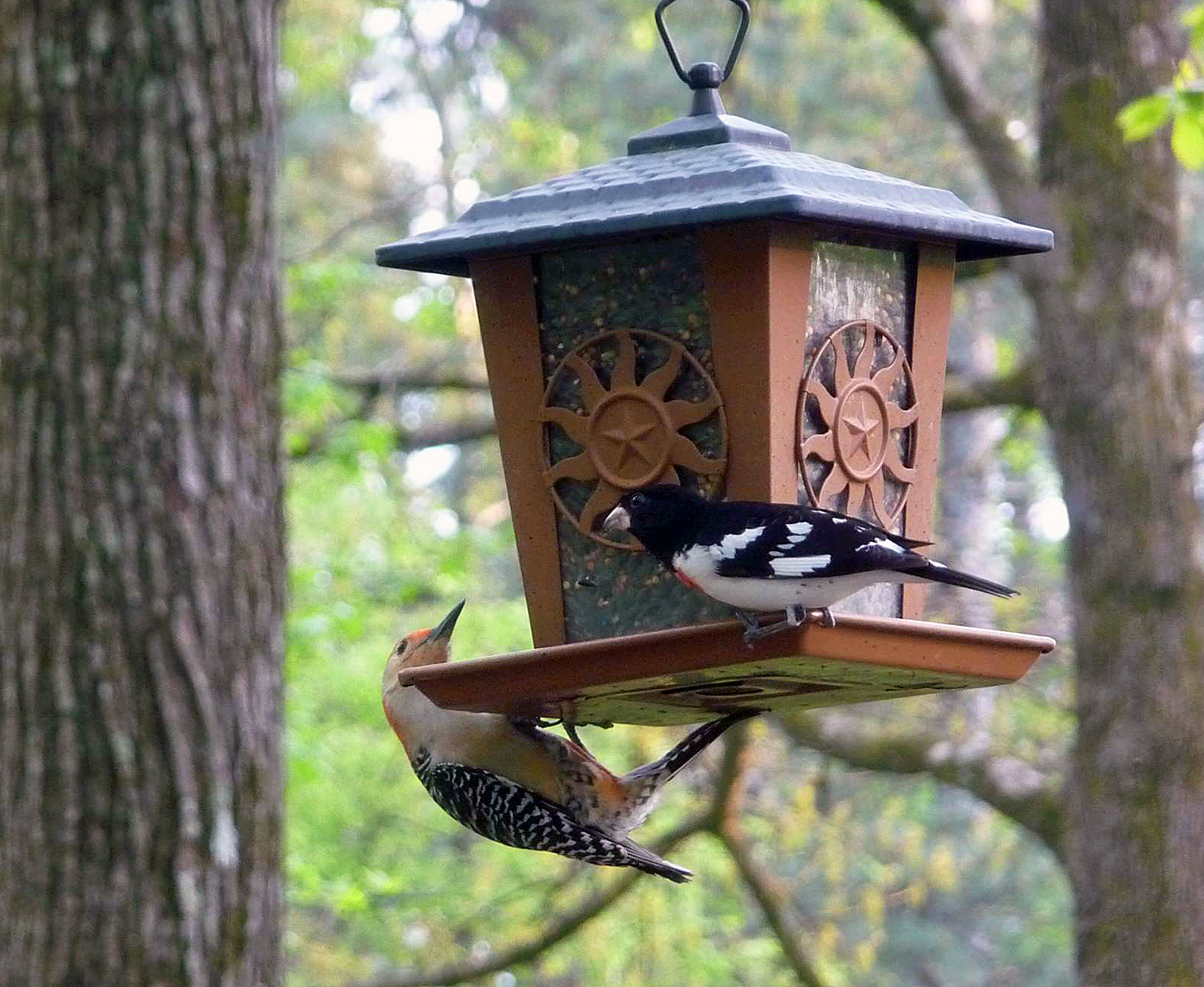
Photo Courtesy of Byron Tucker A Rose-breasted Grosbeak joins a Red-bellied Woodpecker at a feeder in Atlanta.

Photo Courtesy of Byron Tucker
A Rose-breasted Grosbeak joins a Red-bellied Woodpecker at a feeder in Atlanta.

Single birds are occasionally the first to arrive, but Rose-breasted Grosbeaks do form flocks when migrating. Even if a scout shows up alone at your feeders, he will often soon be joined by other grosbeaks. My recent visit by a single male led to two and then three males visiting the feeders. Eventually a female Rose-breasted Grosbeak also made an appearance.

Plenty of Rose-breasted Grosbeaks pass through Northeast Tennessee, and a few even decide to make mountains like Unaka, Holston and Roan their home for the summer. However, these birds spread out widely across the eastern half of the North American continent, ranging from northeastern British Columbia to Quebec and Nova Scotia in Canada. They also range south from New Jersey to Georgia. The Rose-breasted Grosbeak also reaches Colorado, Oklahoma and Kansas.

For the most part, however, the Rose-breasted Grosbeak is replaced in the western United States by the closely related Black-headed Grosbeak.

As fall approaches, the Rose-breasted Grosbeak migrates south to a winter range that spans central Mexico, Central America and northern South America. As they depart, many of these migrating birds will make autumn visits to again partake of offerings of sunflower seeds at backyard feeders. So, if you don’t get to see these showy birds in the spring, you get another chance in September and October.

The male Rose-breasted Grosbeak gives this species it name. Males are the epitome of the birds that make their home for part of the year in the American tropics. The contrasting black and white plumage is emphasized by a triangular slash of rosy-red color on the breast. Put all those elements together and the male Rose-breasted Grosbeak is not a bird that would be mistaken for any other.

The female grosbeak, however, doesn’t quite stand out in the same way. She is much less colorful than the male. With her brown and white plumage, she is often mistaken for a large sparrow or finch.

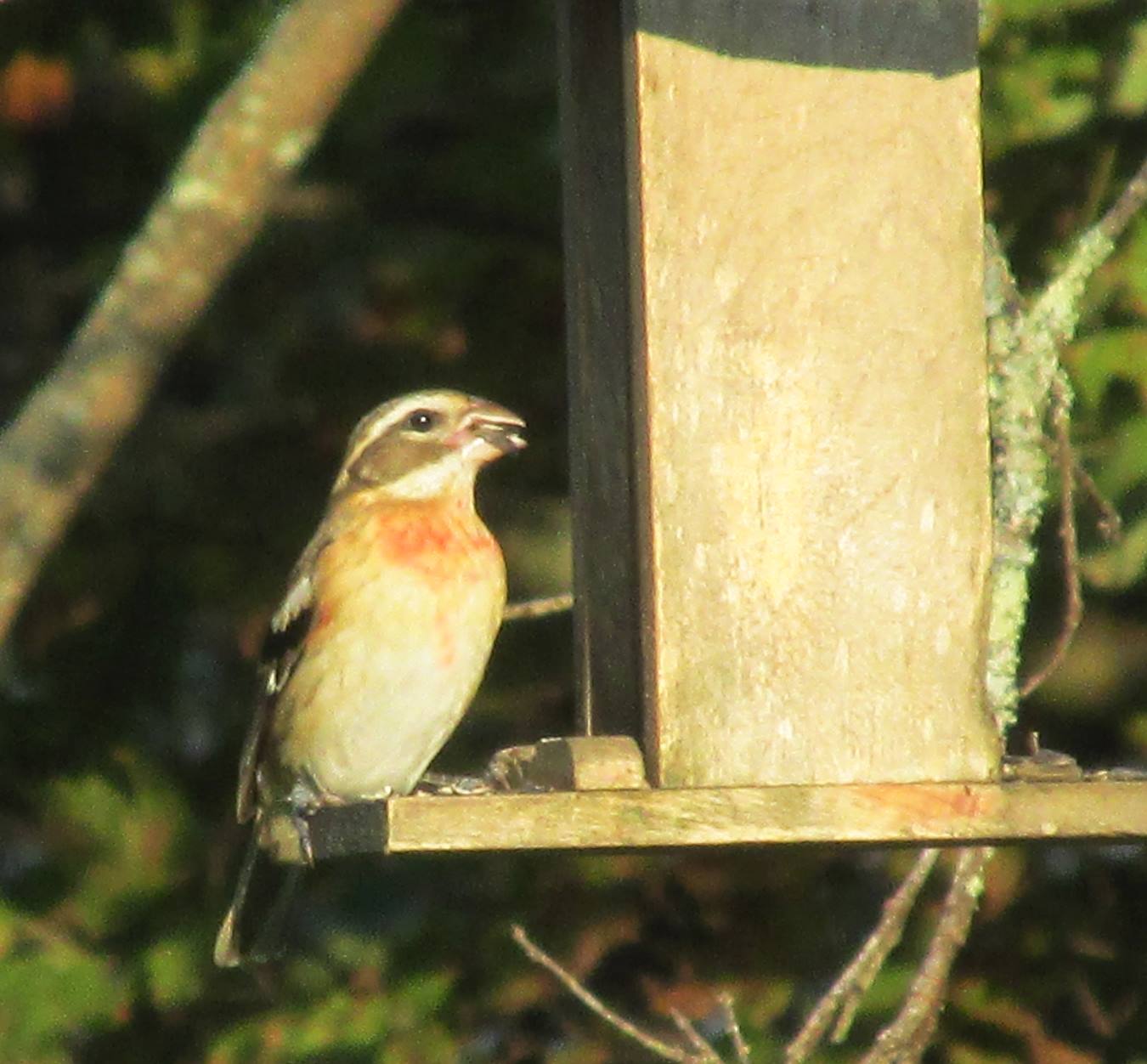
Photo by Bryan Stevens A young male Rose-breasted Grosbeak visits a feeder in September of 2013. Young males resemble females but show a splash of orange on the breast that will be replaced the following spring by the familiar rosy-red patch.

Photo by Bryan Stevens
A young male Rose-breasted Grosbeak visits a feeder in September of 2013. Young males resemble females but show a splash of orange on the breast that will be replaced the following spring by the familiar rosy-red patch.

Both sexes have a massive bill, which they use to hull sunflower seeds at feeders or glean insects from leaves and branches. It’s the heavy, blunt bill for which the term “grosbeak” is derived. “Gros” is a German term for large or big, so grosbeak simply means a large-beaked bird. People who band birds to further the study of them will tell you that Rose-breasted Grosbeaks have a wicked bite and are capable of delivering quite a nip. In Northeast Tennessee, bird banders frequently encounter Rose-breasted Grosbeaks in their mist nets — and bear the scars to prove it.

With some birds, males play only a minor role in the nesting process. That’s not the case with the Rose-breasted Grosbeak male. The males help with nest-building chores and share responsibility with the female for incubating the eggs.

The female lays three to five eggs in a cup-shaped nest. It’s not easy to locate the nests since the birds usually place them in trees at least 20 feet above the ground. Within two weeks, the eggs have hatched and the parents are kept extremely busy finding enough food to satisfy the voracious nestlings. Well fed by both parents, the young grow quickly and usually are ready to leave the nest within 12 days. Often, when a first brood of young departs the nest, the male will care for the rowdy group of fledglings as the female starts a second nest to capitalize on the long days of summer.

Away from our feeders, Rose-breasted Grosbeaks feed on insects, seeds, fruit and even some leaf buds and flowers. I’ve seen these birds satisfying a sweet tooth — or should that be sweet beak? — by feeding on jewelweed flowers and apple blossoms. If sugar’s good for hummingbirds, I am sure it is a valuable energy source for Rose-breasted Grosbeaks, too.

The Rose-breasted Grosbeak is a cherished spring visitor that never fails to disappoint by bringing a hint of the tropics to the mountains of Northeast Tennessee. I’m hoping many readers are also enjoying their own opportunities for hosting this delightful songbird.

•••••

The bird walk at Tipton-Haynes Historic Site on Saturday, April 26, yielded a good range of birds, including American Robin, House Wren, Cardinal, Song Sparrow, Carolina Chickadee, American Goldfinch, Tufted Titmouse, Crow, Canada Goose, Chimney Swift, Brown Thrasher, Barn Swallow, Eastern Towhee, European Starling, Yellow-rumped Warbler, Chipping Sparrow, Mallard, Red-winged Blackbird, Red-bellied Woodpecker, Turkey Vulture, Black Vulture, Northern Flicker, Grackle, Gray Catbird, Blue Jay, Mourning Dove and Eastern Bluebird.

Photo by Bryan Stevens A pair of Brown Thrashers provided quite a show for attendees at a recent bird walk at Tipton-Haynes Historic Site.

Photo by Bryan Stevens
A pair of Brown Thrashers provided quite a show for attendees at a recent bird walk at Tipton-Haynes Historic Site.

Attending the walk were Heather Jones, Charles Moore, David Thometz and myself. We enjoyed perfect spring weather and also admired the many wildflowers in the gardens and woodlands at the Johnson City historic site.

Members of the Lee and Lois Herndon Chapter of the Tennessee Ornithological Society will also hold a bird walk at 8 a.m. on Saturday, May 10, at Sycamore Shoals State Historic Park in Elizabethton. This walk is held in honor of International Migratory Bird Day and should provide participants with an excellent opportunity for seeing some fine birds.

•••••

I enjoy hearing from readers. Share a sighting, ask a question or make a comment by emailing me at ahoodedwarbler@aol.com or posting to my Facebook page.

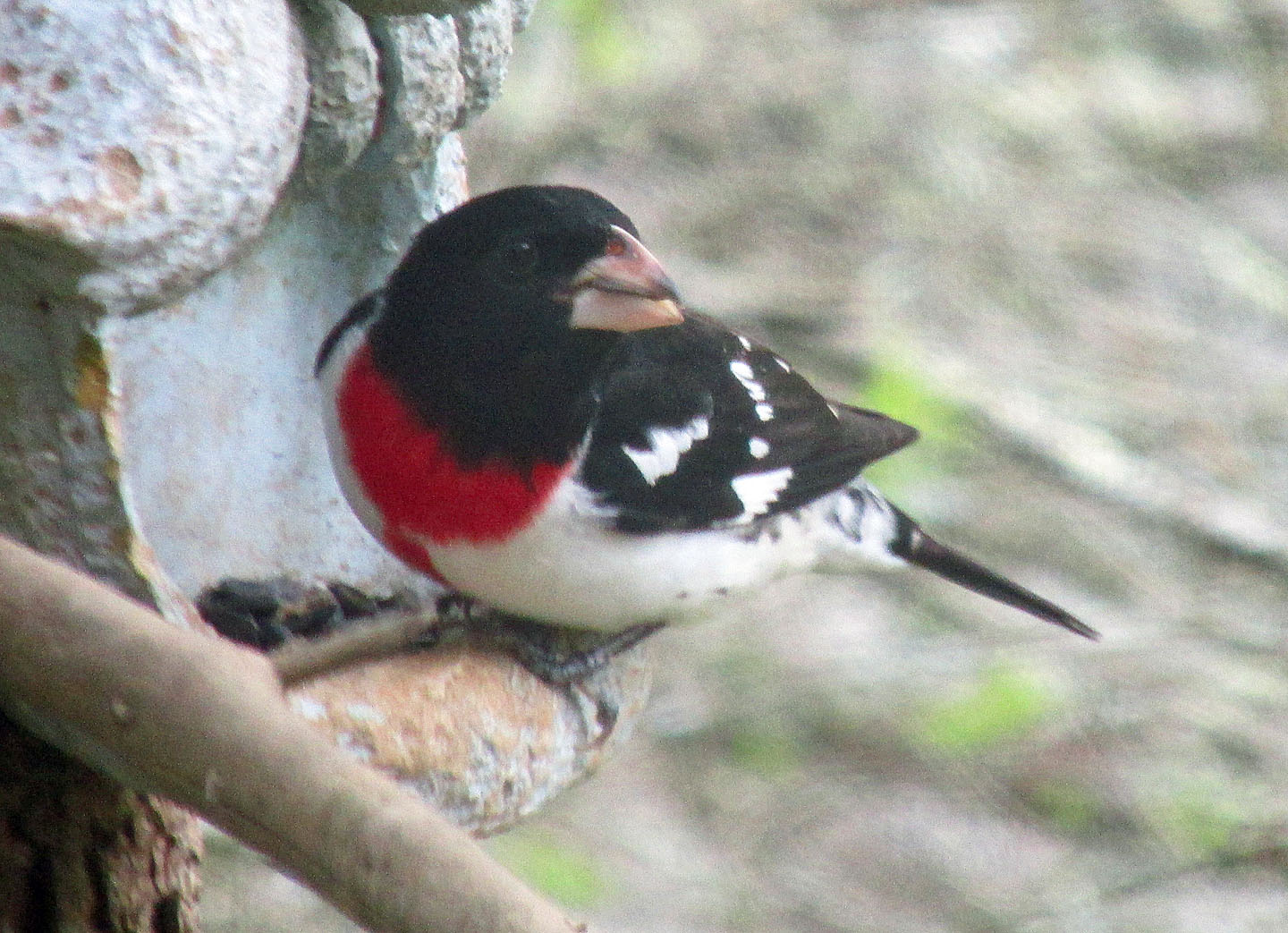
Photo by Bryan Stevens The Rose-breasted Grosbeak never fails to impress.

Photo by Bryan Stevens
The Rose-breasted Grosbeak never fails to impress.