Category Archives: Winter birds

Chapter’s Roan Mountain Christmas Bird Count finds 52 species

Siskin-PairAtFeeders

An abundance of Pine Siskins on the slopes of Roan Mountain made this small finch the most numerous bird on the recent Roan Mountain CBC.

The 62nd Roan Mountain Christmas Bird Count was held Sunday, Dec 20, with nine observers in two parties. The yearly count is conducted by the Lee and Lois Herndon Chapter of Tennessee Ornithological Society, otherwise known as the Elizabethton Bird Club.


A total of 52 species was tallied, which is is above the recent 30-year average of 45.4 species. The all-time high was 55 species in 1987.
Highlights included: Ruffed Grouse, 1; Peregrine Falcon, 1; Red-breasted Nuthatch, 24; Gray Catbird, 1; Chipping Sparrow, 4; Purple Finch, 2; and Pine Siskin, 282.
The most numerous bird on the count was Pine Siskin, with a total of 282 individuals found, followed by Dark-eyed Junco, 172; American Crow, 93; and European Starling, 57.


11265198_10205657576911117_8122867075059637054_o

Usually a summer bird in the region, a single Gray Catbird was found during the recent Roan Mountain CBC.

Compared to the mild weather for most of December, cold temperatures moved in ahead of the counts for Elizabethton and Roan Mountain were held. As a result, near normal temperatures reigned on the days the counts were conducted. There was even about an inch of snow on top of Roan Mountain.

Female-Redbellied

More common at low elevations, only a single Red-bellied Woodpecker was counted during the Roan Mountain CBC.

Species found on the Roan Mountain CBC follow:
Bufflehead, 11; Ruffed Grouse, 1, Wild Turkey, 1; Great Blue Heron, 1; Turkey Vulture, 1; Sharp-shinned Hawk, 1; Cooper’s Hawk, 1; Red-shouldered Hawk, 2; Red-tailed Hawk, 7; American Kestrel, 1; and Peregrine Falcon, 1.
Rock Pigeon, 23; Mourning Dove, 13; Eastern Screech-Owl, 1; and Barred Owl, 1.
Belted Kingfisher, 3; Red-bellied Woodpecker, 1; Yellow-bellied Sapsucker, 1; Downy Woodpecker, 7; Hairy Woodpecker, 2; and Pileated Woodpecker, 4.
Blue Jay 13; American Crow, 93; Common Raven, 15; Carolina Chickadee, 20, Tufted Titmouse, 13; Red-breasted Nuthatch, 24; White-breasted Nuthatch, 11; and Brown Creeper, 2.
Winter Wren, 6; Carolina Wren, 8; Golden-crowned Kinglet, 16; Eastern Bluebird, 5; American Robin, 19; Gray Catbird, 1; and Northern Mockingbird, 2.
European Starling, 57; Cedar Waxwing, 22; Eastern Towhee, 2; Chipping Sparrow, 4; Field Sparrow, 1; Song Sparrow, 43; Swamp Sparrow, 1; White-throated Sparrow, 6; and Dark-eyed Junco, 172.
Northern Cardinal, 15; House Finch, 2; Purple Finch, 2; Pine Siskin, 282; American Goldfinch, 14; and House Sparrow, 55.
••••••
 

HermitThrush-April

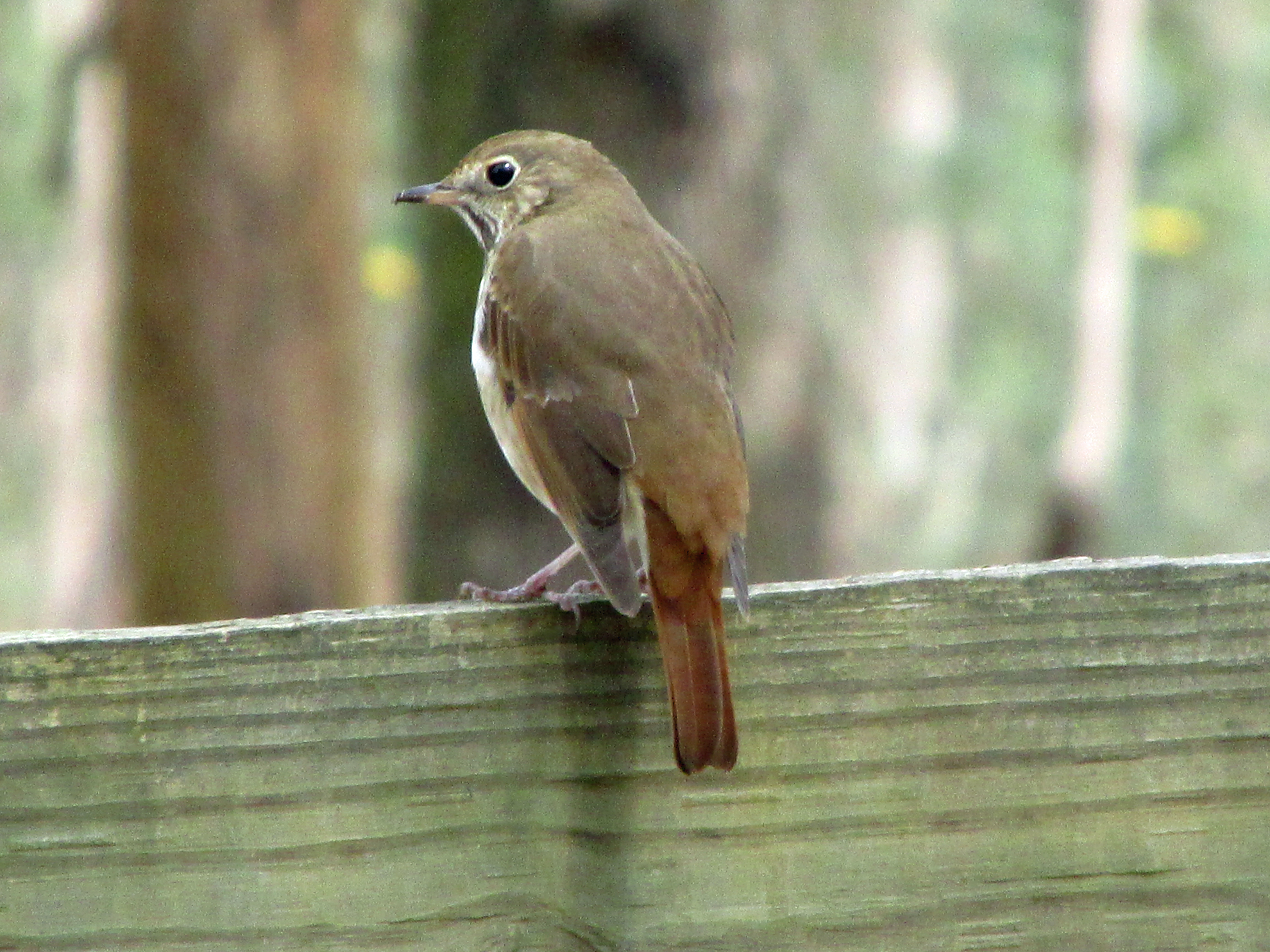
A Hermit Thrush along Simerly Creek was the last bird found on my personal quest for 100 birds in my yard in 2015. This individual was photographed this past March in South Carolina.

My own personal Big Yard Year ended on Dec. 31, 2015. I found my last bird species of the year — Hermit Thrush — lurking in a tangle of rhododendrons on a slope overlooking Simerly Creek. The thrush was the 90th bird I found in my yard in 2015, which brought my quest to an end still shy 10 species of reaching my goal of 100 species in a calendar year.
The Hermit Thrush is the only brown thrush likely to remain in Northeast Tennessee during the winter months. Others, like the Wood Thrush and Veery, winter in the American tropics and return to the United States and Canada each spring for the summer nesting season.
The Hermit Thrush is well known for its song, which consists of a series of clear, musical notes, each on a different pitch, consisting of a piping introductory note and a reedy tremolo. The birds don’t usually sing in winter, but they do produce a call note when disturbed or alarmed that is described as a low “chuck.”
In the summer, the Hermit Thrush feeds on a variety of insects and spiders, but this bird switches to a diet of fruit and berries during the winter months.
The well-known American poet Walt Whitman used a Hermit Thrush as a powerful symbol in his famous poem, “When Lilacs Last in the Dooryard Bloom’d.” Whitman introduces the bird in his poem with the lines, “In the swamp in secluded recesses/A shy and hidden bird is warbling a song/Solitary the thrush/The hermit withdrawn to himself, avoiding the settlements/ Sings by himself a song.”
 

Winterchickadee

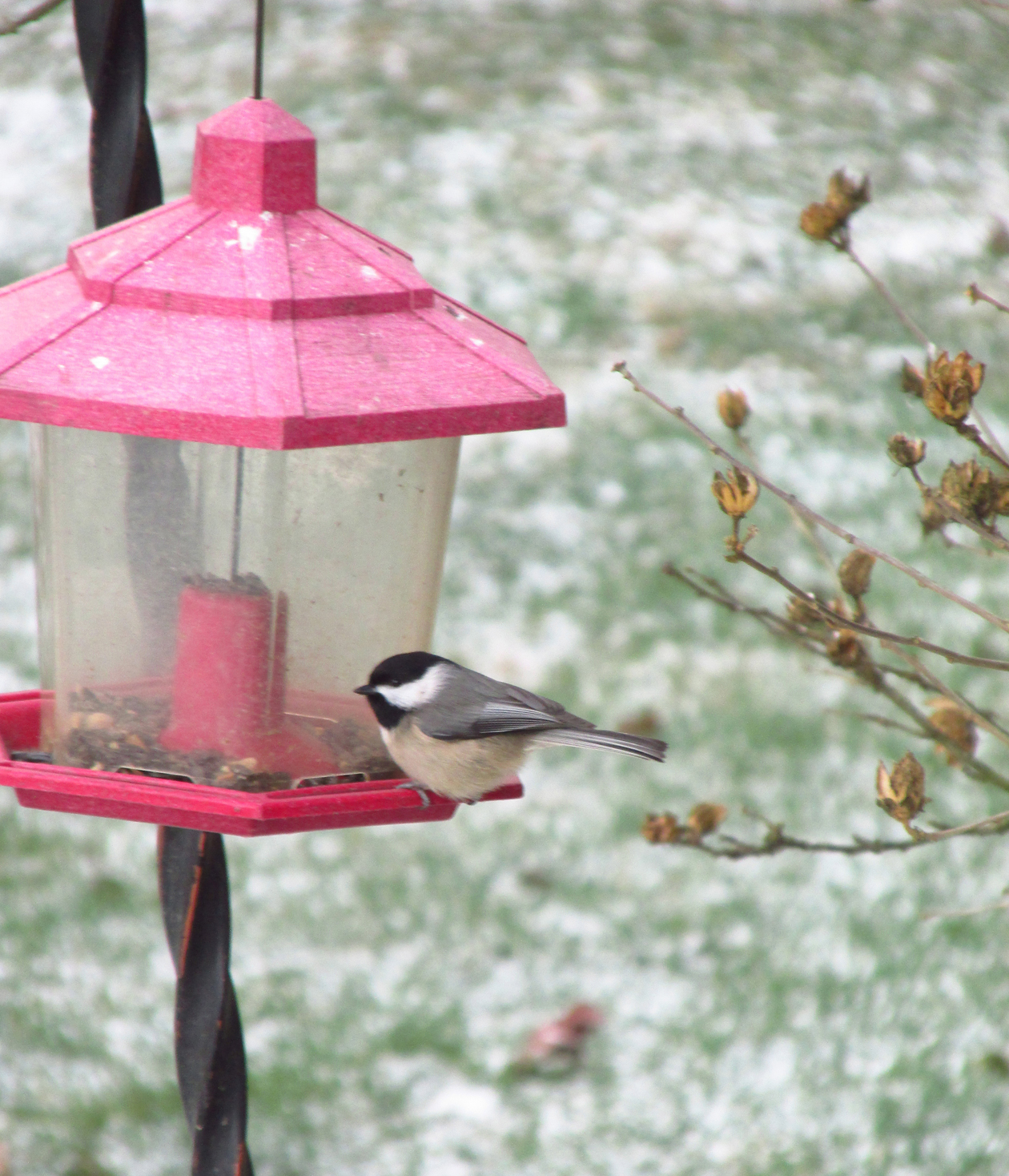
Many birds, such as Carolina Chickadees, are almost daily visitors to my yard.

Overall, I am quite pleased with finding the 90 species in my yard. After all, it broke my old record. I can’t help but think on those species that I missed. Winter species like Yellow-bellied Sapsucker and Brown Creeper, which have been relatively rare in my yard, simply didn’t make an appearance in 2015. House Wren was one bird that I had really expected to find. For some reason, however, no House Wrens took up residence at my home in 2015. Other birds that occasionally make migration stops but didn’t visit last year included Vesper Sparrow, Blue-winged Warbler, Kentucky Warbler, and Canada Goose.
I saw most of my birds in January, ending the first month of the year with 26 species. I also saw 14 species in both April and September, which testified to the strength of my yard to attract migrant birds.


Peregrine_Falcon (1)

Photo by U.S. Fish and Wildlife Service This Peregrine Falcon is a captive bird, unlike the one found during the Roan Mountain CBC.

I haven’t decided if I am setting any birding goals for 2016. I may simply enjoy birds without any specific aims. However, the year is still young. If I decide otherwise, I will announce it on my weekly blog.
Departures, new arrivals signal approach of winter

October represented a transitional time for the region’s birds. Many of our summer birds have now departed for wintering grounds, which means we won’t be seeing them again until April or May of 2016.

Hummer-Oct17

The last Ruby-throated Hummingbird of 2015.

I saw hummingbirds daily in my yard during October through the 17th day of the month, when I saw only a single bird at the feeders. The following day no hummingbirds appeared in the yard.
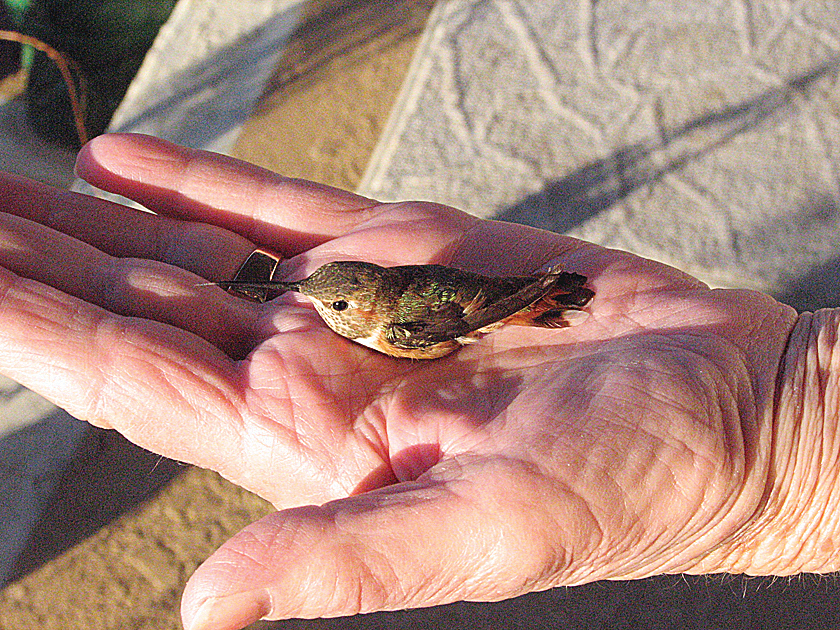
I am still hanging sugar water feeders in the unlikely chance I might attract a visit from one of the Selasphorus hummingbirds, a genus of these tiny birds that spends the nesting season in the western United States. A few of these species appear to migrate through the southeastern United States each fall and early winter. Rufous hummingbird is the species most likely to make an appearance, but other species — Allen’s hummingbird and black-chinned hummingbird — are a possibility.

Rufous-BettyKirby-Three-Program

A Rufous Hummingbird I observed being banded several years ago in Hampton, Tennessee.

These “winter” hummingbirds are easy to recognize. Their plumage is more brown than green, making them quite distinguishable from the usual ruby-throated hummingbird, which is not usually present in the region after the end of October.
•••••
Most of the warblers have also departed. I saw a couple of common yellowthroats on Oct. 10, but they represented the last gasp of warbler migration. Most of the warblers winter in Central America or the Caribbean, although a few travel only as far as Florida.


Yellow-Rump-Frippy

The Yellow-rumped Warbler is one of the few warblers that remains in the region for the winter months.

Of course, there’s always an exception to the rule. The aptly-named yellow-rumped warbler is a winter resident throughout much of Virginia and Tennessee. I had a couple of yellow-rumped warblers in the yard on Oct. 25. The winter diet of this warbler includes the berries of poison ivy, so the bird helps with the spread of this noxious plant.
••••••
I often think of October as the season for sparrows, and this year proved no exception. Three different species marked their return during October.
Of all the birds associated with winter weather, few are as symbolic as the dark-eyed junco, or “snow bird.” The junco occurs in several geographic variations.
John V. Dennis, author of “A Complete Guide to Bird Feeding,” captures the essence of the junco in the following description: “Driving winds and swirling snow do not daunt this plucky bird. The coldest winter days see the junco as lively as ever and with a joie de vivre that bolsters our sagging spirits.” The dark-eyed junco’s scientific name, hyemalis, is New Latin for “wintry,” an apt description of this bird.
Most people look forward to the spring return of some of our brilliant birds — warblers, tanagers and orioles — and I must admit that I also enjoy the arrival of these birds. The junco, in comparison to some of these species, is not in the same league. Nevertheless, the junco is handsome in its slate gray and white plumage, giving rise to the old saying “dark skies above, snow below.”
The first junco showed up this year on Halloween. Sheila Boyd, a Facebook friend who lives in Marion, North Carolina, sent me a message to let me know she saw her first juncos on Oct. 29.


Swamp_Sparrow

The Swamp Sparrow is most often found in wetland habitats.

My junco sighting on Oct. 31 followed observations earlier in the month of some other wintering sparrows. I have allowed a stand of cattails to grow unmolested on my property, and now my action is paying dividends. I’ve seen numerous swamp sparrows in my small cattail marsh, beginning with one that I saw on Oct. 11.
The cattails also persuaded a marsh wren to pay a visit on Oct. 4. Marsh wrens and swamp sparrows are not the only birds fond of cattails. These plants also attract birds as diverse as rails and snipes, as well as red-winged blackbirds, common yellowthroats and various waterfowls.
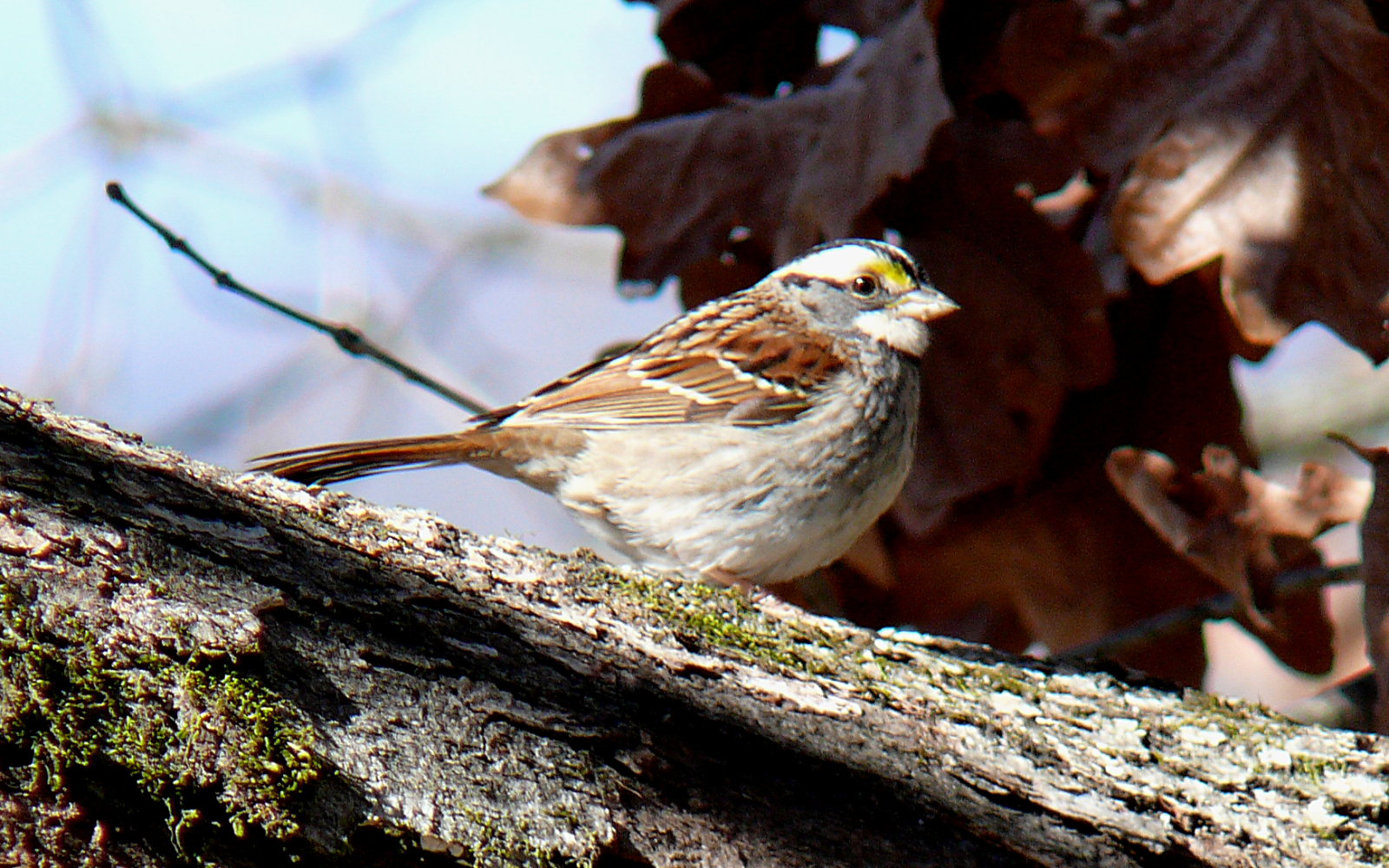
White-throated sparrows showed up on Oct. 15, which is fairly typical for this winter resident. The numbers of this attractive sparrow have been increasing since that date.


White-throated_Sparrow-27527

Photo by Ken Thomas                                            A White-throated Sparrow shows off its namesake white throat.

While I have learned to associate this bird with winter’s arrival, some Native American tribes connected the white-throated sparrow with the annual return of spring. According to Laura C. Martin, author of “The Folklore of Birds,” the Blackfoot Indians called the white-throated sparrows “summer-bringers.” The members of this tribe believed that the message of the sparrow’s song was “the leaves are budding and summer is coming.”
The song of the white-throated sparrow has also earned distinctive translations among the residents of Canada and the United States. Those translations can be described as “Oh sweet Canada, Canada, Canada” or “Old Sam Peabody, Peabody, Peabody.”
While the shy swamp sparrows usually maintain a reclusive presence in the cattails, white-throated sparrows and dark-eyed juncos are regular visitors at my feeders once they arrive. Both the junco and the white-throated sparrow prefer to feed on the ground beneath the feeders. A few other sparrows will visit feeders, including song sparrow, field sparrow, chipping sparrow and white-crowned sparrow.


SongSparrow-Cattailss

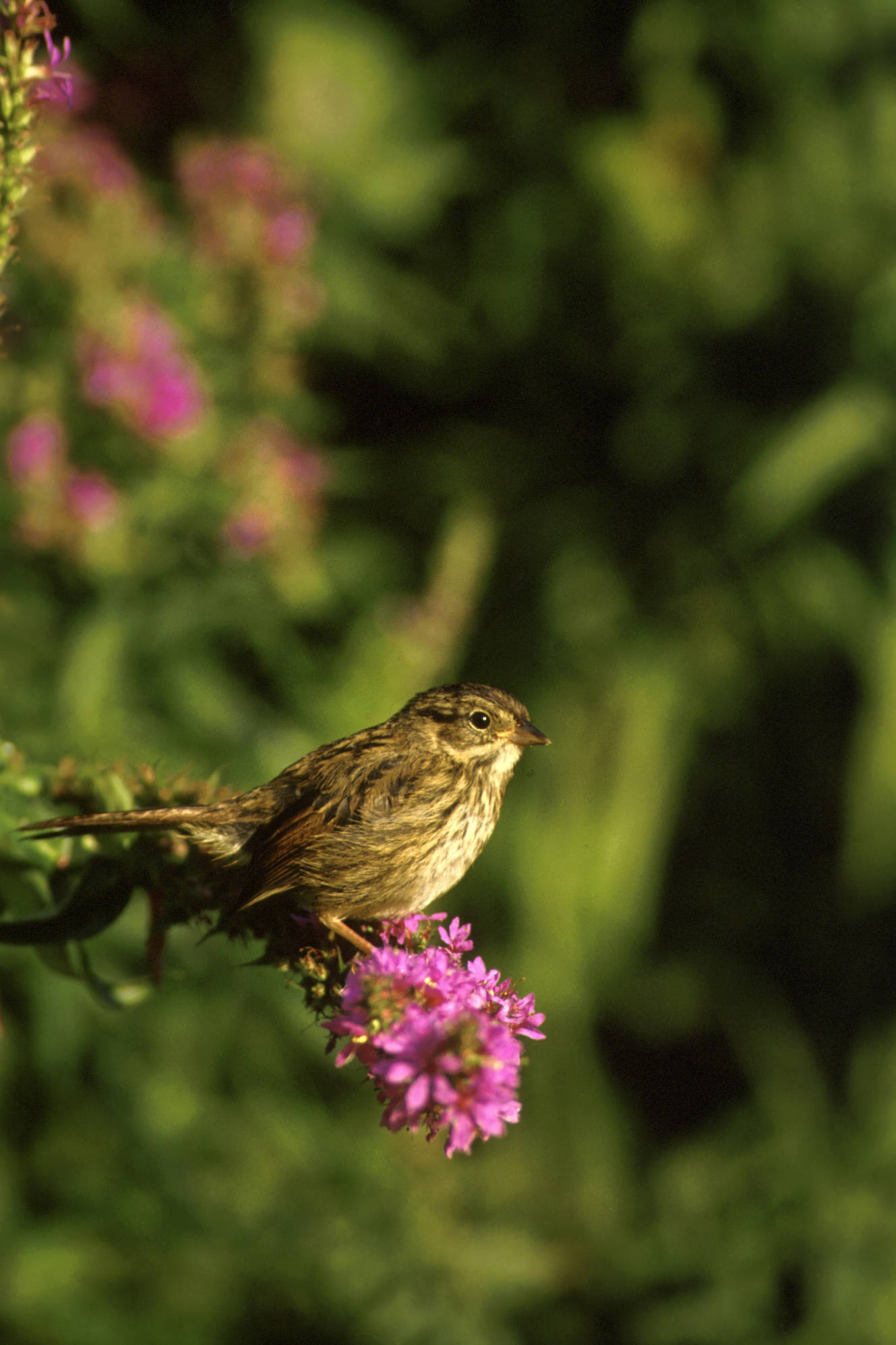
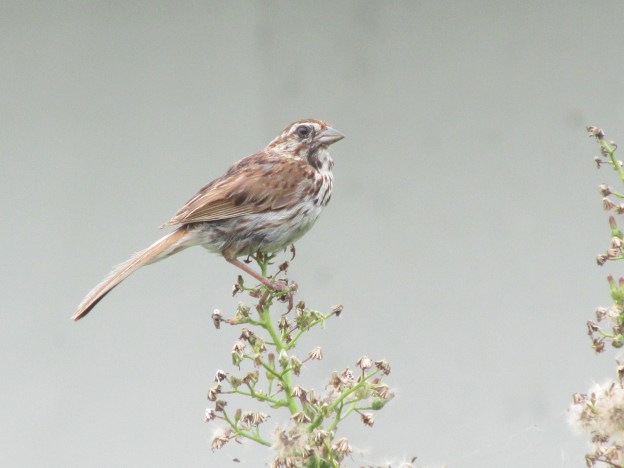
A Song Sparrow perches on a dry cattail stalk.

Of course, the real entertainment from our sparrows comes from their frequent visits to our backyard feeders. When these birds flock to a feeder and began a furious period of eating, I don’t even have to glance skyward or tune in the television weather forecast. I know what they know. Bad weather is on the way!


With our winter birds beginning to arrive, I’d love to hear what readers are seeing at their own feeders. Send me an email at ahoodedwarbler@aol.com to ask questions, share observations or makes a comment.