
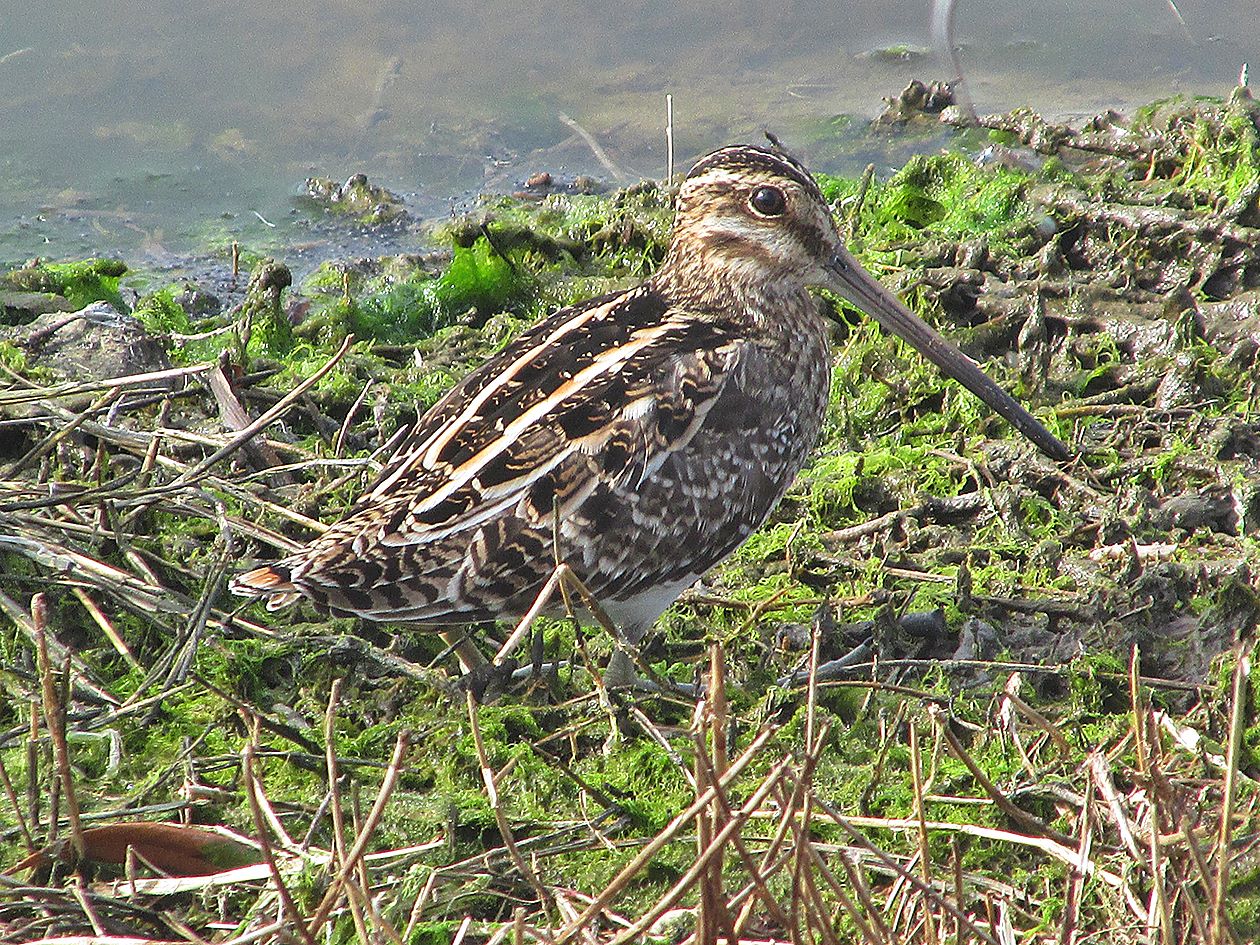
Photo by Bryan Stevens • A Wilson’s snipe forages on muddy ground in a wetland at Huntington Beach State Park in South Carolina.
Have you ever gone on a wild goose chase? Perhaps you have memories of being taken on a snipe hunt?
If so, I don’t need to tell you that our feathered friends have inspired a lot of unusual sayings and activities. The snipe hunt is widely regarded as a rite of passage. I’m not sure if these “hunts” are still organized on moonless nights to pull a playful prank on unsuspecting or naive adolescents. The gist of this practical joke is that these would-be snipe hunters are given a bag or sack to use in capturing the supposedly elusive, perhaps mythical snipe.
The “snipe hunt” has also come to symbolize a lesson in futility since the target of the hunt is never found despite some diligent efforts. It’s all harmless fun, but what bothers me is that the tradition of the snipe hunt reinforces the mistaken idea that this elusive creature is a make-believe bird.
That’s not the case! I know of what I speak, having seen plenty of snipes over the years. There are some things about this unusual bird that makes it understandable how this creature became the focus of the long-running tradition of the snipe hunt.
The Wilson’s snipe is one of North America’s more elusive birds. It’s an aberrant shorebird that doesn’t exactly fit the mold of the birds any coastal visitor has probably seen running along the surf’s edge on a beach.
The snipe is an odd, gangly bird with long legs and an even more absurdly long bill. It’s also remarkably well camouflaged to blend with its preferred surroundings in flooded fields and wetland marshes. It is one of those shorebirds that usually makes its home far from beaches and the crash of the ocean’s surf.
So, to reiterate, there really is such a bird as a snipe. In fact, there are several species of snipes, although only one — Wilson’s snipe — can be found in Northeast Tennessee. Some of the world’s other 25 species of snipe include jack snipe, wood snipe, pintail snipe, noble snipe and imperial snipe. What makes the noble and imperial snipes worthy of such pretentious names isn’t quite clear.
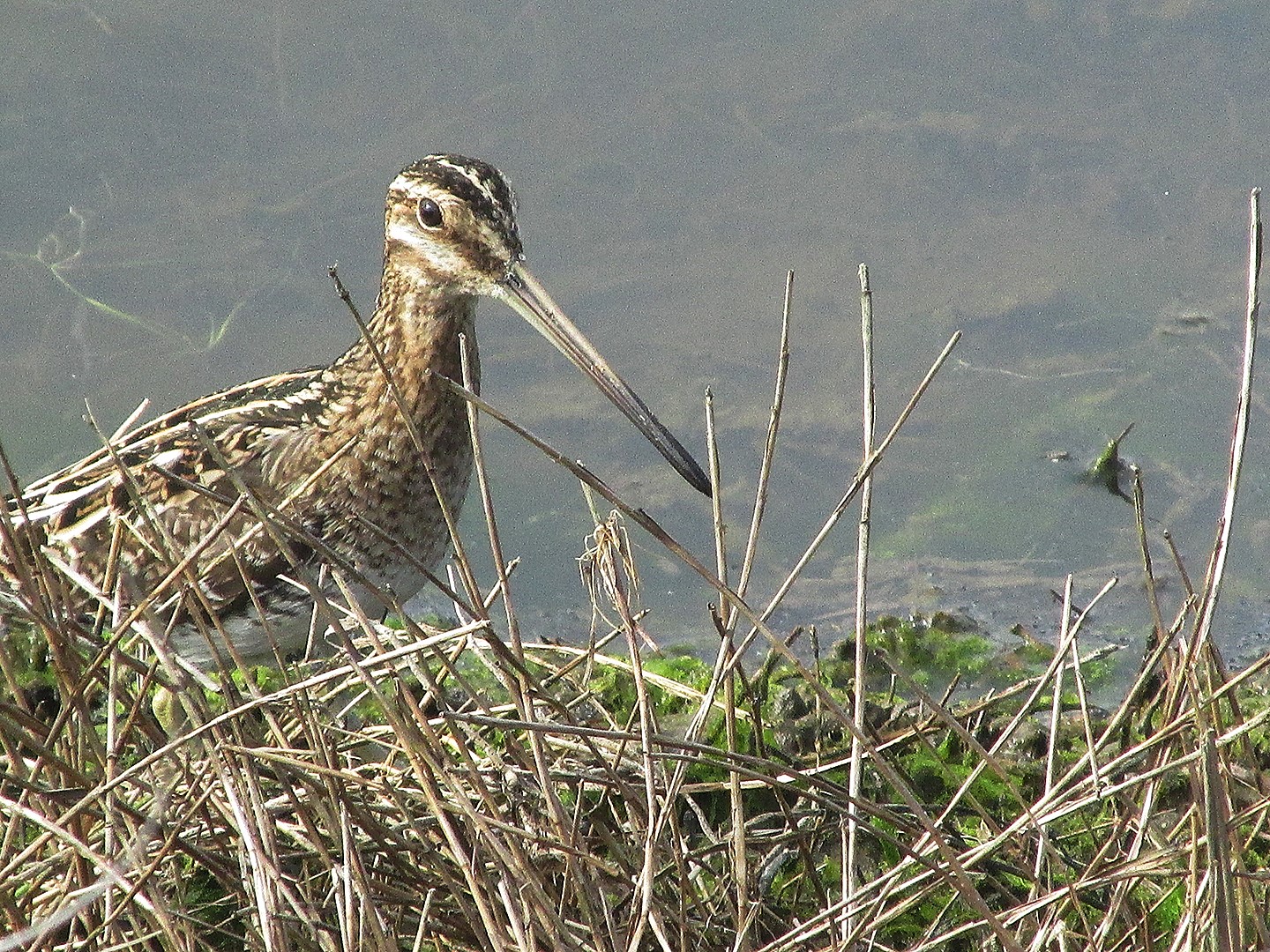
Photo by Bryan Stevens • The Wilson’s snipe can blend well with wetland vegetation.
Any wet field or pasture may conceal hidden Wilson’s snipes during the spring. A few of these hardy shorebirds sometimes spend the winter in the region. Flushing a snipe from a tangle of grass right at your feet as you walk through a wet field always works to get the heart pumping faster.
The Wilson’s snipe uses its long bill to probe in the mud for prey, which can include earthworms, insects and other invertebrates.
Formerly known as the common snipe, the Wilson’s snipe nests in wetland habitats across Canada and the northern United States. The bird’s common name pays homage to Alexander Wilson, an early American ornithologist. In addition to his expertise on birds, Wilson was also a poet and an illustrator. He was born in Scotland in 1766, but he died at age 47 in 1813 in Philadelphia, Pennsylvania.
I’ve located Wilson’s snipes in all of the Northeastern Tennessee counties. I still hold the record for most snipes seen at one time. I was birding in Johnson County with the late Wallace Coffey when we encountered a flock consisting of 126 Wilson’s snipes overrunning Quarry Bog in Shady Valley.
I’ve also observed this snipe in coastal South Carolina, including a close-range observation while visiting Huntington Beach State Park. My South Carolina birding over the years has yielded observations of other shorebirds, including willet, greater yellowlegs, black-bellied plover, short-billed dowitcher and Wilson’s plover, yet another shorebird named in honor of Wilson.
Looking back through my records helped resurface a memory of a fun trip back in 2003 to look for snipe and its even odder relative, the American woodcock. On Tuesday, March 11, I traveled with Tess Cumbie, Reece Jamerson and Howard Langridge to Johnson County’s Shady Valley. Our first stop at Quarry Bog yielded lots of red-winged blackbirds, Eastern meadowlarks and song sparrows. We also flushed about a dozen or so snipe. Other birds seen during our visit included a great blue heron, swamp sparrow, three common grackles, a wood duck and a flock of American robins.
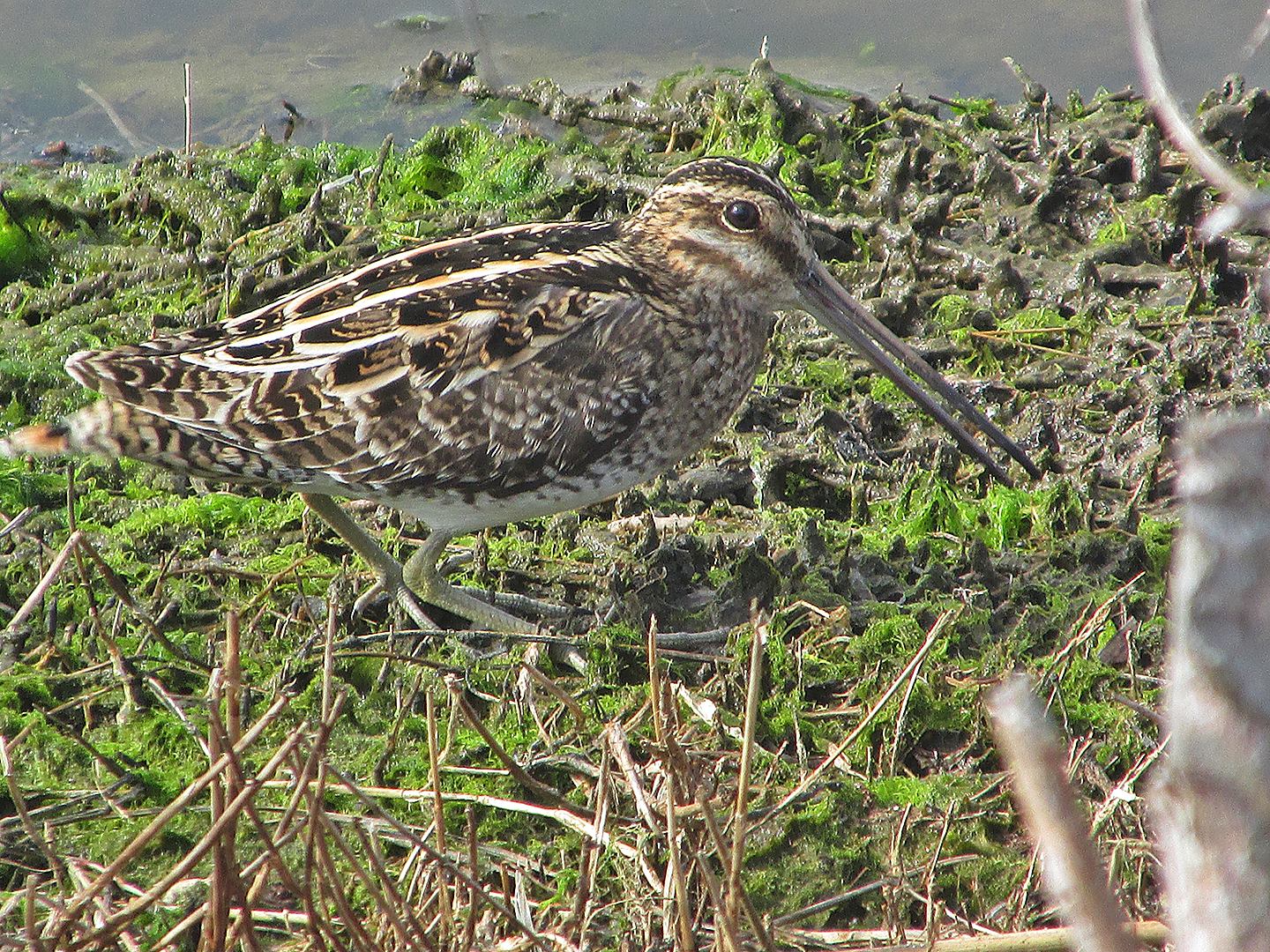
Photo by Bryan Stevens • Although only one species — Wilson’s snipe — can be found in Northeast Tennessee, there are 25 species of snipe found worldwide, including jack snipe, wood snipe, pintail snipe, noble snipe and imperial snipe.
We arrived at Orchard Bog to settle in before twilight with our hope for a show by the American woodcocks, also known by such names as bogsucker and timber doodle. Before the timberdoodles began their show, several wood ducks flew overhead and a flock of eight Canada geese splashed down in the bog. At least two American woodcocks began making their “peent” calls shortly before 7 p.m. Then one of the timberdoodles took to the air, giving a fine show in his display flight. The timberdoodles seemed to give anywhere between 18 to 34 “peent” calls before they would take to the air in a display that also let us hear the “twittering” feathers as they ascended and descended. When it got too dark to really see their flights, we left, but the timberdoodles were still “peenting” in the bog.
As spring advances in the region, many of these shorebirds will make migratory stops along the shores of lakes and rivers or by the edges of farm ponds. Look for snipes around puddles in flooded fields or even along the banks of small streams. The family of shorebirds is dazzling in its diversity, and they’re definitely worth seeking out.
•••
If you have a question, wish to make a comment or share a sighting, email ahoodedwarbler@aol.com.

Photo by Bryan Stevens • Although not rare, Wilson’s snipes are not likely to be encountered unless people actively seek them out in their wetland habitats.
 Our Fine Feathered Friends