Author Archives: Bryan Stevens

Unknown's avatar

About Bryan Stevens

Bryan Stevens lives in Northeast Tennessee. He is an editor, writer and columnist. He has written food columns for the Johnson City Press, Elizabethton Star and Carter County Compass since 2003.

Kinglets among winter’s smallest, friendliest birds

Photo by Jake Bonello/USFWS • A ruby-crowned kinglet living up to its name by displaying its cap of red feathers.

Most of winter’s resident birds have settled in for the season at my home.
From red-shouldered hawk to winter wren to dark-eyed junco and white-throated sparrow, many seasonal residents have all become part of the daily backdrop. These winter arrivals join such year-round residents as Northern cardinal, Carolina chickadee, tufted titmouse, Carolina wren and downy woodpecker.
Some other tiny birds are also a little more abundant this season. I’m hearing kinglets almost everywhere I go.

The ruby-crowned kinglet, one of North America’s smallest birds, is typically about four inches long and doesn’t even weigh half an ounce. A close relative is the golden-crowned kinglet, which is typically just under four inches in length, which makes the species the shortest of North America’s songbirds.
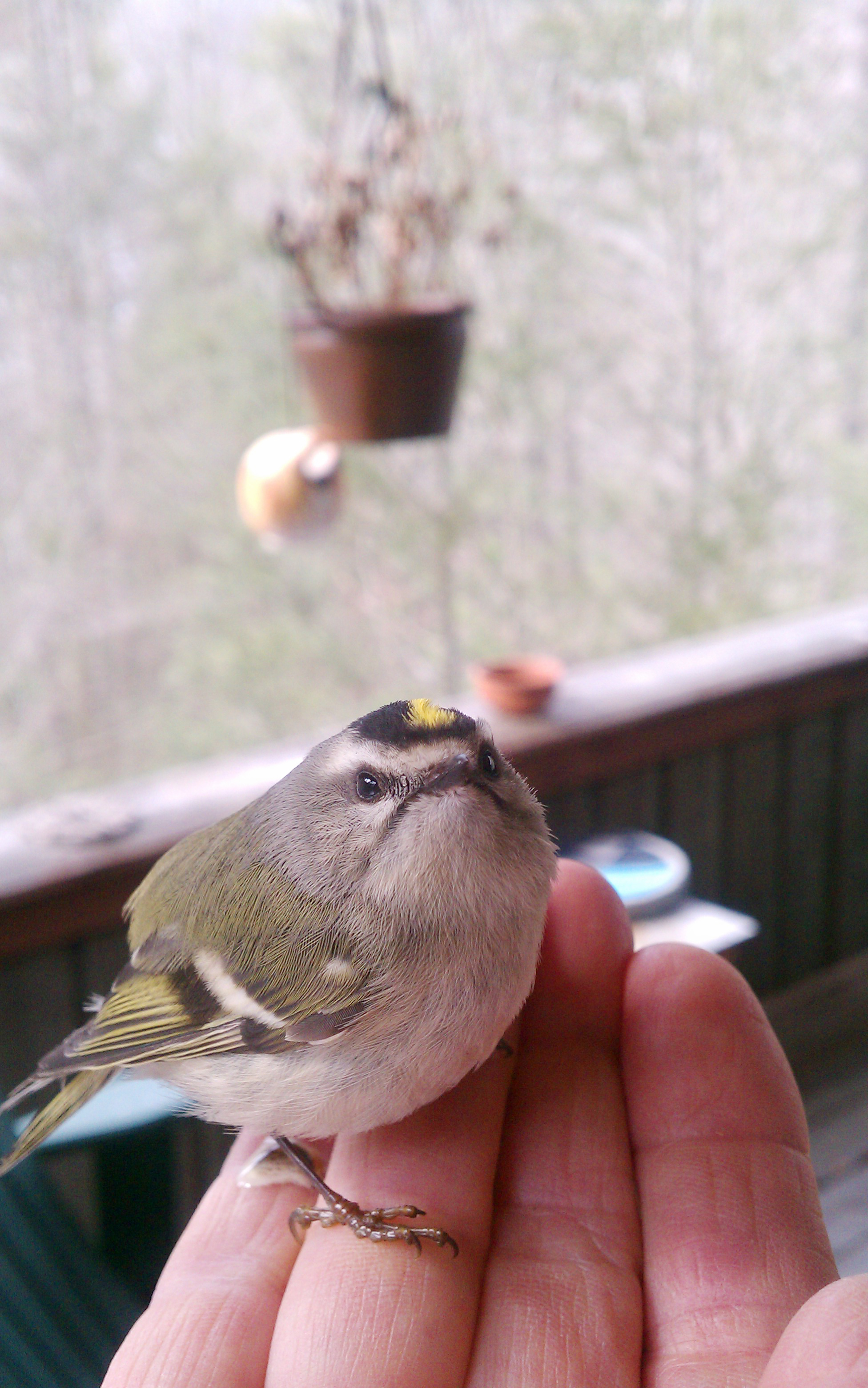
Photo by Beth McPherson • A golden-crowned kinglet being held carefully after a window strike.

How is it that the kinglets, among the smallest of North American birds, invariably choose to spend the harsh cold months of winter in our yards and gardens?
Chickadees, titmice and other familiar winter birds eke out an existence by supplementing some of their diet with fare from bird feeders. Although kinglets often associate with roaming flocks comprise of a mix of different species, the kinglets are not usually interested in the offerings at our feeders.

Kinglets are dedicated to gleaning tiny insects and spiders, as well as insects eggs and larvae, from branches and plantings in our yards. They’re so successful at it that they don’t need to turn to even a well-stocked feeder. A kinglet will on occasion sample an offering of suet or peanut butter, but this bird doesn’t make a habit of visiting feeders.

Kinglets are surprisingly tame at times and often exhibit as much curiosity about us as we display toward them. They’re very active birds, however, constantly moving from perch to perch. These bursts of hyperactivity can make them difficult to observe since they so rarely remain still.

In addition to the two North American species, kinglets, referred to in other parts of the world as firecrests, flamecrests or goldcrests, range throughout temperate North America, Europe and Asia, as well as northernmost Africa, Macaronesia and the Himalayas.

It’s the colorful crest of feathers atop their heads that have given all of them their common names. Kinglets belong to the family, Regulidae, and the genus, Regulus. The family and genus names are derived from a Latin word, regulus, which means “rex,”or “king” The name was apparently inspired by the colorful crown patches, often red, orange or gold, that resemble the royal “crowns” of kings.

This year’s bird calendar features a pair of tree swallows on the cover.

Although small in size, these birds more than compensate for it with a feisty spirit that does them well through the harsher weather of the winter months. It’s that indomitable spirit, curious nature and frantic antics that makes them such welcome companions during the bleak, cold months.

•••

The Lee & Lois Herndon Chapter of the Tennessee Ornithological Society is taking orders for its 2024 bird calendar.

The calendar will feature a photo of a pair of tree swallows on the front cover. The photo was taken by chapter members Eric Middlemas, who also contributed numerous other photographs for the calendar.

The inside pages of the professionally-produced calendar feature dozens more full-color photographs and an informative and educational grid. These calendars sell for $15 plus $2 for shipping. All sales help the club fund birding programs, public park feeders, conservation efforts and other activities in upper Northeast Tennessee. For more information on how to obtain a calendar, email ahoodedwarbler@aol.com.

•••

To share a sighting, ask a question or make a comment, please email me at ahoodedwarbler@aol.com.


Ancient murrelet unexpected state visitor

Photo Courtesy of Tom and Cathy McNeil • An ancient murrelet found at Chickamauga Dam near Chattanooga is the first of its kind ever observed in Tennessee.

Tennessee got a visit from a new bird in late November when an ancient murrelet showed up at Chickamauga Dam near Chattanooga. As I’m fond of noting, birds have wings and can use those wings to show up in the most unexpected places.

A bird of the Pacific Northwest, ancient murrelets typically winter off the Pacific Coast, not on a lake in landlocked Tennessee. It’s little surprise that this bird represents the first-ever record of the species for the Volunteer State.

According to the website “All About Birds,” ancient murrelets are sea-going birds that nest in colonies on land, although usually within 1,000 feet of the shoreline.

The website also notes that ancient murrelets construct earthen burrows for nesting but also use existing cavities under logs or tree roots, crevices in rocky areas or gaps between grass tussocks. They’re also adaptable and readily use wooden nest boxes and sometimes even nest in walls or huts.

Readers may remember that I wrote about Tom and Cathy McNeil chasing after some hurricane-driven American flamingos in North Carolina and Tennessee back in August. Turns out, they went after the ancient murrelet, too, again with success, I am pleased to note.

Upon arrival at the Chickamauga Dam Day Use Area, Allan Trently, an East Tennessee State University graduate and a former East Tennessee resident, had a spotting scope already focused on the murrelet. How’s that for convenience?

The reports of the murrelet made me think back to my childhood reading of the books in the “Little House” series by Laura Ingalls Wilder.

As it turns out, the Ingalls family members were good amateur naturalists.

Wilder, writing as an adult, wrote about birds and other wildlife. She wrote in a time when birds like prairie chickens were still common on the vast grasslands of states like Kansas, Minnesota and North and South Dakota.

An interesting couple of chapters in her book “The Long Winter” offer details of a strange water bird that literally drops out of the sky into a bale of hay on the family farm near Silver Lake in De Smet, South Dakota.

The family consults a book titled “The Wonders of the Animal World” and conclude that the bird looks like a miniature version of the great auk.

The bird was definitely not a great auk, which went extinct in 1844. But there are some tantalizing clues that the bird might have been an ancient murrelet or a dovekie.

Laura Erickson, author of the blog “For the Birds,” dedicated one of her posts to the mysterious bird found by the Ingalls family. Erickson did her research and discovered records of ancient murrelet in South Dakota from November 1993. South Dakota has no records of murrelets, but neighboring Wisconsin had a few. One visiting ancient murrelet was shot by two boys hunting along Lake Michigan in 1908, and another was found dead under some Tomah power lines in 1949.

And then, along comes Steve Kolbe, who found an ancient murrelet at Stoney Point up the shore between Duluth and Two Harbors in January of 2021.

It was an opportunity too good to miss, and Erickson made the trip to see the rare visitor.

She noted in her blog that she immediately thought of Laura Ingalls Wilder when she learned about the bird. Erickson did get to see the bird, and she wrote that the sighting provided her with “a sense of connection with Laura Ingalls Wilder herself, the woman whose books so enriched my childhood and were so enjoyable to read aloud to my own children.”

The “Little House” books are a treasure trove to a time of abundance for birds. Wilder writes often of awe as she observed birds as the family ventured into new territory. Near Silver Lake, she saw great migrating flocks of geese, ducks, cranes, herons, swans, pelicans and hell-divers (grebes) and mud-hens (coots).

A mournful Charles Ingalls even brought back a swan, shot by accident. He tells the family he had never seen one in flight.

He also shot a pelican so the family could see one up close, but the smell made their examination very quick. If you’ve ever wondered, pelicans are not worth eating, according to Wilder. She wrote that their feathers reek of fish, making them unfit for even the stuffing of pillows.

Wilder also described all the sorts of ducks that migrated across the vast prairies, including mallards, redheads, canvasbacks, teals and bluebills. I’m guessing that the bluebills were scaups, a species of diving duck. In an almost poetic passage, she described “golden autumn days” when “the sky was full of wings.

Another birding story from the books, both humorous and serious in tone, involves an invasion of blackbirds that decimated a crop of corn and oats that Charles Ingalls was trying to raise.

The flocks of blackbirds defeat all their efforts to defend the crops, but there is a “when life hands you lemons, make lemonade” moment when Wilder writes, “For dinner, there is blackbird pie — even better than chicken pie. In addition, there is more bounty from the garden: new potatoes, peas, cucumbers and carrots. There is even cottage cheese and more tomatoes with sugar and cream.”

As Pa Ingalls declared at the end of the chapter, “a flock of pesky blackbirds can’t stop us.”

Considering their location in South Dakota, the blackbirds could have consisted of several species: red-winged blackbirds, yellow-headed blackbirds, grackles or cowbirds. It’s a little disappointing Wilder didn’t prove as descriptive in her account of the blackbirds as she did when writing of the waterfowl.

It’s nice to be able to bird vicariously through the exploits of the McNeils, as well as the long-ago stories from the “Little House” books by Laura Ingalls Wilder, but I do need to get out more and look for my own birds.

•••

To ask a question, share a sighting or make a comment, email me at ahoodedwarbler@aol.com.

Bachman’s warbler slips away into extinction 35 years after last sighting

Louis Agassiz Fuertes, an American ornithologist, illustrator and artist, painted this pair of Bachman’s warblers. He also set the rigorous and current-day standards for ornithological art and naturalist depiction and is considered one of the most prolific American bird artists, second only to his guiding professional predecessor John James Audubon.

Back in mid-October, the U.S. Fish and Wildlife Service delisted 21 species from the Endangered Species Act.

Unfortunately, the action came about not because of a successful recovery for the 21 species, but it was due to extinction.

According to the FWS press release, rigorous reviews of the best available science helped FWS determine these species are extinct and should be removed from the list of species protected under the ESA.

Most of these species were listed under the ESA in the 1970s and 1980s. Even at the time of their listing, some of these species had seen their numbers dwindle to very low levels. Others were probably already extinct at the time of listing.

The extinct species include eight of Hawaii’s honeycreepers, Guam’s bridled white-eye and little Mariana fruit bat, a species of fish from Texas and nine species of mussels.

The sad story of the decimation of birds and other species in Hawaii is a natural apocalypse of truly tragic dimensions. But one of the other birds recently declared extinct lived thousands of miles from the Hawaiian islands. That bird — Bachman’s warbler — holds an enigmatic place among my favorite family of birds.

I’ve always been fascinated with the Bachman’s warbler, possibly due to the fact it has a similar appearance to my favorite warbler, the hooded warbler. This small bird was also a fellow inhabitant of the southeastern United States, although it resided in cane brakes and flooded, forested swamps, not in the hollows and woodlands of Northeast Tennessee.

But to me, Bachman’s warbler remained only a painting in a book. When I began birding, I began making actual sightings of the real birds that had existed for a long time as mere images. Alas, Bachman’s warbler remained only an image, not a reality.

Early naturalist and artist John James Audubon produced the most famous painting of the species, but even his work was not based on real life observations.

This warbler was first recorded in 1832 by the Rev. John Bachman, who found the species near Charleston, South Carolina. Bachman later presented study skins and descriptions to Audubon, his friend and collaborator. The famed naturalist and artist never saw the bird alive but named it in honor of Bachman in 1833.

Some 19th century authors also referred to the bird as Bachman’s swamp warbler.

Experts believe that Bachman’s warbler bred primarily in two distinct regions: the southern Atlantic coastal plain and the Gulf Coast states north along the Mississippi River watershed to Kentucky.

In the southern Atlantic coastal plain, the bird bred in South Carolina near Charleston, though it is believed to have once bred as far north as Virginia and south into Georgia.

The Gulf Coast breeding habitat is located primarily in central Alabama, though reports from northern Mississippi and Louisiana are known. The species bred north of Alabama along Arkansas’s and Missouri’s St. Francis River.

Interestingly, there are some unaccepted records of successful nestings in Tennessee, as well as eastern Texas and Oklahoma.

“Federal protection came too late to reverse these species’ decline, and it’s a wake-up call on the importance of conserving imperiled species before it’s too late,” said USFWS Director Martha Williams in the release. “As we commemorate 50 years of the Endangered Species Act this year, we are reminded of the Act’s purpose to be a safety net that stops the journey toward extinction. The ultimate goal is to recover these species, so they no longer need the Act’s protection.”

In September 2021, the Service proposed delisting 23 species from the ESA due to extinction. Following public comment on the proposed rule, the Service withdrew the delisting proposal for a Hawaiian perennial herb in the mint family that has no common name. The plant’s reprieve was due to recent surveys identifying new, potentially suitable habitats for the species.

https://www.google.com/search?sca_esv=587524955&q=last+sighting+of+Bachman%27s+warbler&tbm=isch&source=lnms&sa=X&ved=2ahUKEwjWwrbFo_SCAxXPg2oFHeAoAmgQ0pQJegQIDxAB&biw=1249&bih=439&dpr=1.5#imgrc=I4lV-MgPIjqdRM&imgdii=867BLpmCYA7KDM

Once again, another elusive bird of the southeastern United States escaped a final declaration of extinction. FWS will continue to analyze and review information before deciding whether to delist the ivory-billed woodpecker. Bachman’s warbler and the ivory-billed woodpeckers may very well have been neighbors in some of their favored habitats. My own opinion on the likelihood of the largest native woodpecker still surviving is one of skeptical optimism.

According to the release, the 21 species extinctions highlight the importance of the ESA and efforts to conserve species before declines become irreversible. The circumstances of each also underscore how human activity can drive species into decline and eventual extinction by contributing to habitat loss, overuse and the introduction of invasive species and diseases.

The announcement came as the Endangered Species Act turns 50 years old. Throughout the year, the Department of the Interior has celebrated the ESA’s importance in preventing imperiled species’ extinction, promoting wildlife recovery and conserving the habitats they depend on. The ESA has been highly effective and credited with saving 99% of listed species from extinction.

The final rule to delist 21 species from the ESA due to extinction was published in the Federal Register on Oct. 17 and became effective 30 days after publication.

So, why the slim glimmer of hope for the ivory-billed woodpecker and the sad finality of the fate of Bachman’s warbler?

For people familiar with the bird who knew where to look, Bachman’s warbler continued to be observed from the mid-1880s to 1910. About that time, clear-cutting of southern forests began replacing selective logging, resulting in a much more devastating loss of habitat.

By the 1930s, sightings were rare, and in 1940 the last definite winter sighting was recorded. The last male specimen was collected on March 21, 1941, on Deer Island, Mississippi, while the last female specimen was collected on Feb. 28, 1940, on Ship Island, Mississippi.

Reports of birds from the Missouri and Arkansas breeding grounds lasted through the 1940s, while birds were reported breeding in South Carolina’s I’on Swamp until 1953. Individuals were reported from Fairfax County, Virginia, in 1954 and 1958, and a male was seen singing near I’on Swamp in April 1962.

On March 30, 1977, an immature female was seen in Brevard County, Florida. The last confirmed observation was in Louisiana in 1988.

Warblers are short-lived birds, so populations, although diminished, must have continued to exist to allow these sporadic appearances.

Unfortunately, no intensive effort was ever launched to save the species, at least not on the scale of projects to save whooping cranes, California condors, bald eagles and peregrine falcons.

Two other warblers — the golden-cheeked warbler of Texas and the Kirtland’s warbler of Michigan — remain endangered. Others, including cerulean warbler, are close to the edge.

Why this profile on a bird none of us will ever get to see? That’s simple. No creature should be allowed to simply blink out of existence. The Bachman’s warbler, like everything else in creation, was a marvel. Remember this fragile little bird and maybe we can be certain no others ever have to be added to a list of extinct species.

•••

To ask a question, share a sighting or make a comment, email me at ahoodedwarbler@aol.com.

What’s in a name? Many American birds will get renamed by AOS

Photo by Veronika Andrews from Pixabay • Anna’s hummingbird, a species of hummingbird native to the coastal regions of western North America, is named after a 19th-century duchess. The bird, as well as almost 80 other species, will be renamed by the American Ornithological Society in the future.

What’s in a name? To paraphrase the Bard, a bird’s tweet would still sound as sweet, regardless of the name of the bird.

That theory’s about to get tested. The American Ornithological Society has decided to rename about 80 species of birds named for people. The birds, which can be found in the United States and Canada, range from songbirds to shorebirds, as well as woodpeckers and jays.

The best I can determine after some research is that the new names for some of our birds will be based on appearance or habitat preferences. I’d be more optimistic if it wasn’t the AOS that gave us the boring name of Eastern towhee and took away the accurate and descriptive name of rufous-sided towhee for a familiar backyard bird.

The towhee was renamed in 1995. Some of my birding friends have long memories, because I still hear people refer to this bird as “rufous-sided towhee.”

Photo by Bryan Stevens • A male Eastern towhee forages in the grass beneath a feeder.

I’m sure I will miss some of the former names. I’ll be waiting to see what name is given to Anna’s hummingbird, a species named for Anna Masséna, Duchess of Rivoli. As far as I can determine, the duchess had no particular strikes against her character. A French princess, the duchess was married to amateur ornithologist Prince Victor Masséna, the owner of an impressive collection of bird specimens.

Even royalty needs its hobbies, and birding’s certainly a worthy pursuit in my eyes. I do think the trivia associated with birds named for people can make interesting reading. For example, the duchess served as the Mistress of Robes for the Empress Eugénie, wife of Napoleon III.

Be careful what you find when doing online research. I found one article claiming that the duchess met John James Audubon, the famous American naturalist and painter, in Paris in 1882.

If true, it would have been quite the feat as Audubon died in 1857 in New York.

Then there’s Nuttall’s woodpecker. As explained on the website All About Birds, William Gambel named the small black-and-white woodpecker after Thomas Nuttall, an English botanist and ornithologist, back in 1843.

Photo by Bryan Stevens • The Wilson’s snipe is one of many birds likely to be renamed in the near future.

Nuttall was perhaps better known as a botanist, according to All About Birds, but he also published an early field guide on birds titled “A Manual of the Ornithology of the United States and Canada.”

All About Birds also notes that Nuttall’s book and his passion for nature also inspired the formation of the first organization in North America dedicated to birds in 1873, the Nuttall Ornithological Club.

It seems a shame to me to remove the woodpecker’s name when it honors such a relevant figure in the early history of birding.

Even birds — Clark’s nutcracker and Lewis’s woodpecker — named for the famed Meriwether Lewis and William Clark of the historic Lewis and Clark Expedition will likely lose their long-standing names.

Gambel’s quail also faces renaming. This small desert quail is named for William Gambel, an American naturalist, ornithologist and botanist from Philadelphia. As a young man Gambel worked closely with the renowned naturalist Thomas Nuttall, basically becoming an apprentice to the older man.

Photo by AZArtist from Pixabay • Gambel’s quail is named after William Gambel, an American naturalist, ornithologist and botanist from Philadelphia.

At the age of 18, Gambel traveled to California, becoming the first botanist to collect specimens in Santa Fe, New Mexico, as well as many parts of California. In late 1838, Gambel and Nuttall traveled together on a collecting trip to the Carolinas and the southern Appalachians.

Gambel accomplished a lot in his short lifespan. He tried unsuccessfully to establish a medial practice in Philadelphia and decided, like many Americans, to head west. Shortly after reaching California, he tried to help miners afflicted with typhoid at a camp along the Yuba River. He became sick himself and died Dec. 13, 1849, at age 26.

Animals named in the young man’s honor include Gambel’s quail and Gambelia, a genus of lizards. Also in 1848, a genus of flowering plants, Gambelia, native to California and Mexico, was named after him.

I feel that Shakespeare had it right. The names may change, but the stories of the birds and their namesakes will still be there for anyone who wants to do a little digging.

Some of the stories you might uncover make for interesting reading.

•••

Email Bryan Stevens at ahoodedwarbler@aol.com to share a bird sighting, ask a question or make a comment.

Column, which is turning 28 years old, began with a profile on juncos

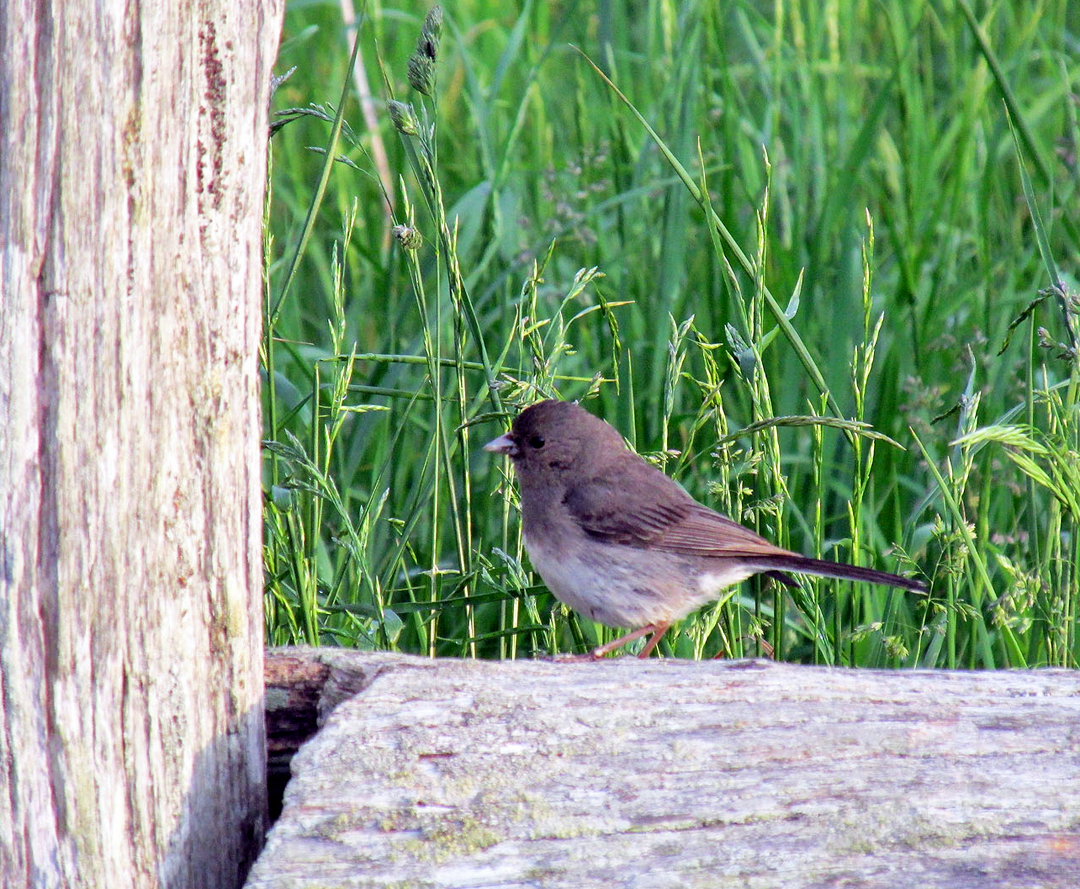
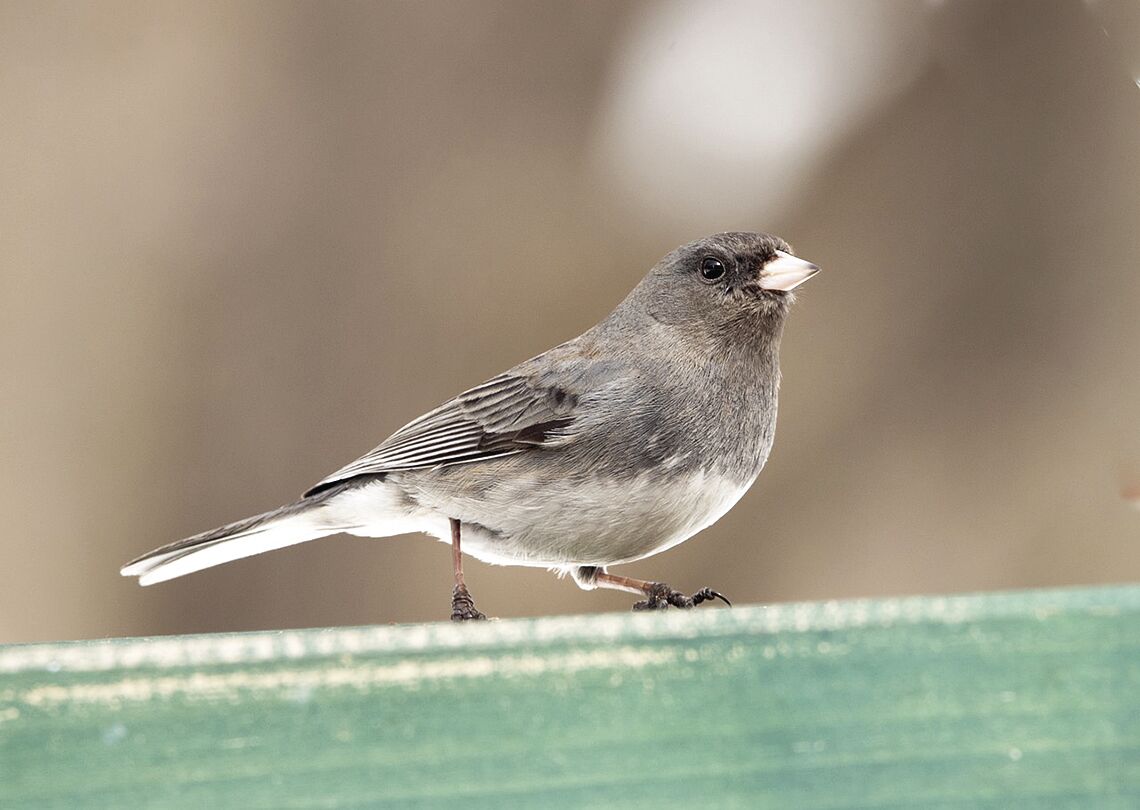
Photo by simardfrancois from Pixabay • The dark-eyed junco is a winter visitor at many bird feeders in the region, but this bird also nests every summer on some high elevation mountains in the region.

I wrote my first bird column on Sunday, Nov. 5, 1995, which means this weekly column is marking its 28th anniversary this week.

This column has appeared in a total of six different newspapers, which I regard as a personal achievement, as well as an accomplishment for our feathered friends. It’s on their behalf that I pen these weekly efforts to promote conservation and good will toward all birds. I have also posted the column as a weekly blog posting since February 2014 at http://www.ourfinefeatheredfriends.com.

I’ve played detective, helping people identify everything from “rain crows,” or cuckoos, to Muscovy ducks, chukars and double-crested cormorants. I’ve observed unusual birds, including white pelicans, brants and roseate spoonbills, in Northeast Tennessee, Southwest Virginia and Western North Carolina and spotlighted them in these columns.

While I’ve had some vision challenges this past year, I still take delight in the kaleidoscopic parade of colorful warblers that pass through the region each spring and fall as well as the fast-paced duel of ruby-throated hummingbirds and the occasional rufous hummingbirds straying through the region.

At my home, I also provide sunflower seed and other supplemental food for the resident birds like Carolina chickadees, white-breasted nuthatches, song sparrows and downy woodpeckers.

Even as I tweak my anniversary column for “Feathered Friends,” parts of the region just experienced the first heavy frost. This prognostication of approaching winter weather is a perfect time to dust off this week’s column, which is a revision of the first bird column I ever wrote. This column focused on a common visitor to yards and feeders during the winter months. In fact, dark-eyed juncos should be returning to the region any day. Here, with some revisions I have made through the years, is that first column.

Photo by Ken Thomas • A dark-eyed junco perches on some bare branches on a winter’s day.

•••

Of all the birds associated with winter weather, few are as symbolic as the dark-eyed junco, or “snow bird.” The junco occurs in several geographic variations.

John V. Dennis, author of “A Complete Guide to Bird Feeding,” captures the essence of the junco in the following description: “Driving winds and swirling snow do not daunt this plucky bird. The coldest winter days see the junco as lively as ever and with a joie de vivre that bolsters our sagging spirits.” The dark-eyed junco’s scientific name, hyemalis, is New Latin for “wintry,” an apt description of this bird.

Most people look forward to the spring return of some of our brilliant birds — warblers, tanagers and orioles — and I must admit that I also enjoy the arrival of these birds. The junco, in comparison to some of these species, is not in the same league. Nevertheless, the junco is handsome in its slate gray and white plumage, giving rise to the old saying “dark skies above, snow below.”

Just as neotropical migrants make long distance journeys twice a year, the junco is also a migrating species. But in Appalachia, the junco is a special type of migrant. Most people think of birds as “going south for the winter.” In a basic sense this is true. But some juncos do not undertake a long horizontal (the scientific term) migration from north to south. Instead, these birds merely move from high elevations, such as the spruce fir peaks, to the lower elevations. This type of migration is known as vertical migration. Other juncos, such as those that spend their breeding season in northern locales, do make a southern migration and, at times, even mix with the vertical migrants.

During the summer months, a visit to higher elevations mountaintops is almost guaranteed to produce sightings of dark-eyed juncos. Juncos may nest as many as three times in a season. A female junco usually lays three to six eggs for each nest, which she constructs without any assistance from her mate.

Juncos are usually in residence around my home by early November. Once they make themselves at home I can expect to play host to them until at least late April or early May of the following year. So, for at least six months, the snow bird is one of the most common and delightful feeder visitors a bird enthusiast could want.

Juncos flock to feeders where they are rather mild-mannered — except among themselves. There are definite pecking orders in a junco flock, and females are usually on the lower tiers of the hierarchy. Females can sometimes be distinguished from males because of their paler gray or even brown upper plumage.

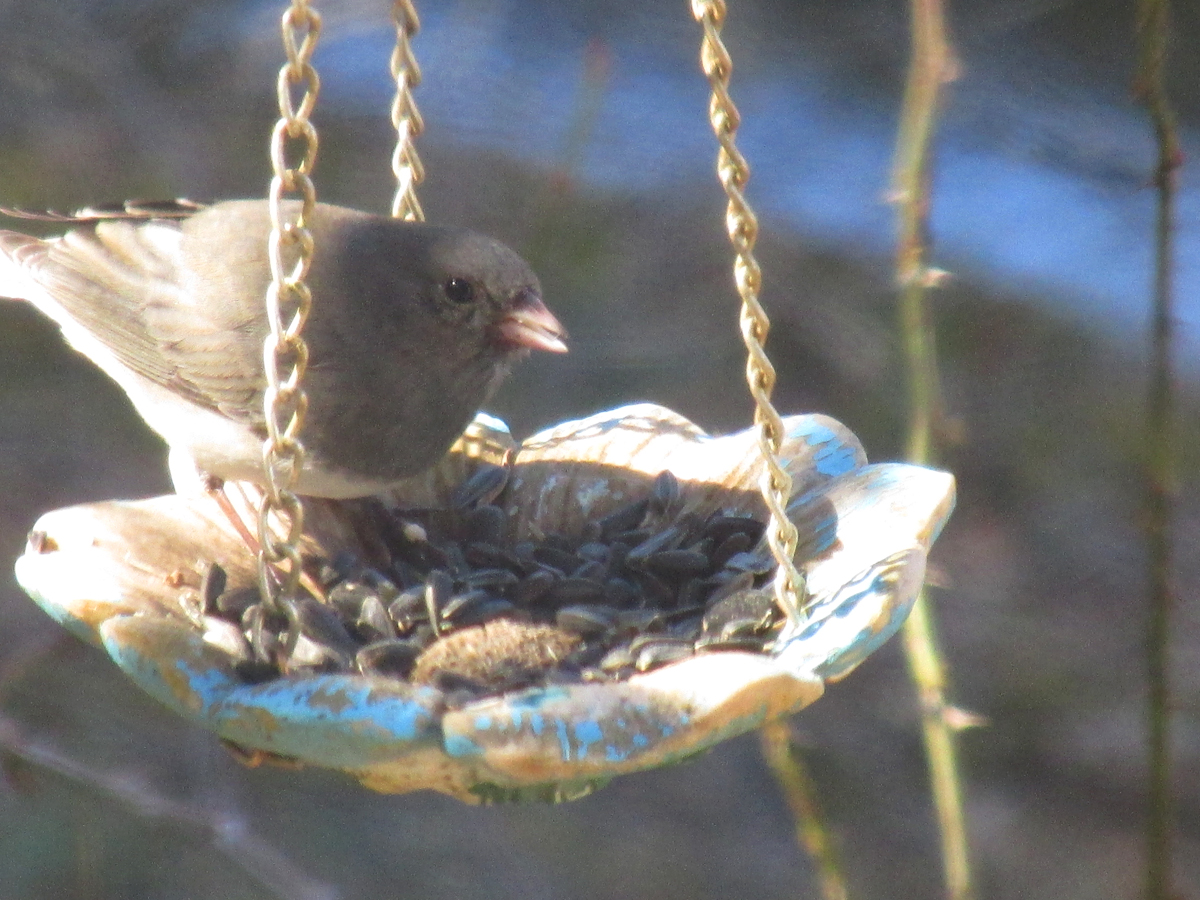
Since juncos are primarily ground feeders they tend to shun hanging feeders. But one winter I observed a junco that had mastered perching on a hanging “pine cone” feeder to enjoy a suet and peanut butter mixture.

Dark-eyed juncos often are content to glean the scraps other birds knock to the ground. Juncos are widespread. They visit feeders across North America. The junco is the most common species of bird to visit feeding stations. They will sample a variety of fare, but prefer such seeds as millet, cracked corn or black oil sunflower.

The juncos are a small branch of the sparrow clan. Some of the other juncos include the endangered Guadalupe junco, yellow-eyed junco, Baird’s junco and volcano junco. The last one on the list is endemic to the Talamancan montane forests of Costa Rica and western Panama. Baird’s junco is named for Spencer Fullerton Baird, an American ornithologist and naturalist.

Photo by Bryan Stevens • A dark-eyed junco visits a hanging feeder.

Baird served as secretary for the Smithsonian Institution from 1878 until his death in 1887. He greatly expanded the natural history collections of the Smithsonian from 6,000 specimens in 1850 to over two million by the time of his death.

I hope you’ve enjoyed this introduction to juncos. There’s something about winter that makes a junco’s dark and light garb an appropriate and even striking choice, particularly against a backdrop of newly fallen snow.

Of course, the real entertainment from juncos come from their frequent visits to our backyard feeders. When these birds flock to a feeder and began a furious period of eating, I don’t even have to glance skyward or tune in the television weather forecast. I know what they know. Bad weather is on the way!

••••

I’ve not seen the first junco of the season, but I did observe a close relative (white-throated sparrow) on the morning of Oct. 24 at my home.

If you’d like to share your first sighting this season of dark-eyed juncos, email me at ahoodedwarbler@aol.com. As always, the column is also a line of communication with fellow bird enthusiasts. I’ve enjoyed sharing stories about birds with countless readers over the past 28 years. I can also be reached on Facebook at https://www.facebook.com/ahoodedwarbler.

Photo by Bryan Stevens • Dark-eyed junco nests on high mountain slopes during the summer month. This dark-eyed junco was photographed at Carver’s Gap on Roan Mountain during the summer nesting season.

Some birds expert at conjuring thrills and chills

Photo from Pixabay • The great tit, a bird related to titmice and chickadees, has acquired a taste for bat brains. Scientists have documented great tits in the mountains of Hungary killing a small species of bat to consume their brains.

NOTE: This column originally ran in November of 2018.

The ultimate coma victim is the fabled zombie, but that’s not likely to afflict any of our feathered friends, right? Well, consider the great tits of Hungary, which are relatives of our tufted titmouse and Carolina chickadee. These birds — at least the Hungarian ones — have apparently acquired a taste for brains.

Not human brains, thankfully. The victims of these brain-hungry great tits are a species of bat — a flying creature often associated with the modern celebration of Halloween, as well as legends about vampires — that shared the habitat of these birds in the Bükk Mountains of Hungary. As it turns out, the tits only hunted bats, in this case a tiny species known as common pippistrelle, out of dire necessity.

Bat ecologists Péter Estók and Björn M. Siemers, after observing the odd behavior of the great tits during some winter seasons, conducted a study to see if great tits are consistent devourers of bats’ brains. They discovered that the birds did hunt the bats and had even learned to detect a special call the bats make as they emerge from hibernation. The ecologists conducted their study over two years and learned that the great tits teach others of their kind the special art of hunting bats. They also learned that the birds made efficient killers, dragging the bats from their roosts and cracking their skulls to get at their brains.

However, when provided with plenty of alternative food, including such favorite items as bacon and sunflower seeds, the great tits chose to eat these items rather than actively hunt bats. The researchers concluded that great tits only resort to harvesting the brains of small bats during times of scarcity during harsh winters. The bizarre story is even featured in the title of a fascinating book by Becky Crew titled “Zombie Birds, Astronaut Fish, and Other Weird Animals.”

So, if humans have nothing to fear from brain-hungry birds, are there any birds that we should fear? Some experts suggest that precautions might be in order if one expects to come into close proximity with a southern cassowary, which is the third-tallest and second-heaviest living bird, smaller only than the ostrich and emu.

The cassowary, a native of New Guinea and northeastern Australia, has developed a reputation as a fearsome bird capable of injuring or killing humans. According to ornithologist Ernest Thomas Gilliard, cassowaries deserve their reputation. In his 1958 book, “Living Birds of the World,” he explained that the second of the three toes of a cassowary is fitted with a long, straight, dagger-like claw which can sever an arm or eviscerate an abdomen with ease. According to Gilliard, there have been many records of natives being killed by this bird.

A thorough study, however, has partly exonerated the cassowary from these misdeeds. In a total of 150 documented attacks against humans, cassowaries often acted in self-defense or in defense of a nest or chicks. The only documented death of a human took place in 1926 when two teenaged brothers attacked a cassowary with clubs. The 13-year-old brother received a serious kick from the bird, but he survived. His 16-year old brother tripped and fell during the attack, which allowed the cassowary to kick him in the neck and sever the boy’s jugular vein.

So we can rest easier knowing that murderous birds that reach a height of almost six feet tall are unlikely to terrorize us should we travel to the lands down under. A more ancient relative of the cassowary, however, might have been a different story had humans lived during the same time period.

Phorusrhacids, also known as “terror birds,” were a group of large carnivorous flightless birds that once had some members reign as an apex predator in South America before they went extinct around two million years ago. The tallest of the terror birds reached a height of almost 10 feet. Titanis walleri, one of the larger species, even ranged into what is now the United States in Texas and Florida.

Terror birds were equipped with large, sharp beaks, powerful necks and sharp talons. Their beaks, which would have been used to kill prey, were attached to exceptionally large skulls. Despite their fearsome appearance, these birds probably fed on prey about the size of rabbits. Perhaps not knowing this, Hollywood has cast these birds as monsters in such films as 2016’s “Terror Birds” and 2008’s “10,000 BC.”

Besides, casting birds as the villains had already been done back in 1963 when Alfred Hitchcock released his film, “The Birds,” based loosely on a short story by Daphne du Maurier. The film, which starred some big Hollywood names such as Rod Taylor, Tippi Hedren, Jessica Tandy, Suzanne Pleshette and Veronica Cartwright, cast a whole new light on a “murder” of crows. Today, the film has achieved the status of a Hollywood classic. I guess it just goes to show that werewolves, zombies and other Halloween monsters have nothing on our fine feathered friends.

Great horned owls become feathered phantoms after sunset

Photo by HMaria from Pixabay • A great horned owl is capable of almost silent flight, which helps this predatory bird take prey by surprise. Many myths and superstitions surround the world’s owls, but the truth about owls is often more fascinating.

Great horned owls become feathered phantoms after sunset

In late September, I began hearing a great horned owl near my home. The sonorous hoots resonated from a distant ridge the other side of the road. The ridge was logged this year and many of the large white pines are gone. I wasn’t at all optimistic the owl would return.

There’s nothing to send shivers traveling along your spine like listening to these haunting hoots from a creature that’s well hidden from human eyes by the cloak of darkness.

Or a cloak of fog and mist, as the case may be. This returning owl calls most often near dawn and dusk. On foggy mornings, of which there has been plenty, the owl’s still been calling as I leave for work.

It’s no wonder that owls have also become popular motifs for the celebration of the Halloween holiday. Just remember there’s more to these creatures of the night than perhaps meets the eye. Owls may be our neighbors, but we’ll never truly belong to their world, which must be why they continue to intrigue us.

While human culture has turned owls into beloved creatures, keep in mind these birds are fierce and ferocious predators. For young American crows in their nests, this owl is the stuff of their avian nightmares. It’s no wonder that crows, some of their numbers no doubt having witnessed their peers taken by the great horned owl as prey when young and helpless, grow up with an abiding hatred of this large nocturnal raptor.

Flocks of adult crows form quickly when an owl is discovered at a roost during the daylight hours. With safety in numbers, the crows mercilessly hound and harry the unlucky owls.

Quite often, a crow’s sharp vision is required to detect a motionless owl at its daytime roost. Great horned owls have a plumage of mottled grays and browns, as well as some white feathers on the chin and throat. This plumage helps them blend into their surroundings. Even when on the move, the great horned owl rarely attracts attention. They can fly in almost perfect silence on wide wings that can stretch out to a wingspan of 4.6 feet.

I know about their silent flight from firsthand experience. Back in the early 2000s I visited Orchard Bog in Shady Valley in Johnson County in early spring for a chance to witness the evening display of American woodcocks. While waiting with other birders for the evening show, I noticed a large shadow moving low over the fields heading toward us. As the bird got closer, it became recognizable as a great horned owl. The owl barely diverted from its flight. In fact, it flew just over our heads, gliding silently on wide wings. I still marvel at how the owl’s wings made no noise whatsoever. The owl continued to glide over the fields until we lost it in the dusk.

On another occasion I also witnessed how, when they want to do so, great horned owls can be absolutely silent. While vacationing on Fripp Island, South Carolina, in the 1990s, I would accompany my family for dusk golf cart excursions. We liked to pull off the side of the road on a causeway that crossed a series of tidal creeks and marsh. On that occasion, a great horned owl flew from nearby woodlands to land on a gnarled snag that rose above the marshland vegetation. Although the owl arrived on silent wings, it soon interrupted the silence with resonant hoots that carried over the marshes. The owl returned to the same snag for two additional evenings during our vacation stay.

I’ve seen other great horned owls over the years in locations from South Carolina and Florida to Utah and and Virginia. I’ve heard many more of these large owls than I have ever been able to get into focus in my binoculars. It’s still a thrill to get even a brief sighting of these impressive birds.

I’ve always thought about trying to locate the owls in residence at my home. I’ve scanned the silhouettes of the tree line in the direction of their hoots, but I’ve not ventured forth on a more methodical search. Perhaps I’ll save that as a Halloween activity this year. I’ll more likely continue to enjoy the owl’s haunting serenade and let a cloak of mystery continue to shroud this fascinating bird.

Photo by Bryan Stevens • A captive rehabilitated great horned owl at Calloway Gardens in Georgia.

Fall Bird Count detects 121 species

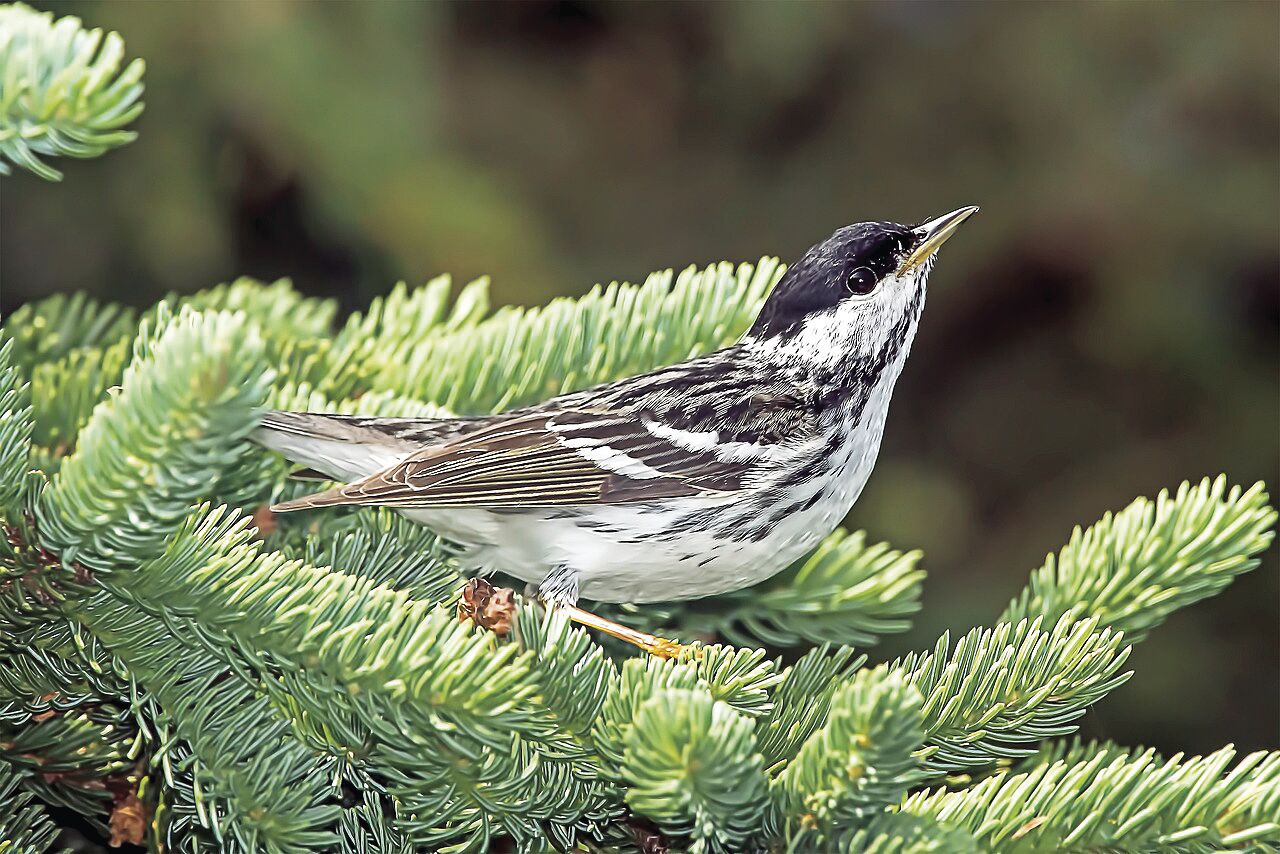
Photo by Hans Room/Pixabay • A blackpoll warbler found during the Fall Bird Count represented a rare appearance by this species on the seasonal count, which has been held for 53 consecutive years. A purple gallinule found in Washington County represented another extremely rare find.

The 53rd consecutive Elizabethton Fall Bird Count was held Saturday, Sept. 30, with 30 observers in about 12 parties. The count area included Carter County, as well as the surrounding counties of Johnson, Sullivan, Unicoi and Washington.

The weather was good, with a temperature range between 54 and 82 F. Participants tallied 121 species, plus one unidentified Empidonax species. The Empidonax flycatchers, or “Empids,” as birders fondly lump them, are birds so similar in appearance they cannot reliably identified in the field unless they are vocalizing. Unfortunately, the Empids are largely silent in autumn.

This total is slightly below the recent 30-year average of 125 species, according to longtime compiler Rick Knight. He noted that the all-time high was 137 species in 1993.

Knight said that a count highlight was a lingering immature purple gallinule in Washington County.

The list:

Canada goose, 850; wood duck, 40; mallard, 179; common merganser, 6; northern bobwhite, 3; ruffed grouse, 1; and wild turkey, 37.

Pied-billed grebe, 4; rock pigeon, 362; Eurasian collared dove, 1; and mourning dove,172.

Yellow-billed cuckoo, 5; black-billed cuckoo, 1; common nighthawk, 2; chimney swift, 246; and ruby-throated hummingbird, 17.

Virginia rail, 1; purple gallinule, 1; killdeer, 45; Wilson’s snipe, 1; and spotted sandpiper, 2.

Double-crested cormorant, 84; great blue heron, 34; great egret, 3; green heron, 3; black vulture, 29; and turkey vulture, 141.

Osprey, 7; northern harrier, 1; sharp-shinned hawk, 5; Cooper’s hawk, 4; bald eagle, 7; red-shouldered hawk, 6; broad-winged hawk, 1; and red-tailed hawk,19.

Barn owl, 2; Eastern screech-owl, 17; great horned owl, 4; barred owl, 4; and Northern saw-whet owl, 1.

Belted kingfisher, 26; red-headed woodpecker, 3; red-bellied woodpecker, 69; yellow-bellied sapsucker, 7; downy woodpecker, 39; hairy woodpecker, 12; northern flicker, 54; and pileated woodpecker, 30.

American kestrel, 16; merlin, 1; great crested flycatcher, 1; Eastern wood pewee, 18; Empidonax species, 1; and Eastern phoebe, 97.

Yellow-throated vireo, 2; blue-headed vireo, 31; red-eyed vireo, 5; blue jay, 438; American crow, 505; fish crow, 7; and common raven, 20.

Tree swallow, 220; barn swallow, 1; Carolina chickadee, 195; tufted titmouse, 168; red-breasted nuthatch, 17; white-breasted Nuthatch, 64; and brown creeper, 3.

House wren, 3; Carolina wren, 177; blue-gray gnatcatcher, 1; golden-crowned kinglet, 5; and ruby-crowned kinglet, 4.

Eastern bluebird, 152; veery, 1; gray-cheeked thrush, 6; Swainson’s thrush, 43; wood thrush, 5; and American robin, 113.

Gray catbird, 38; brown thrasher, 9; Northern mockingbird, 80; European starling, 615; cedar waxwing, 106; and house sparrow, 37.

House finch, 42; pine siskin, 2; American goldfinch, 123; chipping sparrow, 95; field sparrow, 11; dark-eyed junco, 83; Savannah sparrow, 3; song sparrow, 84; and Eastern towhee, 62.

Eastern meadowlark, 17; red-winged blackbird, 10; brown-headed cowbird, 2; and common grackle, 10.

https://www.nps.gov/articles/blackpollmigration.htm

Ovenbird, 6; Northern waterthrush, 3; black-and-white warbler, 2; Tennessee warbler, 73; common yellowthroat, 12; hooded warbler, 13; American redstart, 10; Cape May warbler, 23; northern parula, 11; magnolia warbler, 20; bay-breasted warbler, 28; Blackburnian warbler, 5; chestnut-sided warbler, 6; blackpoll warbler, 1; black-throated blue warbler, 21; palm warbler, 21; pine warbler, 14; yellow-rumped warbler, 6; and black-throated green warbler, 15.

Scarlet tanager, 9; Northern cardinal, 169; rose-breasted grosbeak, 26; blue grosbeak, 3; and indigo bunting, 12.

Observers in this year’s Fall Bird Count included Fred Alsop, Jerry Bevins, Rob Biller, Tammy Bright, Debi and J.G. Campbell, Ron Carrico, Bill and Linda Cauley, Catherine Cummins, Dave Gardner, David and Connie Irick, Rick and Jacki Knight, Roy Knispel, Vern Maddux, Joe McGuiness, Tom McNeil, Alson Ovando, Susan Peters, Brookie and Jean Potter, Lia Prichard, Pete Range, Judith Reid, Judi Sawyer, Bryan Stevens, Kim Stroud and Charlie Warden.

•••

To ask a question, share a sighting or make a comment, email me at ahoodedwarbler@aol.com.
Raucous ravens, hooting owls and more contribute to the autumn soundscape

Photo by LoggaWiggler from Pixabay • Ravens are extremely vocal birds. Captive-raised ravens have even learned words.

The spring bird chorus is deservedly famous, but the birds don’t exactly go silent in the autumn.

Although recent mornings have started out with a definite chill over the past couple of weeks since the calendar officially turned the page into fall, the birds have simply fluffed their feathers and continued with business as usual.

The birds have been active despite these morning chills that I have been somewhat reluctant to acknowledge. Carolina wrens scold from tangles of vines and weeds. As of Oct. 5, I am still hearing the soft whirr of hummingbird wings, too, although I know that the curtain’s closing on their yearly stay. Other vocalizations I’ve detected early in the day have included the rattle of a belted kingfisher at the fish pond, the quarrelsome mews of a gray catbird plucking pokeberries one at a time from an overladen plant and a vigorous Eastern Phoebe repeating its “fee-bee” name continuously from the edge of the woods.

Some other birds also make their presence known while remaining concealed from direct visual observation, including a great horned owl that regularly produces resonant, distant hoots from a nearby ridge. From the ridge behind my home, the croaks of common ravens have added a bit of a spooky vibe to fog-shrouded mornings.

Photo by Bryan Stevens • A great horned owl grasps a post with its talons. This bird was part of a show at Callaway Gardens in Georgia featuring rehabilitated raptors.

Ravens are extremely vocal birds. In addition to the harsh croaks usually associated with these birds, raven can also produce an uncanny imitation of a tinkling bell.

I’m not pulling any legs. Among their vocal repertoire, ravens can produce, usually in flight, a “bell” call. I’m not sure if this is a common vocalization. I only remember ever hearing a raven’s “bell” on a few occasions. I was with a group of more established birders at Roan Mountain State Park when a raven flew overhead. Someone called out, “Listen to that.” I listened and heard my first raven “bell” call.

The strange thing is that I can find little about this unusual vocalization when I researched the subject. According to the website All About Birds, common ravens calls vary from a low, gurgling croak to harsh grating sounds and shrill alarm calls. Scientists have placed their vocalizations into as many as 33 different categories based on sound and context. The most commonly heard is the classic gurgling croak, rising in pitch and seeming to come from the back of the throat.

The croak is their standby vocalization, which they produce often. The raven’s croak can be heard from a mile away. And, in defense of the poet Edgar Allan Poe and his “ominous bird of yore,” ravens are accomplished mimics. According to All About Birds, ravens can imitate other birds. Raven raised in captivity can even learn words. “Nevermore?”

This is the time of year when departures appear to outpace new arrivals, but there are some birds that will soon make their return after a lengthy absence, including white-throated sparrows, dark-eyed juncos and winter wrens. The local ravens, on the other hand, appear to have chosen to reside near my home year-round.

From the opening refrain of “once upon a midnight dreary” in his poem, “The Raven,” Edgar Allan Poe established a somber mood and also helped cement the dark reputation of one of North America’s most misunderstood birds. Poe describes the bird that provides the title of his famous poem with adjectives such as “grim, ungainly, ghastly, gaunt and ominous.” His raven also speaks, although it has the limited vocabulary of a single word, “Nevermore.”

How else does the real common raven resemble the “bird of yore” in Poe’s classic poem? For starters, the raven is an intelligent bird. Authors of a scientific study conducted about 15 years ago posited the claim that ravens and crows are just as intelligent as some of the great apes. Although parrots are more famous for the ability to mimic human speech, captive ravens have proven capable of learning more words than even the most impressive vocabulary-endowed parrots. So, Poe was not wide of the mark when he gave the gift of gab to the raven in his poem.

The sounds of autumn are definitely richer for having the croaking calls of ravens in the mix. Keep your eyes (and ears) open for new arrivals as the transition of seasons continues.

•••

To share a sighting, ask a question or make a comment, email me at ahoodedwarbler@aol.com.

Northern waterthrush provides warbler watching highlight

Photo by Bryan Stevens • Even in migration, both waterthrushes like to stay near water. This Northern waterthrush was photographed along the linear trail in Erwin, Tennessee.

My usual pastime of fall warbler watching declined somewhat this season, for a variety of reasons.

Time, that commodity so rare for many of us, played a part. It’s also more difficult these days to spot the movements of these swift, energetic birds in dense foliage. A vision problem that developed this past February that I have detailed in earlier columns hampered me.

My hearing’s still good, knock on wood, and I managed to hear quite a few warblers this autumn, including hooded warbler, black-throated blue warbler and Northern waterthrush.

So, I spent less time watching for the warblers this autumn and saw fewer warblers. There’s probably a connection.

I did manage to spot a few reliable favorites. I added a Northern waterthrush on a recent misty morning with that chill in the air so associated with the transition of seasons.

This warbler produces a rather loud “chunk!” chip note that’s distinctive enough to alert birders to the presence of one of these birds.

Photo by Bryan Stevens • The Northern waterthrush, pictured, has a beige eye line rather than the white one usually shown by the Louisiana waterthrush.

With some patience, I got a decent look at the Northern waterthrush, which is a migrant through the region in both spring and fall. Northern waterthrushes frequent wet habitats with dense ground cover. In migration, even a puddle or a damp thicket is enough to attract one of these warblers. My recent sighting took place in the branches of a sprawling yew tree adjacent to a creek.

The related Louisiana waterthrush is a summer resident – and one of the first warblers to return each spring – that nests in the region. The two waterthrushes are very similar in appearance. The Louisiana waterthrush has a heavier bill and a white eye line, while the Northern waterthrush’s eye line is usually somewhat yellowish-beige. A Louisiana waterthrush typically also has a whiter belly and underparts.

The two waterthrushes are the only species in the genus Parkesia, so named to honor American ornithologist Kenneth C. Parkes, who was for many years Curator of Birds at Carnegie Museum of Natural History.

The common name of the Louisiana waterthrush is not a very apt one, as this bird does not have any special affinity for the state of Louisiana. Someone collected some of the early specimens of the Louisiana waterthrush in its namesake location, and the name has stuck through the years.

According to the website All About Birds, Northern waterthrushes are numerous, and their population has grown by an estimated 54% since 1970. Partners in Flight estimates the global breeding population at 17 million. The species rates an 8 out of 20 on the Continental Concern Score, indicating it is a species of low conservation concern.

Songbirds usually lead brief lives, but the oldest recorded Northern waterthrush was at least 8 years, 11 months old when it was recaptured and re-released during banding operations in Michigan in 1987, according to All About Birds. The bird had been banded originally in Ontario, Canada, in 1978.

Northern waterthrushes migrate through the region throughout October, so there’s still a window open for seeing one. Search near quiet water surrounded by thickets and listen for that chip note.

•••

To ask a question, share a sighting of make a comment, email me at ahoodedwarbler@aol.com.
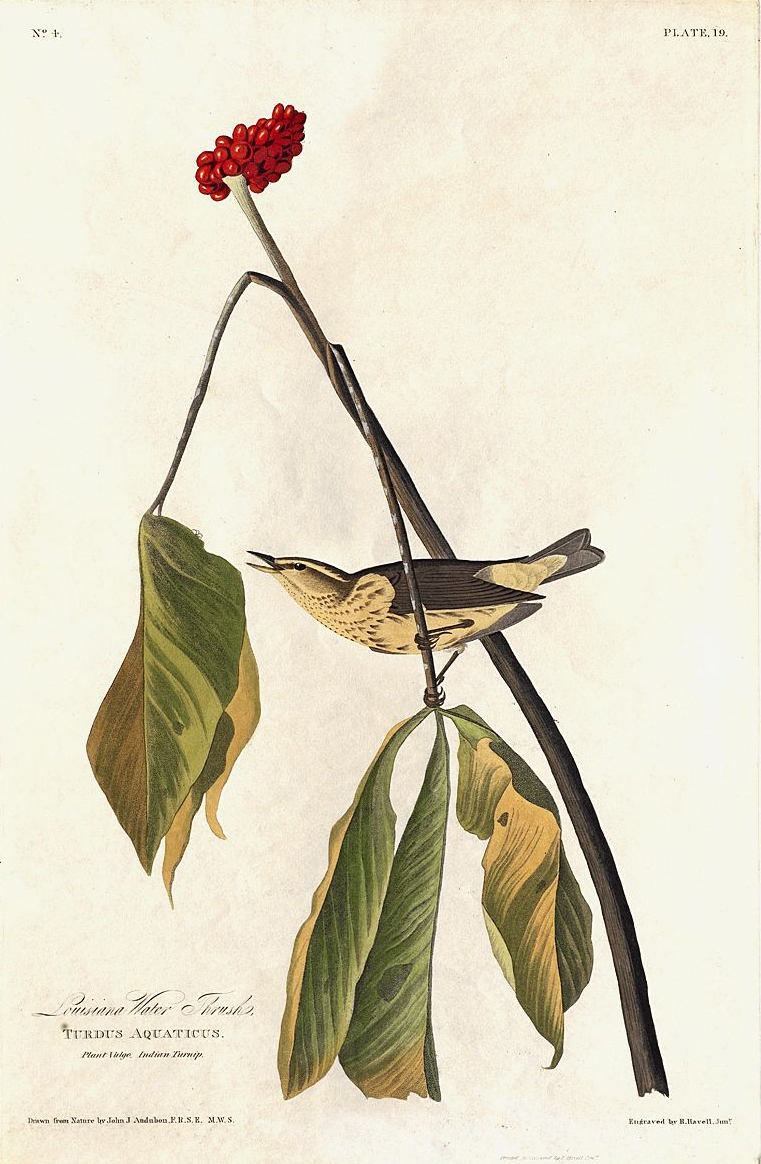
Early artist and naturalist John James Audubon painted this Louisiana waterthrush.