

The front cover of this year’s Elizabethton Bird Club calendar features a gorgeous photo of a black-throated blue warbler taken by club members David and Connie Irick.
Avoid the crowded hassle of Black Friday and get a jumpstart on your shopping list with a gift all bird lovers will enjoy for 365 days.
The Lee and Lois Herndon Chapter of Tennessee Ornithological Society, also known as the Elizabethton Bird Club, has produced its annual calendar featuring bird photographs by its members and friends of the organization.
These calendars make wonderful Christmas gifts and stocking stuffers. This year’s front cover features a gorgeous photo of a black-throated blue warbler taken by club members David and Connie Irick.
The couple recently presented a program for the local bird club that focused heavily on the warblers they saw and photographed during a visit to Magee Marsh, a 2,000-acre wildlife area located in Oak Harbor, Ohio, situated on the southern shore of Lake Erie.
During the program, David Irick admitted that before he began to pursue birding as an interest, he wasn’t even aware of the existence of warblers. Now, he and his wife are hooked on this enchanting family of colorful and energetic songbirds.
The black-throated blue warbler gracing the calendar’s cover was photographed on Holston Mountain. Male black-throated blue warblers nesting in the Appalachian Mountains have black streaks on their backs, not solid blue like other populations, according to a profile on the species located at the website for Tennessee Wildlife Resources Agency.
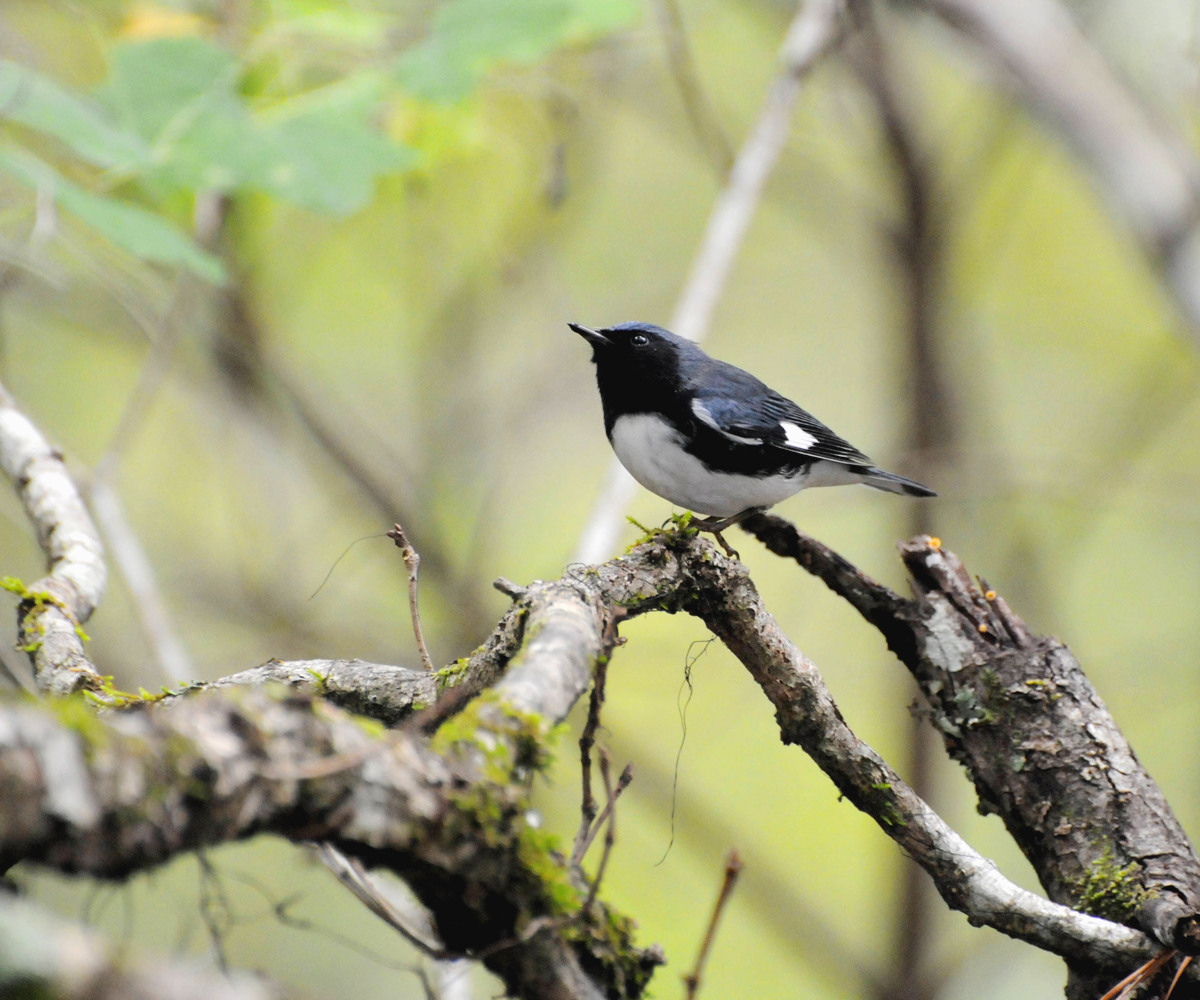
Photo by U.S. Fish & Wildlife Service/Mark Musselman
Black-throated Blue Warblers are among the birds than can often be found at Hampton Creek Cove during a Spring Rally.
Female black-throated blue warblers are extremely different in appearance from males. Scientists call such dramatic physical appearance differences “sexual dimorphism.” Among the warblers, this species provides the most striking example of sexual dimorphism. The male and female do share one identifying mark — a white square near the outer edge of the middle of each wing. This square is usually more pronounced in the male, but it stands out enough that it helps distinguish the female black-throated blue from similar dull-plumaged birds such as vireos.
 The radical differences in appearance of male and female black-throated blues even fooled some experts, according to the TWRA profile on the species.
The “Father of American Ornithology,” Alexander Wilson (1766-1813), first described the female black-throated blue warbler, he thought it was a separate species and named it the pine swamp warbler. Several years later, when artist John James Audubon painted this bird from specimens he collected in the Great Pine Swamp of Pennsylvania, he called the species by the same name.
Learn more about warblers and other birds with a purchase of the club’s 2026 calendar. More photographs by the Iricks, as well as other members and friends of the club, grace the inside pages of the calendar. The month of July features an amazing photo of a bald eagle and November is graced by wild turkeys.
The inside pages of the professionally-produced calendar feature dozens more full-color photographs and an informative and educational grid. These calendars sell for $15 plus $2.50 for shipping. All sales help the club fund birding programs, public park feeders, conservation efforts and other bird- and nature-related activities in upper Northeast Tennessee.
For more information on how to obtain a calendar, email me at ahoodedwarbler@aol.com.
 Our Fine Feathered Friends