
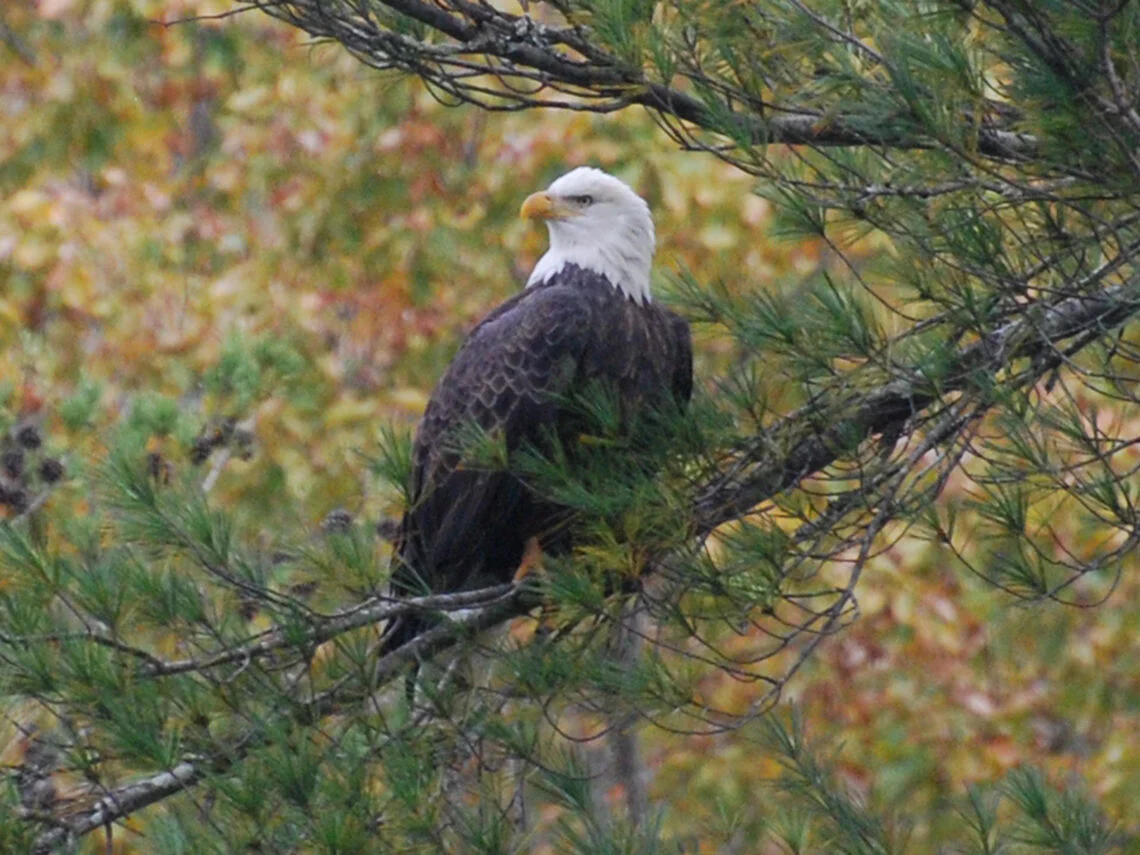
Photo by Jean Potter • A sighting of a bald eagle in the wild is always a memorable moment for the lucky observer.
I hope everyone had a wonderful Fourth of July filled with plenty of red, white and blue. For those who ventured onto area lakes and rivers, I’m hopeful that they perhaps got to glimpse the nation’s official bird.
The bald eagle been recognized as the penultimate bird in the United States of America since the latter decades of the 18th century. I’ve seen many bald eagles in my lifetime, and a sighting of one of these magnificent raptors never disappoints. The resurgence of the once-endangered bald eagle in the lower 48 states has been a laudable accomplishment that all Americans should view with pride.

Photo by Bryan Stevens • The Endangered Species Act has helped save birds like the Bald Eagle from possible extinction.
While the recent Independence Day remains fresh in memory, I thought it might be a good time to share some interesting information on our national bird, the American bald eagle, which officially became the national emblem in 1782 when the great seal of the United States was adopted. Although Benjamin Franklin famously expressed reservations about making the bald eagle our national bird, in hindsight it’s clear that Americans made the right choice.
Despite elevating this native bird to such lofty status, we have not always been kind to the bald eagle. We allowed habitat destruction and toxic pesticides to bring this eagle to the brink of extinction. With well-deserved protection, however, the bald eagle rebounded, and the Department of Interior finally took the eagle off the threatened species list on June 28, 2007.
The bald eagle has been more frequently observed by birders in Northeast Tennessee in recent years. Some of the region’s rivers and lakes are good places to look for bald eagles, particularly in the fall and winter. A few lakes even regularly host nesting bald eagles. I’ve observed bald eagles in Tennessee, South Carolina, Florida and Virginia.
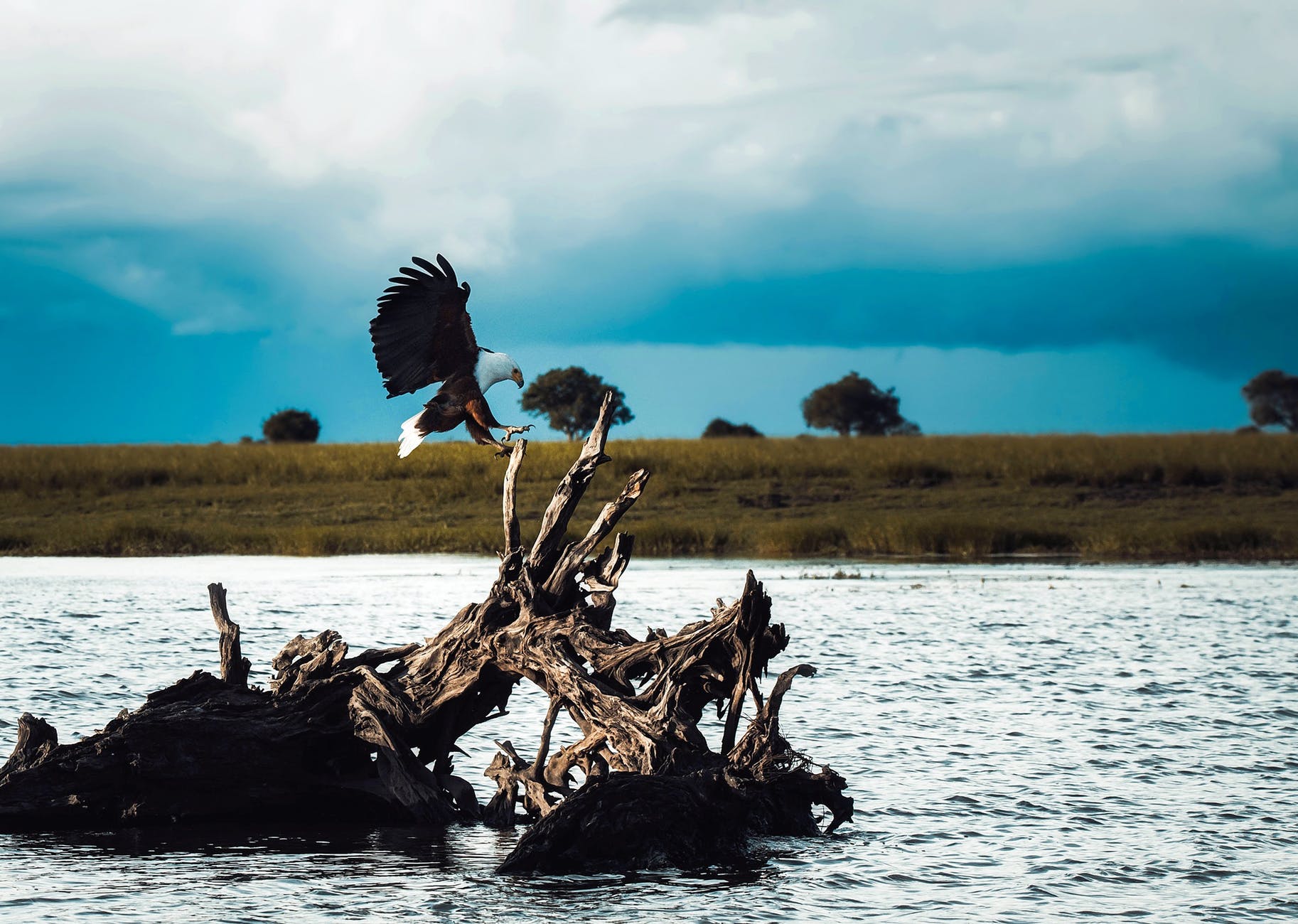
The bald eagle (Haliaeetus leucocephalus) is a member of a genus known as Haliaeetus, or sea eagles. There are seven other living species in the genus: the white-bellied sea eagle, Sanford’s sea eagle, African fish eagle, Madagascar fish eagle, Pallas’s fish eagle, white-tailed eagle and Steller’s sea eagle. The eagles are incredibly majestic birds and important symbols of the value of natural places and creatures.
Steller’s sea eagle is named for the German naturalist Georg Wilhelm Steller, who is renowned for his work as a pioneer in the natural history of Alaska. The 49th state to join the union is also the stronghold for the bald eagle. On occasion, Steller’s sea eagle has strayed into U.S. territory at Alaskan locations including the Pribilof Islands and Kodiak Island. Steller’s sea eagle is bigger than the bald eagle. In fact, it is the largest member of the Haliaeetus genus of eagles, making this bird one of the largest raptors in the entire world.

Ben Franklin wasn’t enthusiastic about the bald eagle as the national bird, but perhaps, considering he favored the Wild Turkey, it’s best we don’t eat our national bird every Thanksgiving.
The naturalist for which this eagle is named has also been honored by the naming of other creatures, including Steller’s sea lion and the now-extinct Steller’s sea cow, as well as several birds, including Steller’s jay and Steller’s eider. He was the first naturalist to describe several creatures native to Alaska, although two of these, the sea cow (a relative of the manatees) and the spectacled cormorant, are now extinct. The latter, which was the largest cormorant to ever live, is a particularly sad story. These cormorants were basically eaten into extinction, exploited as a food source by sailors and fur traders. The last spectacled cormorants perished around 1850 on a Russian island off the coast of the Kamchatka Peninsula.
Fortunately, we have proven a little more far-sighted in our treatment of the bald eagle, which was removed from the U.S. government’s list of endangered species on July 12, 1995, and transferred to the list of threatened species. In 2007, bald eagle numbers had rebounded enough in the Lower 48 states to also allow for the bald eagle to be removed from the list of threatened species.
Male and female adult bald eagles have a blackish-brown back and breast; a white head, neck and tail; and yellow feet and bill. Juvenile bald eagles are a mixture of brown and white and reach full maturity in four to five years. The female bald eagle is 35 to 37 inches in length, slightly larger than the male, with a wingspan that ranges from 72 to 90 inches. Bald eagles weigh from 10 to 14 pounds. The bald eagle’s diet consists mostly of fish, some of which are scavenged, but these large raptors are also capable of preying on everything from muskrats and ducks to rabbits and snakes. The bald eagle will also feed on carrion.
More than 240 years after it was declared an official emblem of the United States, the bald eagle has become an instantly recognizable American symbol. Long may the eagles fly.
•••
Bryan Stevens has written about birds and birding since 1995. To ask a question, make a comment or share a sighting, email him at ahoodedwarbler@aol.com.

 Our Fine Feathered Friends