Category Archives: House Finch

Unicoi County summer bird count finds 109 species

Photo Hans Toom/ Pixabay • The aptly named yellow warbler was one of 18 warbler species found on this year’s Unicoi County Summer Bird Count.

The 11th annual Unicoi County summer bird count was held Saturday, June 8, with 19 observers in seven parties. The count has been conducted yearly since its inception by members of the Elizabethton Bird Club.

I have taken part on this count from the first one held, missing only once when I was out of town. It’s an enjoyable count and, for me, it’s very close to home. This count also provides a reliable snapshot of the birds present in Unicoi County in early summer. 

Counters tallied 109 species which is slightly above the average of 108 species. The all-time high was 112 species in 2016. 

Abundant birds included European starling (314), American robin (246), song sparrow (175), American crow (174), red-eyed vireo (172), Northern cardinal (128) and cliff swallow, 126. Eighteen species of warblers were found, the most abundant being hooded warbler with 84 individuals tallied. 

As always a few low-density or very localized species were missed, including yellow-billed cuckoo, bald eagle, great horned owl, American kestrel, grasshopper sparrow, golden-winged warbler and prairie warbler.

The list:

Canada goose, 18; wood duck, 3; mallard, 20; wild turkey, 7; and ruffed grouse, 1.

Rock pigeon, 61; mourning dove, 56; chuck-will’s-widow,1; Eastern whip-poor-will, 18; chimney swift, 29; and ruby-throated hummingbird, 8.

Killdeer, 8; great blue heron, 3; and green heron, 2.
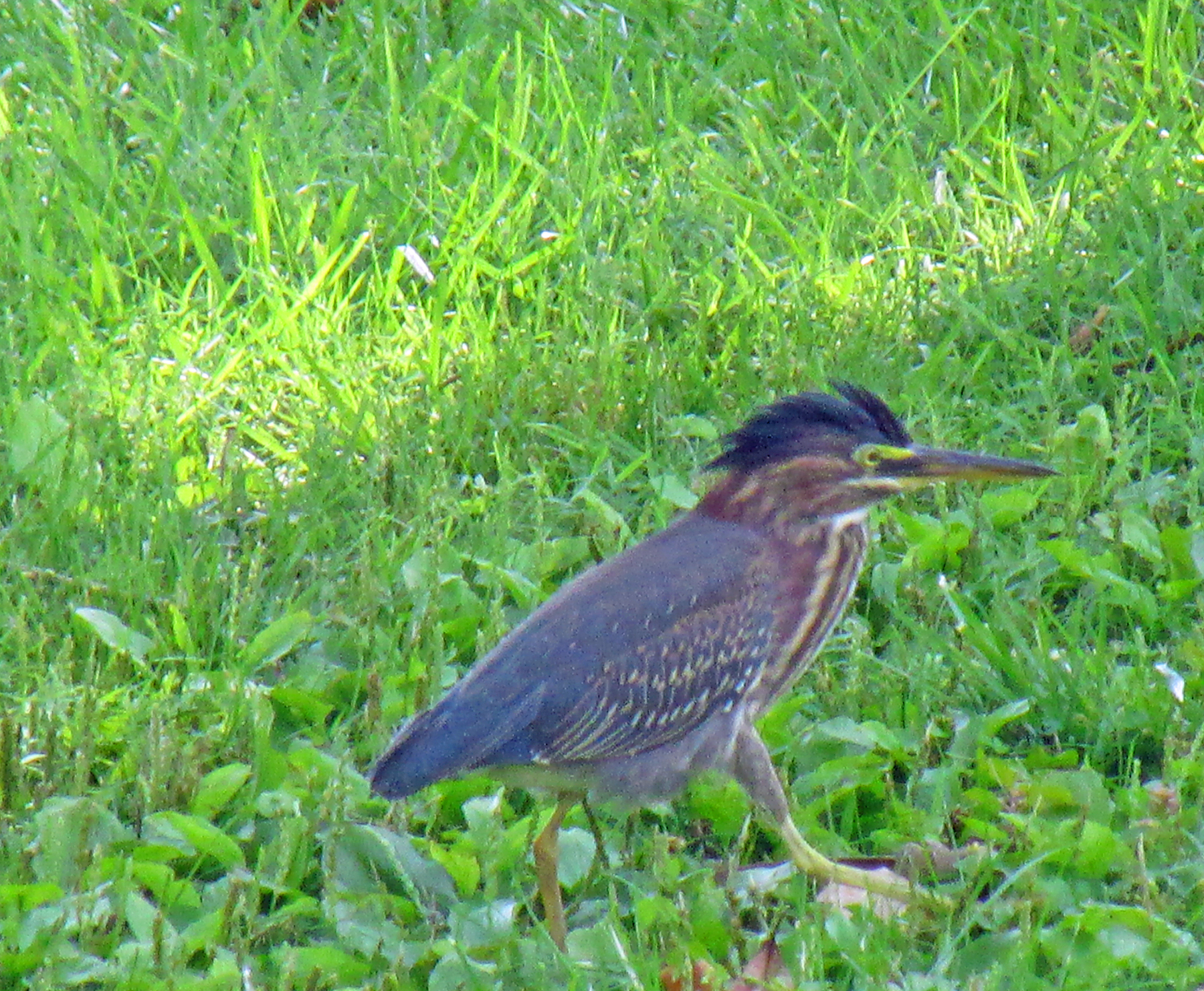
Photo by Bryan Stevens
A green heron elevates a shaggy crest of feathers, a behavior often initiated when the bird feels alarmed.

Black vulture, 1; turkey vulture 37; sharp-shinned hawk, 1;

Cooper’s hawk 3; red-shouldered hawk, 4; broad-winged hawk, 10; red-tailed hawk, 2; Eastern screech-owl, 5; barred owl, 4; and Northern saw-whet owl, 1.

Belted kingfisher, 5; red-bellied woodpecker, 15; yellow-bellied sapsucker, 9;

downy woodpecker, 8; hairy woodpecker, 5; Northern flicker, 10; and pileated woodpecker, 20.

Great crested flycatcher, 3; Eastern kingbird, 11; Eastern wood-pewee, 10; Acadian flycatcher, 32; least flycatcher, 5; and Eastern phoebe, 65.

White-eyed vireo, 3; yellow-throated vireo, 1; blue-headed vireo, 38; warbling vireo, 3; and red-eyed vireo, 172.

Blue jay, 61; American crow, 174; fish crow, 5; common raven, 8; Carolina chickadee, 71; and tufted titmouse, 60.

Photo by Bryan Stevens • A tree swallow visits a nest box to check on young.

Tree swallow, 49; Northern rough-winged swallow, 20; purple martin, 25; barn swallow, 78; and cliff swallow, 126.

Golden-crowned kinglet, 2; cedar waxwing, 36; red-breasted nuthatch, 2; white-breasted nuthatch, 18; brown creeper, 4; and blue-gray gnatcatcher, 23.

Carolina wren, 84; house wren, 31; and winter wren, 3.

Gray catbird, 34; brown thrasher, 14; Northern mockingbird, 17; European starling, 314; Eastern bluebird, 59; veery, 12; hermit thrush, 2; wood thrush, 34; and American robin, 246.

House sparrow, 14; house finch, 33; American goldfinch, 56; chipping sparrow, 54; field sparrow, 6; dark-eyed junco, 20; song sparrow, 175; Eastern towhee, 6; and yellow-breasted chat, 1.

Eastern meadowlark, 14; orchard oriole, 4; Baltimore oriole, 1; red-winged blackbird, 60; brown-headed cowbird, 16; and common grackle, 63.

Ovenbird, 38; worm-eating warbler, 10; Louisiana waterthrush, 10; black-and-white warbler, 19; Swainson’s warbler, 16; Kentucky warbler, 1; common yellowthroat, 6; hooded warbler, 84; American redstart, 12; Northern parula, 41; magnolia warbler, 2; Blackburnian warbler, 10; yellow warbler, 3; chestnut-sided warbler, 17; black-throated blue warbler, 45; yellow-throated warbler, 17; black-throated green warbler, 45; and Canada warbler, 13.

Scarlet tanager, 20; Northern cardinal, 128; rose-breasted grosbeak, 4; blue grosbeak, 1; and indigo bunting, 77.

•••

Bryan Stevens has birded since the early 1990s and has written about birds and birding since 1995. To ask a question, make a comment or share a sighting, email him at ahoodedwarbler@aol.com.

 

Finches arrive ahead of winter in impressive numbers

I’d watched with some degree of envy after friends posted on social media about the arrival of purple finches and pine siskins earlier this fall. What was wrong with my yard?

Fortunately, I only needed to remain patient. People began reporting the arrival of these two species of winter finches at their feeders weeks ago all across Tennessee. The purple finches and pine siskins showed up, finally, at my home on Oct. 23.

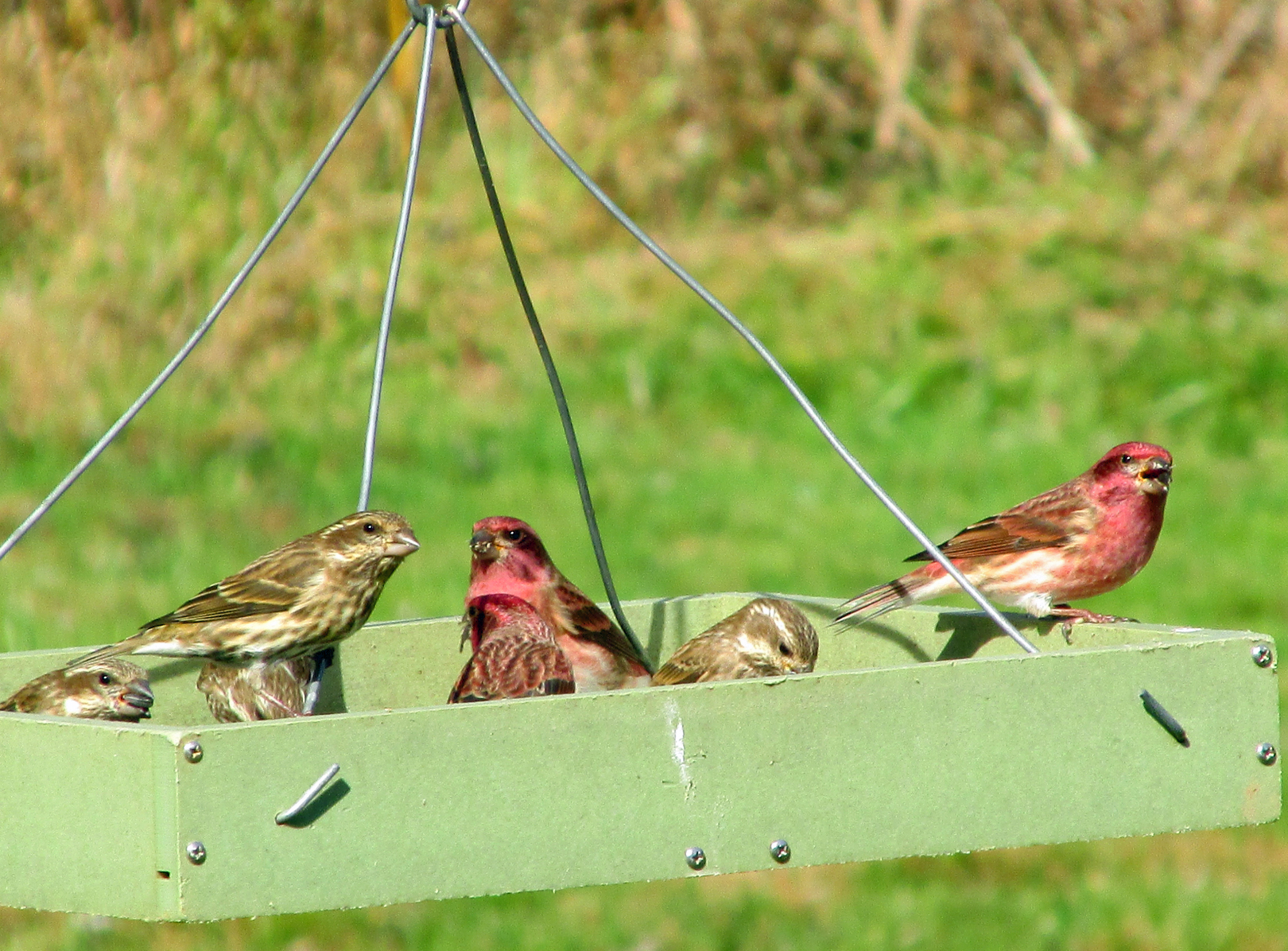
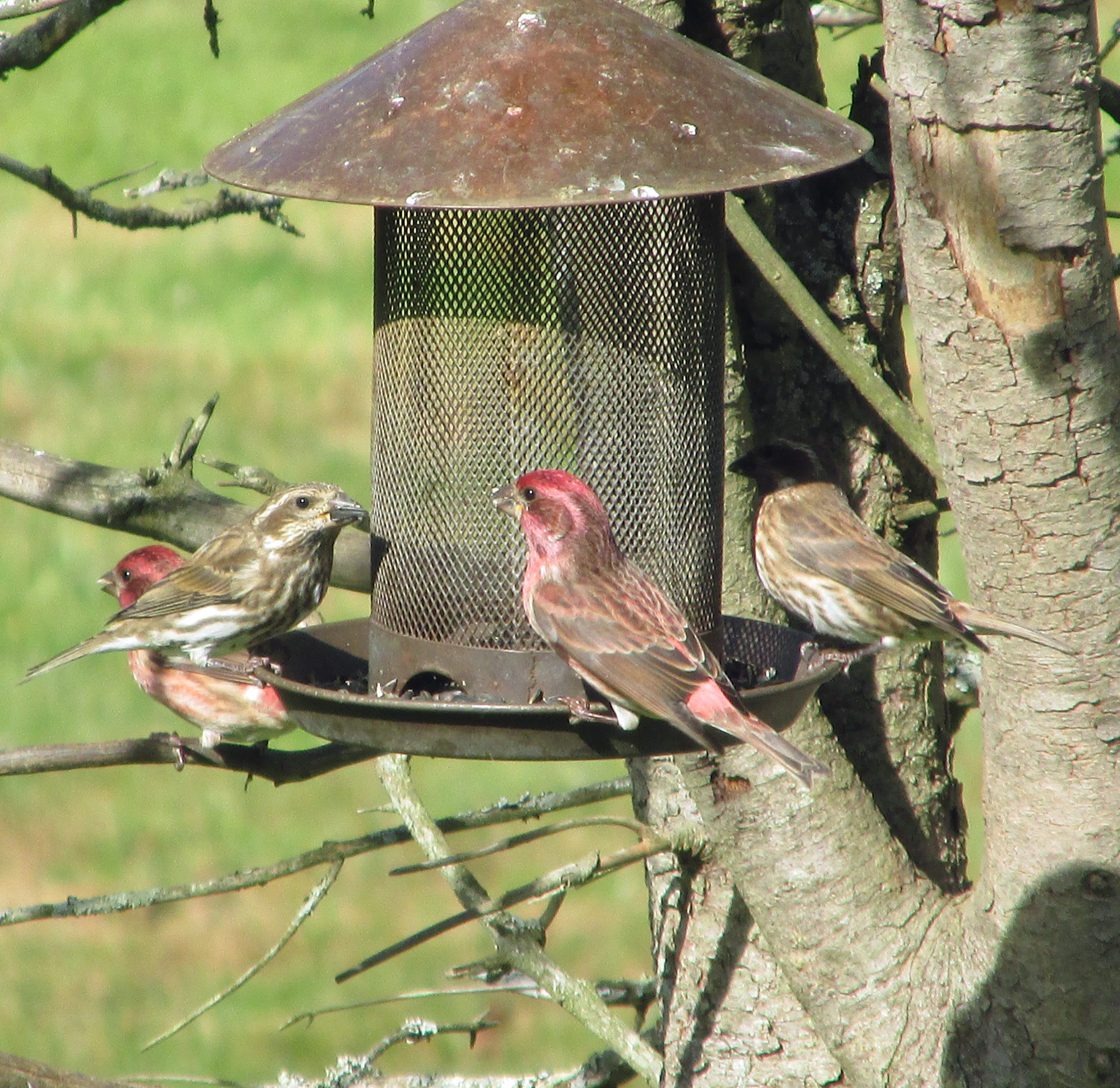
Photo by Bryan Stevens • Male and female purple finches share space at a feeder.

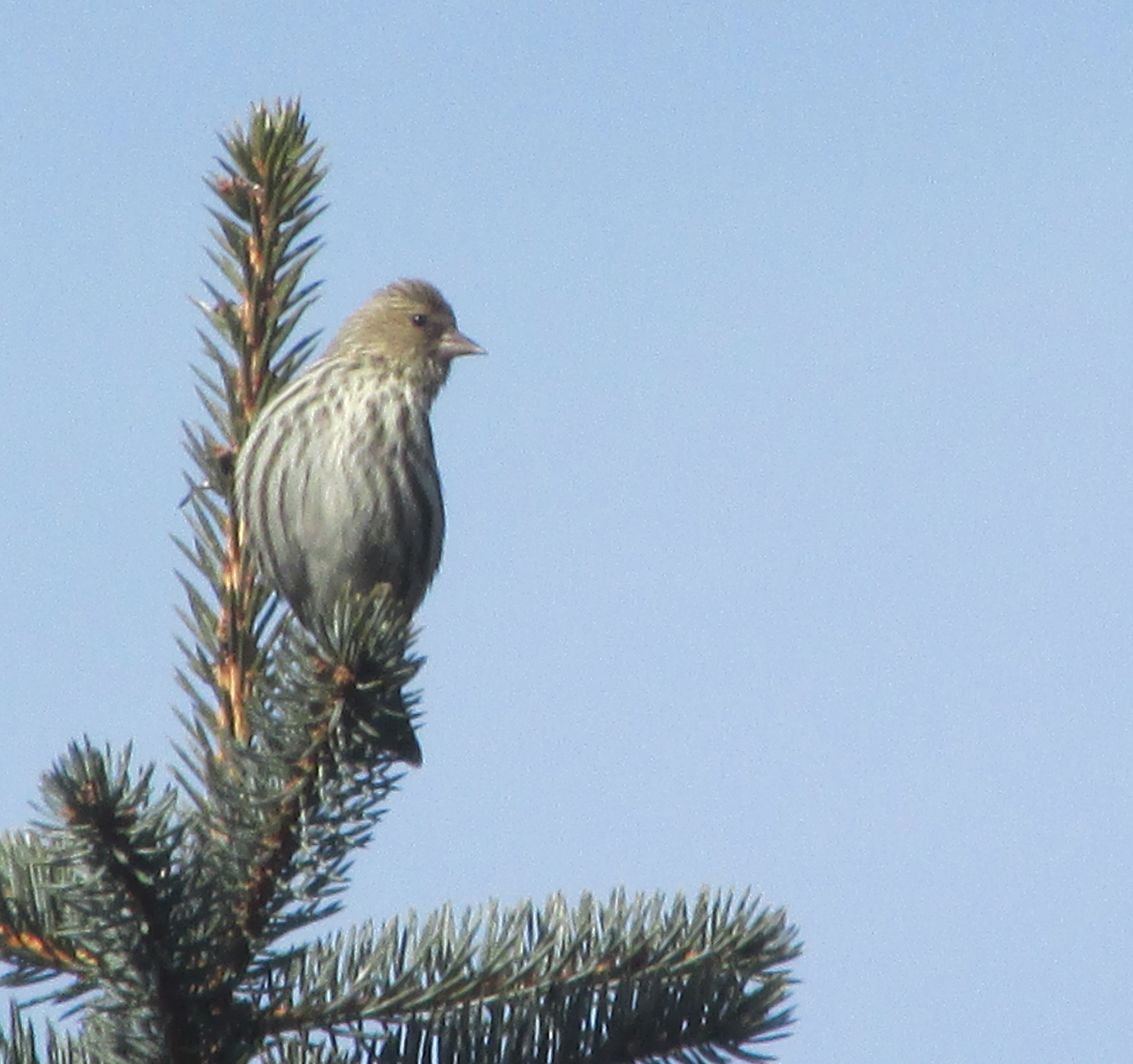
The pine siskin nests during the summer on the higher elevations of Roan Mountain. These small finches, which are related to the American goldfinch, are common winter feeder visitors some years and completely absent other years. This looks to be a year for siskin abundance. Andrew Del-Colle, Site Director and Editor for Audubon Magazine, posted a recent article about this autumn’s dramatic irruption of pine siskins.

Photo by Bryan Stevens • A pine siskin in a spruce at Carver’s Gap on Roan Mountain.

Project FeederWatch, which has monitored North American bird population trends for decades, defines the term irruption as a sudden change in the population density of an organism. In the case of birds, irruptions refer to the movement of northern-wintering species to the south in years of low food availability. Other species that often stage winter irruptions include evening grosbeaks, red-breasted nuthatches and common redpolls. There’s also some indication that some of these other birds may make their way south this winter.

“If you’ve never seen a pine siskin, this is your year,” Del-Colle wrote. “In the past month, the birds have invaded the United States in search of food, inundating backyard feeders across the country. Without question, it’s one of the biggest irruption years in recorded history for the finches.”

Photo by Bryan Stevens • Purple finches jostle for space in a feeder stocked with sunflower seeds.

The pine siskins at my home spend much of their time in weedy fields adjacent to my home and visit my feeders on a semi-regular basis. I suspect their feeder visitation will increase once some truly wintry weather arrives.

The purple finches that arrived on the same day do not rival the siskins in sheer numbers. Nevertheless, the purple finches have lingered, as well. The purple finch, which is a winter visitor to northeast Tennessee, southwest Virginia and western North Carolina, is apparently not as common as in the past. Experts have speculated that the decline in the numbers of purple finches each winter can be attributed, at least in part, to the closely related house finch. The house finch may simply be out-competing the purple finch for scarce natural resources.

Photo by Bryan Stevens • A male house finch perched on a cable. These finches are native to the western United States but became established in the eastern states thanks to the illicit pet trade.

The house finch is quite widespread across the United States. Originally, however, the house finch was a bird of the western part of the country, living in Mexico and the southwestern United States. About 1940, the house finch became established in the eastern United States. In violation of federal law, these small finches were being sold in New York City as pet birds described as “Hollywood Finches.” To avoid trouble with authorities, vendors and even some owners released their “Hollywood Finches” into the wild. Finding the area around New York City to their liking, house finches spread. Within a few decades, they were common birds throughout the eastern United States, including Tennessee, Virginia and North Carolina.

As the house finch claimed a new range, they inevitably encountered the related purple finch. During the winter, both finches are often present at feeders in the region. When both are available for observation, bird enthusiasts should take advantage of the opportunity to compare and contrast these birds. I have never had any difficulty distinguishing a purple finch from a house finch. The two species, at least in my eyes, are easily recognized. I can understand why some people might have trouble separating the two birds. The late Roger Tory Peterson once described the purple finch as a bird “dipped in raspberry juice.” Think about that imagery for a moment and you’ve got a good start to distinguishing a male purple finch from a male house finch. With some practice, observers will come to notice the subtle differences between a purple finch and a house finch.

These two finches belong to the genus Haemorhous, which can be roughly translated as “the color of blood.” The two species are also simply classified as American rosefinches. This grouping also includes a third species, Cassin’s finch, which occurs in the western United States. I have seen all three species, adding Cassin’s finch during a visit to Utah in 2006.

____________

Differentiating purple finches

from house finches can be a challenge

Let’s deal first with the males. Male purple finches are delicate pink-red (that raspberry coloration) on the head and breast, mixing with brown on the back and cloudy white on the belly. The red of a male purple finch is definitely a color I have not observed with many other birds. Even “red” birds such as male Northern cardinals and male scarlet tanagers do not show the same red color. Once you learn the way the red appears in the plumage of a male purple finch, you are on your way to telling this bird apart from its relative.

The red in the plumage of male house finches is surprisingly variable. In most cases, the heads, necks and shoulders of male birds are reddish and the red at times extends to the stomach and between the wings on the bird’s back. The intensity of the red changes with the seasons and is also derived from the berries and fruits in the bird’s diet. Pale yellow and bright orange are alternatives to the typical red plumage.

Look closely at the photograph of the purple finches accompanying this column. There’s a distinctive facial pattern evident on the birds. The strong facial markings include a whitish eye stripe and a dark line down the side of the throat. This pattern simply doesn’t exist with the male house finch. When I make a snap identification of these two birds, I always look for the facial pattern even before I study any other aspects of the appearance of the bird. In addition, purple finches have powerful, conical beaks and a tail that appears short and is clearly notched at the tip. Rounding out the description of a male house finch is the fact that they have a long, square-tipped brown tail and are brown or dull-brown across the back with some shading into gray on the wing feathers. The breast and stomach feathers may be streaked.

Females of both house finches and purple finches are dull brown birds that could easily be mistaken for sparrows. Again, the facial pattern is much more apparent on a female purple finch than on the related female house finch. In addition, I have always noticed that female purple finches are usually a darker shade of brown than the dull brown female house finches. Both male and female house finches are more slender than their more chunky-bodied counterparts.

______________

Although not closely related to our American birds, there is also a group known as rosefinches common to Europe and Asia. Some of these distant relatives include such descriptively named birds as scarlet finch, streaked rosefinch, red-mantled rosefinch, pink-browed rosefinch, long-tailed rosefinch, three-banded rosefinch and Himalayan beautiful rosefinch.

Purple finches occupy a variety of winter habitats, including fields, woodland edges, lawns and gardens. All it takes to lure these finches to feeders is a plentiful offering of sunflower seeds. If you are lucky enough to have both of these finches visiting your feeders, take time to study the differences. It takes some practice, but they can be distinguished quite confidently.