
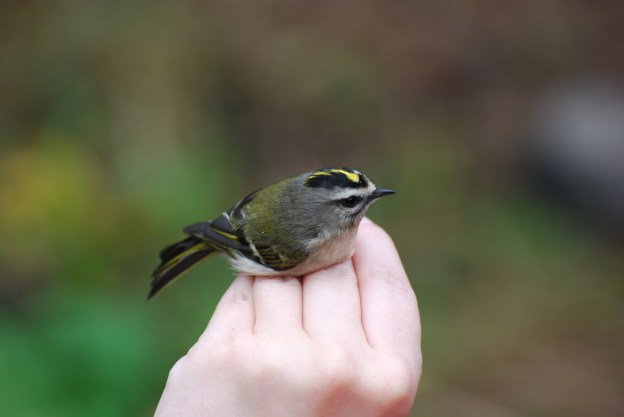
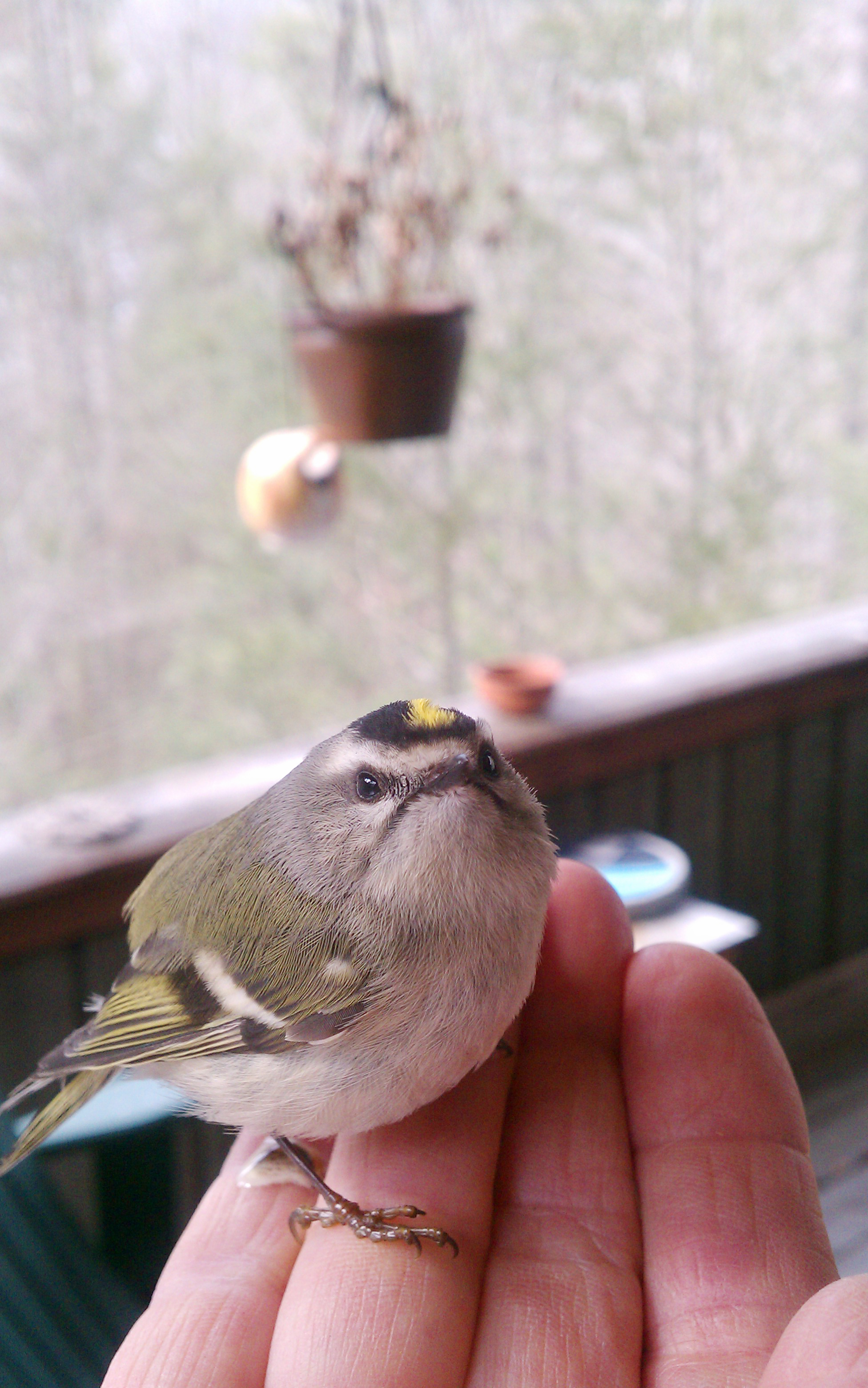
Photo by Beth McPherson • A golden-crowned kinglet recovers in the photographer’s hand after striking a window.
With the recent cold weather, I’ve been seeing a few golden-crowned kinglets, as well as the closely related ruby-crowned kinglet, at my home.
Golden-crowned kinglets are fairly common winter birds. Ruby-crowned kinglets, although not always as common as their relative, also are found in the region during the winter season.
Both the golden-crowned and ruby-crowned kinglets are members of a family of tiny birds known collectively as kinglets and firecrests. They’re such tiny, energetic birds that they absolutely excel with the “cuteness” factor.
All kinglets are very tiny birds, as well as extremely active ones. They are also the only members of this family of birds found in North America. Four other species, however, are native to Europe, Asia and North Africa. The remaining species include goldcrest, common firecrest, Madeira firecrest and flamecrest, which is also known as the Taiwan firecrest.
Kinglets, as their name suggests, are tiny birds. In fact, about the only North American birds smaller than kinglets are some of the hummingbirds. The kinglets belong to the family, Regulidae, and the genus, Regulus. The family and genus names are derived from a Latin word, regulus, which means “rex,” or “king.” The name was apparently inspired by the colorful crown patches, often red, orange or gold, that resemble the royal “crowns” of kings.
Although similar in size and overall coloration, the ruby-crowned and golden-crowned kinglets are easily distinguished from each other. Side by side, the two species of North American kinglets are easy to identify. The golden-crowned kinglet has a striped facial pattern formed by bold black and white stripes. The ruby-crowned kinglet, on the other hand, has a bold white eye ring but no striping.
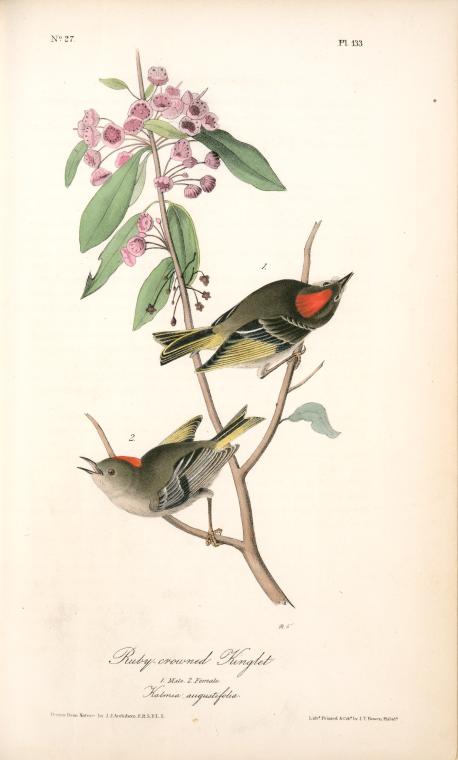
The golden-crowned kinglet has an orange crown patch, while the ruby-crowned kinglet has a red crown patch that is, more often than not, kept concealed. Both sexes of the golden-crowned kinglet possess an orange crown patch, but only the male ruby-crowned kinglet boasts a scarlet patch of feather atop the head.
Kinglets are active birds, foraging vigorously for small insects and spiders. When foraging, both kinglet species have a habit of flicking their wings over the backs. Even if you can’t get a good look at the birds, this behavior alone helps contrast them from other small birds, including some warblers and wrens.
Golden-crowned kinglets are widespread in the region during the winter. During the summer months, head to the slopes of some of the region’s higher mountains to look for these tiny birds that nest at the higher elevations of the Southern Appalachians.
Ruby-crowned kinglets can also be found in the region during the winter, but extreme cold weather will often force these less cold-hardy birds to eke out the winter months farther south.
Kinglets don’t typically visit feeders, but they do tend to join mixed flocks with membership consisting of such species as tufted titmouse, Carolina chickadee and white-breasted nuthatch. When traveling with such flocks, kinglets may visit the space around feeders but rarely take seeds or other fare offered at feeders.
In recent decades, perhaps assisted by the surge in the popularity of feeding birds, kinglets have been observed sampling such fare as suet cakes, peanut chips and scraps of sunflower seeds that have been shelled and dropped by other birds.
Normally, kinglets have a rather fleeting lifespan. These tiny birds can be considered old if they live three or four years. There are always exceptions. The oldest golden-crowned kinglet on record was six years and four months old. That individual, a male, was documented by a bird bander in 1976, according to the website All About Birds.
Kinglets are surprisingly tame at time and often exhibit as much curiosity about us as we display toward them. They’re very active birds, however, constantly moving from perch to perch. These bursts of hyperactivity can make them difficult to observe with any satisfaction since they so rarely remain still for long.
•••
To learn more about birds and other topics from the natural world, friend me on Facebook at https://www.facebook.com/ahoodedwarbler. I like to post about local birds, wildlife, flowers, insects and other aspects of the natural world.





 Our Fine Feathered Friends