
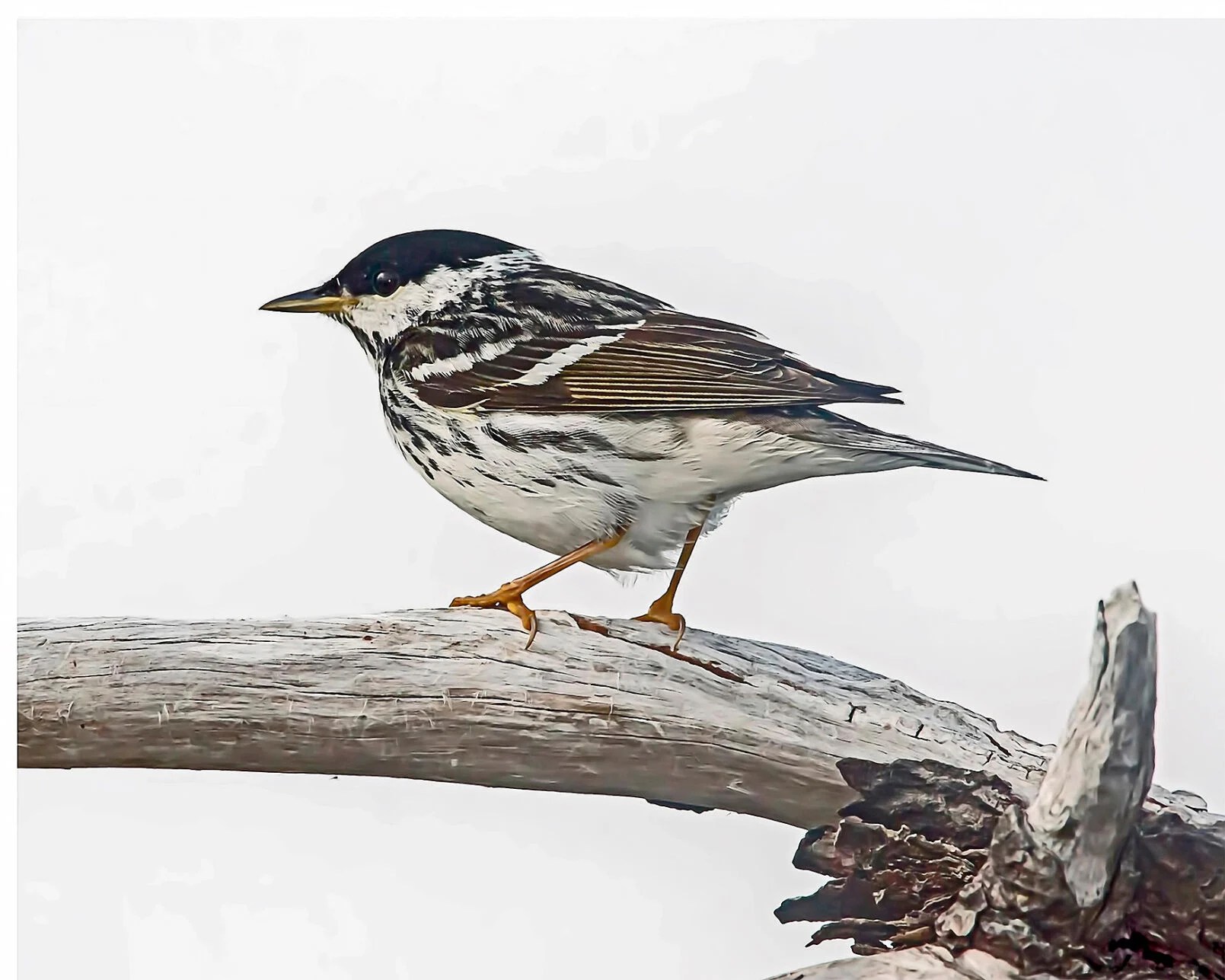
Hans Toom/Pixabay • The blackpoll warbler has one of the more difficult and lengthy migrations of the family of warblers.
The phenomenon of migration isn’t exclusive to the neotropical migrants of the New World. Birds in other parts of the world migrate, too. Waterfowl, shorebirds and raptors are among some of the families of birds that stage impressive migrations.
Of course, I spent most of my birding within Tennessee, particularly in the Northeast Tennessee region. Since the Volunteer State has no access to the sea, it is sometimes amazing how many birds affiliated with coastal areas can be found if you know when and where to look. Fall’s a good time to scan lakeshores, river banks and the edges of farm ponds for migrating shorebirds and wading birds.
I discussed last week some of the species I hope to see this fall. Every time I see some of these migrants I am impressed by what a phenomenal feat each and every single one of these birds represents. As my mother is fond of asking: “How do they do it?”
For such relatively small creatures, many if our birds are world-class travelers. Here are a few profiles of some of these incredible migrants.

Photo by U.S. Fish & Wildlife Service/Kirk Rogers • The Arctic tern is a world champion among migrating birds.
One good tern deserves another
The Arctic tern, for example, truly takes migration to extremes. This small seabird travels each year from its Arctic nesting grounds to the Antarctic region, where it spends the winter months. Put into terms of mileage, the Arctic tern can travel about 50,000 miles in a single year. For a bird with a body length of about 15 inches and a wingspan of about 28 inches, this incredible migration is an astonishing feat. These statistics permit the Arctic tern to easily lay claim to the title of champion migrant among our feathered friends. According to the website for National Geographic, Arctic terns face a serious threat from climate change. In a profile on the tern at its website, National Geographic warns that Arctic terns are projected to lose 20 to 50 percent of their habitat due to the temperature changes linked to climate change. They also face loss of habitat due to encroachment by human activities such as oil drilling.
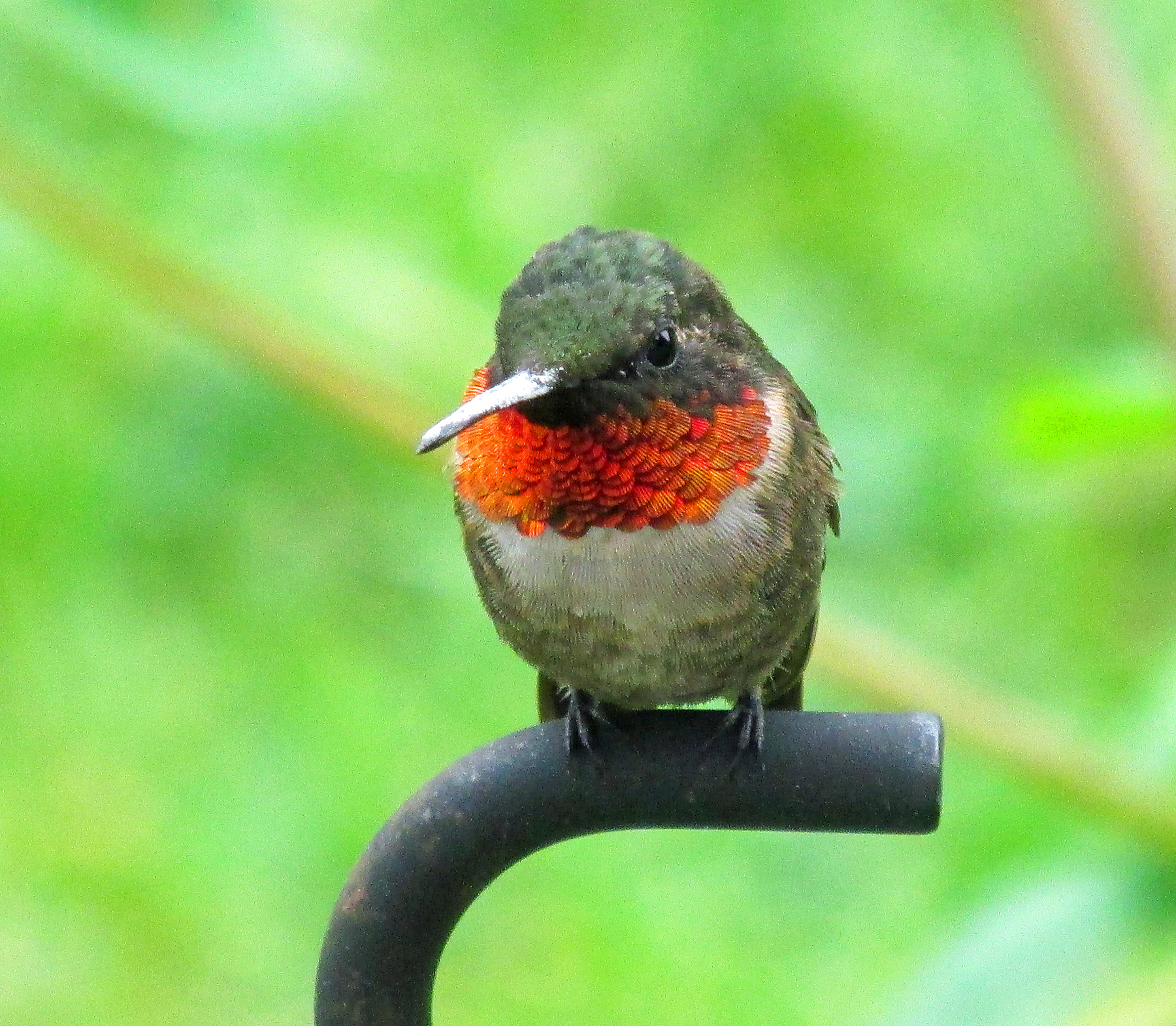
Photo by Bryan Stevens • Despite a perceived disadvantage of size, ruby-throated hummingbirds are quite capable of thriving in a giant world.
Size matters less than we think
The ruby-throated hummingbird makes an impressive migration each year. It’s even more awesome when one considers the diminutive size of these small travelers. Just to reach the United States, these tiny birds undertake a strenuous journey. They leave their wintering grounds in Central America to return to the United States and Canada for the nesting season. Most of these tiny birds, which are barely four inches long, make a non-stop flight of more than 500 miles across the Gulf of Mexico. The journey can take almost an entire day. With the end of summer, the entire population of ruby-throated hummingbirds, increased by a new generation of young birds, makes the Gulf crossing for a second time in a year to return to the American tropics for the winter months.
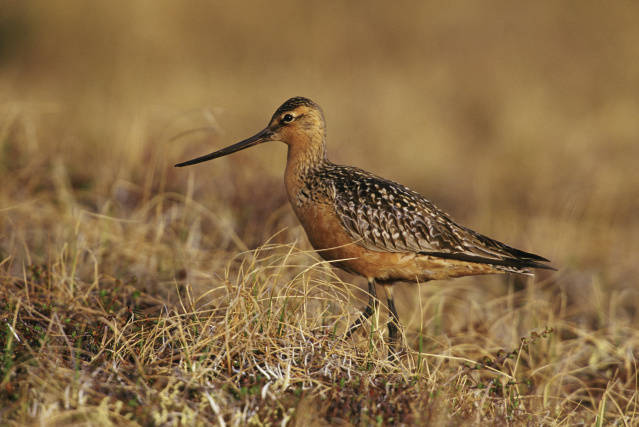
Photo by U.S. Fish & Wildlife Service/Steve Maslowski The bar-tailed godwit stages migrations that can take nine days of non-stop flight spanning nearly 6,000 miles.
Godwits, by Jove!
Shorebirds, which in North America can consist of birds ranging from turnstones and sandpipers to willets and avocets, are champion migrants. For instance, the bar-tailed godwit makes an impressive non-stop migratory flight. This shorebird nests in the United States only in parts of remote Alaska, but this godwit also ranges into Scandinavia and northern Asia. Some of these godwits make a nine-day, non-stop migratory flight that takes them from New Zealand to the Yellow Sea of China and beyond, a distance of almost 6,000 miles each way. Needless to say, since the godwits make no stops along the way, they must also go without food for the duration of their journey. The female godwit is larger than the male, but she still weighs only 12 ounces. The long-billed, long-legged bird is about 17 inches in length from the tip of the bill to its tail. That a creature so small can make such a distant, arduous trip and be the none the worse for wear is truly inspiring.

Bryan Stevens • A broad-winged hawk perches in a woodland in the Southern Appalachians.
A fine kettle of hawks
Many North American raptors migrate, but the broad-winged hawk dislikes the lonely aspects of solitary travel. Instead, these hawks form large flocks, known as kettles, during migration. In autumn the majority of these raptors travel past human-staffed hawk migration observation points, which are dubbed “hawk watches,” during a brief and concentrated period of only a few weeks. Observing the phenomenon locally is possible at the Mendota Fire Tower Hawk Watch site atop Clinch Mountain at an abandoned fire tower near Mendota, Virginia. Broad-winged hawks are part of the family Accipitridae, which includes 224 species of hawks, eagles, vultures and other birds of prey. Broad-winged hawks are truly long-distance migrants. Many hawks passing over Mendota may end their migration as far south as Brazil. These hawks travel in flocks that can consist of hundreds or thousands of individuals. The birds conserve energy by soaring on thermals and mountain updrafts.
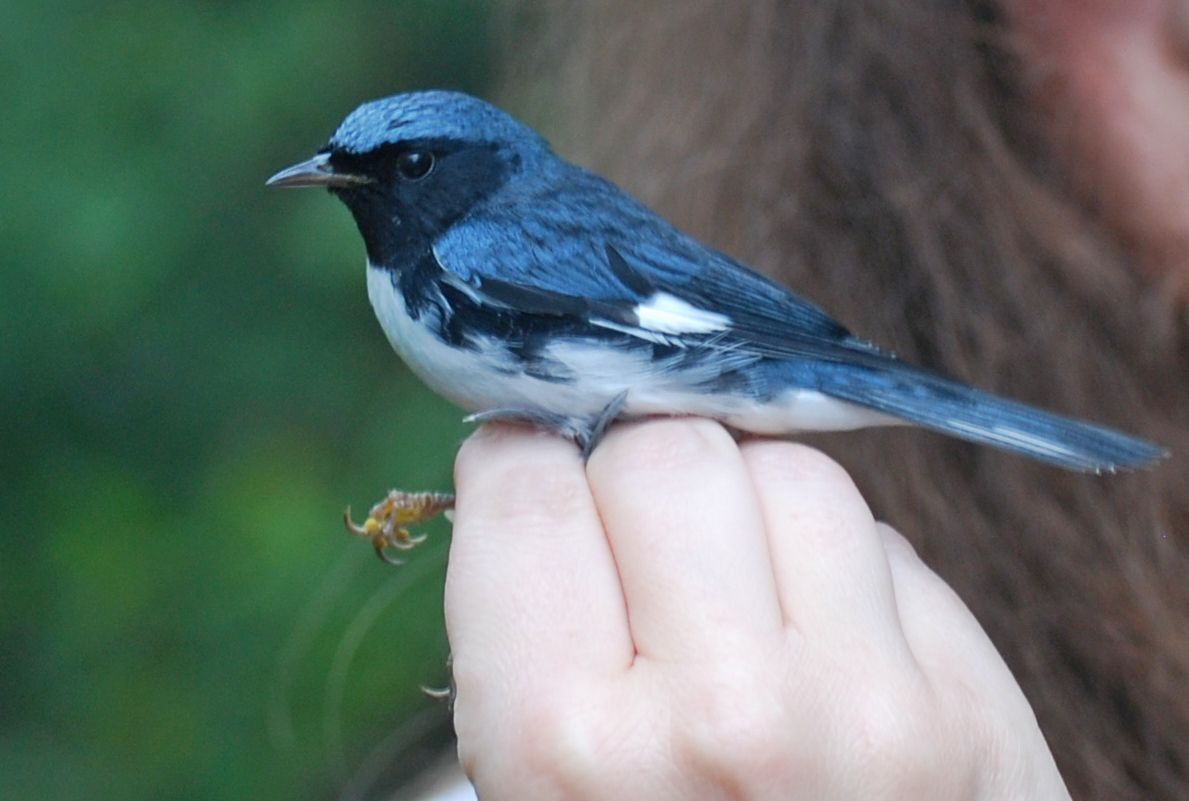
Jean Potter • Warblers, such as this male black-throated blue warbler, migrate into North America each spring to nest and retreat each fall for conditions farther south during the winter.
Traveling in stages
Most of the warblers that nest in North America retreat to Central and South America during the winter months. Few warblers, however, make as great a journey as the blackpoll warbler. Instead of migrating over land, this five-inch-long warbler undertakes a two-stage migration. The first half of the migration is a non-stop flight of about 1,500 miles. Every fall, these tiny birds fly over the ocean during this part of their migration, departing from Canada or the northern United States and not stopping until they reach various locations in the Caribbean. There they will spend some time recovering from the exhausting first half of their journey before they continue their way to such South American countries as Colombia and Venezuela.
•••
Bryan Stevens has written about birds since 1995. To share a sighting, ask a question or make a comment, email him at ahoodedwarbler@aol.com.
 Our Fine Feathered Friends