Category Archives: Spring migration

Eastern phoebe easily wins friends with its trusting nature

Considering the bright finery worn by some of the more colorful spring arrivals, I could hardly blame you if the return of the Eastern phoebes escaped your notice. In comparison with vibrant birds like rose-breasted grosbeak, ruby-throated hummingbird, scarlet tanager and yellow warbler, the Eastern phoebe is downright drab.

Phoebe-Baby

Photo by Bryan Stevens                                      This fledgling Eastern phoebe waits patiently on a branch for a parent to bring it a morsel of food. Phoebe-Baby
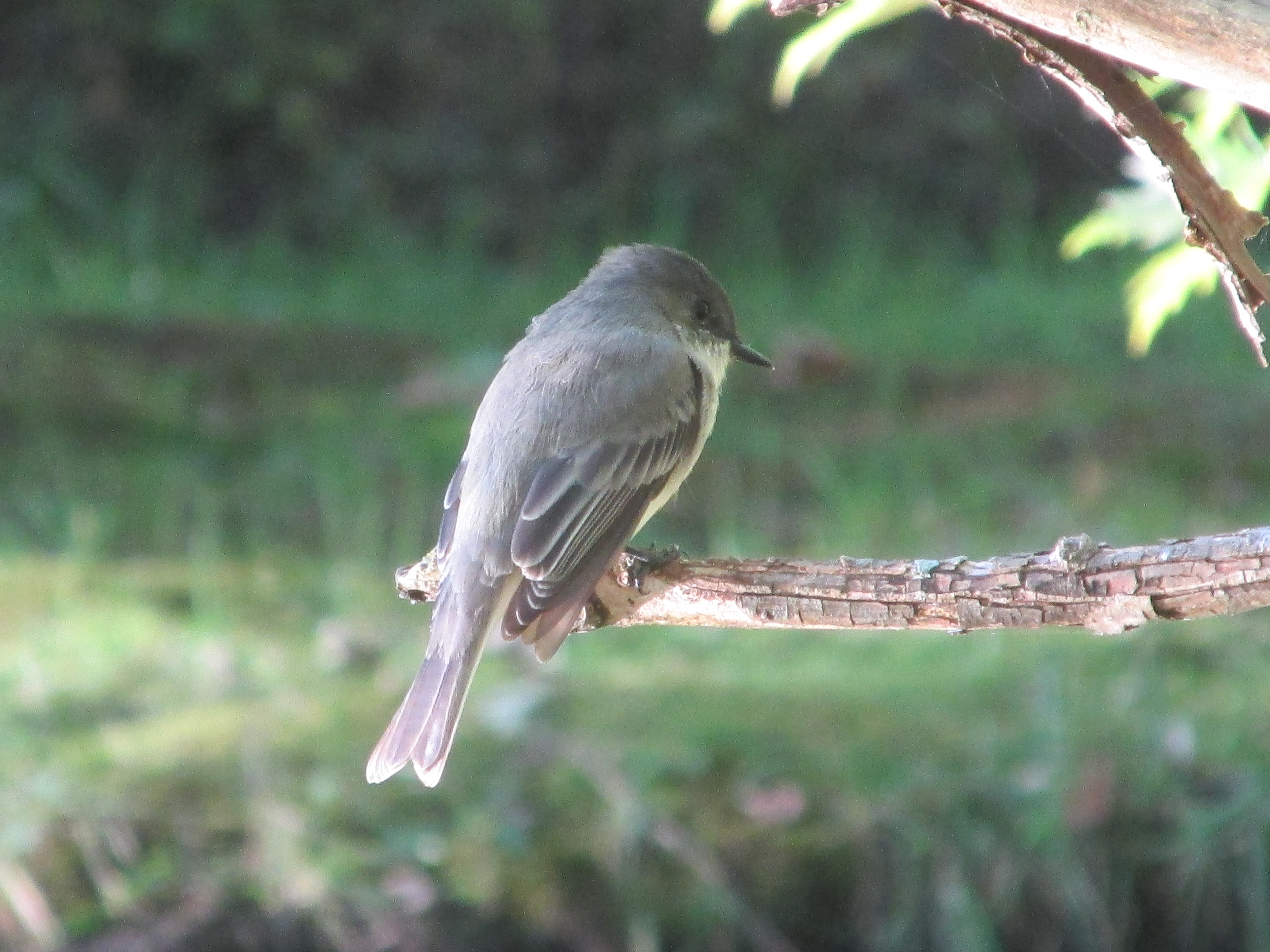
Phoebe-Two

Photo by Bryan Stevens                                                               The Eastern phoebe is a common bird in much of the Eastern United States.

Nevertheless, this member of the flycatcher clan has earned itself a favorite spot in the hearts of many a birdwatcher. It’s one of those birds that even beginning birders find surprisingly easy to recognize and identify. While it may not have a dramatic plumage pattern to hint at its identity, the Eastern phoebe is quite at home around human dwellings and comes into close contact with people going about their daily routines. Rather tame — or at least not too bothered by close proximity with humans — the Eastern phoebe has one behaviorism that sets it apart from all the other similar flycatchers. When this bird lands on a perch, it cannot resist a vigorous bobbing of its tail. Every time that a phoebe lands on a perch, it will produce this easily recognized tail wag. It’s a behavior that makes this bird almost instantly recognizable among birders with the knowledge of this behavioral trait.

The Eastern phoebe is also an enthusiastic springtime singer, and the song it chooses to sing is an oft-repeated two-syllable call “FEE-bee” that provides the inspiration for this bird’s common name.
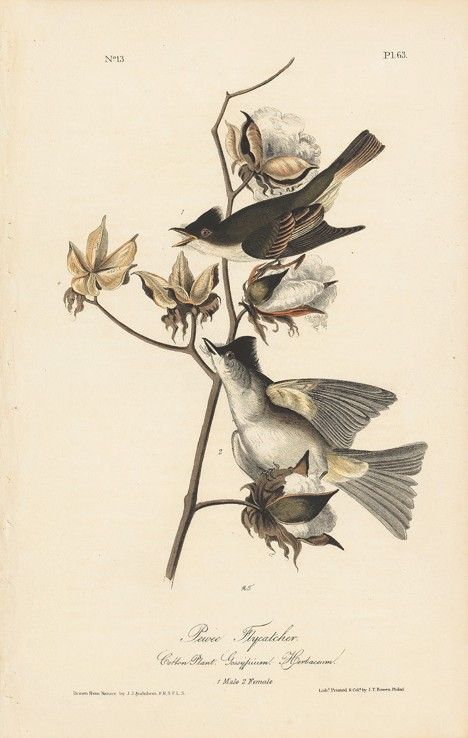
Octavos500_set12

A painting by John James Audubon of Eastern phoebes, or, as he knew them, pewee flycatchers.

Thomas_Say

Thomas Say

The Eastern phoebe, known by the scientific name of Sayornis phoebe, has two relatives in the genus Sayornis. The genus is named after Thomas Say, an American naturalist. The Eastern phoebe’s close relatives include the black phoebe and Say’s phoebe. The black phoebe ranges throughout Oregon, Washington and California and as far south as Central and South America. As its name suggests, this bird has mostly black feathers instead of the gray plumage of its relatives. The Say’s phoebe, also named for the man who gave the genus its name, is the western counterpart to the Eastern phoebe.

Since they belong to the vast family of New World flycatchers, it’s probably no surprise that these phoebes feed largely on insects. The birds will often perch patiently until an insect’s flight brings it within easy range. A quick flight from its perch usually allows the skillful bird to return with a morsel snatched on the wing. In the winter months, the Eastern phoebe also eats berries and other small fruit.

Phoebe-WIllow

Photo by Bryan Stevens                                      An Eastern phoebe forages for insects in the branches of a willow tree.

Phoebes are fond of nesting on human structures, including culverts, bridges and houses. With the latter, they were once known for their habit of placing their nests under sheltering eaves. At my home, a pair of Eastern phoebes often chooses to nest on the wooden rafters in my family’s garage. Phoebes also like to reside near a water source, such as a creek, stream or pond.

Although the species is migratory, a few hardy individuals will usually try to tough out winters in the region. The others that depart in the autumn will migrate to the southern United States and as far south as Central America. On some rare occasions, Eastern phoebes have flown far off their usual course and ended up in western Europe. I can usually count on Eastern phoebes returning to my home in early March, making them one of the first migrants to return each year. Their arrival rarely goes unnoticed since the males tend to start singing persistently as soon as they arrive.
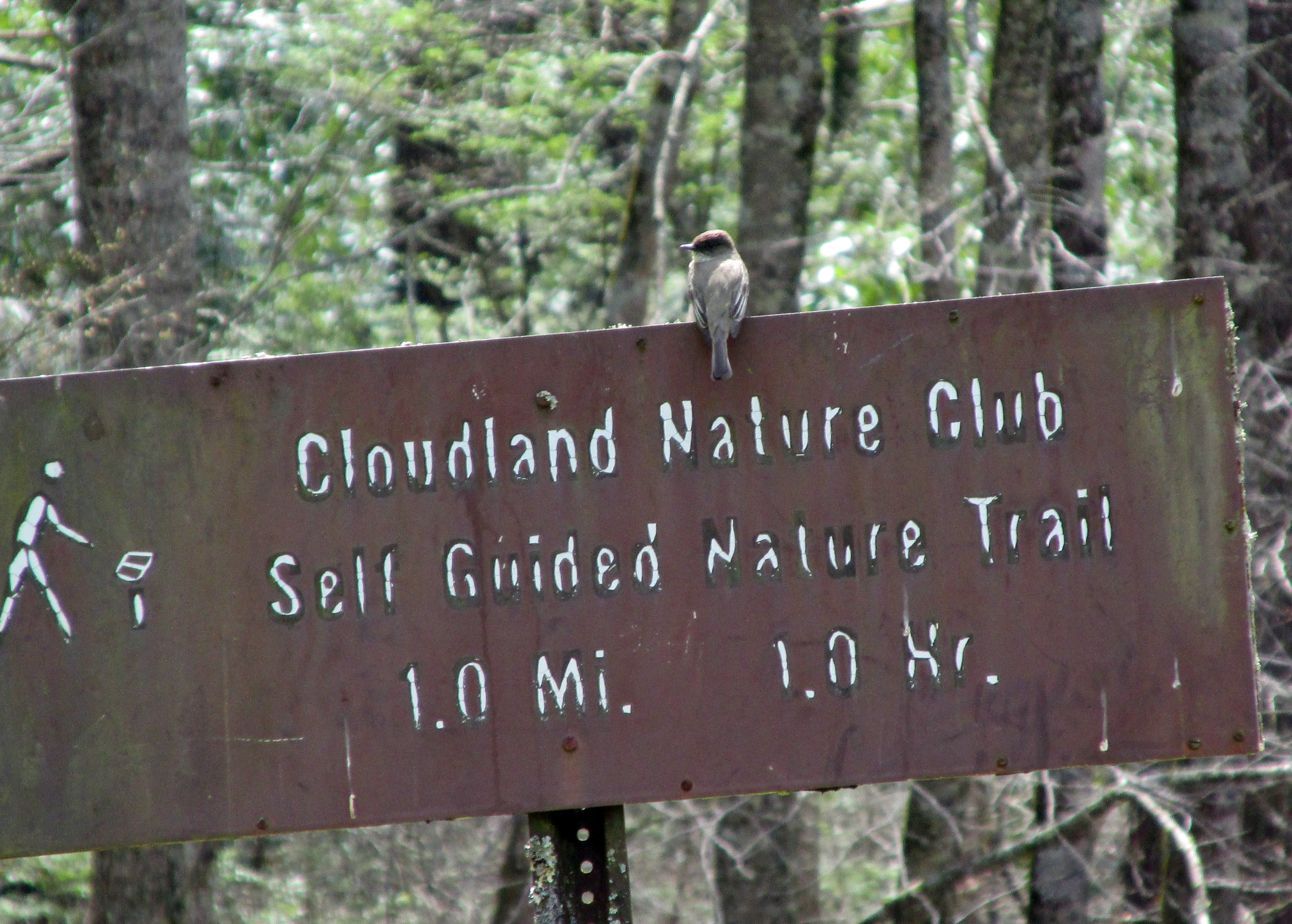
Phoebe-Sign

Photo by Bryan Stevens                                                            An Eastern Phoebe perches on a sign at Roan Mountain State Park in Roan Mountain, Tennessee.

A few weeks ago I wrote about opportunities to take part in citizen science projects for the benefit of birds. The concept of ordinary citizens making a difference in scientific discovery isn’t a new one. More than two centuries ago, one of the most influential birders in history and the namesake of the National Audubon Society used Eastern phoebes to help add to the knowledge of bird migration.

Phoebe-Sept18

Photo by Bryan Stevens            An Eastern phoebe during the fall of the year.

John James Audubon, an early naturalist and famed painter of North America’s birds, conducted an experiment with some young phoebes that represents the first-ever bird banding in the United States of America. His novel experiment, which he carried out in 1803, involved tying some silver thread to the legs of the phoebes he captured near his home in Pennsylvania. He wanted to answer a question he had about whether birds are faithful to home locations from year to year. The following year Audubon again captured two phoebes and found the silver thread had remained attached to their legs. Today ornithologists still conduct bird banding to gather information on birds and the mystery of their migrations.

So, that pair of phoebes that returned to your backyard this spring — they just might be the same ones that have spent past summer seasons providing you with an enlightening glimpse into their lives.

••••••

To learn more about birds and other topics from the natural world, friend Bryan Stevens on Facebook at https://www.facebook.com/ahoodedwarbler. He is always posting about local birds, wildlife, flowers, insects and much more. If you have a question, wish to make a comment or share a sighting, email ahoodedwarbler@aol.com.
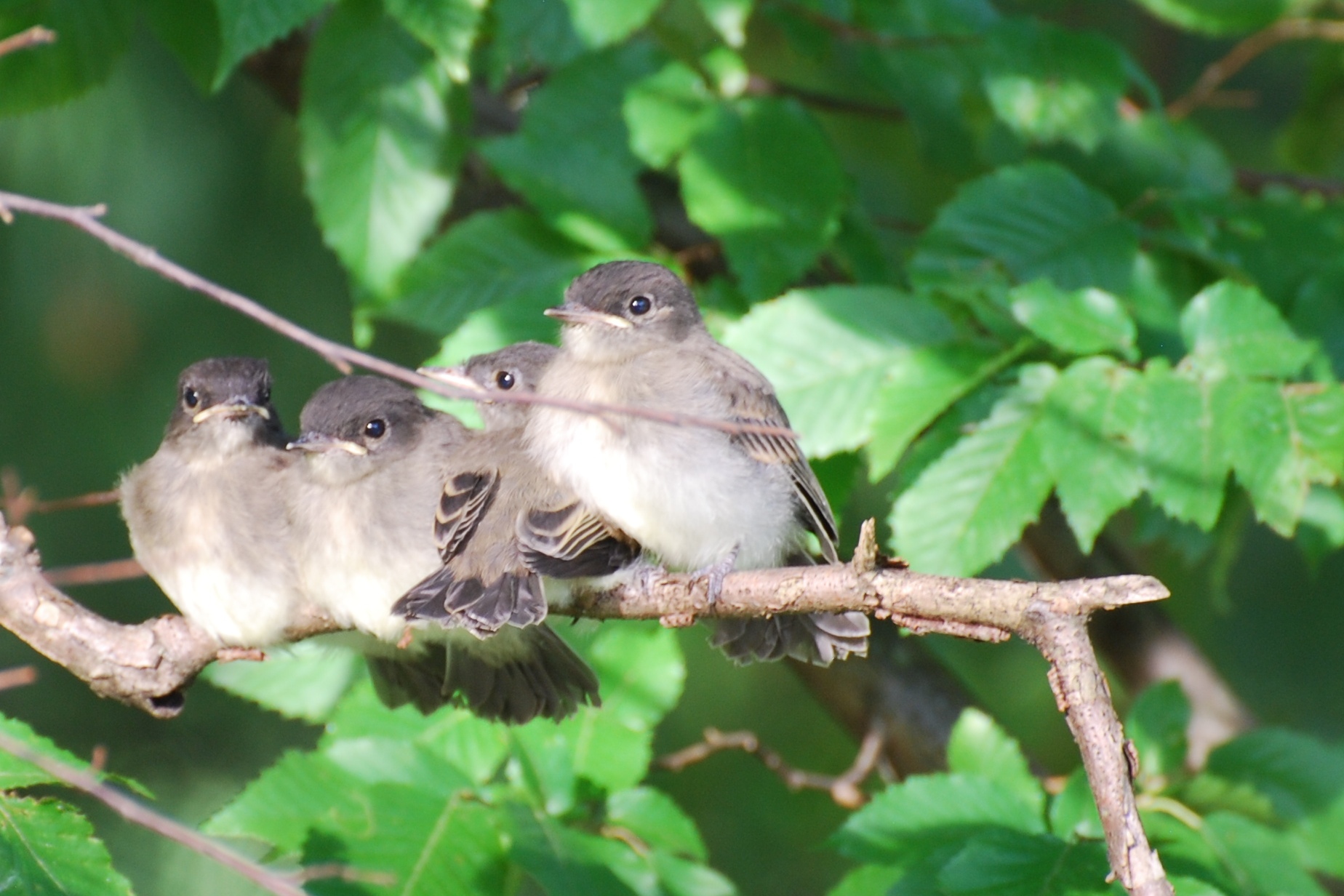
4934813732_fa115579d3_o

Photo Courtesy of Jean Potter                                                                                                          A family of young Eastern Phoebes shares a perch.

Now that hummingbirds are back, here’s how to entice them to stay

4934219635_1db9c900c4_o

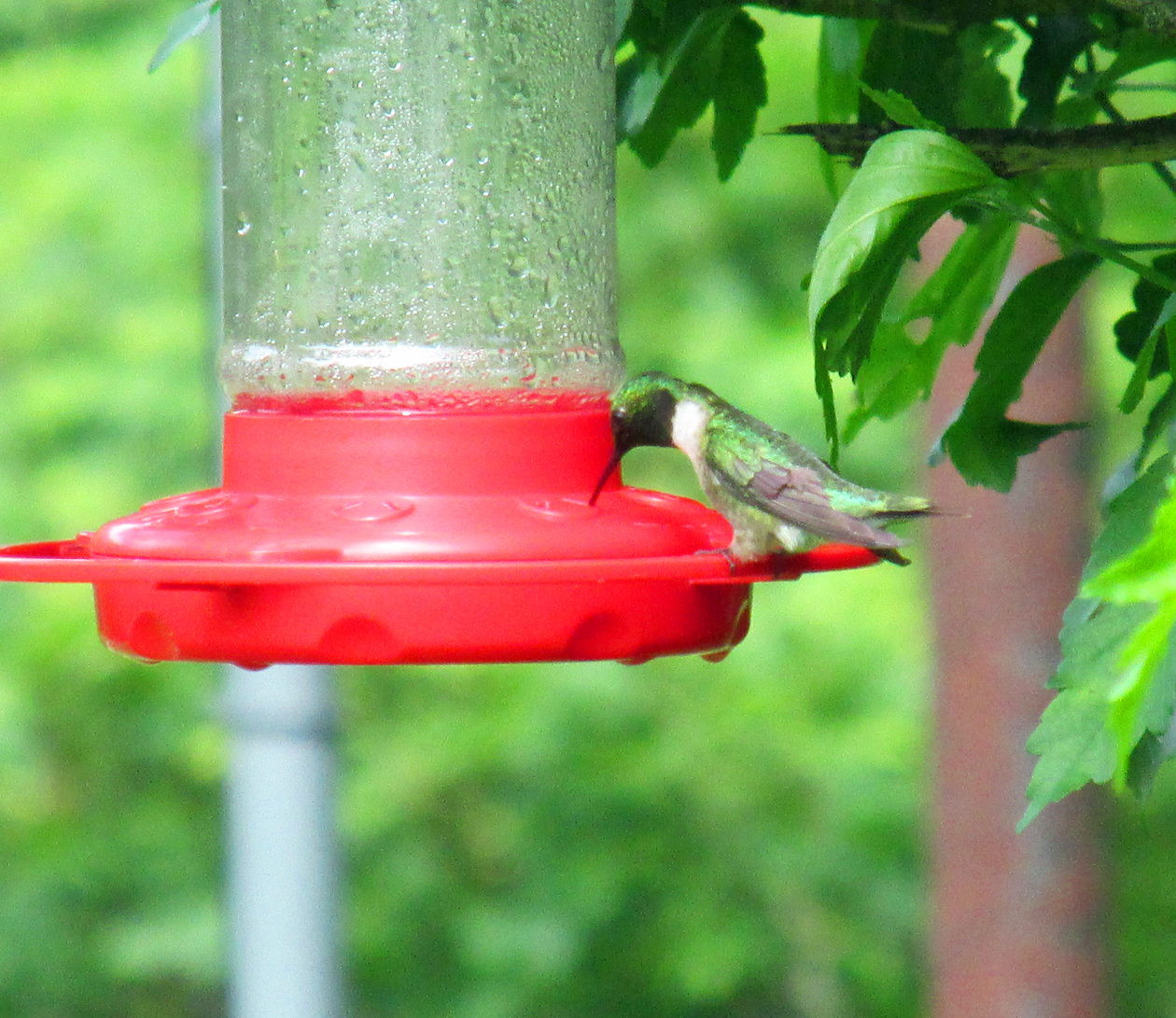
Photo Courtesy of Jean Potter                                                              Although hummingbirds migrate back to the region in the spring, their hosts will need to provide a welcoming environment to keep these tiny birds buzzing around the yard all summer.

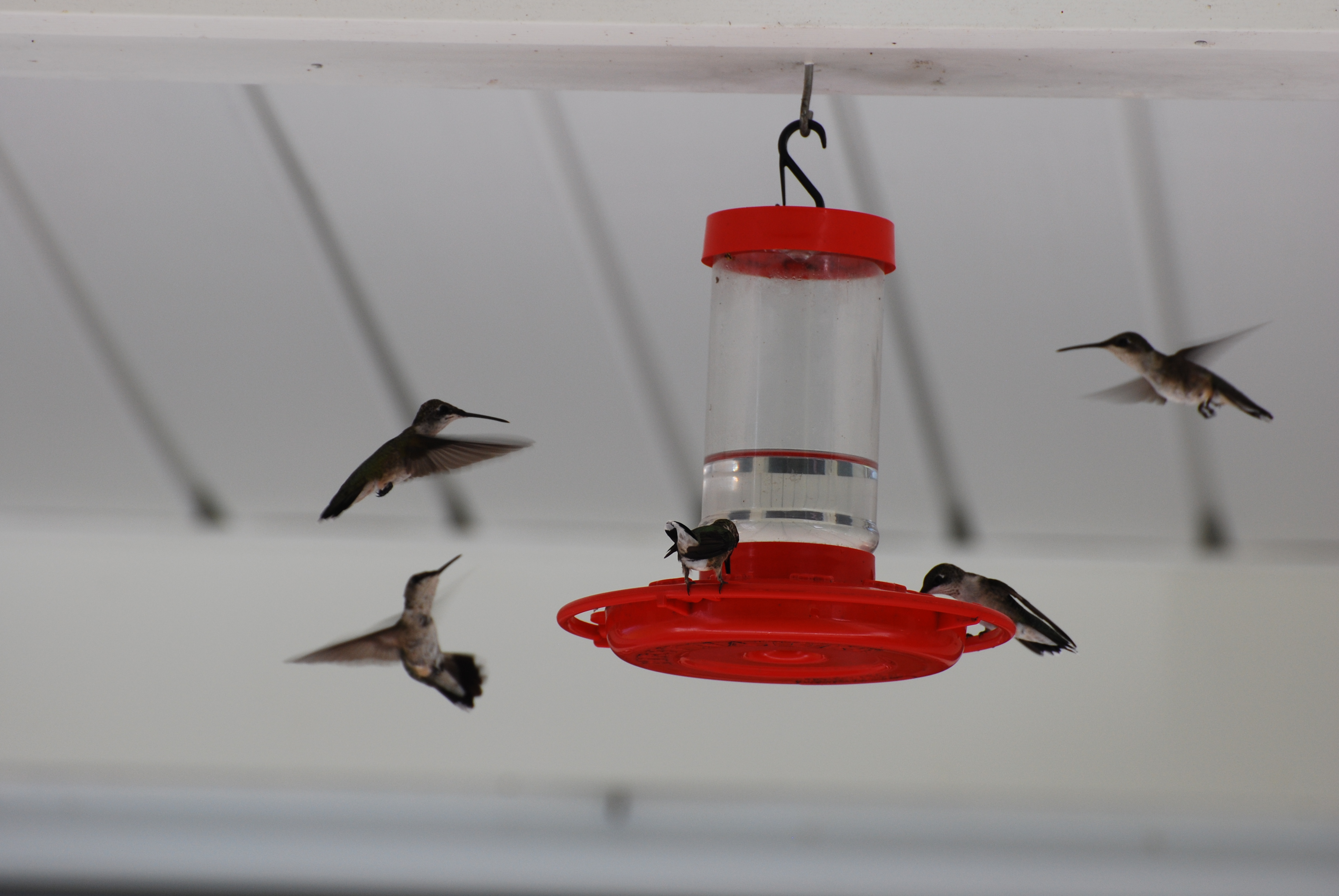
Now that the hummingbirds have returned to the region, it’s important to know how to attract them and meet their needs. Like most living creatures, hummingbirds require three crucial things — shelter, water and food. A yard with evergreen trees or a thick hedge can provide perfect nighttime roosts for a hummingbird. Other types of trees and shrubs also offer potential nesting locations for female hummingbirds.
Hummingbirds, like all birds, need water. Hummingbirds can get a lot of their water in their diet, but they still need water for bathing. Birds bathe to keep their feathers in good condition. For hummingbirds, which are wizard aerialists among birds, it is even more crucial that their feathers are in good shape. A fountain, trickling waterfall or even a well-timed lawn sprinkler are almost magnetic in their attraction for hummingbirds, which are usually too small to bathe in a regular bird bath.

Keeping visiting ruby-throated hummingbirds can be as simple as planting an abundance of the flowers they love, but offering multiple sugar water feeders also helps. Keep the sugar water mix at a four parts water to one part sugar ratio. Don’t offer honey in your feeders. When mixed with water, it can spoil and spread fungal diseases. There’s also no need to use a solution with any sort of red dye. Studies have indicated that such dyes could have adverse effects on hummer health. Remember that hummingbirds don’t subsist on sugar water alone. They also eat numerous tiny insects and spiders to obtain the protein they need for their dietary needs, so don’t use insecticides near feeders or flowers that hummers are likely to visit.

FemaleRuby-April28

Photo by Bryan Stevens                                    By now, female Ruby-throated Hummingbirds are getting ready to build nests and raise young.

Follow these basic instructions and the hummingbirds will reward you with hours of enchanting entertainment this summer.
•••••
I received even more notifications on the return of these tiny winged gems. Here are a few other shared observations: 
» Harold Randolph spotted his first hummingbird in 2016 on Monday, April 11, near Marion, North Carolina, at Lake James. He sent me an email to report the happy fact.
•••••
» Philip Laws in Unicoi County reported on Facebook that he saw his first spring hummingbird on April 11.
•••••
» Betty Poole asked her daughter to email me to report that she saw her first hummingbird of spring on Wednesday, April 13.
•••••
» Steve Meigs, who lives at an elevation of 2,800 feet in Limestone Cove’s Foxhound Hills community near Unicoi, reported that his first hummingbird arrived April 14 at 11:30 a.m. “That’s a few days earlier than the last few years,” he noted on his Facebook comment.
•••••
» John and Patsy Brenner welcomed back their first hummingbird on Monday, April 18. “I believe it was the ruby-throated, but all I really saw was the flash of green,” John wrote in an email. The Brenners live in Meade Meadows in Abingdon, Virginia. “We are on the seventh fairway of the golf course just across from the Creeper Trail,” he wrote. “We are new subdivision so around the houses there are only small trees. I have nesting bluebirds and tree swallows in a free-standing bird house.”
He also reported other daily sightings, including brown-headed cowbirds, doves, finches, cardinals, red-winged blackbirds, sparrows, robins, starlings and downy woodpeckers.
•••••

» Judy Brown, who lives in Damascus, Virginia, notified me that she saw her first hummingbird of the season on Monday, April 18.

Hummer-Male

Photo by Bryan Stevens                                Flowers and sugar water feeders are just two ways to attract hummingbirds to your yard.

•••••
» Mary Beierle of the Stoney Creek community in Elizabethton, Tennessee, welcomed her first spring hummingbird at 6:13 p.m. on Monday, April 18.
“I am so happy!” Mary wrote in an email. “They are very late this year compared to other recent years. This morning there were two hummers and I’m pretty sure they are a male and a female. I have a friend in Jonesborough, Tennessee, who
had his first hummingbird the day before, around 9 in the morning.”
Mary was thrilled by their return. “Spring is finally officially here, in my opinion,” she noted.
» Eddie and Delores Phipps of  Bluff City, Tennessee, shared that their first sighting also took place on Monday, April 18. They had been out of town for the weekend, so they speculated that the hummingbirds might have showed up a day or two earlier.  
Constance Tate’s first sighting of a spring hummingbird involved not one, but two, birds. “There were two of them at the feeder at 3 p.m. on April 19,” she wrote in an email. Constance lives in Bristol, Tennessee, near Steele Creek.
••••••
» Emory & Henry professor Steven Hopp sent me an email about his first hummer sighting on April 20. “I saw my first hummingbird this morning, when it went directly to the empty hummingbird feeder from last year,” he wrote. “I suppose that tells me she was a returning bird.”
•••••
» Helen Whited informed me that hummers arrived at her home in Richlands, Virginia, on Tuesday, April 19.
•••••
» Phyllis Moore of Bristol, Virginia, notified me by Facebook that she saw her first hummingbird of spring around 7:30 p.m. on Wednesday, April 20.
“My first hummingbird just buzzed past my window where I hang my feeder,” reported Patricia Werth in an email. “I guess I better get busy.” Patricia’s sighting occurred at 6:05 p.m. on Wednesday, April 20.
•••••
» Nancy Vernon of Bristol was very excited when she spotted two hummingbirds at her feeder today at 5 p.m. on Wednesday, April 20, in Bristol. “They are very small,” she said, adding that the sighing involved a male and female pair. 
•••••
» Thia Montgomery, who lives in Blountville, Tennessee, reported that her first hummingbird arrived at about 2 p.m. on April 20. “I have three large terra-cotta pots with flowers, and each has a small shepherd’s hook sunk into it with a hummingbird feeder hung on each hook,” she wrote. “As I was watering the flowers in the pots, the hummingbird buzzed me, so I left off watering so he could have a drink.”
The insistent hummingbird — a male —was the first she had seen this year, although she has had her feeders out since the last week of March.
•••••

» Cecilia Murrell of Abingdon,Virginia, has four feeders available for the hummingbirds, but the first one to show up on Thursday, April 21, fed at the nearly empty feeder. “Maybe he has visited me before,” she wrote in an email. 

13043548_10154798728527366_8192659683794612503_n

Photo by Donna Rea              This was the first hummingbird to visit the Rea residence in 2016.

•••••
» Donna Rea shared on Facebook that hummingbirds had returned to her home in the Rock Creek community of Erwin.
•••••
» James Noel Smith reported on Facebook on April 26 that hummingbirds are back at his home in Unicoi.
••••••
To learn more about birds and other topics from the natural world, friend Stevens on Facebook at https://www.facebook.com/ahoodedwarbler. He is always posting about local birds, wildlife, flowers, insects and much more. If you have a question, wish to make a comment or share a sighting, email ahoodedwarbler@aol.comahoodedwarbler@aol.com.


Migrating warblers offer surprises for alert birders


BlackThroated_Green

Photo by Steve Maslowski/U.S. Fish & Wildlife Service Black-throated green warblers are nesting birds in the region. Other warblers wing their way much farther north to habitats where they prefer to nest and raise young.

April kicked off with some excitement when I heard my first warbler of the spring season singing on the first day of the month from the woodlands near my home. Although I never managed to catch sight of the singer, I identified the bird as a black-throated green warbler by the whistled syllables of its song.

The black-throated green warbler is a common nesting bird in the region’s mountains. Warblers are exclusively birds of the New World. The majority of the world’s 118 species of warblers live in Central and South America, as well as in the Caribbean, but about 50 species spend the nesting season in the United States and Canada before retreating to southern strongholds for the winter months.

3481076952_b3ac2ffab6_o (1)

Photo Courtesy of Jean Potter                           A male Hooded Warbler lurks in a thicket of rhododendron.

The warblers have long been one of my favorite bird families, partly because of their ephemeral natures when it comes to visits in the region. Several of these small songbirds only pass through the region for a few weeks each spring and autumn as they migrate from their wintering grounds to breeding habitats spread across North America. The warblers are, for the most part, birds of the fast-moving, insect-eating persuasion.

Many of these energetic birds will bypass the region except for occasional migratory stops as they wing their way quickly to bug-ridden bogs or coniferous forests farther north. Species with names like mourning warbler, bay-breasted warbler and Wilson’s warbler shoot past northeast Tennessee and southwest Virginia in their haste to reach suitable habitat for raising young in the provinces of Canada or the New England states.

Bachman's_Warbler

The last verified sightings of Bachman’s Warbler took place in the 1970s and the species is probably extinct.

A couple of endangered warblers — Kirtland’s warbler of Michigan and the golden-cheeked warbler of Texas — require extensive management by the federal government to protect their nesting habitat and ensure successful nesting. These two warblers, along with a handful of others, are the only members of the warblers nesting in eastern North America that I haven’t added to my birding life list.

BachmanJohnMugColor01t 2

The Rev. John Bachman

Only one of the warblers known to nest in the United States has ever gone extinct. Bachman’s warbler hasn’t been seen since the late 1970s, although there have been sporadic and unconfirmed sightings since the 1980s. The bird was named in honor of the Rev. John Bachman, an early naturalist and friend of John James Audubon. The species was first collected by Bachman in his native South Carolina in the early 1830s. Historically, Bachman’s warbler bred as far north as Virginia, but the bird’s stronghold was in the states along the Atlantic southern coastal plain. Almost the entire population spends the winter months in Cuba. The disappearance of this small, yellowish bird has never been fully explained and will likely linger as a biological mystery. From its discovery to the plunge toward extinction, Bachman’s warbler was known for only slightly more than a century.

BlackNWhite-Warbler

Photo Courtesy of Jean Potter                              A female Black-and-White Warbler gathers nesting materials.


Most warblers have managed to adapt to changing landscapes brought out by human activity. Some, like the yellow warbler and the yellow-rumped warbler, are quite widespread. The yellow warbler nests across most the continental United States and also reaches Alaska. Closer to home, a few of these warblers nest in the woodlands around my house. The expected species each summer include hooded warbler, black-and-white warbler, ovenbird and Northern parula.

I usually have better luck observing migrating warblers in the fall. I think part of the reason rests with the fact that warblers migrating in the spring are in a hurry to reach their destinations. In contrast, the fall migration is a more leisurely activity that affords these tiny birds the luxury of spending a few days in different locations. If one of those locations happens to be my backyard, I take great pleasure in getting my binoculars on species ranging from Kentucky warbler to blue-winged warbler.

13524560525_278623081f_o

Photo Courtesy of Jean Potter                              A Pine Warbler visits a suet feeder. Most warblers ignore feeders, but these energetic songbirds will visit fountains and water features.

Most warblers will ignore offerings at our feeders, although the occasional pine warbler learns the advantages of visiting suet feeders during the cold months. The most reliable means to attract these tiny, energetic birds is with a water feature, such as a bird bath, ornamental pool or even a bubbling fountain or artificial waterfall. On my property, I have a cattail marsh, a fish pond and a modest creek. As a result, I don’t spend much time working on providing supplemental water sources. For those not blessed with such resources, I highly recommend some sort of water source to increase your chances of visits from warblers.

3947702376_eae6a174fc_o (2)

Photo Courtesy of Jean Potter                            A Black-throated Blue Warbler is captured in preparation for banding.

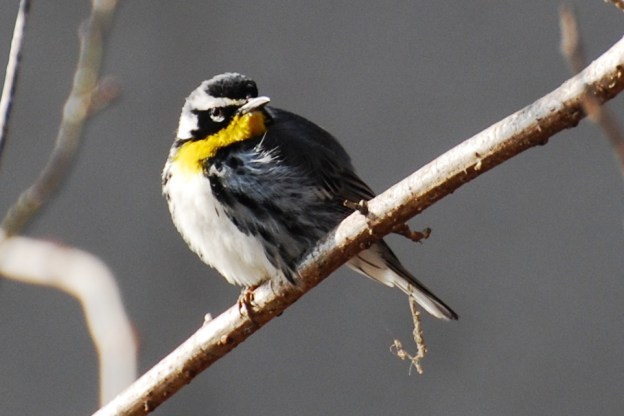
These tiny birds are not the easiest ones to learn to identify. However, only about four dozen species migrate through the region or stop to spend the summer months. With a good field guide and some practice, it’s not that difficult to learn the different species. The reward is that undeniable spark of magic imparted by an observation of a bird as glorious as a fiery-throated Blackburnian warbler or a handsome black-throated blue warbler.