Tag Archives: Black-necked Stilt

Black-necked stilt a gangly member of the windbird clan

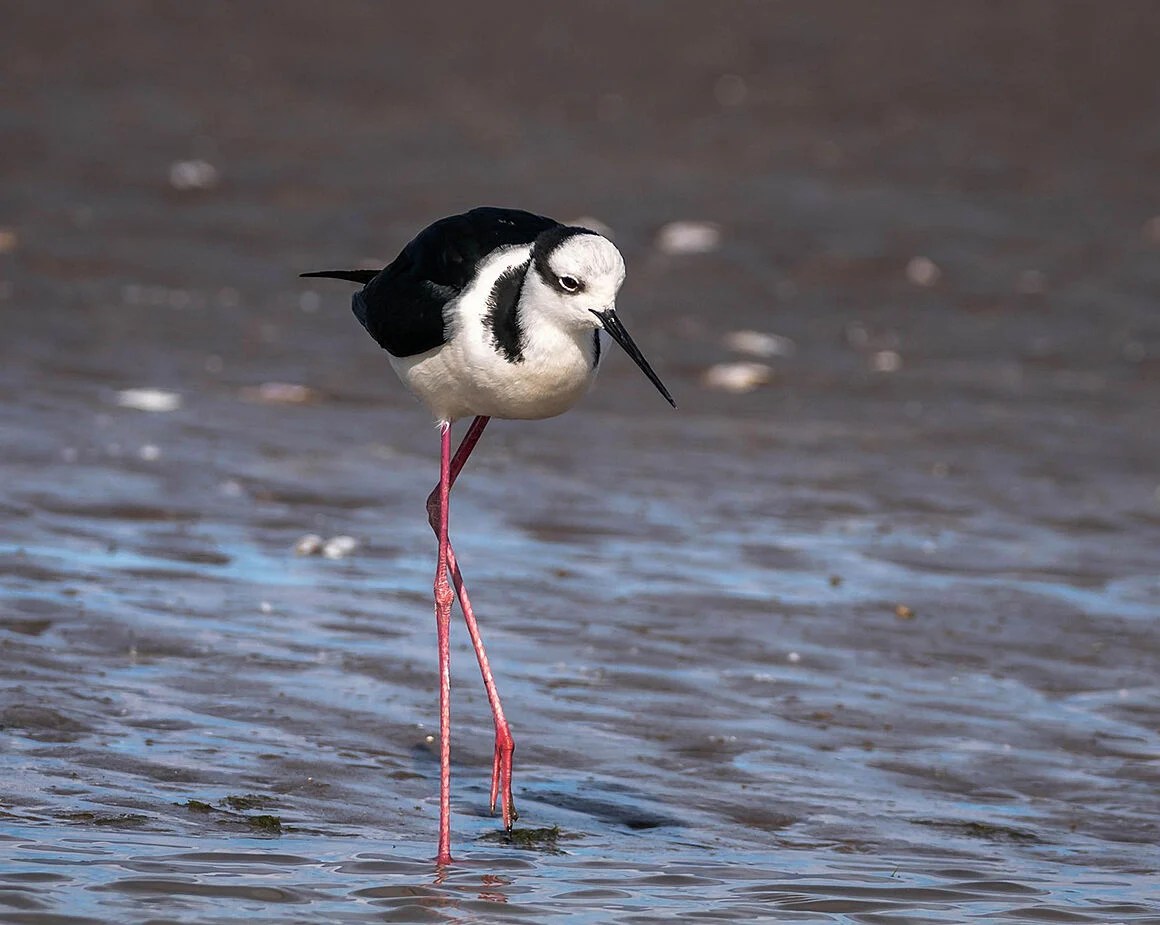
Beto/Pixabay. • A black-necked stilt wades through a wetland area.

I received an email from Brayden Paulk updating me on his new birding adventures since moving to Gulf Shores in Alabama. I wrote a few weeks ago about Brayden and his plans for a Global Big Day of birding.

“I wanted to give you an update on the Big Day,” he wrote, informing me that he has been undergoing a lot of training for a new job and has had lots of 10-plus hour days. But birding has been productive.

“I got down here and I’ve had lots of success,” he wrote. “Where I live there are black-bellied whistling ducks hanging out by the pond, and prothonotary warblers in the swamp behind the apartment,” he said.

Unfortunately, his new job needed him to work on the date of his Big Day.

“So I was not able to do my plans,” he wrote. “However, I did get to go out for a few hours that afternoon to a nearby sod farm. I picked up several good birds, including spotted sandpiper, solitary sandpiper and, most importantly, black-necked stilt.”

Brayden reported that he observed two stilts working the edge of a flooded corner of the field along with dozens of other shorebirds that were too small to identify in low light.

“I was glad that I could do my part to submit one checklist on the Big Day, even if I couldn’t do a 24-hour birding marathon like I had planned,” he added.

He added that his best birding day recently took place two days prior to his planned Global Big Day.

“I got to meet some folks from Alabama Audubon when they came to the Eco Center,” he said. “After the tour, I was invited to go do some sea watching with them at Gulf State Park.”

He noted that the three guys on the impromptu session included Scott Duncan, the director of Alabama Audubon, and two top birders in Baldwin County.

“They were very helpful and wonderful people,” Brayden shared. “While we were out birding, I picked up two lifers: Gull-billed tern and semipalmated sandpiper.”

Bryan Stevens • Black-necked skimmers take flights along the South Carolina coast.

He also reported that they saw lots of other cool coastal birds, such as black skimmer, least tern and osprey.

“The coolest species, though, were two red knots,” he said. “I had only seen them once before, but this was my first time seeing them in breeding plumage. I was very excited to see it, and get two lifers in one day!”

He is also anticipating some future birding.

“My friend Don has a rare shiny cowbird at his house a few miles away from me, as well as Inca doves.”

I enjoyed hearing about Brayden’s sightings of shorebirds, a family of birds also known with a little more creative flair as “wind birds.” They are so named because so many species are capable of incredible long-distance migrations. His success with the black-necked stilts reminded me of how this can be an elusive species for birders.

My last sighting of black-necked stilts took place more than a decade ago in May of 2014 during a South Carolina vacation. I observed three black-necked stilts at Huntington Beach State Park while walking on a marsh boardwalk near the park’s Nature Center. They flew toward the causeway, so I got into my car and drove there to try to re-locate them. I did find two of the stilts feeding along the causeway, but I never managed to re-locate the third bird.

Photo by Bryan Stevens
Two Black-necked Stilts forage along the causeway wetland at Huntington Beach State Park in 2014. 

I watched the two stilts foraging for food in shallow water shared by egrets and alligators. The two birds, despite a somewhat gangly appearance, moved with elegantly efficient strides on their long pink legs.

I have seen this unusual shorebird in Tennessee only once on Oct. 13, 2004, at Austin Springs on Boone Lake in Washington County. The bird, first found by Rick Knight, drew many excited birders to the location for looks at this shorebird before it departed to continue its migration flight south.

As you might imagine, land-locked Tennessee is not an ideal location for finding shorebirds, but spring and fall migration brings a surprising variety of these birds through Northeast Tennessee. Black-necked stilts, however, are a rarity. I have also seen this species of shorebird on Fripp Island, South Carolina, as well as just outside of Wendover, Nevada, on a visit to the Bonneville Salt Flats.

The world of shorebirds has produced many look-alike species, including many of the small sandpipers often collectively labeled as “peeps” by birders. The black-necked stilt, however, is not at all likely to be confused with any other shorebird. It is a slender bird atop a pair of extremely long pink legs. It has a two-tone appearance with black upper parts and white underparts. The black and white dichotomy continues along the bird’s long neck and head. This bird also has a thin, needle-shaped bill that it uses to delicately pluck aquatic insects and other prey from water or mud. The black-necked stilt’s long pink legs are exceptional. In fact, this species has he second-longest legs in proportion to their bodies of any bird, exceeded only by flamingos, according to the website All About Birds.

The black-necked stilt is closely related to the American avocet, another long-legged shorebird. The two species are classified together in the family, recurvirostridae. There’s also a Hawaiian sub-species of the black-necked stilt known as the “aeʻo.”

•••

To share a sighting, make a comment or ask a question, email me at ahoodedwarbler@aol.com.

‘Wind birds’ make their way through region during annual migrations

Since the Volunteer State has no access to the sea, it is sometimes amazing how many birds affiliated with coastal areas can be found if you know when and where to look.

A recent seven-day visit to coastal South Carolina reinforced the romance of a group of related birds known collectively as shorebirds or, in a somewhat more adventuresome context, “wind birds.” This diverse family of birds range in size from sparrow-sized sandpipers to larger species such as American Avocet, Long-billed Curlew and Marbled Godwit.

During daily visits to Huntington Beach State Park, located within five minutes of my brother’s new home on Pawleys Island, S.C., I observed plenty of these “wind birds.” I saw a range of species, including Wilson’s Plover, Short-billed and Long-billed Dowitcher, Greater Yellowlegs, Sanderling, Least Sandpiper, Ruddy Turnstone, Spotted Sandpiper, Semipalmated Sandpiper, Black-bellied Plover, Semipalmated Plover, Dunlin and even the gangly Black-necked Stilt.

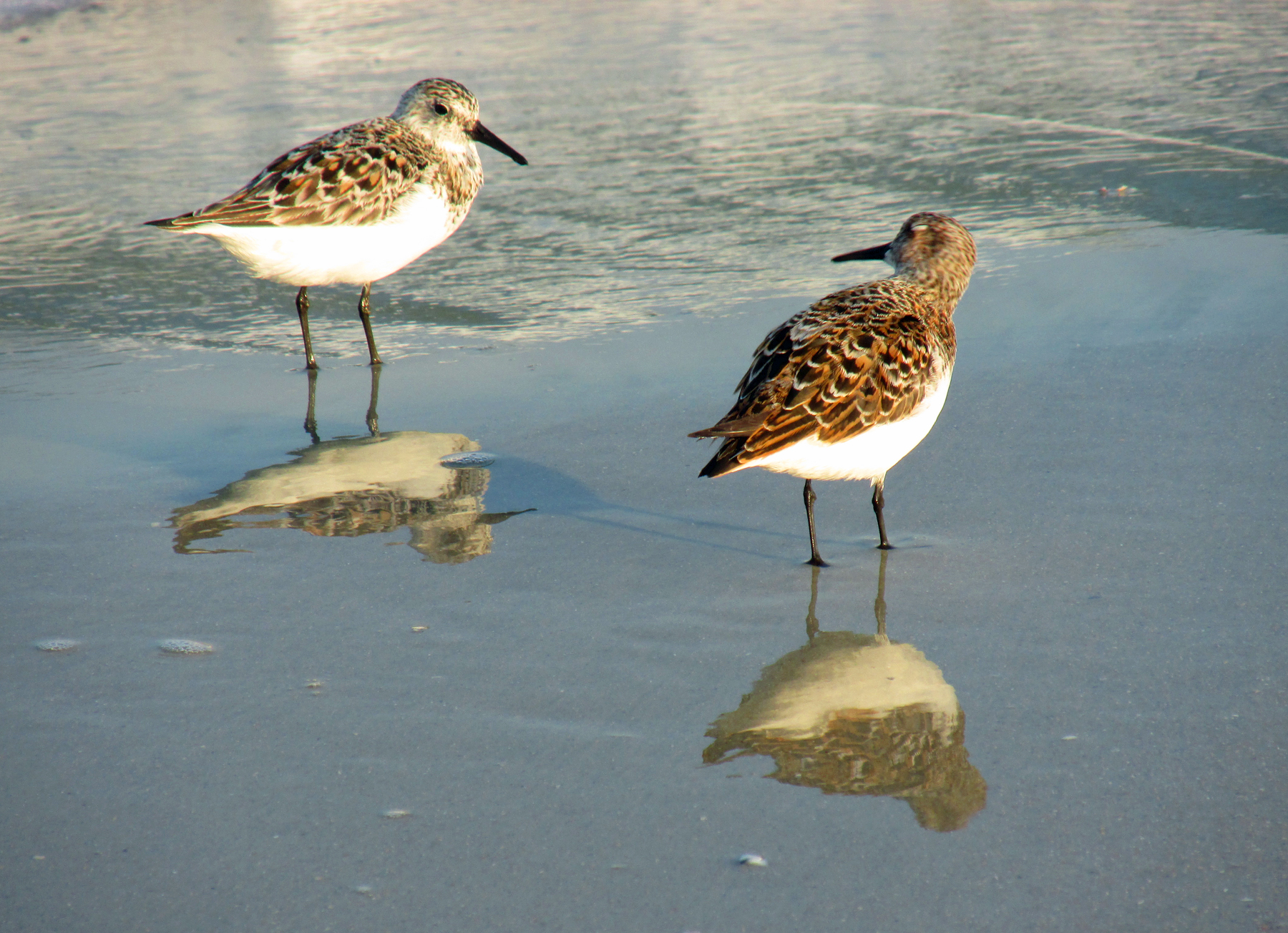
Photo by Bryan Stevens A pair of Sanderlings at surf's edge at Huntington Beach State Park.

Photo by Bryan Stevens
A pair of Sanderlings at surf’s edge at Huntington Beach State Park.

Known as “wind birds” for the propensity of many members of this extended family to stage long-distance migrations, some species fly through Northeast Tennessee each spring and fall as they migrate to and from distant nesting grounds.

I have seen several species — Wilson’s Snipe, Greater Yellowlegs, Pectoral Sandpiper, Least Sandpiper, Solitary Sandpiper and Spotted Sandpiper — in the region this spring. Their stays are usually of brief duration as they are eager to push farther north. Many of them will not stop until they reach the edge of the Arctic tundra.

While I was enjoying seeing a wide range of shorebirds in South Carolina, two Stilt Sandpipers put in a rare appearance in Northeast Tennessee. I hated to miss them. I’ve only seen one other Stilt Sandpiper in the region, and that observation took place back in 2000 at Austin Springs on Boone Lake.

The Stilt Sandpipers were found by Brookie and Jean Potter on the Watauga River at Rasar’s Farm in Elizabethton. The couple reported that it was their first spring sighting of Stilt Sandpipers, as well as their first Carter County sighting of this species. The photo at the start of the column, provided by Jean Potter, shows the two Stilt Sandpipers bordered by a pair of Greater Yellowlegs.

Stilt Sandpipers making migration stops in Tennessee still have a long way to travel. These shorebirds nest on the Arctic tundra beyond the tree line. Wet sedge-meadows with raised ridges and hummocks provide nesting habitat. After the nesting season they fly south as far as northern South America and can be found at fresh water ponds, marshes, lagoons and flooded fields.

This medium-sized sandpiper stands out from most of the sandpipers in its size range. It has long, greenish legs, as well as a long neck and bill, which is drooped at the tip. In breeding plumage, this shorebird has a distinctive chestnut cheek patch.

••••••

During my South Carolina stay, I didn’t encounter any Stilt Sandpipers. I did, however, find three Black-necked Stilts.

The only time I have seen this unusual shorebird in Tennessee took place on Oct. 13, 2004, at Austin Springs on Boone Lake in Washington County. The bird, first found by Rick Knight, drew many excited birders to the location for looks at this shorebird before it departed to continue its migration flight south.

Photo by Bryan Stevens Two Black-necked Stilts forage along the causeway wetland at Huntington Beach State Park.

Photo by Bryan Stevens
Two Black-necked Stilts forage along the causeway wetland at Huntington Beach State Park.

I have also seen Black-necked Stilt on Fripp Island, S.C, as well as in Utah.

The world of shorebirds has produced many look-alike species, including many of the small sandpipers often collectively labeled as “peeps” by birders. The Black-necked Stilt, however, is not at all likely to be confused with any other shorebird. It is a slender bird atop a pair of extremely long pink legs. It has a two-tone appearance with black upper parts and white underparts. The black and white dichotomy continues along the bird’s long neck and head. This bird also has a thin, needle-shaped bill that it uses to delicately pluck aquatic insects and other prey from water or mud.

I first spied the Black-necked Stilts at Huntington Beach State Park while walking on a marsh boardwalk near the park’s Nature Center. They flew toward the causeway, so I got into my car and drove there to try to re-locate them. I did find two of the stilts feeding along the causeway, but I never managed to find the third bird.

I watched the two Black-necked Stilts foraging for food in shallow water shared by egrets and alligators. The two birds, despite a somewhat gangly appearance, moved with elegantly efficient strides on their long pink legs. This bird feeds on an assortment of aquatic creatures, including small fish, insects and tadpoles. The seeds of aquatic plants also provides some of the food in its diet.

I also saw several plovers, another group of shorebirds, while in South Carolina. Wilson’s Plover was one that stood out during my visits to Huntington Beach State Park. Wilson’s Plover is a coastal shorebird that breeds on both coasts of the Americas from the equator northwards. Its range extends north to include much of the U.S. eastern seaboard as well as the Pacific coast of Mexico.

A Wilson's Plover in the dunes at Huntington Beach State Park in South Carolina.

A Wilson’s Plover in the dunes at Huntington Beach State Park in South Carolina.

I’ve observed Wilson’s Plovers on Fripp Island, S.C., in the past, but those sightings have been rather sporadic. I have also observed this bird at one other location — at Douglas Lake in Cocke County back in the late 1990s.

The Wilson’s Plovers at Huntington Beach State Park were nesting in the dunes, which also gave me an opportunity to see some young plovers. A young Wilson’s Plover looks like a ball of downy feathers standing on toothpicks. This plover nests on a bare scrape on sandy beaches or sandbars. To protect the plovers, as well as other nesting species, this section of dunes on Huntington Beach State Park bars the entry of dogs. It is also roped off to prevent accidental intrusion by people.

Photo by Bryan Stevens A pair of Wilson's Plover chicks at Huntington Beach State Park in South Carolina.

Photo by Bryan Stevens
A pair of Wilson’s Plover chicks at Huntington Beach State Park in South Carolina.

Most of the Wilson’s Plovers that spend the summer in the United States retreat each fall, although a few migrate only as far as Florida. The rest spend the winter as far south as Brazil.

For a small shorebird, the Wilson’s Plover sports a thick, blunt and relatively large bill. In fact, this bill — that looks too big for its body — is a good way to identify this shorebird at a glance. The Wilson’s Plover forages for food on beaches. It has a fondness for crabs, which may explain the size and shape of its bill, but this bird will also eat insects, marine worms and other small organisms.

The Wilson’s Plover is larger than the related Semipalmated Plover and Piping Plover but considerably smaller than such relatives as Killdeer and Black-bellied Plover. This shorebird weighs only a couple of ounces, with a length of about eight inches and a wingspan of 19 inches. The Wilson’s Plover has a dark neck ring, grayish-brown upper parts, a white underside and pinkish legs.

This bird was named after the Scottish-American ornithologist Alexander Wilson. Wilson collected the type specimen during a trip in May of 1813 to Cape May, N.J. Other birds named for this pioneering bird expert include Wilson’s Warbler, Wilson’s Phalarope, Wilson’s Snipe and Wilson’s Storm Petrel.

•••••

With a few exceptions, most of the shorebirds that I have found along the Atlantic Coast I have also observed here in land-locked Tennessee during spring and fall migration. It’s one of those little known facts I enjoy sharing with people, who are often surprised that these “beach birds” also make visits to our state.

•••••

Make a comment, ask a question or share an observation by sending an email to ahoodedwarbler@aol.com or posting a comment here on my blog. I am also on Facebook.

A mixed flock of Short-billed and Long-billed Dowitchers and a Ruddy Turnstone at Huntington Beach State Park.

A mixed flock of Short-billed and Long-billed Dowitchers and a Ruddy Turnstone at Huntington Beach State Park.