Tag Archives: winter

Even during winter season, activity on the Roan doesn’t slow much

RM-Sunset-Dec17

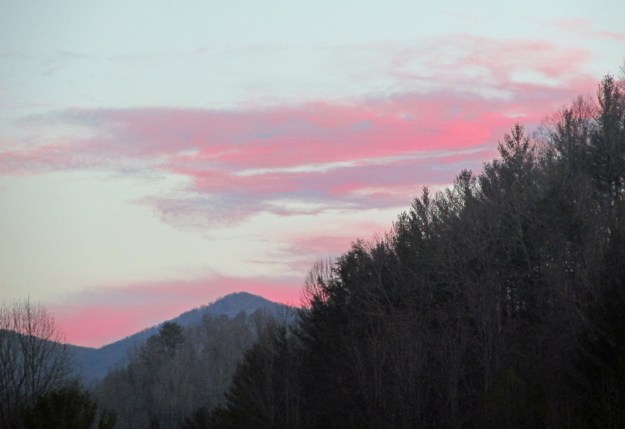
Photo by Bryan Stevens • The setting sun casts a pink glow to the winter sky near the village of Roan Mountain. The 11th annual Roan Mountain Winter Naturalists Rally is set for Saturday, Feb. 11, at the Roan Mountain State Park Conference Center.

Activities last month and planned events for February are just some of the evidence that, no matter the season, things are always happening on Roan Mountain.

For instance, the 65th Roan Mountain Christmas Bird Count was held Sunday, Dec. 17, with nine observers in two parties. Up to four inches of snow blanketed most of the area, but the roads were clear. These weather conditions highlight the fact that over the years a couple of Roan Mountain CBCs had to be cancelled due to weather conditions.

Participants included Fred Alsop, Jim Anderson, Rick Blanton, Kevin Brooks, compiler Rick Knight, Roy Knispel, Guy McGrane, Amber Stanley, and Charles Warden. A total of 44 species were tallied, near the 30 year average of 46. The all-time high of 55 species was established back in 1987.

SNowbird-Feb18

Photo by Bryan Stevens • A total of 50 Dark-eyed Juncos made the tally during the Roan Mountain Christmas Bird Count held Dec. 17, 2017.

A list of the species follows:

Canada Goose, 24; Pied-billed Grebe, 1; Great Blue Heron, 3; Cooper’s Hawk, 1; Red-shouldered Hawk, 1; and Red-tailed Hawk, 6.

Rock Pigeon, 19; Mourning Dove, 58; Eastern Screech-Owl, 2; Barred Owl, 1; Red-bellied Woodpecker, 3; Yellow-bellied Sapsucker, 2; Downy Woodpecker, 10; Hairy Woodpecker, 2; Northern Flicker, 1; and Pileated Woodpecker, 7.

American Kestrel, 1; Eastern Phoebe, 6; Blue Jay, 23; American Crow, 82; and Common Raven, 11.

Carolina Chickadee, 25; Tufted Titmouse, 20; Red-breasted Nuthatch, 5; White-breasted Nuthatch, 15; Brown Creeper, 2; Winter Wren, 2; Carolina Wren, 15; Golden-crowned Kinglet, 13; Eastern Bluebird, 30; American Robin, 12; Northern Mockingbird, 6; European Starling, 65; and Cedar Waxwing, 2.

Winter-Cardinal

Photo by Bryan Stevens • A total of 15 Northern Cardinals were found the day of the Roan Mountain Christmas Bird Count last month.

Eastern Towhee, 9; Field Sparrow, 11; Song Sparrow, 80; Swamp Sparrow, 2; White-throated Sparrow, 11; Dark-eyed Junco, 50; Northern Cardinal, 15; House Finch, 3; American Goldfinch, 46; and House Sparrow, 41.

Some interesting incidents on this count included finding an Eastern Phoebe at an elevation of 4,450 feet surrounded by snow. The most abundant birds included Common Crow with 83 individuals found and European Starling with 65 individuals counted.

•••••••

The focus will be on botany for the upcoming Roan Mountain Winter Naturalists Rally, scheduled for Saturday, Feb. 11.

Huff

Lisa Huff

According to Richard Broadwell, director for the winter rally, the event has drawn hardy nature enthusiasts from far and wide to Roan Mountain for the past 11 winter seasons. Top naturalists volunteer their time and energy to make the event both enjoyable and educational for people of all ages. Parents are encouraged to bring the kids.

Broadwell noted that the 2018 Winter Rally continues this celebration of the natural world by providing top speakers on topics concerning the environs of the Roan Highlands. Speakers for morning programs will be Ben Jarrett, Southern Regional Science Coordinator, for The American Chestnut Foundation; Lisa Huff, Stewardship Ecologist with the Tennessee State Natural Areas Program; and Dwayne Estes, professor of biology at Austin Peay State University.

Jarrett will speak about the historical significance of the American chestnut in a program tilted “Restoration of American Chestnut: A Marriage of Breeding and Biotechnology.” He will take a look at the American chestnut and its economic, ecological and social importance). He will also educate about the chestnut blight and subsequent downfall of the species, as well as the ongoing restoration efforts through backcross breeding and genetic engineering.

Jarrett

Ben Jarrett

Huff will present a history of the shortleaf pine and bluestem vegetation community in Tennessee in a program titled “The Mystery of the Missing Shortleaf Pine.” She started working for the Tennessee State Natural Areas Program in 2000. She is tasked with the daily operations and management of over 42,000 acres in 21 natural areas in East Tennessee.

Estes will speak about southeastern United States grasslands, such as savannas, prairies, glades, barrens, bald, bogs, fens, and meadows, all of which are imminently threatened. He will also educate about the work of the Southeastern Grasslands Initiative in Clarksville, which aims to focus grassland conservation efforts across a 21-state region. SGI will use a multi-faceted approach combining restoration, preservation, recreation, research, rescue, seed banking, education and market-driven strategies. SGI is currently working with and seeking support from private philanthropic foundations, corporations, non-profit conservation organizations and government agencies. His program is titled “The Southeastern Grasslands Initiative: Charting a New Course for Conservation in the 21st Century.”

ESTES

Dwayne Estes

All programs will be held at the Roan Mountain State Park Conference Center. Jarrett will speak at 9:30 a.m. followed by Huff at 10:30 a.m. The program by Estes at 11:40 a.m. will conclude the slate of presentations. Lunch, which requires a pre-paid reservation, will be served at 12:30 p.m. Sarah Sanford, candidate for Master’s of Environmental Management at Duke University, will present a lunchtime program on “Grassy Balds Management in the Roan Highlands.”

Four different hikes are planned for the afternoon, starting at 1:30 p.m. Hike options include:

• Lisa Huff will lead a hike in the Hampton Creek Cove Natural Area. Binoculars are recommended. The moderately strenuous hike should not take more than three hours.

• Jamey Donaldson, ETSU John C. Warden Herbarium Adjunct Curator, will lead a hike to the alder balds on the ridgeline of Roan Mountain. Dress warmly for this strenuous hike.
Sisken-Spruce

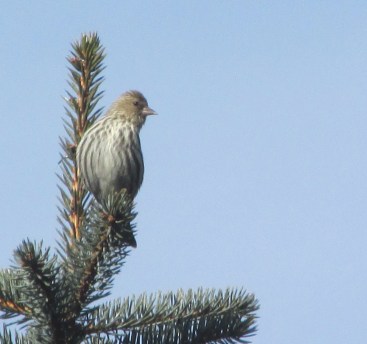
Photo by Bryan Stevens • A Pine Siskin in a spruce at Carver’s Gap on Roan Mountain.

• Marty Silver, Ranger with Warriors Path State Park, will lead a wildlife tracking and animal signs hike down near the Doe River in Roan Mountain State Park. This is a moderately strenuous and kid-friendly activity.

• Dr. Frosty Levy, Professor Emeritus of Biology at East Tennessee State University, will lead an easy winter tree identification hike in Roan Mountain State Park.

For more information and a downloadable brochure, visit http://friendsofroanmtn.org/2018%20Winter%20Rally%20Brochure.pdf or email Broadwell at rbroadwell@gmail.com. The event is free to members of Friends of Roan Mountain and children. Adults who are not members of FORM can register for all activities for $10.

75 years strong, annual Elizabethton Christmas Bird Count breaks old records

GreaterWF-Goose

The 75th consecutive Elizabethton Christmas Bird Count held last month shattered records for this long-running survey. This year’s CBC was held on Saturday, Dec. 16, with 25 observers in six parties participating. The 85 species tallied established a new high for this count, shattering the old mark of 80 species set in 2012 and again in 2016. The average total over the last 30 years of the Elizabethton CBC is 72 species.

Participants included Fred Alsop, Jim Anderson, Jerry Bevins, Rob Biller, Rick Blanton, Kevin Brooks, Gil Derouen, Harry Lee Farthing, Dave Gardner, Carl Hacker, Jacki Hinshaw, David Irick, Rick Knight (compiler), Roy Knispel, Richard Lewis, Joe McGuiness, Charles Moore, Brookie and Jean Potter, Brenda Richards, Chris Soto, Amber Stanley, Bryan Stevens, Kim Stroud, and Scott Turner.

I took part in this CBC, as I have for many years, with fellow members and friends of the Elizabethton Bird Club. Participation in this annual survey has been a part of my holiday traditions for the past 20 years. The tradition of the CBC, however, goes much farther back.

According to the National Audubon Society’s website, the tradition of the Christmas Bird Count arose from a less than bird-friendly custom. By the turn of the 20th century, so-called sportsmen would conduct a “Side Hunt,” a rather bloodthirsty Christmas custom that saw hunters competing to see who could score the largest amount of feathered and furred corpses. It was a huge step forward for conservation when preeminent ornithologist Frank M. Chapman proposed a new holiday tradition. His radical idea was to count birds during the Christmas season rather than hunting and killing them.

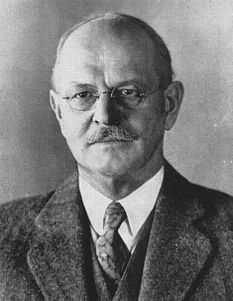
chapman

Ornithologist Frank Chapman organized the very first Christmas Bird Count back   in December of 1900.

The Christmas Bird Count is now conducted each year on dates between Dec. 14 and Jan. 5. The first CBC took place in December of 1900 with 27 observers participating at 25 locations in the United States and Canada. Fifteen of the counts were conducted in the northeastern United States in an area ranging from Massachusetts to Philadelphia, Pennsylvania. Results from that first count in 1900 didn’t truly reflect the diversity of North America’s birds, but they were nonetheless interesting. The Greater Boston CBC consisted of only one participant and found only 17 species. However, some of those species included such good birds as American tree sparrow, brown creeper, Northern shrike and Northern bobwhite.

The Elizabethton Bird Club traditionally compiles the results from its two annual CBCs (Roan Mountain as well as Elizabethton) at its yearly Christmas party. This year when the tallies were added up, count participants were delighted to learn the count had set a new record with an amazing total of 85 species tallied, which is hard to come by in mid-December in Northeast Tennessee. An abundance of waterfowl helped push up the number of species found.

A few species are becoming more expected on this annual December count. For instance, greater white-fronted goose was found for the third time in the last five years. Before that, this goose had never been found on this count.

The bufflehead, the smallest of the diving ducks, set a new record with 293 individuals found. Four Northern Shovelers represented only the eight time this duck has appeared on the count. Greater Scaup were found for only the seventh time in the last 25 years. Ruddy Duck has now been found three times in the last 25 years, which matches the three occasions it was found prior to that time.

Bald eagles, thanks to locations like Watauga Lake and Wilbur Lake, are also becoming more common. Eagles have been found 20 of the last 25 years, but only once prior. Red-shouldered Hawk, which is uncommon in the region, was found for the sixth time in the last quarter-century.

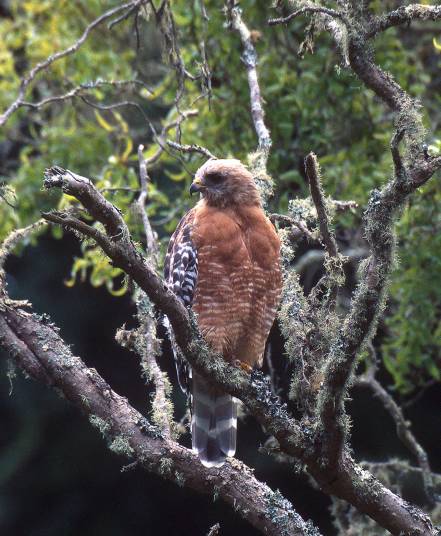
Redshouldered_Hawk-LeeKarney

Photo by U.S. Fish & Wildlife Service/Lee Karney • A Red-shouldered Hawk perches in branches.

Eurasian Collared-Dove appears established in Elizabethton. This dove has been found six of the last nine years since it first made an appearance on the count.

All seven of the region’s woodpecker were found on this year’s CBC. The Red-headed Woodpecker has shown up on four counts in the last 25 years. This woodpecker was only found seven times in the years prior to 1992.

A Blue-headed Vireo spotted on this year’s count represented only the third time this species has been found. A flock of 75 American Pipits marked only the third time this species has been seen since 1992 on a CBC. Prior to that date, the species appeared only twice on an Elizabethton CBC.

Gray Catbird has been found five of the last 25 years, including this year, but only once prior to 1992. Palm Warbler, found only once prior to 1992, has now been found eight of the last 25 years. The single Pine Warbler seen means that this species has now been found four of the last 25 years, but only four times prior to 1992.

The European Starling with 1,335 individuals found on count day was easily the most common species on this year’s CBC. The 16 Dark-eyed Juncos, usually a relatively common species on the Elizabethton CBC, represented the fewest juncos ever found on this long-running survey.

Below is the complete species list:

Greater White-fronted Goose, 1; Canada Goose, 532; Wood Duck,1; Gadwall, 5; American Wigeon, 1; American Black Duck, 2; Mallard, 366; Northern Shoveler, 4; Green-winged Teal, 2; Ring-necked Duck, 14; Greater Scaup, 2; Lesser Scaup, 3; Bufflehead, 293; Hooded Merganser, 4; and Ruddy Duck, 1.

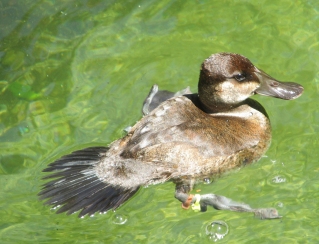
Ruddy-Hen

Photo by Bryan Stevens • A female Ruddy Duck.

Wild Turkey, 33; Common Loon, 2; Pied-billed Grebe, 14; Horned Grebe, 27; Great Blue Heron, 18; Black Vulture, 3; Turkey Vulture, 12; Bald Eagle, 3; Sharp-shinned Hawk, 1; Cooper’s Hawk, 2; Red-shouldered Hawk, 2; and Red-tailed Hawk, 25.

Killdeer,17; Ring-billed Gull, 27; Rock Pigeon, 305; Eurasian Collared-Dove, 1; Mourning Dove, 157; Eastern Screech-Owl, 12; Great Horned Owl, 2; Barred Owl, 1; and Belted Kingfisher, 10.

Red-headed Woodpecker, 1; Red-bellied Woodpecker, 33; Yellow-bellied Sapsucker, 8; Downy Woodpecker, 27; Hairy Woodpecker, 3; Northern Flicker, 26; and Pileated Woodpecker, 21.

American Kestrel, 16; Eastern Phoebe, 12; Blue-headed Vireo,1; Blue Jay, 162; American Crow, 223; and Common Raven, 4.

Red-breastedNutHatchYAHOO

Photo by Bryan Stevens • A Red-breasted Nuthatch at a feeder.

Carolina Chickadee, 117; Tufted Titmouse, 84; Red-breasted Nuthatch, 1; White-breasted Nuthatch, 25; Brown Creeper, 4; House Wren, 1; Winter Wren, 6; and Carolina Wren, 75.

Golden-crowned Kinglet, 41; Ruby-crowned Kinglet, 8; Eastern Bluebird, 111; Hermit Thrush, 11; Amercian Robin, 277; Gray Catbird, 1; Brown Thrasher, 1; and N. Mockingbird, 49.

Eurasian Starling, 1,335; American Pipit, 75; Cedar Waxwing, 154; Palm Warbler, 2; Pine Warbler, 1; and Yellow-rumped Warbler, 154.

Eastern Towhee, 22; Chipping Sparrow, 4; Field Sparrow, 8; Song Sparrow, 142; Swamp Sparrow, 5; White-throated Sparrow,102; Dark-eyed Junco, 16; and Northern Cardinal, 111.

Red-winged Blackbird, 1; Eastern Meadowlark, 1; Brown-headed Cowbird, 2; House Finch, 100; American Goldfinch, 90; and House Sparrow, 41.

The Audubon-sponsored CBC allows counts to also list birds not found on the count day that are seen during count week. This year participants found Redhead ducks, which were not present on count day. Notable misses this year include Ruffed Grouse, American Coot, Wilson’s Snipe, and White-crowned Sparrow.

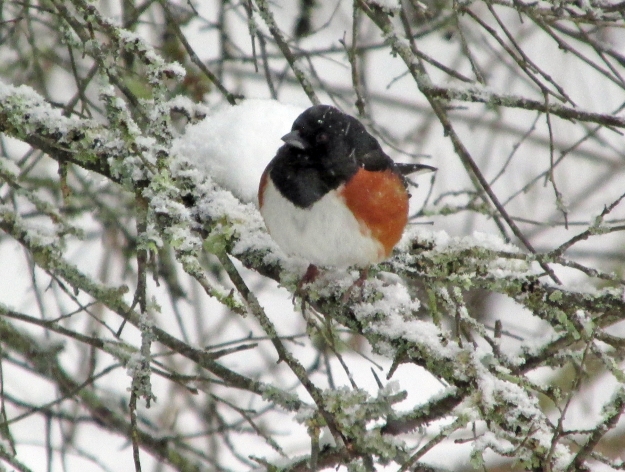
Towhee-Feb12

Photo by Bryan Stevens • A male Eastern Towhee waits out a snowstorm.

Purple finches always welcome winter visitors when snow and cold drives them to feeders

Purple-March30

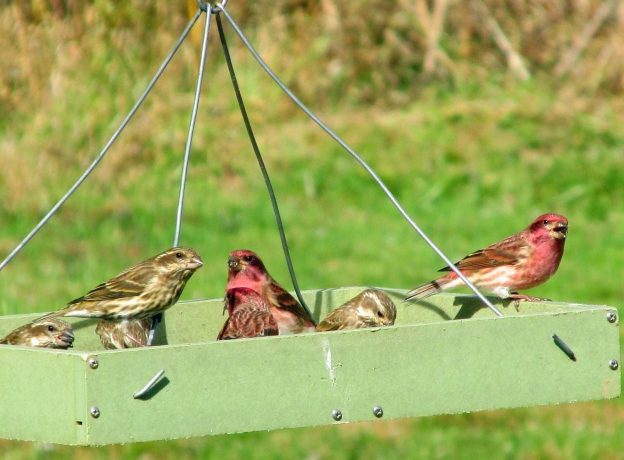
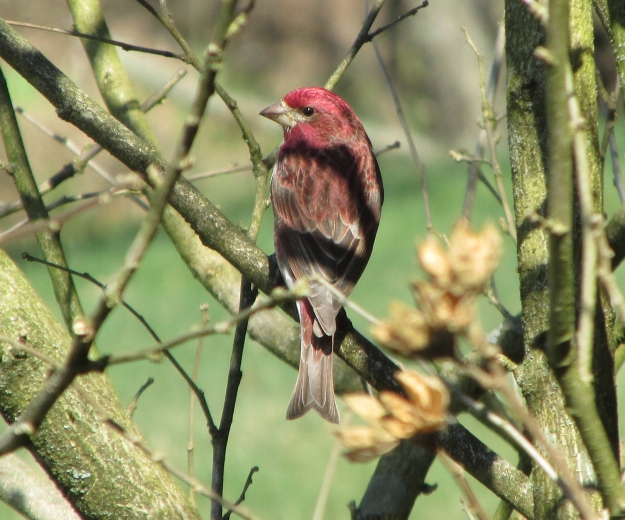
Photo by Bryan Stevens • Purple finches are mainly winter visitors in the region, although they may make appearances during their fall and spring migrations. Although similar to house finches, purple finches have their own unique appearance once observers become familiar with them. The notched tail, evident in this bird, is a good way to distinguish purple finches from very similar house finches.

The region experienced its first brush with wintry weather with the snowstorm that arrived Dec. 8. With a few inches of snow on the ground, some birds that had been ignoring my feeders decided to give them a second look. American goldfinches, dark-eyed juncos and a red-bellied woodpecker made frequent visits to the feeders over the weekend as more snow and cold temperatures put a temporary stop to the mild start of the 2017-2018 winter season.

So far, the feathered clientele at my feeders are the expected visitors, including Carolina chickadees, downy woodpeckers, song sparrows and white-breasted nuthatches. Some birds, such as pine siskin and purple finch, which can make feeder watching an exciting winter pastime, have not yet made an appearance. Both these species belong to a group of birds known in birding circles as “Northern finches” that also includes species like red crossbill, evening grosbeak and common redpoll.

Evening_Grosbeak

Photo by George Gentry/U.S. Fish & Wildlife Service • A male evening grosbeak perches on the side of a sunflower-stocked feeder.

The purple finch, which is a winter visitor to northeast Tennessee, southwest Virginia and western North Carolina is apparently not as common as in past years. Some experts have speculated that the decline in the numbers of purple finches each winter can be attributed, at least in part, to the closely related house finch. Today, the house finch is quite widespread, found across the United States. Originally, however, the house finch was a bird of the western part of the country, living in Mexico and the southwestern United States.

About 1940, the house finch became established in the eastern United States. In violation of federal law, these small finches were being sold in New York City as pet birds described as “Hollywood Finches.” To avoid trouble with authorities, vendors and even some owners released their “Hollywood Finches” into the wild. Finding the area around New York City to their liking, house finches spread. Within a few decades, they were common birds throughout the eastern United States, including Tennessee, Virginia and North Carolina. The house finch had also been introduced into Hawaii about 1870, and is still present today, along with many other species of birds not native to the island.

HousieFinch

Photo by Bryan Stevens • A male house finch perched on a cable. These finches are native to the western United States but became established in the eastern states thanks to the illicit pet trade.

As the house finch claimed a new range, they inevitably encountered the related purple finch. During the winter, both finches are often present at feeders in the region. When both are available for observation, bird enthusiasts should take advantage of the opportunity to compare and contrast these birds. Personally, I have never had any difficulty distinguishing a purple finch from a house finch. The two species, at least in my eyes, are easily recognized. I can understand why some people might have trouble separating the two birds. The late Roger Tory Peterson once described the purple finch as a bird “dipped in raspberry juice.” Think about that imagery for a moment and you’ve got a good start to distinguishing a male purple finch from a male house finch. Unfortunately, the description does nothing to distinguish females of the two species.

Let’s deal first with the males. Male purple finches are delicate pink-red (that raspberry coloration) on the head and breast, mixing with brown on the back and cloudy white on the belly. The red of a male purple finch is definitely a color I have not observed with many other birds. Even “red” birds such as male Northern cardinals and male scarlet tanagers do not show the same red color. Once you learn the way the red appears in the plumage of a male purple finch, you are on your way to telling this bird apart from its relative.

purple-finch-john-james-audubon

Early naturalist and artist John James Audubon painted this depiction of purple finches.

The red in the plumage of male house finches is surprisingly variable. In most cases, the heads, necks and shoulders of male birds are reddish and the red at times extends to the stomach and between the wings on the bird’s back. The intensity of the red changes with the seasons and is also derived from the berries and fruits in the bird’s diet. Pale yellow and bright orange are alternatives to the typical red plumage.

Look closely at the photograph of the purple finches accompanying this column. There’s a distinctive facial pattern evident on the birds. The strong facial markings include a whitish eye stripe and a dark line down the side of the throat. This pattern simply doesn’t exist with the male house finch. When I make a snap identification of these two birds, I always look for the facial pattern even before I study any other aspects of the appearance of the bird. In addition, purple finches have powerful, conical beaks and a tail that appears short and is clearly notched at the tip. Rounding out the description of a male house finch is the fact that they have a long, square-tipped brown tail and are brown or dull-brown across the back with some shading into gray on the wing feathers. The breast and stomach feathers may be streaked.

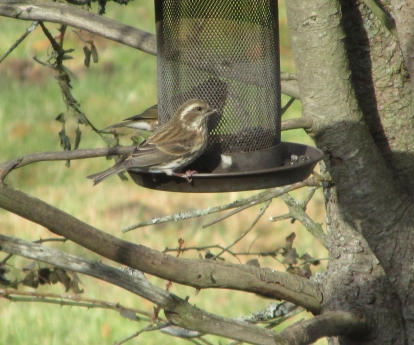
Females of both house finches and purple finches are dull brown birds that could easily be mistaken for sparrows. Again, the facial pattern is much more apparent on a female purple finch than on the related female house finch. In addition, I have always noticed that female purple finches are usually a darker shade of brown than the dull brown female house finches. Both male and female house finches are more slender than their more chunky-bodied counterparts.

PurpleFinches

Photo by Bryan Stevens • A study of the facial pattern of a female purple finch helps contrast her from similar female house finches. Again, the notched tail is also a good indication of the bird’s identity.

In the United States, another close relative of the house finch and purple finch is the Cassin’s finch of the western United States. Together, the three species make up a classification known as the American rosefinches. Formerly placed in the genus Carpodacus, these three birds are now in the genus known as Haemorhous. The new classification separates them from the Eurasian rosefinches, which includes more than two dozen species including scarlet finch, great rosefinch and crimson-browed finch.

Purple finches occupy a variety of winter habitats, including fields and woodland edges, as well as yards and gardens. All it takes to lure these finches to your feeder is a plentiful offering of sunflower seeds. If you are lucky enough to have both of these finches visiting your feeders, take time to study the differences. It takes some practice, but they can be distinguished quite confidently.

Merry Christmas to all my fellow bird enthusiasts! 

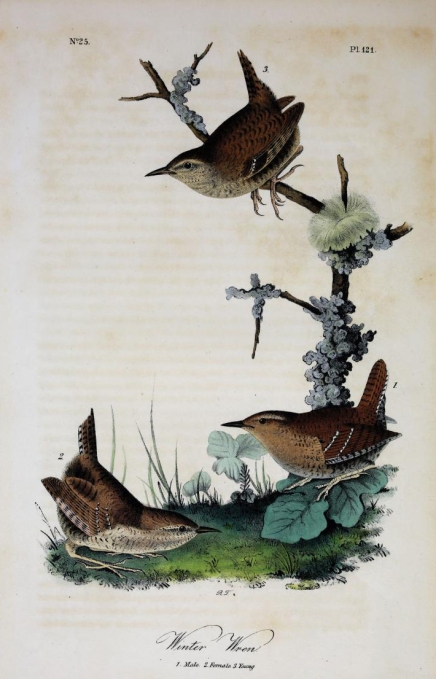
Winter wren one of the season’s low-profile visitors

WinterWren

Photo by Jean Potter
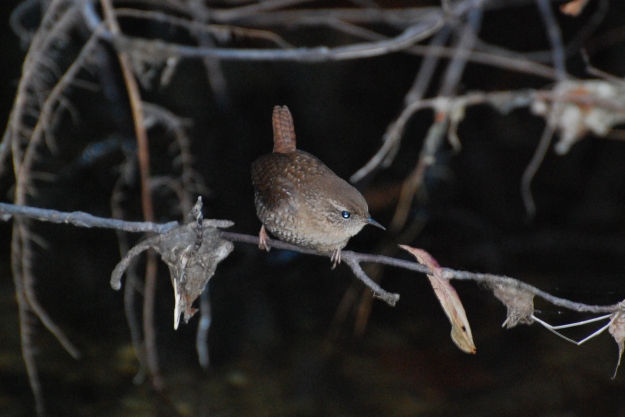
What the winter wren lacks in size, it makes up for with its voice. A boisterous and exuberant singer during the spring nesting season,  winter wrens are also quick to scold intruders into their winter territories.


Of late, every time I step outside my front door I’ve incurred the ire of a winter wren that’s taken up residency in my yard. This wren is a tiny bird among a family of birds known for small size, but it makes its presence known in unmistakable terms.

For starters, the winter wren is a noisy bird. The one living at my home arrived in late November and immediately claimed a niche to call its own. Any intrusion is met with a scolding chatter as the wren scurries low to the ground to drop out of view. In fact, the winter wren’s a very terrestrial bird. Observers are just as likely to see one of these wrens run across the ground as they are to see it take flight. I’m hopeful he will remain as winter’s grip tightens for the next couple of months.

The website All About Birds, managed by The Cornell Lab of Ornithology, offers advice on making a wren-friendly yard. “Landscaping with native plants is a good way to provide habitat for Winter Wrens,” according to the website. Other steps to take could extend to creating brush piles and ensuring some sections of the yard offers dense vegetation. The website also notes that this wren is often found making its home near streams.

In the summer, the winter wren often nests atop some of the high-elevation mountains in the region, especially ones with abundant fir and spruce trees. Otherwise, it’s mostly a winter visitor in the region. Other wrens common to the region include the Carolina wren and the house wren. In suitable habitats, especially during fall and spring migration, two other wrens — marsh wren and sedge wren — are observed occasionally in the region. Other wrens native to the United States include the rock wren, canyon wren, cactus wren, Pacific wren and Bewick’s wren.

The world’s 88 species of wrens are, for the most part, the quintessential “little brown birds,” but that hasn’t kept them from acquiring some interesting and descriptive common names. Some examples include the tooth-billed wren, flutist wren, riverside wren, whiskered wren, happy wren, musician wren, timberline wren, speckle-breasted wren, white-breasted wood wren and giant wren. The last species on the list resides in Mexico and is indeed a “giant” among a family of tiny birds, reaching a length of almost nine inches and weighing all of 1.8 ounces.

For the most part, wrens are birds of the New World. In fact, only the Eurasian wren represents the family in Europe, Asia and Africa. Experts recently split the winter wren into several different species, including the Pacific wren of the west coast of North America and the Eurasian wren of Europe, Asia and Africa.WinterWren_edited-1

Just as the winter wren thinks nothing of acting like a mouse when scurrying through leaf litter and over fallen logs in search of insect prey, this bird doesn’t hesitate to imitate mice by poking into shadowy holes in the ground or exploring the dark crevices of fallen logs. When winter temperatures drop sharply, many of these birds may cram themselves into a roosting hole to benefit from the communal heat from so many tiny feathered bodies in such close proximity. Winter wrens eat mostly insects and spiders, but in winter these birds will also eat some seeds and berries. Winter wrens rarely visit feeders, but a suet cake often attracts birds with similar dietary preferences, including kinglets and chickadees. A larger relative, the Carolina wren, is a common visitor to feeders.

In English and German lore, the winter wren was known as the “king of the birds.” Different tales provide varying explanations for how such a small bird earned such an inflated title. Ritual hunts were enacted in some European locations. These hunts, known as “wren hunts,” were conducted by “wren boys” who would parade through town on their quests. Wren Day fell on Dec. 26, which coincided with the holiday St. Stephen’s Day. Some myths blame the noisy bird for betraying the hiding place of Stephen, who was delivered up as a Christian martyr to his enemies due to the bird’s treachery. In some European cultures, various superstitions sprang up about wrens. For instance, in Scotland it is considered extremely unlucky to kill a wren.

Personally, I feel lucky to have the tiny winter wren spending time around my home and can guarantee no “wren hunts” will be staged here. At a time of year when feathered friends can be scarce, a winter wren is a welcome visitor.

••••••

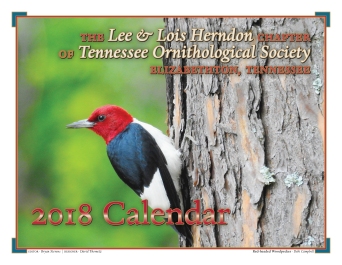
The Lee and Lois Herndon Chapter of Tennessee Ornithological Society produces an annual calendar featuring some exceptional bird photography from its members. This year’s calendar features full-color photographs of some colorful and engaging birds. The club sells the calendars for $15 each. All proceeds are used to support birding opportunities and bird-related causes. For instance, the club pays for bird seed to stock the feeders at Sycamore Shoals State Historic Park in Elizabethton, Tennessee. The club also regularly supports causes that benefit birds.HerndonCalendar2018(Cover)

The calendar also features an informative calendar grid with highlights for major holidays, as well as important bird-related dates. The calendar’s pages feature more than 80 full-color photographs of area birds, including common favorites, as well as a few more exotic birds. The front cover features a dazzling photograph of a red-headed woodpecker. The photo was taken by Debi Campbell, a resident of Bluff City, Tennessee, and current president of the Herndon chapter. If you’re interested in obtaining a calendar, contact ahoodedwarbler@aol.com by email. Calendars will also be available for purchase by cash or check only at the offices of the Bristol Herald Courier located at 320 Bob Morrison Blvd. in Bristol, Virginia.

If you’re interested in obtaining a calendar, contact ahoodedwarbler@aol.com by email. Calendars will also be available for purchase by cash or check only at the offices of the Bristol Herald Courier located at 320 Bob Morrison Blvd. in Bristol, Virginia.

•••••

Bryan Stevens lives near Roan Mountain, Tennessee. If you have a question, wish to make a comment or share a sighting, email ahoodedwarbler@aol.com.


Dark-eyed junco faithful visitor to feeders during wintry weather

Junco-Ground

Photo by Kenneth Thomas / Dark-eyed juncos, often referred to as “snow birds,” flock to feeders in winter during periods of inclement weather.

I recently took part in the 48th annual Elizabethton Fall Count. Although part of the count’s focus is on Carter County, significant attention is paid to the adjacent counties of Johnson, Sullivan, Unicoi and Washington in Northeast Tennessee. This year’s count, which was held Saturday, Sept. 30, with 54 observers in 12 parties, tallied 122 species, which is slightly below the recent 30-year average of 126 species. The all-time high for this count was 137 species, which was reached in 1993.

Together with Brenda Richards, I travelled the Forest Service road on Holston Mountain to seek out some species that prefer higher elevation habitats, including dark-eyed juncos. The junco is also a winter visitor to yards and gardens throughout the region and should be returning any day now for a seasonal stay during the colder months of the year. During our progress up the mountain, we glimpsed several dark-eyed juncos as well as other birds such as blue-headed vireo and black-and-white warbler.

I have always had a fondness for juncos. In fact, I wrote my first birding column on Sunday, Nov. 5, 1995, which means that I recently celebrated the 22nd anniversary of my weekly accounts of birds and birding. The column has appeared weekly without interruption in various newspapers in the last 22 years. The column has also been a great conduit for getting to know other people interested in our “feathered friends.” I always enjoy hearing from readers, and I hope to continue to do so in the coming years. Since February of 2014, I’ve also been posting the column as a weekly blog on birds and birding.

Here, with some revisions I have made through the years, is that first column that has now involved into a look that is all “For the Birds.”
…..

Of all the birds associated with winter weather, few are as symbolic as the Dark-eyed Junco, or “snow bird.” The junco occurs in several geographic variations.dennisjl 2

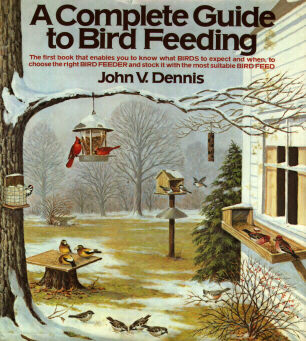
John V. Dennis, author of “A Complete Guide to Bird Feeding,” captures the essence of the junco in the following description: “Driving winds and swirling snow do not daunt this plucky bird. The coldest winter days see the junco as lively as ever and with a joie de vivre that bolsters our sagging spirits.” The Dark-eyed Junco’s scientific name, hyemalis, is New Latin for “wintry,” an apt description of this bird.

Most people look forward to the spring return of some of our brilliant birds — warblers, tanagers and orioles — and I must admit that I also enjoy the arrival of these birds. The junco, in comparison to some of these species, is not in the same league. Nevertheless, the junco is handsome in its slate gray and white plumage, giving rise to the old saying “dark skies above, snow below.”

Just as neotropical migrants make long distance journeys twice a year, the junco is also a migrating species. But in Appalachia, the junco is a special type of migrant. Most people think of birds as “going south for the winter.” In a basic sense this is true. But some juncos do not undertake a long horizontal (the scientific term) migration from north to south. Instead, these birds merely move from high elevations, such as the spruce fir peaks, to the lower elevations. This type of migration is known as vertical migration. Other juncos, such as those that spend their breeding season in northern locales, do make a southern migration and, at times, even mix with the vertical migrants.

Juncos are usually in residence around my home by early November. Once they make themselves at home I can expect to play host to them until at least late April or early May of the following year. So, for at least six months, the snow bird is one of the most common and delightful feeder visitors a bird enthusiast could want.

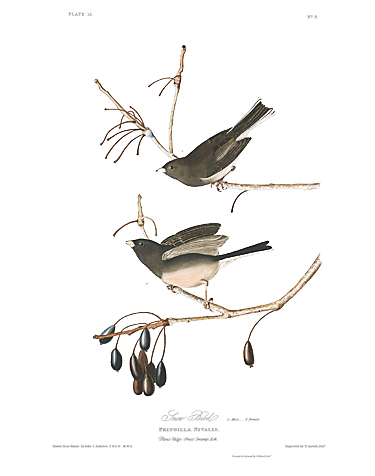
john-james-audubon-limited-centennial-edition-giclee-on-paper-dark-eyed-junco-2

Early American naturalist and artist John James Audubon painted this pair of Dark-eyed Juncos.

Juncos flock to feeders where they are rather mild-mannered — except among themselves. There are definite pecking orders in a junco flock, and females are usually on the lower tiers of the hierarchy. Females can sometimes be distinguished from males because of their paler gray or even brown upper plumage.

Since juncos are primarily ground feeders, they tend to shun hanging feeders. But one winter I observed a junco that had mastered perching on a hanging “pine cone” feeder to enjoy a suet and peanut butter mixture.

Dark-eyed juncos often are content to glean the scraps other birds knock to the ground. Juncos are widespread. They visit feeders across North America. The junco is the most common species of bird to visit feeding stations. They will sample a variety of fare, but prefer such seeds as millet, cracked corn or black oil sunflower.

There’s something about winter that makes a junco’s dark and light garb an appropriate and even striking choice, particularly against a backdrop of newly fallen snow.

Junco-AtFeeder

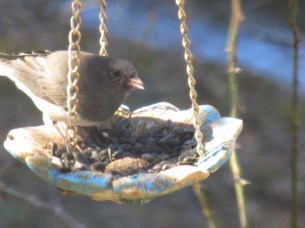
Photo by Bryan Stevens / A Dark-eyed Junco perches on the side of a hanging feeder offering sunflower seeds.

Of course, the real entertainment from juncos come from their frequent visits to our backyard feeders. When these birds flock to a feeder and begin a furious period of eating, I don’t even have to glance skyward or tune in the television weather forecast. I know what they know. Bad weather is on the way!

•••••

If you have a question, wish to make a comment or share a sighting, email ahoodedwarbler@aol.com.