Monthly Archives: January 2025

Winter’s ducks begin arriving in region

Photo by USFWS • A pair of green-winged teal swim together through a wetland.

Some interesting waterfowl have spent at least part of the winter at the pond at Erwin Fishery Park and a nearby fenced lagoon at the back of the park.

Some of the visitors since the start of the new year have included green-winged teal, American black duck, lesser scaup and Northern pintail. The scaup is a species of diving duck while the others are what are referred to as “dabbling” ducks. Diver and dabbler refers basically to the manner in which these ducks forage for their food.

The familiar mallard is probably the best known dabbling duck, but other dabblers include American wigeon, gadwall and Northern shoveler. Dabbling ducks generally feed in shallow water.

The green-winged teal is the smallest of North America’s dabbling ducks. There are two other close relatives of the green-winged teal in North America – the blue-winged teal and cinnamon teal. I’ve seen the green-winged and blue-winged at many locations in the region. I saw my only cinnamon teal during a trip to Utah and Idaho in 2003.

The Northern pintail that spent some time at Erwin Fishery Park was a hen with a more subtle appearance than adult male pintails.

This can be a species difficult to find in Northeast Tennessee. The website All About Birds notes that Northern Pintails are common, but their populations declined by about 2.6% per year resulting in a cumulative decline of about 75% between 1966 and 2019, according to the North American Breeding Bird Survey. The Partners in Flight organization estimates the global breeding population at 5.1 million.

Photo by Bryan Stevens • The Northern pintail is a dabbling duck, so classified due to its way of foraging for food in shallow water.


Elegant is a useful word for describing pintails. Both sexes have blue-grey bills and grey legs and feet. The drake is more striking, having a thin white stripe running from the back of its chocolate-brown head down its neck to its mostly white undercarriage. The drake also has attractive gray, brown and black patterning on its back and sides. The hen’s plumage is more subtle and subdued, with drab brown feathers similar to those of other female dabbling ducks. She has the same slender shaper as the male. Her tail feathers are long but don’t match the male’s namesake tapered tail feathers.

The Northern pintail is a cosmopolitan duck that also ranges into Europe, the Middle East, India and Asia. Other pintails include white-cheeked pintail, yellow-billed pintail and Eaton’s pintail. The latter species is restricted to the island groups of Kerguelen and Crozet in the southern Indian Ocean. The species was named after the English explorer, naturalist and entomologist Alfred Edwin Eaton. He served as the vicar of Shepton Montague in Somerset in England. Born in 1944, he died in 1929 at age 84.

Our region offers some dependable locations for looking for winter ducks, as well as other wintering waterfowl such as geese, grebes and loons. Accessible locations for looking for ducks during the winter season include Wilbur Lake near Elizabethton and Osceola Island Recreation Area below the tailwaters of Holston Dam in Bristol. Of course, any farm pond not frozen over is a potential location attractive to wandering waterfowl.


A duck known as the common merganser has expanded its summer nesting range to include the Nolichucky River and Watauga River. Twenty years ago this species, despite its name, was far from common in the region. It’s too early to tell whether changes wrought by last fall’s flooding from Hurricane Helene will affect this duck’s nesting attempts along these two rivers.

One difficulty in finding ducks in recent weeks has been the deep freeze gripping the region and turning almost all open water into ice. The widespread cold could help convince waterfowl from farther north to head south in the hope of less frigid conditions. My hope is that at least a few of those ducks will stop off at places like the pond at Erwin Fishery Park.

Ducks that aren’t too difficult to locate during winter in the region include bufflehead, ring-necked duck and hooded merganser. Other possible visitors include redhead and canvasback. If the Northern pintail is the most elegant of the dabbling ducks, the canvasback ranks as the most majestic of the diving ducks.

Ducks are interesting to observe. Binoculars and spotting scopes can make the process easier. Most ducks are social birds. Flocks, or rafts, of ducks display interesting interactions. In addition to the familiar “quack” of the mallard, different ducks produce a variety of hoots, whistles, hisses and other vocalizations.

•••

I’ve written about birds and birding since 1995. To ask a question, make a comment or share a sighting, email me at ahoodedwarbler@aol.com.

Photo by Bryan Stevens • The male mallard is probably the most recognized duck in the United States.
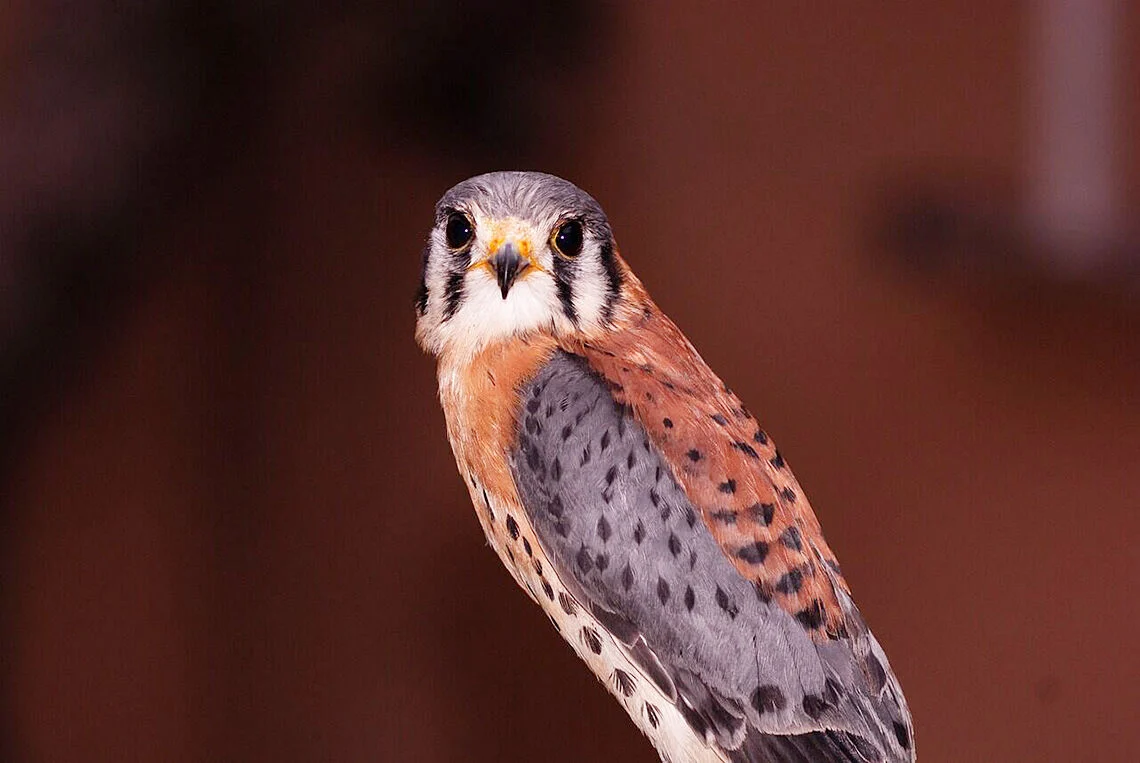
Look for wintering kestrels in open habitats

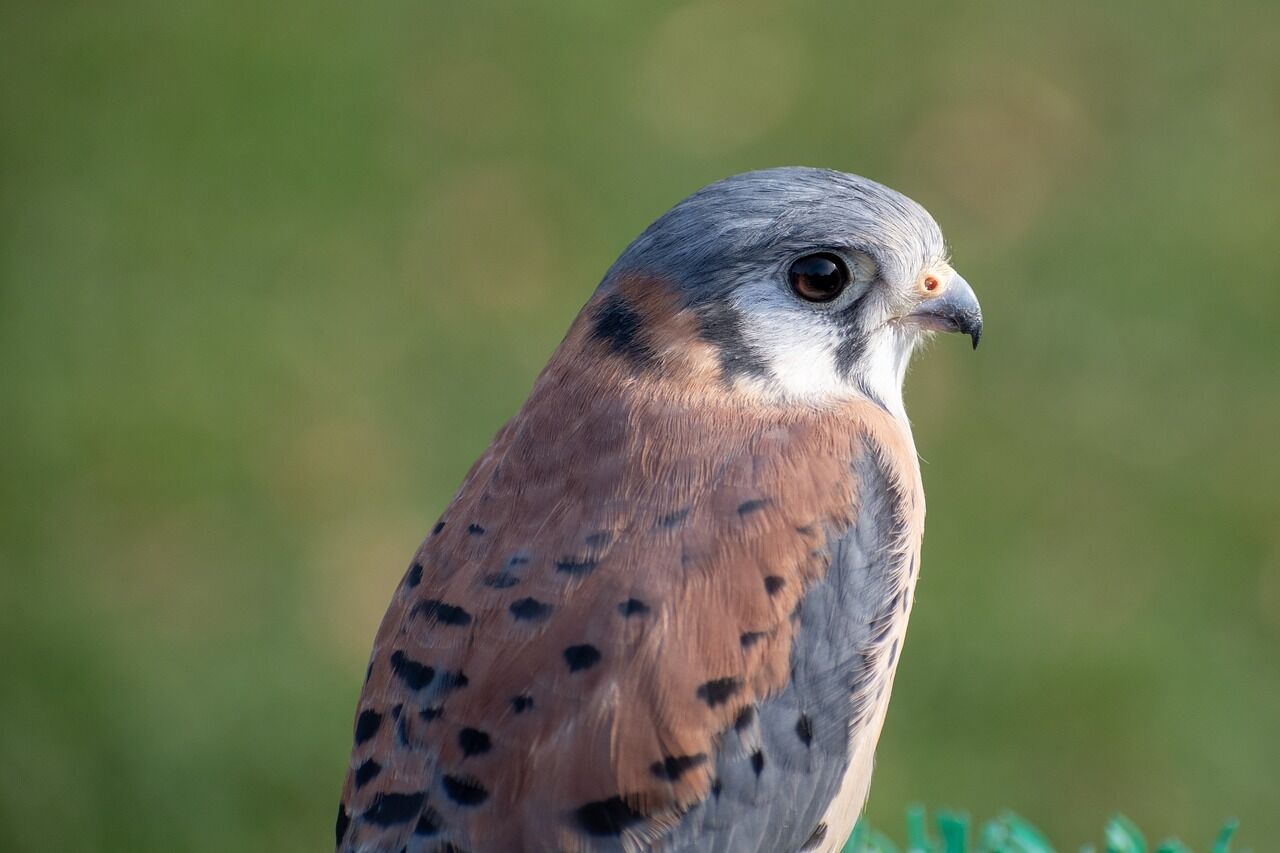
David Antonio Carrillo/Pixabay • American kestrel numbers increase in winter in the region as cold weather farther north usually drives more of these small falcons into the area.

The region’s already had several cold snaps since the new year’s dawning and we’re not even at the end of January. The colder temperatures and snow have helped bring an increase in the number of wintering American kestrels.

These small falcons can be found in the region throughout the year, but their numbers usually rise in early winter as kestrels from other areas take up residence for the colder months.

Any open habitat is enough to attract these falcons. I often find them in Limestone Cove in Unicoi County. The fields near Bell Cemetery are a reliable place to look for them in winter. They are also fairly common in in agricultural fields in western Washington County.

The American kestrel is a small member of the falcon family, which includes such relatives as merlin, peregrine falcon and gyrfalcon. All falcons, regardless of size, share a similar aerodynamic design that includes sleek, streamlined bodies and long, slim wings which taper to pointed tips. They fly with rapid wingbeats and are capable of swift flight.

The male American kestrel is a colorful bird. He shows a rusty back with some black barring, a rusty tail and steel blue-gray wings. The female kestrel is brownish with black barring on her back and tail. She also shows a buff-colored wash streaked with brown on her under- parts. Both sexes show a strong facial pattern marked by two black “sideburns” on the side of the face.

reitz27 from Pixabay • Any open, spacious habitat is enough to attract American kestrels.

The American kestrel has long been one of my favorite raptors. They’re seldom as skittish as many other raptors and will permit close observation. Formerly known by the name “Sparrow Hawk,” the American kestrel does not feed entirely on other birds. In fact, a large part of this small falcon’s diet includes rodents and insects.

In its nesting preference, the American kestrel is unusual among other native falcons and hawks. Kestrels nest in cavities, including abandoned woodpecker holes and nest boxes provided by humans.

Like many raptors, the American kestrel likes to hunt from a perch, swooping down on unsuspecting prey. The kestrel, however, is also capable of hovering, a type of flight that only a relatively few birds, including the belted kingfisher and the ruby-throated hummingbird, are capable of performing.

The falcons comprise a family of birds with a long history with humans. The sport of falconry, although not as widely practiced today, long ago became associated with royalty and nobility. In fact, falconry has been called “the sport of kings.” The sport basically involved hunting prey, usually other birds, with birds of prey such as falcons. As a pastime, falconry never became as popular in the United States as in other parts of the world.

There are more than 60 species of falcons found worldwide. While the peregrine falcon’s endangered status became well-known in the United States, other falcons have been threatened with extinction. The Mauritius Kestrel once dwindled to a population of only six individuals. Today, the population, due to intensive human effort, has greatly recovered.

Other members of the falcon family can be found in the region, including the peregrine falcon and the merlin. Other falcons in North America include the prairie falcon and the Aplomado falcon. Worldwide, some of the more descriptively named falcons include spotted kestrel, rock kestrel, greater kestrel, lesser kestrel, red-footed falcon, red-necked falcon, sooty falcon and brown falcon.

•••

To share observations, ask questions, or make a comment, email me at ahoodedwarbler@aol.com.


Club posts 82nd annual Elizabethton Christmas Bird Count results

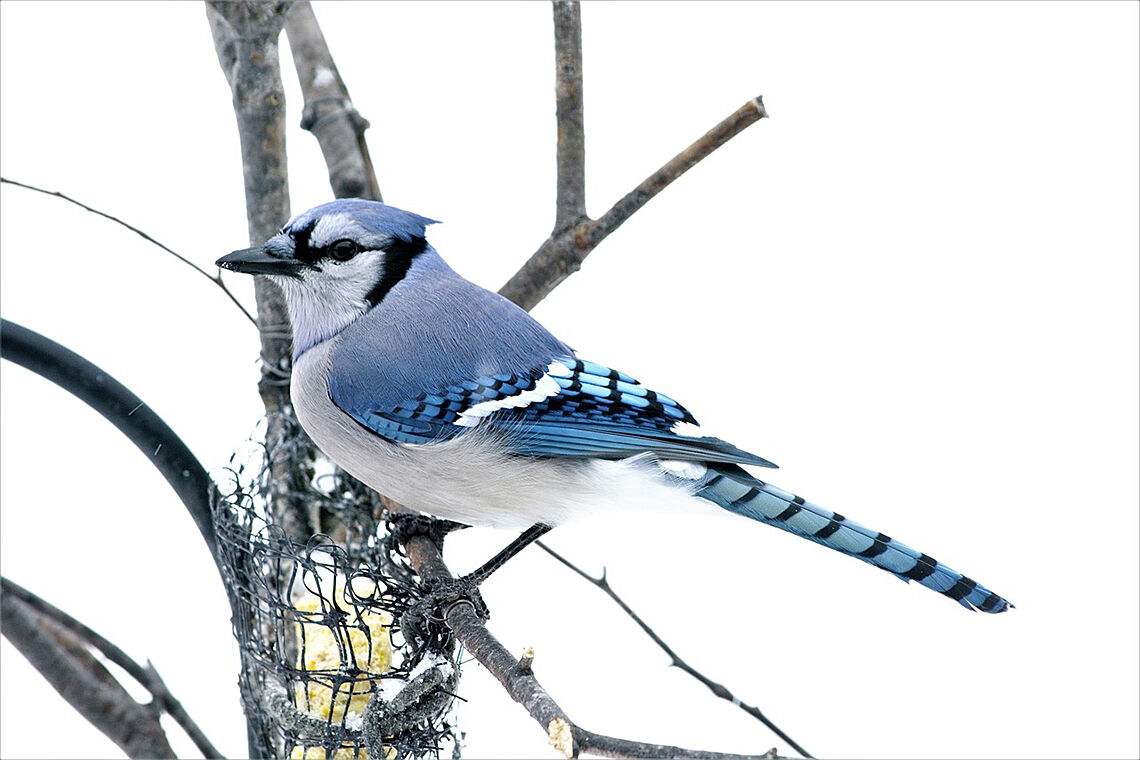
Photo by Scott/Pixabay • A blue jay perches at a suet feeder.

The 82nd Elizabethton Christmas Bird Count was held Saturday, Dec. 14, with 24 observers in six parties.

Unfortunately, I had to miss the count for the first time in almost a decade due to having contracted my first cold since 2019. I keep track of these things, especially when they interrupt the holiday season.

According to compiler Rick Knight, this year’s CBC tallied 71 species, with an additional three species seen during “count week,” which is defined as three days before or after count day. The three species found during count week were American wigeon, killdeer and pine warbler.
The total was just below the recent 40-year average of 72 species. The all-time high was 85 species recorded in 2017.

Here’s the list:
Canada goose, 302; wood duck, 2; American wigeon, 1; mallard, 65; green-winged teal, 2; ring-necked duck, 5; bufflehead, 143; hooded merganser, 3; red-breasted merganser, 1; and common merganser, 4.
Wild turkey, 26; pied-billed grebe, 10; rock pigeon 106; Eurasian collared-dove, 2; mourning dove, 108; killdeer, 1; Wilson’s snipe, 1; ring-billed gull, 9; double-crested cormorant, 1; great blue heron, 9; black vulture, 18; and turkey vulture, 21.Cooper’s hawk, 5; bald eagle, 6; red-shouldered hawk, 2; red-tailed hawk, 15; Easter screech-owl, 6; great horned owl, 1; and barred owl, 2.
Belted kingfisher, 12; red-bellied woodpecker, 30; yellow-bellied sapsucker, 8; downy woodpecker, 26; hairy woodpecker, 2; Northern flicker, 32; and pileated woodpecker, 19.
American kestrel, 16; Eastern phoebe, 13; blue jay, 107; American crow, 339; fish crow, 1; and common raven, 10.
Carolina chickadee, 102; tufted titmouse, 77; ruby-crowned kinglet, 11; golden-crowned kinglet, 17; cedar waxwing, 103; red-breasted nuthatch, 8; white-breasted nuthatch, 27; and brown creeper, 10.

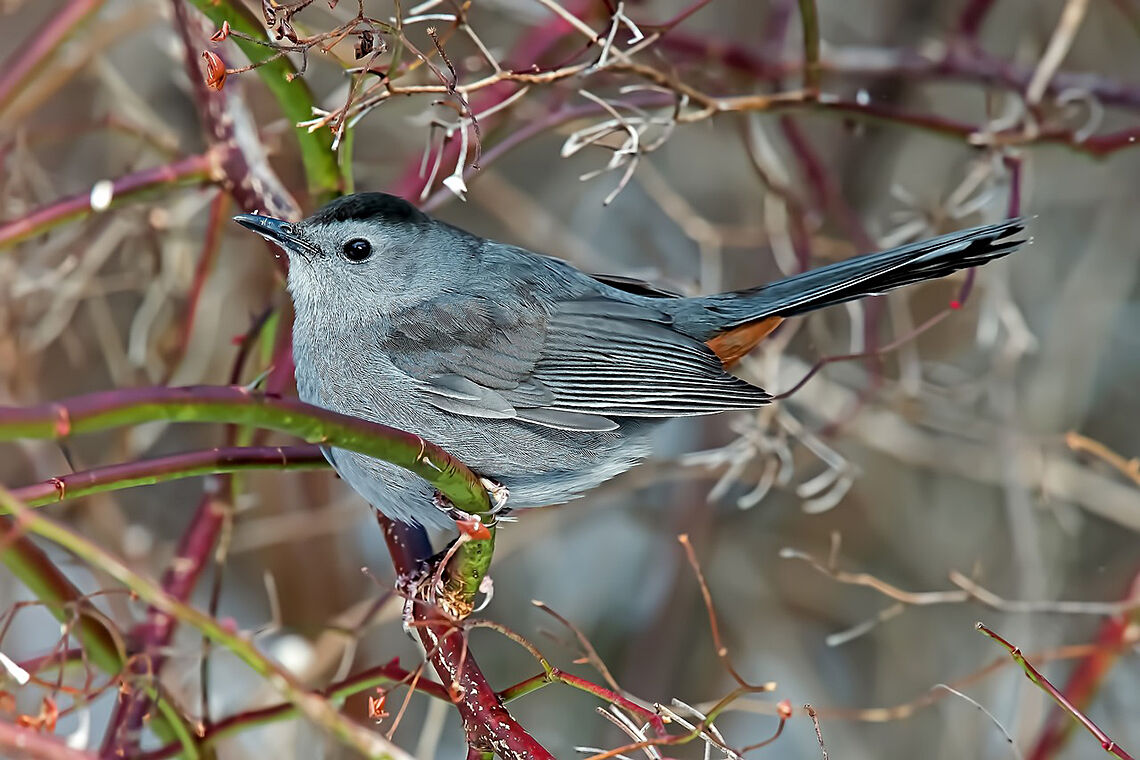
Hans Toom/Pixabay • A gray catbird found on this year’s Elizabethton Christmas Bird Count represents a somewhat unusual winter sighting for the species.

Carolina wren, 104; winter wren, 9; gray catbird, 1; Northern mockingbird, 55; European starling, 369; Eastern bluebird, 108; hermit thrush, 11; and American robin, 181.
House sparrow, 34; house finch, 73; purple finch, 2; American goldfinch, 34; chipping sparrow, 18; field sparrow, 9; dark-eyed junco, 151; white-throated sparrow, 56; song sparrow, 125; swamp sparrow, 7; Eastern towhee, 10.
Eastern meadowlark, 11; orange-crowned warbler, 1; pine warbler, yellow-rumped warbler, 98; and Northern cardinal, 118.

Knight noted that highlights from the count included fish crow, gray catbird and orange-crowned warbler.

Other notable species include red-breasted and common mergansers and Eurasian collared-dove.

There are always some notable misses. This year the count failed to find horned grebe, sharp-shinned hawk, fox sparrow and white-crowned sparrow.

The first Christmas Bird Counts were conducted on Christmas Day (Dec. 25) in 1900. The annual census arose from a proposal made by famed ornithologist Frank M. Chapman. According to Audubon.org, these yearly counts, conducted throughout the country, have provided a wealth of data over the past century.

Observations made due to CBCs have helped Audubon researchers, conservation biologists, wildlife agencies and other interested individuals to study the long-term health and status of bird populations across North America. When combined with other surveys such as the Breeding Bird Survey, the data provides a picture of how the continent’s bird populations have changed in time and space over the past hundred years.

The concept of the Christmas Bird Count, according to the website for the National Audubon Society, arose from a less than bird-friendly custom prevalent at the turn of the 20th century. So-called sportsmen would conduct a “Side Hunt,” a rather blood-thirsty Christmas custom that saw hunters competing to see who could score the largest amount of feathered and furred corpses.

The annual holiday bird survey may even have arisen from an earlier custom with roots in Europe that came to the United States of America with early colonists. The “Side Hunt” has some similarity to a peculiar celebration in Ireland and other European countries known as “Wren Day” or “Hunt the Wren Day.” The event was conducted the day after Christmas, the date of Dec. 26 being consigned as Saint Stephen’s Day. By the 20th century, the hunt consisted of tracking down a fake wren carried atop a decorated pole. Crowds would parade through towns in masks and colorful attire. These groups were referred to as “wren boys.”

Whether or not the “Side Hunt and “Wren Hunt” shared any connections, it was a huge step forward for conservation when Chapman, the preeminent ornithologist of his day, proposed a new holiday tradition. His radical idea was to count birds during the Christmas season rather than hunting and killing them.

I think other bird lovers will join me in celebrating Chapman’s wonderful idea, which has continued strong for the past 125 years.

•••

I’ve written about birds and birding since 1995. To share a sighting, ask a question or make a comment, email me at ahoodedwarbler@aol.com.

Three species of owls — great horned (pictured), Eastern screech and barred — were tallied on this year’s CBC.


Birds have developed ways of dealing with cold

David Ellis/USFWS • A common redpoll feasts on stiff goldenrod seed. These small finches can endure temperatures 100 degrees below freezing.

With the arrival of January, we can probably be assured of some cold weather. I’m not fond of the cold, but I can put on gloves and a thicker coat and I am good to go.

What about our feathered friends? How do birds cope when temperature plummet below freezing?

Birds actually employ a range of strategies and behaviors that keep them cozy even during the worst that winter can hurl at them.

Some birds avoid the necessity of coping with cold by migrating. All those tropical species that brighten the warmer seasons in the mountains of Southern Appalachia withdraw to warmer areas in Central and South America during the winter.

Those birds that elect not to put distance between themselves and cold temperatures must do something to stay warm. Feathers are one of a bird’s defining traits, and they can do a neat trick with their feathers to stay warm. You’ve probably seen them do this. They will fluff their feathers, trapping air between them to provide insulation. If you’ve ever noticed that some birds look “fatter” in extreme cold it’s likely because they have fluffed up to combat the cold.

Of course, feathers require good maintenance to help with the task of staying warm, and birds are diligent about such tasks. Preening feathers on a routine basis keeps them watertight and able to hold in heat. Some birds even grow extra feathers in autumn to prepare for cold temperatures. That’s similar to dogs or cats growing a denser coat of fur in anticipation of wintry temperatures.

Birds have different comfort levels when its comes to personal space, but many of the more sociable species will huddle together. You’ve probably seen nature documentaries of penguins in the Antarctic as they huddle together for weeks on end to endure the harsh conditions of the globe’s southernmost continent.

Larger species of birds, such as geese and grouse, eat more and gain weight, which is often achieved by the storage of body fat.

Other birds have also adopted the huddling strategy in a cozy cavity or nest box. My most vivid recollection of an observation of this strategy involved Eastern bluebirds. During a severe cold snap accompanied by snow and blustery winds, I watched multiple bluebirds enter one of my nesting boxes. I’m not sure how many entered the box, but it was likely about eight to 10 birds.

Necessity makes birds adaptable. The next day the aforementioned high winds took down the post that held the nest box. At dusk the bluebirds showed up again. They looked baffled to find the box had disappeared. Then I saw them fluttering into an old tire that I had used at the base of the pole to help anchor the box. Faced with oncoming darkness, they chose to huddle together inside the old tire.

Natural cavities in trees also provide cozy roosting spaces for birds. Chickadees and titmice, nuthatches and woodpeckers seek out such cavities ahead of time so they will always be ensured of a warm space during bouts of inclement weather.

The biological mechanism of torpor is one that’s probably familiar to fans of hummingbirds, but other small birds can also take steps to lower their body temperature. Chickadees and kinglets put this ability to good use. In these small birds, the adaptation being employed is known as controlled hypothermia. Chickadees can drop their body temperature by as much as 22 degrees below normal daytime body temperature.

Snakes and reptiles can enter a physical state called brumation, where they sleep more but still wake to eat, drink and enjoy the sun on warmer days, according to information on the Facebook page of the U.S. Fish and Wildlife Service. Since snakes are cold-blooded, they’re lethargic at these colder temperatures even when they’re on the move.

Hibernation, although a strategy widely used by mammals, is rare in birds. The common poorwill (a relative of whip-poor-will and chuck-will’s-widow – is the only bird known to go into torpor for extended periods that can range from weeks to months. On the southern edge of their range in the United States, poorwills spend much of the winter hibernating, usually concealed in rock piles.

There’s warmth in numbers. Crows, starlings, robins and other species will gather in communal roosts to use body warmth to stay warm overnight. Sometimes these roosts are quite large and can lead to conflict with nearby humans who may not want the noise and mess that comes with hosting a large flock of birds.

While warm socks and gloves protect human toes and fingers, birds don’t have to worry about frostbite. Quick circulation means that blood does not linger in their feet long enough to freeze. In addition, the legs and feet of birds are covered in scales. Like feathers, the scales provide excellent insulation.

Some birds will gather together in large stands of evergreens. I’ve observed house sparrows gathering in the holly trees outside the courthouse in downtown Erwin at dusk on cold evenings.

There are things we can do to help. Plant evergreen trees or construct a brush pile that will provide shelter from the elements, as well as a measure of safety from predators, for the birds that share our lawns and gardens.

Many people already feed birds. Try supplementing seeds with some food rich in fat. Birds, unlike us, will not be adversely affected by a high-fat diet. Their metabolism allows them to burn off the extra calories in an enviable amount of time. Some high-fat foods that birds will love include peanut butter and beef suet, as well as peanuts and other assorted nuts. While it’s relatively simple to render suet into a usable for for birds, most people cannot be blamed for turning to commercially made suet cakes. Many of these are also made even more appealing with a mix of peanuts or fruit into the suet cake. The extra calories derived from these foods will let birds better regulate their body temperature and tolerate the more frigid nights.

It’s also important to provide liquid water for birds. Outdoor heaters designed to fit into a birth bath can help prevent the water from freezing during cold snaps.

Birds will also appreciate a sunny spot. By basking in sunshine, they can also boost their internal temperature.

Some birds are just built for cold. For example, snowy owls have been observed in temperatures 80 degrees below zero. Species of redpolls, a type of finch, can endure temperatures 100 degrees below freezing.

Emperor penguins live and nest in some of the most inhospitable terrain on the planet. Those who have viewed the documentary film “March of the Penguins” will be familiar with the species. Their colonies on the ice in the Antarctic must endure temperatures than can plunge to -40 degrees Farenheit. They must also survive frigid winds that can reach 90 miles per hour.

Emperor penguins have several adaptation to help them survive such cold conditions, according to the World Wildlife Fund. These penguins have two layers of feathers, a reserve of fat and beaks and flippers that are proportionally smaller than those for other penguin species.

Lee Karney/USFWS • The common raven can live in a range of habitats, but these large and intelligent birds are especially adapted to cold.

The common raven is another bird that shrugs off cold and snow. They can survive and thrive in habitats as varied as Arctic tundra and scorching deserts. If temperatures drop below -4 degrees Farenheit, ravens can generate extra body heat.

All things considered, birds are simply better at coping with cold than we are.

•••

Bryan Stevens has written about birds since 1995. To ask a question, make a comment or share a bird sighting, email him at ahoodedwarbler@aol.com.