Monthly Archives: June 2025

Unicoi County Summer Bird Count finds 107 species

Ken Silvers • A great blue heron wades in a wetland along Erwin Linear Trail.

The 12th annual Unicoi County Summer Count took place Saturday, June 14, with 15 observers in six parties. Sharp-eyed counters tallied 107 species, which is near the average of 108 species.

Conducted by members of the Elizabethton Bird Club, the survey gives a summer snapshot of the bird life present in the county. The organization also conducts a Carter County Summer Bird Count. I’ll discuss the results of that count in an upcoming column.

Notable sightings, according to count compiler Rick Knight, included black-billed cuckoo, red crossbill, pine siskin, Savannah sparrow and yellow-rumped warbler. The count also found 19 species of warblers.

The list:

Canada goose, 37; mallard, 34; wild turkey, 21; and ruffed grouse, 1.

Rock pigeon, 19; mourning dove, 53; black-billed cuckoo, 1; chuck-will’s-widow. 1; Eastern whip-poor-will, 7; chimney swift, 17; and ruby-throated hummingbird, 8.

Killdeer, 3; green heron, 1; and great blue heron, 4.

Bryan Stevens • A małe downy woodpecker visits a feeder for peanuts.

Black vulture, 3; turkey vulture, 47; red-shouldered hawk, 1; broad-winged hawk, 2; red-tailed hawk, 1; Eastern screech owl, 2; and barred owl, 1.

Belted kingfisher, 3; red-bellied woodpecker, 10; yellow-bellied sapsucker, 3; downy woodpecker, 9; hairy woodpecker, 4; Northern flicker, 6; and pileated woodpecker, 10.

Great crested flycatcher, 6; Eastern kingbird, 6; Eastern wood-pewee, 6; Acadian flycatcher, 52; least flycatcher, 3; and Eastern phoebe, 39.

White-eyed vireo, 1; blue-headed vireo, 25; warbling vireo, 2; red-eyed vireo, 135; blue jay, 48; American crow, 89; fish crow, 3; and common raven, 2.

Carolina chickadee, 37; tufted titmouse, 51; tree swallow, 34; N. rough-winged swallow, 16; purple martin, 16; barn swallow, 46; and cliff swallow, 48.

Golden-crowned kinglet, 1; cedar waxwing, 28; red-breasted nuthatch, 9; white-breasted nuthatch, 9; and blue-gray gnatcatcher, 16.

Jean Potter • A Carolina wren creeps along a fence.

Carolina wren, 50; house wren, 20; and winter wren, 3.

Gray catbird, 15; brown thrasher, 8; Northern mockingbird, 10; European starling, 347; Eastern bluebird, 26; veery, 24; hermit thrush, 5; wood thrush, 46; and Amercian robin, 195.

House sparrow, 17; house finch, 2; red crossbill, 5; pine siskin, 3; and American goldfinch, 37.

Chipping sparrow, 44; field sparrow, 6; dark-eyed junco, 28; Savannah sparrow, 1; song sparrow, 81; and Eastern towhee, 5.

Eastern meadowlark, 5; orchard oriole, 4; Baltimore oriole, 1; red-winged blackbird, 43; brown-headed cowbird, 8; and common grackle, 30.

Photo by Bryan Stevens • A male brown-headed cowbird displays the brown head that gives this bird its common name.

Ovenbird, 46; worm-eating warbler, 7; Louisiana waterthrush, 10; black-and-white warbler, 22; Swainson’s warbler, 16; Kentucky warbler, 1; Common yellowthroat, 9; hooded warbler, 52; American redstart, 1; Northern parula, 32; magnolia warbler, 1; Blackburnian warbler, 2; yellow warbler, 1; chestnut-sided warbler, 12; black-throated blue warbler, 29; yellow-rumped, 1; yellow-throated warbler, 21; black-throated green warbler, 40; and Canada warbler, 18.

Scarlet tanager, 16; Northern cardinal, 63; rose-breasted grosbeak, 3; blue grosbeak, 3; and indigo bunting, 64.

Knight noted that some species, as always happens, were missed by counters. These included wood duck, yellow-billed cuckoo, the accipiter hawks, bald eagle, great horned owl, American kestrel, yellow-throated vireo, brown creeper and yellow-breasted chat.

I counted with Chris Soto from the Limestone Cove area to the top of Iron Mountain Gap along Highway 107. This was my first observation of the blow Hurricane Helene dealt Iron Mountain Gap. The scenery at the top of the mountain on the line between North Carolina and Tennessee has been changed radically. So many trees were toppled by the storm’s passage. But the birds appeared unaffected by the changes, with an assortment of warblers, indigo buntings and yellow-bellied sapsuckers.

•••

Bryan Stevens has written about birds and birding since 1995. To send him a question, make a comment or share a sighting, email him at ahoodedwarbler@aol.com.
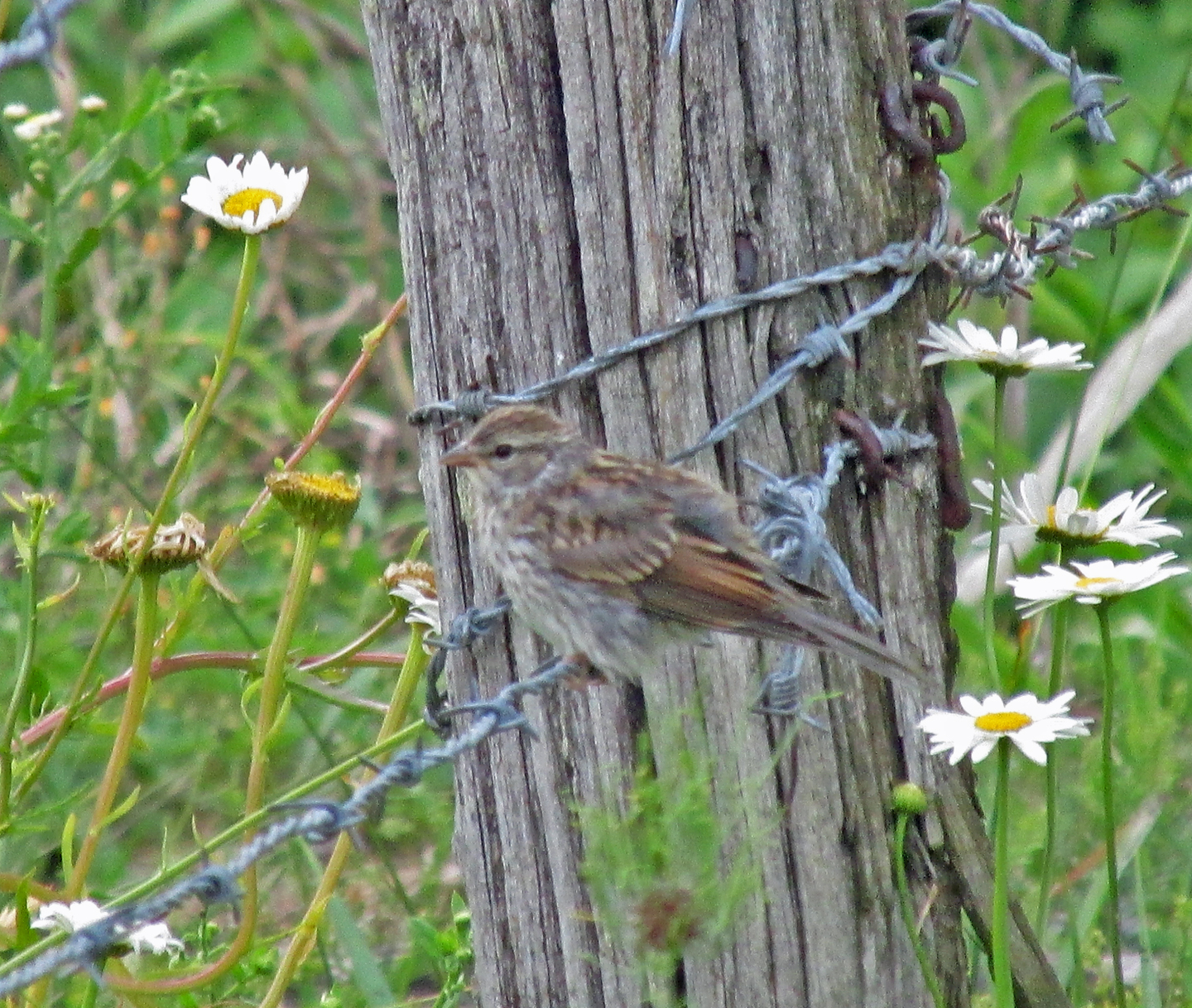
Photo by Bryan Stevens
A young Chipping Sparrow perches on a barbed wire fence at the Bell Cemetery in Limestone Cove.

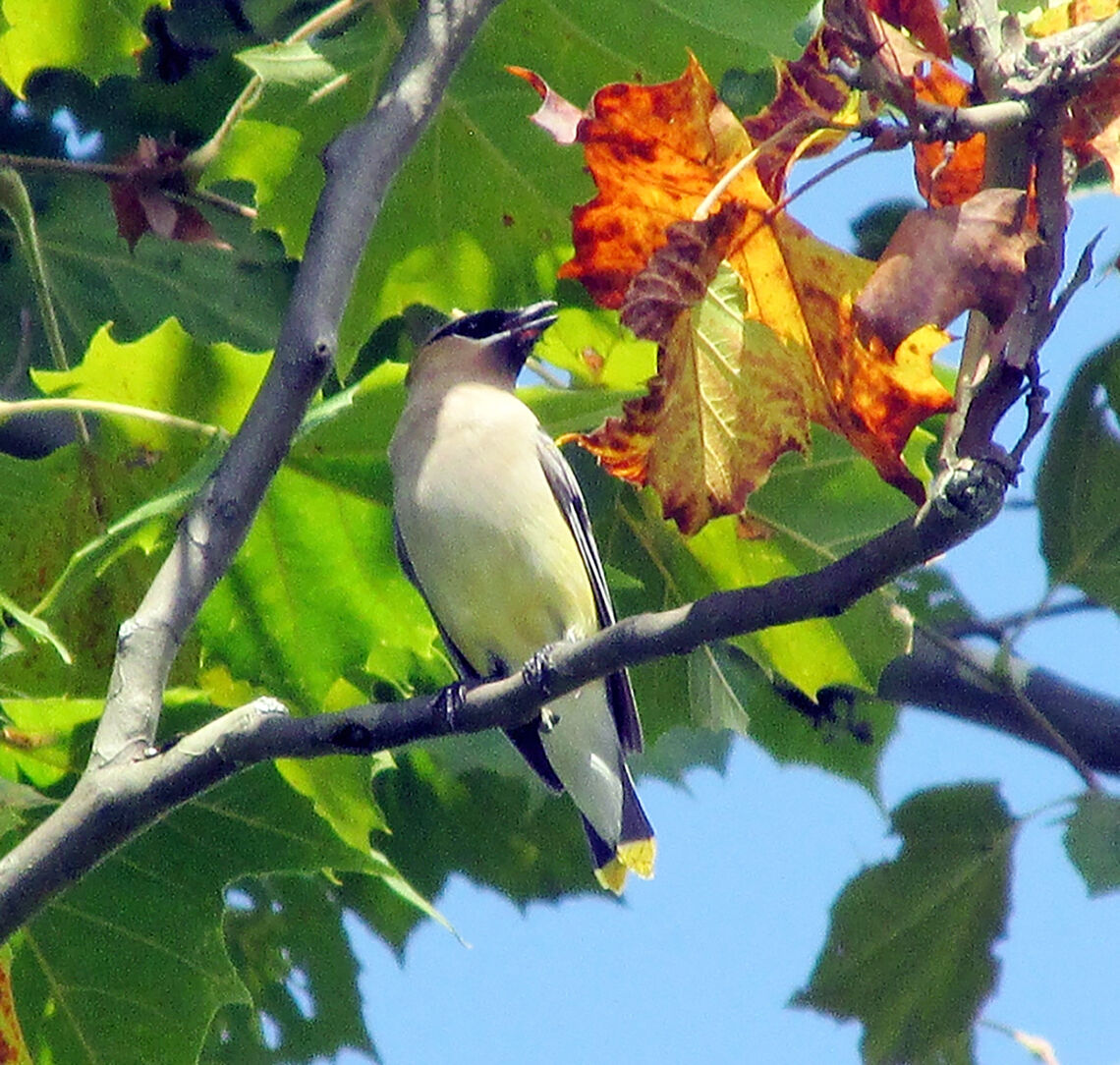
Cedar waxwings provide entertainment as they feast on mulberries

Photo by Jack Bulmer/Pixabay • A cedar waxwings strikes a stately pose on a branch.

Spring turned out to be a rainy season in Northeast Tennessee. As we move into the official summer season as of Friday, June 20, summer’s also looking like it might be wetter than usual.

Rainfall hasn’t stopped the rhythms of the seasons. For instance, two mulberry trees at home have produced a bonanza of ripening berries for our fruit-loving feathered friends.

So far, the main beneficiaries of all this bounty has been the local cedar waxwings. These sleek and distinctive birds have a brown and gray silky plumage, a black mask and a perky crest. Some of the wing feathers show red tips. The similarity of these wing tips to melted drops of wax gives these birds the common name of waxwing.

There’s no absolute explanation of the purpose for these waxy tips. Experts have theorized that the colorful wingtips might help attract mates.

Other birds have competed for access to the berries, including American robins, gray catbirds and at least one scarlet tanager.

Cedar waxwings love their fruit. They’re not quite a frugivore, which is a scientific term for animals that depend mostly on raw fruits for sustenance. The website All About Bird recommends planting native trees and shrubs that bear small fruits, including such species as mulberry, dogwood, serviceberry, cedar, juniper, hawthorn and winterberry, to attract cedar waxwings.

Photo by Bryan Stevens • A cedar waxwing perches in the upper branches of a tree.

The cedar waxwing has few relatives. Worldwide, there are only two other species: the Bohemian waxwing, of the northern forests of Eurasia and North America; and the Japanese waxwing, found in such northeast Asian countries as Japan, Korea and China.

Although it’s classified as a songbird, the cedar waxwing does’t truly produce a vocalization that anyone would contend qualifies as a song. They are, however, very vocal birds, producing shrill, high-pitched notes as they pass through the upper branches of tall trees.

Early American naturalist and artist John James Audubon painted this pair of cedar waxwings.

As much as the waxwing has a fondness for fruit, it’s also a bird that would have made an excellent flycatcher. Flocks of these birds will often congregate in trees near the edge of a pond, garden or yard — anywhere winged insects might be found in good numbers — in order to hawk insects on the wing. A waxwing will sally forth from a branch, snatch its prey in mid-air, and return to its perch for a quick snack. Dragonflies often feed on mayflies and dragonflies but they will also forage on a wide array of other winged insects.

Waxwings are rather nomadic, coming and going with a maddening unpredictability. They often follow the available sources of food, whether that’s the multitude of flying insects attracted by pond and rivers or a particularly bountiful crop of fruit.

They can form large flocks. I once observed a flock that probably consisted of 100 individuals as they stripped berries in early winter from a holly tree. Adding some comic relief to the scene were two Northern mockingbirds making a futile attempt to disperse the waxwings and thus claim all the berries for themselves. The mockingbirds would chase off a dozen or so birds only for twice that number to descend on the vacated spot in the tree’s branches. It was a losing battle, but I am confident that once they settled down, the mockingbirds managed to enjoy the supply of berries alongside the overwhelming numbers of waxwings.

I’ve enjoyed the friendly flock of waxwings as they’ve feasted on mulberries. The only drawback has been that I am usually observing their antics in late evening when the sun is behind these birds. Fortunately, even a waxwing’s sleek silhouette is still a sight to behold and enjoy.

•••

To share a sighting, ask a question or make a comment, send me an email to ahoodedwarbler@aol.com.

Photo by Bryan Stevens • A pair of cedar waxwings hawk for insects near a pond.

Regional spring bird count finds 148 species

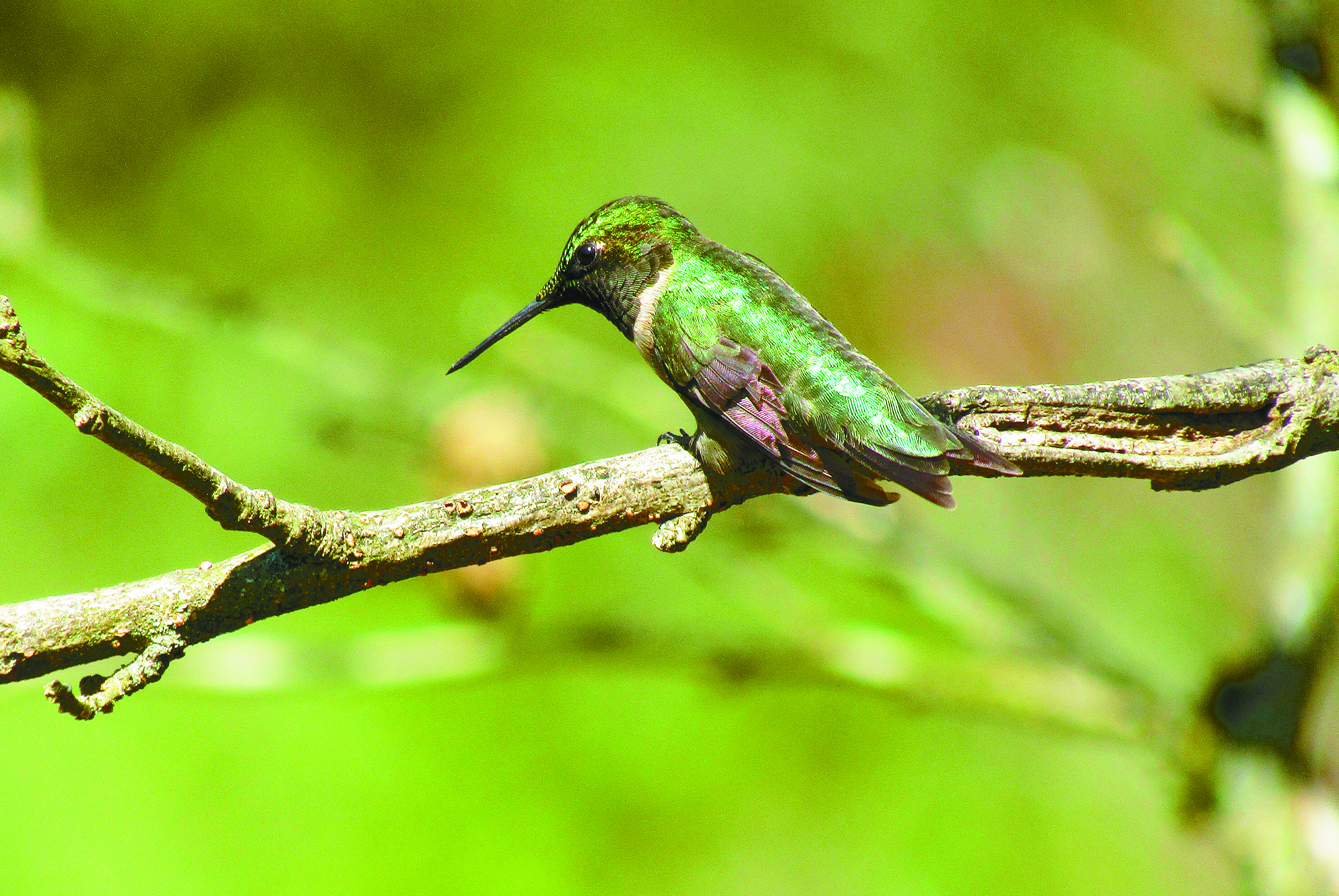
Photo by Bryan Stevens • Ruby-throated hummingbirds have settled into a comfortable summer routine throughout the Northeast Tennessee region.

The 82nd consecutive spring bird count was held Saturday, May 3, with 44 observers in 15 parties. The survey tallied 148 species, which is slightly below the recent 30 year average of 150 species. The count is conducted by the Elizabehton Bird Club, which will also conduct two summer counts this month. One of these counts is held in Carter County and the other in Unicoi County.

The spring count is a regional survey that includes all Northeast Tennessee counties: Carter, Johnson, Sullivan, Unicoi and Washington.

Compiler Rick Knight shared some observations. Noteworthy sightings included common merganser, black-billed cuckoo, willow flycatcher, vesper sparrow and bobolink, as well as prothonotary and cerulean warblers. A total of 31 species of warblers made this year’s count. A record number (24) for Swainson’s warbler provided an indication that this species is locally abundant during the nesting season.

The 17 fish crows reported by six parties provided a good example of the local expansion of this species. The 17 common ravens, once not so common in the region, were reported by eight of the count parties.

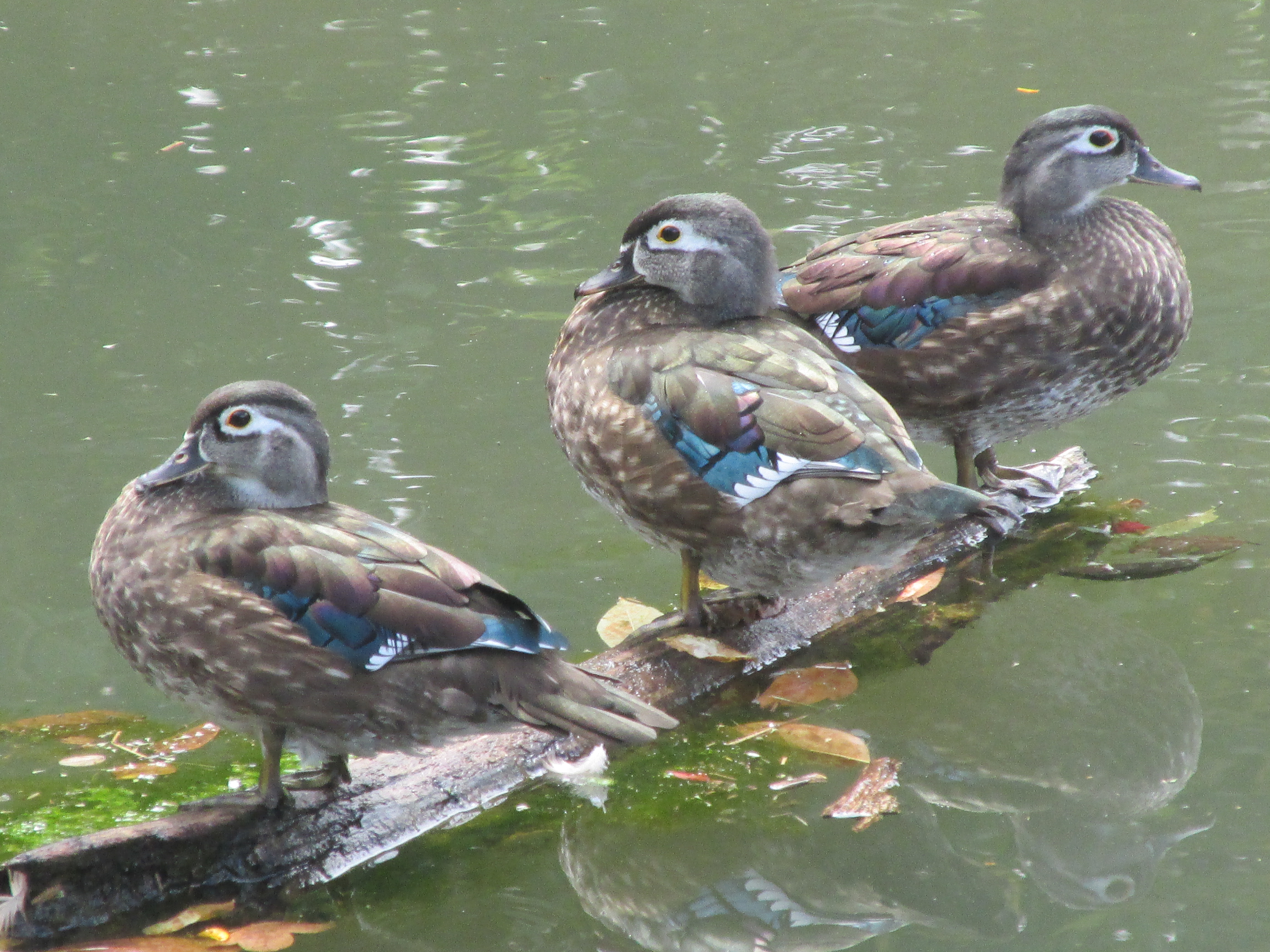
Photo by Bryan Stevens • Young wood ducks share a perch on a submerged log.

The list:

Canada goose, 208; wood duck, 31; blue-winged teal, 2; mallard, 86; and common merganser, 7.

Wild turkey, 16; ruffed grouse, 1; rock pigeon, 92; Eurasian collared-dove, 1; mourning dove, 176; yellow-billed cuckoo, 3; and black-billed cuckoo, 2.

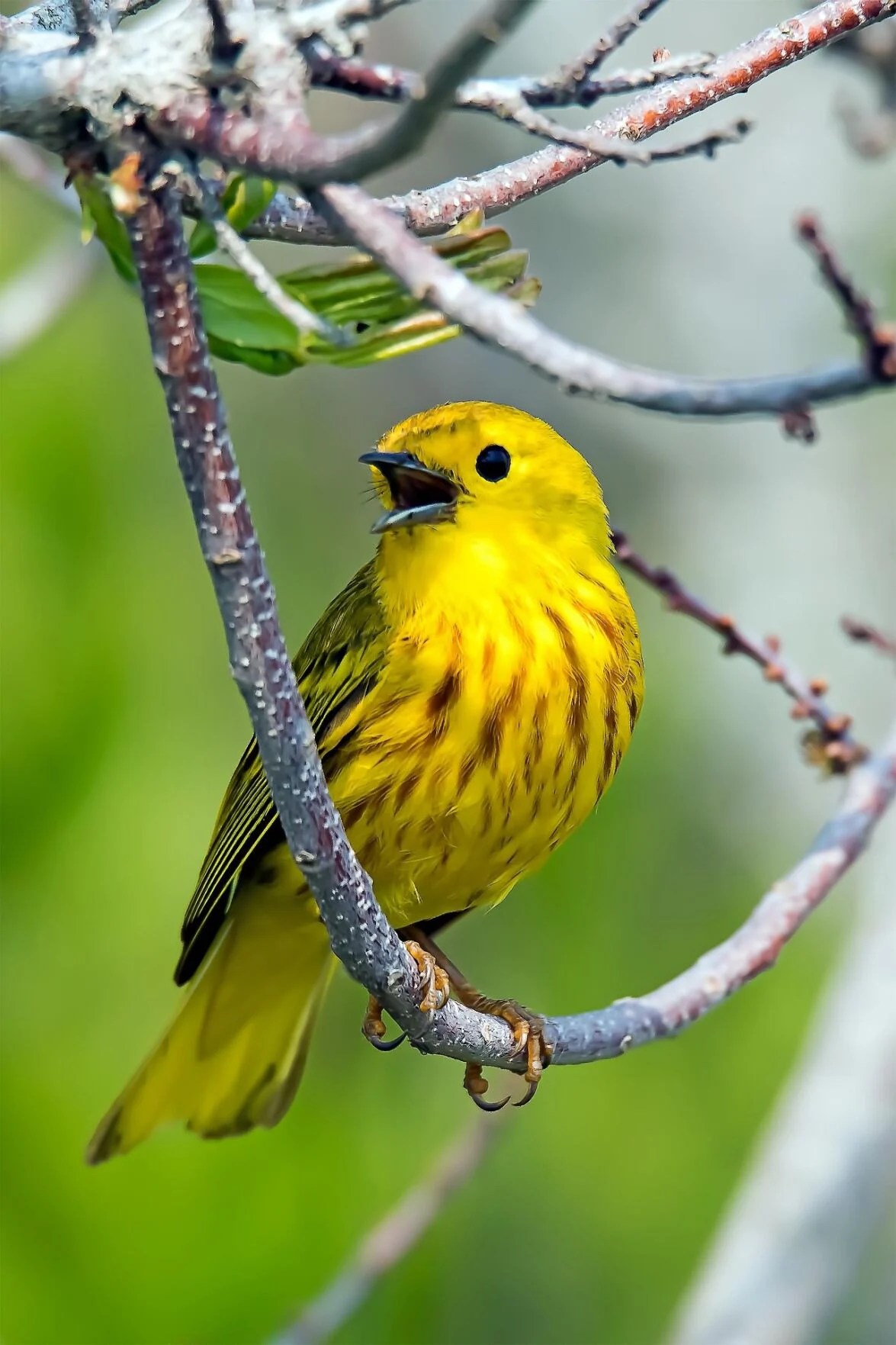
Photo by Hans Toom/Pixabay • A male yellow warbler is aptly named.

Chuck-will’s-widow, 9; Eastern whip-poor-will, 32; Chimney swift, 149; ruby-throated hummingbird, 18.

Killdeer, 32; least sandpiper, 16; pectoral sandpiper; 1; spotted sandpiper, 42; solitary sandpiper, 39; and lesser yellowlegs, 6.


Double-crested cormorant 28; green heron 8; great egret, 1; and great blue heron, 50.

Black vulture, 38; turkey vulture, 96; osprey, 4; Cooper’s hawk, 6; bald eagle, 1; red-shouldered hawk, 4; broad-winged hawk, 7; red-tailed hawk, 14; Eastern screech owl, 15; great horned owl, 2; and barred owl, 4;

Belted kingfisher, 15; red-headed woodpecker, 2; red-bellied woodpecker, 68; yellow-bellied sapsucker, 7; downy woodpecker, 33; hairy woodpecker, 6; Northern flicker, 37; and pileated woodpecker, 36.

Photo by Bryan Stevens • Downy woodpeckers will visit feeders in any season.

American kestrel, 5; great crested flycatcher, 28; Eastern kingbird, 42; Eastern wood-pewee, 16; Acadian flycatcher, 27; willow flycatcher, 1; least flycatcher, 10; and Eastern phoebe, 64.

White-eyed vireo, 19; yellow-throated vireo, 12; blue-headed vireo, 42; warbling vireo, 10; and red-eyed vireo, 364.

Blue jay, 175; American crow, 218; fish crow, 17; and common raven,17.

Tree swallow, 107; Northern rough-winged swallow, 81; purple martin, 29; barn swallow, 144; and cliff swallow, 482.

Carolina chickadee, 144; tufted titmouse, 189; ruby-crowned kinglet, 1; golden-crowned kinglet, 2; red-breasted nuthatch, 9; and white-breasted nuthatch, 26.

Brown creeper, 6; blue-gray gnatcatcher, 62; Carolina wren, 159; house wren, 39; and winter wren, 1.

Gray catbird, 68; brown thrasher, 43; Northern mockingbird, 97; cedar waxwing, 122; Eurasian starling, 539; Eastern bluebird, 97; veery, 15; Swainson’s thrush, 8; wood thrush, 116; and American robin, 654.

House sparrow, 55; house finch, 78; pine siskin, 7; and American goldfinch, 252.

Chipping sparrow, 139; field sparrow, 34; dark-eyed junco, 48; white-crowned sparrow, 3; white-throated sparrow, 4; vesper sparrow, 1; Savannah sparrow, 4; song sparrow, 287; swamp sparrow, 1; and Eastern towhee, 203.

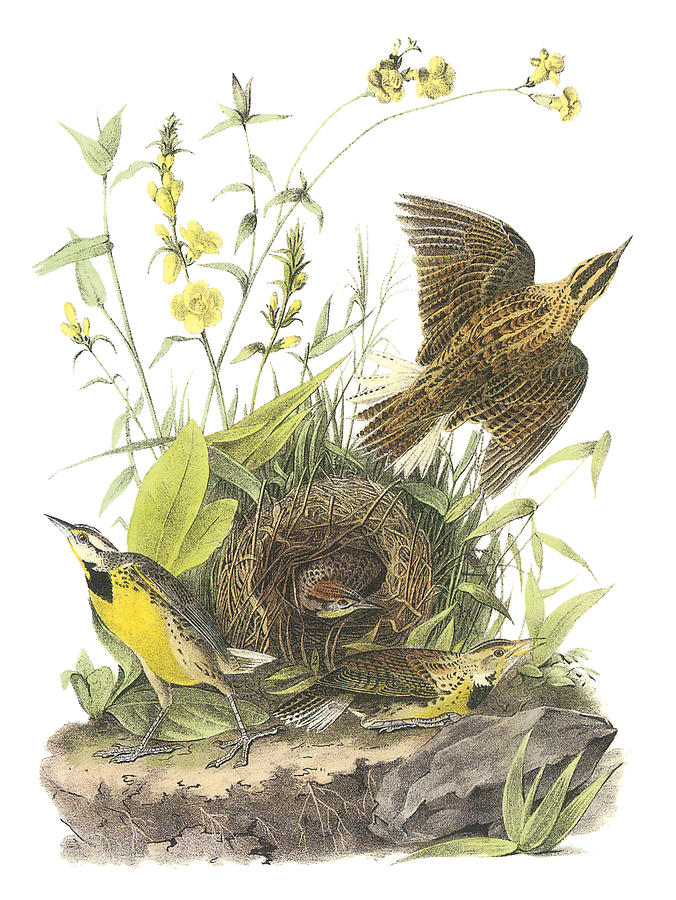
Early American naturalist and painter John James Audubon painting this scene depicting nesting meadowlarks.

Yellow-breasted chat, 9; bobolink, 6; Eastern meadowlark, 108; orchard oriole, 28; Baltimore oriole, 26; red-winged blackbird, 211; brown-headed cowbird, 65; and common grackle, 195.

Ovenbird, 169; worm-eating warbler, 42; Louisiana waterthrush, 45; Northern waterthrush, 4; golden-winged warbler, 2; blue-winged warbler, 1; black-and-white warbler, 104; prothonotary warbler, 1; Swainson’s warbler, 24; Tennessee warbler, 13; Kentucky warbler, 4; common yellowthroat, 25; hooded warbler, 234; American Redstart 27; Cape May warbler, 14; cerulean warbler, 2; Northern parula, 88; magnolia warbler, 4; bay-breasted warbler, 6; Blackburnian warbler, 16; yellow warbler, 10; chestnut-sided warbler, 32; blackpoll warbler, 6; black-throated blue warbler, 97; palm warbler, 5; pine warbler, 7; yellow-rumped warbler, 17; yellow-throated warbler, 52; prairie warbler, 1; black-throated green warbler, 100; and Canada warbler, 50.

Summer tanager, 2; scarlet tanager, 92; Northern cardinal, 284; Rose-breasted grosbeak, 30; blue grosbeak, 11; indigo bunting, 164; and dickcissel, 1.

I counted with Chris Soto and Brookie and Jean Potter around Sycamore Shoals State Historic Park, on the greenbelt along the Watauga River and on Holston Mountain.

•••

To share a sighting, make a comment or ask a question, email me at ahoodedwarbler@aol.com.

Photo by Hans Toom/Pixabay • A male Blackburnian warbler looks splendid in the dappled sunlight that appears to make his orange throat patch almost glow.

Noisy killdeer parents have mastered the art of deception

Photo by Bryan Stevens • A killdeer stands near the edge of a stream.

In last week’s column, I focused on the black-necked stilt, an oddity in the shorebird family that few non-birders would have ever heard of. This week, my focus will be on the killdeer, which is probably the shorebird most people know. Even non-birders have probably encountered this wide ranging bird that resides across much of North America.

While killdeers are considered shorebirds, they are certainly not confined to shorelines but can be found in a variety of habitats from school yards to golf courses to prairies and fields.

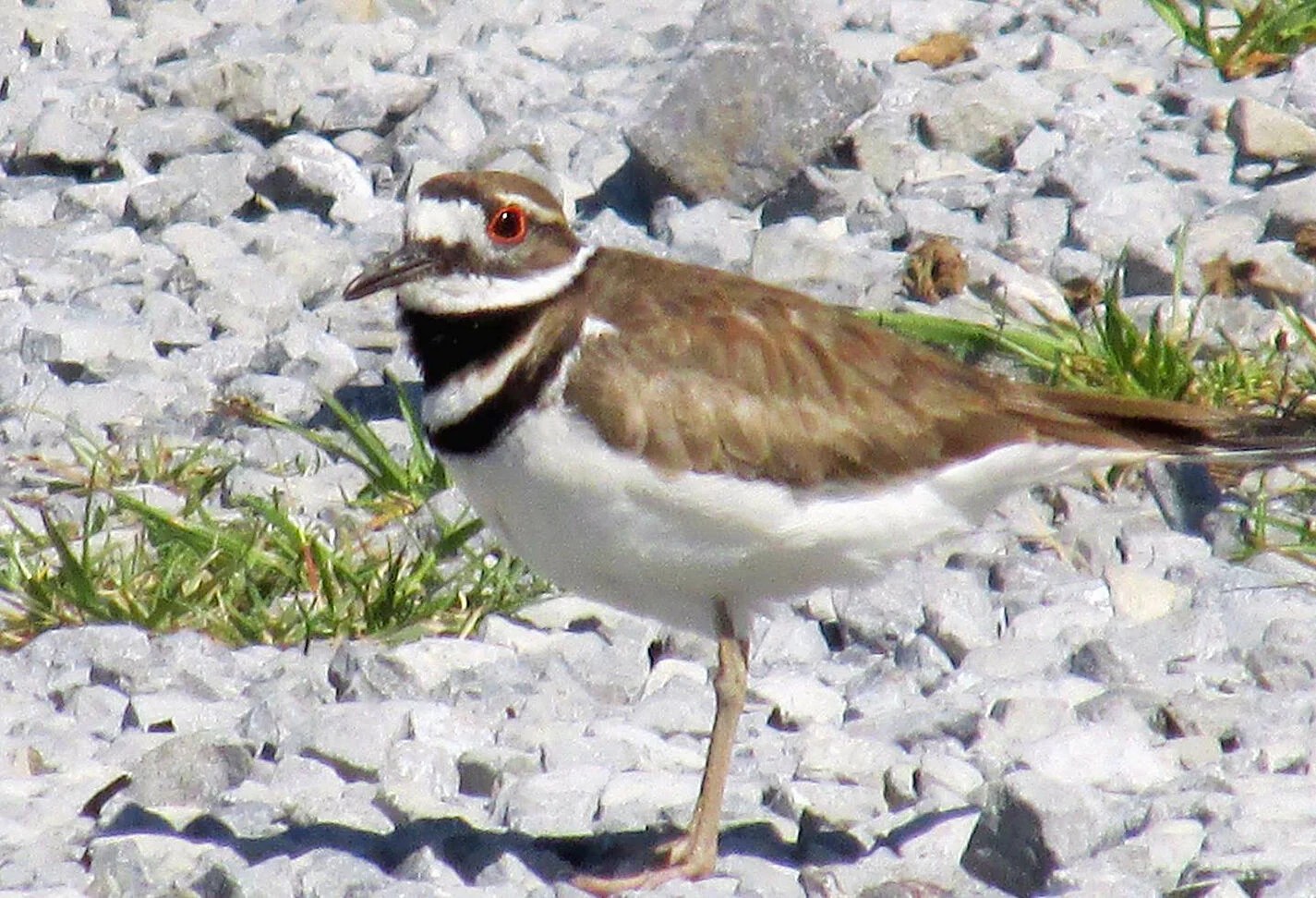
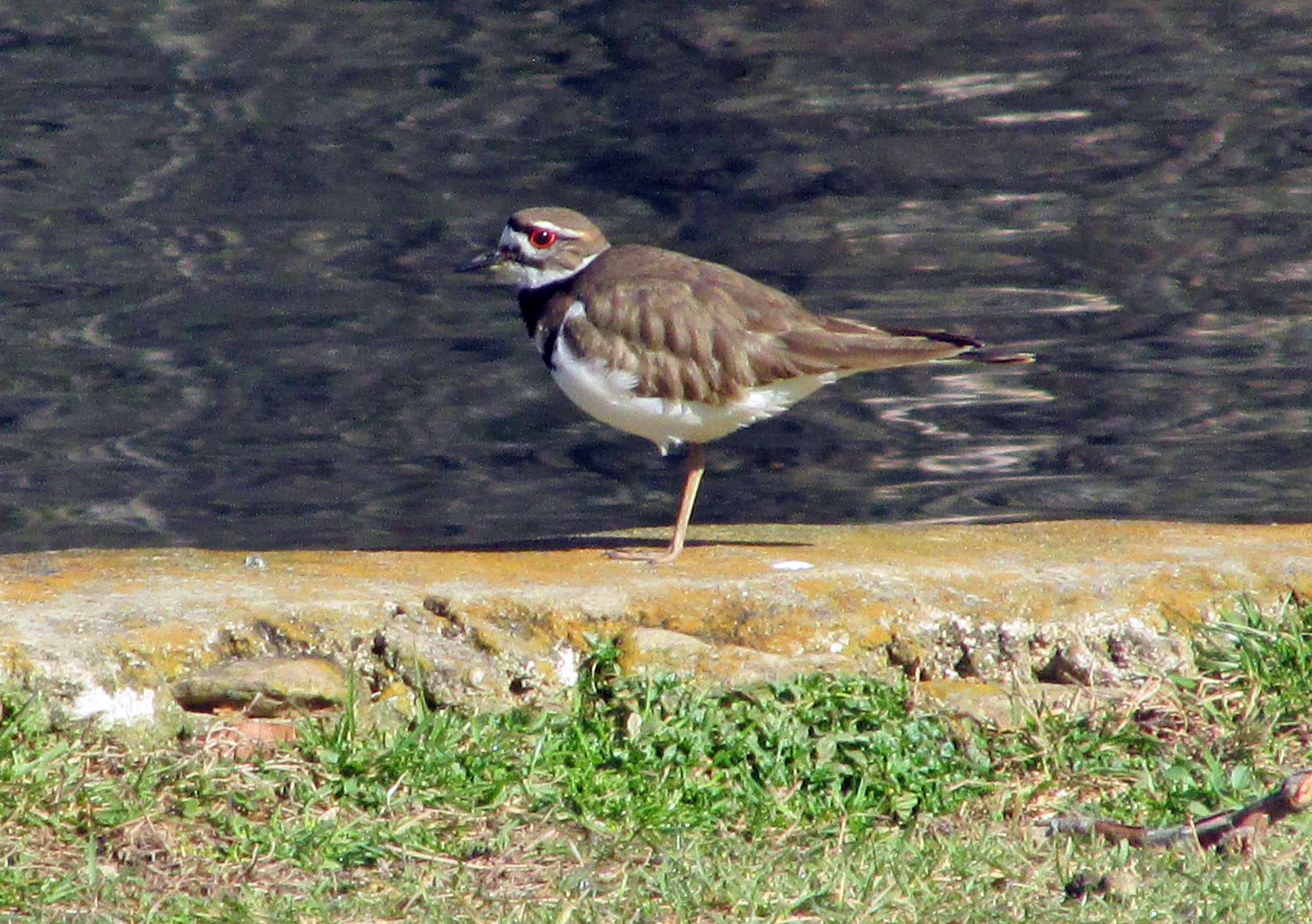
About 11 inches in length, the killdeer is brown above and white below with two black bands across the white chest. Males and females look alike.

These birds, despite their common name, are not antagonistic toward deer. The name killdeer refers to the loud, strident vocalization these birds produce when alarmed or disturbed. Early naturalists also noticed the noisy nature of killdeer, giving them names such as chattering plover and noisy plover, according to the website All About Birds.

The female killdeer usually lays up to four eggs on a spot on the bare ground that she may or may not have lined with some grass. Both parents attempt to guard the nest from predators. They are reliably zealous in their duties. In fact, the killdeer is famous for faking a display of injury whenever intruders draw too close. The display is meant to lure potential predators away from the location of the nest.

Photo by Bryan Stevens • A killdeer stands sentry duty near its nest in a gravel parking lot.

The predator, thinking the “injured” killdeer will be easy prey, follows the bird away from the nest’s vicinity. Killdeer will also put on the show for humans who venture too close to the nest. They drag their wings in a convincing display of serious injury. Of course, once the ruse has worked, the killdeer miraculously recovers and returns to its nest.

I learned about the killdeer early in life. I had a wise teacher for my first grade year. When a nesting killdeer built its home in the school yard, the teacher turned the discovery of this feathered neighbor into a teaching event.

I remember the bird performing the broken wing display and our teacher patiently explaining the rationale for the bird’s antics. The teacher must have been protective of the bird. I do recall that my fellow students and I were forbidden to approach the nest. Considering the natures of first-grade students, that was probably a smart precaution.

Photo by Bryan Stevens • A killdeer stands at the edge of a large pond at Fishery Park in Erwin, Tennessee.

The class followed the progress of the killdeer family as the eggs hatched and the school grounds became the home turf for the pair of killdeers and their young. I don’t recall a conclusion to the story. Since killdeer nest in spring, I suspect that the school year came to an end ahead of the nesting season.

The killdeer is a member of the plover family, which includes shorebirds distinctly different from related sandpipers.

There are more than 60 species of plovers worldwide, with several different species spending at least part of the year in North America. Close relatives of the killdeer include Wilson’s plover, semipalmated plover, snowy plover, mountain plover and the endangered piping plover.

Killdeers utilize some unusual nesting locations, including gravel parking lots and building rooftops covered with gravel or pebbles. Young killdeers can leave the nest site soon after hatching and follow their parents as they forage for food. They look like fuzzy golf balls with toothpick legs.


I’ll always remember my first encounters with this large, loud plover while a student at Hampton Elementary School many years ago. Observing that killdeer family no doubt planted the seed that eventually sprouted into my enthusiasm for watching birds. Witnessing the trickery the birds deployed to foil predators — and curious kids — away from their nests remains fresh in the memory.

Photo by Bryan Stevens • The killdeer is a plover, placing it within the family of shorebirds. They are more often found on open fields instead of along coastal shores.

Somewhat more recently, I encountered another fuzzy golf ball at rest on the ground toward the back of Erwin Fishery Park. Thinking the tiny bird was dead, I picked it up for a closer look. Even as I handled the bird, it remained motionless in my hand. When I returned the tiny “body” to the ground, however, the bird performed an amazing resurrection and fled the vicinity as quick at those toothpick legs could carry it.

Numerous people have called or written me throughout the years to report unusual nesting locations used by killdeers. I’ve seen nests in hotel parking lots, local parks and construction sites. As I mentioned earlier, the female killdeer is content to lay her eggs directly on bare soil, although she will occasionally line the nest.

These birds are opportunists. The nest lining often consists of what is most readily available. I once inspected a killdeer nest lined with discarded cigarette butts. I’m hopeful the babies didn’t hatch with instant nicotine addictions.

•••

Bryan Stevens has written about birds since 1995. Share a sighting, ask a question or make a comment by emailing him at ahoodedwarbler@aol.com.

Photo by Bryan Stevens • A killdeer covers its egg during a light rain.

Black-necked stilt a gangly member of the windbird clan

Beto/Pixabay. • A black-necked stilt wades through a wetland area.

I received an email from Brayden Paulk updating me on his new birding adventures since moving to Gulf Shores in Alabama. I wrote a few weeks ago about Brayden and his plans for a Global Big Day of birding.

“I wanted to give you an update on the Big Day,” he wrote, informing me that he has been undergoing a lot of training for a new job and has had lots of 10-plus hour days. But birding has been productive.

“I got down here and I’ve had lots of success,” he wrote. “Where I live there are black-bellied whistling ducks hanging out by the pond, and prothonotary warblers in the swamp behind the apartment,” he said.

Unfortunately, his new job needed him to work on the date of his Big Day.

“So I was not able to do my plans,” he wrote. “However, I did get to go out for a few hours that afternoon to a nearby sod farm. I picked up several good birds, including spotted sandpiper, solitary sandpiper and, most importantly, black-necked stilt.”

Brayden reported that he observed two stilts working the edge of a flooded corner of the field along with dozens of other shorebirds that were too small to identify in low light.

“I was glad that I could do my part to submit one checklist on the Big Day, even if I couldn’t do a 24-hour birding marathon like I had planned,” he added.

He added that his best birding day recently took place two days prior to his planned Global Big Day.

“I got to meet some folks from Alabama Audubon when they came to the Eco Center,” he said. “After the tour, I was invited to go do some sea watching with them at Gulf State Park.”

He noted that the three guys on the impromptu session included Scott Duncan, the director of Alabama Audubon, and two top birders in Baldwin County.

“They were very helpful and wonderful people,” Brayden shared. “While we were out birding, I picked up two lifers: Gull-billed tern and semipalmated sandpiper.”

Bryan Stevens • Black-necked skimmers take flights along the South Carolina coast.

He also reported that they saw lots of other cool coastal birds, such as black skimmer, least tern and osprey.

“The coolest species, though, were two red knots,” he said. “I had only seen them once before, but this was my first time seeing them in breeding plumage. I was very excited to see it, and get two lifers in one day!”

He is also anticipating some future birding.

“My friend Don has a rare shiny cowbird at his house a few miles away from me, as well as Inca doves.”

I enjoyed hearing about Brayden’s sightings of shorebirds, a family of birds also known with a little more creative flair as “wind birds.” They are so named because so many species are capable of incredible long-distance migrations. His success with the black-necked stilts reminded me of how this can be an elusive species for birders.

My last sighting of black-necked stilts took place more than a decade ago in May of 2014 during a South Carolina vacation. I observed three black-necked stilts at Huntington Beach State Park while walking on a marsh boardwalk near the park’s Nature Center. They flew toward the causeway, so I got into my car and drove there to try to re-locate them. I did find two of the stilts feeding along the causeway, but I never managed to re-locate the third bird.

Photo by Bryan Stevens
Two Black-necked Stilts forage along the causeway wetland at Huntington Beach State Park in 2014. 

I watched the two stilts foraging for food in shallow water shared by egrets and alligators. The two birds, despite a somewhat gangly appearance, moved with elegantly efficient strides on their long pink legs.

I have seen this unusual shorebird in Tennessee only once on Oct. 13, 2004, at Austin Springs on Boone Lake in Washington County. The bird, first found by Rick Knight, drew many excited birders to the location for looks at this shorebird before it departed to continue its migration flight south.

As you might imagine, land-locked Tennessee is not an ideal location for finding shorebirds, but spring and fall migration brings a surprising variety of these birds through Northeast Tennessee. Black-necked stilts, however, are a rarity. I have also seen this species of shorebird on Fripp Island, South Carolina, as well as just outside of Wendover, Nevada, on a visit to the Bonneville Salt Flats.

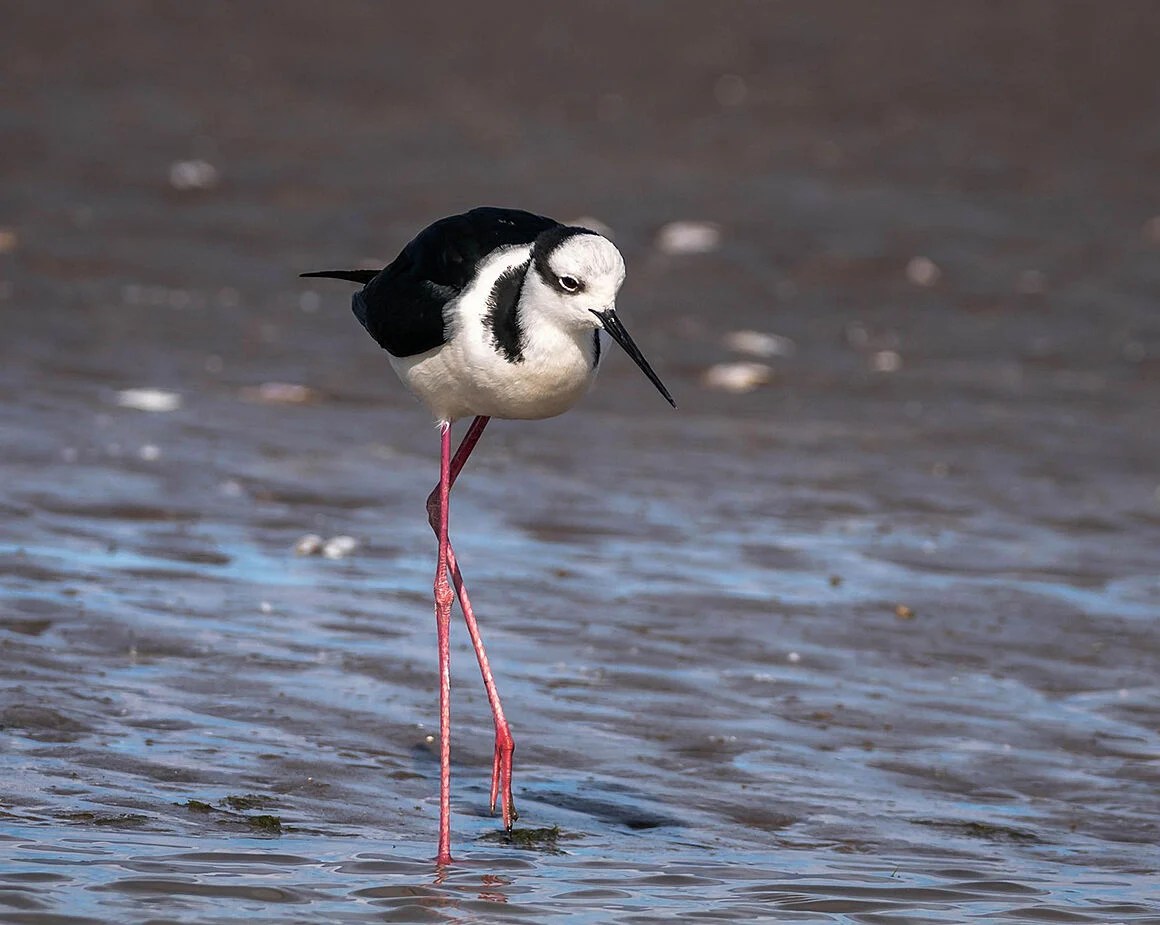
The world of shorebirds has produced many look-alike species, including many of the small sandpipers often collectively labeled as “peeps” by birders. The black-necked stilt, however, is not at all likely to be confused with any other shorebird. It is a slender bird atop a pair of extremely long pink legs. It has a two-tone appearance with black upper parts and white underparts. The black and white dichotomy continues along the bird’s long neck and head. This bird also has a thin, needle-shaped bill that it uses to delicately pluck aquatic insects and other prey from water or mud. The black-necked stilt’s long pink legs are exceptional. In fact, this species has he second-longest legs in proportion to their bodies of any bird, exceeded only by flamingos, according to the website All About Birds.

The black-necked stilt is closely related to the American avocet, another long-legged shorebird. The two species are classified together in the family, recurvirostridae. There’s also a Hawaiian sub-species of the black-necked stilt known as the “aeʻo.”

•••

To share a sighting, make a comment or ask a question, email me at ahoodedwarbler@aol.com.