
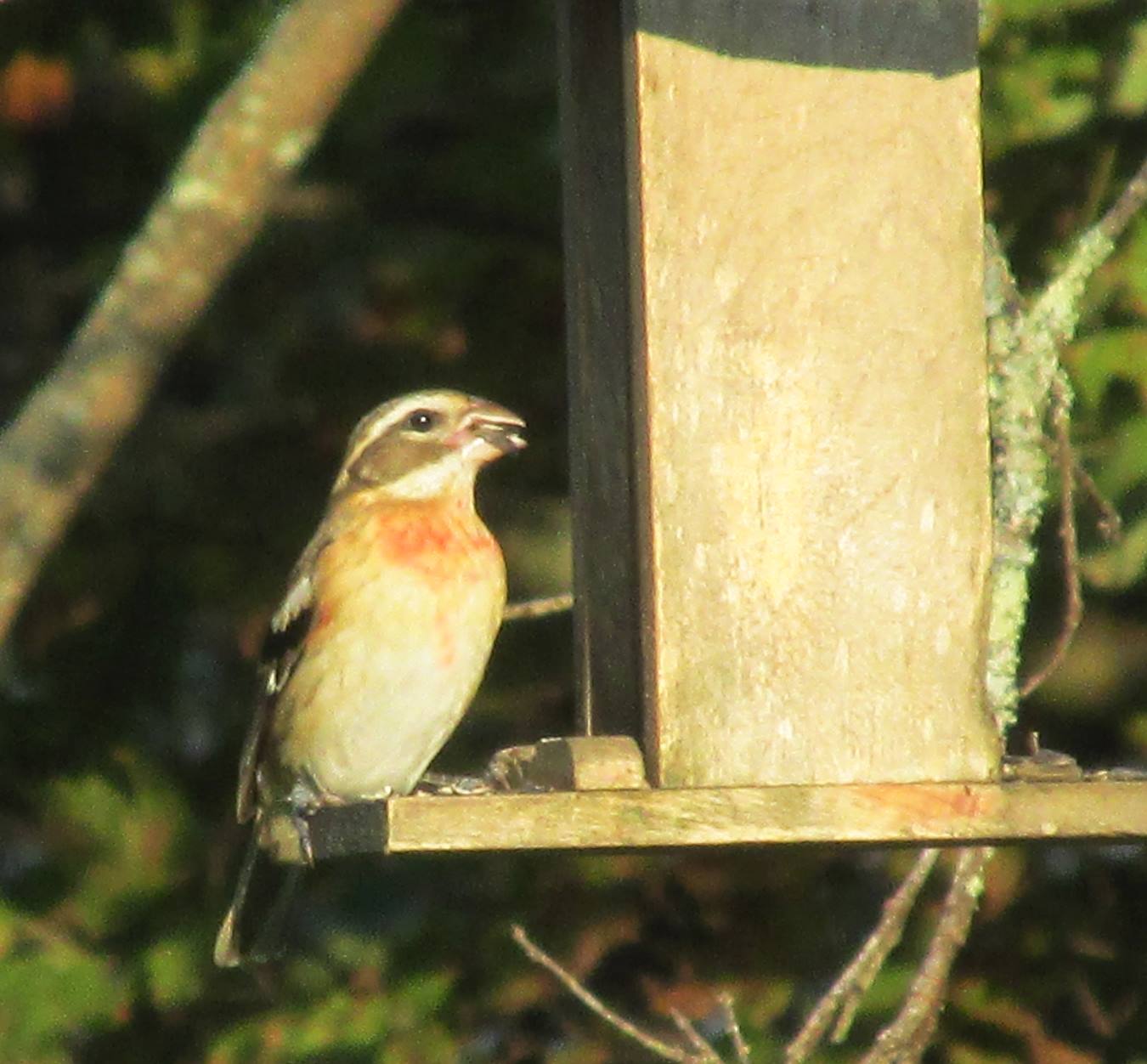
Photo by Bryan Stevens • A young male Rose-breasted Grosbeak visits a feeder in September of 2013. Young males resemble females but show a splash of orange on the breast that will be replaced the following spring by the familiar rosy-red patch.
My favorite season is fall. I’m always excited when birds return in the spring, but I have better luck observing fall migrants.
There’s a trade-off, however. Many birds don’t look their best by the time autumn migration rolls around. Take the male indigo bunting, for instance. This species is the only solid blue bird in the eastern United States, but it’s all an illusion — literally a trick of the light.
The indigo bunting’s feathers are not really blue; the male’s brilliant azure plumage is caused by the process of diffraction of light around the structure of the bird’s feathers. This process scatters all but the blue light, and the resulting color shifts from black to blue to turquoise as the angle of reflected light changes. In bright light, it can even look unnaturally vivid blue. In poor light, however, an indigo bunting male can appear black. Fortunately, indigo buntings have both a characteristic body shape and song, so even if the birds are not seen in their best light, they can still be recognized.
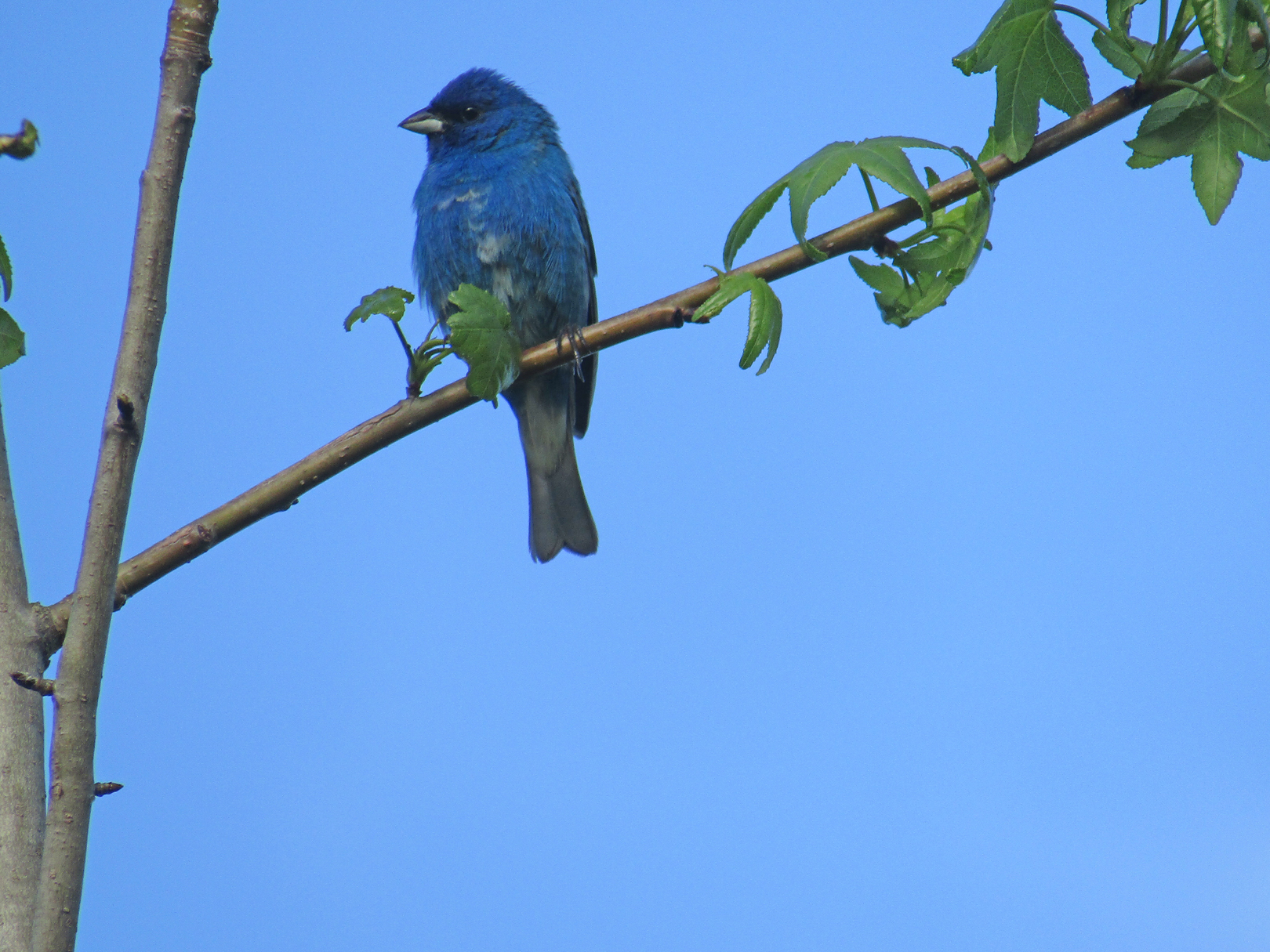
Photo by Bryan Stevens • Male indigo buntings look their best when they arrive each spring. They most over the summer, giving fall males a blotchy plumage of brown with some hints of blue remaining..
For such a bright blue bird, indigo buntings are not easy to detect. When that plumage gets mottled with brown patches in fall, these birds blend even better with their backgrounds.
The indigo bunting belongs to a genus of birds known as Passerina, which is included the family Cardinalidae, which includes birds like Northern cardinal and rose-breasted grosbeak. They are often lumped into a group known as North American buntings, although they are not closely related to such birds as snow bunting and lark bunting. The latter is even recognized as the official state bird for Colorado, a unique honor for this group of birds. The other members of the Passerina genus include lazuli bunting, varied bunting, painted bunting, rose-bellied bunting, orange-breasted bunting and blue grosbeak.
Indigo buntings linger into early October, but they also molt feathers and take on a less showy look in late summer and fall. Even the males can end up looking rather shabby compared to a spring counterpart in electric blue plumage.
The rose-breasted grosbeak, or at least adult males of the species, are birds that can take one’s breath away when observed in spring when the birds first return from their tropical wintering grounds. By fall, however, even adult males have lost some of the crisp black-and-white plumage and the rosy coloration on the breast often fades to dull orange.
In fall, the rose-breasted grosbeak migrates south to a winter range that spans central Mexico, Central America and northern South America. As they depart, many will make stops in yards with feeders to partake of offerings of sunflower seeds. So, if you didn’t get to see these showy birds in the spring, local bird enthusiasts get another chance to see them in this month and into October.
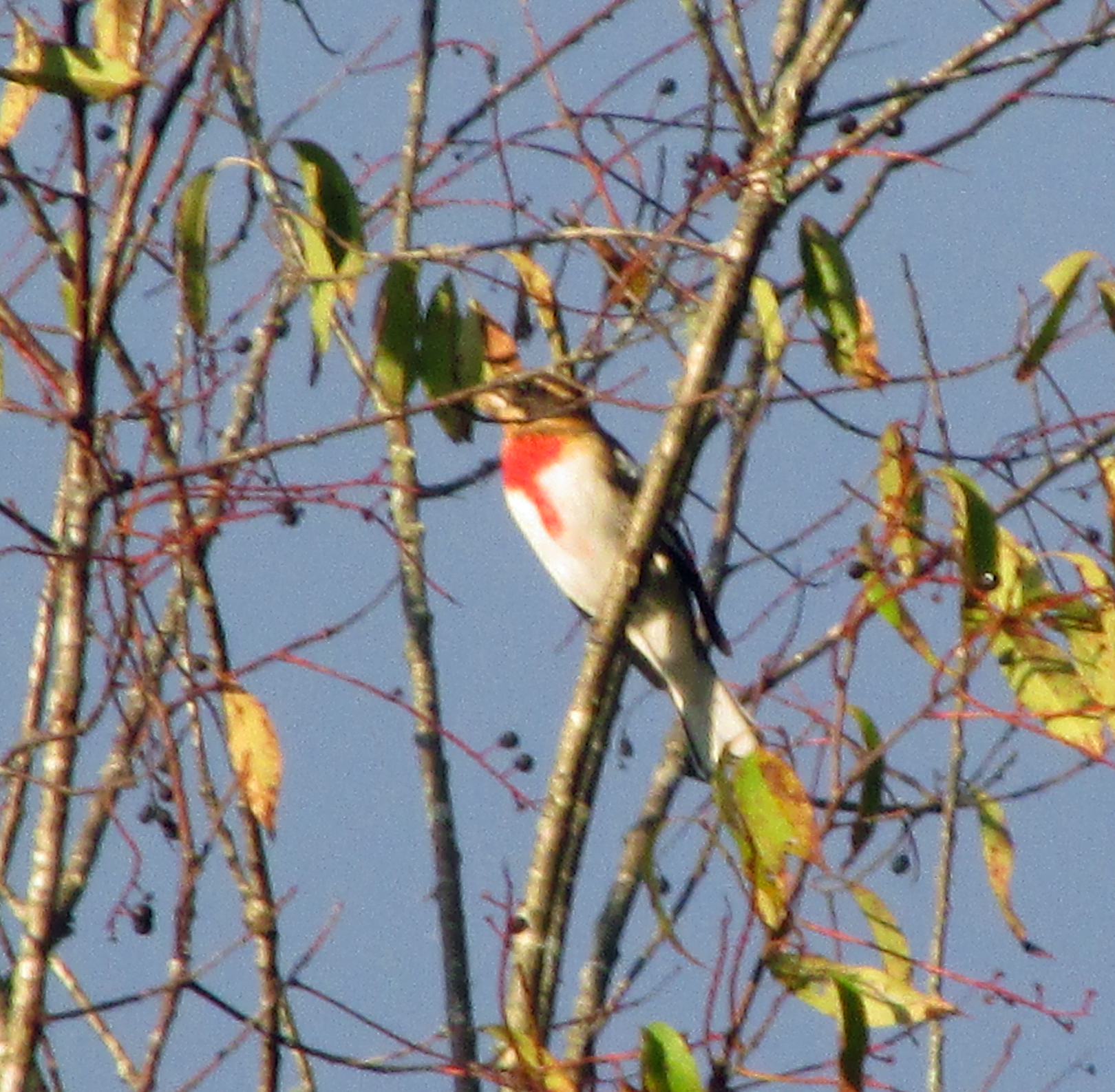
Photo by Bryan Stevens • Some of the Rose-breasted Grosbeaks migrating through this fall still retain some of their rosy color.
The male rose-breasted grosbeak gives this species it name. Males are the epitome of the birds that make their home for part of the year in the American tropics. The contrasting black and white plumage is emphasized by a triangular slash of rosy-red color on the breast. Put all those elements together and the male rose-breasted grosbeak is not a bird that would be mistaken for any other.
The female grosbeak, however, doesn’t stand out in the same way. She is much less colorful than the male. With her brown and white plumage, she is often mistaken for a large sparrow or finch. At this time of year, however, all rose-breasted grosbeaks: Adult males, adult females and young birds born this past summer can look dull. The best way to identify them is by focusing on the beak. That large, sturdy beak gives this species the other part of its name. “Gros” is a German word for big, so the name basically means “big beak.”
A fall appearance at odds with how a bird looks in the spring is also true of the scarlet tanager. The vibrant red and black spring males may look yellow or greenish-yellow once the acquire their fall and winter plumage. It’s not all that surprising. The males no longer have to impress females with their splendid coloration once the nesting season’s concluded.
The warblers, my absolute favorite family of birds, are famous for looking different in the fall. Long ago, someone coined the phrase “confusing fall warblers” since many young birds and even adult birds in fall plumage can look different than spring birds.
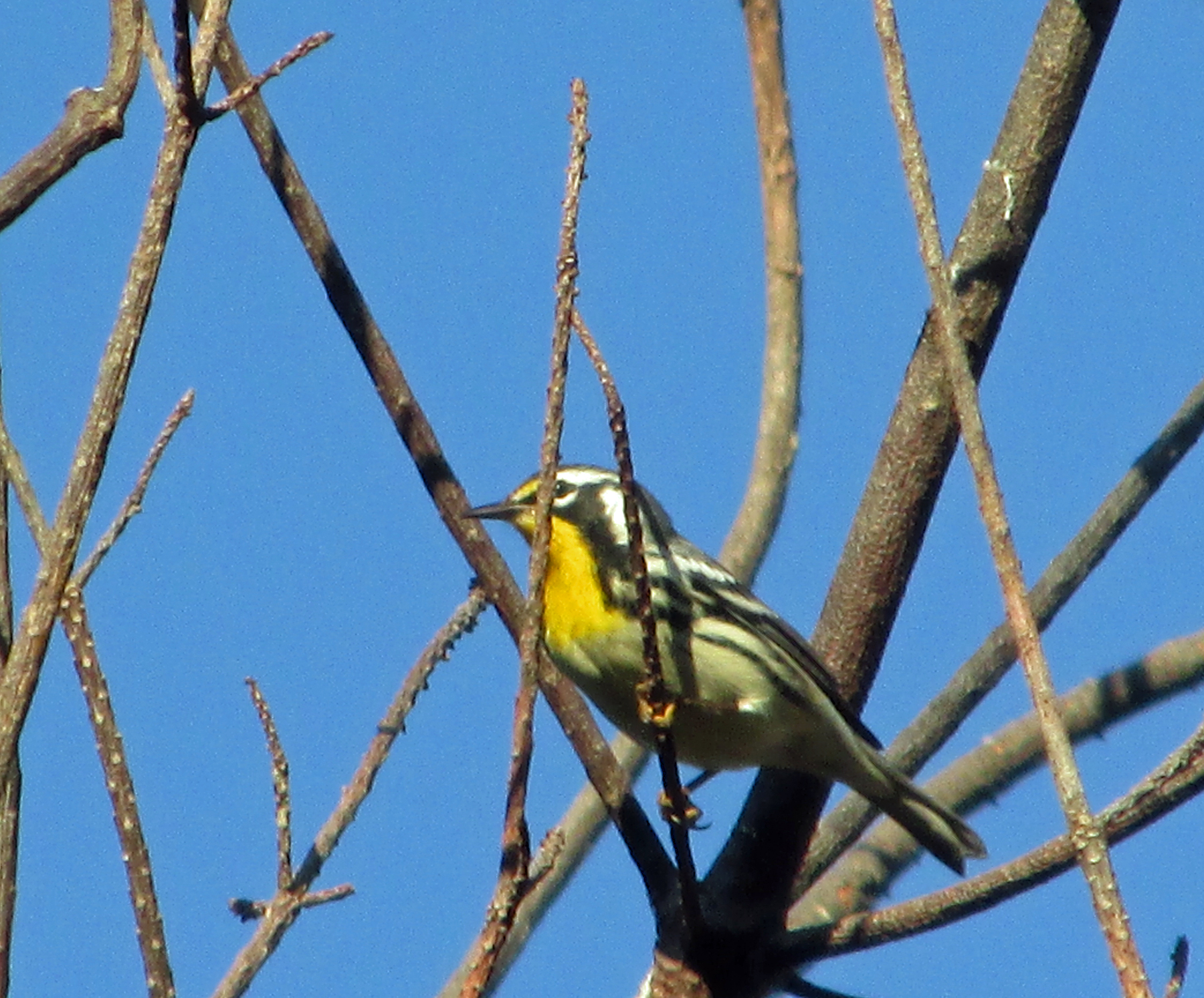
Photo by Bryan Stevens • The appearance of yellow-throated warblers does not change much from spring to autumn.
To identify confusing fall warblers, focus on features that remain consistent in their drabber autumn plumage, such as bill shape, leg color, tail patterns, wing bars and subtle facial markings. Learning the foraging behaviors of the various species can also be helpful.
Some of the warblers that look much different in fall includes species like magnolia warbler, Tennessee warbler, chestnut-sided warbler and Cape May warbler. Other species, such as hooded warbler, ovenbird and Northern waterthrush don’t change all that much with the seasons.
•••
Bryan Stevens is the managing editor of The Erwin Record. He has written about birds, birders and birding since 1995. To ask a question, make a comment or share a sighting, email him at ahoodedwarbler@aol.com.
 Our Fine Feathered Friends