

Bryan Stevens • A female Northern cardinal visits a hanging platform feeder for a winter meal of sunflower seeds.
I’ve enjoyed a decent amount of activity in my yard this fall, enjoying visits from ruby-throated hummingbirds and American goldfinches as well as brown thrashers and gray catbirds. I’ve also glimpsed a few warblers. As much as I enjoy fall, crowding into my awareness is the fact that cold weather will soon be with us again.
Even that fact, however, is not totally unwelcome. Winter’s a fine season for peering through the windows at the birds that flock to feeders. So, with the winter season looming just around the corner, now might be a good time to take some steps to make your yard and feeders more attractive and welcoming to our feathered friends.
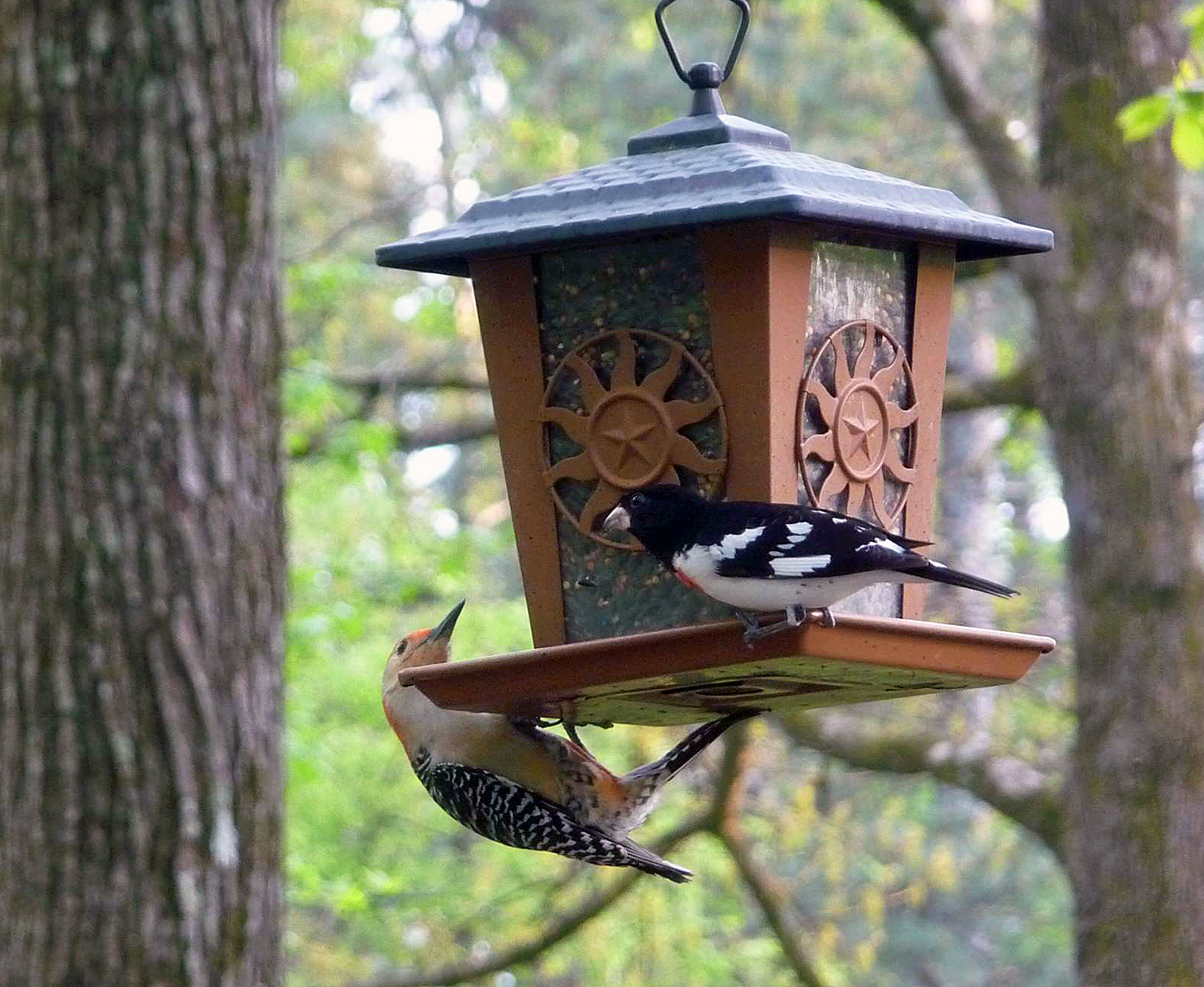
Photo Courtesy of Byron Tucker
A Rose-breasted Grosbeak joins a Red-bellied Woodpecker at a feeder in Atlanta.
Seeing all the activity in my yard during fall migration made me want to ensure that it remains attractive for those birds that choose to eke out a living during the colder months of the year in our region.
Here are a few suggestions of things to do this fall to make your winter bird feeding more productive. It’s better to do these outdoor chores now before winter truly put a nip in the air.
• Plant native trees that bear fruit. Autumn’s a recommended planting time for many trees, so consider checking with a local nursery about the selection of such native trees as American holly, serviceberry and red mulberry. It’s always good to select trees that provide fruit at different seasons to maximize the appeal of your plantings to birds. A flock of American robins or cedar waxwings, or even a pair of Northern mockingbirds, can quickly strip berries from a holly tree when conditions turn snowy and icy.
• Build or refurbish a brush pile. Fall’s a season for pruning, so take those discarded limbs and twigs to construct a protective shelter for songbirds. Shy birds that naturally avoid open spaces can be coaxed closer to feeders by having access to a tangle of sticks and brush. A brush pile offers a degree of protection should songbirds at your feeder need to find a quick hiding place when a hawk or other predator makes an unexpected appearance.
• Evaluate feeders. The winter season brings snow, ice and a flurry of renewed interest in bird feeders, so now is the time to clean and replace feeders. The elements are not always kind on feeders, so when it becomes apparent that a feeder is in poor condition, consider replacing it with a new one. It’s also important to give feeders a thorough cleaning. Using a mild bleach solution will help disinfect them and make feeding from them safe for our feathered friends. Just be sure to rinse throughly and then dry the feeder before hanging it back out.
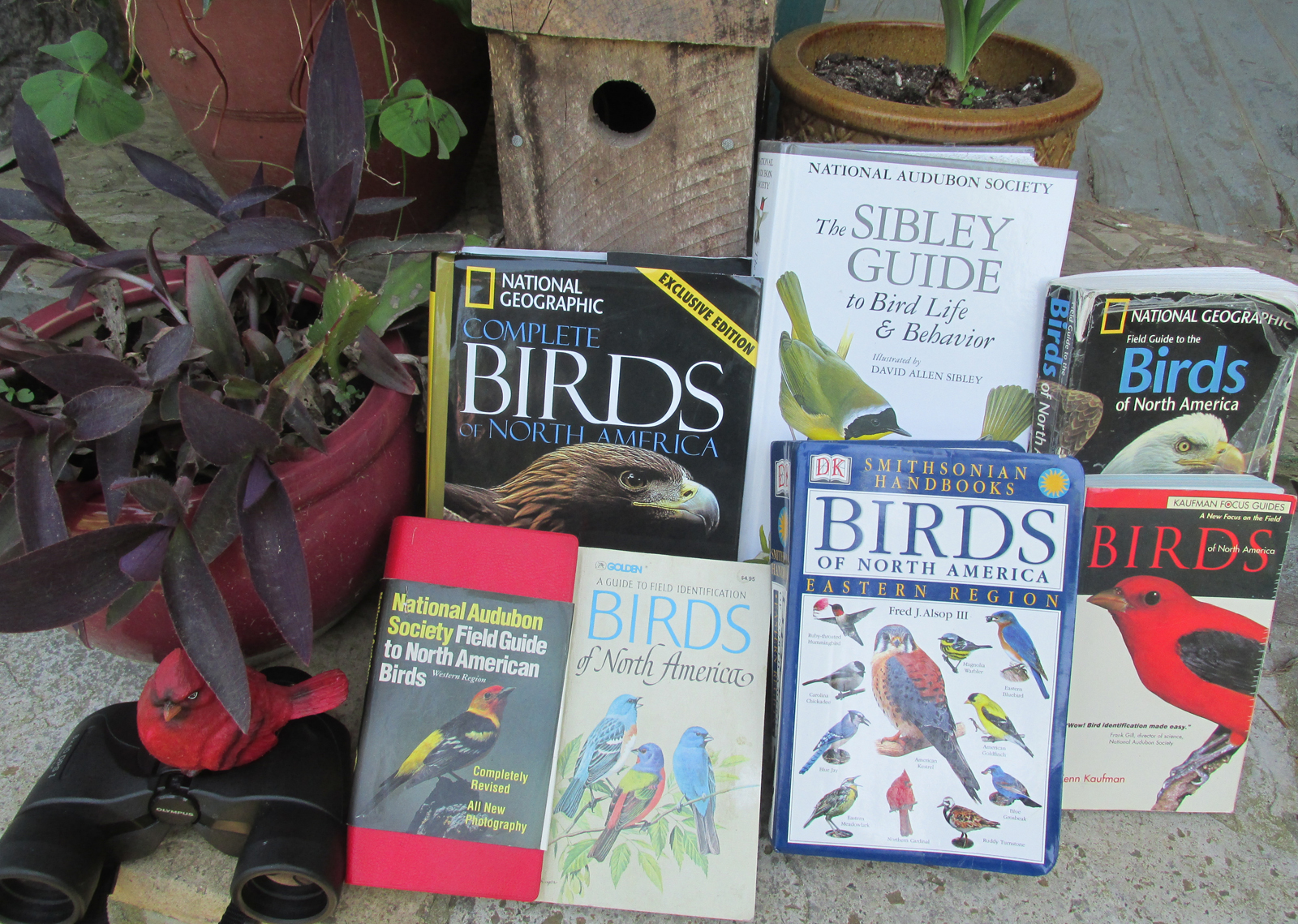
Photo by Bryan Stevens • Field guides are an essential tool for bird identification.
• Take some steps to increase your enjoyment of the birds coming to your feeders. Invest in a good bird identification guide or app. I am a fan of a good field guide that I can hold in my hands while thumbing through the pages, but I know that many people prefer the convenience of an app that’s accessible through their smartphone. Some popular apps would include the Audubon Bird Guide, eBird and Merlin Bird ID. Some of my recommended field guides include Peterson Field Guide to Birds of North America and The Sibley Field Guide to Birds of Eastern North America. Identifying birds congregated in the winter at a feeder is often easier than trying to track them through the green canopy during the other seasons. Of course, you’ll want to be aware that some birds wear different plumages during the winter months. The guides and apps can help with these identification challenges.
• Upgrade your optics. Place a pair of binoculars on your Christmas list. Bring the birds closer to you with a reliable pair of binoculars. It will make all the difference.
• Don’t take down the sugar water feeders just yet. Although ruby-throated hummingbirds almost all depart in early October, other species of hummingbirds normally found in the western United States have reliably made appearances in the region in October, November and other winter months. Through the years, I have seen several of these seemingly out-of-place hummingbirds. Some of them remain at their host’s feeders for a brief stay of a few days or a couple of weeks, but some of these hummingbirds have extended their stay for several months, lingering throughout the winter months before eventually departing in February or March. The big question concerns whether these hummingbirds are truly lost and out of place. The answer, based on everything I have managed to learn, is that these hummingbirds are precisely where they want to be. For still unknown reasons, some of these western hummingbirds make a migration swing through the eastern United States. One thing is certain: You won’t see one of these “strays” unless you keep out a feeder with fresh sugar water. It’s not that difficult. After all, the ants and wasps that made a nuisance of themselves during warmer temperatures are no longer active. If it gets too cold, you can always move your feeders inside at night and put back outdoors at daylight. If you do happen to attract a winter hummingbird, please let me know. I love helping to document these rare visitors.
•••
Bryan Stevens has written about birds, birders and birding since 1995. Share sightings, ask questions or make a comment by emailing him at ahoodedwarbler@aol.com.
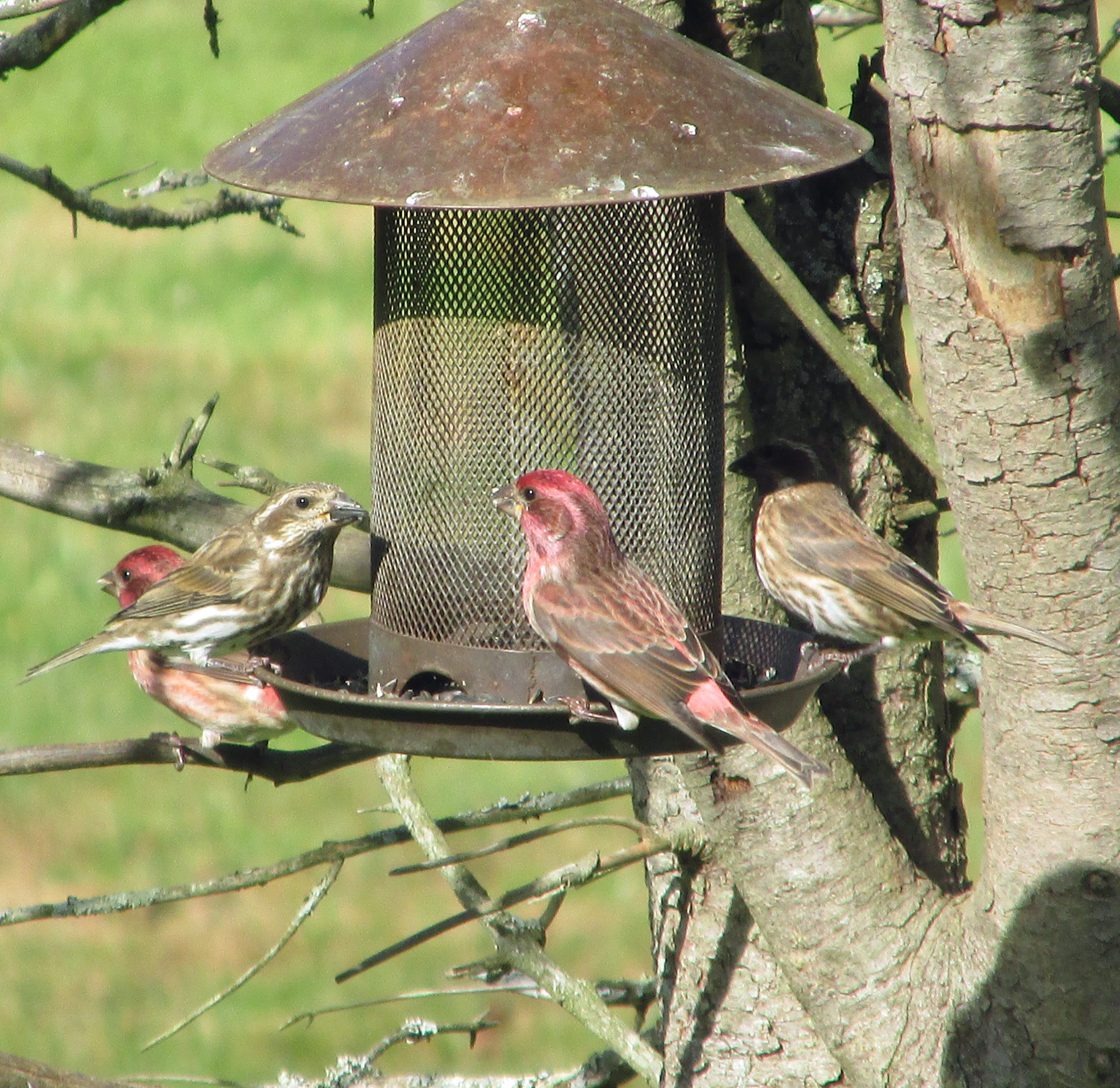
Photo by Bryan Stevens • Male and female purple finches share space at a feeder.
 Our Fine Feathered Friends