
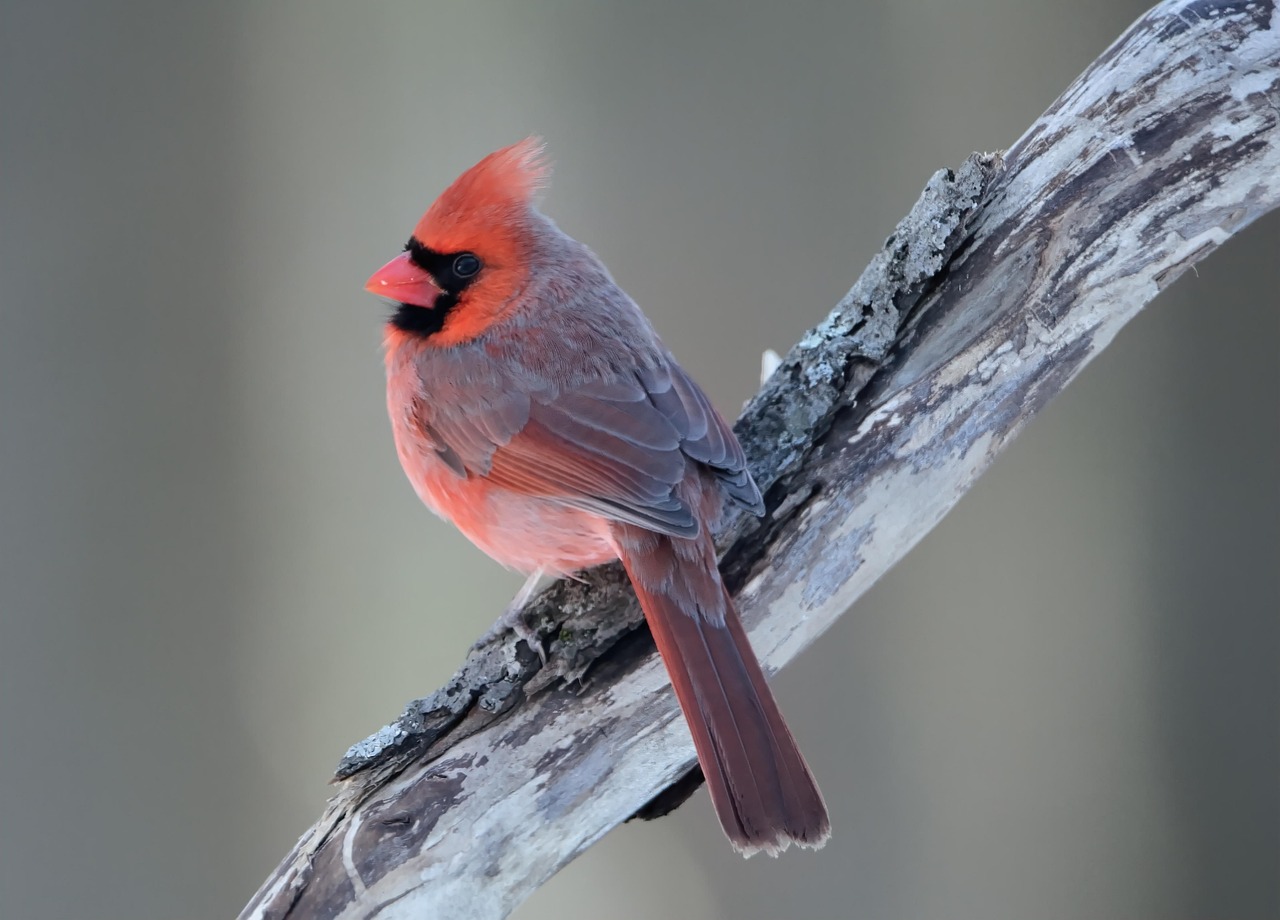
Photo by Nature Lady/Pixabay • A male Northern cardinal is always a welcome splash of brightness on wintry days.
Christmas Eve is upon us. I hope the hustle and bustle has died down and everyone can take delight in an enjoyable holiday. My own sincere wish to readers is that everyone gets to celebrate a great holiday that just might also include an interlude for watching some birds.
Often, when we think of winter birds, our thoughts focus on some of the less-than-colorful feeder visitors — the brown sparrows and wrens, the black and white chickadees, the drab American goldfinches that look so unlike their summer appearance.
There’s one bird, however, that makes an impression in any season. The Northern cardinal, especially the brilliant red male, stands out against a winter backdrop of snow white, deep green or drab gray.
Over the years, the Northern cardinal has also become associated with the Christmas season. How many Christmas cards have you received this holiday season with a cardinal featured in the artwork? I’d wager that at least a few cards in any assortment of holiday greetings will feature the likeness of a bright red cardinal.
Cardinals, also known by such common names as redbird and Virginia nightingale, are easily recognized backyard birds. I never tire of observing these colorful birds. Cardinals are easily lured to any backyard with plentiful cover to provide a sense of security and a generous buffet of sunflower seed.
Cardinals accept a wide variety of food at feeders. Sunflower seed is probably their favorite, but they will also sample cracked corn, peanuts, millet, bakery scraps and even suet. The cardinal is also one of only a few birds that I have noticed will consistently feed on safflower seed.
While we may get the idea that cardinals feed largely on seed, that is a misconception based on our observation of the birds at our feeders. When away from our feeders, cardinals feed on insects and fruit, including the berries of mulberry, holly, pokeberry, elderberry, Russian olive, dogwood and sumac.

Kevin Tipton/Pixabay • Female cardinals, more subdued than males, are still a sure means of providing some joy when glimpsed in wintry settings.
There’s no difficulty in identifying a cardinal. The male boasts crimson plumage, a crest, a black face and an orange bill. The female, although less colorful, is also crested. Female cardinals are soft brown in color, with varying degrees of a reddish tinge in their feathers, particularly in their wings. Immature cardinals resemble females except young cardinals have dark bills.
Cardinals are a widespread species, ranging westward to the Dakotas and south to the Gulf Coast and Texas. The southeastern United States was once the stronghold of the cardinal population. In the past century, however, cardinals have expanded their range into New England and Canada. These birds have even been introduced to Hawaii.
At feeders, cardinals mingle with a variety of other birds. Their preference for dense, tangled habitat is one they share with such birds as brown thrashers, Eastern towhees, Carolina wrens and song sparrows. In general, however, cardinals directly associate only with their own kind. Cardinals will form loose flocks during the winter, but these flocks are never as cohesive as those of such flocking birds as American goldfinches. Cardinals are more often observed in pairs. For such a bright bird, the male cardinal can be surprisingly difficult to detect as he hides in thick brush that conceals his presence. Cardinals are nervous birds, however, and usually betray their presence with easily recognized chip notes.
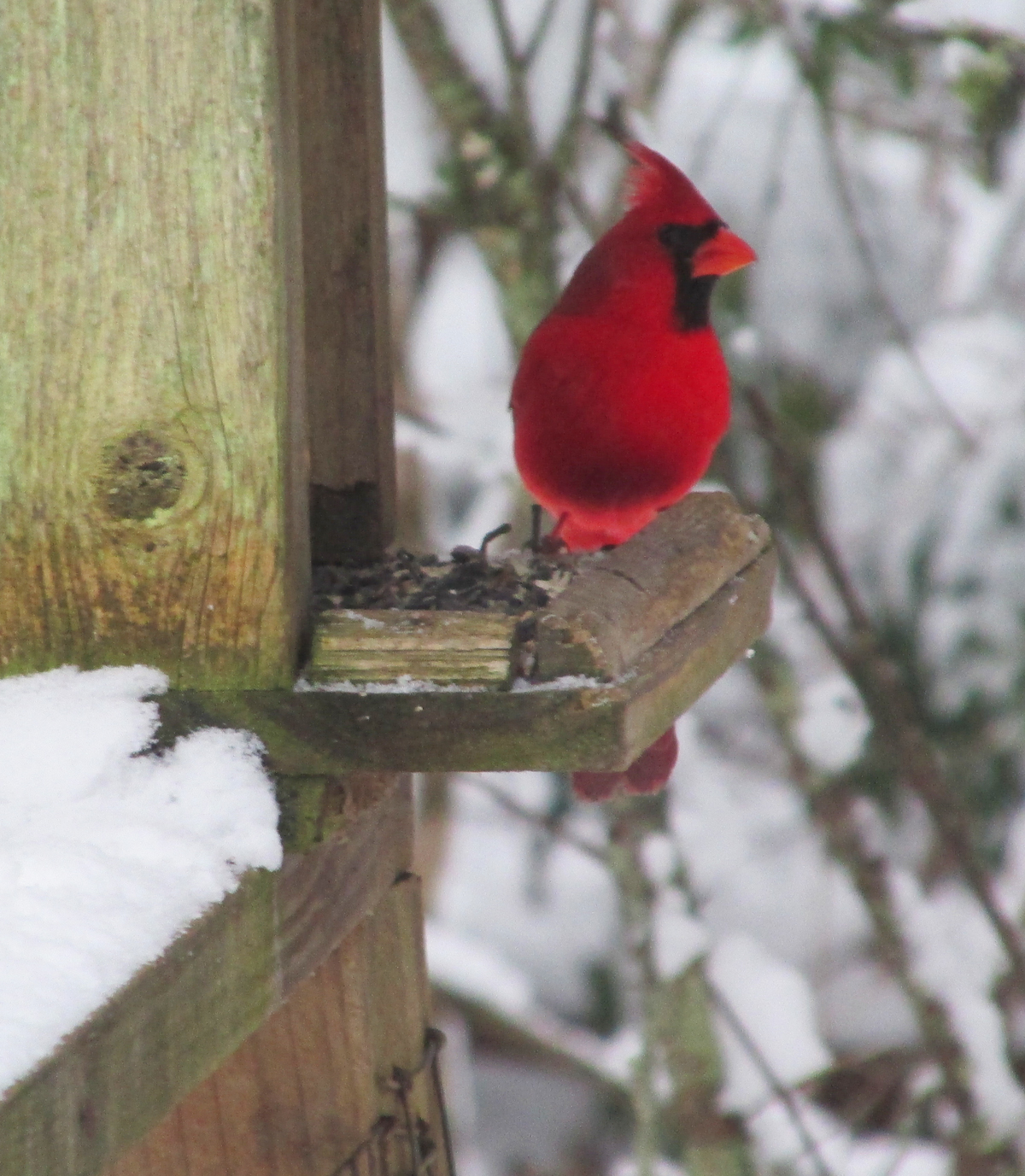
Photo by Bryan Stevens • A male Northern cardinal visits a feeder on a snowy afternoon.
It’s not surprising that such a popular bird has also become associated with many trappings of the Christmas season.
“You see cardinals on greeting cards, stationery, paper plates, paper napkins and tablecloths, doormats, light switch plates, candles, candle holders, coffee mugs, plates, glasses, Christmas tree ornaments and lights, bookmarks, mailboxes, Christmas jewelry,” writes June Osborne in her book “The Cardinal.”
Osborne asserts that cardinals have become an integral part of the way that many people celebrate the holiday season. I can be included among such people. My Christmas decorations include an assortment of cardinal figurines and ornaments. There are other birds — doves and penguins for example — associated with the holiday season, but for me the holidays magnify the importance of one of my favorite birds. The cardinal, in its festive red plumage, appears made to order for a symbol of the holiday season.
There’s additional evidence to put forward as testimony to the popularity of the Northern cardinal. It’s the official state bird of seven states: Virginia, North Carolina, West Virginia, Ohio, Illinois, Indiana and Kentucky. Only the Northern mockingbird, which represents five states as official state bird, even comes close to the Northern cardinal in this respect.
Even once the holidays are past, there’s nothing like a glimpse of a Northern cardinal to add some cheer to a bleak winter day.
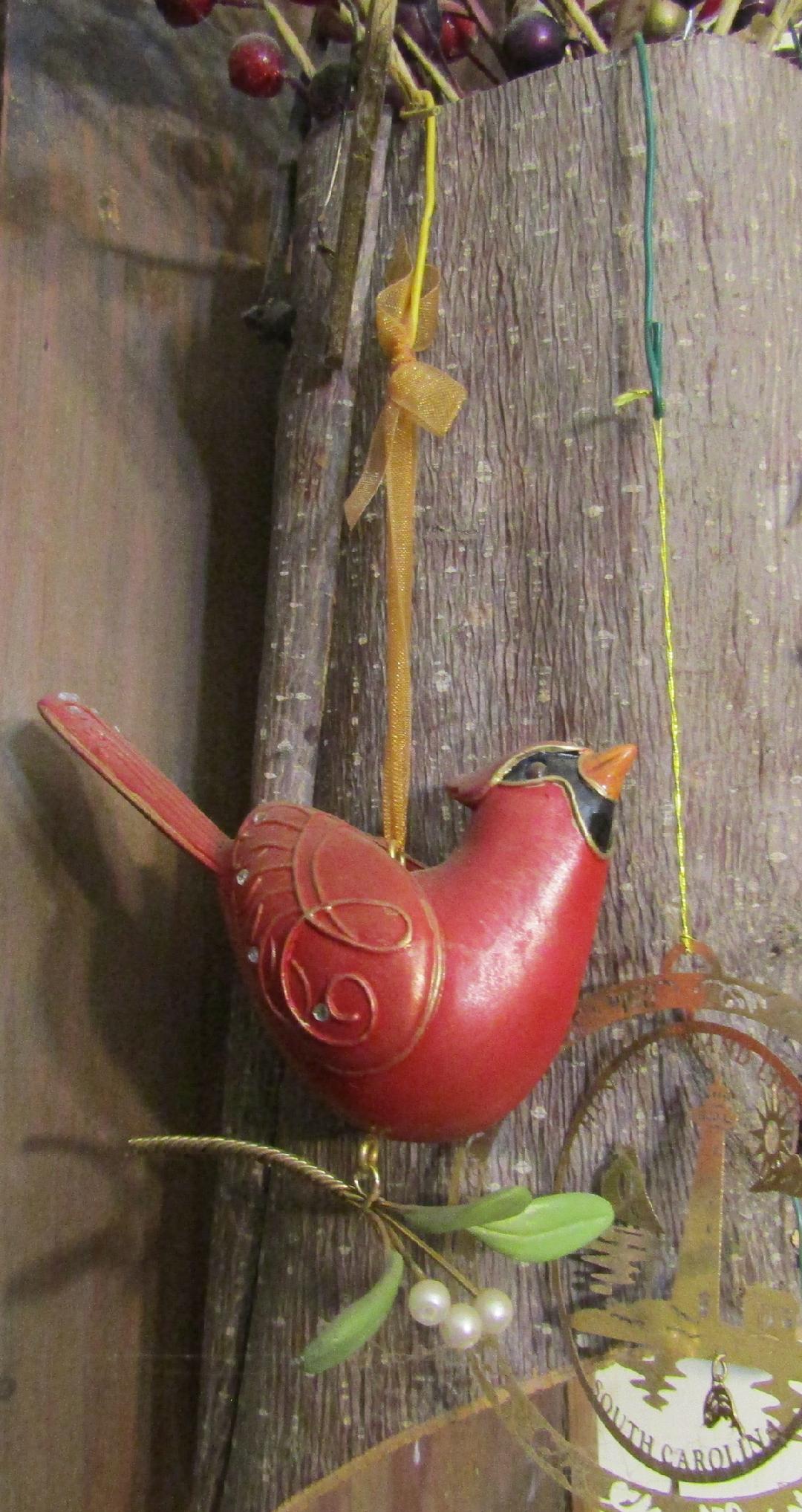
Photo by Bryan Stevens • Northern cardinals are a favorite for makers of Christmas ornaments.
 Our Fine Feathered Friends
I heard chip notes yesterday as I was enjoying time in my backyard with Yorkie. It took awhile for me to discover who and where it was. Then I saw a female cardinal hopping from my fence into the thick leaves of a small tree on the other side. I don’t know what type of tree it is but it produces red berries in the spring and it is currently confused producing new tender leaves. Although we have had a steady flow of sea fog for weeks it has remained delightful on the warm side. I did not hear or see the male yet.
And you are correct that holiday cards often come with Cardinals!! Is your ornament hanging outside on your fence?
LikeLike