
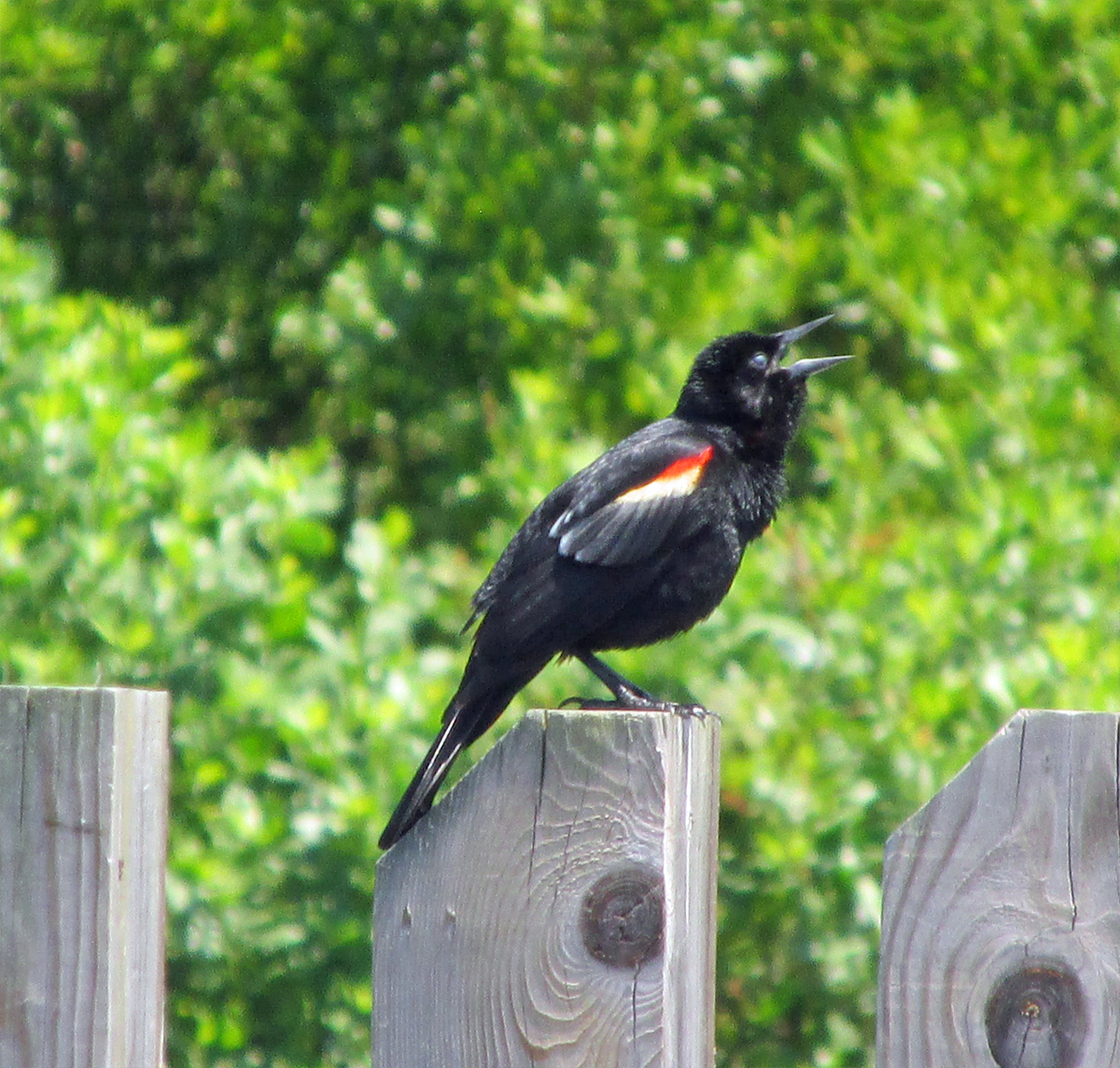
Photo by Bryan Stevens • A male red-winged blackbird sings to attract mates and ward off rivals.
When the red-winged blackbirds put in their first appearance this year, they picked a really bad day to make their return.
I heard the instantly recognizable “konk-ka-ree” vocalization as I walked from the house to my car on the morning of Feb. 22. It didn’t take long to spot the birds making the sound: four male red-winged blackbirds perched atop a cypress tree at the fish pond. The temperature hovered around 21 degrees, snow covered the ground, and a brisk breeze made everything feel even colder.
Despite the miserable weather, I gladly welcomed back the red-winged blackbirds. I imagine that the day improved for the birds as temperatures gradually rose. By the time I got home, the snow that had fallen the previous night had almost melted, but the blackbirds had departed.
Spring is getting closer. The red-winged blackbirds are proof, one that I’m greedily grasping as I continue wishing for warmer weather and more spring arrivals among our feathered friends. Everyone thinks the first American robin is the herald of spring. I’ve always depended on red-winged blackbirds as spring harbingers.
After posting about my sighting of the blackbirds on Facebook, Erwin resident Amy Tipton commented on my post.
“We spotted some in our backyard over the weekend and then again today,” she wrote. “A very welcome sight!”
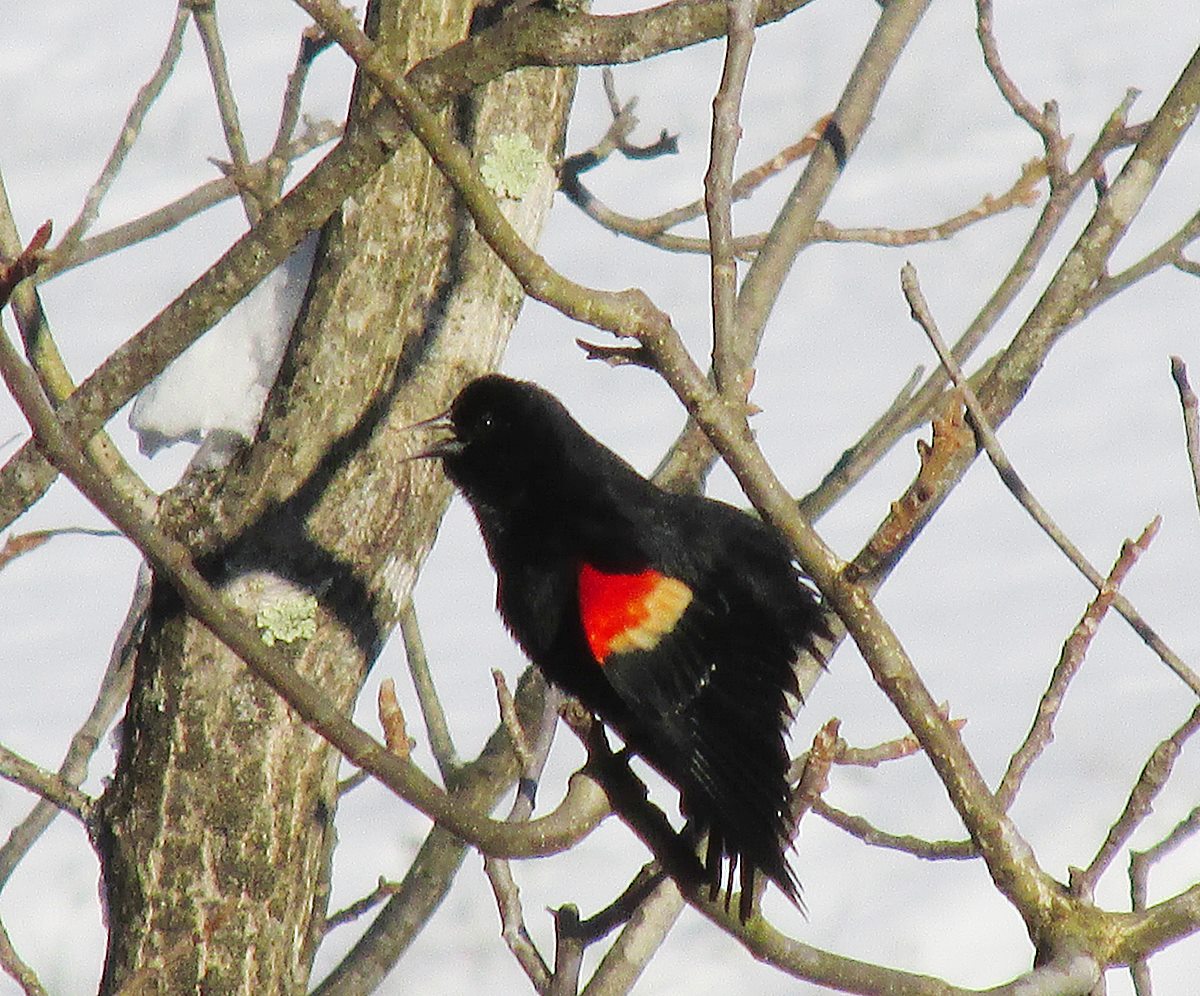
Bryan Stevens • The male red-winged blackbird has an apt common name.
I’ve long associated red-winged blackbirds as a sign indicating progress toward spring. The visitors I saw recently are probably the vanguard of large numbers of red-winged blackbirds that return in impressive numbers every March.
The showy and loud red-winged blackbirds make themselves at home at my fish pond and adjacent stands of cattails, producing quite a commotion. “The kon-ke-ree song of the male red-winged blackbird is a sure indication that spring is on the way,” according to a profile of the species located at the Tennessee Watchable Wildlife website. At this time of year, the male red-winged blackbirds seek elevated perches to display and vocalize.
Red-winged blackbirds are tied to the rhythms of wetlands. In these environments, they are common birds. In Northeast Tennessee, any stands of cattails in a marshy area is likely to attract at least a few members of this species.
The male red-winged blackbird is a very aptly named. Glossy black males sport red wing patches that are often trimmed with a narrow band of yellow feathers. By contrast, female red-winged blackbirds are mostly brown birds that could easily be mistaken for large sparrows. Both sexes have sharply pointed bills.
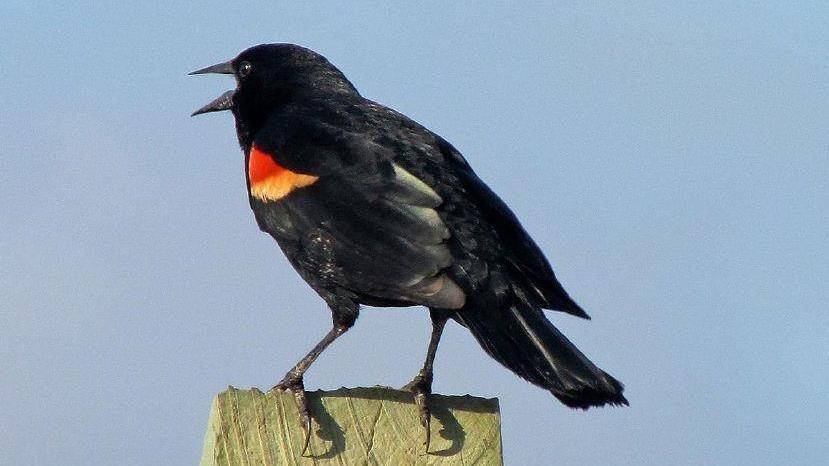
Bryan Stevens • A male red-winged blackbird sings from a post.
At my home, red-winged blackbirds are fond of visiting my feeders. They will feast on sunflower, suet cakes, or both when they’re available.
These active, noisy birds apparently love company. Red-winged blackbirds roost in flocks throughout the year, according to the website All About Birds. The website also noted that winter flocks can be especially impressive, consisting of congregations of several million birds, including other blackbird species and starlings.
All About Birds also noted that the oldest red-winged blackbird on record lived to be at least 15 years and nine months old. The bird, originally banded in New Jersey in 1967, was found alive, but injured in 1983. The good news? The bird recovered from its injuries and, in all likelihood, continued to live in U.S. wetlands, adding some more longevity to its lengthy lifespan.
•••
Bryan Stevens has written about birds, birding and birders since 1995. Email him at ahoodedwarbler@aol.com to share a sighting, ask a question or make a comment.
 Our Fine Feathered Friends