Monthly Archives: March 2026

Treetop Treasures: Five warblers to seek this spring

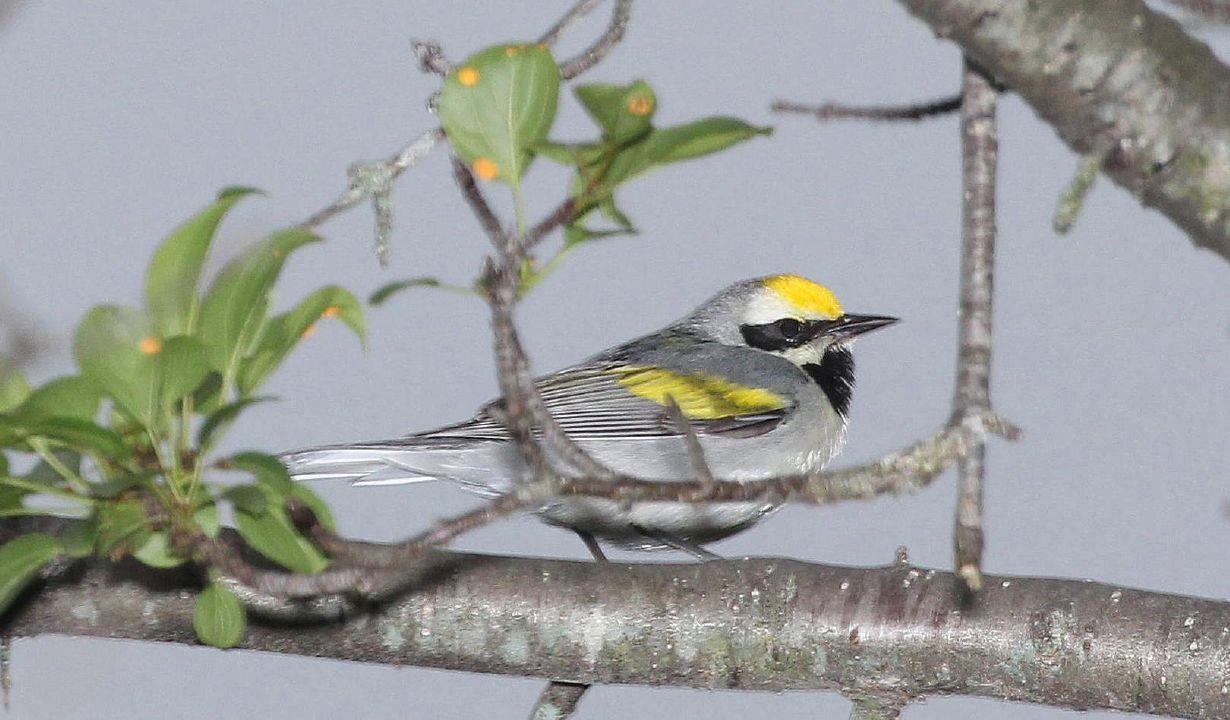
Alan Schmierer/USFWS • The golden-winged warbler is listed as a species In Need of Management in Tennessee due to significant population declines.

I’ve not glimpsed my first hummingbird of spring. I’ve not even heard that telltale buzz from a rapidly beating pair of wings that signals the arrival of one of our most annually anticipated birds.

Of course, hummingbirds are not the only returning birds that I await with eagerness. In fact, my favorite family of birds consists of about 45 species of warbler reliably found in the eastern United States. The warblers, from my perspective, are in a class of their own compared to other birds. Here’s a list of warblers that I fully hope to see in the coming weeks.
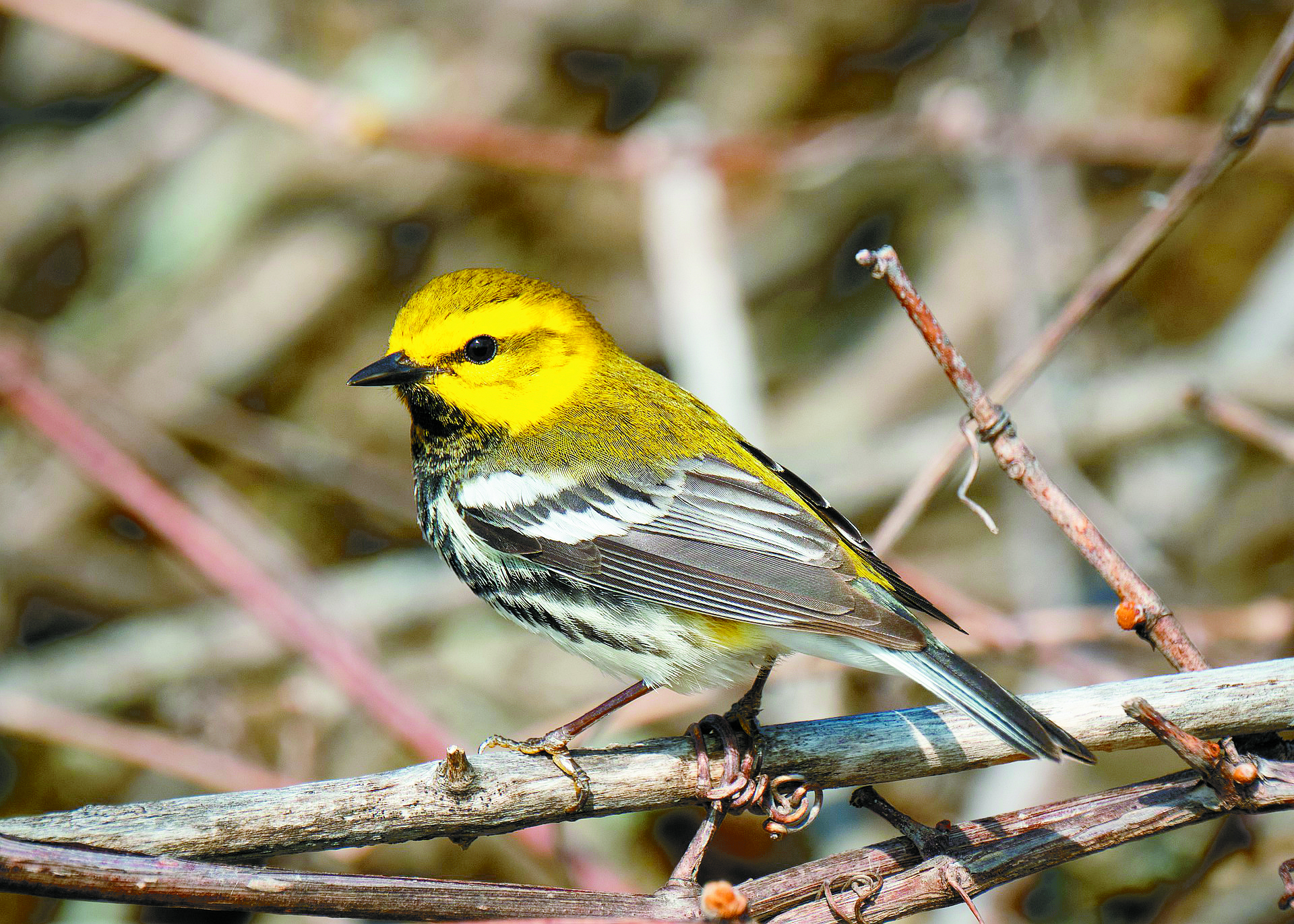
Photo by Howard Walsh/Pixabay • The black-throated green warbler nests in local mountains in coniferous and mixed woodlands during the summer months. Once the nesting season concludes, these warblers wing their way back to wintering grounds in Mexico and Central America, as well as the West Indies and southern Florida.

Black-throated green warbler: Males of this species have a bright yellow face with olive-green cheeks, crown and back. Only adult males have the namesake solid black throat. These warblers like the treetops where males repetitively sing a breezy, buzzy song that sounds sort of like “zoo-zee-zoo-zoo-zee.”

Photo by Jean Potter • A male hooded warbler flits through the foliage of a rhododendron thicket.

Hooded warbler: Find this shy warbler close to the ground. The species is a specialist of the understory. In Southern Appalachia, they’re quite at home in rhododendron thickets. The markings of males consist of a lemon-yellow face and underparts framed by a jet-black hood and throat. Females are mostly olive-green above with yellow underparts. Most females lack a hood, but some older individuals show a faint or incomplete black hood. Males sing a loud, ringing series of musical notes that are often described as “weeta-weeta-wee-TEE-o.” A fun mnemonic translation of the song has the male hooded warbler singing “I want to rent a video.”

Black-and-white Warbler: This aptly named warbler’s plumage consists of only black and white feathers. Females are less vibrant than males but are still striking birds in a black-and-white ensemble. An early arrival, this bird returns to the southern United States by late March. In behavior, they are more like nuthatches or creepers, sticking close to the trunks and branches of trees as they forage in crevices for insect prey. Male black-and-whites produce a “squeaky wheel” song that sounds like “weesee-weesee-weesee.”

Photo by Diana Lynn Tucker • A worm-eating warbler perches on the edge of a flower pot.

Worm-eating warbler: This species is not named for its appearance. Being saddled with the phrase “worm-eating” is also not entirely accurate. While fond of caterpillars, they do not consume earthworms. Its diet also consists of a range of small insects and spiders. Males and females are similar in appearance, blending in well with an “earth-tone” plumage of olive-brown with a warm buffy wash on their underside. Four bold black stripes border a buffy face. This warbler has a sharp bill that is longer than the bills of most other warblers. Don’t listen for any semblance of a musical song from this bird. Males produce a distinctive dry trill that could easily be mistaken for a sound produced by an insect.

Golden-winged warbler: This is not a species I expect to see at home, but I did once see one during fall migration. The male golden-winged warbler features a distinctive black throat and eye patch, a bright yellow crown and prominent yellow patches on its silvery-gray wings. The female is a “washed out” version of the male. Males produce a “bee-buzz-buzz-buzz” song that is often helpful in locating this bird in its favored successional habitats of shrubby fields and regenerating woodlands. Because such habitats are fleeting, this warbler can be rather sporadic in distribution. Although its population has drastically declined, the species is not officially listed as endangered on a federal level, although many states have designated it such. One hates to think pessimistically in terms of birds, but this might be a species that you should seek out while it is still present in Northeast Tennessee.
•••
As I have in years past, I await notices from readers to let me know about their first hummingbird sightings of spring. Share a sighting, or ask a question or make a comment, by emailing me a ahoodedwarbler@aol.com. I’m also on Facebook at http://www.facebook.com/ahoodedwarbler.
Start getting ready to welcome returning hummingbirds

Photo by Bryan Stevens • Despite a perceived disadvantage of size, ruby-throated hummingbirds are quite capable of thriving in a giant world.

It’s late March and some of the early arrivals among our feathered friends are already back. As the calendar turns the page from March to April, a steady stream of spring arrivals will kick off with the return of birds like rose-breasted grosbeak, indigo bunting, Baltimore oriole, wood thrush and a dazzling array of warblers.

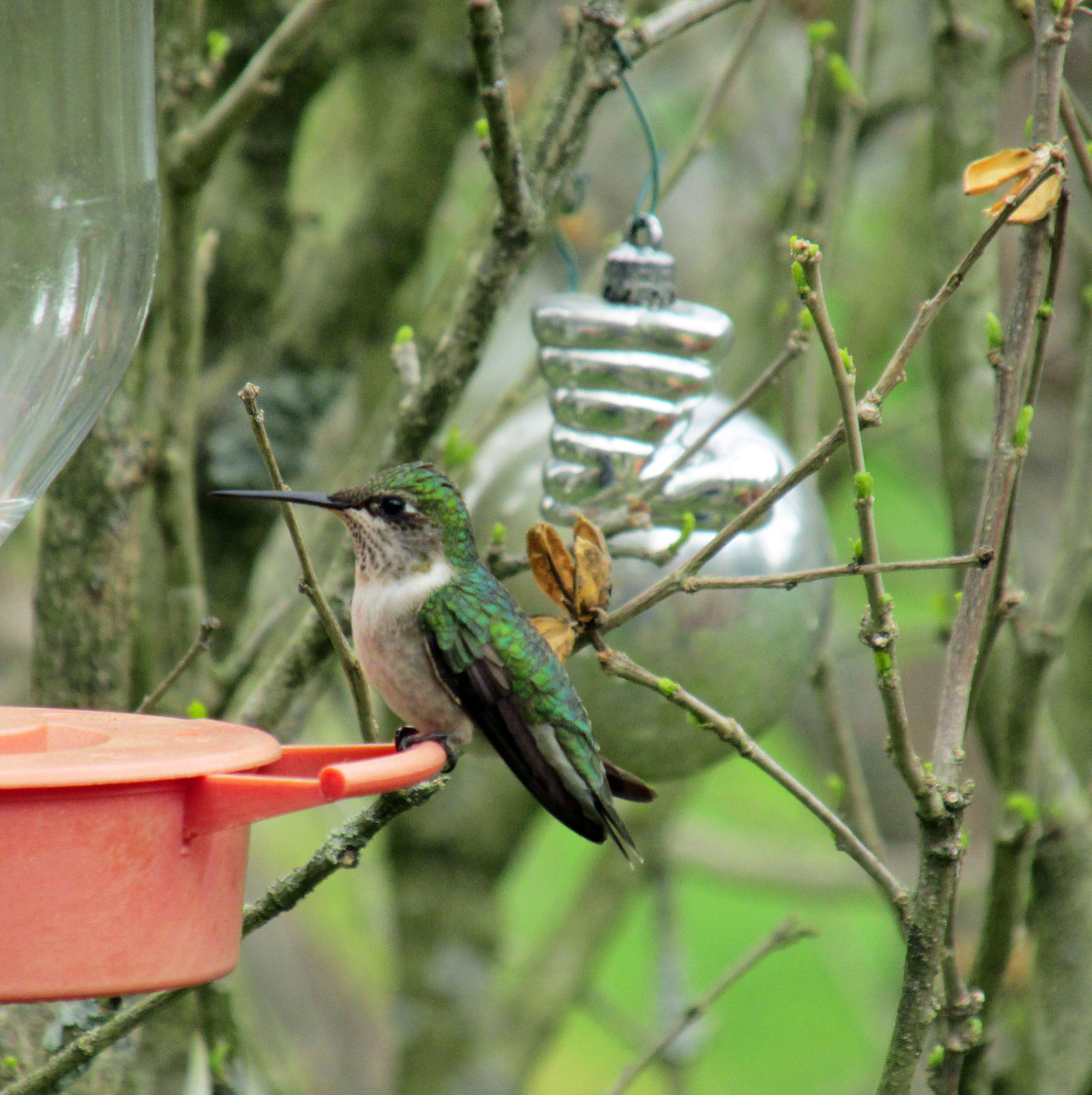
The most anticipated returning bird for many people is the ruby-throated hummingbirds. These tiny, feisty bundles of sparkling green feathers are sorely missed from after their departure in October to their return to Northeast Tennessee in early April.

These tiny flying gems are back in the continental United States. Their migration requires an annual spring crossing of the Gulf of Mexico. Once they arrive along the coasts of Gulf states, they need a bit of time to recuperate before resuming their relentless migration northward.

Photo by Bryan Stevens • A male ruby-throated hummingbird perches at a feeder for a sip of sugar water.

Journey North, a website and project that tracks the yearly advance of ruby-throated hummingbirds as well as other birds, monarch butterflies and other migrants, received reports of ruby-throated hummingbirds in Louisiana as early as March 1.

People in Florida have also been seeing them in early March, but because some ruby-throated hummingbirds may winter in Florida, telling the overwinterers from the true migrants is difficult.

As of March 16, the northernmost report of a ruby-throated hummingbird came from Conyers, Georgia. A woman reported her sighting to Journey North on March 15.

I anticipate this season’s ruby-throated hummingbird migration will bring the first individuals to Northeast Tennessee, Southwest Virginia and Western North Carolina in early April if not late March. It’s even possible there will be some Easter arrivals of hummingbirds in the region with this religious holiday falling on April 5 this year.

Most first spring observations of hummingbirds are males, although a few females are also early arrivals. Male hummingbirds arrive first so they can find and defend a territory.

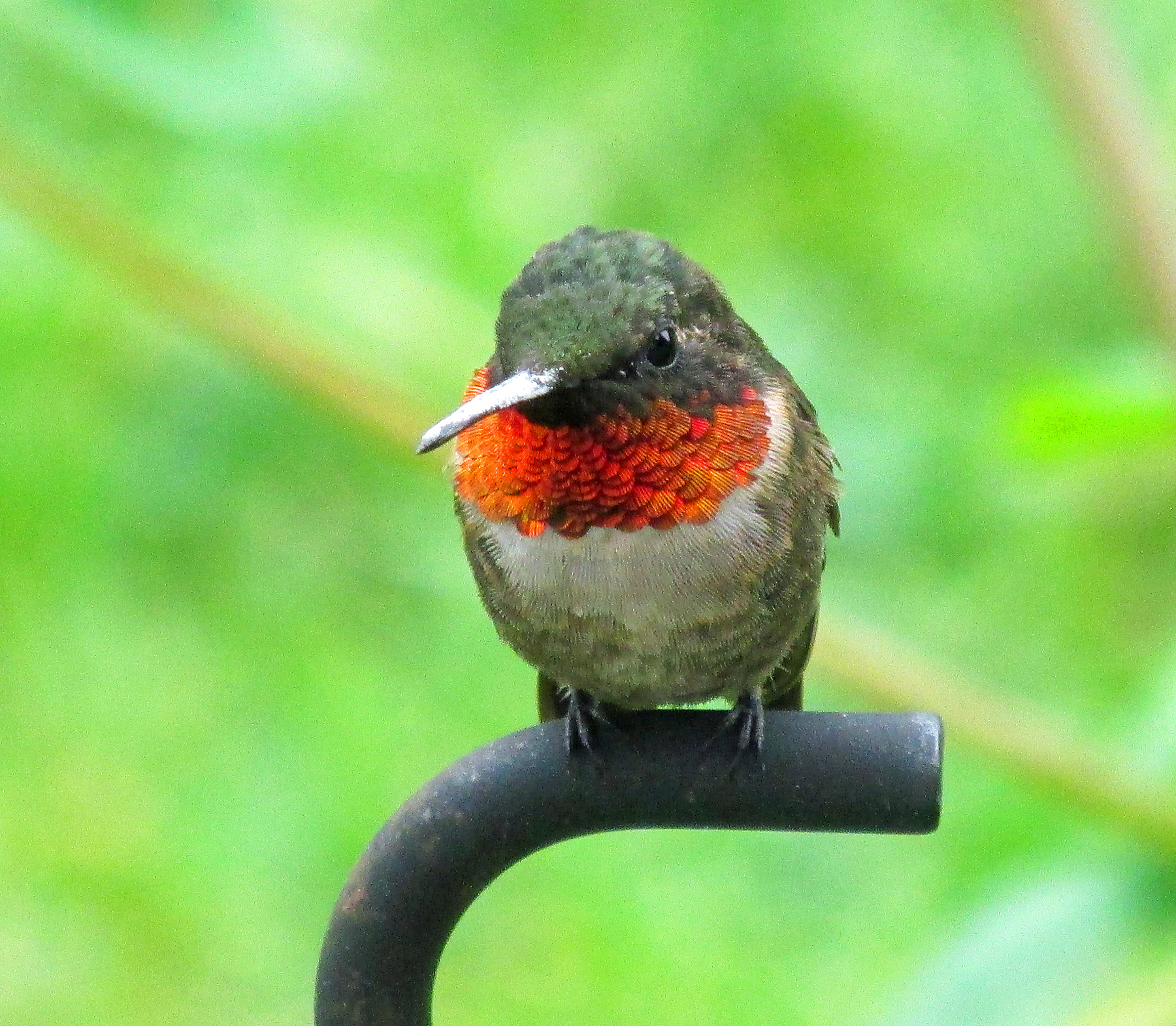
Photo by Bryan Stevens • Male ruby-throated hummingbird show the namesake red throat. The feathers on a male’s throat are iridescent, which means they can change when seen from different angles. In poor light, the ruby-red throat can look almost black.

As always, spring migration can be a challenging time for hummingbirds. Temperatures, wind patterns and storms can influence the pace of migration. Even once these tiny birds make their epic spring crossing of the Gulf of Mexico, they will need time to rest and refuel before moving northward.

By mid-March, the advance of ruby-throated hummingbirds has usually reached states such as Georgia and South Carolina. By the end of March, these tiny flying gems have reached states such as Tennessee and North Carolina.

It’s time to get those sugar water feeders outside and waiting for the early arrivals. Once the chance of late-season freezes has passed, consider planting some colorful native flowers to provide nectar sources for hummingbirds. In addition, some hanging baskets of flowers can be purchased from garden centers with the benefit that these baskets can be brought indoors during unseasonable cold snaps.

In the meantime, take steps now to welcome hummingbirds back and keep them safe during their stay. Most experts also suggest avoiding red dyes or food colorings, which are often found in commercially marketed hummingbird sugar water. Don’t risk the health of hummingbirds for a little convenience.

Photo by Bryan Stevens • Only adult male ruby-throated hummingbirds have the vibrant red throat patch.

It’s easy to make your own sugar water mix, which can be stored in the refrigerator in an empty plastic juice jug. Boil some water and then add one cup of sugar for every four cups of water in your pot. Stir thoroughly. Let the mixture cool and then bottle it. Fill your feeders and store any remaining sugar water in the fridge in the aforementioned jug. Refrigerated, the mix should stay good to use for at least a week or two.

Last year I welcomed back the spring’s first ruby-throated hummingbird at 4:14 p.m. on Sunday, April 6.

As I have for many years, I am asking readers to share their first sightings of hummingbirds. I have tracked arrivals for several years now. To share your first spring sighting of a ruby-throated hummingbird, email me at ahoodedwarbler@aol.com or contact me on Facebook at http://www.facebook.com/ahoodedwarbler. Please include the date and time of your sighting. I also welcome the sharing of other details about your sightings.
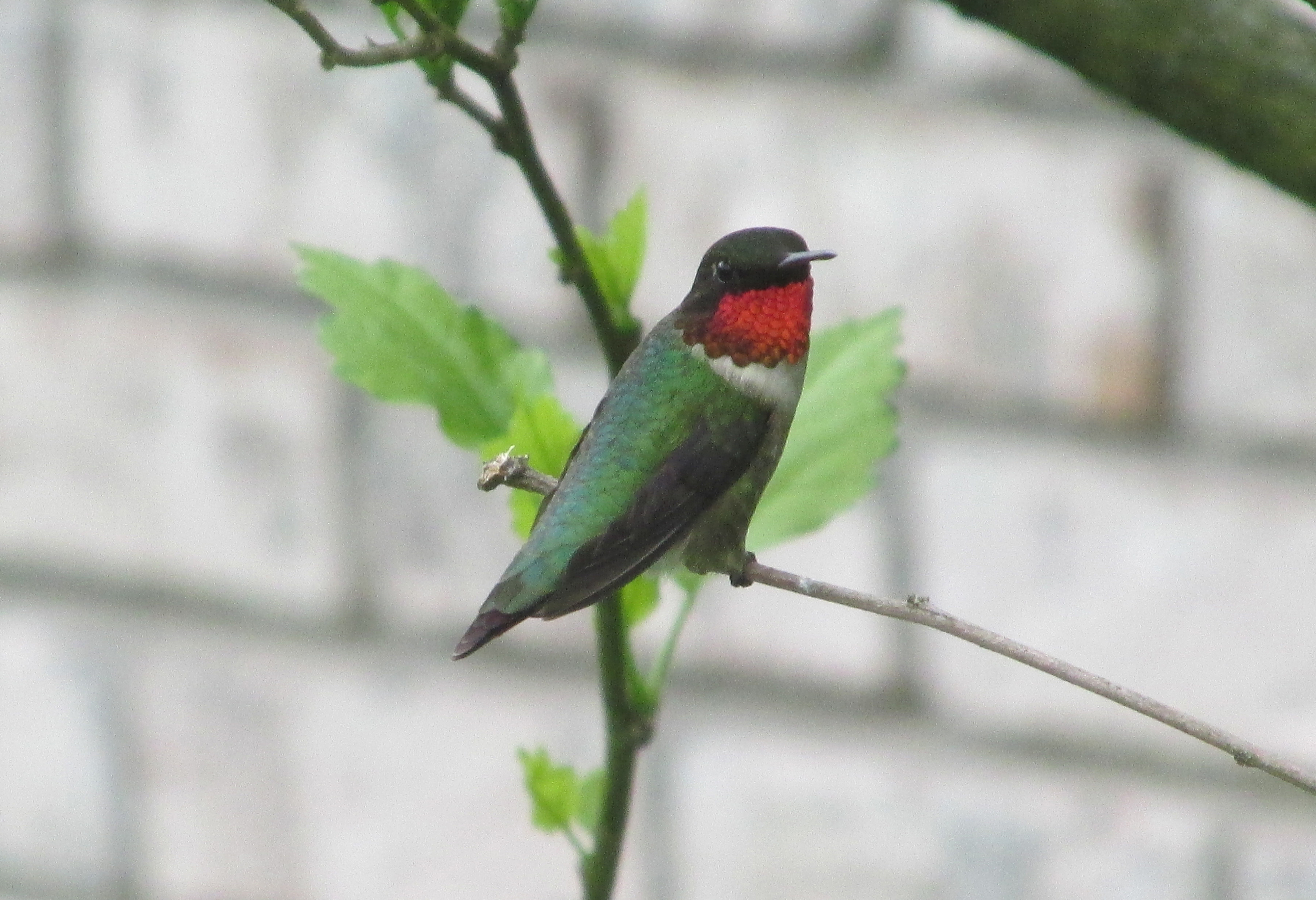
Photo by Bryan Stevens • Ruby-throated hummingbirds such as this male are returning to the region.

BRR!-ding: Couples tackle the deep freeze of northern Minnesota for hard-to-find species

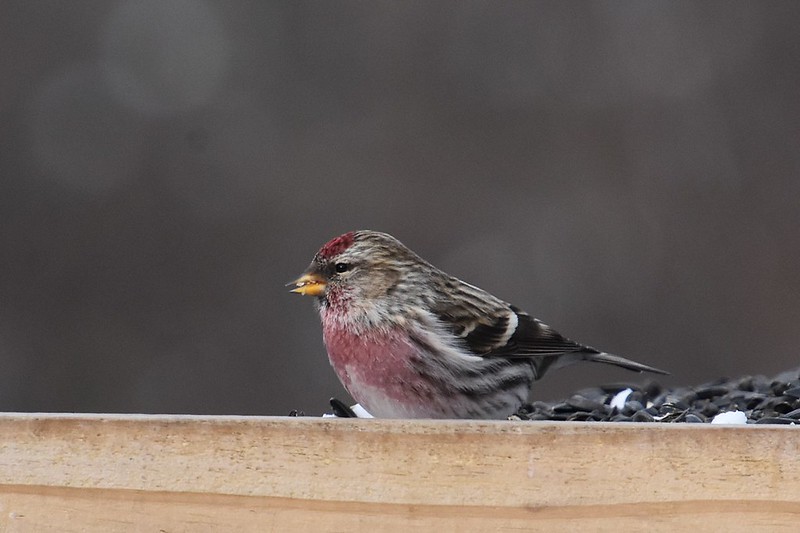
Jean Potter • A redpoll at a feeder in Sax-Zim Bog in Minnesota.

Like postal carriers, birders endure the elements, including snow and cold. Elizabethton couple Brookie and Jean Potter took this up a notch during a sub-zero birding expedition to northern Minnesota back in January to expand their list of life birds.

They were accompanied by another Elizabethton couple, David and Connie Irick. While coping with temperatures far below zero with a recorded wind chill of -34 degrees Fahrenheit, the Potters managed to add five news species to their life lists. The Iricks saw nine new species.

They enjoyed three full days of birding from Jan. 19 to Jan. 22, but it took two days of driving each way. They left Tennessee on Saturday, Jan. 17, and returned Jan. 24.

Photo by Jean Potter • Sax-Zim Bog offers specialty habitats for cold-weather species.

I’ve been friends with Brookie and Jean, and birded with them, since the late 1990s when I visited their home to observe a nesting great crested flycatcher. They’ve traveled the country to add species to their growing life lists.

They have long had a bucket list target of seeing 500 species, according to Jean. With their recent excursion to Sax-Zin Bog in northern Minnesota, they surpassed this goal.

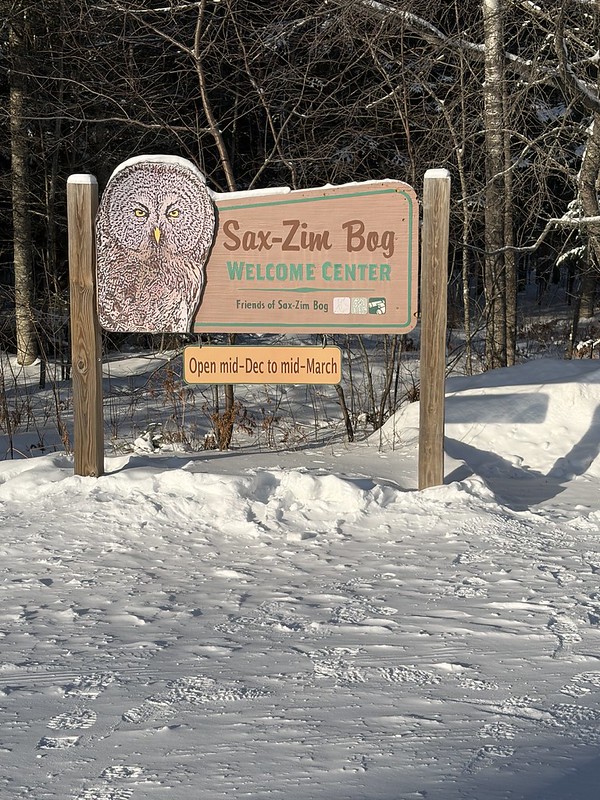
Sax-Zin Bog is about an hour north of Duluth, Minnesota, and Lake Superior. It’s also about 100 miles north from Minneapolis.

“It’s a very popular winter destination for birders,” Jean said. “It offers cold weather habitats you can find anywhere else.”

Those habitats attract some specialty birds, including Northern finches, several owls and some other hard-to-find birds.

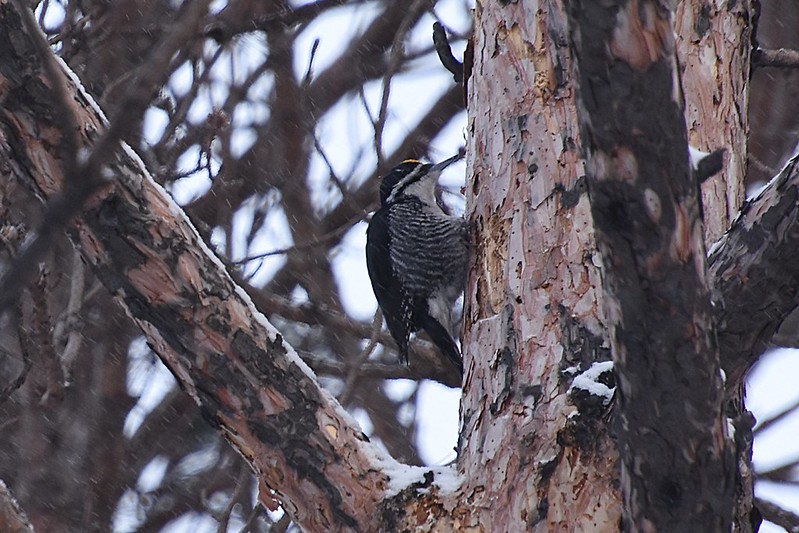
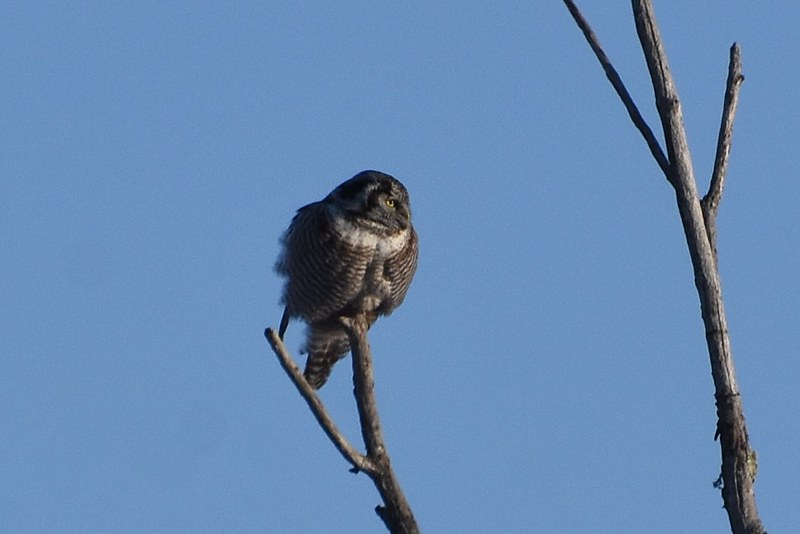
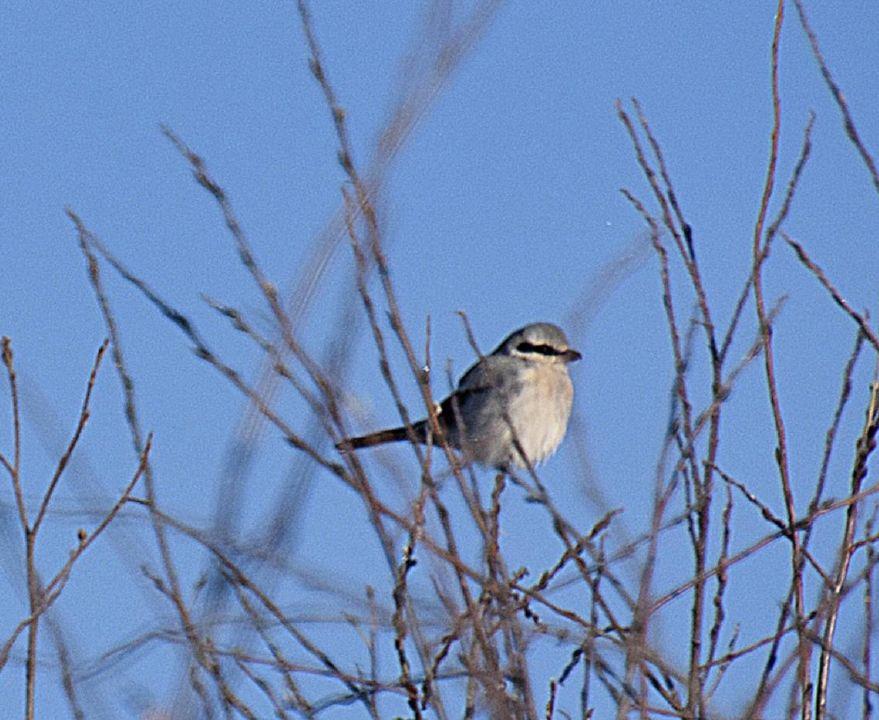
Their five new bird species were: Northern hawk-owl, boreal chickadee, Northern shrike, Canada jay and black-backed woodpecker.

Photo by Jean Potter • A black-backed woodpecker spotted in Minnesota by two visiting couples from Tennessee.

Some of their target birds failed to appear.

“We hoped to see a great gray owl and boreal owl, but this year they were not present,” Jean noted. “They had an irruption there last year.”

A bird irruption is a large-scale southward migration of northern-breeding birds (finches, nuthatches and owls) moving far beyond their typical winter range. Triggered by food scarcity in the boreal forest, these massive, sporadic movements often bring unusual species to unexpected locations.

Photo by Jean Potter • The trip to Sax-Zim Bog produced sightings of two individual Northern hawk-owls.

They did see short-eared owl and the Northern hawk-owls.

“We saw a total of 25 species, and we were very happy with it,” Jean said.

She added that most the birds were different than what they would normally see in Northeast Tennessee in winter.

They’re used to getting 100 species on some of their birding trips.

“It was quality over quantity,” Brookie said of their January trip to Minnesota.

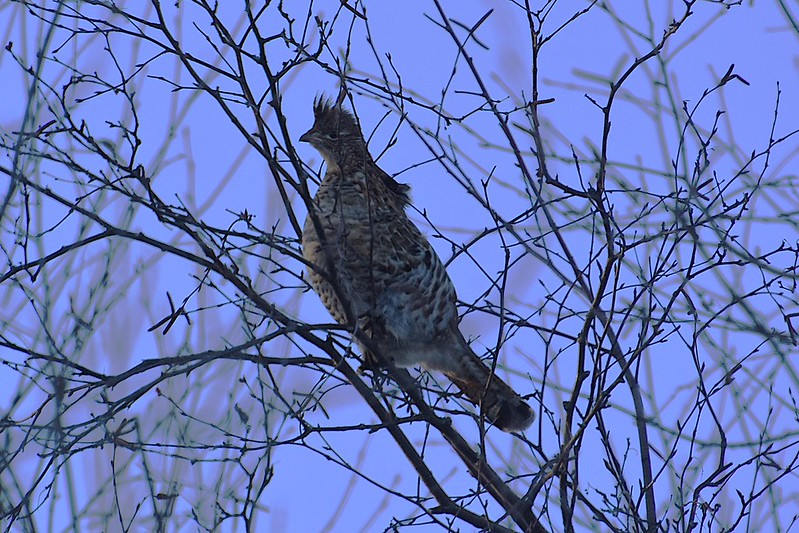
Photo by Jean Potter • A ruffed grouse in the branches of a tree.

The same five species that were new for the Potters were also new to the Iricks. The Potters, however, had already seen in different locations four other birds that were new for the Iricks.

David and Connie also added Northern goshawk, black-capped chickadee, pine grosbeak and redpoll to their life list.

Birds that are rare in winter here were common there.

We had tons of evening grosbeaks,” Jean said. “People put out feeders in the bog. There are houses located in the bog. There is also a welcome center.”

Photo by Jean Potter • A Northern shrike spotted at Sax-Zim Bog.

At some stops, they saw as many as 75 evening grosbeaks at a time crowded around some of the feeders.

“The owners used big buckets to fill up feeders,” Brookie said.

They found all their birds in the 300-square-mile Sax-Zim Bog, except for the black-backed woodpecker.

The woodpecker they found in Superior National Forest in Duluth.

“We went looking for it on the boardwalks in the bog, but we met some other birders and a woman told me that she had got it the day before,” Jean said.

She wrote down the coordinates provided by the woman, who guaranteed they’d see the woodpecker.

“We drove snow-covered roads in big pine forests to find it,” Brookie said.

“A big truck had the road blocked with a module home,” Brookie added. From the backseat, Connie Irick actually saw the bird while their vehicle was stopped and alerted everyone to its presence.

Contributed • Brookie and Jean Potter on a snow-covered boardwalk at Sax-Zim Bog.

“It stayed there and we studied it for awhile,” Brookie said.

Birding in such extreme temperatures took some adjustment.

“The first day we were there, our endurance was tested,” Jean reported. “We got up well before sunrise. It was -16 degrees and a windchill of -34.”

Most of their birding was done from inside a vehicle.

She reported that they were prepared, clothing wise. “But it was still a shock,” she added.

“All the roads were white. No blacktop,” she explained. “We had a four-wheel drive. They had well-maintained roads. The land is flat, so that helps.”

The big challenge when driving was avoiding snow-covered ditches.

“We saw a truck stuck in a deep ditch,” Jean said. “People in trouble got into ditches at turn-offs.”

They did venture outside of the car occasionally.

“We walked half-mile on the boardwalk in sub-zero weather,” Jean said. “That was about the longest we were outdoors.”

They also birded outside of Sax-Zin Bog.

“We drove through the North Woods of Wisconsin and saw Rough-legged Hawks,” Jean said.

“We could see Lake Superior, but it was frozen,” Jean said. “It just looked like a big white field.”

They might have seen more, but they had to cut the trip short.

“We had to come home a day early to get ahead of Winter Storm Vern,” Jean said.

They stayed in Hibbing, Minnesota, a town northwest of the bog.

They ate their meals in Cotton, Minnesota.

“It just had gas station and a restaurant called Wilbert Cafe,” Brookie said. “It had a good variety of home-cooked food.”

Jean added, “We met other birders from all over. Everyone comes here at the coldest time of the year.”

Brookie added, “The manager said birders keep the restaurant going in winter.”

Brookie also noted one other pertinent fact. “Bob Dylan was raised in Hibbing, Minnesota,” he said.

Sax-Zin Bog has no bathroom facilities, other than Port-o-johns, so the restaurant also provided restrooms.

Dealing with the cold was simple.

“We had Arctic coats and boots, and we dressed in many layers,” Jean said. “It was a challenge just to use a camera in my heavy gloves. I didn’t take as many pics as I normally do.”

They did most of their birding in daylight hours, but they did venture out after dark to look for owls.

“We were so proud to get Northern hawk-owl on our first day,” Jean said.

They also spotted a second of these owls in another part of the bog.

“We saw ruffed grouse in the trees,” she said.

Spruce grouse and sharp-tailed grouse had been target birds, but like the great gray owl they never showed themselves.

“We missed Bohemian waxwings,” Brookie said. “We might have gone looking for them if we’d had one more day. There was a report of them near Lake Erie.”

They found the landscape of northern Minnesota interesting.

“I saw enough windmills to last me a lifetime,” Brookie said.

“I added four new states: Wisconsin, Illinois, Indiana and Minnesota,” Jean said, noting she has now visited 35 states.

Brookie has visited 36 states. He was stationed in San Diego, California, during his time in the U.S. Marine Corps in the Vietnam Era, which gives him one more state than his wife.

Jean, who likes lighthouses, did see one from the car near Lake Superior.

They would have liked to have seen a couple of mammals that reside in that region.

Brookie wanted to see pine martens while Jean hoped to see a snowshoe hare, but those will have to wait for a future trip.

They also traveled past Monoquet, Indiana. “We passed hundreds of sandhill cranes in that area, but we didn’t stop,” Jean said.

By the time they departed, they were handling the cold like pros.

“On that first day, I wondered what in the world am I doing here?” Jean said. “But by the time we left, I figured we can do it again some time.”


Feathered harbingers: New bird sightings prove spring is here

Photo by Bryan Stevens • The American robin is widely hailed as a harbinger of spring.

Crocuses are blooming, spring peepers are peeping and the birds are starting to feel the approach of spring. Increasing daylight helps trigger changes among many of the birds that are widely considered signs of spring.

Among the other harbingers of the season are several species that have gained reputations for signalling the transition from winter into spring by their presence alone.

Here are some of the top candidates among our feather friends for the honor of being a genuine symbol of spring’s imminent arrival.

American robins
Robins are widely considered harbingers of spring. They appear to become more common overnight, but for the most part, it’s only a shift in behavior.
While robins are present in winter, they shift from eating berries in large, quiet flocks to foraging for worms on lawns in smaller groups as the ground thaws. With increasing daylight, they also begin to feel the urge to partner with potential mates. The robin’s song, often interpreted as “cheerily, cheer up,” is a distinct sound of early spring and is used to signal availability to those prospective mates.

Photo by Bryan Stevens • Wilson’s snipes return to much of their range in early spring.

Wilson’s snipe
The snipe, a type of shorebird, is a real bird despite a common belief that this bird, the subject of futile snipe hunts, is mythical. Haunting wetlands with their distinctive “winnowing” (drumming) courtship flights, they are heralds for the advancing spring season. These migratory, long-billed shorebirds typically reappear in marshy areas and wet pastures in early spring, often arriving by early March to begin breeding in northern regions. While some individuals may winter in warmer parts of the United States, their widespread arrival and intense courtship activity are widely recognized as a sign of spring.

American woodcock
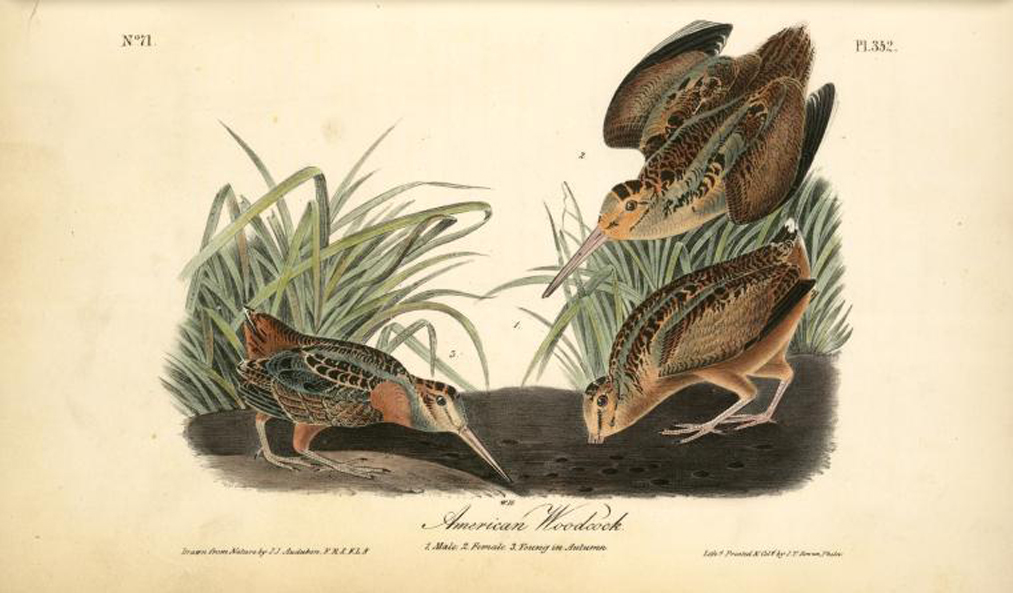
A snipe relative, the American woodcock is a premier, early-spring harbinger known for its dramatic “sky dance” courtship displays performed at dawn and dusk, often commencing as early as February or March. On the ground, the male produces a loud, buzzing, nasal sound — frequently described as “peent” — roughly every two seconds. These birds have a long bill equipped with a flexible tip, perfect for foraging for earthworms after the spring thaw has lured them to the earth’s surface. Males put on impressive display flights, using specialized wing feathers to produce a strange twitter as they descend back to earth in wide spirals. Other nicknames for this most unusual shorebird are timberdoodle and bog sucker.

Early American naturalist John James Audubon painted this trio of American woodcocks.

Eastern phoebe
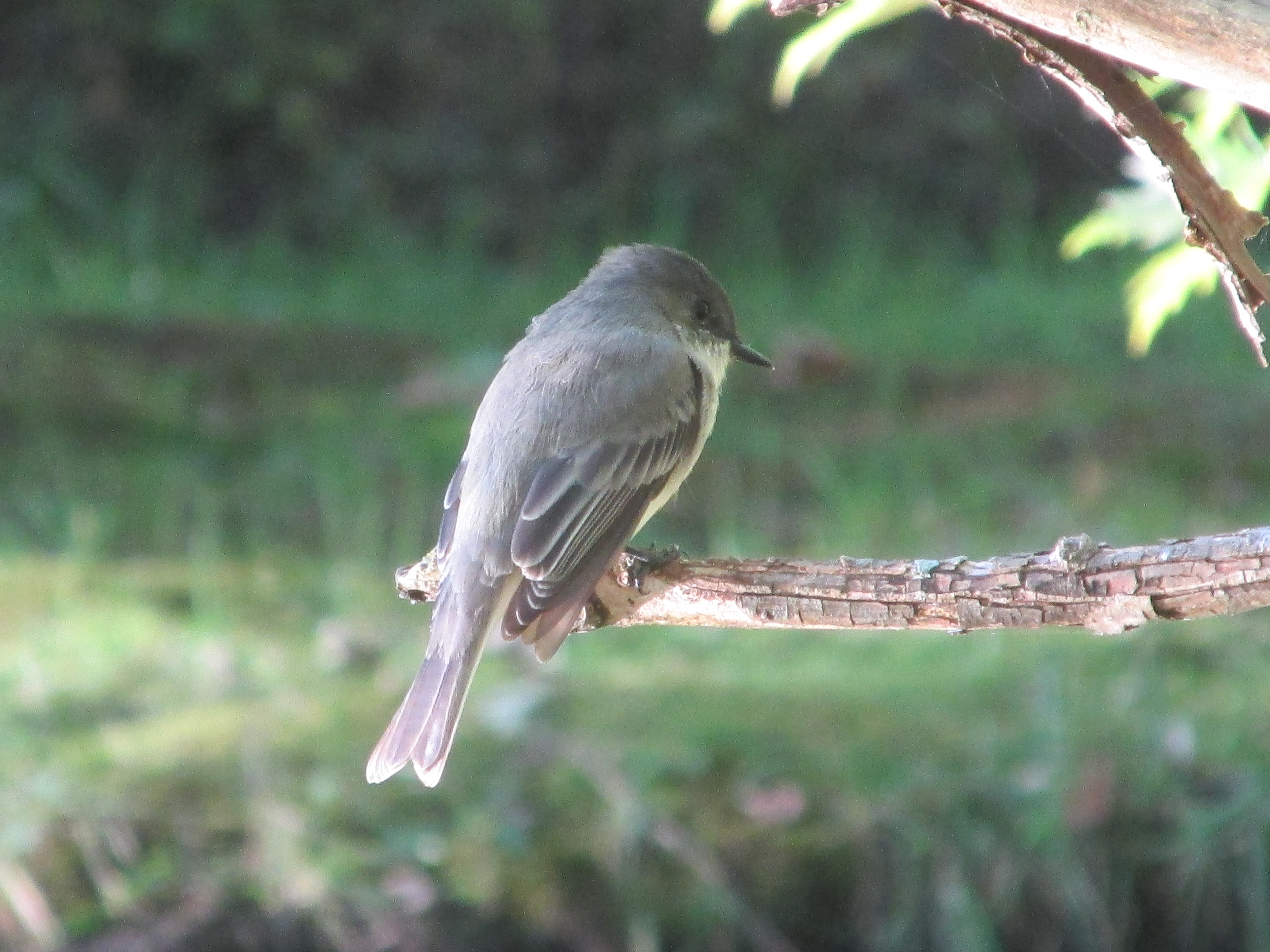
Eastern phoebes belong to the flycatcher family and are among the earliest migratory birds to return to their breeding grounds, often arriving before many other species. Eastern phoebes are more reliable indicators of the actual start of spring migration than American robins because they fly north to catch bugs while robins often overwinter and get a head start without even migrating. Henry David Thoreau detailed spring arrival for many species around Walden Pond in Concord, Massachusetts, in the 1850s. He recorded the Eastern Phoebe arriving in early April and the Eastern Wood-Pewee in late May. Across the migration data for 22 consistently observed species in Concord’s historical bird data, the average timing of spring arrival has not changed significantly from Thoreau’s time to the present. However, there are a few exceptions, such as yellow warbler and Baltimore oriole, that now return to Walden significantly earlier than when Thoreau observed them.

Photo by Bryan Stevens • The Eastern phoebe is a flycatcher and a bird that reliably returns early in the spring season.

Eastern bluebird
Bluebirds are a widely recognized early harbinger of spring, often arriving in northern locations by February or March, signalling the end of winter. Seeing bluebirds in pairs, checking out nesting boxes or perched on low branches in open, rural areas are classic signs of early spring. The well-known writer and naturalist Henry David Thoreau famously wrote that the bluebird “carries the sky on his back,” documenting their arrival as a vital seasonal marker in Northern regions and Canada. Locally, many bluebirds overwinter, but they still begin exploring potential nest locations in early spring, often as early as February.

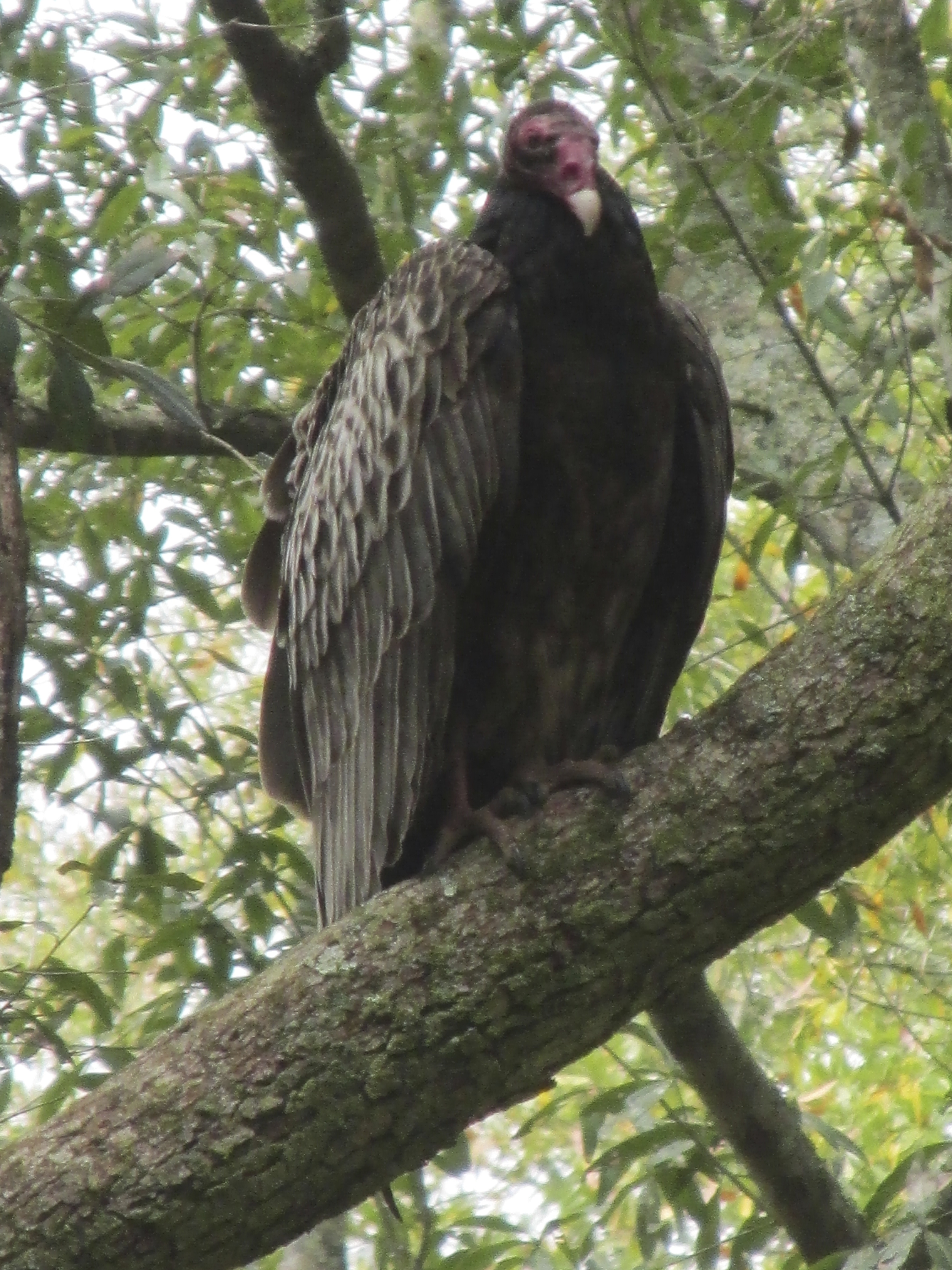
Photo by Bryan Stevens • Turkey vultures are a signal of spring’s arrival in some parts of the United States.

Turkey vulture
The return of turkey vultures is a significant, early sign of spring in many parts of North America, often appearing between February and March. As migratory scavenger birds, they return north to feed on animals that perished during the winter, often appearing in flocks. Hinckley, Ohio, celebrates the annual return of turkey vultures (locally called buzzards) to the Hinckley Reservation every March 15, a tradition dating back to 1957. Known as “Buzzard Day,” this event features a pancake breakfast, vendor fairs and spotter-led viewing of the birds returning to their roosts.

Louisiana waterthrush
Birders usually have to wait until April and May for most warblers to venture back to East Tennessee. The Louisiana waterthrush is a premier, early-arriving harbinger of spring in Eastern North America, often appearing in early March along fast-flowing, wooded streams. Known as one of the first migrant warblers to return, their arrival is signaled by a loud, ringing song that mimics the sound of rushing water. They typically arrive on breeding grounds weeks before many other migrant species, particularly other warblers. The loud, ringing song of the Louisiana waterthrush is often heard near streams before leaves have fully returned to the trees.

Photo by Bryan Stevens • The tiny blue-gray gnatcatcher returns to East Tennessee in late March.

Blue-gray gnatcatcher
This tiny bundle of feathers is an energetic, noisy songbird that arrives in the region in the final days of March. I often hear this bird’s raspy, scolding vocalizations before I detect their nonstop movements in newly-emerged leaves. They don’t arrive quite as early as the other birds on this list, but I’ve always held this bird as one of my personal birds of spring. Once the feisty blue-gray gnatcatcher is back, the spring season can truly commence. The gnatcatcher, which is one of our smallest birds, feeds on more than gnats. The only local birds as comparably small as the gnatcatcher are kinglets and hummingbirds.

What bird do you look forward to seeing again every spring? What’s something provided by nature that provides assurance that spring is just around the corner?

Feel free to write to me to share your answers by emailing ahoodedwarbler@aol.com.


Move over robins: Red-winged blackbird is the real sign of sprinfg

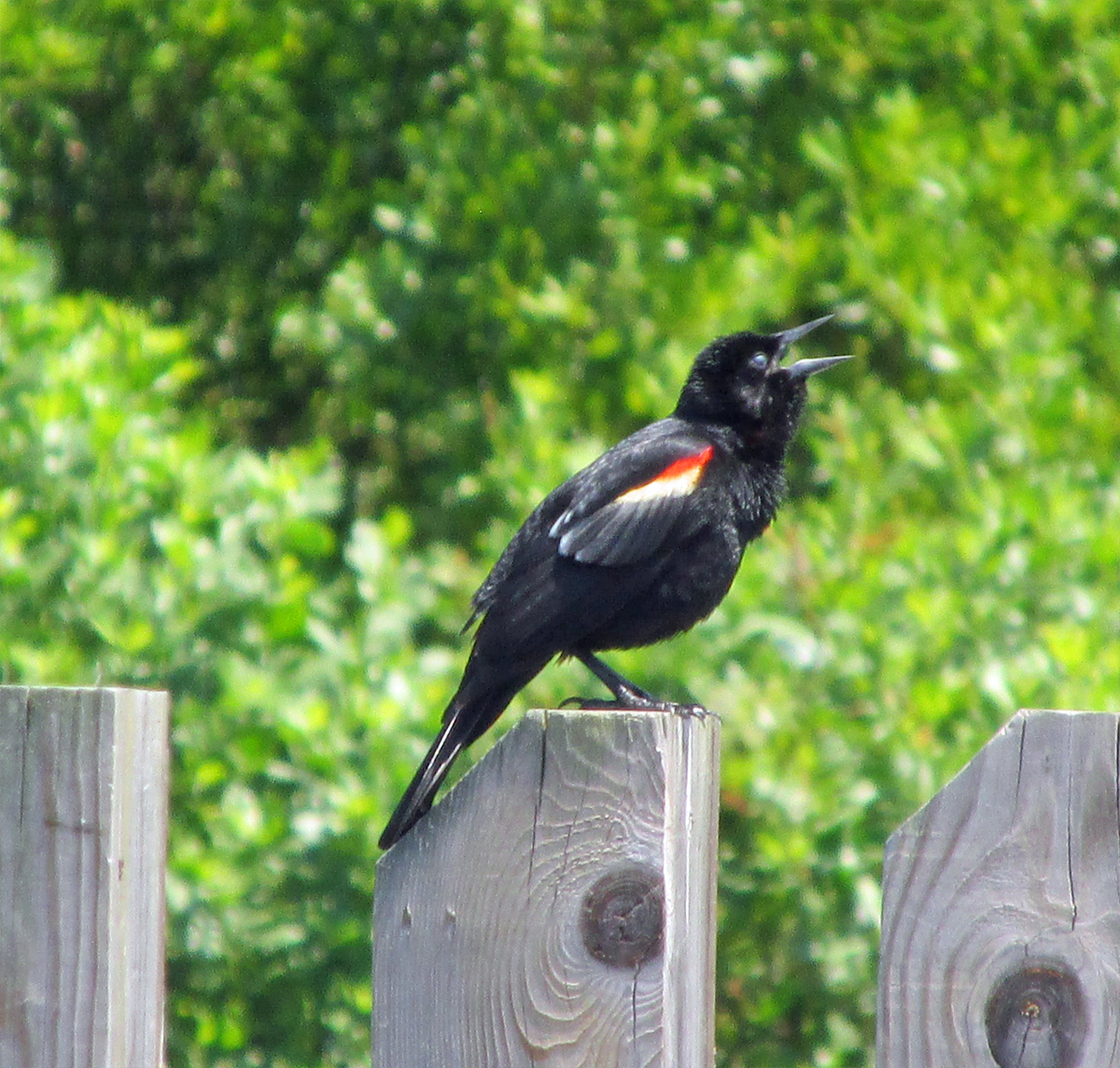
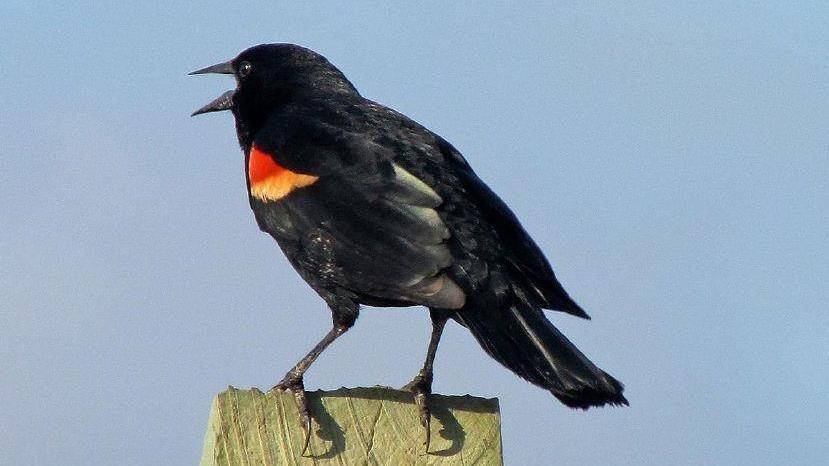
Photo by Bryan Stevens • A male red-winged blackbird sings to attract mates and ward off rivals.

When the red-winged blackbirds put in their first appearance this year, they picked a really bad day to make their return.

I heard the instantly recognizable “konk-ka-ree” vocalization as I walked from the house to my car on the morning of Feb. 22. It didn’t take long to spot the birds making the sound: four male red-winged blackbirds perched atop a cypress tree at the fish pond. The temperature hovered around 21 degrees, snow covered the ground, and a brisk breeze made everything feel even colder.

Despite the miserable weather, I gladly welcomed back the red-winged blackbirds. I imagine that the day improved for the birds as temperatures gradually rose. By the time I got home, the snow that had fallen the previous night had almost melted, but the blackbirds had departed.

Spring is getting closer. The red-winged blackbirds are proof, one that I’m greedily grasping as I continue wishing for warmer weather and more spring arrivals among our feathered friends. Everyone thinks the first American robin is the herald of spring. I’ve always depended on red-winged blackbirds as spring harbingers.

After posting about my sighting of the blackbirds on Facebook, Erwin resident Amy Tipton commented on my post.

“We spotted some in our backyard over the weekend and then again today,” she wrote. “A very welcome sight!”

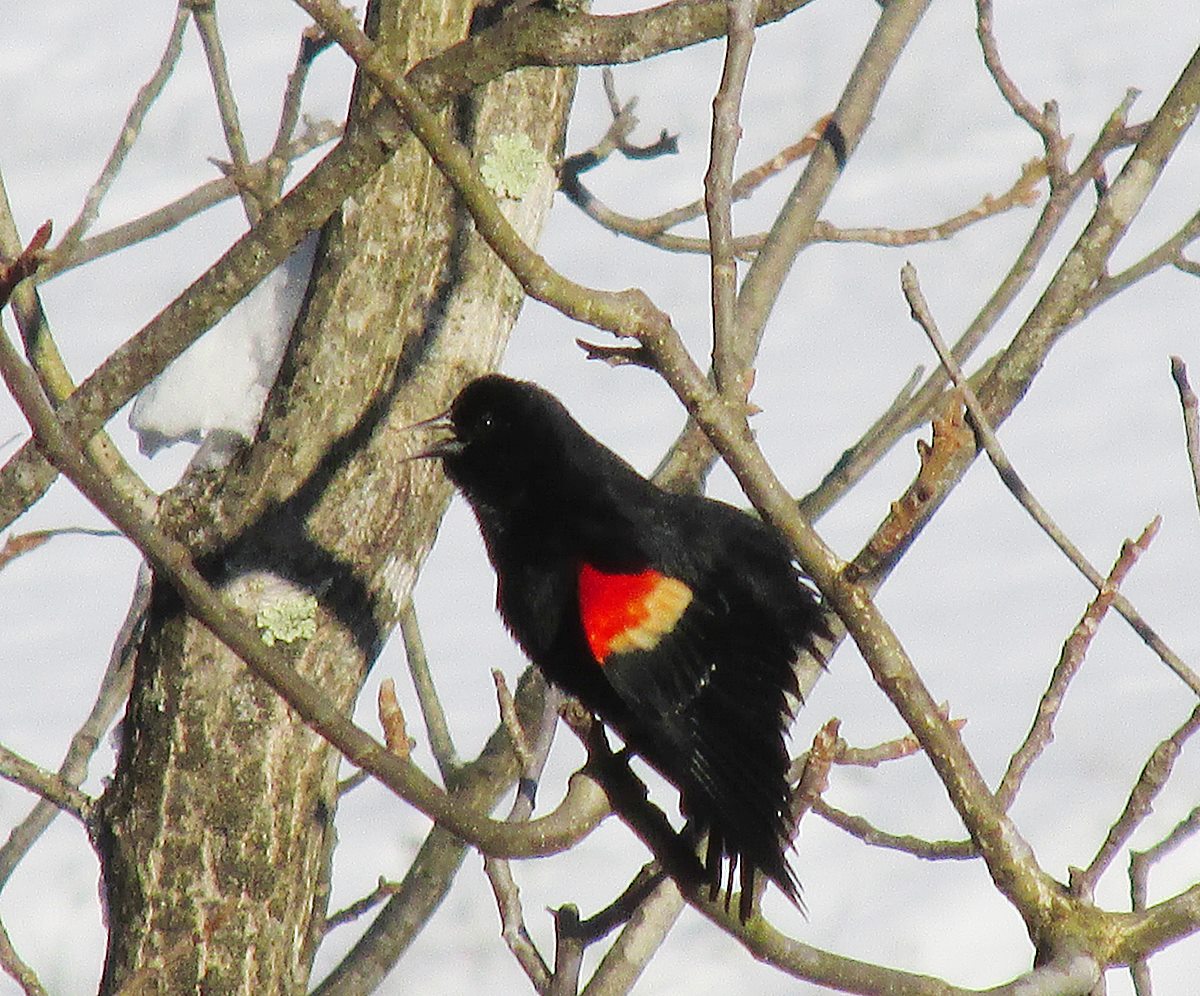
Bryan Stevens • The male red-winged blackbird has an apt common name.

I’ve long associated red-winged blackbirds as a sign indicating progress toward spring. The visitors I saw recently are probably the vanguard of large numbers of red-winged blackbirds that return in impressive numbers every March.

The showy and loud red-winged blackbirds make themselves at home at my fish pond and adjacent stands of cattails, producing quite a commotion. “The kon-ke-ree song of the male red-winged blackbird is a sure indication that spring is on the way,” according to a profile of the species located at the Tennessee Watchable Wildlife website. At this time of year, the male red-winged blackbirds seek elevated perches to display and vocalize.

Red-winged blackbirds are tied to the rhythms of wetlands. In these environments, they are common birds. In Northeast Tennessee, any stands of cattails in a marshy area is likely to attract at least a few members of this species.

The male red-winged blackbird is a very aptly named. Glossy black males sport red wing patches that are often trimmed with a narrow band of yellow feathers. By contrast, female red-winged blackbirds are mostly brown birds that could easily be mistaken for large sparrows. Both sexes have sharply pointed bills.

Bryan Stevens • A male red-winged blackbird sings from a post.

At my home, red-winged blackbirds are fond of visiting my feeders. They will feast on sunflower, suet cakes, or both when they’re available.

These active, noisy birds apparently love company. Red-winged blackbirds roost in flocks throughout the year, according to the website All About Birds. The website also noted that winter flocks can be especially impressive, consisting of congregations of several million birds, including other blackbird species and starlings.

All About Birds also noted that the oldest red-winged blackbird on record lived to be at least 15 years and nine months old. The bird, originally banded in New Jersey in 1967, was found alive, but injured in 1983. The good news? The bird recovered from its injuries and, in all likelihood, continued to live in U.S. wetlands, adding some more longevity to its lengthy lifespan.

•••

Bryan Stevens has written about birds, birding and birders since 1995. Email him at ahoodedwarbler@aol.com to share a sighting, ask a question or make a comment.