Category Archives: Spring 2026

Eastern phoebes make good neighbors

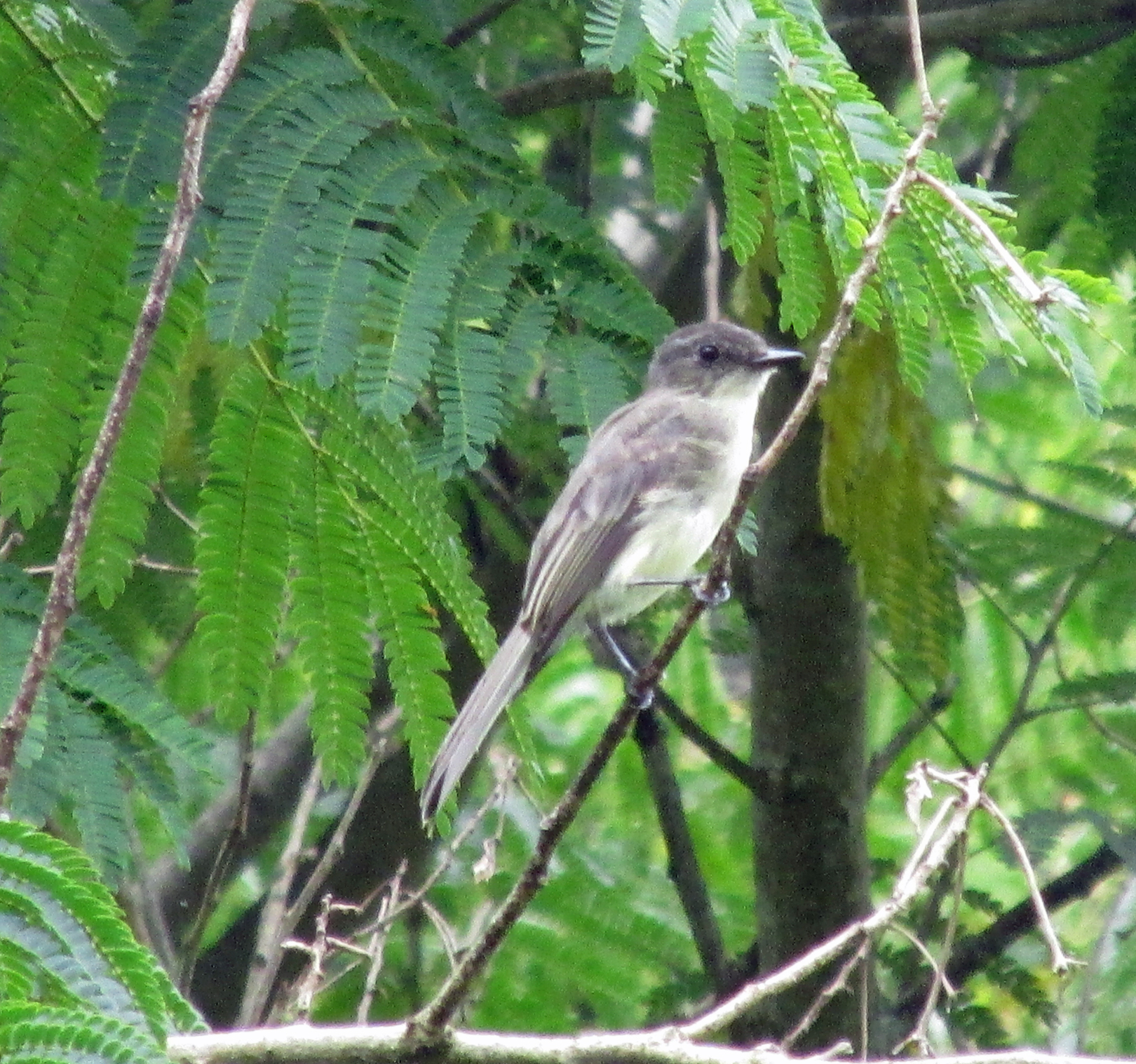
Photo by Bryan Stevens • An Eastern phoebe perches in a mimosa tree.

We’ve reached June, and I can hardly believe it. After a May that veered from cold to unseasonably hot, I’m hoping June can find a happy balance.

The birds haven’t ruffled their feathers about temperature variances, as best as I can tell. Migration is, for the most part, concluded. Some birds have already completed a first nesting, including some Eurasian starlings in downtown Erwin. During a stroll on the Union Street sidewalk, I flustered a fledgling and its parents. I gave them some space as I passed, and it looked like things got back to normal.

Nesting is the main focus of most birds during the spring and summer months, and the process can stretch out until August and early September for species like cedar waxwing and American goldfinches.
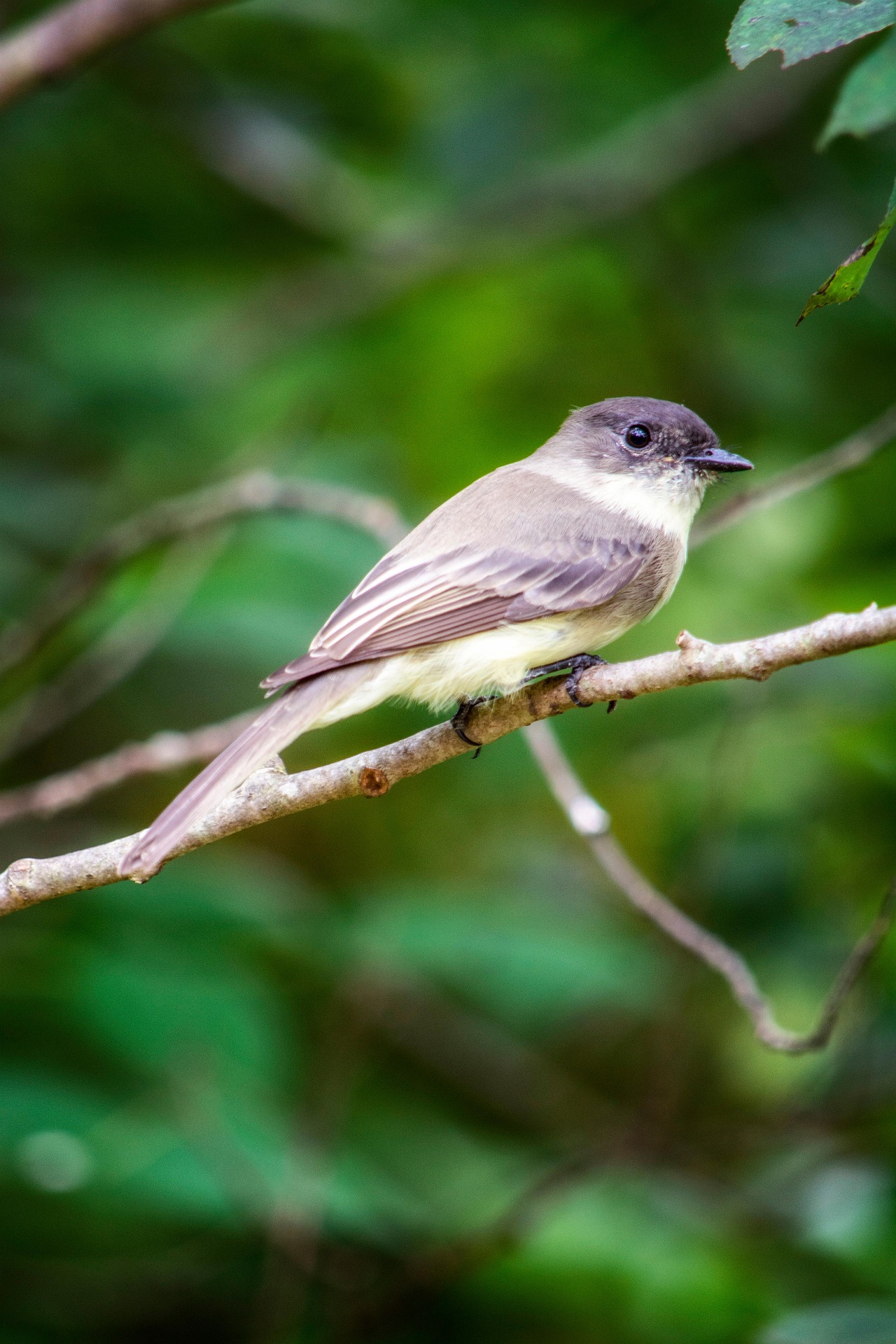
Photo by Megan Zopf/Pixabay • An Eastern phoebe perches on a branch.

Other birds, such as various sparrows, American robin and Eastern bluebird, may attempt to nest multiple times in zealous bids to propagate their species.

I’ve noticed that the old nest on the blades of the porch fan at my house has gotten a bit greener as the Eastern phoebes have done some refurbishment to what has been a popular nest location for this species at my home in recent years.

Actually, it’s probably only the resident female phoebe involved in bringing new moss to the structure and working the material into the foundation of the previous nest. According to the website All About Birds, the female phoebe works solo on all nest-building tasks, although the male may accompany her, perhaps offering the avian equivalent of moral support.

She uses various materials, including mud, moss and leaves, along with grass stems and animal hair, during her construction process. Once she is done with her refurbishment and the nest meets her standards, she will lay two to six eggs. She’ll incubate them for 15 to 16 days. Once hatched, the nestlings will reside in the nest for up to 20 days. Even after the young fledge from the nest, the parents remain attentive as they introduce their brood to the wider world.

John James Audubon, an early naturalist and famed painter of North America’s birds, conducted an experiment with some young phoebes that represents the first-ever bird banding in the United States of America. His novel experiment, which he carried out in 1803, involved tying some silver thread to the legs of the phoebes he captured near his home in Pennsylvania. He wanted to answer a question he had about whether birds are faithful to home locations from year to year.

Photo by Bryan Stevens • A young Eastern phoebe awaits a food delivery from a parent.

The following year, Audubon again captured two phoebes and found the silver thread had remained attached to their legs. Today, ornithologists still conduct bird banding to gather information on birds and the mystery of their migrations. So, that pair of phoebes that returned to your backyard this spring — they just might be the same ones that have spent past summer seasons providing you with an enlightening glimpse into their lives. I’ve wondered myself if the phoebes that nest on my porch ceiling fan are the same two birds that have done so in previous years. I’ve suspected they are or, perhaps, they are related to the original nesting pair.

The Eastern phoebe, known by the scientific name of Sayornis phoebe, has two relatives in the genus Sayornis. The genus is named after Thomas Say, an American naturalist. The Eastern phoebe’s close relatives include the black phoebe and Say’s phoebe. The black phoebe ranges throughout Oregon, Washington and California and as far south as Central and South America. As its name suggests, this bird has mostly black feathers instead of the gray plumage of its relatives. The Say’s phoebe, also named for the man who gave the genus its name, is the western counterpart to the Eastern phoebe.

The phoebes belong to the world’s largest family of birds, which is known collectively as the “tyrant flycatchers.” With more than 400 species, this family of birds consists of species known as tyrannulets, elaenias, pygmy tyrants, tody-flycatchers, spadebills, flatbills, attilas, kingbirds and kiskadees.

Since they belong to the vast family of New World flycatchers, it’s probably no surprise that these phoebes feed largely on insects. The birds will often perch patiently until an insect’s flight brings it within easy range. A quick flight from its perch usually allows the skillful bird to return with a morsel snatched on the wing. In the winter months, the Eastern phoebe also eats berries and other small fruit. Phoebes can even feed on poison ivy berries without risk of ill effects.

The Eastern phoebe is not a colorful bird, but it makes a good neighbor. I’d encourage everyone to welcome this bird whenever they get the chance.

To make a comment, ask a question or share a sighting, email me at ahoodedwarbler@aol.com. I’ve written about birds, birding and birded for 30 years and love hearing from fellow enthusiasts.

Feathered harbingers: New bird sightings prove spring is here

Photo by Bryan Stevens • The American robin is widely hailed as a harbinger of spring.

Crocuses are blooming, spring peepers are peeping and the birds are starting to feel the approach of spring. Increasing daylight helps trigger changes among many of the birds that are widely considered signs of spring.

Among the other harbingers of the season are several species that have gained reputations for signalling the transition from winter into spring by their presence alone.

Here are some of the top candidates among our feather friends for the honor of being a genuine symbol of spring’s imminent arrival.

American robins
Robins are widely considered harbingers of spring. They appear to become more common overnight, but for the most part, it’s only a shift in behavior.
While robins are present in winter, they shift from eating berries in large, quiet flocks to foraging for worms on lawns in smaller groups as the ground thaws. With increasing daylight, they also begin to feel the urge to partner with potential mates. The robin’s song, often interpreted as “cheerily, cheer up,” is a distinct sound of early spring and is used to signal availability to those prospective mates.

Photo by Bryan Stevens • Wilson’s snipes return to much of their range in early spring.

Wilson’s snipe
The snipe, a type of shorebird, is a real bird despite a common belief that this bird, the subject of futile snipe hunts, is mythical. Haunting wetlands with their distinctive “winnowing” (drumming) courtship flights, they are heralds for the advancing spring season. These migratory, long-billed shorebirds typically reappear in marshy areas and wet pastures in early spring, often arriving by early March to begin breeding in northern regions. While some individuals may winter in warmer parts of the United States, their widespread arrival and intense courtship activity are widely recognized as a sign of spring.

American woodcock
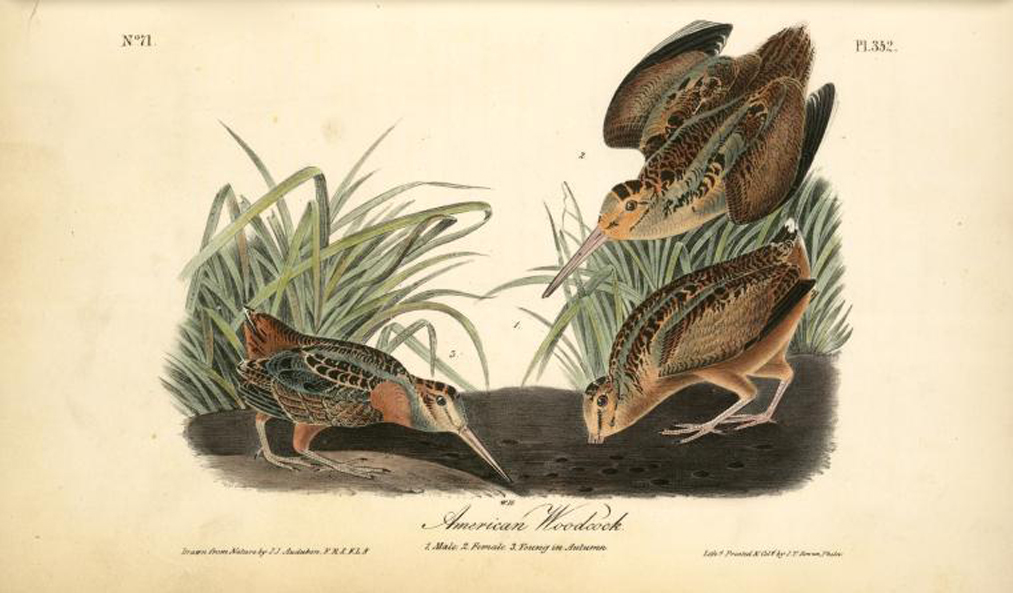
A snipe relative, the American woodcock is a premier, early-spring harbinger known for its dramatic “sky dance” courtship displays performed at dawn and dusk, often commencing as early as February or March. On the ground, the male produces a loud, buzzing, nasal sound — frequently described as “peent” — roughly every two seconds. These birds have a long bill equipped with a flexible tip, perfect for foraging for earthworms after the spring thaw has lured them to the earth’s surface. Males put on impressive display flights, using specialized wing feathers to produce a strange twitter as they descend back to earth in wide spirals. Other nicknames for this most unusual shorebird are timberdoodle and bog sucker.

Early American naturalist John James Audubon painted this trio of American woodcocks.

Eastern phoebe
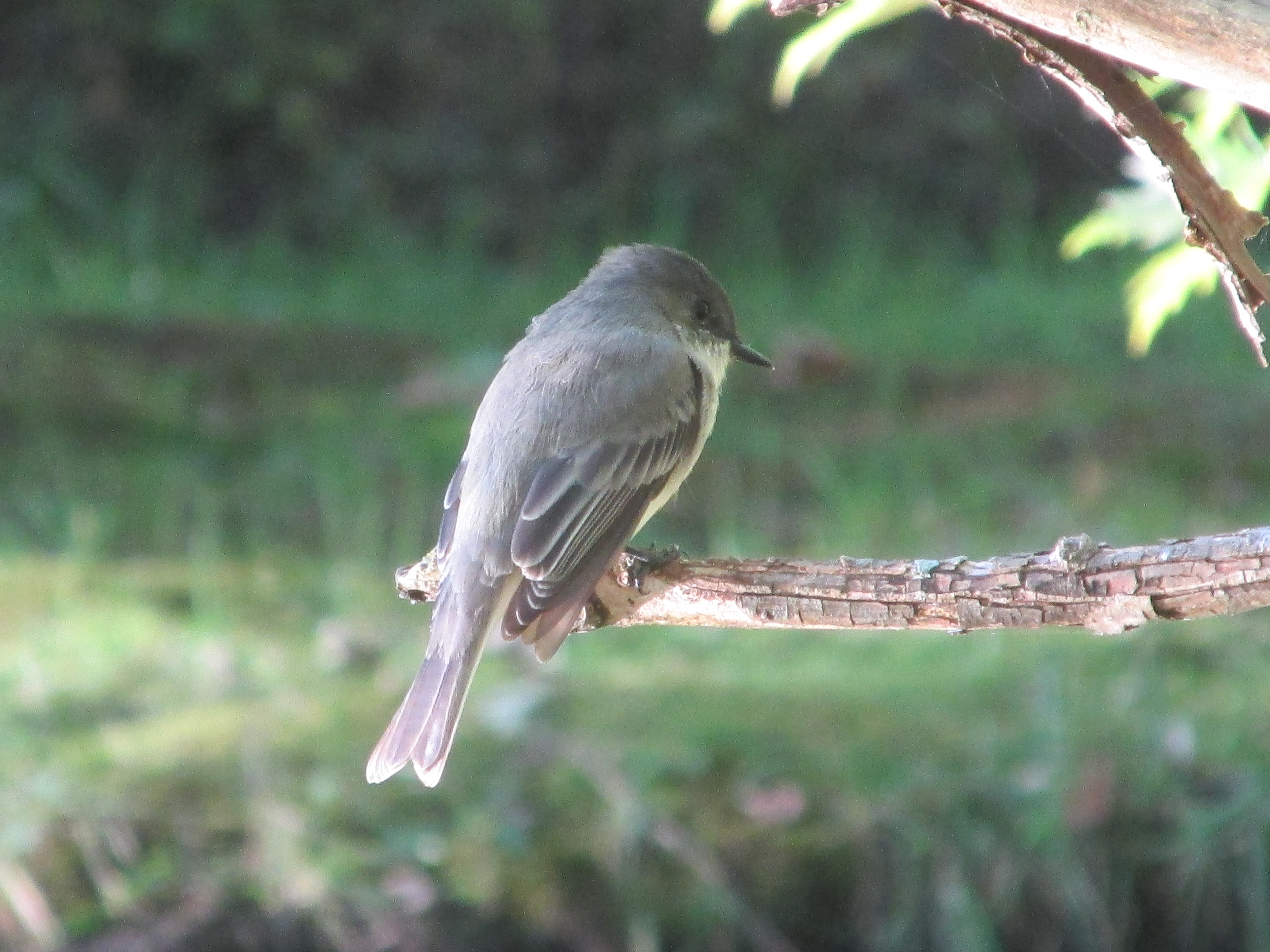
Eastern phoebes belong to the flycatcher family and are among the earliest migratory birds to return to their breeding grounds, often arriving before many other species. Eastern phoebes are more reliable indicators of the actual start of spring migration than American robins because they fly north to catch bugs while robins often overwinter and get a head start without even migrating. Henry David Thoreau detailed spring arrival for many species around Walden Pond in Concord, Massachusetts, in the 1850s. He recorded the Eastern Phoebe arriving in early April and the Eastern Wood-Pewee in late May. Across the migration data for 22 consistently observed species in Concord’s historical bird data, the average timing of spring arrival has not changed significantly from Thoreau’s time to the present. However, there are a few exceptions, such as yellow warbler and Baltimore oriole, that now return to Walden significantly earlier than when Thoreau observed them.

Photo by Bryan Stevens • The Eastern phoebe is a flycatcher and a bird that reliably returns early in the spring season.

Eastern bluebird
Bluebirds are a widely recognized early harbinger of spring, often arriving in northern locations by February or March, signalling the end of winter. Seeing bluebirds in pairs, checking out nesting boxes or perched on low branches in open, rural areas are classic signs of early spring. The well-known writer and naturalist Henry David Thoreau famously wrote that the bluebird “carries the sky on his back,” documenting their arrival as a vital seasonal marker in Northern regions and Canada. Locally, many bluebirds overwinter, but they still begin exploring potential nest locations in early spring, often as early as February.

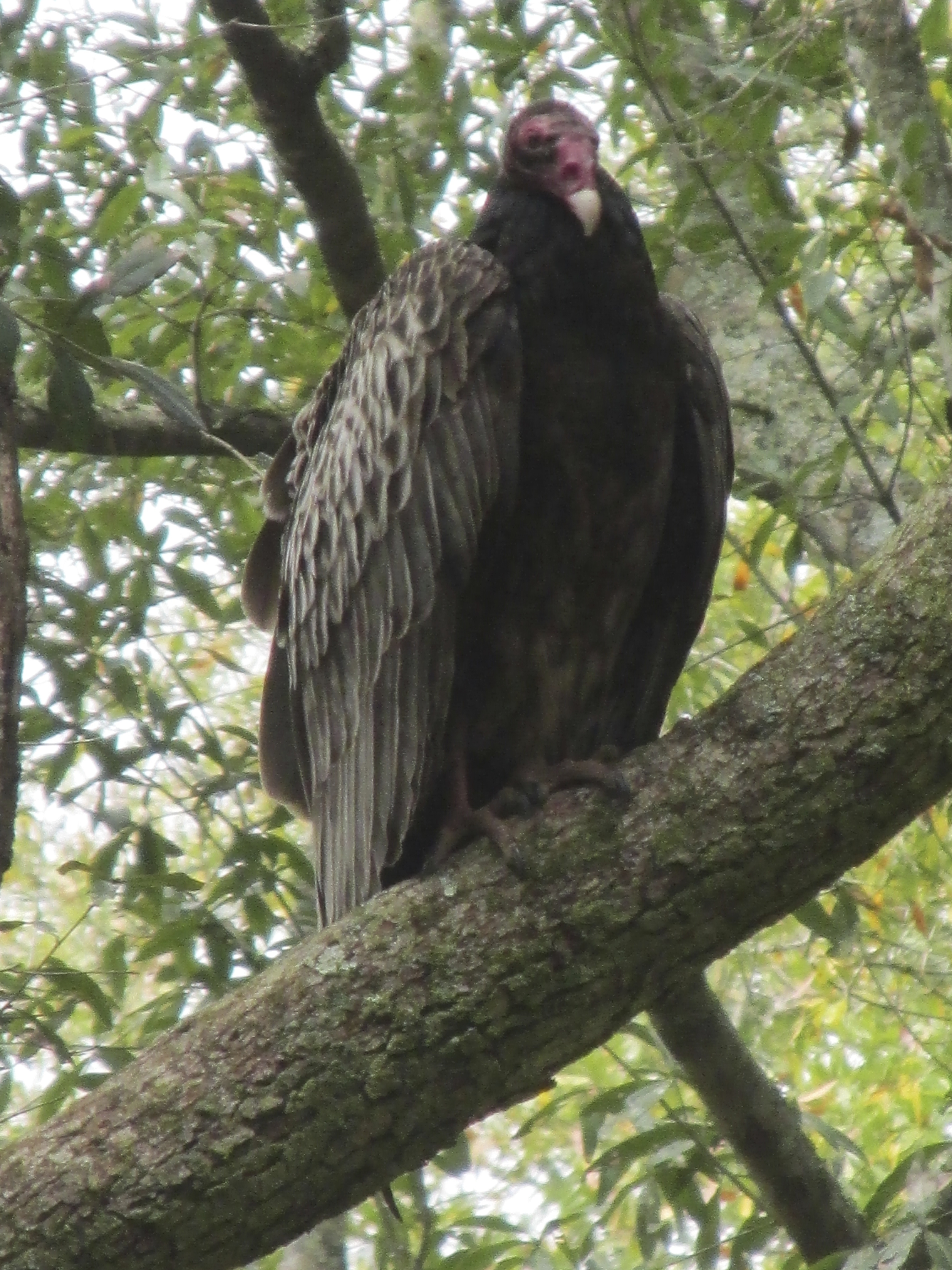
Photo by Bryan Stevens • Turkey vultures are a signal of spring’s arrival in some parts of the United States.

Turkey vulture
The return of turkey vultures is a significant, early sign of spring in many parts of North America, often appearing between February and March. As migratory scavenger birds, they return north to feed on animals that perished during the winter, often appearing in flocks. Hinckley, Ohio, celebrates the annual return of turkey vultures (locally called buzzards) to the Hinckley Reservation every March 15, a tradition dating back to 1957. Known as “Buzzard Day,” this event features a pancake breakfast, vendor fairs and spotter-led viewing of the birds returning to their roosts.

Louisiana waterthrush
Birders usually have to wait until April and May for most warblers to venture back to East Tennessee. The Louisiana waterthrush is a premier, early-arriving harbinger of spring in Eastern North America, often appearing in early March along fast-flowing, wooded streams. Known as one of the first migrant warblers to return, their arrival is signaled by a loud, ringing song that mimics the sound of rushing water. They typically arrive on breeding grounds weeks before many other migrant species, particularly other warblers. The loud, ringing song of the Louisiana waterthrush is often heard near streams before leaves have fully returned to the trees.

Photo by Bryan Stevens • The tiny blue-gray gnatcatcher returns to East Tennessee in late March.

Blue-gray gnatcatcher
This tiny bundle of feathers is an energetic, noisy songbird that arrives in the region in the final days of March. I often hear this bird’s raspy, scolding vocalizations before I detect their nonstop movements in newly-emerged leaves. They don’t arrive quite as early as the other birds on this list, but I’ve always held this bird as one of my personal birds of spring. Once the feisty blue-gray gnatcatcher is back, the spring season can truly commence. The gnatcatcher, which is one of our smallest birds, feeds on more than gnats. The only local birds as comparably small as the gnatcatcher are kinglets and hummingbirds.

What bird do you look forward to seeing again every spring? What’s something provided by nature that provides assurance that spring is just around the corner?

Feel free to write to me to share your answers by emailing ahoodedwarbler@aol.com.