Monthly Archives: August 2026

These migratory birds are true champions

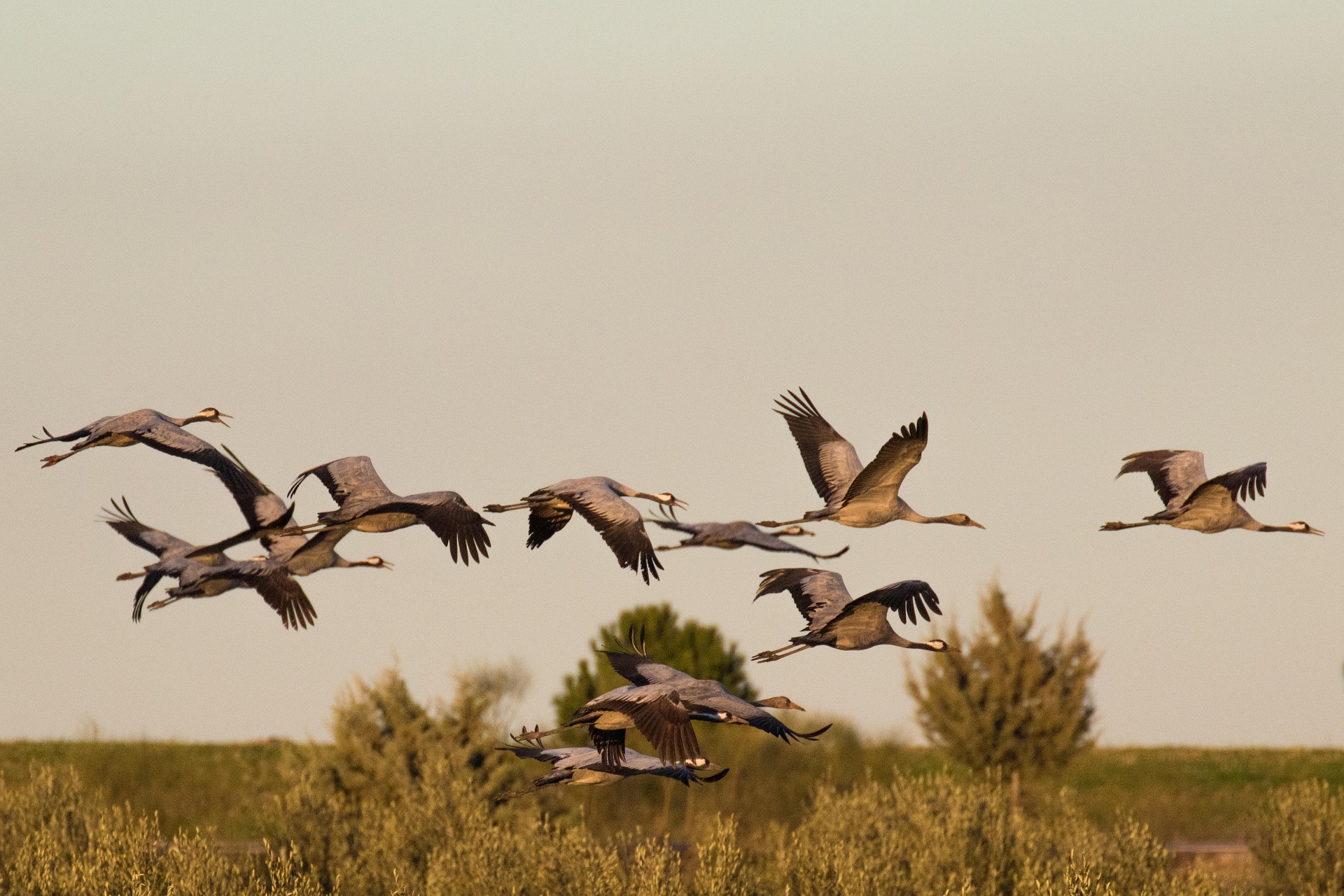
ANNE AND SATURNINO MIRANDA/PIXABAY • The common crane holds a record achieved by the feat of flying over the Himalayans at a height of 37,000 feet. However, this is not a typical flight. They usually fly below 3,280 feet.

As it does every year, September’s arrival puts fall migration into sharp focus. The birds that returned this past spring — the warblers, vireos, tanagers, grosbeaks, flycatchers, hawks, hummingbirds and many more — have begun or are beginning to make their way back to the locations where they will spend the winter months far from the cold, bleak conditions over most of North America.

On recent mornings as I leave for work I have heard the buzz of hummingbird wings, as well as the scolding calls of red-eyed vireos from the woodlands around my home.

Some of these birds migrate out of the tropics every spring to avoid competition. Others find North America a land of abundant, albeit temporary, resources. This land of plenty offers a wealth of insects, seeds, fruit and other nourishing, nutritious food to help parent birds keep their strength while they work to ensure their young thrive. Of course, once the bountiful period concludes, they return to the tropics of Central and South America to winter. Those that do so successfully will make the journey back to the United States and Canada in the spring. It’s an ongoing cycle, repeating year after year, season after season.

The phenomenon of migration isn’t exclusive to the neotropical migrants of the New World. Birds in other parts of the world migrate, too. Waterfowl, shorebirds and raptors are among some of the families of birds that stage impressive migrations.

Here are some migration achievements of some of our feathered friends:

Elevation Champ
The Himalayas represent a mountainous challenge for many migratory birds. Some birds, however, shrug off the astonishing heights of the world’s tallest mountains. The common crane holds a record achieved by the feat of flying over the Himalayans at a height of 37,000 feet. However, this is not a typical flight for these cranes. In fact, they usually avoid flying over mountains. They usually fly below 3,280 feet. The regular migrant that does fly at loft heights is the bar-headed goose, recording reaching 29,000 feet. These geese regularly fly over the peaks of the Himalayas when migrating.

Long-distance Champ
The Arctic tern truly takes migration to extremes. This small seabird travels each year from its Arctic nesting grounds to the Antarctic region, where it spends the winter months. Put into terms of mileage, the Arctic tern can travel about 50,000 miles in a single year. For a bird with a body length of about 15 inches and a wingspan of about 28 inches, this incredible migration is an astonishing feat. These statistics permit the Arctic tern to easily lay claim to the title of champion migrant among our feathered friends.

Tiny Champ
The ruby-throated hummingbird, a favorite of many bird enthusiasts living in the eastern United States, makes an impressive migration each year. Just to reach the United States, these tiny birds undertake a strenuous journey. They leave their wintering grounds in Central America to return to the United States and Canada for the nesting season. Most of these tiny birds, which are barely four inches long, make a non-stop flight of more than 500 miles across the Gulf of Mexico. The journey can take almost an entire day. With the end of summer, the entire population of ruby-throated hummingbirds, increased by a new generation of young birds, makes the Gulf crossing for a second time in a year to return to the American tropics for the winter months.

Photo by Bryan Stevens • A ruby-throated hummingbird perches at a feeder for a sip of sugar water.

Dedicated Champ
Among North America’s buteo hawks, which includes raptors such as red-shouldered hawk and red-tailed hawk, the broad-winged hawk stands out as a dedicated migrant. These hawks form flocks that at times number in the hundreds or thousands as they sail and glide on thermals rising over various mountain ranges. These hawks and other raptors are well-known in the region for migrating past the Mendota Fire Tower in Southwest Virginia every September and early October. The broad-winged hawk’s counterpart in the western United States is Swainson’s hawk, which shares the broad-winged hawk’s inclination for migrating in large flocks. Swainson’s hawk is named for William Swainson, the famous 19th century English naturalist for which Swainson’s thrush is also named.

Warbler Champs
My favorite family of birds, the warblers, are seasonal migrants. The Northern parula, a warbler species that regular spends the spring and summer months in the woods around my home, winters in Mexico, Central America, the Caribbean and southern Florida. The Northern parula breeds across the eastern half of the United States and southeastern Canada. It’s not a migration of an incredible distance, but it’s still quite an accomplishment for a bird less than five inches long and weighing less than half an ounce.

Photo by Bryan Stevens • The Northern parula, like most warblers, is a medium- to long-distance migrant.

Another warbler is a true migratory champion. Few warblers make as great a journey as the blackpoll warbler. Instead of migrating over land, this five-inch-long warbler undertakes a two-stage migration. The first half of the migration is a non-stop flight of about 1,500 miles. Every fall, these tiny birds fly over the Atlantic Ocean during this part of their migration, departing from Canada or the northern United States and not stopping until they reach various locations in the Caribbean. There they will spend some time recovering from the exhausting first half of their journey before they continue their way to such South American countries as Colombia and Venezuela. Once again, during the time they spend flying over open ocean, these tiny warblers do not feed.

Fall’s a great time to witness the variety of avian life. Look for some of these migrants passing through your yards, gardens or favorite birding spots.

For those wanting suggestions for seeking out migrating birds, the linear trail in Erwin, Rocky Fork State Park in Flag Pond and Limestone Cove Recreation Area are some good bets.
Too short a season: Hummingbirds’ stay coming to a close

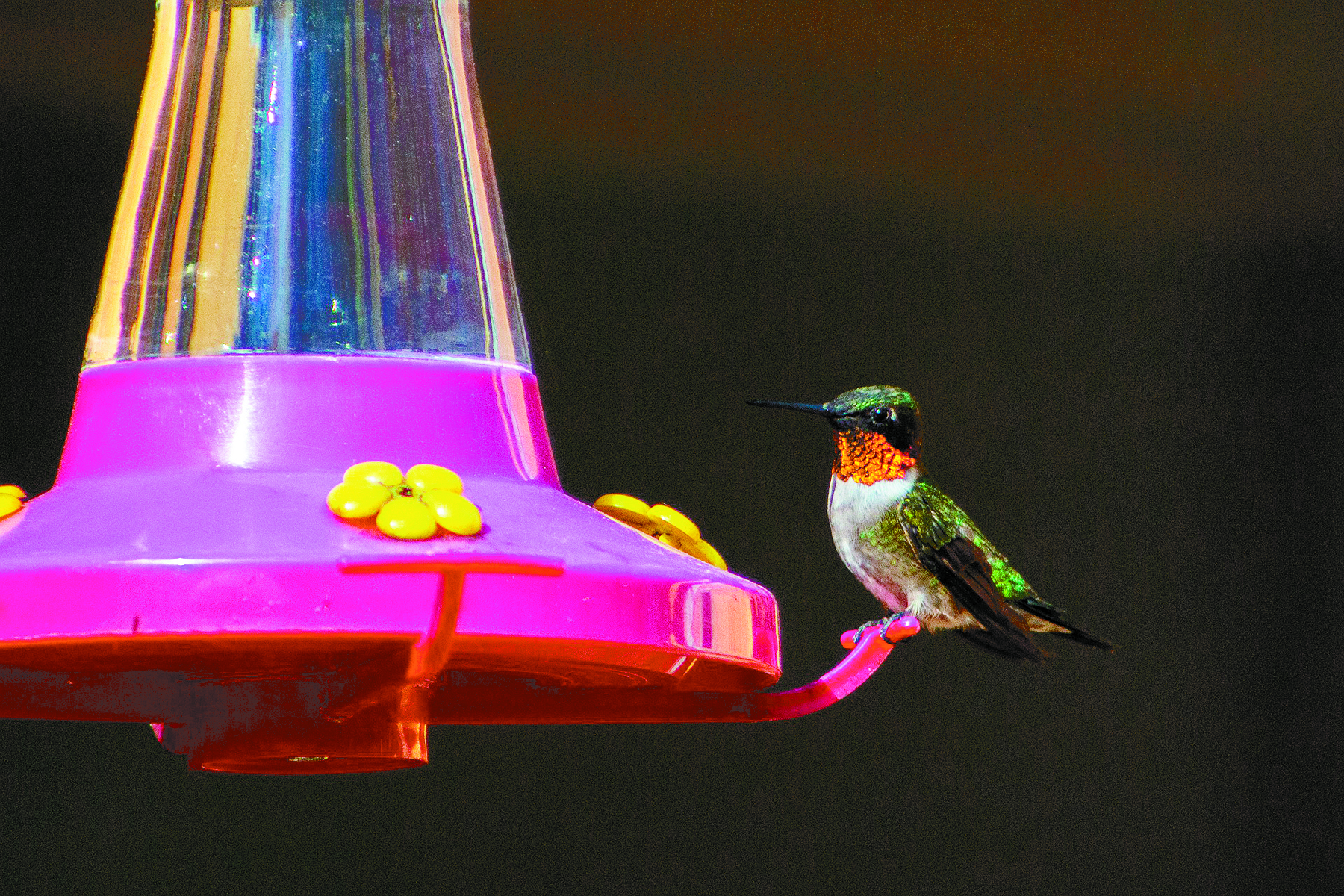
Photo by Katy Jefferson/Pixabay • A male ruby-throated hummingbird perches on a sugar water feeder.

September’s right around the corner. Then comes fall, then winter, and the cycle of the seasons continues to advance.

Always there as signals to herald the imminent approach of a new season are the birds. Our feathered friends are quite remarkable in that regard.

I heard from Elizabethton resident Susan Peters recently via email about my recent columns on catbirds.

She reported that she has noticed that catbirds return almost exactly at the same time as the hummingbirds every year. She described the catbirds as very chatty for awhile when they first come back.

“I just assumed they were letting everyone else know they were back,” she wrote.

I agree with her. I think the constant vocalizing of the catbirds is an announcement to human neighbors as well as their fellow feathered kin that they are back in the vicinity.

Catbirds appear to stage different high profile periods during their yearly stay. My own catbirds are always at their most chatty when they first return in the spring, in later summer after the nesting season when they “reappear,” and again in fall just before they depart for their wintering grounds.

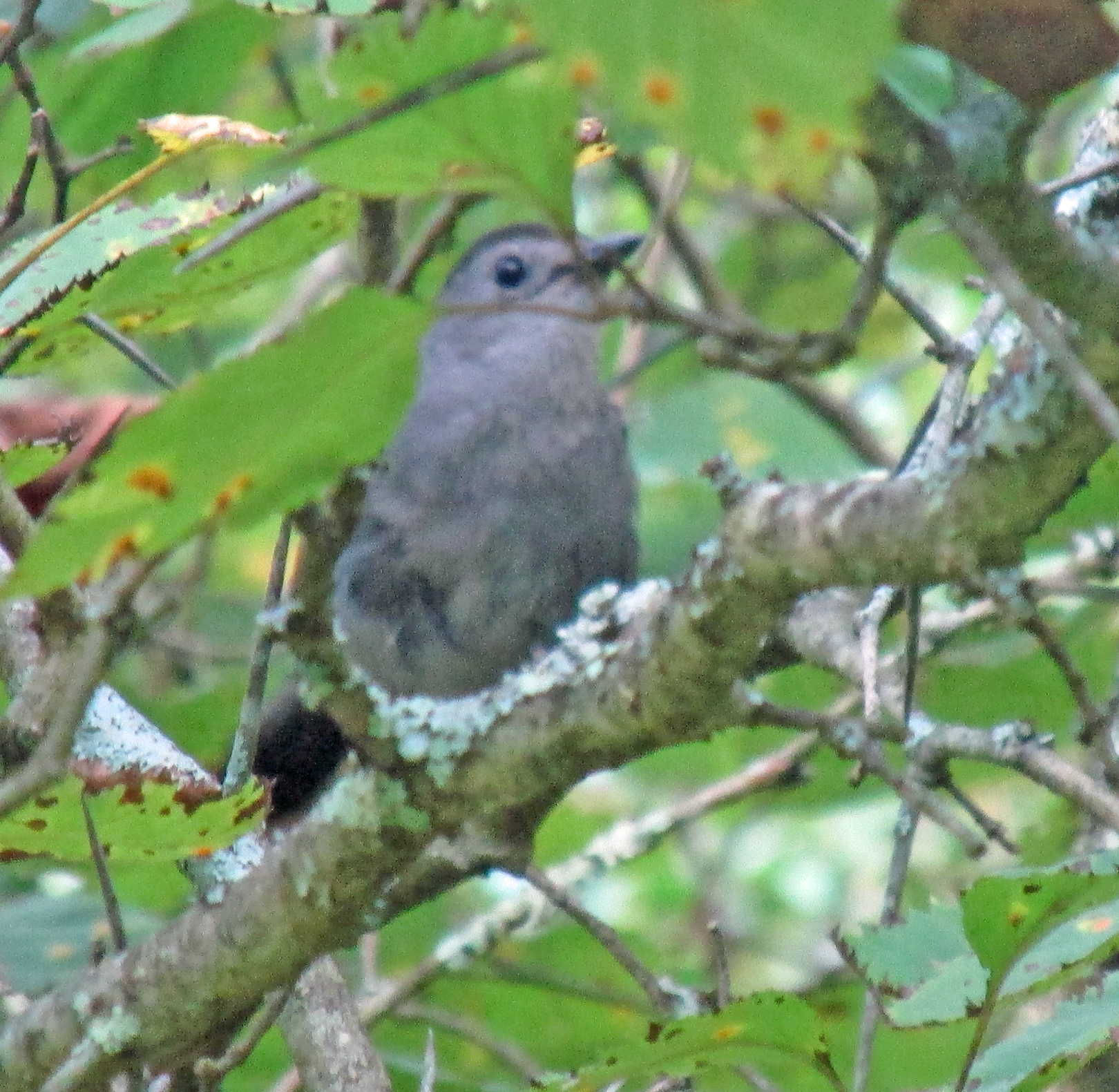
Photo by Bryan Stevens A curious Gray Catbird peeks from dense cover. Attendees at the fall rally can look for catbirds and other species at any of the offered bird hikes.

It was the other “feathered friend” mentioned in Susan’s message that I thought I’d riff on this week.

The ruby-throated hummingbird activity is rising at my home. Of course, that’s true for a lot of the wildlife. I’ve seen plenty of white-tailed deer, along with this summer’s fawns, as well as rabbits, groundhogs and raccoons during recent lazy late summer days. I think many of these visitors are trying to dry out from the frequent rainstorms.

If anything, the abundant rain has propelled an explosion of blooms, including jewelweed, a definite hummingbird favorite. Before the jewelweed burst into bloom a healthy crop of tiny red crocosmia blooms kept the hummingbirds coming back for more. I’ve also got some trumpet vines clinging to the wall of the family garage that also serve as a hummingbird attractant.

We’ve got six or seven more weeks to enjoy their company, and then come the inevitable winter months forcing us to await their return next spring as everything goes green once again.

It’s bittersweet when I flip the calendar page from August to September, but there are some good things to anticipate. Every season brings some of its own birds. Fall and winter mean migrating waterfowl, hermit thrushes and crowded bird feeders.

I don’t have anything against fall – it’s my favorite season. But I know that our ruby-throated hummingbirds, which returned only five months ago in early April, will soon be departing.

It won’t be only the hummingbirds. Warblers, orioles, tanagers and other migrants will also fly south to spend the winter season somewhere more hospitable.

Photo by Bryan Stevens • Late summer usually brings a spike in visiting hummingbirds.

Most of the hummingbirds that visited our gardens over the summer are getting ready to migrate back to their winter homes in Central America. The one that returned this spring and successfully nested are being joined at our sugar water feeders by the season’s offspring. That’s the reason there’s a spike in numbers in late summer and early fall.

The New World is home to about 360 species of hummingbirds. In addition to the ruby-throated hummingbird, I’ve seen eight other hummingbird species.

We’ve expended many adjectives in finding names of them all. Sometimes, words fail. Mere adjectives are somewhat inadequate in providing common names for many of the world’s hummingbirds, but that doesn’t keep us from trying to give descriptive names to each hummingbird species. For instance, we have the beautiful hummingbird of Mexico; the charming hummingbird of Costa Rica and Panama; the festive coquette of northwestern South America; and the magnificent hummingbird of the southwestern United States.

Other names are even more elaborate and occasionally outlandish, such as the white-tufted sunbeam of Peru; the violet-throated metaltail of Ecuador; the violet-throated starfrontlet of Peru and Bolivia; the hyacinth visorbearer of Brazil; and the rainbow-bearded thornbill of Colombia and Ecuador.

And in East Tennessee and across the entire eastern half of the North American continent, we have the ruby-throated hummingbird. It’s the single representative of this huge family of birds in this part of the world.

For the young birds, this will be their first epic crossing of the Gulf of Mexico, something the species must do twice a year to get to and from their summer home in eastern North America. We use the word “epic” far too often to describe achievements, but it applies to the feat of this tiny bird.

Photo by Bryan Stevens • A ruby-throated hummingbird visits a feeder for a sip of sugar water.

These tiny birds are about 3.5 inches in length and weigh two to six grams. That’s the weight of a penny.

Think about it. Something so small is able to fly 500 miles across open water between the U.S. Gulf Coast and the Yucatán Peninsula or Mexico.

This journey takes these tiny birds 18 to 24 hours of non-stop flying, with success depending greatly on the wind and weather conditions.

They can’t feed while flying over the ocean, so they tank up and double their body weight by eating heavy amounts of nectar and insects before the flight.

Some members of the species have chosen a safer coastal route around the edge of the Gulf through Texas instead of direct flight across. This turns a 500-mile journey into one that stretches to 1,000 to 2,000 miles. Regardless, that’s still a truly epic undertaking.

Keep your feeders filled with sugar water and add some extra flowers to your garden this fall seasons. You’ll earn the gratitude of visiting hummers. And, when they return next spring, consider yourself repaid in full.

•••

Bryan Stevens has written about birds, birding and birders since 1995. Email him at ahoodedwarbler@aol.com to share a sighting, make a comment or ask a question.

Cuckoo column strikes a chord with readers

Painting by Nick Blosser • Local artist Nick Blosser transformed a tragic ending for a yellow-billed cuckoo into a reflective and even beautiful work of art.

I got some feedback from readers after I wrote my recent column focused on yellow-billed cuckoos.

In that column, I happened to mention that I’ve probably seen almost as many cuckoos killed in window strikes as I have seen live individuals. That seemed to resonate. Although it is a sad way to get introduced to a species of bird, that appears to happen regularly with cuckoos.

“My husband and I loved your story on the yellow-billed cuckoo,” Mindy Blosser wrote in an email. “Several years ago we witnessed a tragic window strike of a yellow-billed cuckoo at our house in south Johnson City.”

She added, “It is such a beautiful bird.”

She said that her husband, Nick, is an artist and that he completed a watercolor painting to memorialize the bird.

“We thought you might like to see the watercolor,” she said.

They also agreed to let me share Nick’s painting with readers.

The painting, although obviously tragic in nature, manages to transform the moment into something reflective and even beautiful.

I also heard from Susan Peters, an Elizabethton resident, in response to the column on cuckoos.

“I really enjoyed your column on the cuckoo,” Susan wrote in an email. “You mentioned callers who had a bird strike into a window, and I wondered if you remembered the one I called you about. It was years ago at my parents’ home on K Street.”

She reminded me that the cuckoo at her parents’ home hit a big picture window and probably broke its neck.

Like the Blossers, Susan admired the beauty of the cuckoo.

“Such a beautiful bird,” she wrote.

Susan and I have corresponded for years through this column. And her timely email reminded me that I did indeed make arrangements to meet her and collect the cuckoo that died after the window strike. I transported the cuckoo to the biology department at Milligan University, at the time still Milligan College. It was probably one of the last specimens ever added to the collection of freeze-dried specimens maintained by biology professor Gary Wallace. He is now retired and has moved back to his boyhood home in Dover, Tennessee, in Stewart County.

When I gave some of my early programs on birding to local civic organizations, Wallace sent me out well prepared with some fine specimens from the collection. I recall that he loaned me everything from a blue-winged teal to a tiny ruby-throated hummingbird. The specimens were always a big hit with audiences. There’s just something about holding a bird in the hand, even if it is dead and preserved as a freeze-dried skin, that connects people with the long-expired bird and its kin.

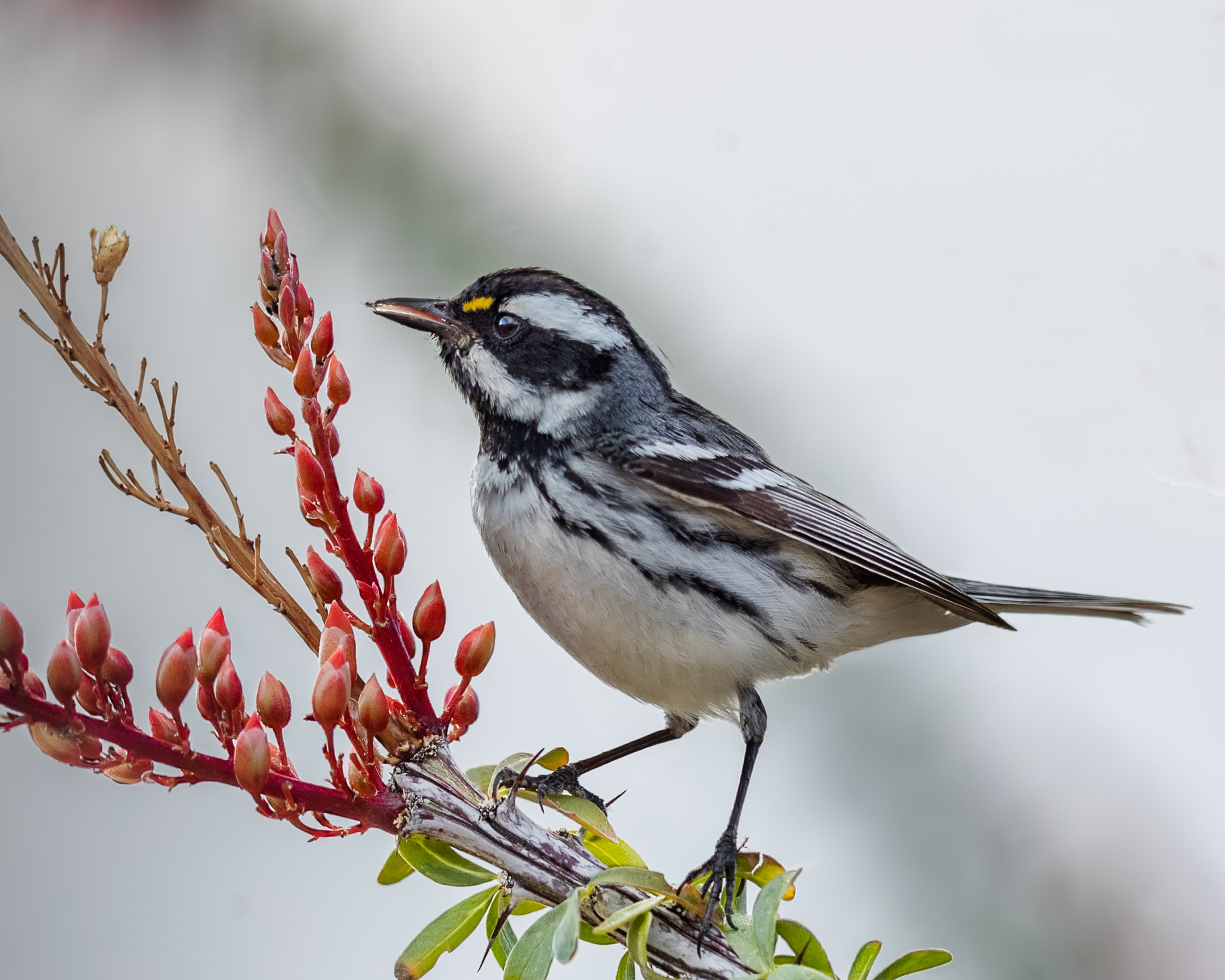
Photo by Patricia White/USFWS • The black-throated gray warbler normally ranges across the western half of North America and Mexico. Its migration route is usually west of the Great Plains, but half a century ago an individual reached Tennessee only to die in a fatal fallout of migrating birds that collided with a communications tower on Holston Mountain Oct. 2, 1972.

When the Elizabethton Bird Club still met on the Milligan campus, Wallace often opened the biology collection to our meetings for programs that basically consisted of our members getting to marvel at the array of birds preserved by the college’s biology department. Some unique specimens included the first black-throated gray warbler ever found in Tennessee. Unfortunately that bird died in a fatal fallout of birds that collided with a communications tower on Holston Mountain on Oct. 2, 1972.

Although housed for many years at Milligan, the black-throated gray warbler was eventually transferred in the summer of 2011 to the Louisiana State University Museum of Natural Science after Milligan’s biology department phased out its own collection.

The black-throated gray warbler normally ranges across the western half of North America and Mexico. The species migrates primarily through the Pacific and Central Flyways, staying strictly west of the Great Plains. Well, usually staying west of the Great Plains! The specimen found on Holston Mountain more than half a century ago proves that even this species has occasionally wandered far beyond its usual range.

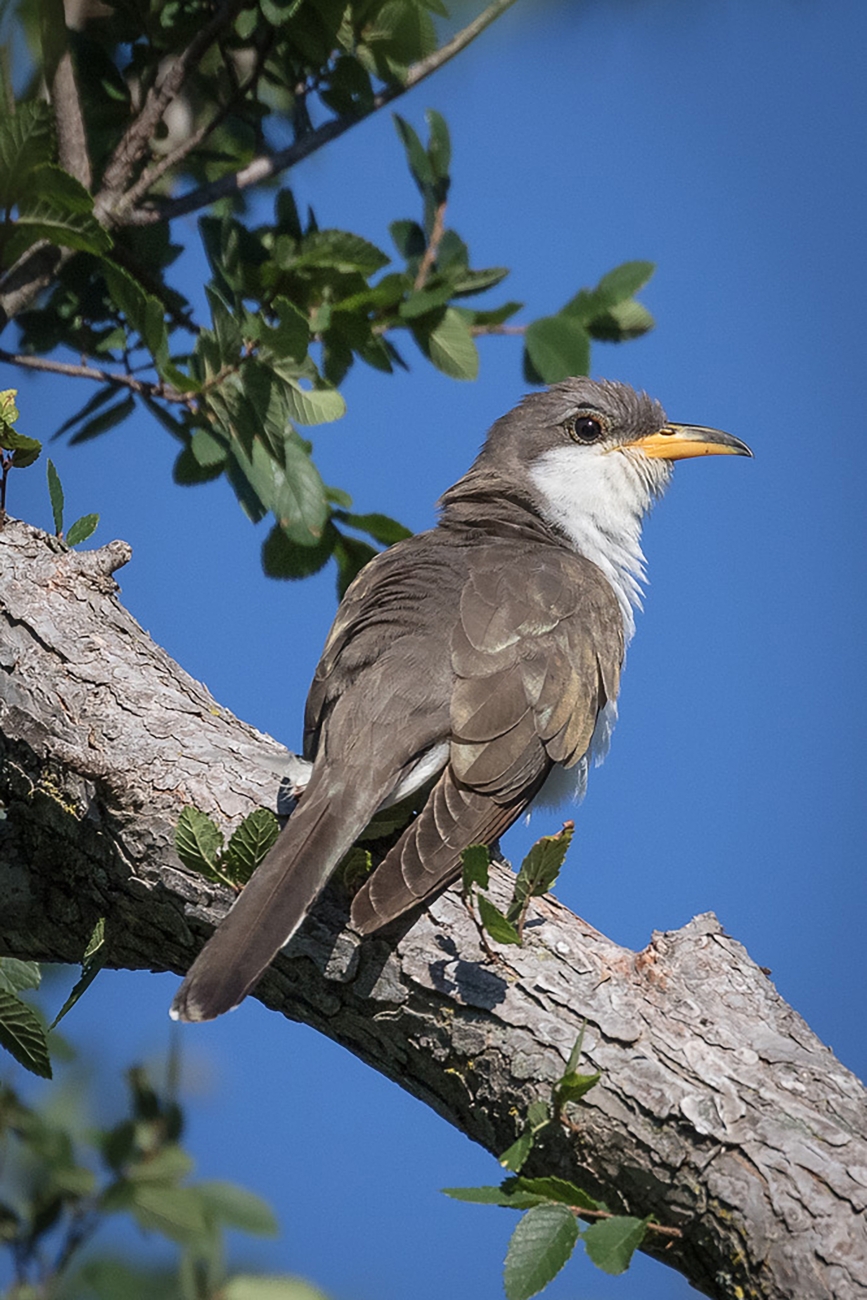
USFWS • A yellow-billed cuckoo perches in the open.

All too often, birds meet with accidents during migration or simply while living their daily lives. According to the ABA Rare Bird Alert network, an injured spotted rail was found and taken to a wildlife rehabilitation center earlier this month. Because the bird was immediately transferred into rehabilitation, its exact initial discovery location has not been publicized, making this mega-rarity not chaseable for Tennessee birders. “Chaseable” simply refers to the fact that many birders would have traveled a great distance to see such an unexpected discovery in order to add it to their life lists.

The spotted rail is a native to the freshwater marshes of Central America, the Caribbean, and South America. In other words, its discovery in Tennessee was extremely surprising.

Experts consider injured rails notoriously difficult to rehabilitate, but if this individual survives the first few stressful days, its chances of recovery should improve.

Birds have wings, and those wings can transport them to some unusual places. Their flights also occasionally take them into danger. It’s all part of the natural cycle. It’s also just one fascinating aspect of the lives of birds that keeps birders coming back for more.

Photo by Bryan Stevens • The waxy tips to the wing feathers are evident in this photograph of a cedar waxwing.

The seasons are beginning to shift. In recent weeks I’ve glimpsed young wild turkeys crossing local roadways. Cedar waxwings are beginning to flock at my home, no doubt lured by the ripening wild cherries in trees around my home. Ruby-throated hummingbirds are still visiting. An Eastern screech-owl has become a reliable serenader in the early evening hours.

Keep watching for unexpected visitors. As always, feel free to email me at ahoodedwarbler@aol.com to share sightings, ask questions or make comments.


Make an effort to win over gray catbirds

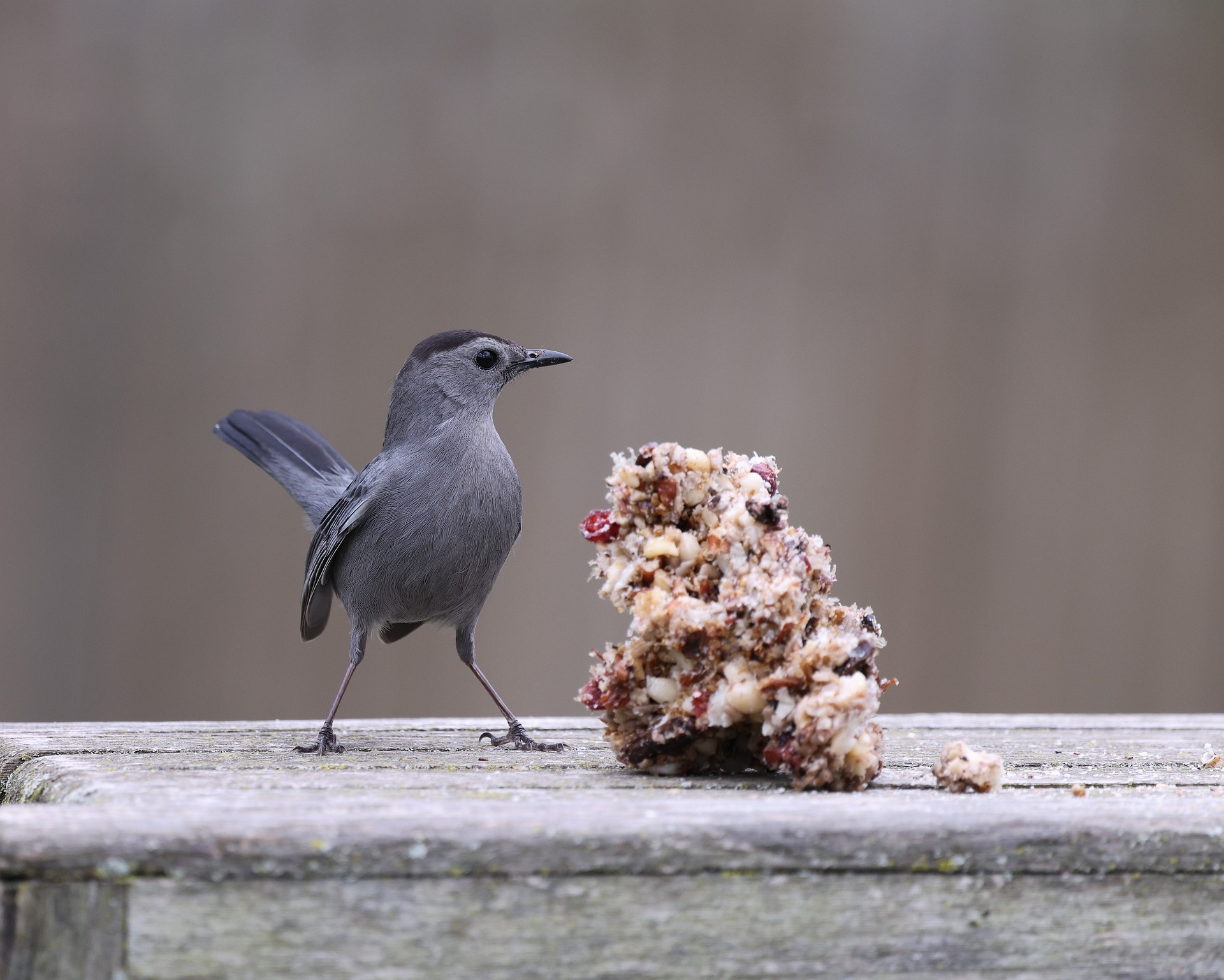
Veronika Andrews from Pixabay • If all else fails, bribery works well on gray catbirds. Provide these birds with a treat and their confidence is more quickly given.

The gray catbird is a baffling bird with a personality that runs the gamut from introverted to extroverted, sometimes depending on the season and at other times seemingly just on a whim. With some gentle persuasion, however, people can gain a catbird’s trust and develop a fun friendship with these clever songbirds.

Bribery also works. One summer, I only needed to offer some less-than-perfect strawberries and blueberries. A few blemishes on the fruit didn’t bother the resident catbirds at all, and they soon became accustomed to receiving such treats.

Your first introduction to the catbird is likely going to occur when you hear what sounds like an irritable feline hiding in a hedge, thicket or dense shrub. Upon closer examination, you may get a glimpse of a charcoal gray bird roughly the shape of a Northern mockingbird but smaller. A black cap and a patch of rusty-red feathers under the tail are the only exceptions to this bird’s overall gray plumage.

Photo by Bryan Stevens A curious Gray Catbird peeks from dense cover. Attendees at the fall rally can look for catbirds and other species at any of the offered bird hikes.

I’m pleased to note that catbirds are doing well. A profile on the website All About Birds confirms that the species is common and has benefitted from stable populations from 1966 to 2019, according to the North American Breeding Bird Survey. An estimate from Partners in Flight gives the species a breeding population of 29 million individuals spread out across North America. In a time when many bird species are declining, this is welcome news.

Catbirds are experts at concealing themselves from prying eyes. The gray plumage blends into the shadowy sections of the tangles and thickets where the bird likes to hide itself. However, even when gray catbirds are reluctant to be seen, they’re almost eager to be heard. The catbird is extremely vocal, with several calls and songs in its repertoire, including the rather faithful rendering of a fussy cat’s meow that provides this bird its common name.

They’re part of a family related to thrushes that are known as “mimic thrushes.” Besides its surprisingly accurate rendition of a feline, the catbird has several other common vocalizations. Despite their shy nature, they’re extremely curious. Imitating their calls or simply producing a squeaky sound will usually persuade the bird to move out of cover and search for the source of the noise.

Catbirds are part of the parade of returning birds each spring that includes species like rose-breasted grosbeaks, scarlet tanagers, Baltimore orioles and indigo buntings, but because they lack the brilliant plumages of these other birds their arrival would probably go unnoticed if not for the fact they are extremely noisy for the first few weeks they are back. Then they go silent again and remain quieter as they take up the serious business of raising young.

Photo by Bryan Stevens • A gray catbird hides within the branches of a dense shrub.

However, in a mood that appears to swing with the seasons, gray catbirds emerge again in late summer and early fall when they feast on such fruit as elderberries and wild cherries while making their whiny cacophony of calls from any tangle or thicket where they happen to be.

The catbird belongs to the genus Dumetella. The name is based upon the Latin term dūmus, which roughly translated means “thorny thicket.” Dumetella, in turn, means “dweller in the thornbushes” or “small bird of the thornbushes.” It’s a rather apt description for a bird fond of habitats often dominated by thorny vegetation. Older common names for the gray catbird included cat thrush and slate-colored mockingbird.

They are related to thrashers and mockingbirds, but scientists find them just different enough to warrant placing the gray catbird in its own genus. A relative known as the black catbird, which ranges throughout the Yucatan Peninsula of Mexico, as well as northern Guatemala and northern Belize, also belongs to a genus of its own. Both catbirds are classified as “mimic thrushes,” or Mimidae, of which there are about 30 species in the New World. There is a totally unrelated family of catbirds that ranges through Australia, Asia and parts of Africa.

Photo by Bryan Stevens • Gray catbird have a rusty-red patch beneath their tail, occasionally seen as they dive for cover.

The gray catbird is not as an accomplished mimic as some of its relatives, such as the Northern mockingbird. Males have motivation to constantly expand their repertoire, however, as doing so increases the likelihood of attracting a mate. They imitate other birds, but some have been recorded imitating frogs and other non-avian singers.

While not generally considered a bird to visit feeders, people have succeeded in attracting catbirds to feeders designed to offer grape jelly or orange slices. Planting fruit-bearing shrubs and trees is the best means of attracting these fascinating birds to your yard and garden. Leave a few untidy edges to your yard. Gray catbirds will thank you.

•••

Email me at ahoodedwarbler@aol.com to ask a question, make a comment or share a sighting.

Calling cuckoo brings back some birding memories

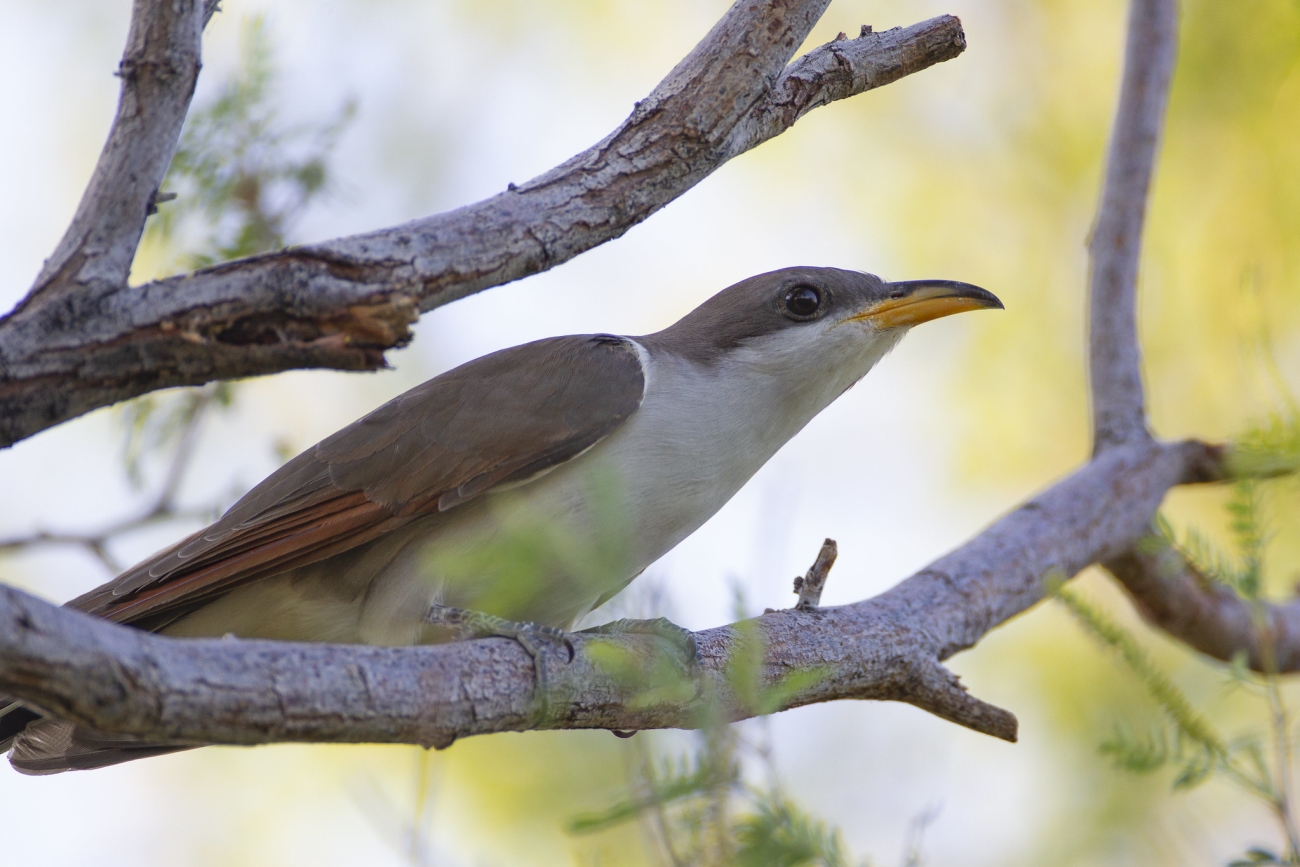
Photo by Peter Pearsall/USFWS • A yellow-billed cuckoo perches horizontally along a bare tree branch. The species feeds prodigiously on a variety of caterpillars.

I heard the low, gulping call of a yellow-billed cuckoo concealed by a dense curtain of green on the ridge behind my home on Sunday, July 26.

The hidden caller reminded me that this bird has acquired the nickname “rain crow” for consistently calling prior to summer downpours.

The yellow-billed cuckoo migrates a great distance to spend the summer months hidden in the dense green canopy of our local woodlands. Cuckoos spend the summer months in southern Canada and across most of the United States, but the bird’s winter range extends as far south as Venezuela and Argentina. They make a roundtrip journey of about 5,000 miles every spring and fall.

In pursuit of their favorite food – caterpillars – the yellow-billed cuckoo provides a public service, removing hairy tent caterpillars and their unsightly silk tents from the branches of various trees. I certainly applaud these efforts. Only a handful of birds feed on these caterpillars, with the yellow-billed cuckoo being the first and foremost consumer of these pests. The cuckoo has a voracious appetite for these caterpillars.

Photo by USFWS • A yellow-billed cuckoo selects a surprising open perch for a bird known for its reclusive nature.

Staking out tent caterpillar nests would seem a good way to increase the chances of seeing these elusive birds. Personally, it’s never quite worked out that way. My best – and first – sighting of a yellow-billed cuckoo is now buried 30 years back among my birding memories. I saw the bird perched in a gnarled peach tree that once stood only a few yards from my home.

Another memorable sighting took place on Fripp Island, South Carolina. That bird, observed from a golf cart, shared a tree with a scolding blue-gray gnatcatcher. The discrepancy in the sizes of the tiny gnatcatcher and the large cuckoo was striking. I genuinely feared that the cuckoo might attempt to snack on the smaller bird.
Other sightings have taken place at Roan Mountain State Park, Winged Deer Park in Johnson City, Sycamore Shoals State Historic Park in Elizabethton and Douglas Lake in Cocke County.

In addition to sightings of live birds, some readers have reported window strikes to me, usually because they’re unable to identify the bird that suffered a sad demise after impacting a window.

The yellow-billed cuckoo is a large bird, which an observation in close quarters emphasizes. This bird can reach a length of nearly 12 inches, but much of that length is composed of its long tail. It easily matches the size of such familiar birds as blue jay and American robins.

The yellow-billed cuckoo has a long, streamlined body and a brown and white plumage. The underside of the tail features large white dots and the wings show some rusty-red feathers. The bird also has a large, curved beak that gives the species its common name.

I hear these birds every summer, but my sightings amount to perhaps a couple every decade. I’m sure I could see more cuckoos with extra effort, but this bird would still present a challenge.

Europe’s common cuckoo is famous in folklore and fairy tales for slipping its eggs into the nests of other birds. While the yellow-billed cuckoo does this on occasion, it is not in the same league as nest parasites such as brown-headed cowbirds.

Two other cuckoos spend time in the United States. The black-billed cuckoo is also found in Northeast Tennessee, but this species is even more difficult to locate than its yellow-billed cousin.

I’ve only seen black-billed cuckoos on a few occasions. My best and first sighting involved a bird that briefly perched on a snag along a hiking trail at Johnson City’s Winged Deer Park. I managed to get my binoculars on the bird long enough for a memorable look. I’ve also seen this species at Sycamore Shoals State Historic Park and at Hampton Creek Cove in Roan Mountain.

Another species is the mangrove cuckoo, a bird that in the United States resides only in southern Florida while also ranging the Caribbean, both coasts of Mexico and Central America, and the Atlantic coast of South America as far south as the mouth of the Amazon River. It’s no surprise that this specialist species is found primarily in mangrove swamps.

The yellow-billed cuckoo is known by the scientific name, Coccyzus americanus. Other cuckoos in the genus Coccyzus, which includes about a dozen species, are pearly breasted cuckoo, dark-billed cuckoo, chestnut-bellied cuckoo, grey-capped cuckoo, bay-breasted cuckoo and the great lizard cuckoo.

Although I haven’t seen one for a few years, I’m still glad to know that the yellow-billed cuckoo remains a lurker in the woodlands around my home. If you manage to lay eyes on this elusive bird, consider yourself fortunate.

•••

Bryan Stevens has written about birds, birding and birders since 1995. To share a sighing, ask a question or make a comment, email him at ahoodedwarbler@aol.com.