
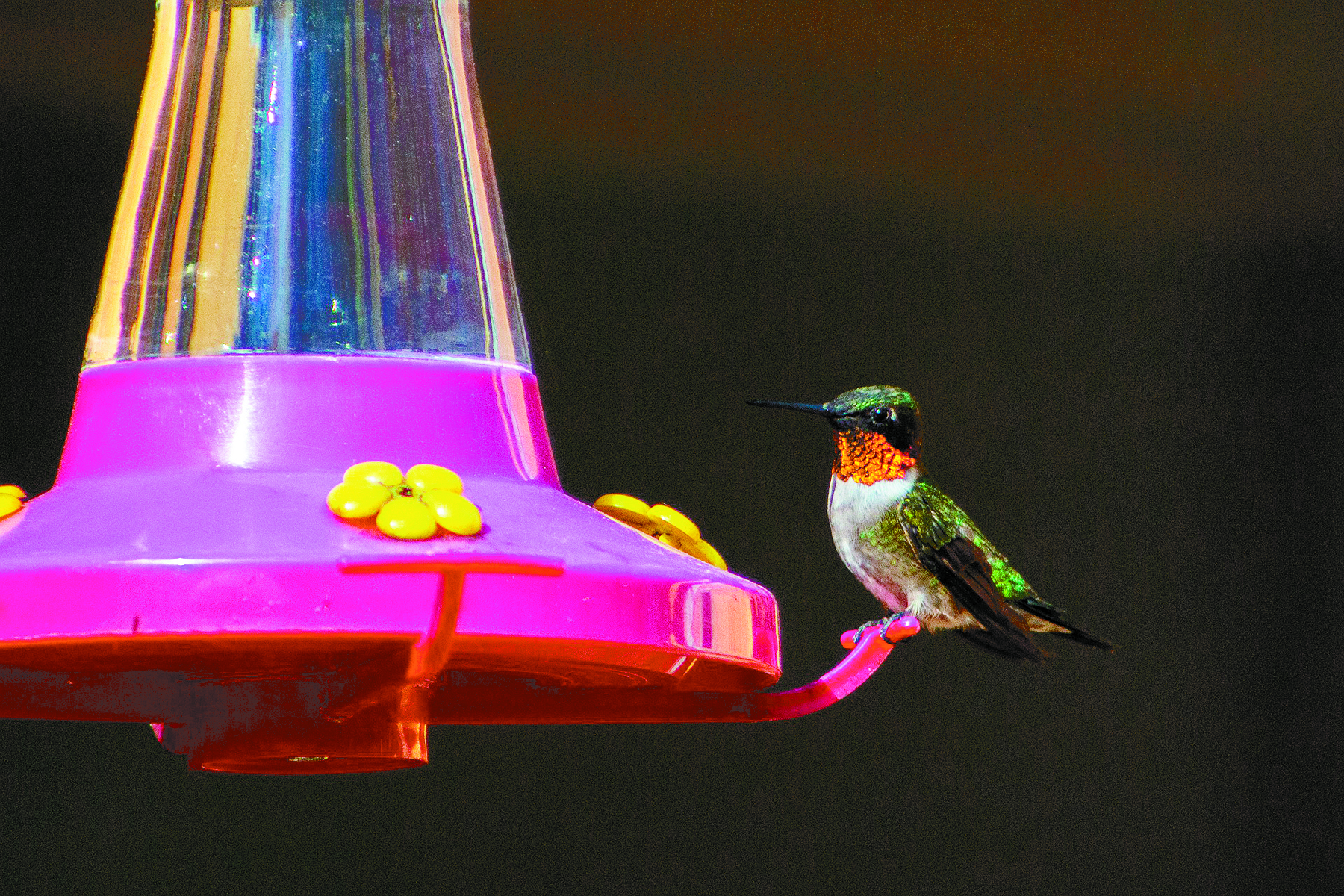
Photo by Katy Jefferson/Pixabay • A male ruby-throated hummingbird perches on a sugar water feeder.
September’s right around the corner. Then comes fall, then winter, and the cycle of the seasons continues to advance.
Always there as signals to herald the imminent approach of a new season are the birds. Our feathered friends are quite remarkable in that regard.
I heard from Elizabethton resident Susan Peters recently via email about my recent columns on catbirds.
She reported that she has noticed that catbirds return almost exactly at the same time as the hummingbirds every year. She described the catbirds as very chatty for awhile when they first come back.
“I just assumed they were letting everyone else know they were back,” she wrote.
I agree with her. I think the constant vocalizing of the catbirds is an announcement to human neighbors as well as their fellow feathered kin that they are back in the vicinity.
Catbirds appear to stage different high profile periods during their yearly stay. My own catbirds are always at their most chatty when they first return in the spring, in later summer after the nesting season when they “reappear,” and again in fall just before they depart for their wintering grounds.
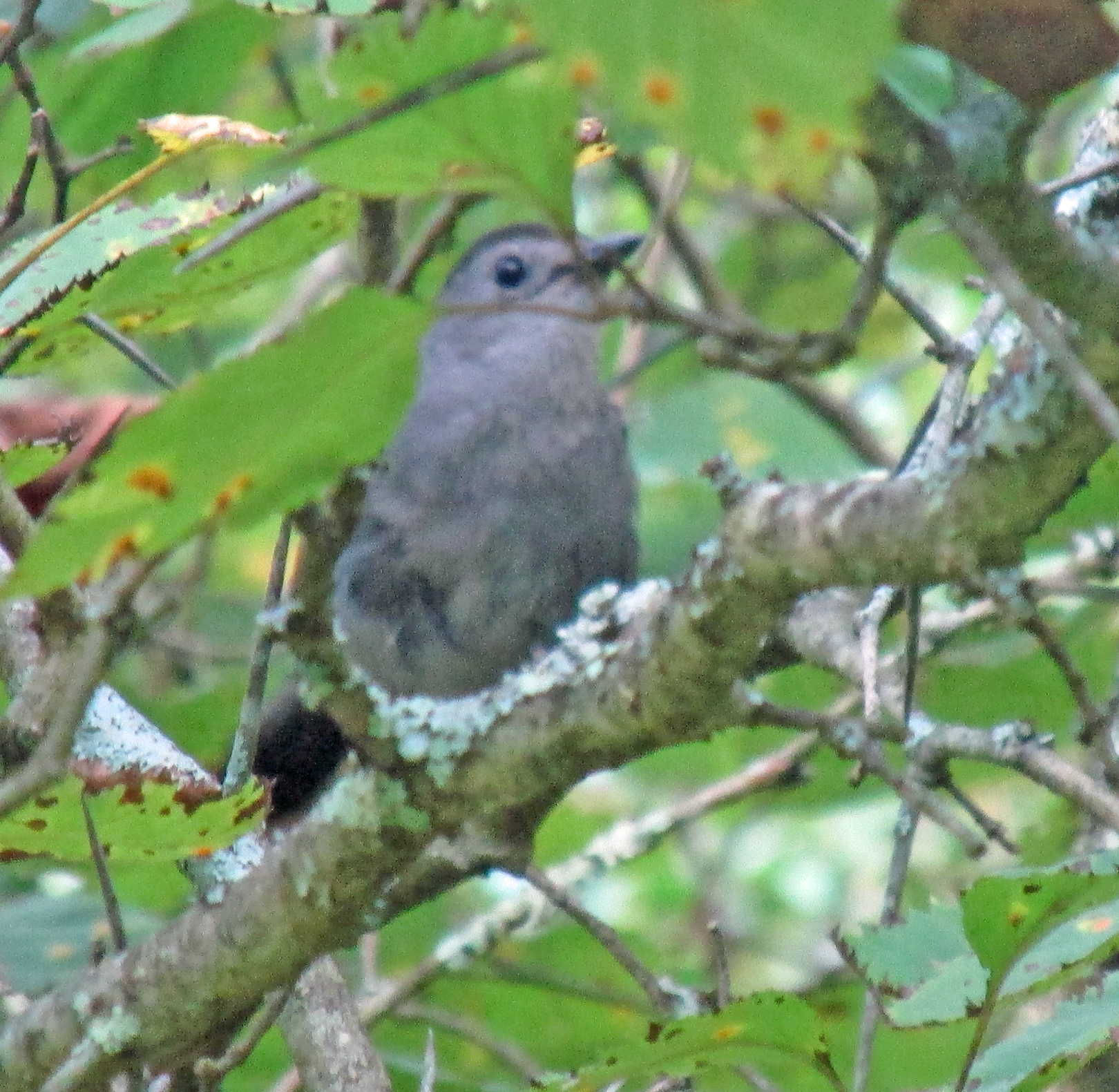
Photo by Bryan Stevens A curious Gray Catbird peeks from dense cover. Attendees at the fall rally can look for catbirds and other species at any of the offered bird hikes.
It was the other “feathered friend” mentioned in Susan’s message that I thought I’d riff on this week.
The ruby-throated hummingbird activity is rising at my home. Of course, that’s true for a lot of the wildlife. I’ve seen plenty of white-tailed deer, along with this summer’s fawns, as well as rabbits, groundhogs and raccoons during recent lazy late summer days. I think many of these visitors are trying to dry out from the frequent rainstorms.
If anything, the abundant rain has propelled an explosion of blooms, including jewelweed, a definite hummingbird favorite. Before the jewelweed burst into bloom a healthy crop of tiny red crocosmia blooms kept the hummingbirds coming back for more. I’ve also got some trumpet vines clinging to the wall of the family garage that also serve as a hummingbird attractant.
We’ve got six or seven more weeks to enjoy their company, and then come the inevitable winter months forcing us to await their return next spring as everything goes green once again.
It’s bittersweet when I flip the calendar page from August to September, but there are some good things to anticipate. Every season brings some of its own birds. Fall and winter mean migrating waterfowl, hermit thrushes and crowded bird feeders.
I don’t have anything against fall – it’s my favorite season. But I know that our ruby-throated hummingbirds, which returned only five months ago in early April, will soon be departing.
It won’t be only the hummingbirds. Warblers, orioles, tanagers and other migrants will also fly south to spend the winter season somewhere more hospitable.

Photo by Bryan Stevens • Late summer usually brings a spike in visiting hummingbirds.
Most of the hummingbirds that visited our gardens over the summer are getting ready to migrate back to their winter homes in Central America. The one that returned this spring and successfully nested are being joined at our sugar water feeders by the season’s offspring. That’s the reason there’s a spike in numbers in late summer and early fall.
The New World is home to about 360 species of hummingbirds. In addition to the ruby-throated hummingbird, I’ve seen eight other hummingbird species.
We’ve expended many adjectives in finding names of them all. Sometimes, words fail. Mere adjectives are somewhat inadequate in providing common names for many of the world’s hummingbirds, but that doesn’t keep us from trying to give descriptive names to each hummingbird species. For instance, we have the beautiful hummingbird of Mexico; the charming hummingbird of Costa Rica and Panama; the festive coquette of northwestern South America; and the magnificent hummingbird of the southwestern United States.
Other names are even more elaborate and occasionally outlandish, such as the white-tufted sunbeam of Peru; the violet-throated metaltail of Ecuador; the violet-throated starfrontlet of Peru and Bolivia; the hyacinth visorbearer of Brazil; and the rainbow-bearded thornbill of Colombia and Ecuador.
And in East Tennessee and across the entire eastern half of the North American continent, we have the ruby-throated hummingbird. It’s the single representative of this huge family of birds in this part of the world.
For the young birds, this will be their first epic crossing of the Gulf of Mexico, something the species must do twice a year to get to and from their summer home in eastern North America. We use the word “epic” far too often to describe achievements, but it applies to the feat of this tiny bird.

Photo by Bryan Stevens • A ruby-throated hummingbird visits a feeder for a sip of sugar water.
These tiny birds are about 3.5 inches in length and weigh two to six grams. That’s the weight of a penny.
Think about it. Something so small is able to fly 500 miles across open water between the U.S. Gulf Coast and the Yucatán Peninsula or Mexico.
This journey takes these tiny birds 18 to 24 hours of non-stop flying, with success depending greatly on the wind and weather conditions.
They can’t feed while flying over the ocean, so they tank up and double their body weight by eating heavy amounts of nectar and insects before the flight.
Some members of the species have chosen a safer coastal route around the edge of the Gulf through Texas instead of direct flight across. This turns a 500-mile journey into one that stretches to 1,000 to 2,000 miles. Regardless, that’s still a truly epic undertaking.
Keep your feeders filled with sugar water and add some extra flowers to your garden this fall seasons. You’ll earn the gratitude of visiting hummers. And, when they return next spring, consider yourself repaid in full.
•••
Bryan Stevens has written about birds, birding and birders since 1995. Email him at ahoodedwarbler@aol.com to share a sighting, make a comment or ask a question.

