

Photo by Jean Potter • A golden-crowned kinglet is held after being banded.
The season’s definitely changing. As I write this week’s column, the recent glorious autumn weekend has rapidly transitioned to much colder temperatures and a snowy forecast. In my mind, mid-November is far too early to experience snow, but then I can also remember a handful of white Halloweens when unseasonal early snows arrived in late October.
The birds have been forecasting the approach of winter with their presence. In recent weeks, many winter residents have arrived. Here’s a look at a few of them:
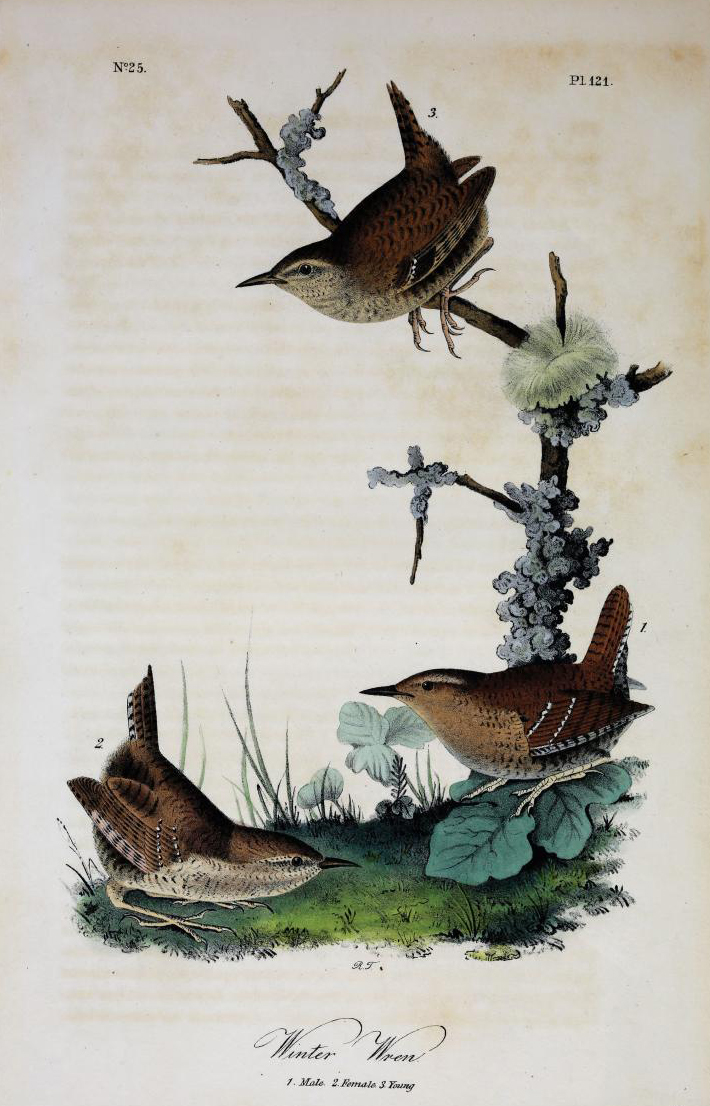
Painting of winter wrens by early American naturalist and painter John James Audubon.
Winter Wren
This bird is one of the smallest wrens in North America. In Europe, this species is known simply as “wren” due to the fact that no other wrens occur in that part of the world. A key habitat element desired by the winter wren is an abundance of fallen logs. In the wake of Hurricane Helene in 2024, there are still plenty of felled trees in area woodlands. It must be a paradise for winter wrens. These tiny birds are winter birds in the southeastern and south-central United States. They often scurry and creep more like a mouse than a bird equipped with fully capable wings. Other wrens found in the region include Carolina wren and house wren.
Golden-crowned Kinglet
North America is home to two species of kinglet: the golden-crowned kinglet and the ruby-crowned kinglet. The ruby-crowned kinglets arrived in late September and early October. Now the related golden-crowned kinglet has arrived. The golden-crowned kinglet is a hardy bird that dares the region’s frigid winters. Ruby-crowned kinglets will often head farther south if East Tennessee, Western North Carolina and Southwest Virginia experience dramatically frigid winters. The golden-crowned kinglet, which nests on some high-elevation mountains in the region, is not a feeder visitor, but it will join mixed flocks. When these flocks visit feeders, the attached kinglets will sometimes check out what’s causing all the commotion.
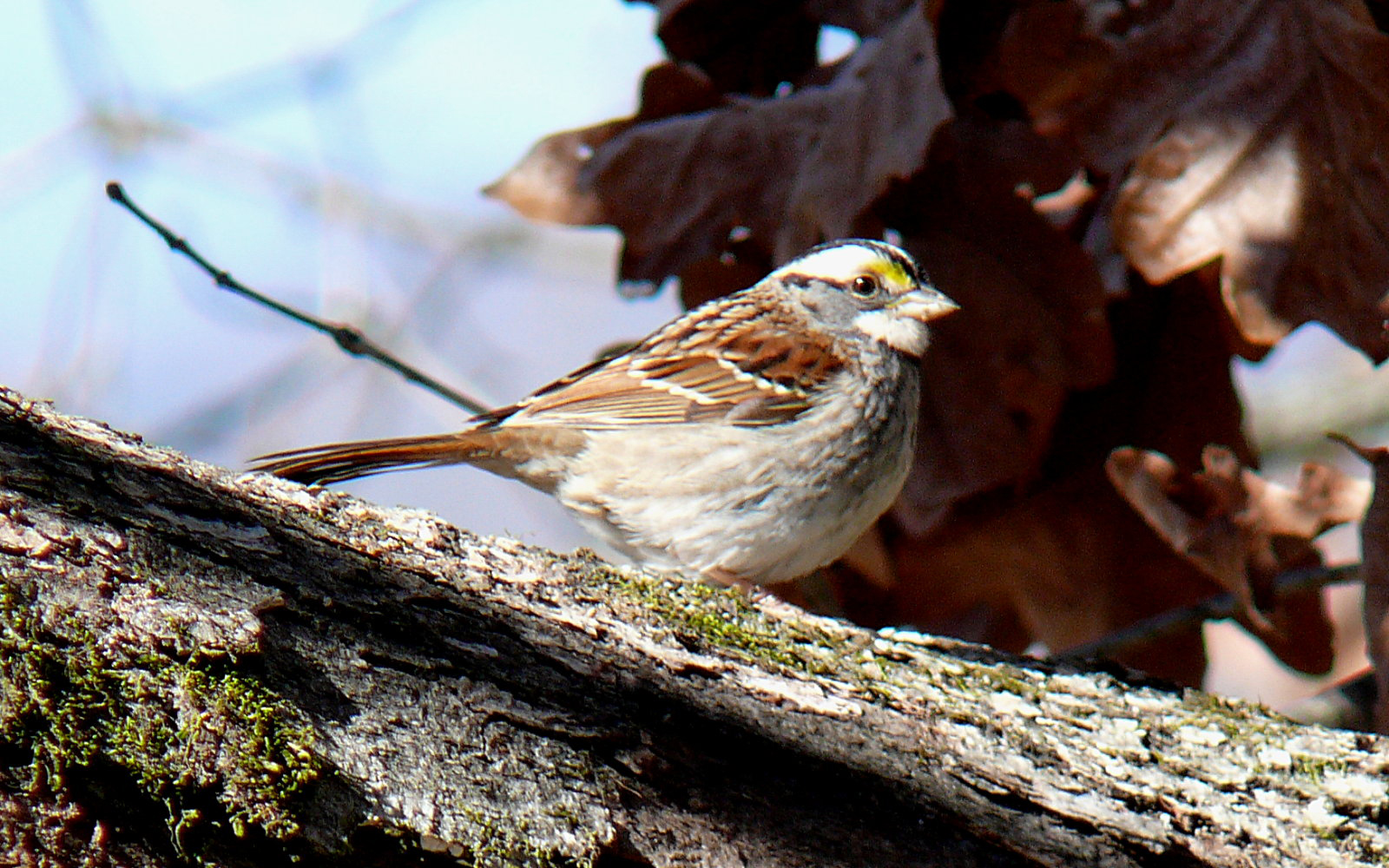
Photo by Skeeze/Pixabay • A white-throated sparrow perches on a branch to sing its easily recognizable song. Many Americans translate the sparrow’s song as “Ol’ Sam Peabody, Peabody, Peabody.”
White-throated Sparrow
Winter’s a season painted in shades of gray. Or brown, in the case of some of the “little brown birds” known as sparrows that enliven our yards and gardens during the colder months. I saw my first white-throated sparrow of the season on Halloween (Oct. 31). These birds, with the namesake white throat patch, are common sparrows at feeders during the winter months. There they may join other sparrows, including song sparrows, field sparrows, fox sparrows and swamp sparrows. Unlike most sparrows, the white-throated sparrow also has a dot of color — a prominent yellow spot between the sparrow’s eyes and bill. Like most sparrows, they prefer to feed on the ground, but on occasion they learn to visit hanging feeders and platform feeders.
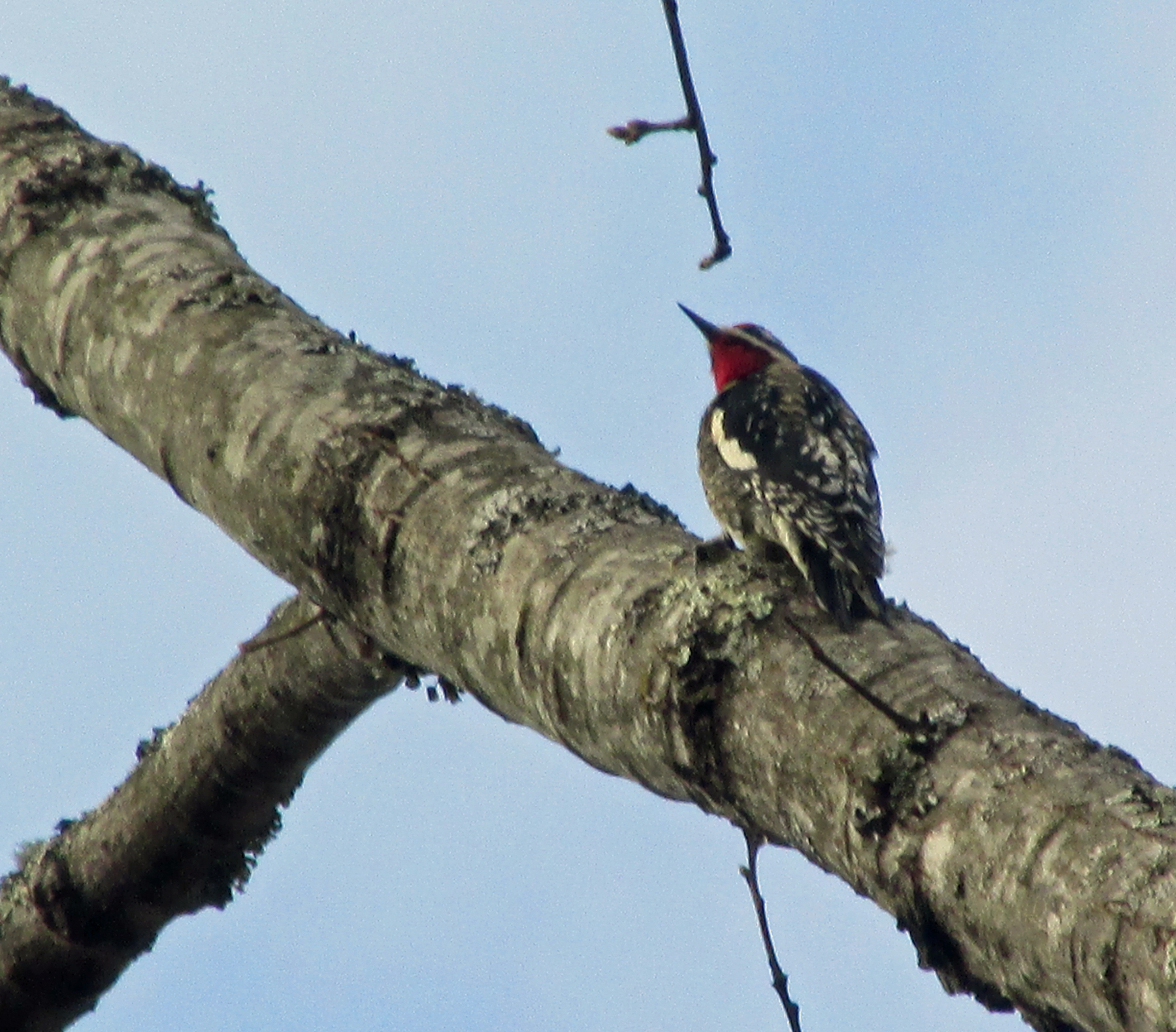
Photo by Bryan Stevens • A yellow-bellied sapsucker hitches along a tree trunk near Watauga Lake.
Yellow-bellied Sapsucker
There are some bird names that sound like fighting words that bring into question concepts like courage and honor. Indeed, I sometimes think people are waiting for a punchline when I inform them there truly is a species of bird known as the yellow-bellied sapsucker. For those who doubt, just know that this species of aberrant woodpecker is a rather common winter resident in the region. Sapsuckers usually arrive by the first half of October. The yellow-bellied sapsucker has a call that sounds amazingly like the meow of a cat. I know about this call from personal experience. While birding in South Carolina a few years ago, I searched diligently for the source of such a call. It sounded somewhat like a gray catbird — another mimic of the common household feline — but not quite. Now I know that when I hear this unusual call I can train my binoculars on the branches and trunks of nearby trees to scan for a sapsucker. To seek out this woodpecker, you might also scan for sapsucker wells, which are small, orderly rows of holes drilled into tree trunks by sapsuckers to access plant sap and concealed insects.
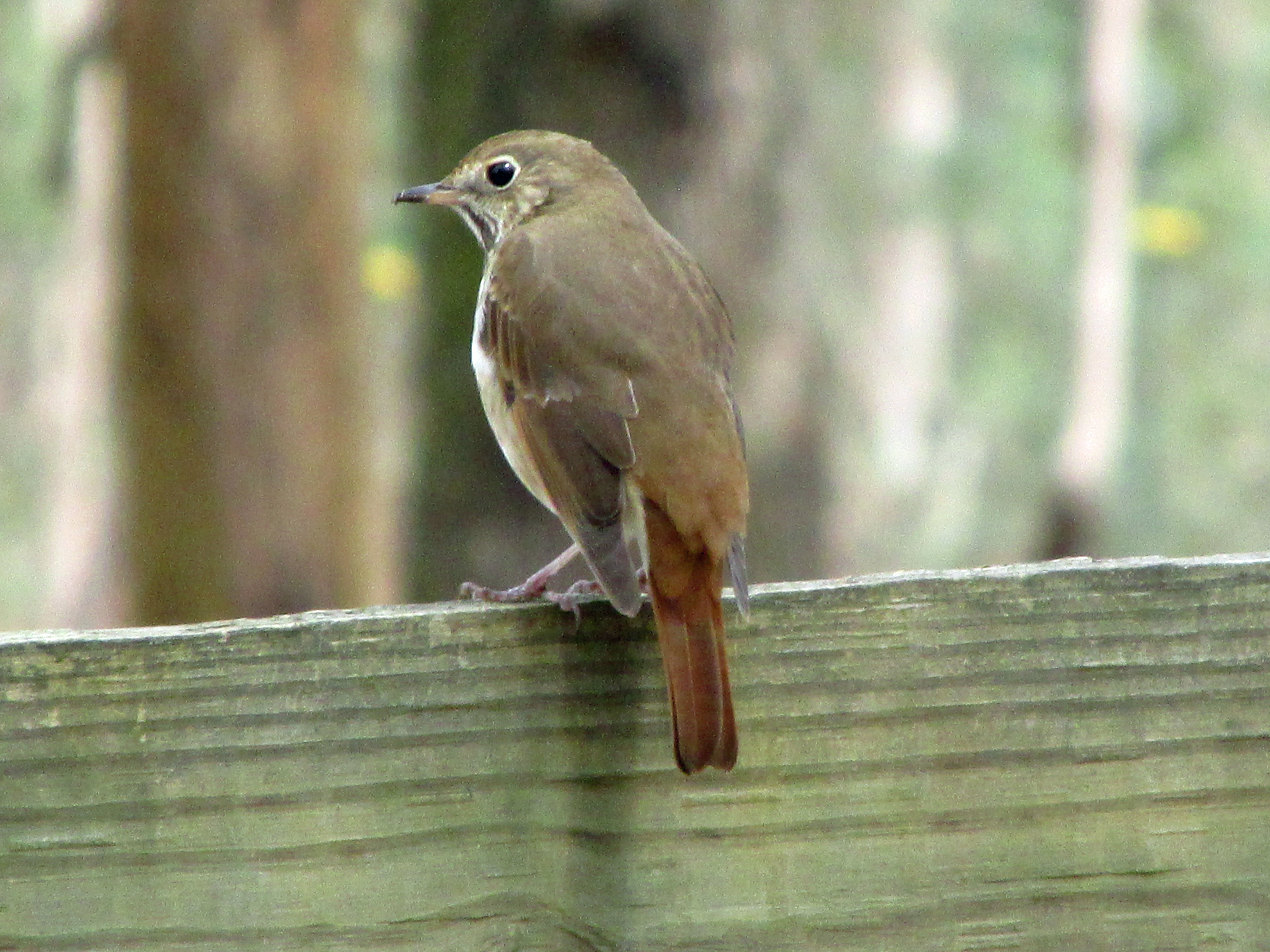
Photo by Bryan Stevens • The hermit thrush is a winter resident throughout much of the southeastern United States.
Hermit Thrush
Most thrushes migrate into the region in the spring and reside here until fall. The hermit thrush turns this pattern on its head. Hermit thrushes winter in the region, departing in the spring for nesting territory farther north. They typically don’t sing in winter, which is a shame. This thrush has a hauntingly beautiful song — a series of clear, musical notes, each on a different pitch, consisting of a piping introductory note and a reedy tremolo. In the wintry months, the hermit thrush does produce a call note when disturbed or alarmed that is described as a low “chuck.” According to the Smoky Mountains Visitors Guide website, the hermit thrush forages for most of its food from the ground. This bird’s diet includes insects, spiders, snails and earthworms, as well as considerable amounts of wild fruits during the fall and winter.
•••
Bryan Stevens has written about birds, birding and birders since 1995. Email him at ahoodedwarbler@aol.com to share sightings, ask questions or make comments.

