Monthly Archives: April 2026

Unseen wood thrushes still make lovely music

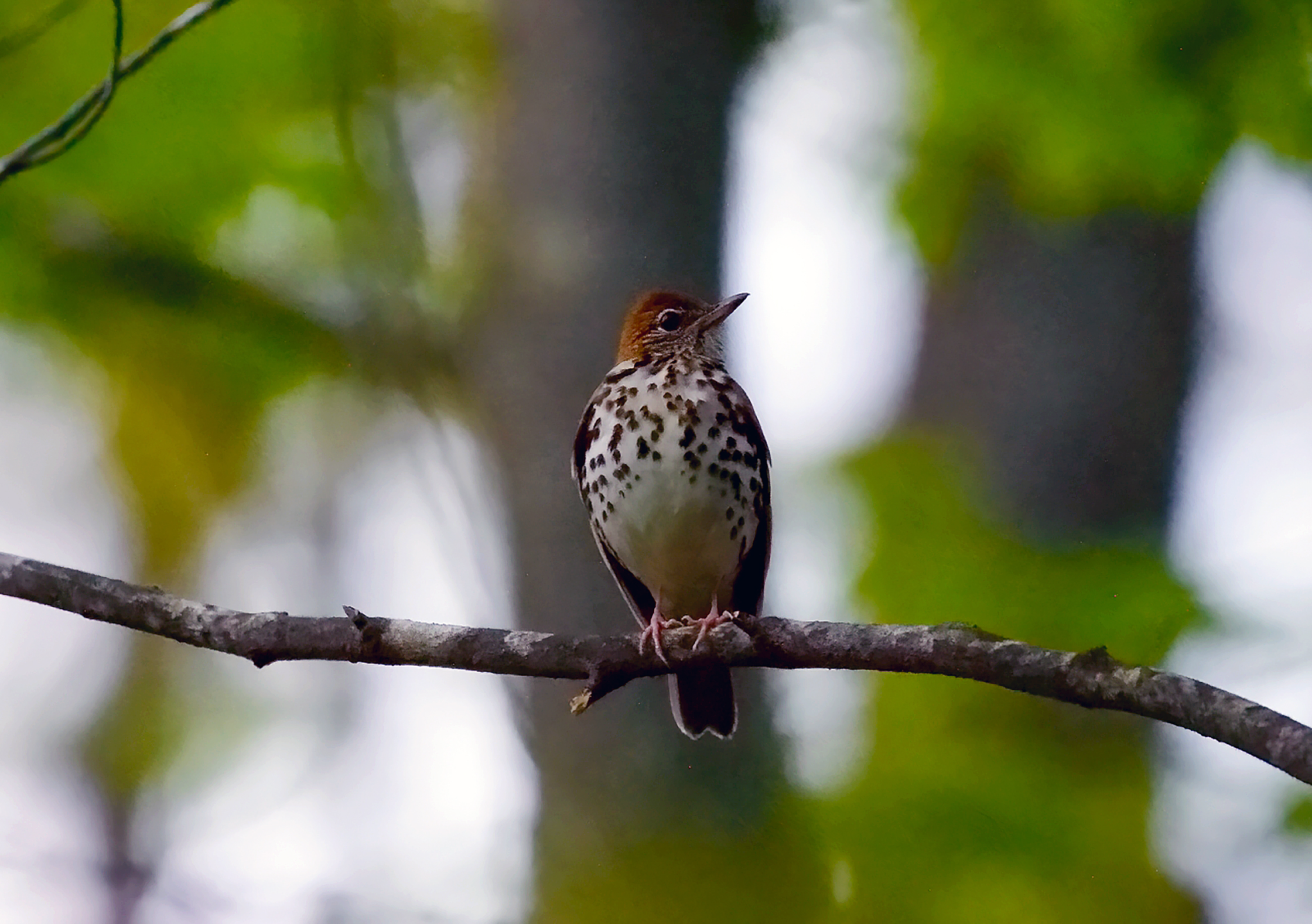
Photo by Jake Bonello/USFWS • A wood thrush sings at dusk from dense woodland cover.

The wood thrush, one of the most talented avian songsters in North America, returned this past week. I guess it’s now safe to plant corn. I’ve heard that many area gardeners hesitate to plant their corn until this native bird has given the “all clear” to signal that danger of a late freeze is past.

I haven’t seen a wood thrush yet, but I know that several of these birds have taken up residence in the woods around my home. I know because I’ve been hearing them singing mornings and evenings.

The wood thrush has a well-developed organ called a syrinx, which is the human equivalent of a larynx or voice box. For many songbirds, such as the thrushes, this specialized organ is more like a double voice box that permits a bird to produce two notes simultaneously while singing its song.

I think more people would take up the challenging pastime of birdwatching if not for the intimidation of trying to identify dozens of species that often demand attention to some specific details to contrast some birds from similar species.

But it is possible to enjoy birds even with looking at them. The wood thrush produces an elegant song that I never tire of hearing. Many other birds are vocal. They’re not all as musical as members of the thrush family, but its’s not necessary to ever lift a pair of binoculars to enjoy the birds in your own backyard. The sweet serenade of a wood thrush from woodland shadows is one of my favorite front porch evening activities every summer.

The wood thrush is one of the larger brown thrushes, which also includes such related birds as Swainson’s thrush, veery, gray-cheeked thrush and hermit thrush. Other less closely related members of the thrush family in North America include the American robin, Eastern bluebird and Townsend’s solitaire.
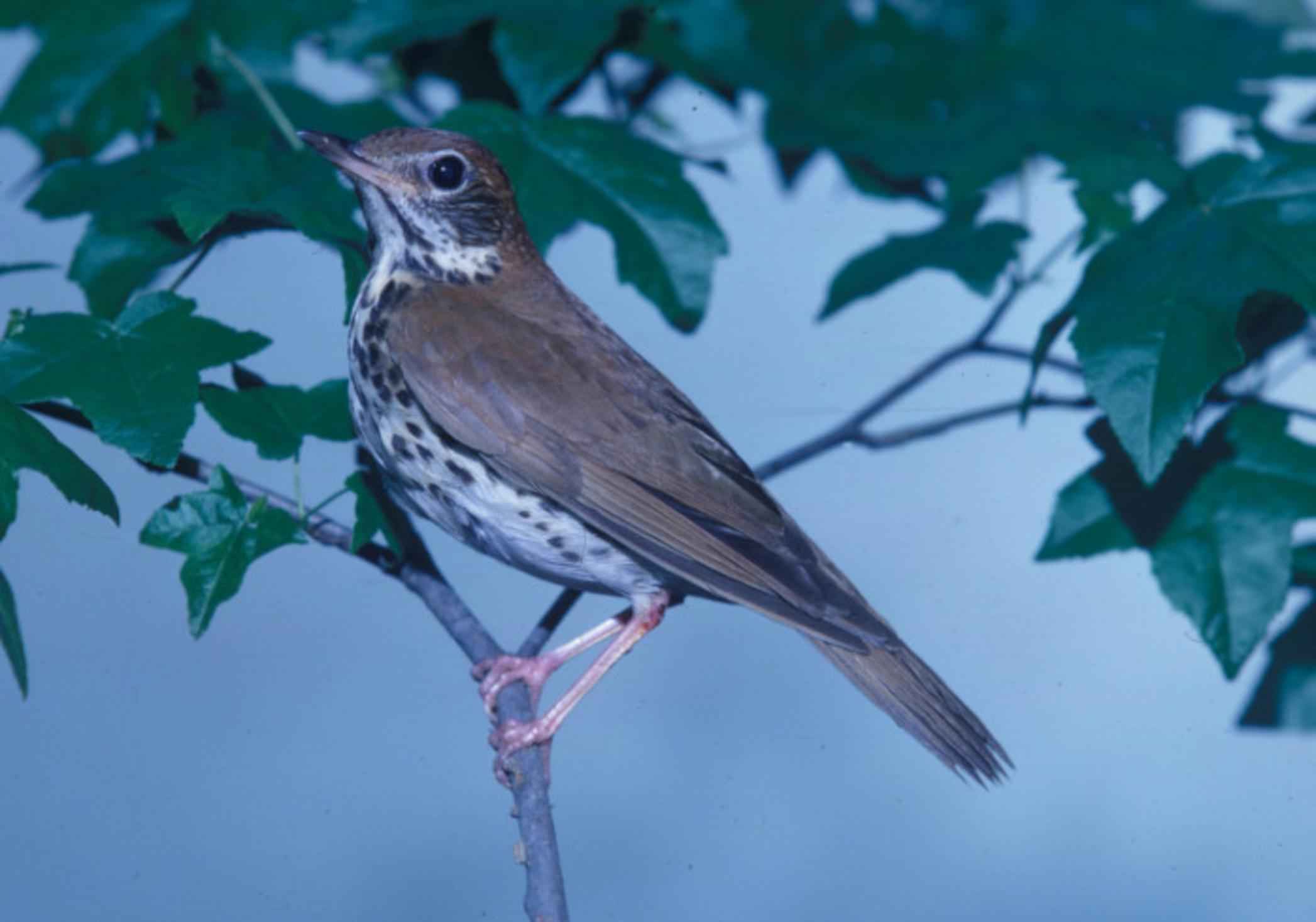
Photo by U.S. Fish & Wildlife Service • The Wood Thrush often sings its flute-like song from deep under cover in dense woodlands.

The wood thrush is a fairly common bird in the region from April to October. Wood thrushes migrate south in the fall, dispersing to Mexico and Central America for the winter months, and then they reverse the route to return each spring.

The shy wood thrush does not usually venture too far from its preferred woodland habitat, but freshly disturbed soil in a garden will attract these birds as they seek out earthworms and insect larvae. Wood thrushes also feed on various fruits and berries, which means they can be attracted by plantings of suitable trees and shrubs.

The wood thrush, like many of its relatives, sings mainly in the early morning and again in the evening hours. They will also often sing after the tumult of an afternoon thunderstorm in the summer. I encourage anyone who lives near woods to pull up a comfortable seat outdoors and let the relaxing song of a wood thrust provide a great conclusion to the the day.

Naturalists often point to one of the wood thrush’s close kin — the hermit thrush — as the most gifted singer in this clan of gifted songsters. For discerning listeners, the hermit thrush’s flute-like notes are somewhat more melancholy, haunting and ethereal than even the incredibly enchanting notes of the wood thrush’s song.

The poet Walt Whitman employed a thrush as a symbol in his poem, “When Lilacs Last in the Dooryard Bloom’d,” a moving pastoral elegy in honor of the assassinated President Abraham Lincoln.
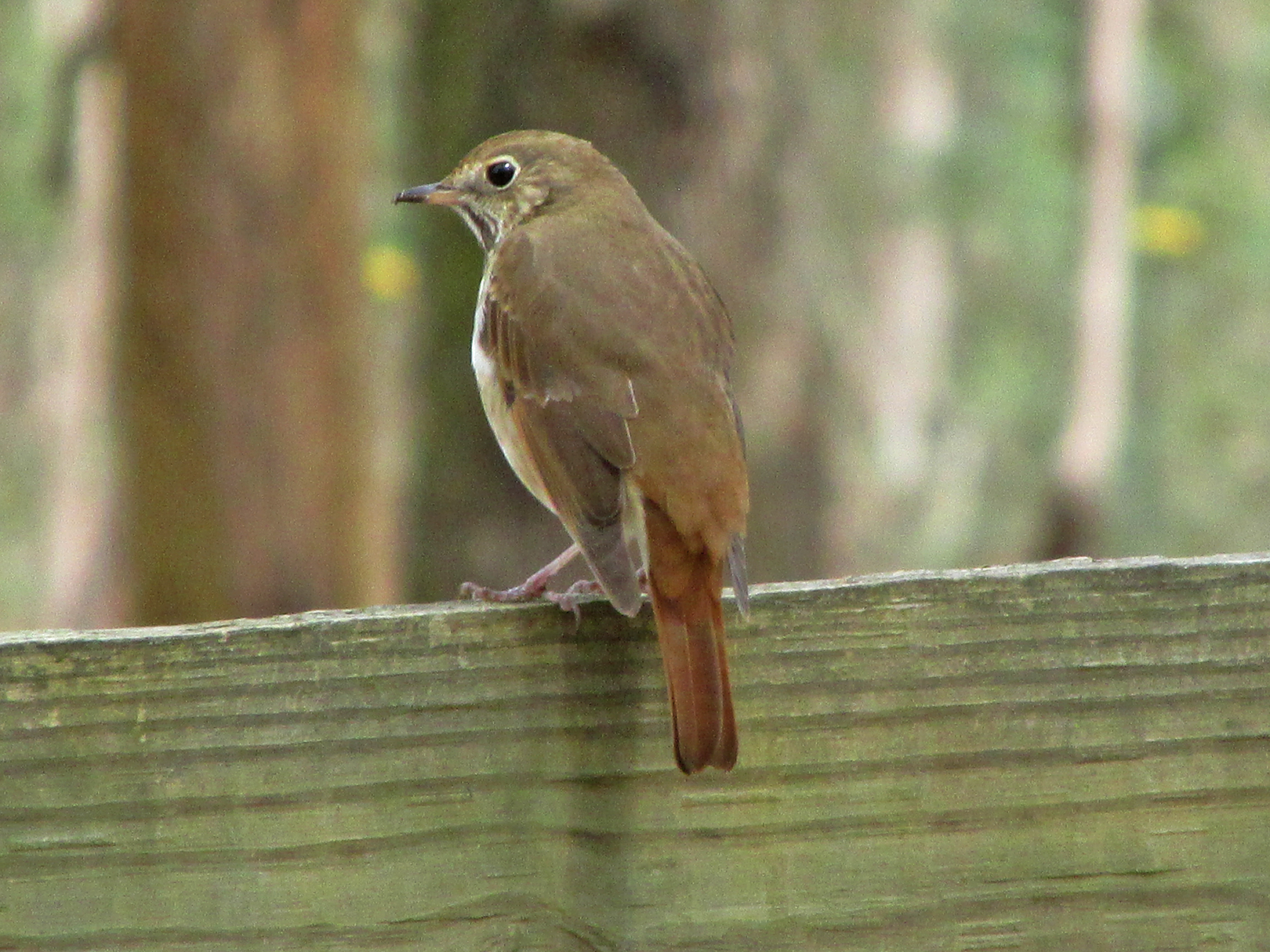
Photo by Bryan Stevens • A hermit thrush perches on a wooden fence rail. The bird’s rusty-red tail is evident in the photo.

Whitman evidently knew his birds, and it’s not difficult to identify that he referred to the hermit thrush when he wove this songbird as a symbol into his stanzas honoring Lincoln.

“Sing on there in the swamp,” Whitman wrote in his poem. “O singer bashful and tender, I hear your notes, I hear your call. I hear, I come presently, I understand you…”

Whitman and many other Americans have been made fans of this gifted songbird. In fact, the citizens of Vermont even proclaimed the hermit thrush as their official state bird.

In Northeast Tennessee, hermit thrushes are mostly a winter bird, but the wood thrush stays with us from spring to early fall. Enjoy the free music of resident wood thrushes this season. I don’t think you’ll be disappointed.
•••
To learn more about birds and other topics from the natural world, friend Stevens on Facebook at https://www.facebook.com/ahoodedwarbler. He often posts about local birds, wildlife, flowers, insects and much more. If you have a question, wish to make a comment or share a sighting, email him at ahoodedwarbler@aol.com.

Photo by Jean Potter • The wood thrush is a common summer resident of woodlands in Northeast Tennessee, Southwest Virginia and Western North Carolina.
Ruby-throated hummingbirds return to region

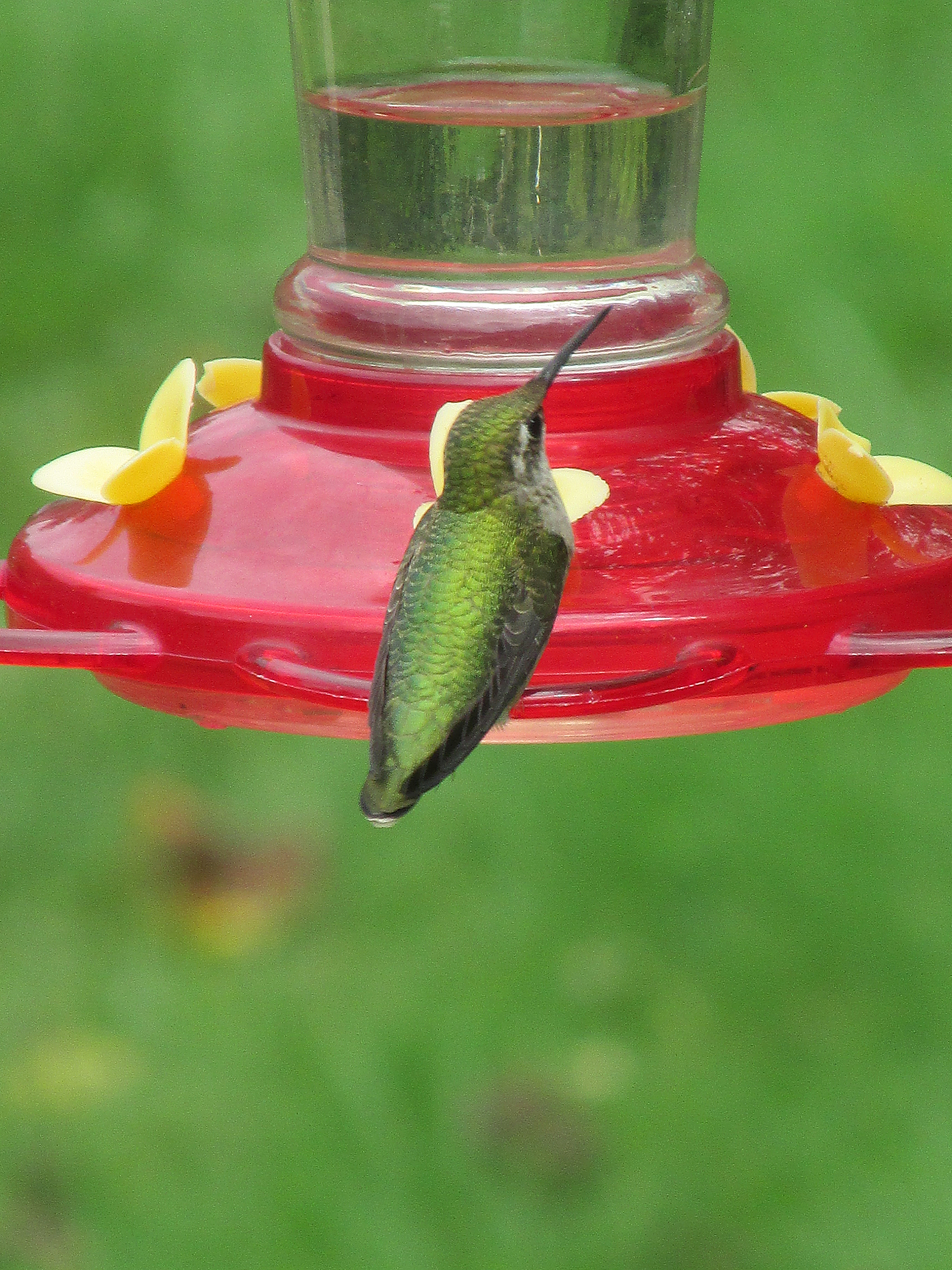
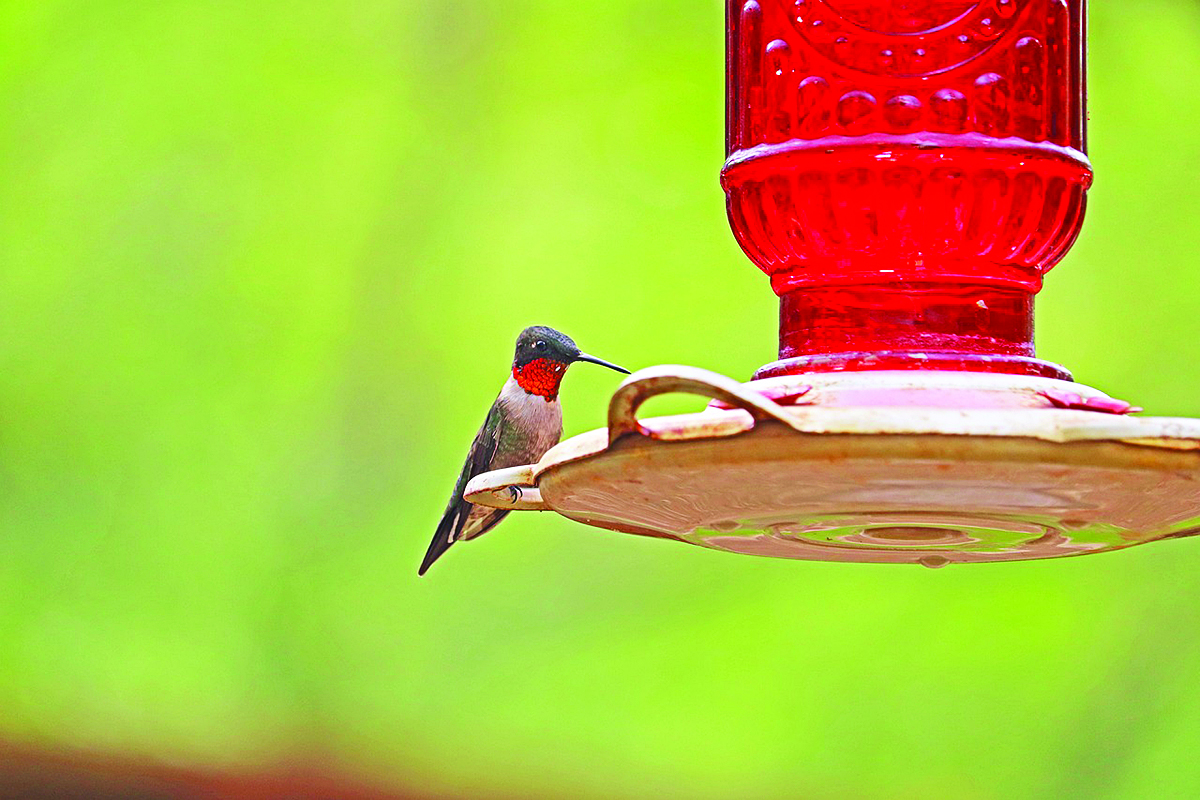
By George/Pixabay • A ruby-throated hummingbird sips sugar water from a feeder.

The hummingbirds are back, although they’ve been slightly late returning this spring. My first report of a sighting came from southwest Virginia this year.

Bobby Andis reported an arriving ruby-throated hummingbird on April 9 in Abingdon, Virginia.

•••

Edison and Emma Jean Wallin saw their first spring hummingbird at 6:10 p.m. on April 11 at their home in Unicoi. Their daughter, Amy Tipton, reported their sighting to me via Facebook messenger. Amy, like me, is still waiting for her first spring hummingbird.

•••

Lynda Carter emailed me to share her first spring sighting of a male ruby-throated hummingbird at her feeder at 8:45 a.m. on Saturday, April 11. She said that she lives near the end of the Embreeville Mountain in the Lamar community in Washington County.

•••

Brookie and Jean Potter welcomed their first spring hummingbird at 7:40 p.m. on April 11. The Potters live near Wilbur Lake in Elizabethton.

•••

Michele Sparks • The photographer got a quick shot of the first spring hummingbird at her feeder in Bluff City.

Michele Sparks had her first spring hummingbird arrive at 6 p.m. on April 13 at her home in Bluff City. Michele shared a photograph of the visiting hummingbird and noted that this year’s bird beat last year’s arrival date by two days.

•••

Joe McGuiness saw his first spring hummingbird on April 15 in Erwin.

•••

After feeling twinges of impatience with their expected arrival, I finally saw my first ruby-throated hummingbird at 7 p.m. on April 16. I had stepped onto my front porch and within seconds heard the familiar buzz of hummingbird wings. Some careful observation detected the tiny bird weaving in and out of the branches of a nearby shrub. After some more waiting, the bird flew to one of my feeders for a quick drink of sugar water.

•••

Dianne Draper in Jonesborough saw her first spring hummingbird on April 17.

•••

Every hummingbird’s arrival at our homes after an absence of nearly six months is nothing short of a miraculous achievement on the part of this tiny bird. According to the website hummingbird.net, most ruby-throated hummingbirds make a daring journey across the Gulf of Mexico to return to their summer homes in the United States and Canada. They typically depart at dusk for their nonstop Gulf flight of up to 500 miles, which takes 18 to 22 hours, depending on the weather.

Now that we’ve welcomed them back into our yards and gardens after such a harrowing journey, it’s important as good hosts to make sure these tiny wonders are kept safe.

Plant flowers! Many people have been told that red flowers are best, but the fact is hummingbirds sip nectar from a variety of blooms in all sorts of colors. The benefit of flowers is that nothing beats natural, and flower nectar is about as good as natural gets.

Some ways of ensuring that our hummingbird guests are kept healthy and secure are simply common sense. For instance, don’t use pesticides, herbicides or any other sort of toxin anywhere close to the vicinity of a sugar water feeder or a flower garden. Hummingbirds are such tiny creatures with such intense metabolisms that it only takes a minute amount of any harmful substance to sicken or kill one of these little flying gems.

Feeding hummingbirds is easy, but many people try to complicate the process. Only common, pure cane sugar, mixed to a ratio of four parts water to one part sugar, is a safe choice for these birds.

Photo by Bryan Stevens • Put sugar water feeders out early to attract the “early birds.”

•••

Rich Hall emailed me, not about a hummingbird, but about another exciting sighting.

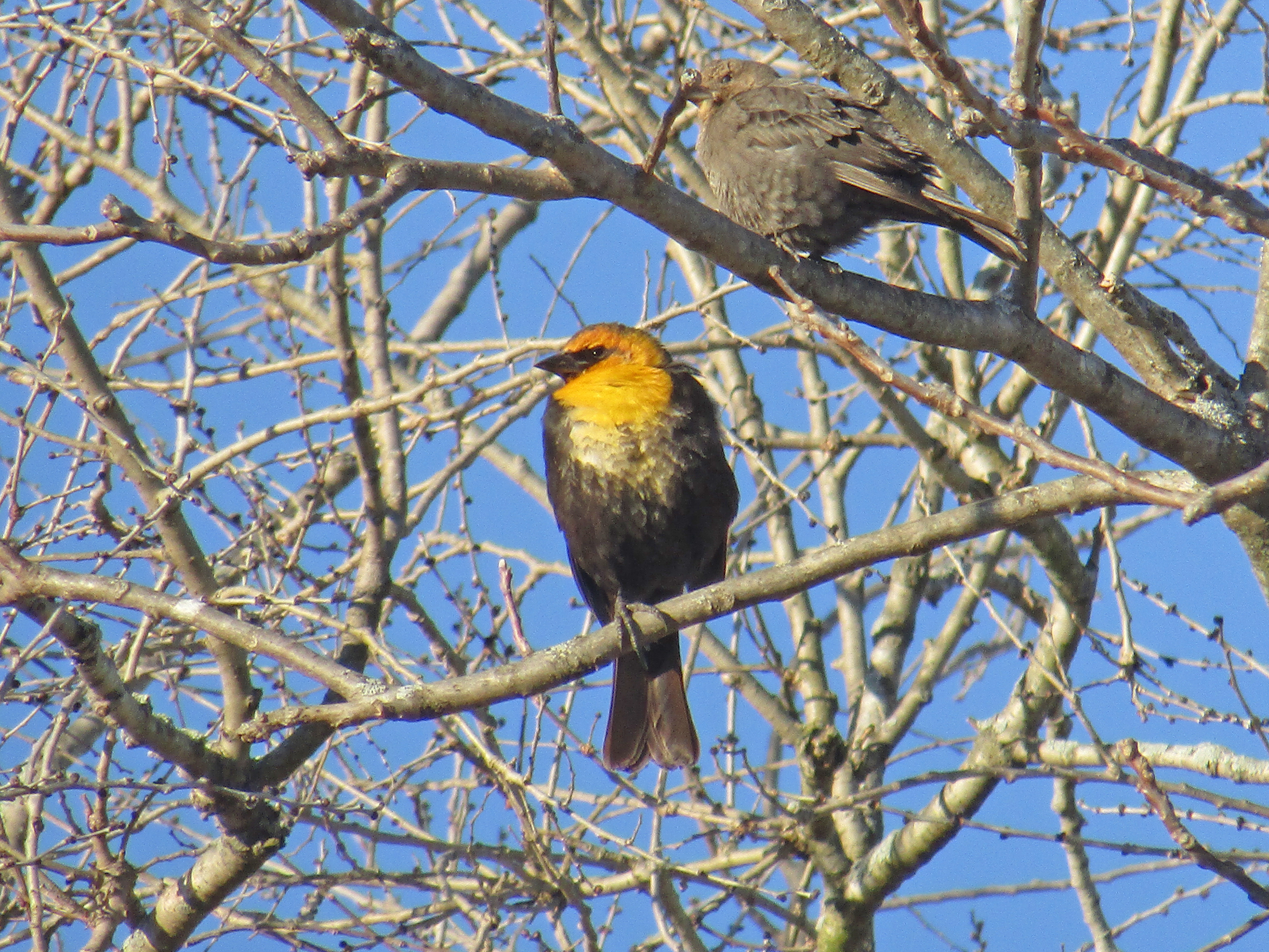
On the morning of April 13, he saw two yellow-headed blackbirds. “I live in Goodlettsville, outside of Nashville,” he wrote. “Do you ever hear reports of them coming over this way?”

I emailed him back and let Rich know that the yellow-headed blackbird is considered a rare to uncommon visitor to the Volunteer State, but they do surface occasionally. The species often mingles with flocks that also include red-winged blackbirds and brown-headed cowbirds. Yellow-headed blackbirds are slightly more likely to travel through Middle and West Tennessee than in East Tennessee, but there have been reports from every section of the state. I saw a lone yellow-headed blackbird several years ago in Jonesborough. A town resident alerted the birding community to the bird’s presence.

Photo by Bryan Stevens • This yellow-headed blackbird mingled with flocks of brown-headed cowbirds and European starlings at a cattle pasture near Jonesborough, Tennessee in February of 2018.. The bird, the first of its kind seen in Northeast Tennessee since 1994, has generated excitement among birders. Some people have traveled from as far as Knoxville, Tennessee, and Roanoke, Virginia, to see the bird.

•••

To share sightings, ask a question or make a comment, email me at ahoodedwarbler@aol.com.

Cliff swallows have returned to nest beneath new bridge

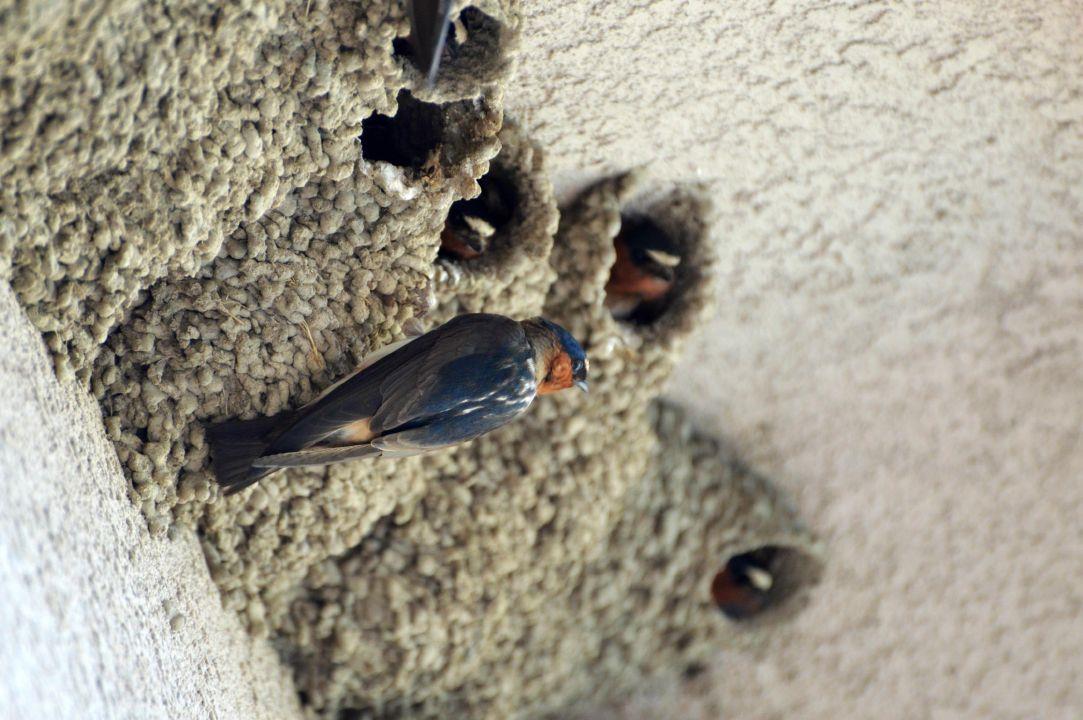
Carole/Pixabay • Cliff swallows traditionally built their mud nests on the sides of cliffs but in recent times they have adapted to nesting beneath bridges and other man-made structures.

From Washington County comes another Helene recovery story, this time of the feathered variety.

When raging floodwaters rushed through the Nolichucky River in September 2024, many area bridges got swept away, including the Taylor Bridge in Washington County.

In this instance, the loss of the bridge also left hundreds of cliff swallows homeless. In 2024, these birds had already departed the region. Not until they returned in the spring of 2025 did the resident cliff swallows discover that their dependable nesting location beneath the bridge had been claimed by floodwaters.

Jonesborough resident Lynda Carter reported the news to me that the restoration of the bridge has also resulted in the swallows returning this spring.

“I was delighted to discover the cliff swallows are rebuilding their colony underneath the new Taylor Bridge on the Nolichucky,” Lynda wrote in an email. “Their massive colony was lost along with the old bridge during the Helene flooding.”

Cliff swallows have greatly expanded their numbers in Northeast Tennessee in the past few decades. Once somewhat rare, their adaptable nature has made the cliff swallow one of the most abundant swallow in the entire region. Even with setbacks from the loss of bridges in Helene, the species has stayed common.

It’s not difficult to fathom why they’re so common. These birds nest in colonies and area concrete bridges have proven an acceptable alternative to cliffs for this graceful, aerodynamic bird. I’ve visited bridge in the region that provide a summer nesting location for hundreds of cliff swallows.

The cliff swallow is the same species celebrated in natural lore for returning annually to Mission San Juan Capistrano in California. There’s even a local California celebration every year on March 19 to mark the return of arguably the world’s most famous species of swallow.

The migration was immortalized in popular culture by Leon René’s 1939 hit song, “When the Swallows Come Back to Capistrano,” which almost overnight transformed the historic Mission into a global tourist destination.

Local lore credits a local priest with championing the swallows. He witnessed a shopkeeper destroying cliff swallow nests and supposedly invited the birds to move to the Mission.

Pairs of cliff swallows build exquisite gourd-shaped nests entirely out of mud that they collect in their beaks. Their nests are amazing structures, especially considering the birds can only build the mud nest chambers one beakful of mud at a time.

Cliff swallows are long-distance migrants. They winter as far south as Brazil, Uruguay and Argentina before they make the trip back each spring to spread out across North America.

The birds have been publicly celebrated in Capistrano, California, since the 1920s, but there are records documenting that the birds returned annually to the Mission from the time of its establishment in 1776.

Today the Mission functions as a museum and welcomes 300,000 visitors each year. The structure was built of stone and adobe bricks, which are made water, dirt, sand and straw. Adobe structures were once common throughout the southwestern United States. In the United States, New Mexico can claim the most adobe buildings with more than 59,000 such structures located in the state. Adobe buildings are also common in California, Texas and Arizona. Building with adobe is common around the globe in locations such as Mali and Iran.

Cliff swallows do line their mud nests with dry grass and feathers to offer a softer cushion for eggs and chicks.

Other swallows that spend the nesting season in Northeast Tennessee include tree swallow, barn swallow, Northern rough-winged swallow, purple martin and bank swallow. Bank swallows are rare and more likely to be found in the western part of Tennessee along Mississippi River bluffs.

•••

I’ve heard from a reader about a first sighting of a ruby-throated hummingbird this spring. I’m still waiting to see my first spring hummingbird. I’ll reveal more details about the first sighting in next week’s column. There’s plenty of time to share first spring sightings of hummingbirds. I’d love to share details in next week’s column. Email me at ahoodedwarbler@aol.com to share you own first-of-spring hummingbird sighting. Please include the date and time.

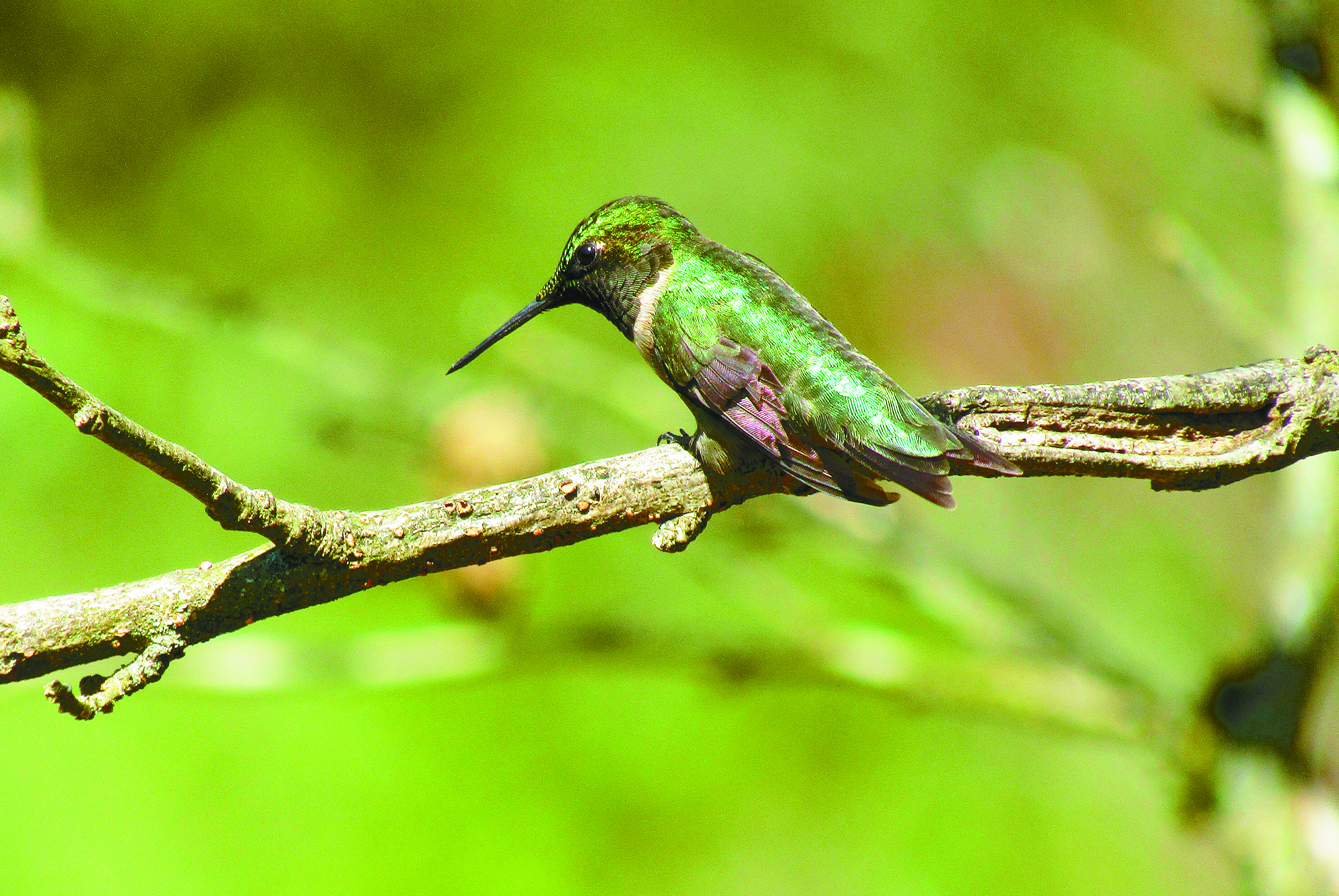
Bryan Stevens • Ruby-throated hummingbirds have been spotted in the region.

Yellow-throated warbler sighting on April 2 is first of season

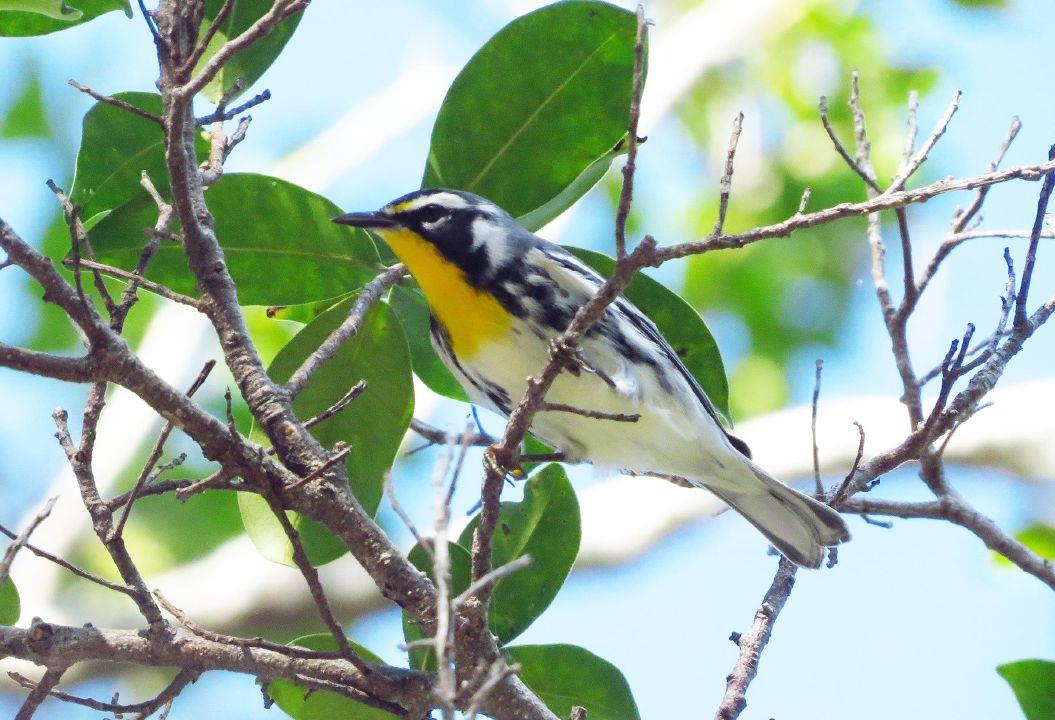
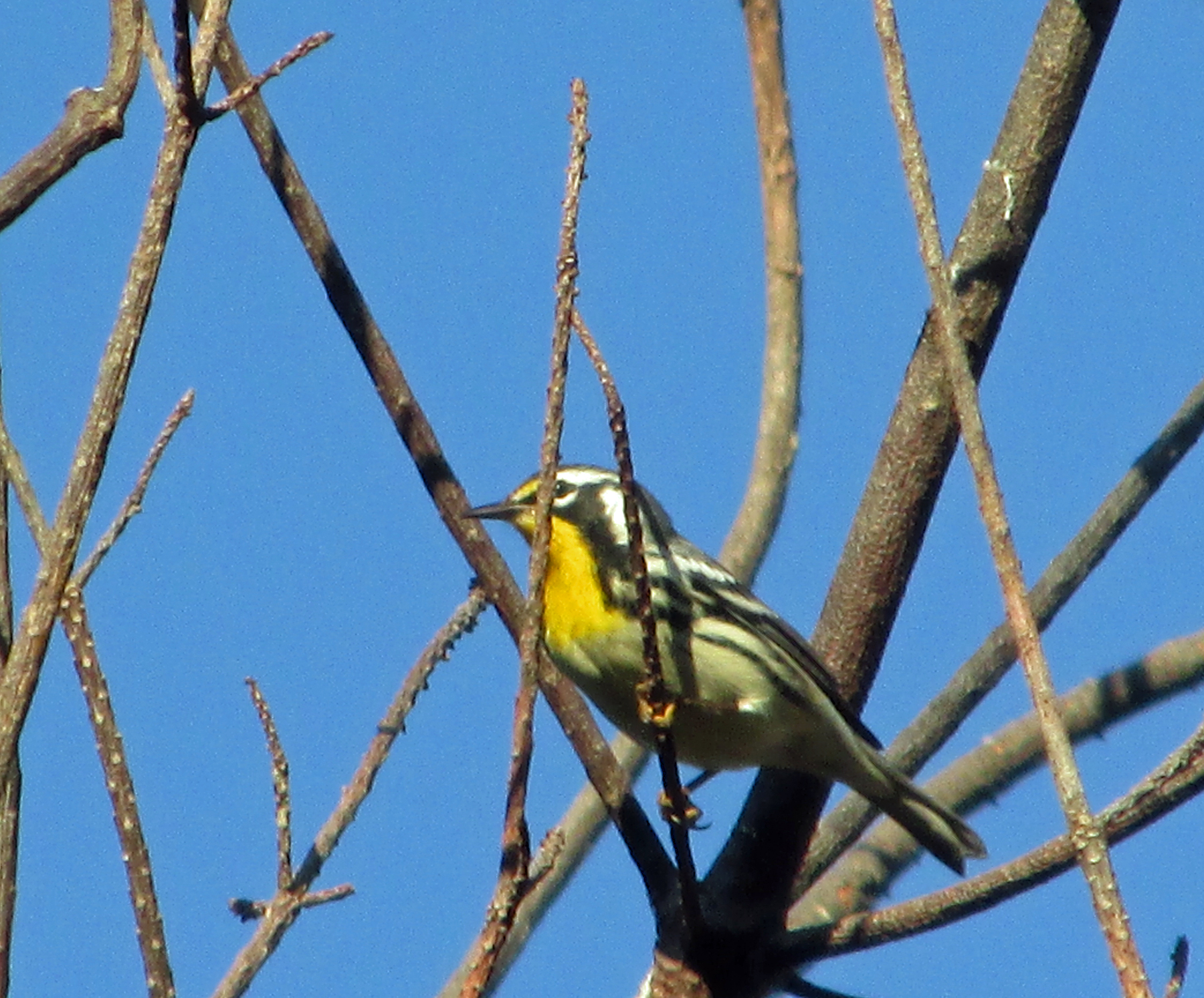
Susan Young/USFWS • The yellow-throated warbler can be a challenge to observe due to its habit of remaining aloft in the tops of tall trees.

You have to admire our feathered friends for always keeping a surprise or two tucked under their wings.

My first warblers of the spring season arrived on April 2, and neither was one of the species I fully expected to be this year’s “early bird” at my home.

A yellow-throated warbler and a pine warbler, both singing from a stand of pine trees, took this year’s early arrival status. This is the first time either of these two warblers has gained that distinction.

The Northern parula has in recent years claimed this honor, which in years past went to species such as hooded warbler or black-throated green warbler.

In 2025, an ovenbird beat all of other warblers to arrive on Friday, April 7, in the woodlands around my home. followed a few days later by a black-throated green warbler.

Technically, I noticed the yellow-throated warbler first, so it gets the honor of being the spring’s first returning warbler. Only a few minutes passed, however, before I also took note of the singing pine warbler. At press time, no other warblers have arrived.

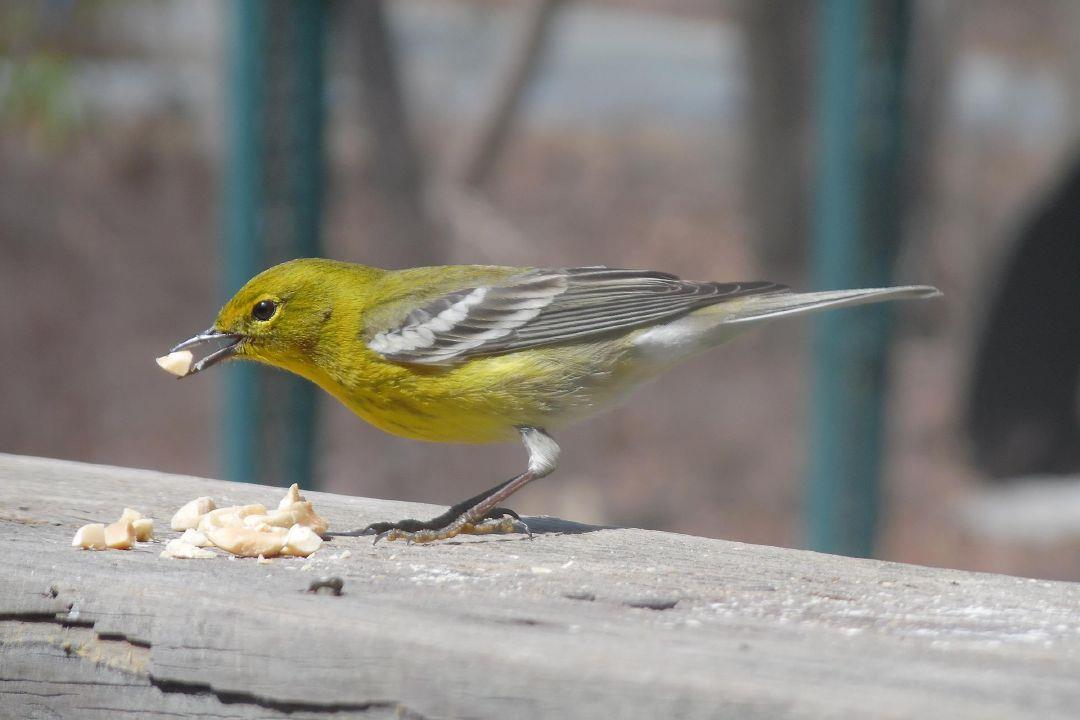
Nikolaus Schultz/Pixabay • Pine warblers can become regular feeder visitors if fare to their liking is available.

I’m still waiting for my first ruby-throated warbler of spring. I’ve not yet heard from any readers, but I fully anticipate hearing about these tiny flying gems arriving any day.

Last year I welcomed back the season’s first ruby-throated hummingbird at 4:14 p.m. on Sunday, April 6. I’m hopeful I can shave a few days off that arrival time this year, but that’s entirely up to the hummingbirds.

As I have for many years, I am asking readers to share their first sightings of hummingbirds. I have tracked arrivals for several years now. To share your first spring sighting of a ruby-throated hummingbird, email me at ahoodedwarbler@aol.com or contact me on Facebook at http://www.facebook.com/ahoodedwarbler. Please include the date and time of your sighting. I also welcome the sharing of other details about your sightings.

Photo by Bryan Stevens • Blue-headed vireos, such as this bird, are high-elevation summer residents in the region. In the spring and fall, they are also common migrants.

Regardless, spring has sprung. Dogwoods are blooming, and their blossoms are beautiful, but it’s also a reminder that our traditional “dogwood winter” with its accompanying dip back into cooler temperatures, is around the corner. Other birds have also been arriving.

A blue-headed vireo put in an appearance on March 29. A chipping sparrow did the same on March 30. When the dam finally breaks, dozens of birds will return or, in some cases, migrate through the region on their way farther north. April and May are exciting times for birders.

As for the two warblers that arrived on April 2, they represent species that have made only occasional appearances at my home. Perhaps the affinity for pine trees that both of these warblers share could have drawn them to visit. There are several stands of large pines thriving on the property.

As its name would indicate, pine warblers are almost always found near pines. These birds have white bellies, two white wing bars, dark legs and thin, relatively long pointed bills. Yellowish “spectacles” around their eyes help contrast them from other warblers. Adult males have olive upperparts and bright yellow throats and breasts; females and immatures display upperparts which are olive-brown.

Bryan Stevens • A pine warbler visits a feeder for a helping of suet.

Pine warblers feed mostly on insects, as well as some seeds and fruit. They tend to forage by probing in crevices on tree trunks and branches, or by poking their beaks into pine cones. Pine warblers spends a great deal of time on the ground, often in the litter of pine needles beneath large trees. They turn over leaves and clusters of pine needles to search for insects concealed beneath them.

The pine warbler doesn’t make the longer migrations of some members of the warbler family. In fact, some pine warblers are resident in the southeastern United States year-round. Visits to wooded suburbs in Atlanta in almost any season is sure to feature sightings. Many pine warblers have also included visits to backyard feeders into their daily routines. They’re fond of offerings such as mealworms, suet cakes and sunflower chips.

The only real requirement needed to attract pine warblers is the presence of pines. These birds utilize various pines, including loblolly, shortleaf, longleaf and white pines.

The yellow-throated warbler is also fond of pine trees. Not quite as common at feeders at pine warblers, the yellow-throated warbler has shifted its behavior to take advantage of the extra resource that a well-maintained feeding station kept supplied with diverse offerings represents.

Photo by Bryan Stevens A Yellow-throated Warbler makes a migratory stop in my yard on the first day of September.

The yellow-throated warbler is also commonly associated with mature trees that extend above the canopy. They also prefer that favored trees are located near a water source. Some of the favored trees for the species include sycamore, shortleaf pine, Virginia pine and bald cypress.

I’ll be interested to see if these two species linger or if they’re passing through and simply using my home as a stopping point to forage and rest before continuing on their way.

It’s a great time of year to stay alert to new arrivals. Keep a pair of binoculars at the ready, and don’t forget to share those sightings, especially as the return of ruby-throated hummingbirds is imminent.

•••

Bryan Stevens has written about birds, birding and birders since 1995. Email him at ahoodedwarbler@aol.com to make a comment, ask a question or share a sighting.