Tag Archives: Cliff Swallow

Cliff swallows have returned to nest beneath new bridge

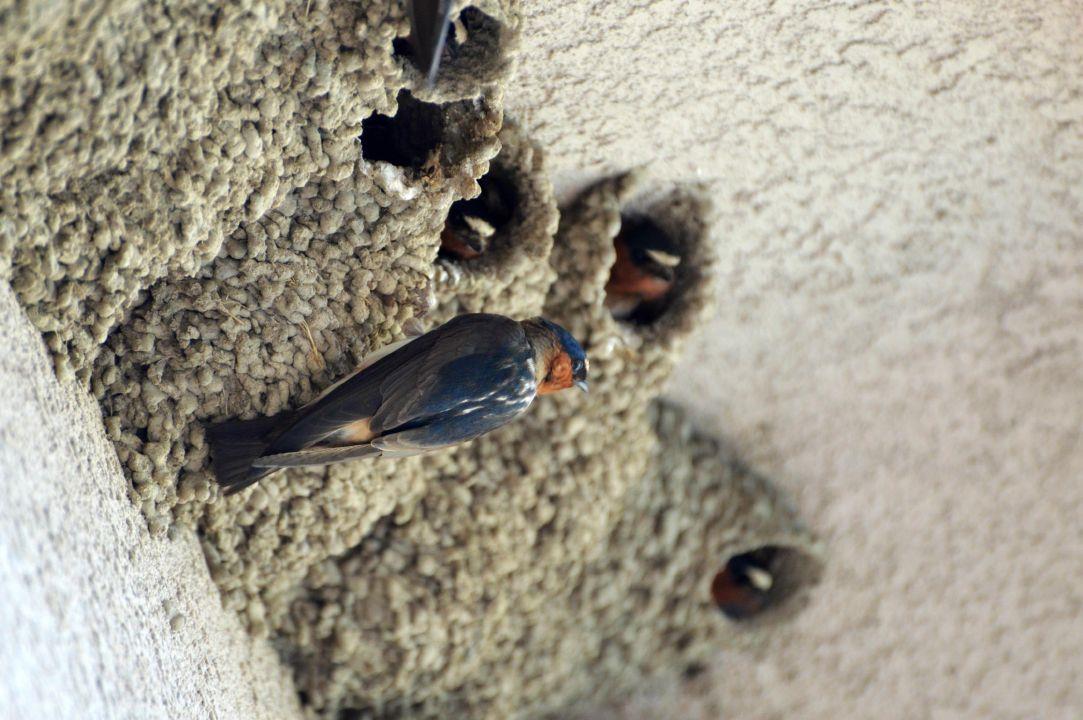
Carole/Pixabay • Cliff swallows traditionally built their mud nests on the sides of cliffs but in recent times they have adapted to nesting beneath bridges and other man-made structures.

From Washington County comes another Helene recovery story, this time of the feathered variety.

When raging floodwaters rushed through the Nolichucky River in September 2024, many area bridges got swept away, including the Taylor Bridge in Washington County.

In this instance, the loss of the bridge also left hundreds of cliff swallows homeless. In 2024, these birds had already departed the region. Not until they returned in the spring of 2025 did the resident cliff swallows discover that their dependable nesting location beneath the bridge had been claimed by floodwaters.

Jonesborough resident Lynda Carter reported the news to me that the restoration of the bridge has also resulted in the swallows returning this spring.

“I was delighted to discover the cliff swallows are rebuilding their colony underneath the new Taylor Bridge on the Nolichucky,” Lynda wrote in an email. “Their massive colony was lost along with the old bridge during the Helene flooding.”

Cliff swallows have greatly expanded their numbers in Northeast Tennessee in the past few decades. Once somewhat rare, their adaptable nature has made the cliff swallow one of the most abundant swallow in the entire region. Even with setbacks from the loss of bridges in Helene, the species has stayed common.

It’s not difficult to fathom why they’re so common. These birds nest in colonies and area concrete bridges have proven an acceptable alternative to cliffs for this graceful, aerodynamic bird. I’ve visited bridge in the region that provide a summer nesting location for hundreds of cliff swallows.

The cliff swallow is the same species celebrated in natural lore for returning annually to Mission San Juan Capistrano in California. There’s even a local California celebration every year on March 19 to mark the return of arguably the world’s most famous species of swallow.

The migration was immortalized in popular culture by Leon René’s 1939 hit song, “When the Swallows Come Back to Capistrano,” which almost overnight transformed the historic Mission into a global tourist destination.

Local lore credits a local priest with championing the swallows. He witnessed a shopkeeper destroying cliff swallow nests and supposedly invited the birds to move to the Mission.

Pairs of cliff swallows build exquisite gourd-shaped nests entirely out of mud that they collect in their beaks. Their nests are amazing structures, especially considering the birds can only build the mud nest chambers one beakful of mud at a time.

Cliff swallows are long-distance migrants. They winter as far south as Brazil, Uruguay and Argentina before they make the trip back each spring to spread out across North America.

The birds have been publicly celebrated in Capistrano, California, since the 1920s, but there are records documenting that the birds returned annually to the Mission from the time of its establishment in 1776.

Today the Mission functions as a museum and welcomes 300,000 visitors each year. The structure was built of stone and adobe bricks, which are made water, dirt, sand and straw. Adobe structures were once common throughout the southwestern United States. In the United States, New Mexico can claim the most adobe buildings with more than 59,000 such structures located in the state. Adobe buildings are also common in California, Texas and Arizona. Building with adobe is common around the globe in locations such as Mali and Iran.

Cliff swallows do line their mud nests with dry grass and feathers to offer a softer cushion for eggs and chicks.

Other swallows that spend the nesting season in Northeast Tennessee include tree swallow, barn swallow, Northern rough-winged swallow, purple martin and bank swallow. Bank swallows are rare and more likely to be found in the western part of Tennessee along Mississippi River bluffs.

•••

I’ve heard from a reader about a first sighting of a ruby-throated hummingbird this spring. I’m still waiting to see my first spring hummingbird. I’ll reveal more details about the first sighting in next week’s column. There’s plenty of time to share first spring sightings of hummingbirds. I’d love to share details in next week’s column. Email me at ahoodedwarbler@aol.com to share you own first-of-spring hummingbird sighting. Please include the date and time.
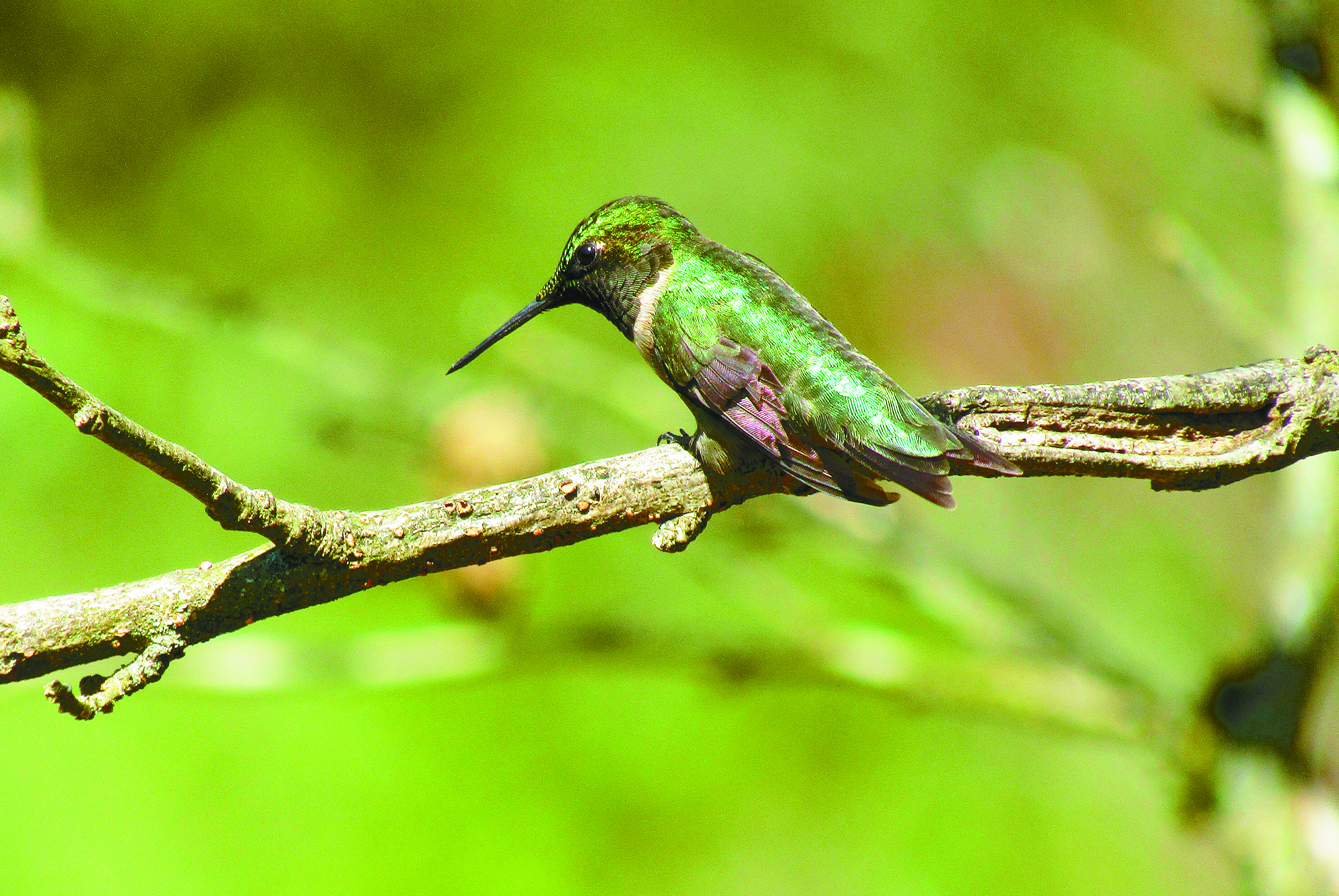
Bryan Stevens • Ruby-throated hummingbirds have been spotted in the region.
Summer is the season of the swallow


No matter where you live, you probably don’t have to go far to see one of the members of the swallow family. These graceful, aerodynamic birds are quite familiar to most people. If you spend much time at all outdoors during the summer months, chances are you’ve observed some members of this family.

Overall, it’s been a good year for swallows. It’s usually not too difficult to find five of the six species that are known to make Northeast Tennessee and Southwest Virginia their home from spring to fall. In addition to barn and tree swallows, I have seen purple martins, cliff swallows and northern rough-winged swallows so far this year.

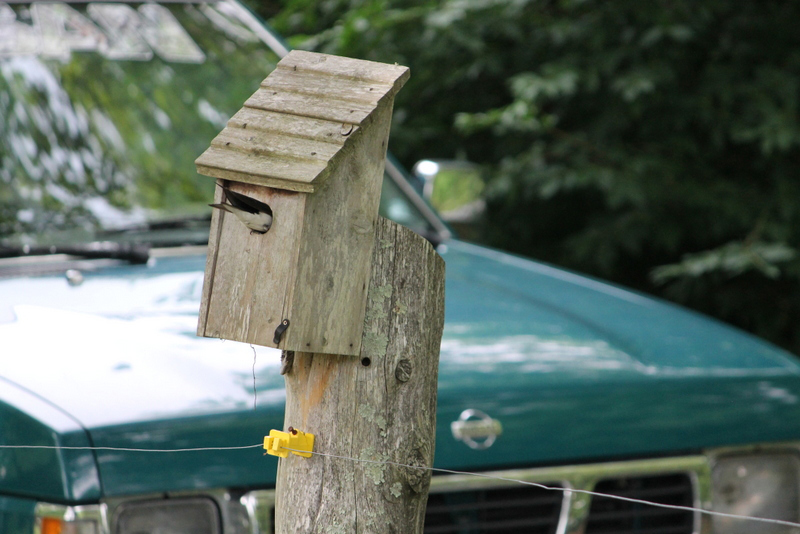
Photo courtesy of Mary Taylor Beierle A tree swallow peeks inside a nest box at the Beierle home.

Photo courtesy of Mary Taylor Beierle
 A tree swallow peeks inside a nest box at the Beierle home.

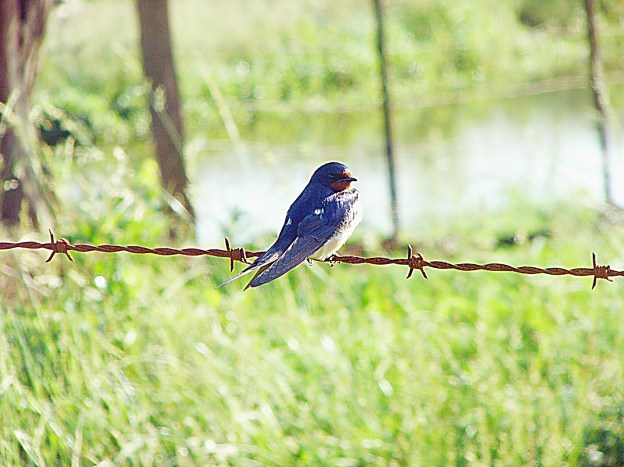
Barn swallow and tree swallow are the two members of the family that are probably best known to people. They have adapted to life in both suburban and rural areas, which brings them into frequent contact with people.

These days, the barn swallow is as apt to nest in a parking garage or on an apartment balcony as inside a barn in the countryside. Once young swallows leave the nest, parents will park them on a perch as they continue to feed the still dependent young. Adults fly over nearby fields, foraging for insects that they catch on the wing and deliver back to the waiting, always hungry, young birds.

A freshly mown field is a magnet for swallows. I don’t know how the word spreads so quickly among these birds, but I’ve observed dozens of these birds descending on fields soon after they have been mowed for hay. At times, the birds arrive while the mowing is still taking place, swooping after insects stirred up in the tractor’s wake.

I haven’t observed any bank swallows in the region this year, but these members of the swallow family are rather hit-or-miss in the region. Because of their specialized nesting needs, bank swallows are localized in their distribution and not as widespread as their kin.

Cliff swallows nest beneath many local bridges. These swallows, which at one time nested primarily on rocky cliffs, hence their name, now frequently nest under man-made structures. These swallows make their jug-shaped nests out of mud and clay. These nesting “jugs” are all located in clusters beneath bridges and other structures. It’s a wonder that the parents flying in with food are able to tell their nests apart from the nearby seemingly identical nests of their neighbors.

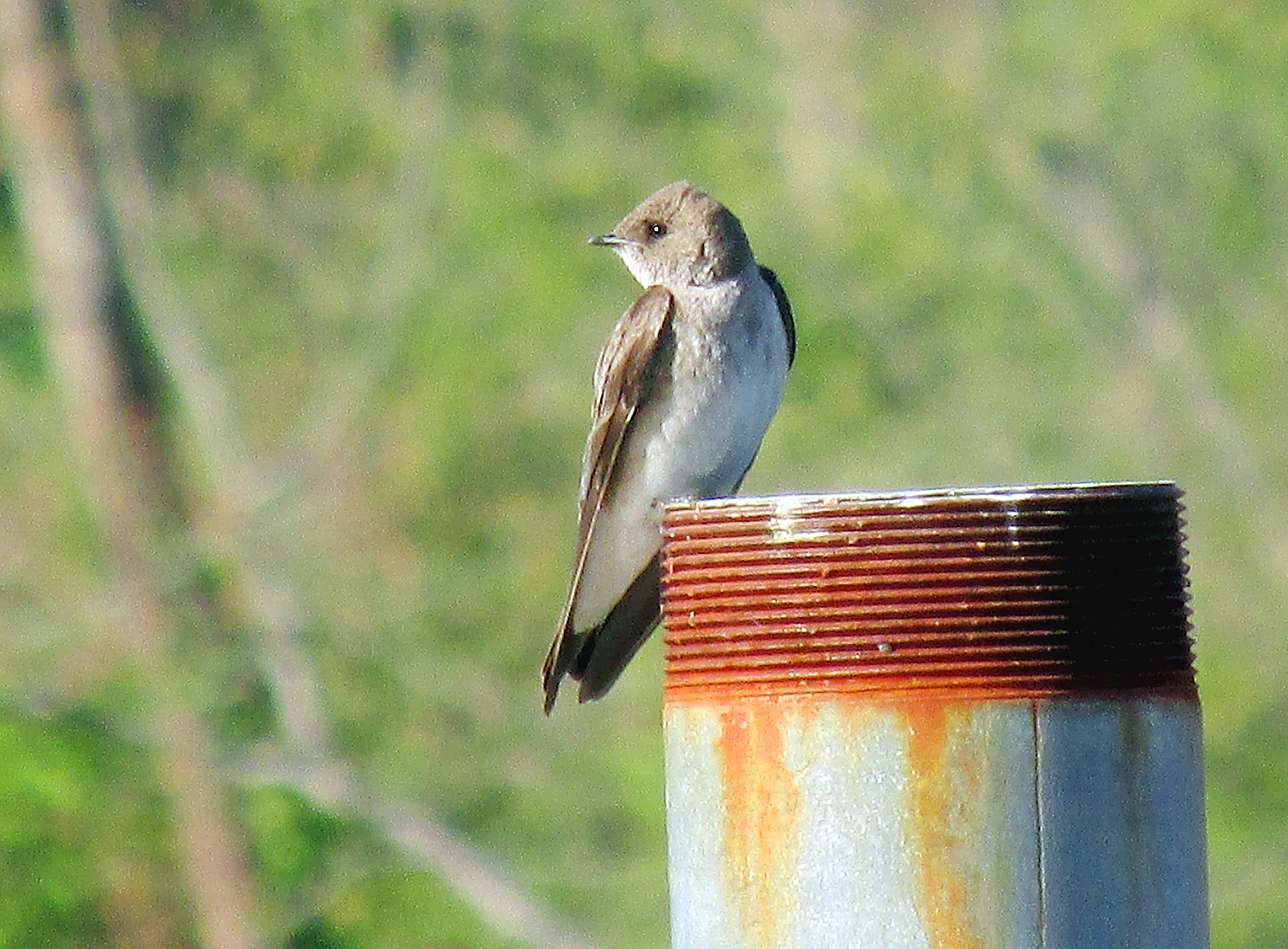
NRW-Swallow

Photo by Bryan Stevens                                  For such a small bird, the Northern rough-winged Swallow has a long name.

Northern rough-winged swallows are opportunists when it comes to nesting. According to a profile written by Mark Johns with North Carolina Wesleyan College, this small swallow nests near rocky gorges, shale banks, stony road cuts, railroad embankments, gravel pits, eroded margins of streams and other exposed banks of clay, sand or gravel. They will also nest in old kingfisher burrows, protruding drainpipes, crevices in brick or stone structures such as dams, bridges or tunnels, gutters and culverts. Their nests are often built near open water.

The Northern rough-winged swallow ranks as one of the species with the longest common names in North America. It’s name consists of 26 letters and a hyphen, which ranks it one letter below both the Northern beardless-tyrannulet and a recently-created species — the saltmarsh sharp-tailed sparrow — which each have 27 letters and a hyphen. Formerly known as sharp-tailed sparrow, the species was renamed with “salt marsh” added to distinguish it from a relative, Nelson’s sparrow.

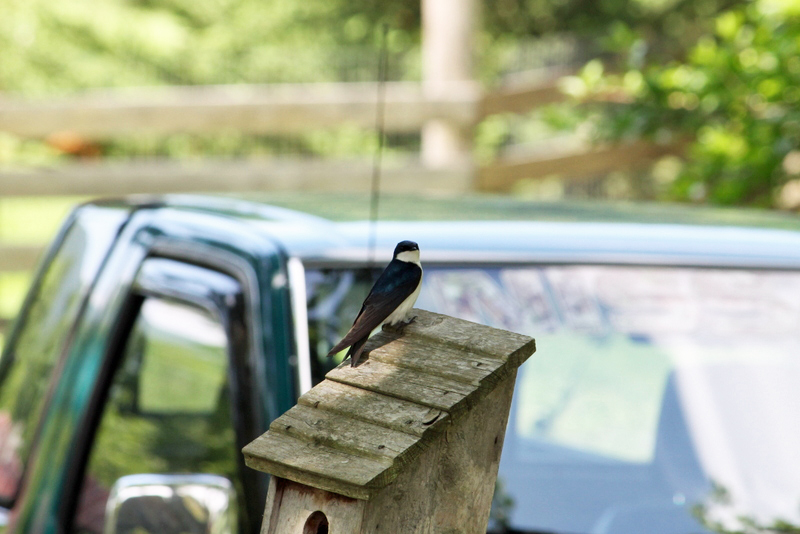
TreeSwallow-MaryBierlie

Photo courtesy of Mary Taylor Beierle                                      A male Tree Swallow surveys his territory from atop a nesting box.

Purple martins, which rank as the largest species in the swallow family in North America, are famous for nesting in large colonies. Nesting facilities range from groupings of natural or artificial gourds fashioned into a nesting chamber, as well as large, multi-level condominium dwellings tailored for the specific needs of this communal bird. A colony can consist of several dozen to several hundred pairs of these birds. Only the adult male purple martin shows the iridescent, dark blue-purple plumage that provides the species with its name.

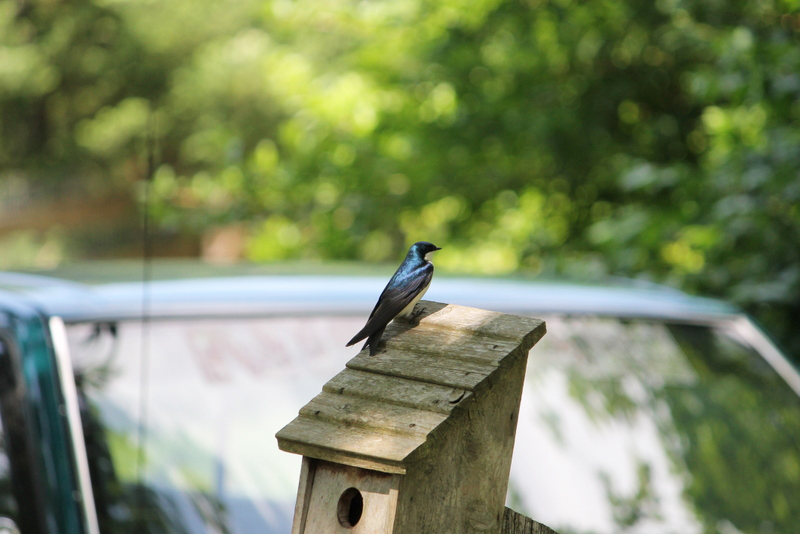
The tree swallow is my favorite, probably because a pair of these birds has nested in my yard for many years. Unlike other swallows, these cavity-nesting birds will readily accept nesting boxes. They compete with Eastern bluebirds for boxes, but the two species usually can work out a truce and settle down to nest in close proximity to each other. The iridescent blue-green male tree swallow, complete with white underparts and a forked tail, is a handsome bird and a welcome addition to the bird population in any yard or garden. Tree swallows enjoy water, so a nearby pond or creek is a boon for attracting these birds.

TreeSwallowPerched-Bierlie

Photo courtesy of Mary Taylor Beierle          Tree swallows readily accept human-provided nesting boxes. They also make delightful neighbors during the summer season.

While only a few swallows range into the United States and Canada, a total of 83 species of swallows can be found worldwide. Some of the common names for these different swallows (and martins) are quite descriptive. A sampling includes white-eyed river martin, square-tailed saw-wing, white-headed saw-wing, grey-rumped swallow, white-backed swallow, banded martin, violet-green swallow, golden swallow, brown-chested martin, brown-bellied swallow, pale-footed swallow, white-bibbed swallow, pearl-breasted swallow, greater striped swallow, mosque swallow, fairy martin and chestnut-collared swallow.

••••••

Several of the photos this week were provided by Mary Taylor Beierle, a resident of Stoney Creek in Carter County. Mary is also the author of the book, “Edmond The Daddy Turkey,” a delightful story about a male turkey who learns how to be a father.

Mary emailed me the photos with a brief note about her visiting swallows.  “I am thrilled to have them here as we had never seen them before,” she said. “Good thing I have several bird books so I could identify them.”

To learn more about Mary’s book, visit http://www.amazon.com/Edmond-Daddy-Turkey-Taylor-Beierle/dp/0985986123

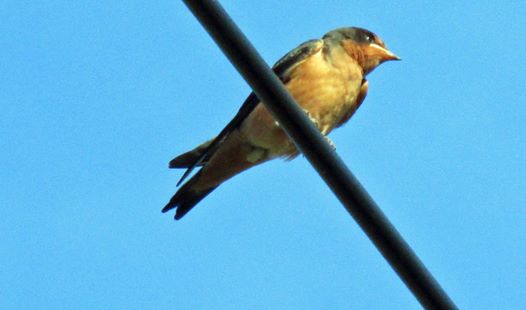
10441231_838490356179548_1093306511537972714_n

Photo by Bryan Stevens A Barn Swallow perches on a utility wire over a field.