Tag Archives: Spring

Cliff swallows have returned to nest beneath new bridge

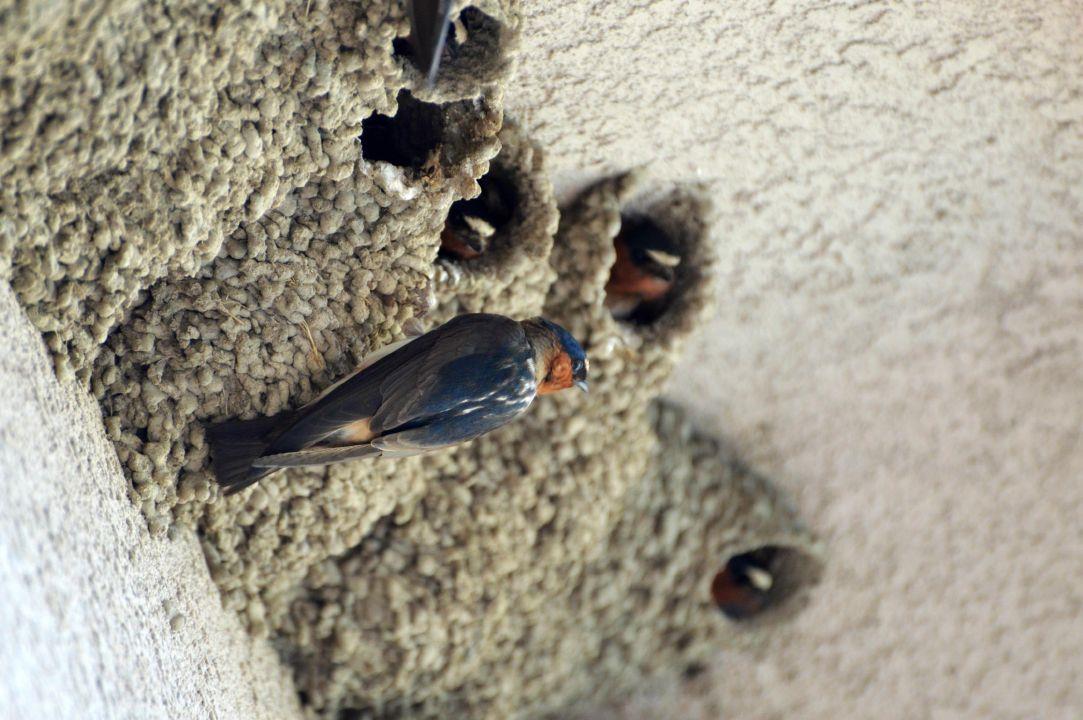
Carole/Pixabay • Cliff swallows traditionally built their mud nests on the sides of cliffs but in recent times they have adapted to nesting beneath bridges and other man-made structures.

From Washington County comes another Helene recovery story, this time of the feathered variety.

When raging floodwaters rushed through the Nolichucky River in September 2024, many area bridges got swept away, including the Taylor Bridge in Washington County.

In this instance, the loss of the bridge also left hundreds of cliff swallows homeless. In 2024, these birds had already departed the region. Not until they returned in the spring of 2025 did the resident cliff swallows discover that their dependable nesting location beneath the bridge had been claimed by floodwaters.

Jonesborough resident Lynda Carter reported the news to me that the restoration of the bridge has also resulted in the swallows returning this spring.

“I was delighted to discover the cliff swallows are rebuilding their colony underneath the new Taylor Bridge on the Nolichucky,” Lynda wrote in an email. “Their massive colony was lost along with the old bridge during the Helene flooding.”

Cliff swallows have greatly expanded their numbers in Northeast Tennessee in the past few decades. Once somewhat rare, their adaptable nature has made the cliff swallow one of the most abundant swallow in the entire region. Even with setbacks from the loss of bridges in Helene, the species has stayed common.

It’s not difficult to fathom why they’re so common. These birds nest in colonies and area concrete bridges have proven an acceptable alternative to cliffs for this graceful, aerodynamic bird. I’ve visited bridge in the region that provide a summer nesting location for hundreds of cliff swallows.

The cliff swallow is the same species celebrated in natural lore for returning annually to Mission San Juan Capistrano in California. There’s even a local California celebration every year on March 19 to mark the return of arguably the world’s most famous species of swallow.

The migration was immortalized in popular culture by Leon René’s 1939 hit song, “When the Swallows Come Back to Capistrano,” which almost overnight transformed the historic Mission into a global tourist destination.

Local lore credits a local priest with championing the swallows. He witnessed a shopkeeper destroying cliff swallow nests and supposedly invited the birds to move to the Mission.

Pairs of cliff swallows build exquisite gourd-shaped nests entirely out of mud that they collect in their beaks. Their nests are amazing structures, especially considering the birds can only build the mud nest chambers one beakful of mud at a time.

Cliff swallows are long-distance migrants. They winter as far south as Brazil, Uruguay and Argentina before they make the trip back each spring to spread out across North America.

The birds have been publicly celebrated in Capistrano, California, since the 1920s, but there are records documenting that the birds returned annually to the Mission from the time of its establishment in 1776.

Today the Mission functions as a museum and welcomes 300,000 visitors each year. The structure was built of stone and adobe bricks, which are made water, dirt, sand and straw. Adobe structures were once common throughout the southwestern United States. In the United States, New Mexico can claim the most adobe buildings with more than 59,000 such structures located in the state. Adobe buildings are also common in California, Texas and Arizona. Building with adobe is common around the globe in locations such as Mali and Iran.

Cliff swallows do line their mud nests with dry grass and feathers to offer a softer cushion for eggs and chicks.

Other swallows that spend the nesting season in Northeast Tennessee include tree swallow, barn swallow, Northern rough-winged swallow, purple martin and bank swallow. Bank swallows are rare and more likely to be found in the western part of Tennessee along Mississippi River bluffs.

•••

I’ve heard from a reader about a first sighting of a ruby-throated hummingbird this spring. I’m still waiting to see my first spring hummingbird. I’ll reveal more details about the first sighting in next week’s column. There’s plenty of time to share first spring sightings of hummingbirds. I’d love to share details in next week’s column. Email me at ahoodedwarbler@aol.com to share you own first-of-spring hummingbird sighting. Please include the date and time.

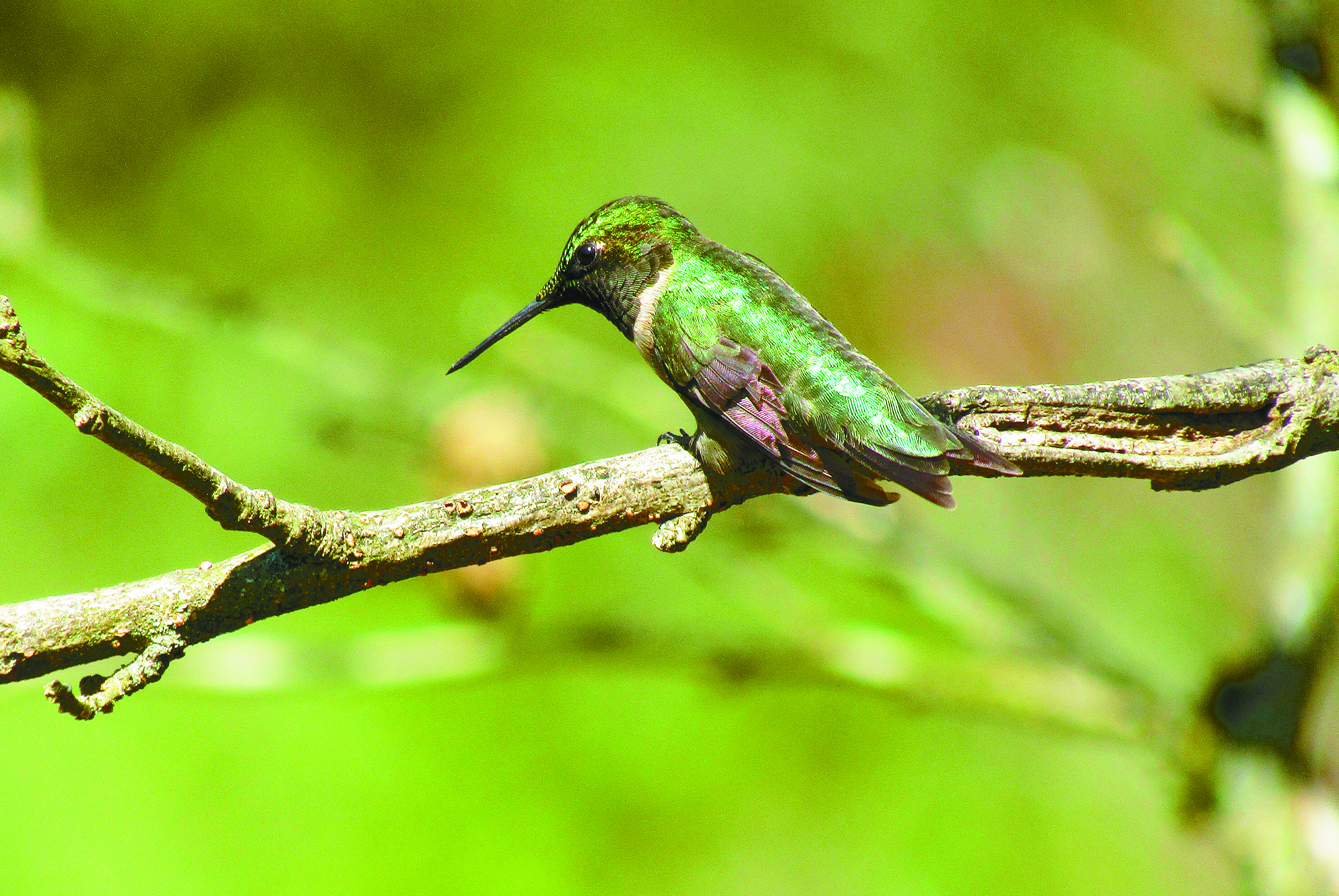
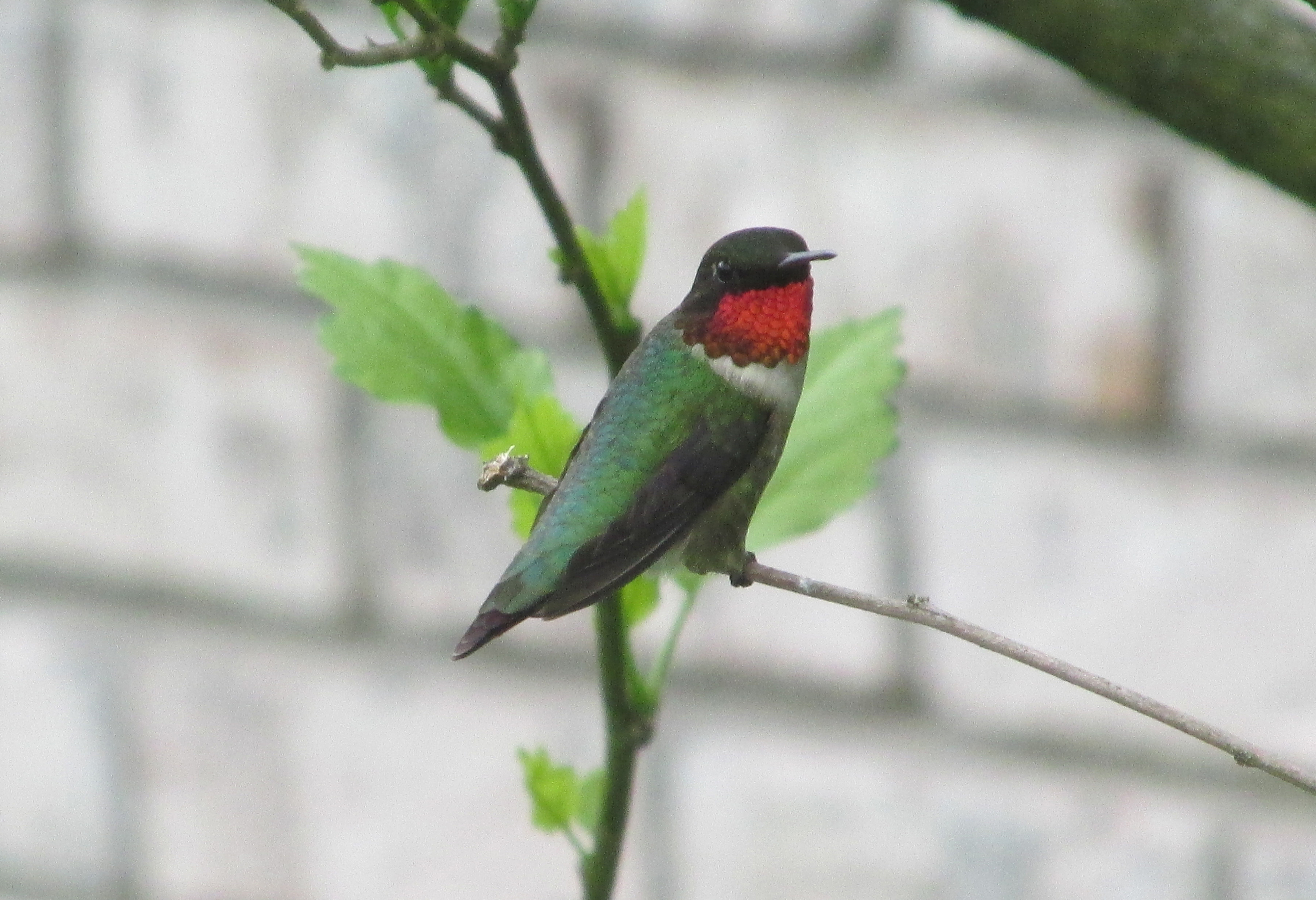
Bryan Stevens • Ruby-throated hummingbirds have been spotted in the region.

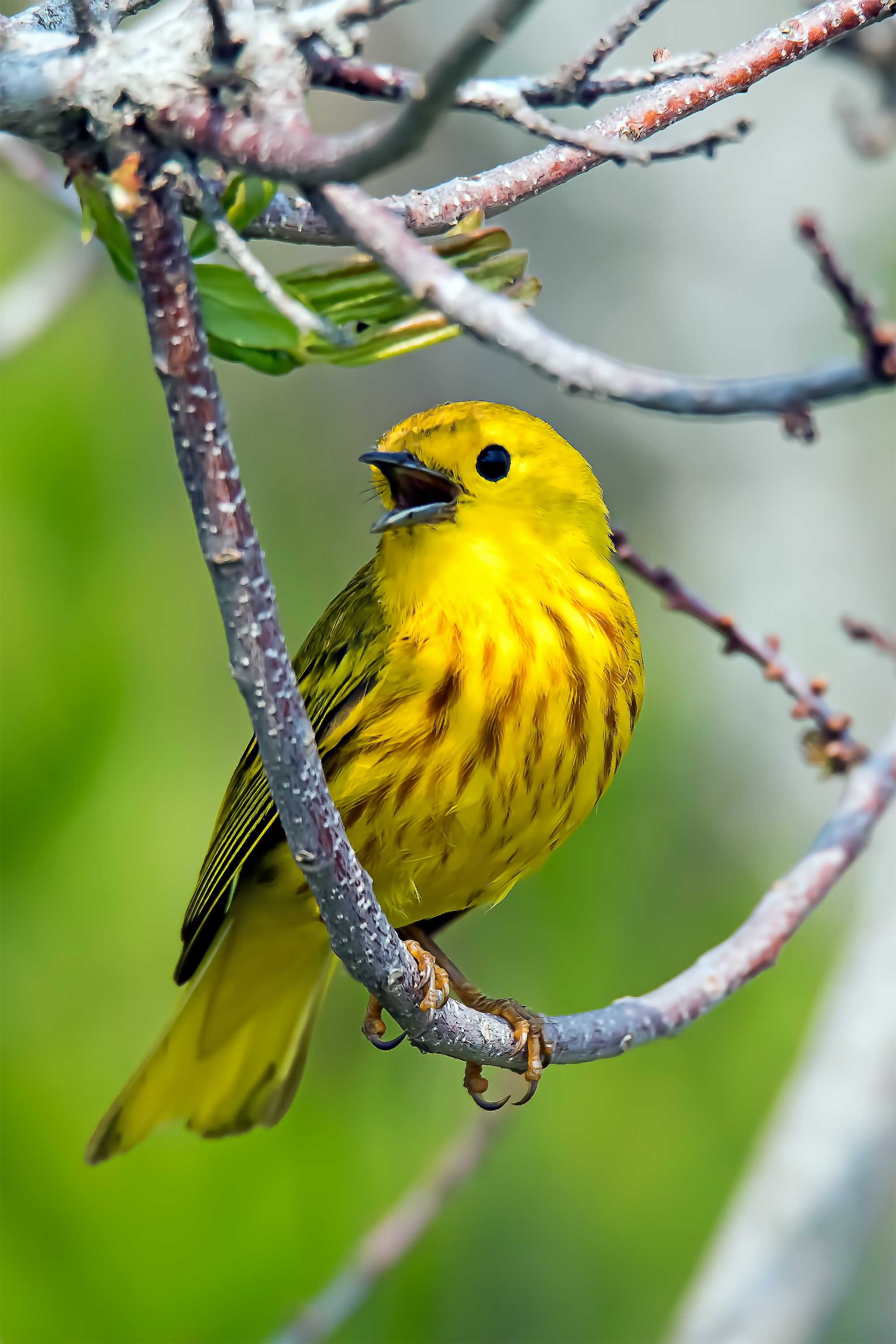
Yellow-throated warbler sighting on April 2 is first of season

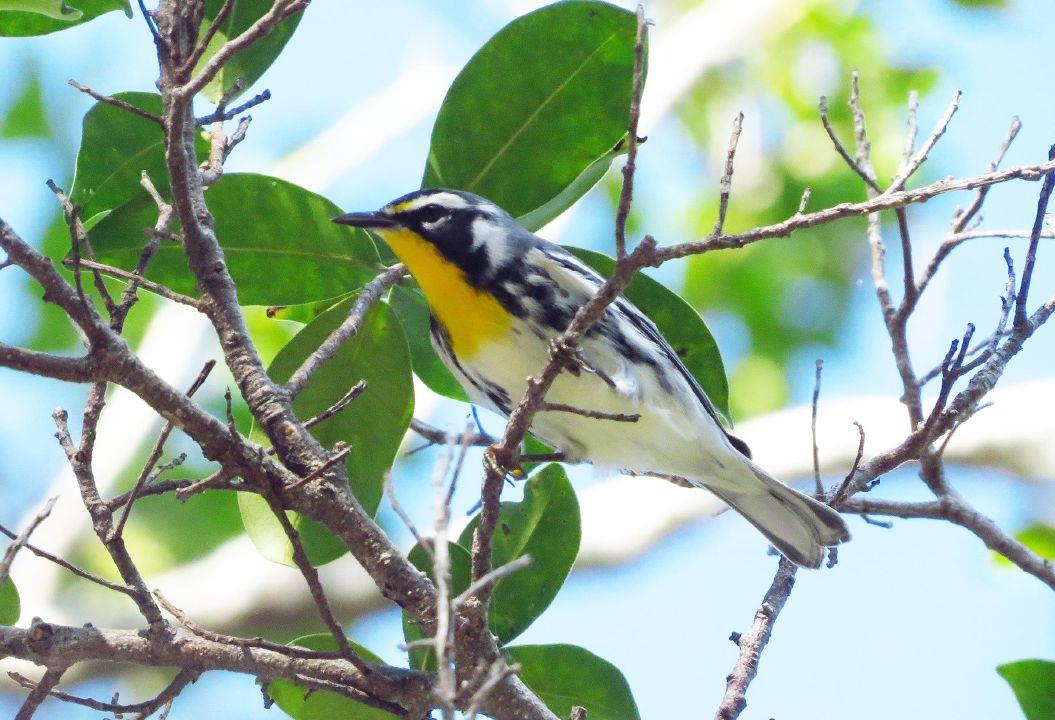
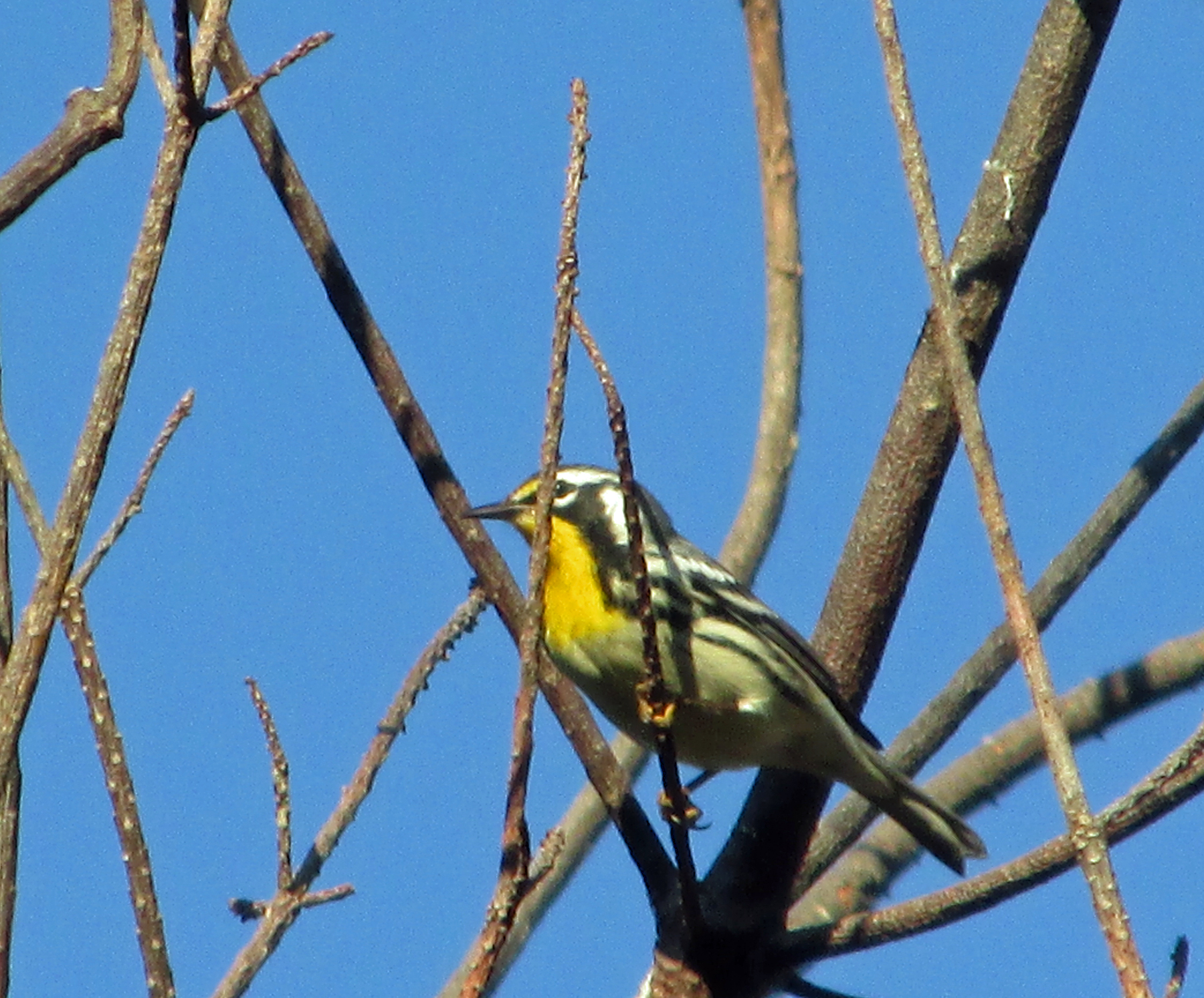
Susan Young/USFWS • The yellow-throated warbler can be a challenge to observe due to its habit of remaining aloft in the tops of tall trees.

You have to admire our feathered friends for always keeping a surprise or two tucked under their wings.

My first warblers of the spring season arrived on April 2, and neither was one of the species I fully expected to be this year’s “early bird” at my home.

A yellow-throated warbler and a pine warbler, both singing from a stand of pine trees, took this year’s early arrival status. This is the first time either of these two warblers has gained that distinction.

The Northern parula has in recent years claimed this honor, which in years past went to species such as hooded warbler or black-throated green warbler.

In 2025, an ovenbird beat all of other warblers to arrive on Friday, April 7, in the woodlands around my home. followed a few days later by a black-throated green warbler.

Technically, I noticed the yellow-throated warbler first, so it gets the honor of being the spring’s first returning warbler. Only a few minutes passed, however, before I also took note of the singing pine warbler. At press time, no other warblers have arrived.

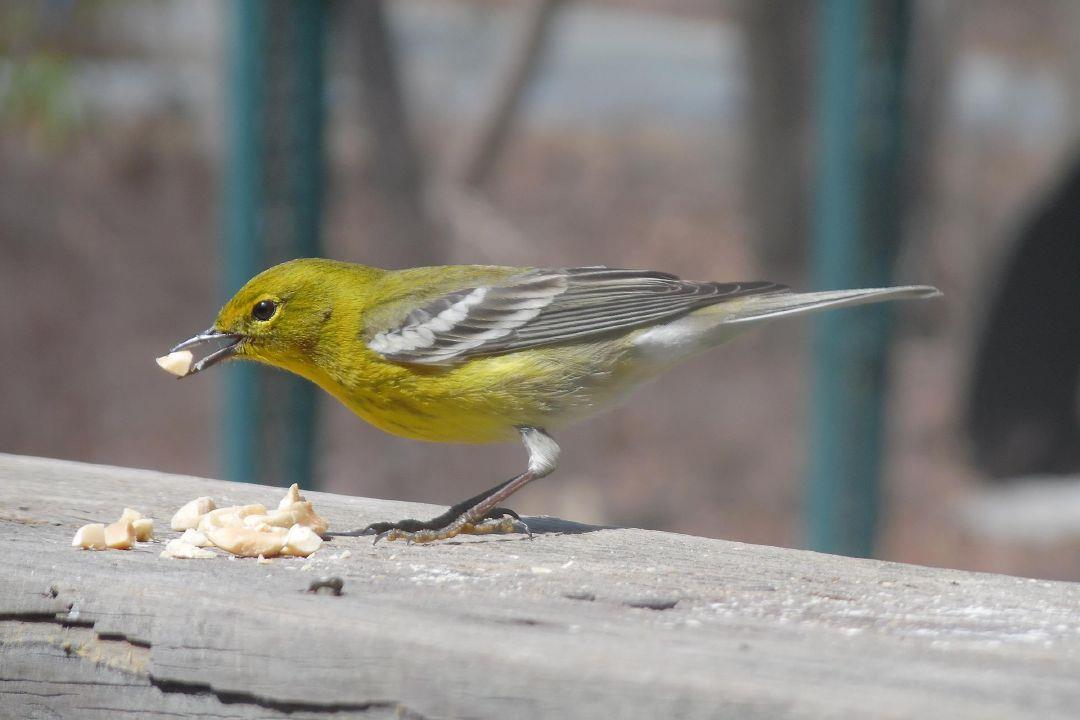
Nikolaus Schultz/Pixabay • Pine warblers can become regular feeder visitors if fare to their liking is available.

I’m still waiting for my first ruby-throated warbler of spring. I’ve not yet heard from any readers, but I fully anticipate hearing about these tiny flying gems arriving any day.

Last year I welcomed back the season’s first ruby-throated hummingbird at 4:14 p.m. on Sunday, April 6. I’m hopeful I can shave a few days off that arrival time this year, but that’s entirely up to the hummingbirds.

As I have for many years, I am asking readers to share their first sightings of hummingbirds. I have tracked arrivals for several years now. To share your first spring sighting of a ruby-throated hummingbird, email me at ahoodedwarbler@aol.com or contact me on Facebook at http://www.facebook.com/ahoodedwarbler. Please include the date and time of your sighting. I also welcome the sharing of other details about your sightings.

Photo by Bryan Stevens • Blue-headed vireos, such as this bird, are high-elevation summer residents in the region. In the spring and fall, they are also common migrants.

Regardless, spring has sprung. Dogwoods are blooming, and their blossoms are beautiful, but it’s also a reminder that our traditional “dogwood winter” with its accompanying dip back into cooler temperatures, is around the corner. Other birds have also been arriving.

A blue-headed vireo put in an appearance on March 29. A chipping sparrow did the same on March 30. When the dam finally breaks, dozens of birds will return or, in some cases, migrate through the region on their way farther north. April and May are exciting times for birders.

As for the two warblers that arrived on April 2, they represent species that have made only occasional appearances at my home. Perhaps the affinity for pine trees that both of these warblers share could have drawn them to visit. There are several stands of large pines thriving on the property.

As its name would indicate, pine warblers are almost always found near pines. These birds have white bellies, two white wing bars, dark legs and thin, relatively long pointed bills. Yellowish “spectacles” around their eyes help contrast them from other warblers. Adult males have olive upperparts and bright yellow throats and breasts; females and immatures display upperparts which are olive-brown.

Bryan Stevens • A pine warbler visits a feeder for a helping of suet.

Pine warblers feed mostly on insects, as well as some seeds and fruit. They tend to forage by probing in crevices on tree trunks and branches, or by poking their beaks into pine cones. Pine warblers spends a great deal of time on the ground, often in the litter of pine needles beneath large trees. They turn over leaves and clusters of pine needles to search for insects concealed beneath them.

The pine warbler doesn’t make the longer migrations of some members of the warbler family. In fact, some pine warblers are resident in the southeastern United States year-round. Visits to wooded suburbs in Atlanta in almost any season is sure to feature sightings. Many pine warblers have also included visits to backyard feeders into their daily routines. They’re fond of offerings such as mealworms, suet cakes and sunflower chips.

The only real requirement needed to attract pine warblers is the presence of pines. These birds utilize various pines, including loblolly, shortleaf, longleaf and white pines.

The yellow-throated warbler is also fond of pine trees. Not quite as common at feeders at pine warblers, the yellow-throated warbler has shifted its behavior to take advantage of the extra resource that a well-maintained feeding station kept supplied with diverse offerings represents.

Photo by Bryan Stevens A Yellow-throated Warbler makes a migratory stop in my yard on the first day of September.

The yellow-throated warbler is also commonly associated with mature trees that extend above the canopy. They also prefer that favored trees are located near a water source. Some of the favored trees for the species include sycamore, shortleaf pine, Virginia pine and bald cypress.

I’ll be interested to see if these two species linger or if they’re passing through and simply using my home as a stopping point to forage and rest before continuing on their way.

It’s a great time of year to stay alert to new arrivals. Keep a pair of binoculars at the ready, and don’t forget to share those sightings, especially as the return of ruby-throated hummingbirds is imminent.

•••

Bryan Stevens has written about birds, birding and birders since 1995. Email him at ahoodedwarbler@aol.com to make a comment, ask a question or share a sighting.


Start getting ready to welcome returning hummingbirds

Photo by Bryan Stevens • Despite a perceived disadvantage of size, ruby-throated hummingbirds are quite capable of thriving in a giant world.

It’s late March and some of the early arrivals among our feathered friends are already back. As the calendar turns the page from March to April, a steady stream of spring arrivals will kick off with the return of birds like rose-breasted grosbeak, indigo bunting, Baltimore oriole, wood thrush and a dazzling array of warblers.

The most anticipated returning bird for many people is the ruby-throated hummingbirds. These tiny, feisty bundles of sparkling green feathers are sorely missed from after their departure in October to their return to Northeast Tennessee in early April.

These tiny flying gems are back in the continental United States. Their migration requires an annual spring crossing of the Gulf of Mexico. Once they arrive along the coasts of Gulf states, they need a bit of time to recuperate before resuming their relentless migration northward.

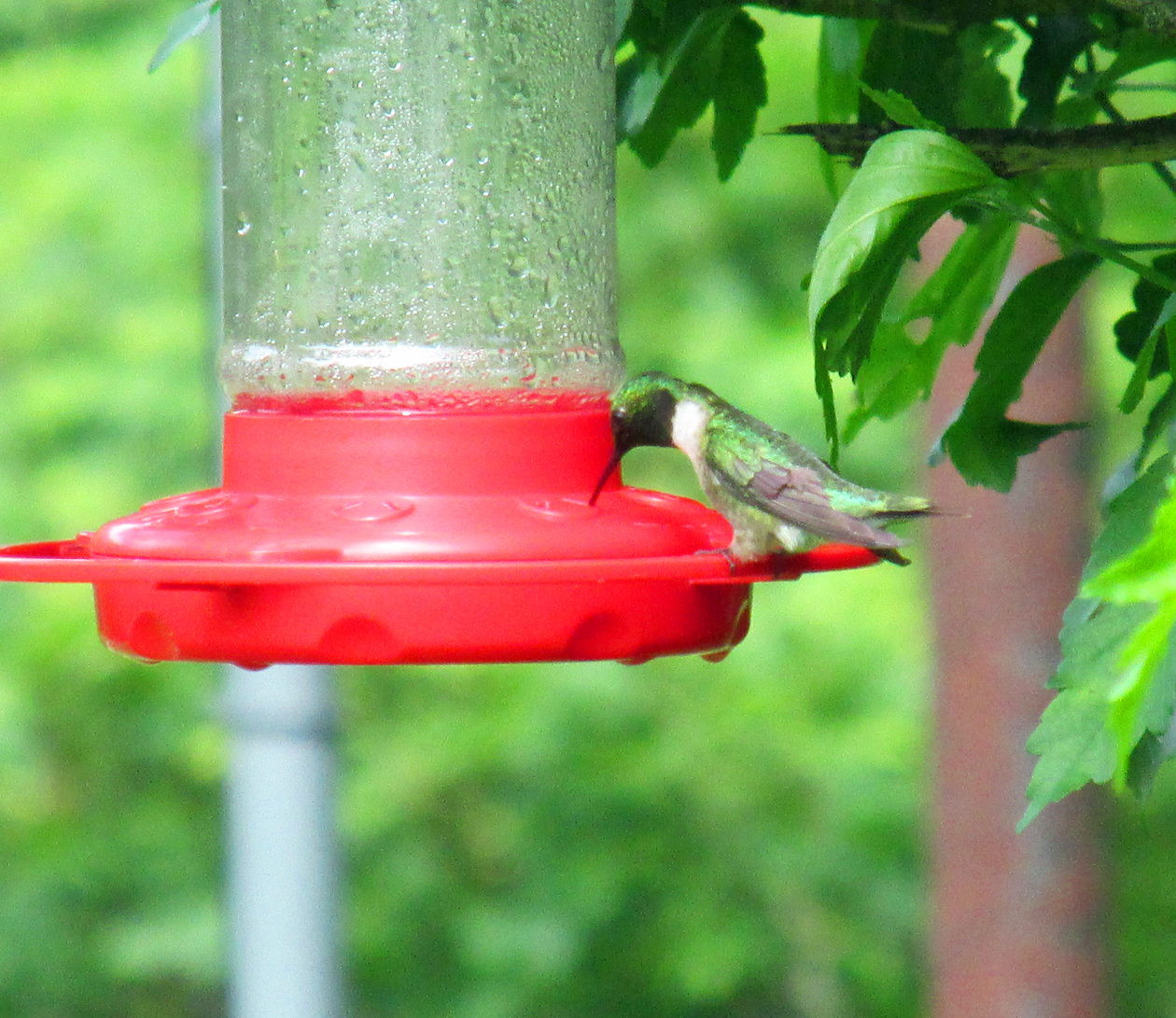
Photo by Bryan Stevens • A male ruby-throated hummingbird perches at a feeder for a sip of sugar water.

Journey North, a website and project that tracks the yearly advance of ruby-throated hummingbirds as well as other birds, monarch butterflies and other migrants, received reports of ruby-throated hummingbirds in Louisiana as early as March 1.

People in Florida have also been seeing them in early March, but because some ruby-throated hummingbirds may winter in Florida, telling the overwinterers from the true migrants is difficult.

As of March 16, the northernmost report of a ruby-throated hummingbird came from Conyers, Georgia. A woman reported her sighting to Journey North on March 15.

I anticipate this season’s ruby-throated hummingbird migration will bring the first individuals to Northeast Tennessee, Southwest Virginia and Western North Carolina in early April if not late March. It’s even possible there will be some Easter arrivals of hummingbirds in the region with this religious holiday falling on April 5 this year.

Most first spring observations of hummingbirds are males, although a few females are also early arrivals. Male hummingbirds arrive first so they can find and defend a territory.

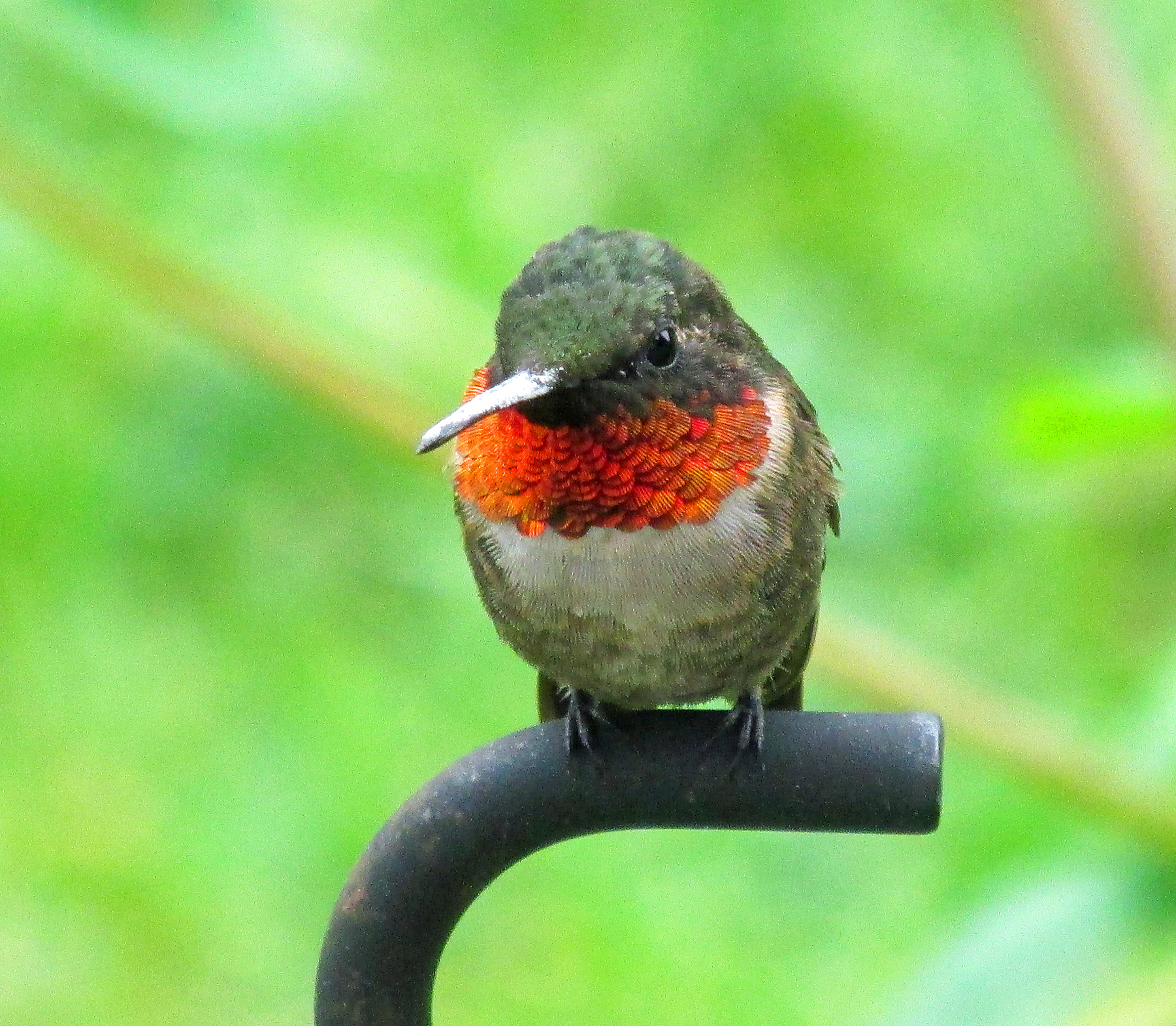
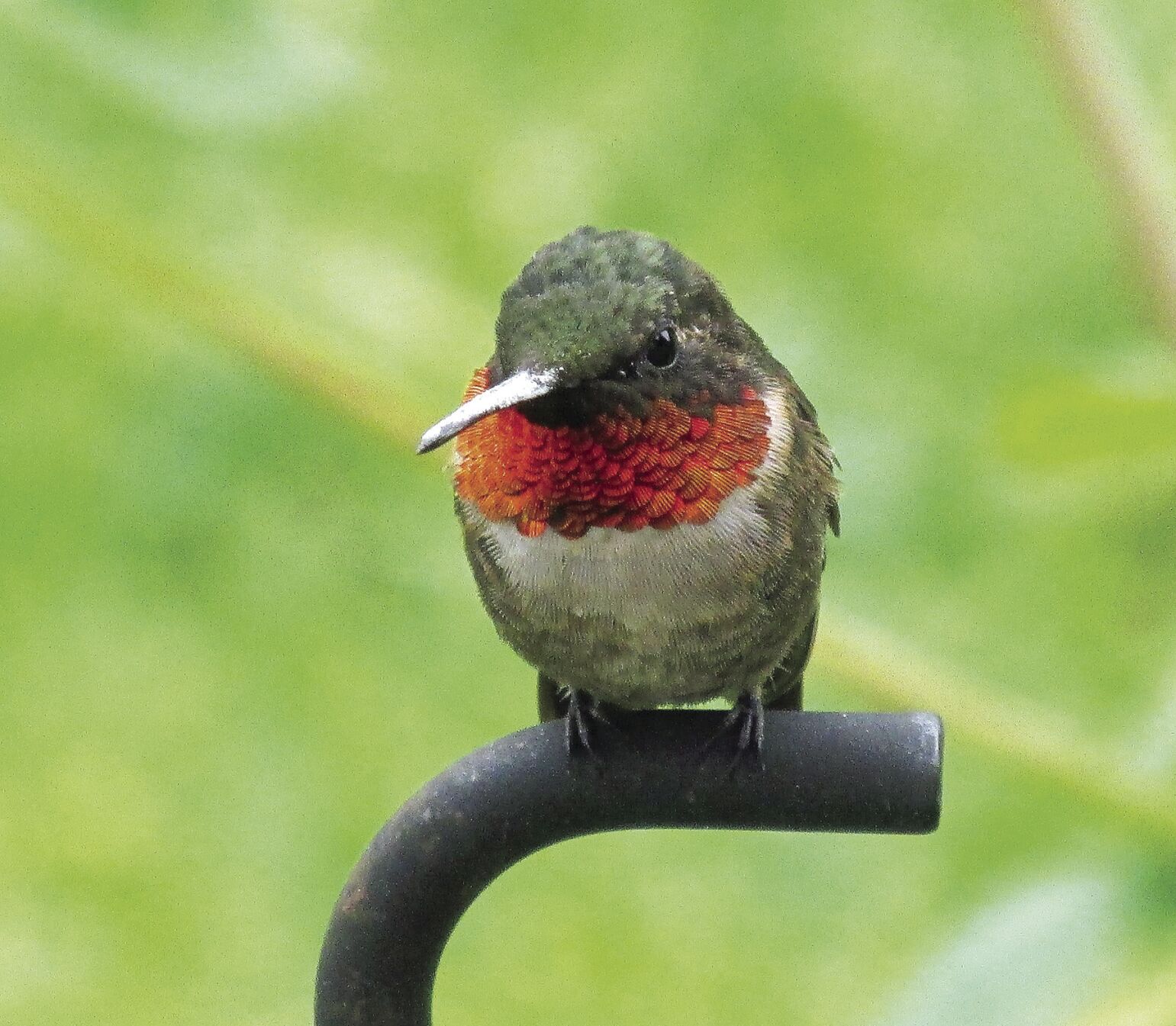
Photo by Bryan Stevens • Male ruby-throated hummingbird show the namesake red throat. The feathers on a male’s throat are iridescent, which means they can change when seen from different angles. In poor light, the ruby-red throat can look almost black.

As always, spring migration can be a challenging time for hummingbirds. Temperatures, wind patterns and storms can influence the pace of migration. Even once these tiny birds make their epic spring crossing of the Gulf of Mexico, they will need time to rest and refuel before moving northward.

By mid-March, the advance of ruby-throated hummingbirds has usually reached states such as Georgia and South Carolina. By the end of March, these tiny flying gems have reached states such as Tennessee and North Carolina.

It’s time to get those sugar water feeders outside and waiting for the early arrivals. Once the chance of late-season freezes has passed, consider planting some colorful native flowers to provide nectar sources for hummingbirds. In addition, some hanging baskets of flowers can be purchased from garden centers with the benefit that these baskets can be brought indoors during unseasonable cold snaps.

In the meantime, take steps now to welcome hummingbirds back and keep them safe during their stay. Most experts also suggest avoiding red dyes or food colorings, which are often found in commercially marketed hummingbird sugar water. Don’t risk the health of hummingbirds for a little convenience.

Photo by Bryan Stevens • Only adult male ruby-throated hummingbirds have the vibrant red throat patch.

It’s easy to make your own sugar water mix, which can be stored in the refrigerator in an empty plastic juice jug. Boil some water and then add one cup of sugar for every four cups of water in your pot. Stir thoroughly. Let the mixture cool and then bottle it. Fill your feeders and store any remaining sugar water in the fridge in the aforementioned jug. Refrigerated, the mix should stay good to use for at least a week or two.

Last year I welcomed back the spring’s first ruby-throated hummingbird at 4:14 p.m. on Sunday, April 6.

As I have for many years, I am asking readers to share their first sightings of hummingbirds. I have tracked arrivals for several years now. To share your first spring sighting of a ruby-throated hummingbird, email me at ahoodedwarbler@aol.com or contact me on Facebook at http://www.facebook.com/ahoodedwarbler. Please include the date and time of your sighting. I also welcome the sharing of other details about your sightings.

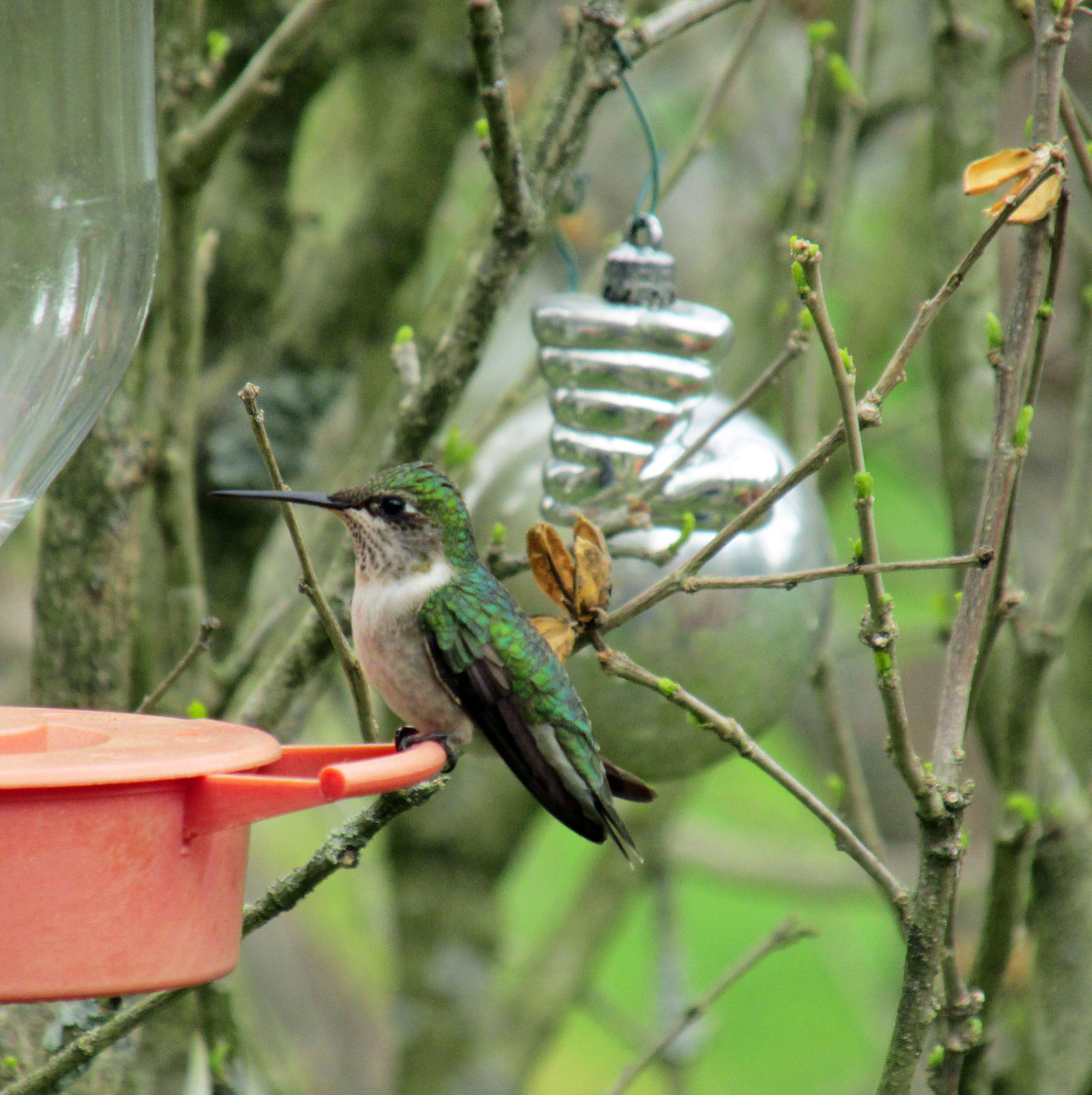
Photo by Bryan Stevens • Ruby-throated hummingbirds such as this male are returning to the region.

Feathered harbingers: New bird sightings prove spring is here

Photo by Bryan Stevens • The American robin is widely hailed as a harbinger of spring.

Crocuses are blooming, spring peepers are peeping and the birds are starting to feel the approach of spring. Increasing daylight helps trigger changes among many of the birds that are widely considered signs of spring.

Among the other harbingers of the season are several species that have gained reputations for signalling the transition from winter into spring by their presence alone.

Here are some of the top candidates among our feather friends for the honor of being a genuine symbol of spring’s imminent arrival.

American robins
Robins are widely considered harbingers of spring. They appear to become more common overnight, but for the most part, it’s only a shift in behavior.
While robins are present in winter, they shift from eating berries in large, quiet flocks to foraging for worms on lawns in smaller groups as the ground thaws. With increasing daylight, they also begin to feel the urge to partner with potential mates. The robin’s song, often interpreted as “cheerily, cheer up,” is a distinct sound of early spring and is used to signal availability to those prospective mates.

Photo by Bryan Stevens • Wilson’s snipes return to much of their range in early spring.

Wilson’s snipe
The snipe, a type of shorebird, is a real bird despite a common belief that this bird, the subject of futile snipe hunts, is mythical. Haunting wetlands with their distinctive “winnowing” (drumming) courtship flights, they are heralds for the advancing spring season. These migratory, long-billed shorebirds typically reappear in marshy areas and wet pastures in early spring, often arriving by early March to begin breeding in northern regions. While some individuals may winter in warmer parts of the United States, their widespread arrival and intense courtship activity are widely recognized as a sign of spring.

American woodcock
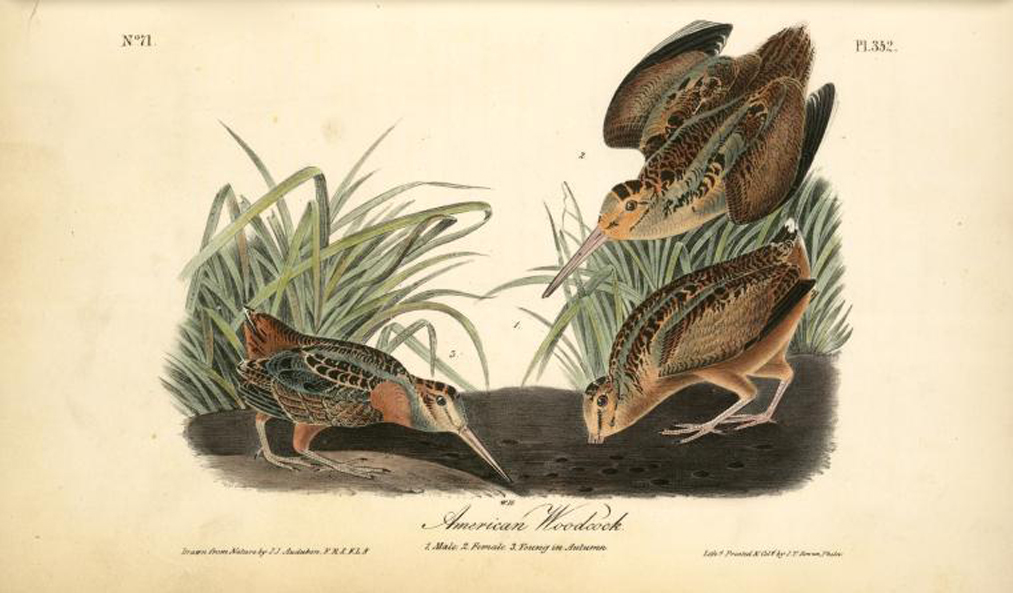
A snipe relative, the American woodcock is a premier, early-spring harbinger known for its dramatic “sky dance” courtship displays performed at dawn and dusk, often commencing as early as February or March. On the ground, the male produces a loud, buzzing, nasal sound — frequently described as “peent” — roughly every two seconds. These birds have a long bill equipped with a flexible tip, perfect for foraging for earthworms after the spring thaw has lured them to the earth’s surface. Males put on impressive display flights, using specialized wing feathers to produce a strange twitter as they descend back to earth in wide spirals. Other nicknames for this most unusual shorebird are timberdoodle and bog sucker.

Early American naturalist John James Audubon painted this trio of American woodcocks.

Eastern phoebe
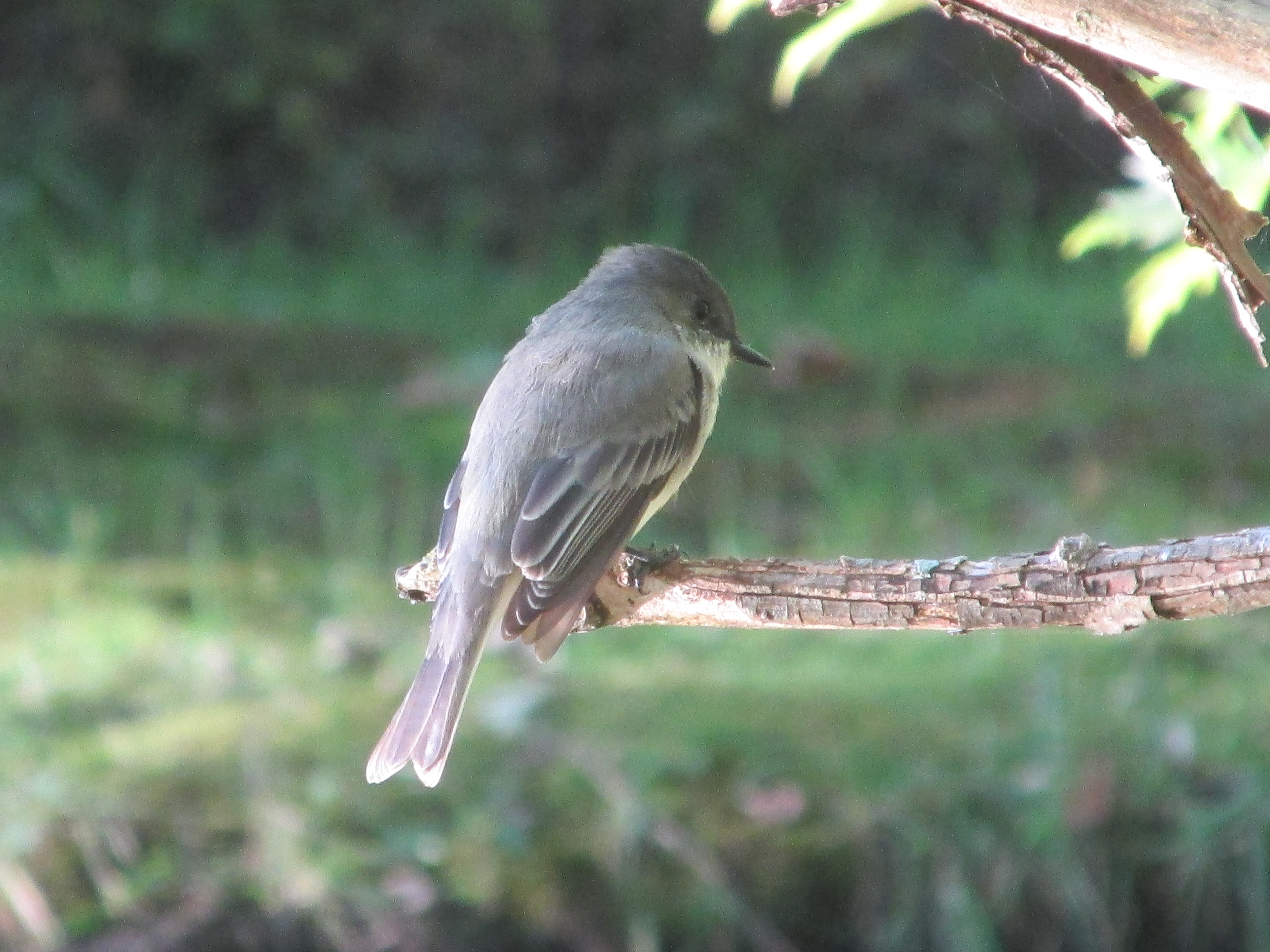
Eastern phoebes belong to the flycatcher family and are among the earliest migratory birds to return to their breeding grounds, often arriving before many other species. Eastern phoebes are more reliable indicators of the actual start of spring migration than American robins because they fly north to catch bugs while robins often overwinter and get a head start without even migrating. Henry David Thoreau detailed spring arrival for many species around Walden Pond in Concord, Massachusetts, in the 1850s. He recorded the Eastern Phoebe arriving in early April and the Eastern Wood-Pewee in late May. Across the migration data for 22 consistently observed species in Concord’s historical bird data, the average timing of spring arrival has not changed significantly from Thoreau’s time to the present. However, there are a few exceptions, such as yellow warbler and Baltimore oriole, that now return to Walden significantly earlier than when Thoreau observed them.

Photo by Bryan Stevens • The Eastern phoebe is a flycatcher and a bird that reliably returns early in the spring season.

Eastern bluebird
Bluebirds are a widely recognized early harbinger of spring, often arriving in northern locations by February or March, signalling the end of winter. Seeing bluebirds in pairs, checking out nesting boxes or perched on low branches in open, rural areas are classic signs of early spring. The well-known writer and naturalist Henry David Thoreau famously wrote that the bluebird “carries the sky on his back,” documenting their arrival as a vital seasonal marker in Northern regions and Canada. Locally, many bluebirds overwinter, but they still begin exploring potential nest locations in early spring, often as early as February.

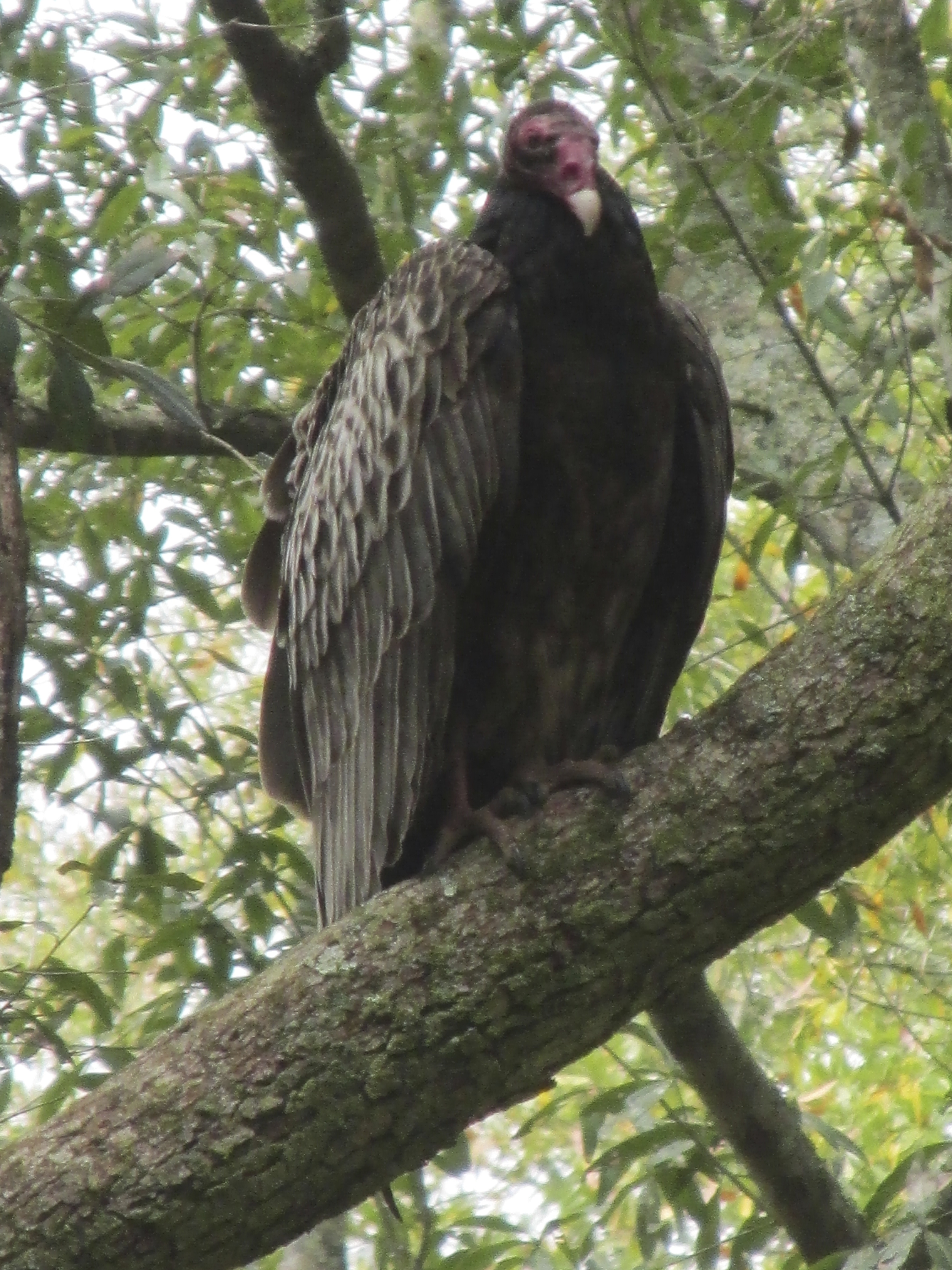
Photo by Bryan Stevens • Turkey vultures are a signal of spring’s arrival in some parts of the United States.

Turkey vulture
The return of turkey vultures is a significant, early sign of spring in many parts of North America, often appearing between February and March. As migratory scavenger birds, they return north to feed on animals that perished during the winter, often appearing in flocks. Hinckley, Ohio, celebrates the annual return of turkey vultures (locally called buzzards) to the Hinckley Reservation every March 15, a tradition dating back to 1957. Known as “Buzzard Day,” this event features a pancake breakfast, vendor fairs and spotter-led viewing of the birds returning to their roosts.

Louisiana waterthrush
Birders usually have to wait until April and May for most warblers to venture back to East Tennessee. The Louisiana waterthrush is a premier, early-arriving harbinger of spring in Eastern North America, often appearing in early March along fast-flowing, wooded streams. Known as one of the first migrant warblers to return, their arrival is signaled by a loud, ringing song that mimics the sound of rushing water. They typically arrive on breeding grounds weeks before many other migrant species, particularly other warblers. The loud, ringing song of the Louisiana waterthrush is often heard near streams before leaves have fully returned to the trees.

Photo by Bryan Stevens • The tiny blue-gray gnatcatcher returns to East Tennessee in late March.

Blue-gray gnatcatcher
This tiny bundle of feathers is an energetic, noisy songbird that arrives in the region in the final days of March. I often hear this bird’s raspy, scolding vocalizations before I detect their nonstop movements in newly-emerged leaves. They don’t arrive quite as early as the other birds on this list, but I’ve always held this bird as one of my personal birds of spring. Once the feisty blue-gray gnatcatcher is back, the spring season can truly commence. The gnatcatcher, which is one of our smallest birds, feeds on more than gnats. The only local birds as comparably small as the gnatcatcher are kinglets and hummingbirds.

What bird do you look forward to seeing again every spring? What’s something provided by nature that provides assurance that spring is just around the corner?

Feel free to write to me to share your answers by emailing ahoodedwarbler@aol.com.


Ruby-throated hummingbirds mark their spring return

Photo by Bryan Stevens • A male ruby-throated hummingbird surveys his surroundings.

I am still waiting (at the time this post was written) for the first ruby-throated hummingbird of spring. Every year I hope they will make an early appearance, but I am almost always disappointed. These tiny birds always arrive in their own good time and my home is apparently not located within their primary migratory path.

As a consolation prize, however, I have welcomed the first of the spring warblers. I had two black-and-white warblers singing at home on April 9. The black-and-white warbler sings a repetitive song that has been described as a “squeaky wheel” based on the rising pattern of the song’s notes.

Other recent arrivals have included brown thrasher and tree swallow.

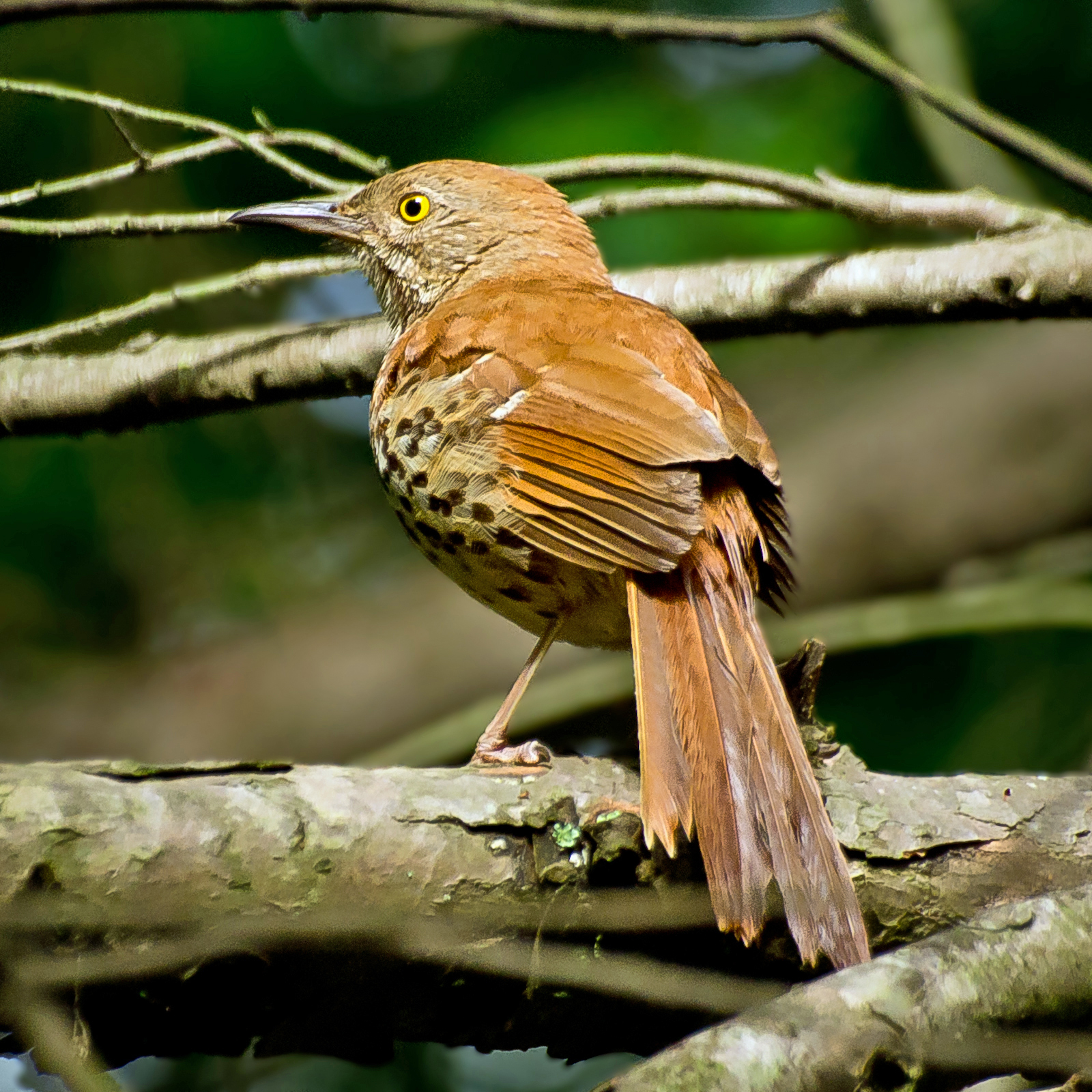
Photo by Ken Thomas
The Brown Thrasher is an alert, sharp-eyed observer of its surroundings.

While I cannot claim to have seen my first spring hummingbird – yet – I can report that hummingbirds are officially back. Some of my Facebook friends have reported their first sightings. Other readers have emailed me to share their sightings.

Nancy Light welcomed back a ruby-throated hummingbird on Sunday, April 7. “I have my sugar water feeders hanging off my fruit trees in the front yard,” Nancy wrote in an email. “I live in Kingsport, but this sighting was at my farm in Duffield, Virginia, in the Fairview community.”

•••

Patricia Faye Wagers in Kingsport saw her first hummingbird of spring on April 8.

“With one, I know more are on the way,” she wrote in a Facebook post announcing her sighting.

•••

Dianne Draper in Jonesborough reported her first hummingbird sighting of spring on April 9 in a Facebook post.

“Never did get a picture of the bird,” she wrote. “Also saw the first broad-winged hawk in the yard,” she added.

Broad-winged hawks, like ruby-throated hummingbirds, are migratory and return to the region in late March and early April.

•••

It’s in Central and South America where the world’s more than 300 species of hummingbirds reach their greatest diversity. In Eastern North America, the only hummingbird known to nest is the ruby-throated hummingbird.

The western half of the United States and Canada can claim about a dozen nesting species, including rufous hummingbird, Allen’s hummingbird, Anna’s hummingbird, broad-tailed hummingbird, black-chinned hummingbird, calliope hummingbird, buff-bellied hummingbird, broad-billed hummingbird and violet-crowned hummingbird.

Hummingbirds, regardless of species, occupy a tough spot in the food chain. A bird not much bigger than many large insects is going to be a target for opportunistic predators that will attempt to kill and consume anything small enough for them to make the effort.

To make matters worse for ruby-throated hummingbirds, some large spiders and mantids, as well as bigger dragonflies, have also been documented as hummingbird predators. When ruby-throated hummingbirds retreat to Central America for the winter months, they also face threats from lizards and snakes.

The list of predators that have been known to eat ruby-throated hummingbirds extends to bullfrogs, as well as many raptors, including kestrels, merlins and sharp-shinned hawks. Blue jays and other birds will raid hummingbird nests for eggs or young. Squirrels and chipmunks are also nest predators.

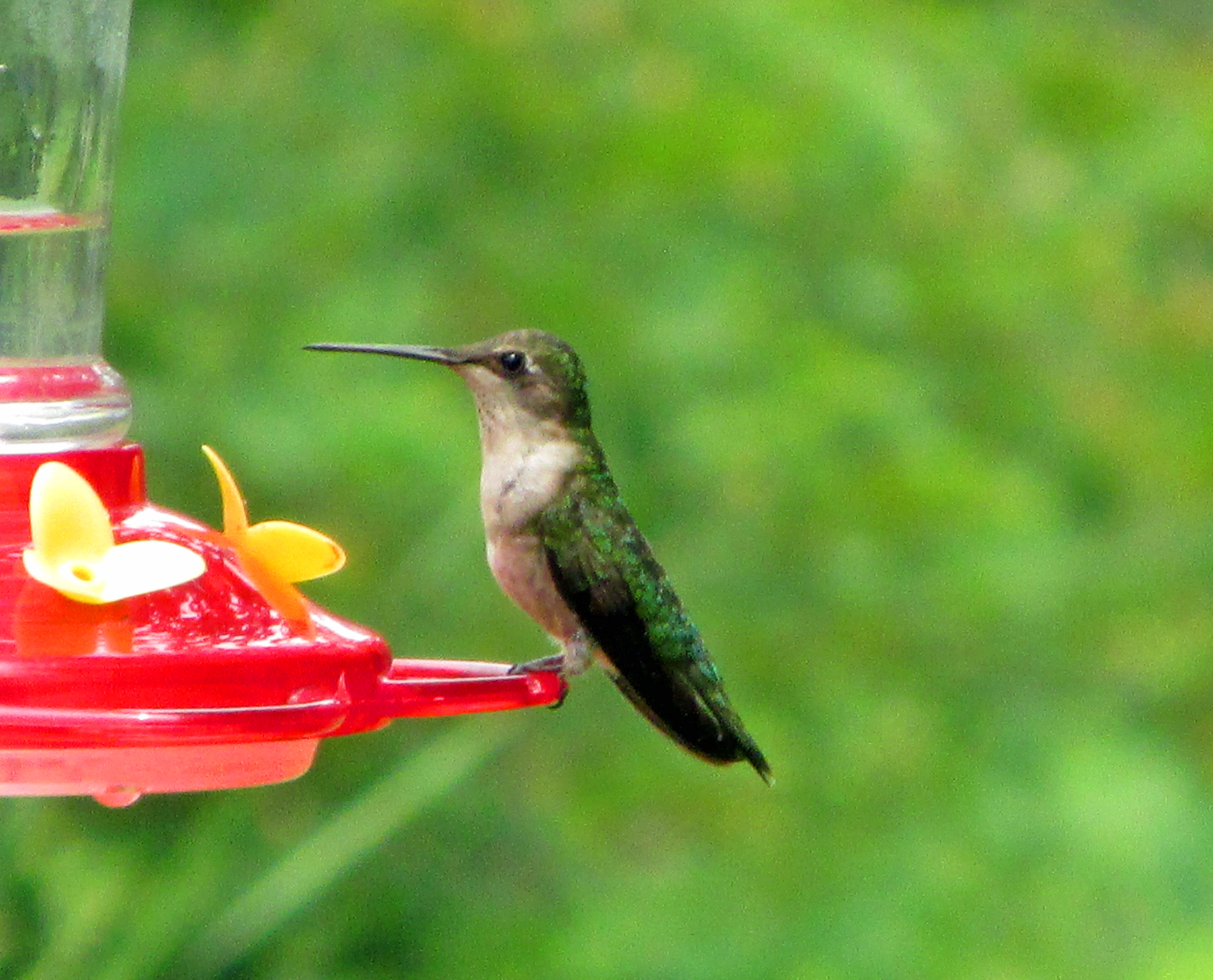
Photo by Bryan Stevens • Every hummingbird that arrives at your feeder is a survivor.

In essence, every hummingbird visiting your feeders and gardens is a survivor.

And evading an assortment of predators is not their only obstacle. These tiny birds make an awesome yet grueling migratory flight – twice a year – across the Gulf of Mexico. This achievement is a grueling finale for such a tiny creature’s migration. This direct flight alone can take 18 to 22 hours of non-stop flying before reaching land on the other side of the Gulf in states like Mississippi and Texas.

Hummingbirds have fascinated for centuries. Early European explorers sent back reports of amazing little birds that seemed halfway between birds and insects.

In the 1550s, French explorer Jean de Léry published a journal of his travels in Brazil. His account provided the first written description of hummingbirds to reach readers back in the Old World.

This painting, “The Inspiration of Christopher Columbus” by José María Obregón, was painted in 1856 well after the explorer sailed the ocean blue. It’s a reminder that from the moment that European explorers arrived, they were amazed at many discoveries in the New World, including tiny birds that buzzed and hummed around their heads like insects.

Of course, the natives of North America also knew about hummingbirds. In fact, many native tribes held hummingbirds in high regard. Some regarded them as healers. An Aztec deity by the name of Huitzilopochtli had a physical form supposedly comprised of hummingbird feathers that fell from the sky. The Aztecs also believed that fallen warriors were reincarnated as hummingbirds, no doubt because of the feisty and often downright militant attitudes of these tiny birds. Anyone who has ever witnessed hummingbirds dueling at their feeders will know what I mean.

It won’t be long before we have these tiny flying jewels back with us. Once they return, their antics will entertain us for several months before it’s time for them to head south again this fall.

•••

Feel free to continue to share hummingbird sightings with me. Provide the time and date of their arrival. Email me at ahoodedwarbler@aol.com to share a sighting, ask a question or make a comment.

Photo by Bryan Stevens • A ruby-throated hummingbird sips from a sugar water feeder.


Sounds of spring remain one of the season’s pleasures

Photo by Bryan Stevens • Blue-headed vireos, such as this bird, are high-elevation summer residents in the region. In the fall, they are also common migrants.

In modern life, it can seem like we’re always looking for ways to relax and de-stress. For me, nothing works quite so well as letting nature’s sounds, as well as sights, provide some measure of relief from stressful situations and anxious thoughts.

I instantly notice when a new vocalization is added to the usual mix. Such occurred on March 26 when I heard the syllabic song of a blue-headed vireo from the upper reaches of a large tree near the fish pond.

The blue-headed vireo’s song has been described as “Hear me! See me! Here I am!” It’s similar to the song of the related red-eyed vireo, but it’s slower and the paired syllables are separated by a brief pause.

În a couple more weeks, the songs of blue-headed vireos will ring out all over the high-elevation forested slopes of many of our local mountains, but these are just starting to get back to the region after an absence during the colder months. Many other feathered singers will be arriving in their wake, including warblers, tanagers and grosbeaks.

Photo by Bryan Stevens • The tufted titmouse is a backyard bird with an impish personality and a loud song.

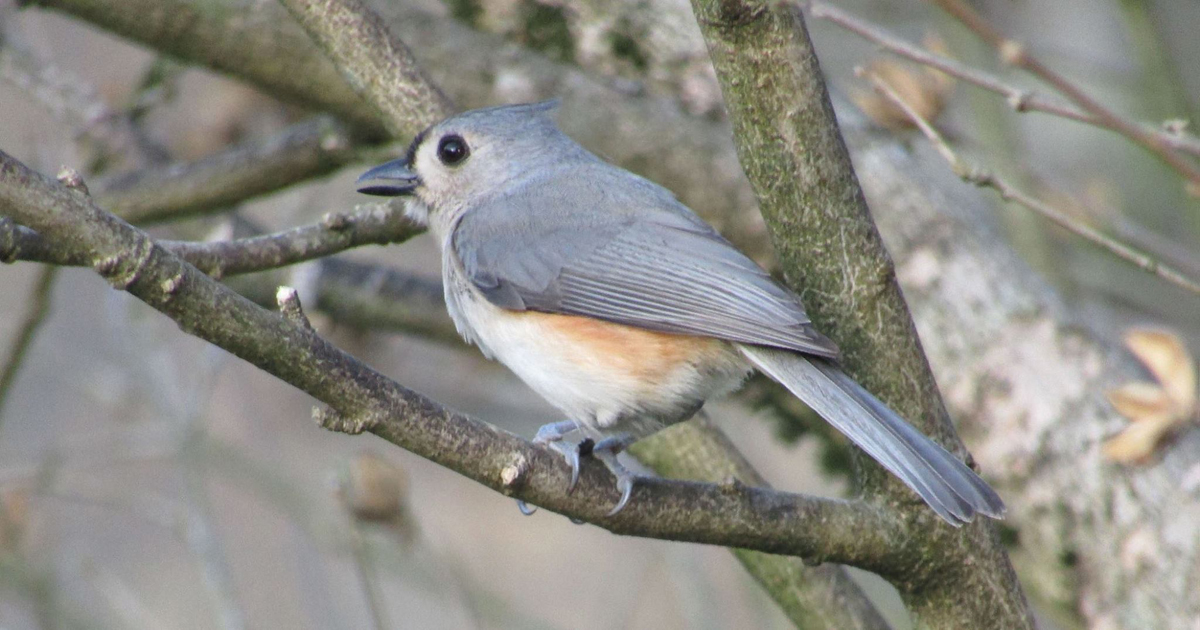
The mornings around my home often begin with a loud, insistent “Peter! Peter! Peter!” uttered from the woods or even from shrubbery just outside my bedroom window. Male tufted titmice, little gray relatives of chickadees with a distinctive crest and large, dark eyes, sing their urgent “Peter! Peter! Peter!” as a constant refrain in their efforts to attract mates now that they feel spring in their blood.

A series of rat-a-tat-tats echoes from deeper in the woods as woodpeckers tap their sturdy bills against the trunks of trees. The three most common woodpeckers at my home are red-bellied, downy, and pileated, and they all have their own unique vocalizations, as well.

The pileated woodpecker produces clear, far-carrying resonant piping sounds that can last for a few seconds each blast. The much smaller downy woodpecker produces a whinny of high-pitched notes that descend in pitch toward their conclusion. The red-bellied call is probably the one that stands out the most. The call’s a harsh, rolling “Churr, churr, churr” given almost like an expression of exasperation as they circle tree trunks and explore branches.

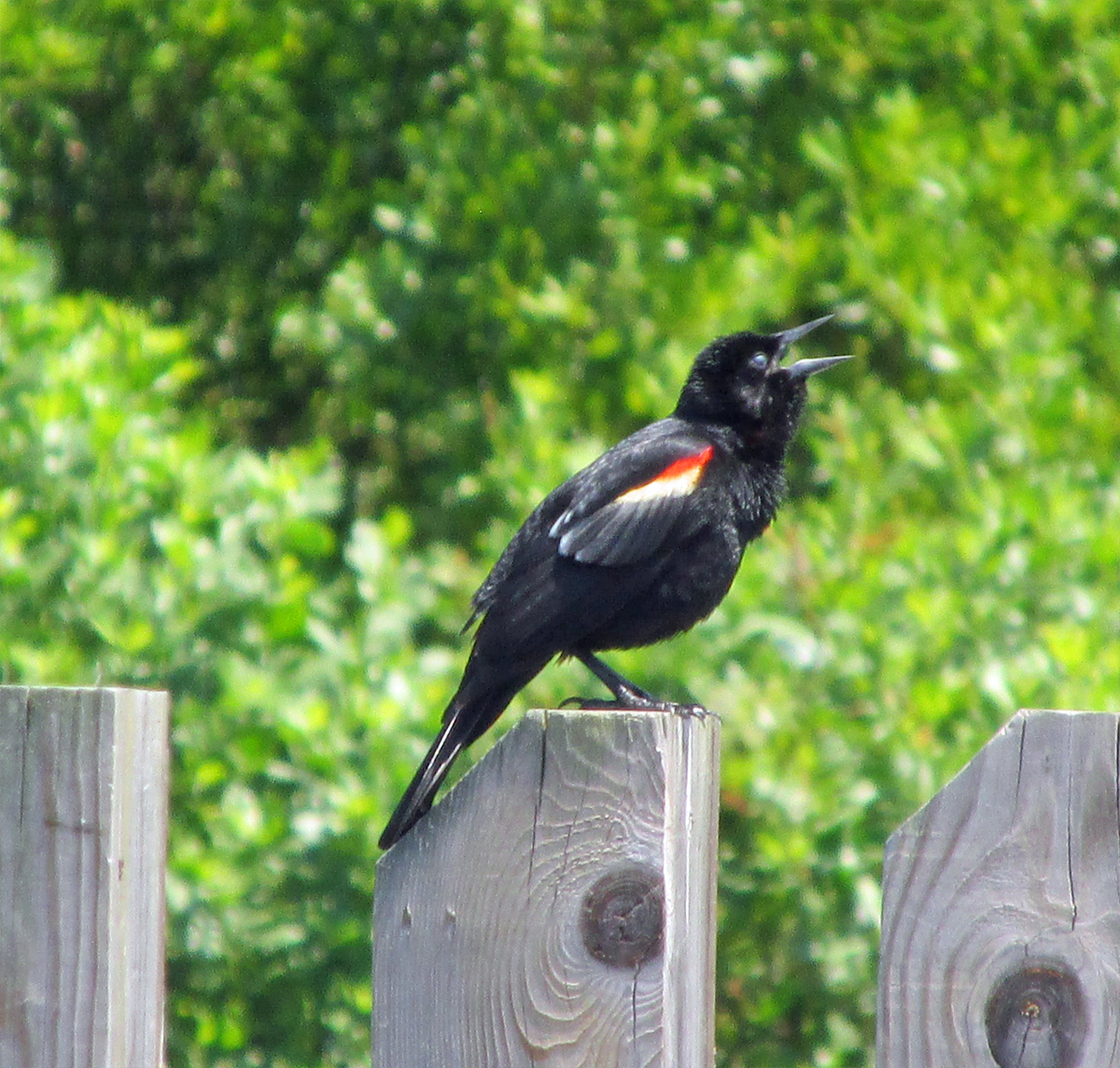
Since their return earlier this month, the resident red-winged blackbirds are often some of the earliest singers these days. According to the website All About Birds, the male red-winged blackbird’s “conk-la-ree!” is a classic sound of wetlands across the continent of North America. According to the website, the one-second song starts with an abrupt note that transforms quickly into a musical trill.

Photo by Bryan Stevens • A male red-winged blackbird sings to attract mates and ward off rivals.

Some birds helpfully introduce themselves with a song that repeats their name. One such common bird is the Eastern phoebe. In recent weeks, a pair has been checking out possible nesting sites. In past years, they have made use of the rafters of my garage and blades on a porch ceiling fan for potential nest sites. The male spends much of the day producing his strident “fee-bee” call, which is a perfect phonetic rendition of the bird’s common name.

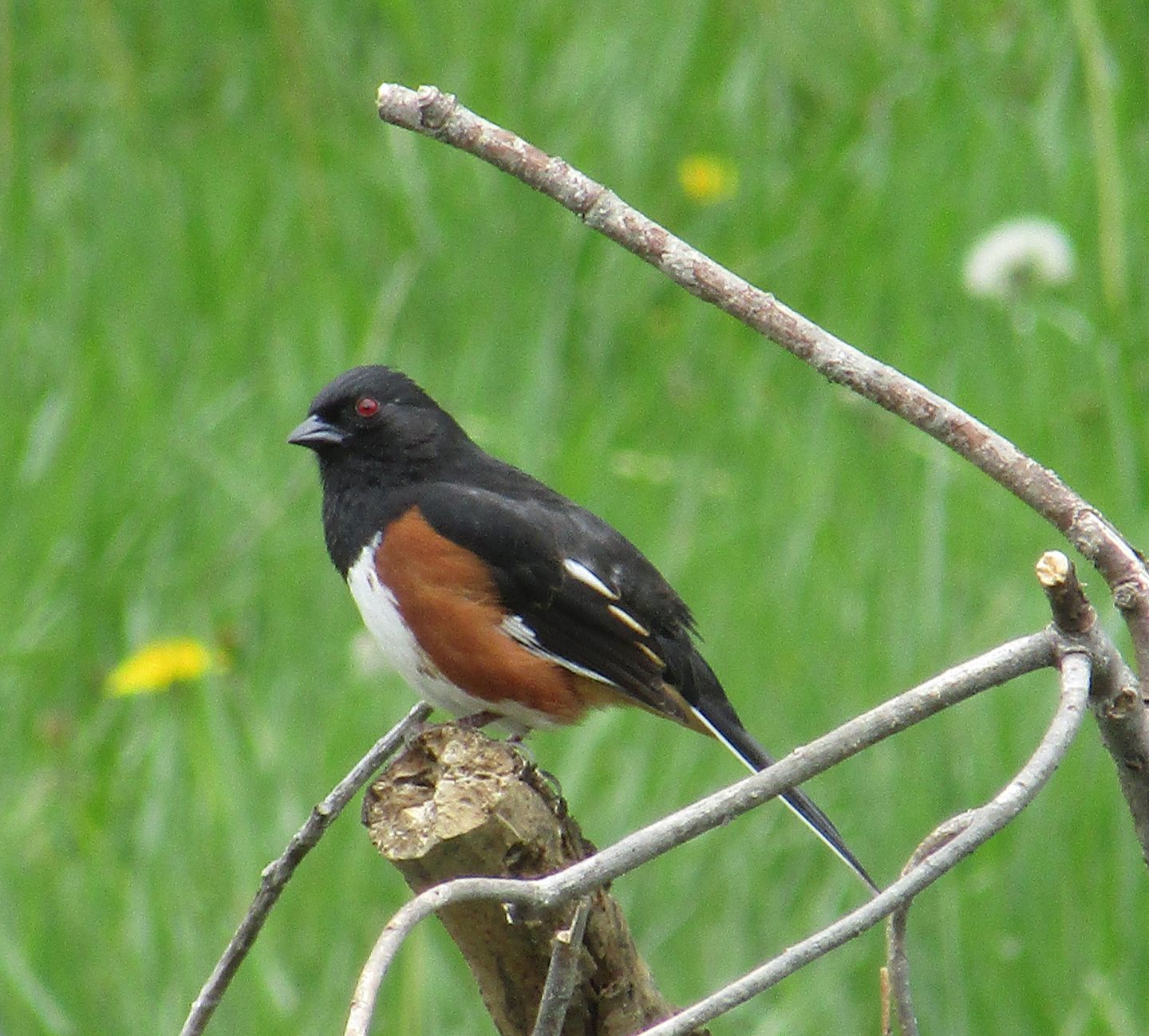
Then there’s one of my favorite songs of spring, which is produced by the Eastern towhee, also known by such common names as “ground robin” and “swamp robin.” These birds, which are actually a species of sparrow, also have some instantly recognizable vocalizations. With the arrival of spring, the males seek elevated perches for extensive singing bouts to attract mates and establish territories. Their song has been interpreted, quite accurately, as “drink your tea!” They also have some alarm notes, such as “€œChew-ink”€ and “€œToe-Hee,” of which the latter provides the basis for this bird’s common name.

Photo by Bryan Stevens • Male Eastern towhees are persistent singers once they establish  a spring territory.

Towhees occasionally spend the winter, but I’ve not noticed any during the winter of 2023-24. They are back now, and have been keeping a high profile for the past couple of weeks.

Of course, other wildlife is keen to join the springtime chorus. I have so many spring peepers at the fish pond and in the wet fields around my house that the noise from these tiny amphibians can reach deafening levels. The chorus is bound to grow more diverse and louder as spring advances. Take some time to enjoy the sounds of nature at your own home.

••••••

To share your own sighting, make a comment or ask a question, send email to ahoodedwarbler@aol.com. I’m also on Facebook.

Restless robin flocks signal spring’s approach

When I posted Jan. 29 on Facebook about seeing my first flock of American robins in 2021, I didn’t anticipate the avalanche from other observant bird enthusiasts.

Priscilla Gutierrez commented on seeing about 30 robins in a field along Limestone Cove Road in Unicoi.

“They don’t come to the feeders,” Priscilla noted. “It was wonderful to see them.”

Alice Torbett in Knoxville shared that she saw her first flock of robins about two weeks ago when they swooped in to harvest berries from the holly tees at her Knoxville home. “They were very considerate to wait until after Christmas,” Alice wrote.

Erwin resident Brenda Marie Crowder commented that “tons of Robins are eating my holly berries right now. With snow dropping and all.”

Jonesborough resident Nan Hidalgo reported that she had five robins in her yard on a recent Friday afternoon.

Christine M. Schwarz in Alexandria, Virginia, shared her own sightings.

Photo by Bryan Stevens • An American robin grasps a perch and keeps an eye on its surroundings.

“Three weeks ago there was a large flock at Mount Vernon,” Christine wrote in a comment to my post. “I have seen a smaller group over here by Fort Belvoir, too. I can’t believe they’re migrating now — more like wintering over.”

Byron Tucker, who lives in Atlanta, commented, “The other day, I saw a flock of robins and blackbirds mixed together.”

Dee Obrien, formerly of Elizabethton, Tennessee, but now living in Florida, lamented the timing of the robins. “They always seem to come back to soon, poor little things,” she wrote. “It is too cold.”

Becky Boyd shared her own experience with robins. “I’ve had dozens here in Knoxville,” she said. “They all recently left, except one loner who is terrorizing the bluebirds and attacks them at the feeders.”

Erwin resident Donna Rea, and a former co-worker at The Erwin Record, posted a question to my Facebook robin discussion.

“What do robins eat this time of year?” Donna asked. “Will they eat out of our feeders if the ground is frozen and they can’t find a hibernating worm?”

Photo by Jack Bulmner/Pixabaycom • An American robin plucks a berry from a branch.

I suggested in my reply that robins might eat suet at feeders, as well as fruit. More likely, the restless robins in the region are probably scouring the countryside for holly trees with berries. Of course, robins are omnivorous in their appetite and would gladly take an earthworm if they could coax one out of the chilly ground.

South Carolina resident Catherine Romaine Henderson simply posted an optimistic comment on my robin post. “Please tell me spring is coming!”

The American robin is indeed widely held to be a harbinger of spring. Furthermore, the robin is a popular American bird. In fact, this bird has been designated the official state bird by Wisconsin and Michigan.

In truth, many robins forego migration to endure a few months of cold weather. Their ability to shift their diet from earthworms and insects to fruit and feeder fare helps robins eke out a living. Robins remain an abundant bird but their fondness for co-existing with humans can leave them vulnerable to pesticides applied to lawns and gardens.

According to the website, “All About Birds,” the American robin nests three times a year. On average, however, only 40 percent of robin nests succeed at fledging young. Even once out of the nest, young robins are vulnerable. The website estimates that only 25 percent of each year’s fledged robins will reach November. So, the young robins that join some of the large flocks people are seeing in the region are birds that have beaten the odds.

Photo by Bryan Stevens • Returning American robins, prominent in lawns and gardens during their annual spring migration, will soon turn their attention to nesting duties.

Even the robins that do depart the region each fall don’t migrate far. Many robins that spend the summer in Canada or the United States only migrate as far as the Gulf States, southern Florida, southern California, Baja California and Mexico.

The American robin is a large bird in the thrush family, which in North America also includes such birds as Eastern bluebird, wood thrush, and Townsend’s solitaire.

In the British Isles, the European robin is simply known as “robin” or “robin redbreast.” When the first English colonists arrived in New England and other parts of colonial-era North America, they took pleasure in finding that some of the birdlife in the New World resembled familiar birds from their homeland. The red-breasted American robin looked like the bird they knew in the Old World as “robin,” which motivated them to name the New World bird “robin,” as well.

Other than the red breast, however, the two robins are not all that similar. The American robin is the larger of the two birds. Further separating these two birds is the fact that the European robin is not a thrush but rather a member of the family of Old World flycatchers.

Photo by Bryan Stevens • While American robins like fruit when its available, they also spend a lot of time feeding on earthworms and insects.

In some ways, the two robins are similar. Both are fond of earthworms, spending a great deal of their time on the ground foraging for worms. They will also follow human gardeners at their work, waiting patiently for the followed person to disturb the soil with a spade or hoe and expose earthworms for the waiting bird. They are also rather tolerant of humans and have learned to make their own homes close to human dwellings.

Some of the British transplants to North America must have felt homesick for familiar things because several unsuccessful attempts were made to introduce the European robin to the United States and Canada. European robins introduced in New York and Oregon failed to gain a foothold, unlike the introduction of such alien birds as the house sparrow and European starling.

On a few occasions, our American robins have overflown their destinations and ended up in the United Kingdom. For instance, an American robin became a first for London birdwatchers when one was found in that nation’s capital city in March of 2006. Whether of the European or American persuasion, robins have long been a favorite of birdwatchers and nature enthusiasts.

They have even adapted to take food at feeders. If you’d like to try your luck at attracting robins to feeders, know that they like their sunflower seeds hulled. They will also eat mealworms, fruit, peanut hearts and suet. Robins prefer to feed on the ground or on an open platform feeder.

Robins are such friendly and engaging birds. If we can have them near us for 12 months of the year, who’s going to complain?


Mississippi kite glimpsed on spring count becomes latest listed ‘life bird’

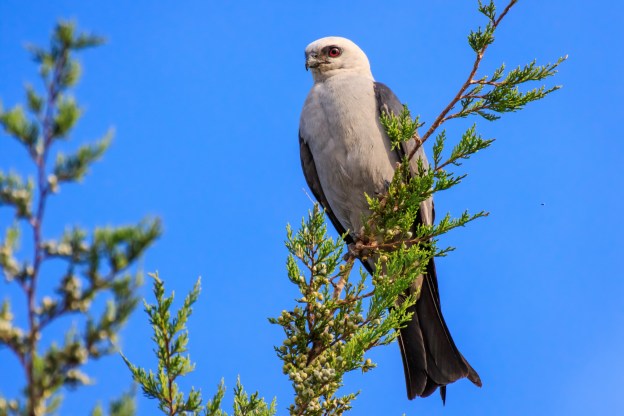
Photo by Richard/Adobe Stock • A solitary Mississippi Kite sits perched in a lakeside tree. These graceful raptors take their prey mostly while on the wing.

If you know many birders, you have likely heard them talk about “life birds.” These are any species that a birder has seen and identified in the wild for the very first time. It can be any bird species at all that the birder observes for the first time, whether it is a commonplace bird like a song sparrow or something slightly more exotic.

While taking part in the 77th consecutive Elizabethton Spring Count on Saturday, May 2, I saw something that, for our region, could be considered a little more exotic. The sighting certainly ranked as unexpected.

Unless one travels extensively, life birds can be hard to get once people have added to their lists most of the common birds around their homes. Finding a life bird during the ongoing pandemic brings its own challenges. I haven’t added a new life bird to my own list since a visit to South Carolina in June 0f 2016. During that visit to Huntington Beach State Park, I added a least bittern to my list of “life birds.”

My most recent “life bird” appeared closer to home and might qualify as my most unexpected life bird ever. The bird flew into view and onto my life list during the annual Spring Bird Count, which was conducted by members and friends of the Elizabethton Bird Club. Due to social distancing, many participants counted solo this year, myself included, although a few married couples birded together. I’ll always remember my pandemic spring count, especially for the 46th bird on my tally list for the day.

I found myself in the parking lot at Sycamore Shoals State Historic Park in Elizabethton around 11 in the morning. I wanted to scan the evergreens in that vicinity for Cape May warblers, a migrant that finds the tall conifers to its liking. I didn’t find any warblers, but I did surprise a perched raptor into making a short flight.

The instant I saw the bird launch itself into flight, I knew I was watching something out of the ordinary. The bird flew with a combination of grace and power that reminded me of a falcon, but I also glimpsed a barred tail that reminded me of one of the accipiter hawks. Then it landed on a dead branch in a tall sycamore that must have permitted the raptor an unobstructed view of the entire park. Although I’d never until that moment seen a Mississippi kite, I have studied illustrations and photographs. I felt fairly certain of the bird’s identity even before I used my phone to call up some birding sites to confirm my identification.

Photo by Bryan Stevens • This Mississippi Kite became the first of its kind ever observed on one of the Elizabethton Bird Club’s Spring Bird Counts for Northeast Tennessee.

That’s when the fact I was birding solo hit home. I wanted some additional witnesses to this very unexpected find. In lieu of other observers, I turned to my camera. The bird had turned its back to me, but I snapped some photos and then made my way to a position that I hoped would allow for better photographs.

Alas, the resident American crows at the park had different ideas. Detecting a raptor in their midst, about a half dozen crows gathered to harass the perched kite. Before I could snap a new round of photos, the kite took flight and flew into a stand of tall trees located between the park and Sycamore Shoals Hospital.

Only a few years ago, a Mississippi kite in Northeast Tennessee would have been unheard of. The hills and mountains of the region are simply not the expected habitat for these graceful raptors. Faith Reeves, a resident of Elizabethton, Tennessee, a Facebook friend and fellow birder, saw the first two Mississippi Kites ever found in Northeast Tennessee. She saw and photographed the birds in her own yard on May 20, 2014, and May 13, 2016.

In addition, Don Holt observed a Mississippi kite in Washington County, Tennessee, on April 16, 2017.

Rick Knight and several other birders also saw several Mississippi Kites for about a week in late August of 2016. Observers estimated that these sightings involved from two to five different kites.

“The August observations are our only fall records,” said Rick Knight, a long-time compiler of birds sightings in the region. He added that fall is the season when kites are likely to linger.

“All spring records are overshooting migrants and are one-day-wonders,” Knight explained.

Hearing his explanation, I felt even more privileged to have witnessed this “one-day wonder” in my home county.

Photo by Myriams-Fotos/Pixabay.com • The red kite is an abundant member of the kite family in Europe and northwest Africa.

The Mississippi kite is a beautiful raptor. Adults are grayish-white with the head often appearing pale gray or almost white. Although the Mississippi kite can attain a wingspan of three feet, these birds weigh only seven to thirteen ounces. They feed almost exclusively on insects, which they capture in flight. Some of the insects, such as cicadas and grasshoppers, are ones that damage crops, making the Mississippi kite a friend to farmers.

These kites breed and nest in the central and southern United States, but they have expanded their range north in recent years. They leave the United States in fall to spend the winter in southern South America.

Several years ago I got the thrill of adding a swallow-tailed kite to my life list in some agricultural fields in southwestern Washington County. I’ve also seen swallow-tailed kites in Florida. There is one other member of the kite family that I’d like to add to my list. The snail kite is a dark bird with a hooked beak designed for feeding on snails found in wetlands. This specialist resides in Florida, as well as the Caribbean and Central and South America.

Other kites found around the world include the double-toothed kite, plumbeous kite, whistling kite, square-tailed kite, red kite and black kite.

It’s been a spring filled with many amazing bird observations. I can’t speak for others, but thanks to that remarkable kite sighting and glimpses of some other fascinating birds, not even having to bird solo in a pandemic can bring me down. I’ll provide more details on this year’s Spring Bird Count for Northeast Tennessee in next week’s column.

Photo by Bryan Stevens • Mississippi Kite perched in a tree prior to being dispersed by some defensive American crows.

Region’s two oriole species make their spring return

Photo by MillionPM/Pixabay.com • Oranges, as well as offerings of grape jelly, are often successful at luring Baltimore orioles to feeders.

Earlier this spring, Kaylynn Wilster, who resides in Jonesborough, Tennessee, emailed me for information about orioles.

“Do you know when the orioles return to our area?” Kaylynn asked. In her email, she also shared that she had a female Baltimore oriole gathering nesting materials in her yard last summer.

“I put out an oriole feeder this year,” she added. So far, she noted, only chickadees have discovered the grape jelly.

In addition, Brenda Hickman Dishner, who lives near Holston Dam in Bristol, Tennessee, contacted me through Facebook to ask if I have seen orioles in the area.

Brenda added that she has put out oriole feeders for the past three years with no luck.

Photo provided by Gloria Blevins • A male Baltimore Oriole visits a feeder at the Blevins home in Damascus, Virginia.

It seems many people are hoping to welcome these bright orange and black birds to their feeders. In my reply to Kaylynn and Brenda, I told them to expect orioles to arrive in late April and early May. I’ve found orioles uncommon visitors to my home, but my prediction on timing proved more or less correct.

Gloria Blevins shared a photo of the Baltimore orioles that have been visiting her home in Damascus, Virginia. In a Facebook message, she shared that the orioles have been feeding on grape jelly that she had provided them since May 2.

Although she no longer lives locally, Kathy Noblet has been seeing lots of Baltimore orioles at her home in Mount Vernon, Ohio, since late April. Her photographs of these colorful birds have been nothing short of amazing. She has shared new photographs on Facebook on an almost daily basis for the past couple of weeks.
“The orioles continue to come to my deck and pig out on grape jelly,” Kathy posted on May 6. “They are fun to watch!”

I also heard back from Kaylynn on May 15. “There was a male oriole getting a drink at my pond about four days ago,” she informed me in an email.

Photo by USFWS • Baltimore orioles, like this male, are members of the blackbird family, making them relatives of species such as Eastern meadowlarks, brown-headed cowbirds, common grackles and red-winged blackbirds.

The Baltimore oriole, despite its bright plumage, is a member of one of the blackbird clans, known in scientific circles as the Icterus genus. In his book, “Birds of Forest, Yard, and Thicket,” John Eastman notes that there are 26 species in the genus, eight of which nest in the United States.

In the eastern United States, there are only two orioles — the Baltimore oriole and its smaller relative, the orchard oriole. The western half of the nation is home to a half dozen orioles, including Bullock’s oriole, Scott’s oriole, Audubon’s oriole, hooded oriole and Altamira oriole. I saw several gaudy, noisy Bullock’s orioles during a trip to Utah in May of 2006.

Tall trees are an essential part of the Baltimore oriole’s favored habitat. Baltimore orioles are well-known for their colorful appearance, but their fame also rests with a sack-like nest that Eastman describes as a “durable marvel of tight-woven plant fibers” in his informational book. Eastman also notes that during another era in America, the Baltimore oriole often built its marvelous nests in American elms before Dutch elm disease almost eradicated these trees from the landscape. He reports that maples, willows and apples have served as nesting trees in the absence of elms. Once the hard-working female oriole sets to work, she may spend eight days or longer weaving plant fibers into a strong pouch suspended from the outer ends of drooping branches. The durability of the nest means that other birds, including house finches, may occupy the old nest once abandoned by the original inhabitant.

Orioles are present in the region from April to October, retreating to the American tropics for the winter. There they may live on plantations that produce such much-coveted crops as bananas, coffee and cacao, which is the essential ingredient for chocolate.

George Calvert, Lord Baltimore

The Baltimore oriole is named in honor of one of the founding fathers of the state of Maryland. George Calvert, or Baron Baltimore, was an influential English colonist instrumental in establishing the colony of Maryland. His servants wore orange and black uniforms, which inspired early American naturalist Mark Catesby to name the bird the Baltimore oriole. The bird’s association with the the city of Baltimore and the state of Maryland have continued to this day. The bird is also famous as the namesake of one of America’s professional baseball teams.

Baltimore orioles eat insects and fruit, but these adaptive birds have also developed a fondness for sweet nectar. Orioles no longer have to raid sugar water feeders meant for hummingbirds. Many manufacturers of bird-feeding equipment now produce affordable sugar water feeders specifically designed for use by orioles. Many bird enthusiasts also use orange slices and grape jelly to lure orioles into their yards. I’ve tried these tricks, but I’ve attracted more gray catbirds and scarlet tanagers than I have orioles. In my book, that’s not a disappointment. I happen to like catbirds and tanagers.

With orioles, I’ve had better luck by refraining from a bit of pest control. Back in the late 1990s, I observed a male Baltimore oriole visiting a large caterpillar tent in the branches of a cherry tree. The bird methodically plucked the caterpillars from the silken tent, eating them one after the other. I’ve since learned that this is not an odd occurrence for Baltimore orioles. While many birds avoid spiny and hairy caterpillars, orioles actively seek them out and do a great service by reducing the damage these hungry caterpillars can inflict on the environment.

If you’re wanting to see orioles, I can share some area “hot spots” for these colorful birds. The waterfront at Winged Deer Park in Johnson City, Tennessee, has fewer tall trees than it did a few years ago, but the remaining trees still attract orioles. Warriors Path State Park in Kingsport, Tennessee, has long been a place that local birders depend on for sightings of Baltimore orioles. I also had some impressive sightings of both orioles at Hungry Mother State Park a few years ago. Although those birds could have been spring migrants, this park in Marion, Virginia, certainly offers habitat that orioles would find attractive.

Want more details on how to attract orioles to your yard using specialized feeders? Check out this helpful article from Birds and Blooms. https://www.birdsandblooms.com/birding/attracting-birds/bird-nesting/how-to-attract-orioles/

Photo by Bryan Stevens • In the western part of the United States, the Baltimore oriole is replaced by Bullock’s oriole.

Migrating rose-breasted grosbeaks thrill observers with recent visits

Photo provided by Shannon Stimson • A male rose-breasted grosbeak checks out some well-stocked feeders.

They’re not as dependable as ruby-throated hummingbirds, but they are every bit as impressive. Of course, I am referring to rose-breasted grosbeaks, which have been delighted people across the eastern half of the United States for the past couple of weeks.

Among these grosbeaks, it’s the male that wears the exquisite apparel. Males have a black head, wings, back and tail, with a bright splash of rose coloring across the front of their breast. Males and females exhibit marked sexual dimorphism, which is simply a scientific way of saying that males and females are quite different in their appearance.

The female rose-breasted grosbeak lacks the male’s showy plumage. She could easily be mistaken for a large, chunky sparrow with her brown, streaked feathers. She does have the large beak in common with the male. In fact, the term “grosbeak” is derived from German and simply means “big beak.” Incidentally, I’m told by bird banders that rose-breasted grosbeaks can give a nasty nip with that sizable and sturdy beak.

My email in-box and my Facebook page have been active this migration season with reports from people eager to share observations of these showy songbirds.

Carla Honaker sent me an email on Monday, April 27, about visiting rose-breasted grosbeaks.

“Two days ago I ran out of bird seed and changed from a mix to a black oil seed,” Carla reported. “I had heavy bird traffic yesterday and this morning my mother went over to open the blind that faces the front yard where the bird feeder hangs on a limb in a dogwood tree. To her surprise, there was a rose-breasted grosbeak sitting on the feeder eating the sunflower seeds.”

Understandably, Carla and her mother were very excited to see this unknown visitor at the feeder. Curious about the bird’s identity, Carla used the app Cornell Lab Merlin and made the identification.

Photo by Paintspreader/Pixabay.com • Male rose-breasted grosbeaks provide a jolt of excitement during migratory stopovers in yards and gardens throughout the eastern United States every spring.

Carla said the grosbeak stayed around for a few more minutes, long enough for her to take a picture of the side of his wing and back and tail.

She also had a question, asking if there are many rose-breasted grosbeaks in this area and whether there is a chance he will be a regular at her feeder.

Photo by Bryan Stevens • A male rose-breasted grosbeak perches in a tree on Roan Mountain in Tennessee.

Alas, rose-breasted grosbeaks are usually only spring and fall migrants unless one lives in the higher elevations of some of our local mountains. Visit area mountains in summer if you want to see these birds away from your feeders. They’re still fairly common in the region, but sadly, their numbers have declined overall.

I also let Carla know that grosbeaks are very fond of sunflower seed, so changing the mixed seed to black oil sunflower was probably helpful in attracting the visitor.

Elizabeth “Liz” Wynacht, who lives outside Atlanta in the town of Roswell, Georgia, also shared her own rose-breasted grosbeak story in an email she sent to me on Wednesday, April 29.

Elizabeth provided some interesting background to preface her story. “A few years ago, I looked up and saw this bright red “kiss” on this creamy colored breast of a bird,” she wrote. “I ran in to get my camera but he was gone when I got back. After researching what I thought I saw, my guess was a grosbeak. I have been looking for him ever since.”

Photo Provided by Byron Tucker • A male rose-breasted grosbeak squares off with a red-bellied woodpecker in the suburbs of Atlanta, Georgia.

After a couple of years, her wait ended. “This past Friday, while sitting on my porch, I looked up from my phone, and I saw that beautiful red kiss coming toward the feeder,” she wrote. “Of course, my movement startled him and he flew away.”

Once again, she fetched her camera and waited. Liz reported that the male grosbeak showed up again along with his little wife. They visited for three days.

“He was a wonderful surprise in the midst of this crazy pandemic,” Liz wrote. “Really lifts the spirit to see such a beautiful bird.”

Shannon Stimson sent me an email on Monday, May 4, with some attached photos of male rose-breasted grosbeaks. “I had three males at my feeders two days ago followed by one female,” Shannon wrote. “One male that looked less mature stayed on for two days gorging on nuts and seeds for hours and engaging in a slight disagreement with a red-headed woodpecker over possession of the feeder.”

Sadly, Shannon reported that the grosbeaks moved on, but noted that their visit brought a great deal of cheer in this isolating time.

Photo by Bryan Stevens
A rose-breasted grosbeak finds a meal of sunflower seeds at a feeder.

Kaylynn Wilster, who lives in Jonesborough, Tennessee, emailed me on Thursday, April 30, about her own rose-breasted grosbeak sighting. “He was not afraid of me and let me walk around the yard,” she wrote.

The very same day that Kaylynn saw her grosbeak, I looked out my window and saw one at my feeders. There had been a storm the previous night, so I suspect that helped “persuade” the bird to visit.

I posted on Facebook about my sighting and several friends shared their own.

“I was just reading an old article of yours about rose-breasted grosbeaks and, lo and behold, I have a flock of them hanging out on my feeders for the first time ever,” wrote Mary Ragland in a Facebook message to me.

Carolyn Grubb in Washington County, Virginia, reported seeing one.

Amy Wallin Tipton, who lives in Unicoi County, Tennessee, reported that her parents had been hosting a male and female rose-breasted grosbeak for the past two days.

James and Pattie Rowland, of Erwin, Tennessee, also reported on Facebook sightings of rose-breasted grosbeaks.

Keep the reports coming. If nothing else, sharing bird sightings is a way to feel less socially distant from others.

Photo Provided by Elizabeth “Liz” Wynacht  • A male rose-breasted grosbeak visits a feeder in a suburban area near Atlanta, Georgia.