
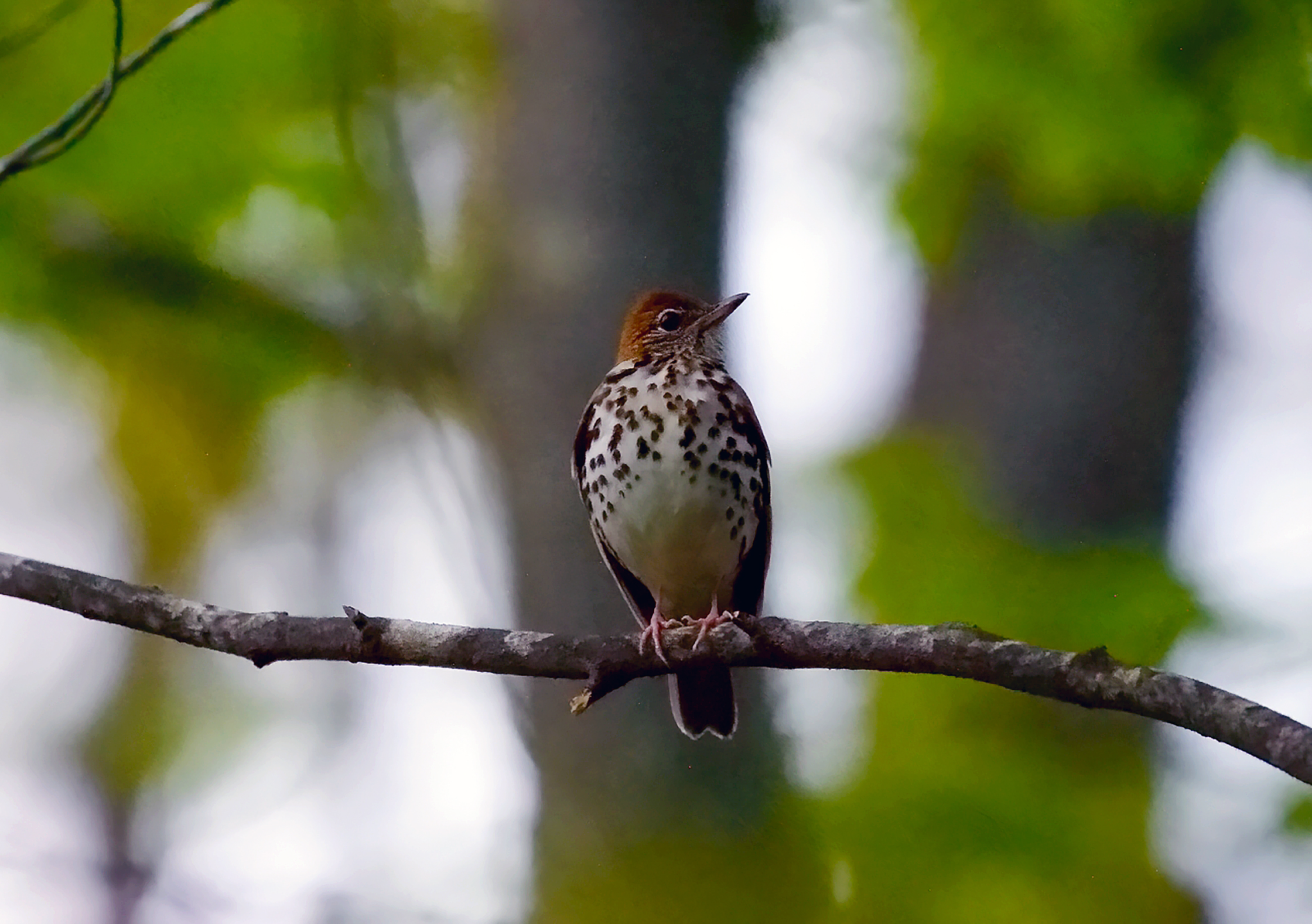
Photo by Jake Bonello/USFWS • A wood thrush sings at dusk from dense woodland cover.
The wood thrush, one of the most talented avian songsters in North America, returned this past week. I guess it’s now safe to plant corn. I’ve heard that many area gardeners hesitate to plant their corn until this native bird has given the “all clear” to signal that danger of a late freeze is past.
I haven’t seen a wood thrush yet, but I know that several of these birds have taken up residence in the woods around my home. I know because I’ve been hearing them singing mornings and evenings.
The wood thrush has a well-developed organ called a syrinx, which is the human equivalent of a larynx or voice box. For many songbirds, such as the thrushes, this specialized organ is more like a double voice box that permits a bird to produce two notes simultaneously while singing its song.
I think more people would take up the challenging pastime of birdwatching if not for the intimidation of trying to identify dozens of species that often demand attention to some specific details to contrast some birds from similar species.
But it is possible to enjoy birds even with looking at them. The wood thrush produces an elegant song that I never tire of hearing. Many other birds are vocal. They’re not all as musical as members of the thrush family, but its’s not necessary to ever lift a pair of binoculars to enjoy the birds in your own backyard. The sweet serenade of a wood thrush from woodland shadows is one of my favorite front porch evening activities every summer.
The wood thrush is one of the larger brown thrushes, which also includes such related birds as Swainson’s thrush, veery, gray-cheeked thrush and hermit thrush. Other less closely related members of the thrush family in North America include the American robin, Eastern bluebird and Townsend’s solitaire.
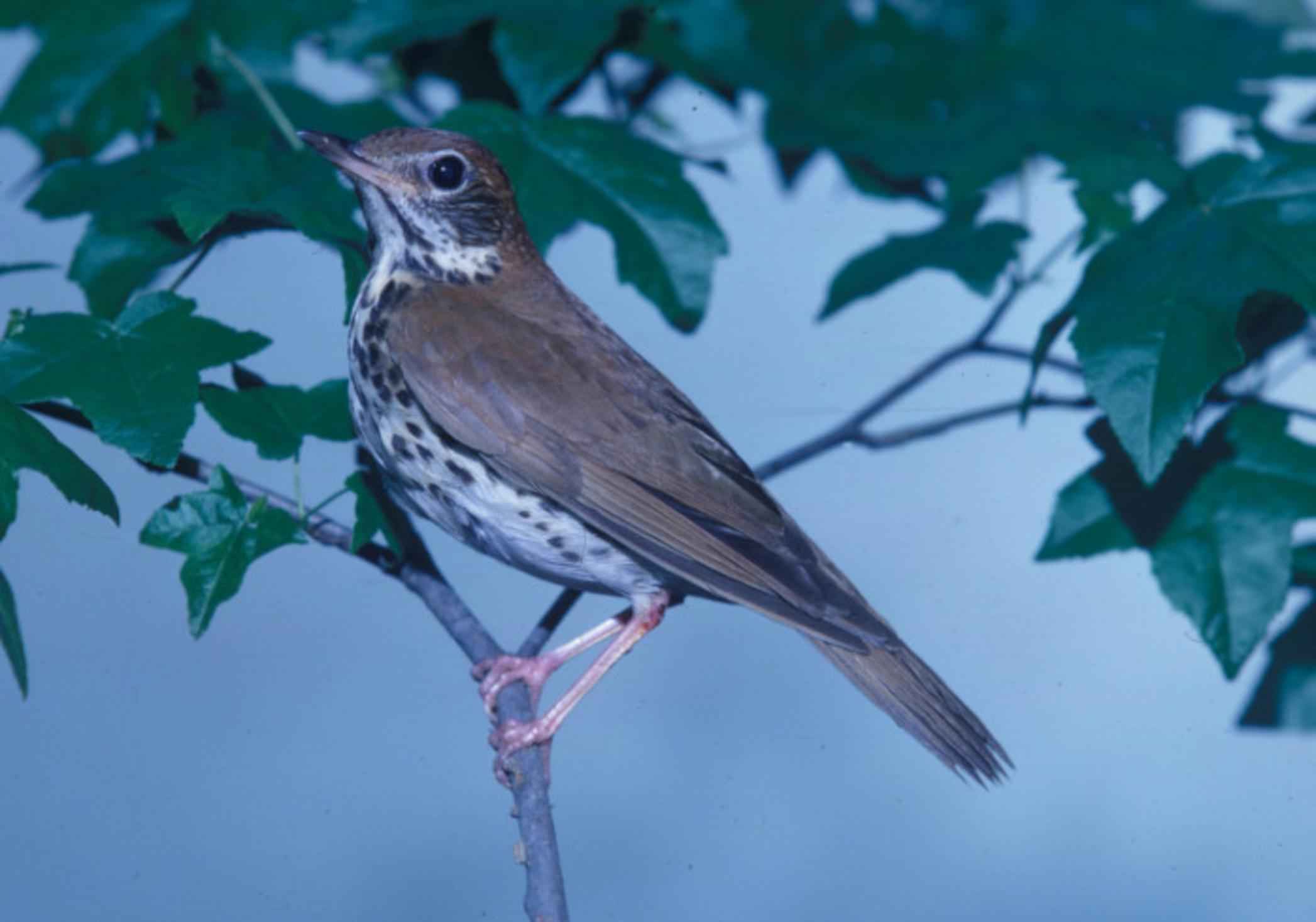
Photo by U.S. Fish & Wildlife Service • The Wood Thrush often sings its flute-like song from deep under cover in dense woodlands.
The wood thrush is a fairly common bird in the region from April to October. Wood thrushes migrate south in the fall, dispersing to Mexico and Central America for the winter months, and then they reverse the route to return each spring.
The shy wood thrush does not usually venture too far from its preferred woodland habitat, but freshly disturbed soil in a garden will attract these birds as they seek out earthworms and insect larvae. Wood thrushes also feed on various fruits and berries, which means they can be attracted by plantings of suitable trees and shrubs.
The wood thrush, like many of its relatives, sings mainly in the early morning and again in the evening hours. They will also often sing after the tumult of an afternoon thunderstorm in the summer. I encourage anyone who lives near woods to pull up a comfortable seat outdoors and let the relaxing song of a wood thrust provide a great conclusion to the the day.
Naturalists often point to one of the wood thrush’s close kin — the hermit thrush — as the most gifted singer in this clan of gifted songsters. For discerning listeners, the hermit thrush’s flute-like notes are somewhat more melancholy, haunting and ethereal than even the incredibly enchanting notes of the wood thrush’s song.
The poet Walt Whitman employed a thrush as a symbol in his poem, “When Lilacs Last in the Dooryard Bloom’d,” a moving pastoral elegy in honor of the assassinated President Abraham Lincoln.
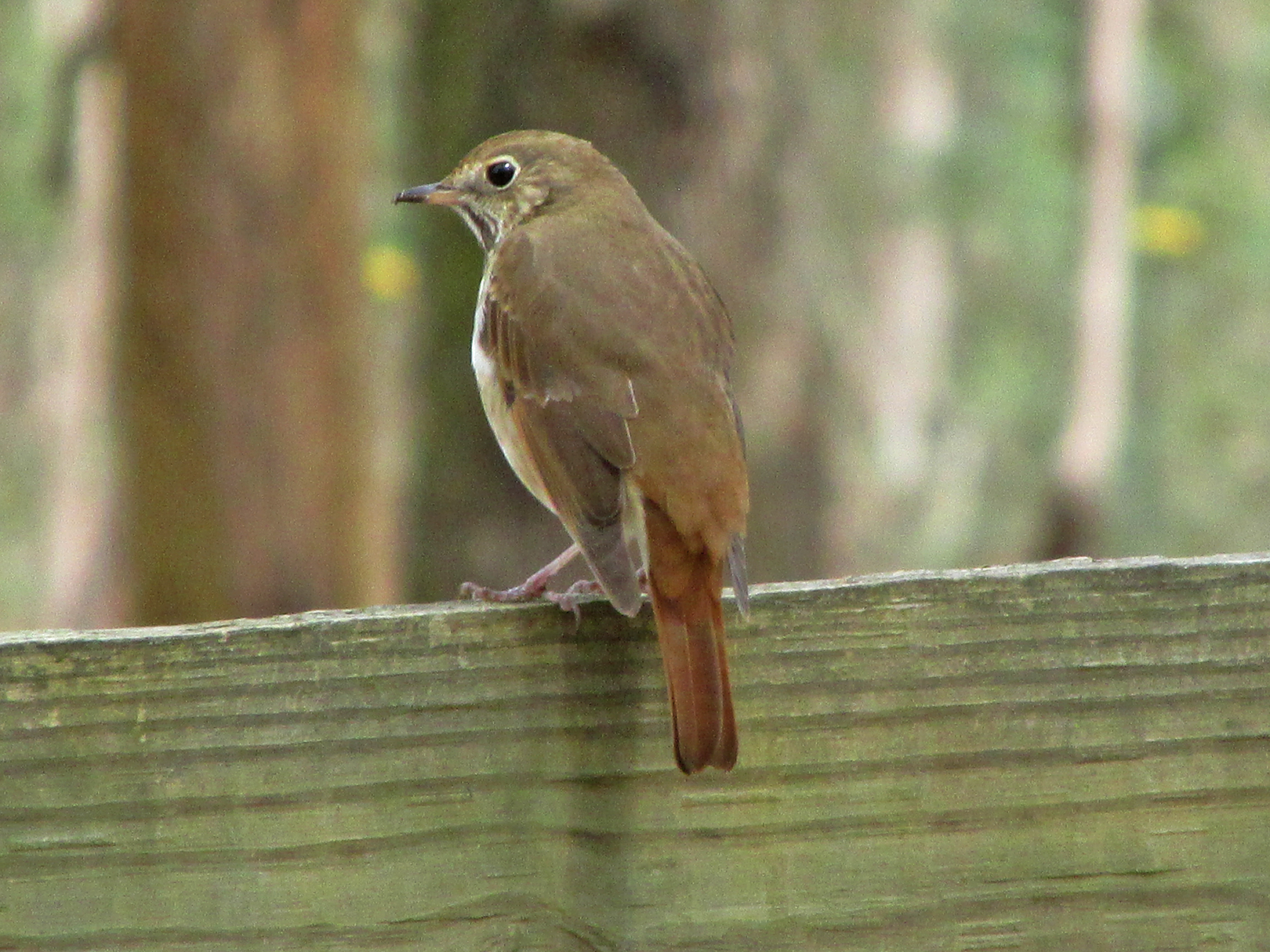
Photo by Bryan Stevens • A hermit thrush perches on a wooden fence rail. The bird’s rusty-red tail is evident in the photo.
Whitman evidently knew his birds, and it’s not difficult to identify that he referred to the hermit thrush when he wove this songbird as a symbol into his stanzas honoring Lincoln.
“Sing on there in the swamp,” Whitman wrote in his poem. “O singer bashful and tender, I hear your notes, I hear your call. I hear, I come presently, I understand you…”
Whitman and many other Americans have been made fans of this gifted songbird. In fact, the citizens of Vermont even proclaimed the hermit thrush as their official state bird.
In Northeast Tennessee, hermit thrushes are mostly a winter bird, but the wood thrush stays with us from spring to early fall. Enjoy the free music of resident wood thrushes this season. I don’t think you’ll be disappointed.
•••
To learn more about birds and other topics from the natural world, friend Stevens on Facebook at https://www.facebook.com/ahoodedwarbler. He often posts about local birds, wildlife, flowers, insects and much more. If you have a question, wish to make a comment or share a sighting, email him at ahoodedwarbler@aol.com.

Photo by Jean Potter • The wood thrush is a common summer resident of woodlands in Northeast Tennessee, Southwest Virginia and Western North Carolina.
 Our Fine Feathered Friends