
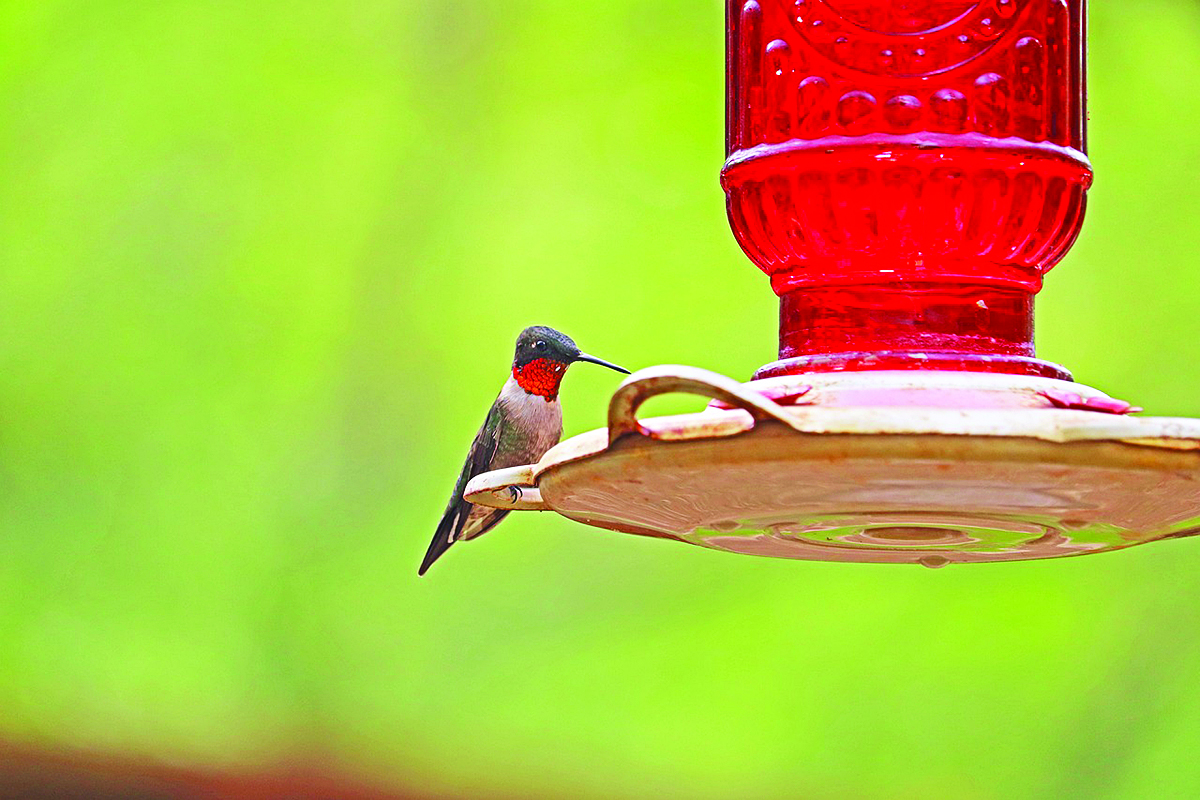
By George/Pixabay • A ruby-throated hummingbird sips sugar water from a feeder.
The hummingbirds are back, although they’ve been slightly late returning this spring. My first report of a sighting came from southwest Virginia this year.
Bobby Andis reported an arriving ruby-throated hummingbird on April 9 in Abingdon, Virginia.
•••
Edison and Emma Jean Wallin saw their first spring hummingbird at 6:10 p.m. on April 11 at their home in Unicoi. Their daughter, Amy Tipton, reported their sighting to me via Facebook messenger. Amy, like me, is still waiting for her first spring hummingbird.
•••
Lynda Carter emailed me to share her first spring sighting of a male ruby-throated hummingbird at her feeder at 8:45 a.m. on Saturday, April 11. She said that she lives near the end of the Embreeville Mountain in the Lamar community in Washington County.
•••
Brookie and Jean Potter welcomed their first spring hummingbird at 7:40 p.m. on April 11. The Potters live near Wilbur Lake in Elizabethton.
•••
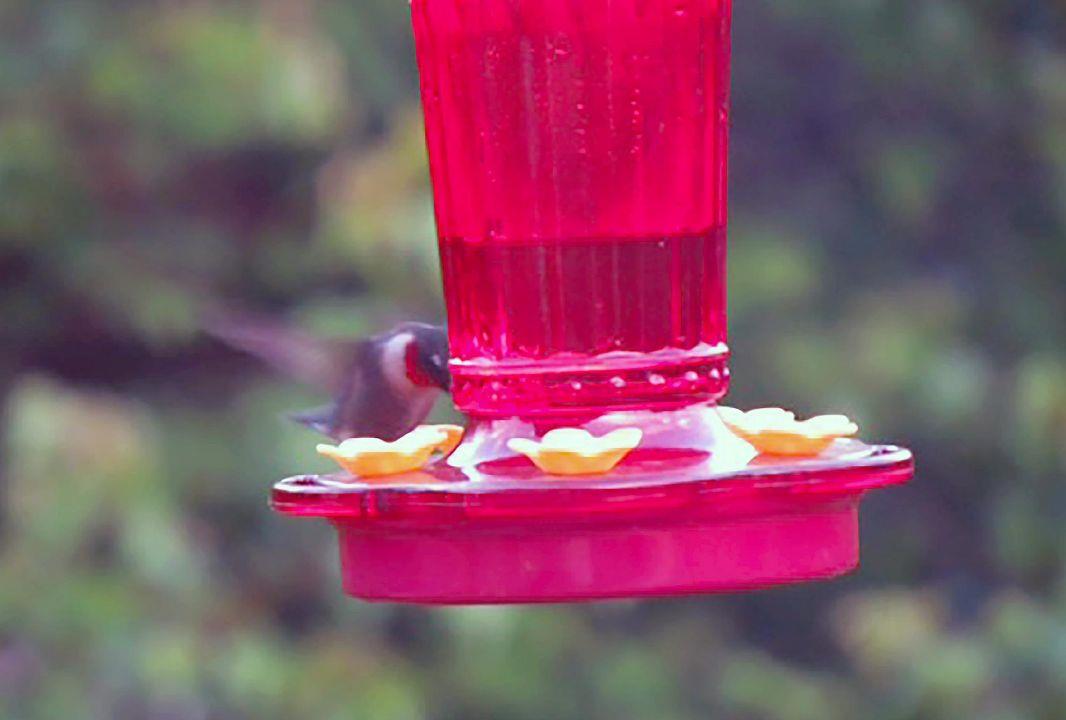
Michele Sparks • The photographer got a quick shot of the first spring hummingbird at her feeder in Bluff City.
Michele Sparks had her first spring hummingbird arrive at 6 p.m. on April 13 at her home in Bluff City. Michele shared a photograph of the visiting hummingbird and noted that this year’s bird beat last year’s arrival date by two days.
•••
Joe McGuiness saw his first spring hummingbird on April 15 in Erwin.
•••
After feeling twinges of impatience with their expected arrival, I finally saw my first ruby-throated hummingbird at 7 p.m. on April 16. I had stepped onto my front porch and within seconds heard the familiar buzz of hummingbird wings. Some careful observation detected the tiny bird weaving in and out of the branches of a nearby shrub. After some more waiting, the bird flew to one of my feeders for a quick drink of sugar water.
•••
Dianne Draper in Jonesborough saw her first spring hummingbird on April 17.
•••
Every hummingbird’s arrival at our homes after an absence of nearly six months is nothing short of a miraculous achievement on the part of this tiny bird. According to the website hummingbird.net, most ruby-throated hummingbirds make a daring journey across the Gulf of Mexico to return to their summer homes in the United States and Canada. They typically depart at dusk for their nonstop Gulf flight of up to 500 miles, which takes 18 to 22 hours, depending on the weather.
Now that we’ve welcomed them back into our yards and gardens after such a harrowing journey, it’s important as good hosts to make sure these tiny wonders are kept safe.
Plant flowers! Many people have been told that red flowers are best, but the fact is hummingbirds sip nectar from a variety of blooms in all sorts of colors. The benefit of flowers is that nothing beats natural, and flower nectar is about as good as natural gets.
Some ways of ensuring that our hummingbird guests are kept healthy and secure are simply common sense. For instance, don’t use pesticides, herbicides or any other sort of toxin anywhere close to the vicinity of a sugar water feeder or a flower garden. Hummingbirds are such tiny creatures with such intense metabolisms that it only takes a minute amount of any harmful substance to sicken or kill one of these little flying gems.
Feeding hummingbirds is easy, but many people try to complicate the process. Only common, pure cane sugar, mixed to a ratio of four parts water to one part sugar, is a safe choice for these birds.
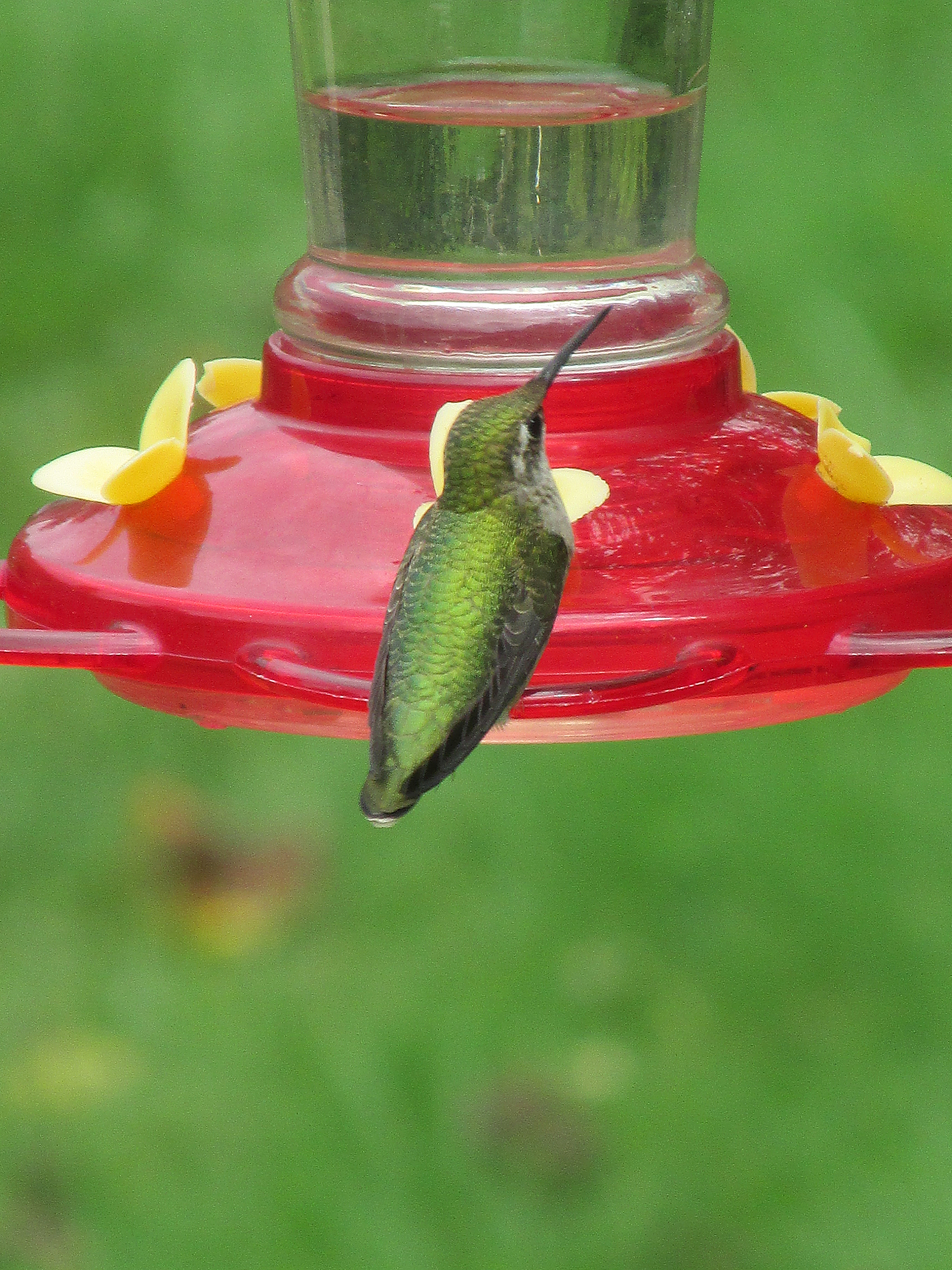
Photo by Bryan Stevens • Put sugar water feeders out early to attract the “early birds.”
•••
Rich Hall emailed me, not about a hummingbird, but about another exciting sighting.
On the morning of April 13, he saw two yellow-headed blackbirds. “I live in Goodlettsville, outside of Nashville,” he wrote. “Do you ever hear reports of them coming over this way?”
I emailed him back and let Rich know that the yellow-headed blackbird is considered a rare to uncommon visitor to the Volunteer State, but they do surface occasionally. The species often mingles with flocks that also include red-winged blackbirds and brown-headed cowbirds. Yellow-headed blackbirds are slightly more likely to travel through Middle and West Tennessee than in East Tennessee, but there have been reports from every section of the state. I saw a lone yellow-headed blackbird several years ago in Jonesborough. A town resident alerted the birding community to the bird’s presence.
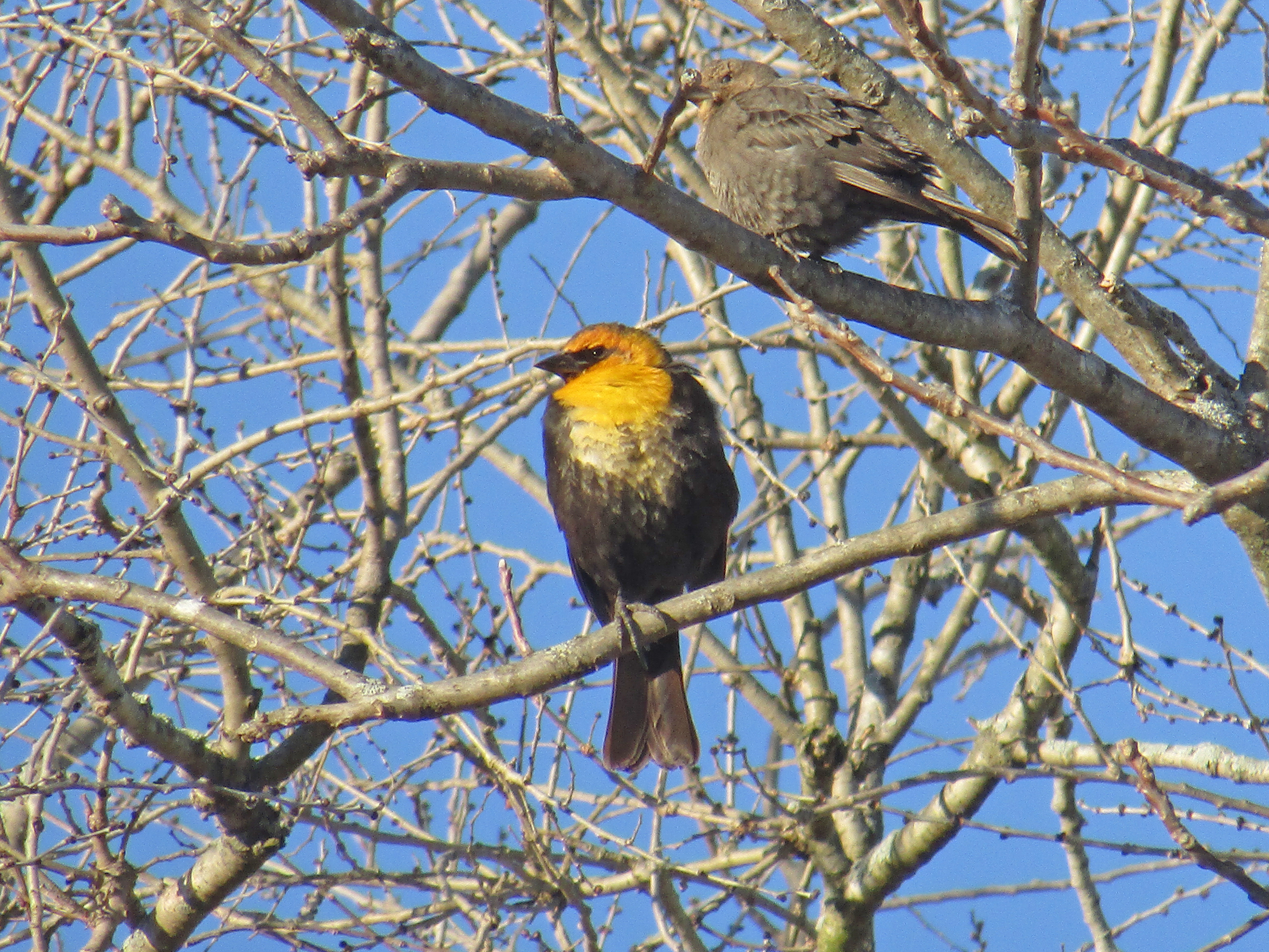
Photo by Bryan Stevens • This yellow-headed blackbird mingled with flocks of brown-headed cowbirds and European starlings at a cattle pasture near Jonesborough, Tennessee in February of 2018.. The bird, the first of its kind seen in Northeast Tennessee since 1994, has generated excitement among birders. Some people have traveled from as far as Knoxville, Tennessee, and Roanoke, Virginia, to see the bird.
•••
To share sightings, ask a question or make a comment, email me at ahoodedwarbler@aol.com.

