
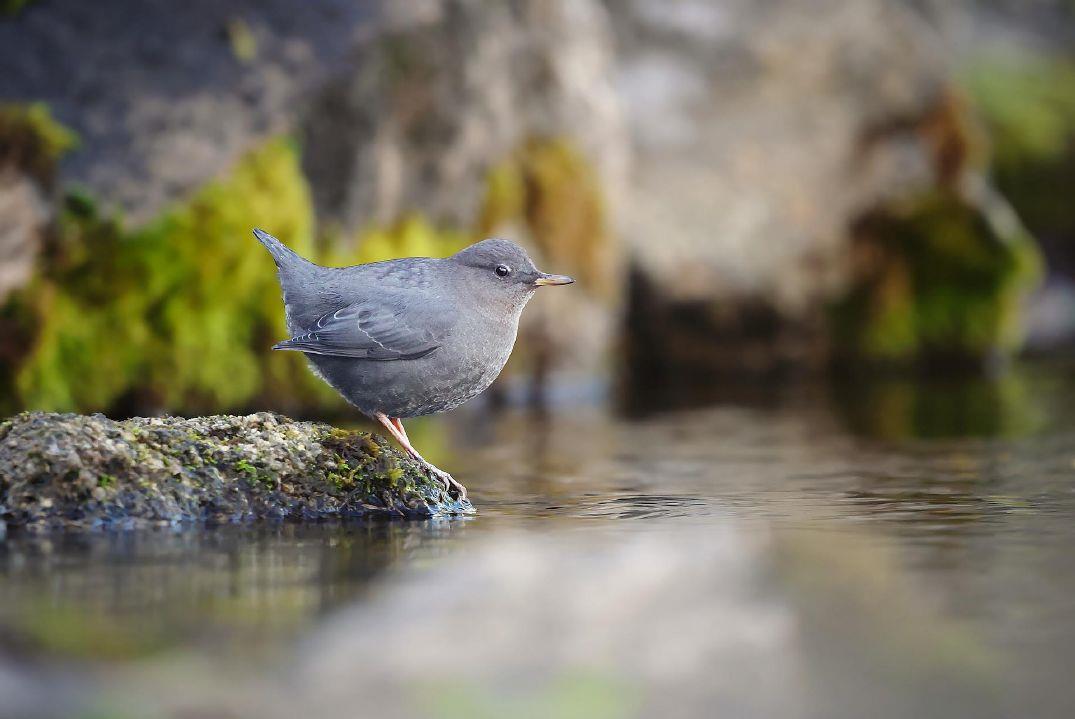
Daniel Roberts/Pixabay • The American dipper is North America’s only aquatic songbird.
I am observing 30 years of writing my weekly “Feathered Friends” column in 2026. To help celebrate this personal milestones, I’ve been visiting my archives to republish some memorable columns.
This week, I’m sharing an account of a visit in October 2003 to Utah and Idaho. The story involves homemade raspberry ice cream, a songbird that thinks it’s a fish and a bonus sighting of a species named for American naturalist and ornithologist John Kirk Townsend.
I did some homework in advance of my two-week trip to Salt Lake City, Utah, to come up with a list of target birds. The American dipper made the list as a species that I had high hopes of seeing. I learned from a friend that American dippers inhabit many of the streams in canyons, some in the immediate vicinity of Salt Lake City. Another friend, David Thometz, and I searched City Creek Canyon and Little Cottonwood Canyon in the Salt Lake metropolitan area without success.
We saw other birds, including lazuli bunting, Western kingbird, black-billed magpie, so this early disappointment didn’t sting too much, and we got a second chance near the end of my visit.
The American dipper, also known by the common named “water ouzel,” is a songbird with incredible adaptations allowing the bird to take advantage of a special niche in its environment, namely rushing waters of clear mountain streams. Dippers are eight-inch songbirds with stubby gray bodies. They range from Alaska through the mountains of the American western states and into Mexico. These birds are named for particular “dipping” motions that they display walking along stream edges.
These birds forage for food, primarily aquatic insect larvae, both above and beneath the surface of rushing streams.
I finally found my American dipper while traveling Logan Canyon on a trip back to Salt Lake City after visiting Bear Lake National Wildlife Refuge in Idaho. David and I stopped at Card Picnic Area in the Uinta-Wasatch-Cache National Forest to enjoy a local treat we picked up in Garden City, Utah.
We saw some good birds, including cinnamon teal and trumpeter swan, at Bear Lake, which is famous for its raspberries. The locals often stage an annual Raspberry Festival. We were too late for the festival in 2003, but we purchased two small plastic containers of homemade raspberry ice cream at a shop.
The ice cream was frozen solid, so we made plans to let the ice cream thaw and then made a stop at some point along Logan Canyon to enjoy the frozen treat. We took a scenic drive along Highway 89, enjoying the mile-high limestone cliffs easily viewed from the roadway. The route takes in forest terrain, the Logan River and plenty of opportunities to view native wildlife. Prior to stopping to eat our ice cream, we made stops and saw two different races – Oregon and slate-colored – of the dark-eyed junco, as well as black-capped and mountain chickadees and least chipmunks. We also saw sleek trout in Logan River, which is dotted by various beaver dams. We could not positively identify the trout, but the local streams are inhabited by brook, cutthroat and rainbow trout.
The Card Picnic Area is a beautiful streamside site featuring picnic tables beneath huge trees. There was a beautiful wide pool in Logan River adjacent to the tables. The only bird we saw upon arrival was a junco that disappeared into the brush too quickly for me to identify.
After enjoying our ice cream, a delicious treat that anyone visiting Bear Lake should not miss, we walked to the side of the stream to snap some photographs. As we approached the stream, a small bird flushed and flew somewhat awkwardly to the opposite stream bank.
I felt my pulse quicken as I realized that one of target birds had materialized. “David, I think we’ve found a dipper!” I whispered excitedly as I lifted my binoculars. As the bird came into focus, I immediately recognized the small grayish bird as it walked nervously over some damp gravel on the other side of the stream. As we watched, the dipper produced a loud, bubbling song, easily heard even over the noise of the rushing water.
The dipper also blinked conspicuously, showing white eyelids. Those eyelids are a special adaptation for life spent below rushing water. The eyelids protect the bird’s eyes while it is beneath the water. Some of my guide books mention that the dipper will blink and show the eyelids most often when alarmed. Dippers have a thin white line of feathers on each eyelid, according to All About Birds. That thin line of feathers creates a white flash as the bird blinks.
The birds appear to fearlessly take to the frigid water of mountain streams, but there’s a good reason for that. Dippers also have a thick coat of down and more feathers than most songbirds. Some estimates place the number at between 4,200 to 6,000 feathers. By comparison, an American robin has 3,000 feathers. This dense coat of feathers helps insulate the birds from the cold water. A dipper’s blood also carries a higher oxygen capacity, helping these small birds stay under water for up to 30 seconds.
We remained calm and as still as possible so we could put the bird at ease. Our actions must have worked because the bird returned to its routine, turning over fallen leaves in the shallows to look for scurrying insect larvae. Then, the dipper hopped onto a large rock in the rushing water, and I held my breath. I wanted so badly to see this small bird dive and swim beneath the water. I wasn’t disappointed. The bird soon plunged into the stream, swimming against the current, using its wings as paddles. Watching this tiny songbird provided an exciting observation, but not as much as when the dipper fearlessly plunged completely beneath the water, spent a few seconds submerged and then popped back to the surface. This show was repeated several times for our benefit.
A family picnicking at the site even got to enjoy the show when we pointed out the dipper. The family lived in the local area, but the father expressed surprise to learn dippers lived in Utah, although he had seen them in Washington. It’s surprising what we sometimes fail to notice in our own backyards.
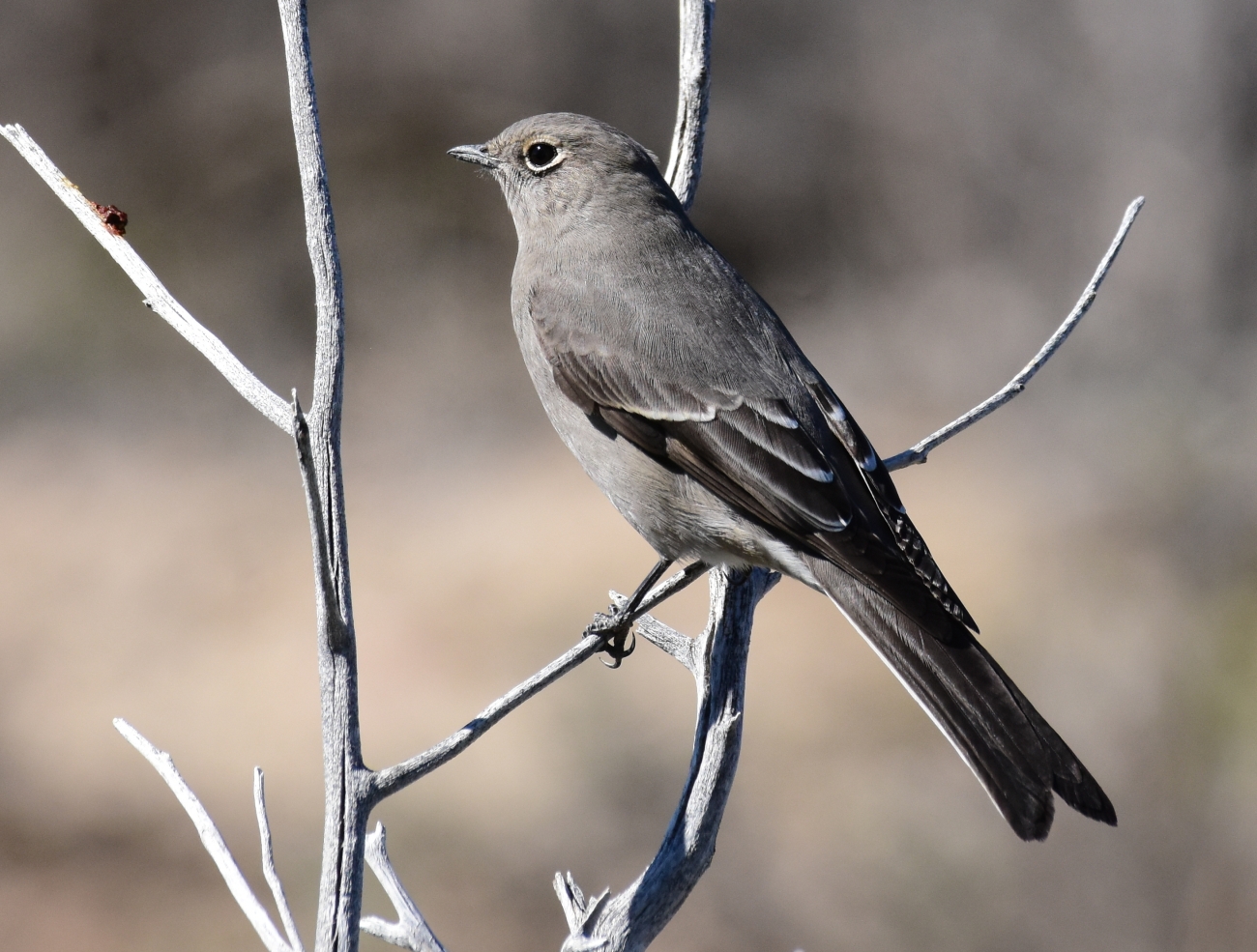
Tom Koerner/USFWS • The Townsend’s solitaire is related to thrushes.
Sighting the American dipper would have been more than enough, but when birding, surprises are always welcome. So, imagine my astonishment when, while watching the dipper, three additional birds dropped down from some overhanging trees and drank at the stream side.
Although unprepared for these new birds, my prior research helped me recognize them as Townsend’s solitaires, a member of the thrush family. The Townsend’s solitaire is a grayish bird with a superficial resemblance to the Northern mockingbird. The Townsend’s solitaire is the only member of its family of mountain-forest thrushes, or solitaires, to range into the United States.
This species is named for John Kirk Townsend, a 19th-century naturalist who traveled across the Rocky Mountains to the Pacific coast in 1833 to collect bird and mammal specimens with veteran botanist Thomas Nuttall. Only 24 at the time, Townsend accompanied Nuttall, 48 years old at the time, from Philadelphia to the Pacific Northwest. They focused their search along the Columbia River.
As for dippers, there are five different species found around the world. In addition to the American dipper, there is a white-throated dipper, or European dipper, as well as the brown dipper of Asia, the white-capped dipper of South America and the rufous-throated dipper, also of South America.
I think it’s a shame that the American dipper’s range doesn’t extend into the eastern half of the nation. Based on my observation, I think the bird would be right at home along Indian Creek in Unicoi County.
•••
Bryan Stevens has written about birds, birding and birders since 1995. Contact him at ahoodedwarbler@aol.com.

