
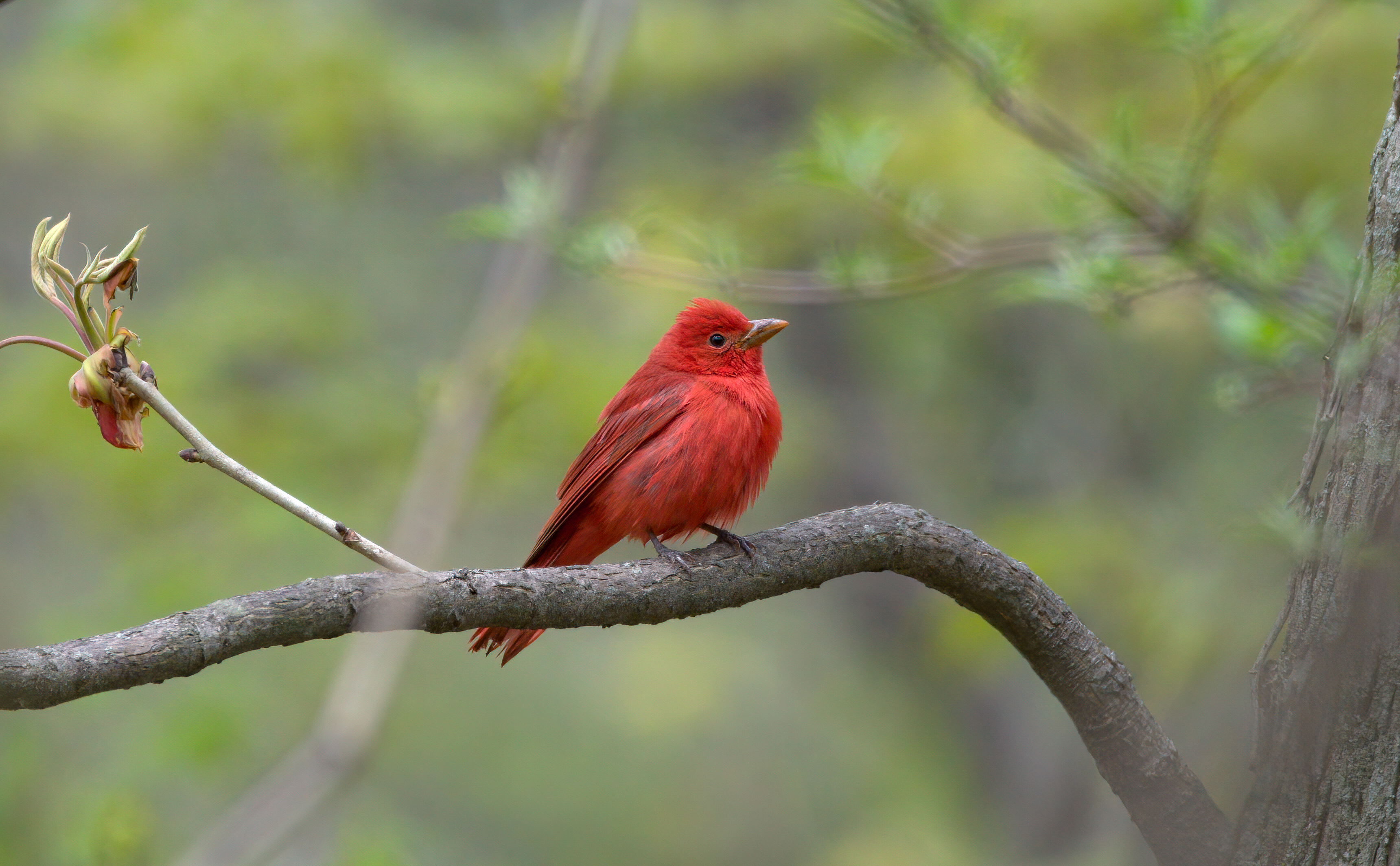
USFWS • Male summer tanagers are a rosy-red bird that pale somewhat in comparison to male scarlet tanagers.
Many of our summer birds have already returned for another nesting season. In the past week or so I have welcomed back chimney swift, common yellowthroat and red-eyed vireo.
I’m still receiving hummingbird arrival reports. April Kerns Fain had her first hummingbird of the year on April 13 at her home in Unicoi.
•••
Tom Brake in Abingdon, Virginia, reported his first hummingbird on April 16.
•••
Phyllis Moore in Bristol, Virginia, noted that her first spring hummingbird sighting involved two of these birds returning to her home.
•••
Anita Clemmer in Boone, North Carolina, saw her first spring hummingbird on April 17.
•••
Pam Seely saw her first hummingbirds of spring on April 18 at her home near The Laurels.
•••
Sue Schreiner saw her first hummingbird of spring on April 19 at her Bluff City home.
•••
Amy Tipton in Erwin reported her first spring hummingbird on at 7:30 p.m. on April 21.
•••
Spring is a great time to enjoy some truly vibrant birds that catch the eye, including scarlet tanager, Baltimore oriole, chipping sparrow, rose-breasted grosbeak, indigo bunting and more. Of course, some of our summer birds keep a low profile. Without showy feathers, they are more than able to fade into the background. They’re worth seeking out, but they do lack the “wow” factor of some of their more spectacular kin.
Here’s are some profiles on a handful of birds that live in the shadows of some much better-known relatives.
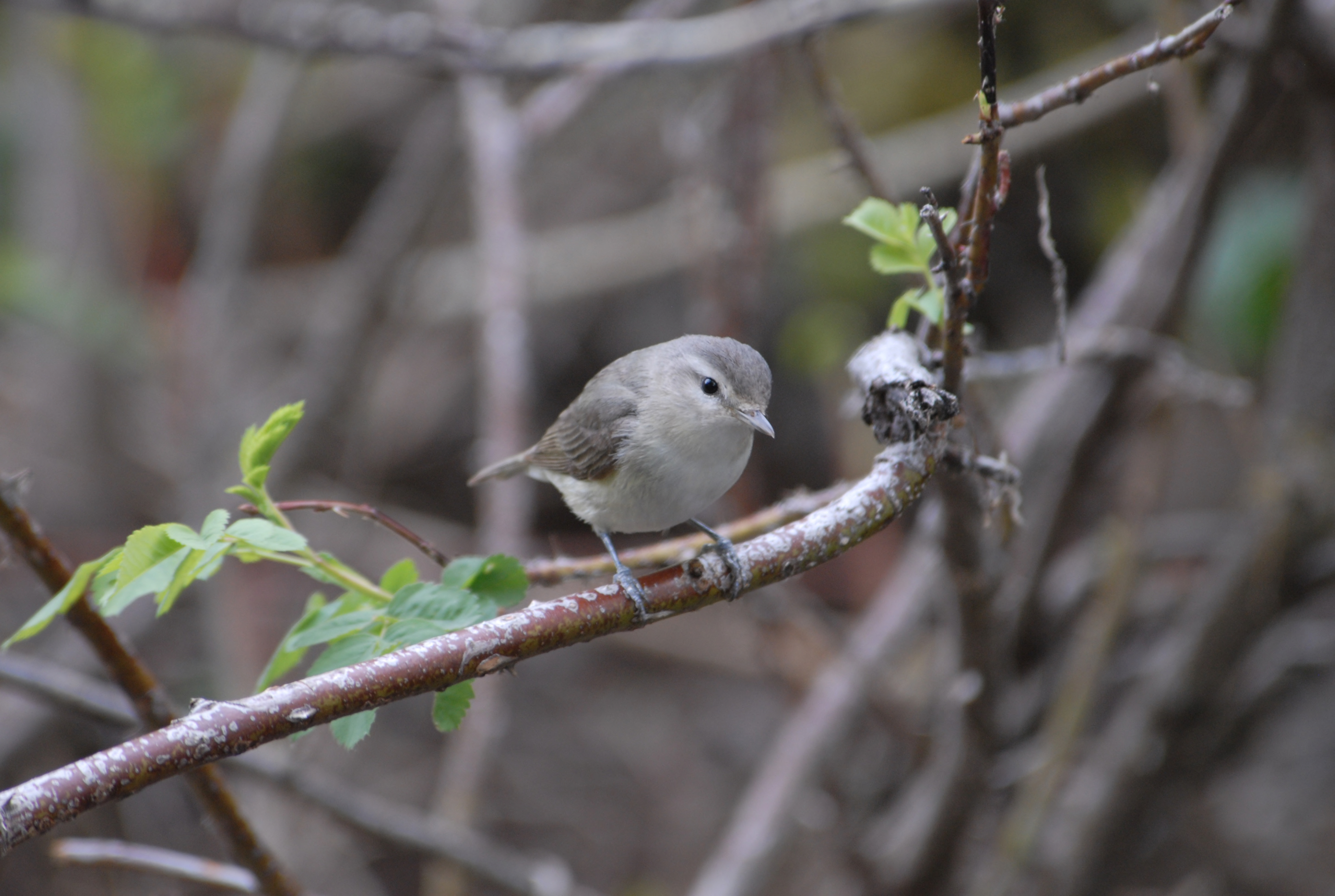
USFWS • The warbling vireo is a “plain Jane” among the region’s birds.
Warbling Vireo
The warbling vireo is one of the true “Plain Janes” of the world of birds. In the vireo family, which is known mostly for species that are largely “little green birds,” the warbling vireo lacks even that color. These are small, plain birds with gray-olive upperparts and white underparts occasionally tinged with faint yellow. They have a mild face pattern with a whitish stripe over the eye. It would never be described as colorful. They remain high in the treetops foraging for caterpillars and other prey. This habit makes observation of this bird difficult. Compared to the red-eyed vireo, blue-headed vireo and white-eyed vireo, it’s easy to see why the warbling vireo is named for its song, not its appearance.
Summer tanager
If not for the fact that the related scarlet tanager boasts an appearance that screams tropical beauty, this is a bird that cannot fairly be described as subdued in appearance. But male summer tanagers have a rosy-red plumage and lack the brilliant crimson feathers of the male scarlet tanager. Females of both species are dull birds with yellow-green plumage. These birds are more common in the southeastern United States. They’re not rare, but it isn’t easy to see them due to their tendency to remain in the upper branches of tall trees, especially oaks.
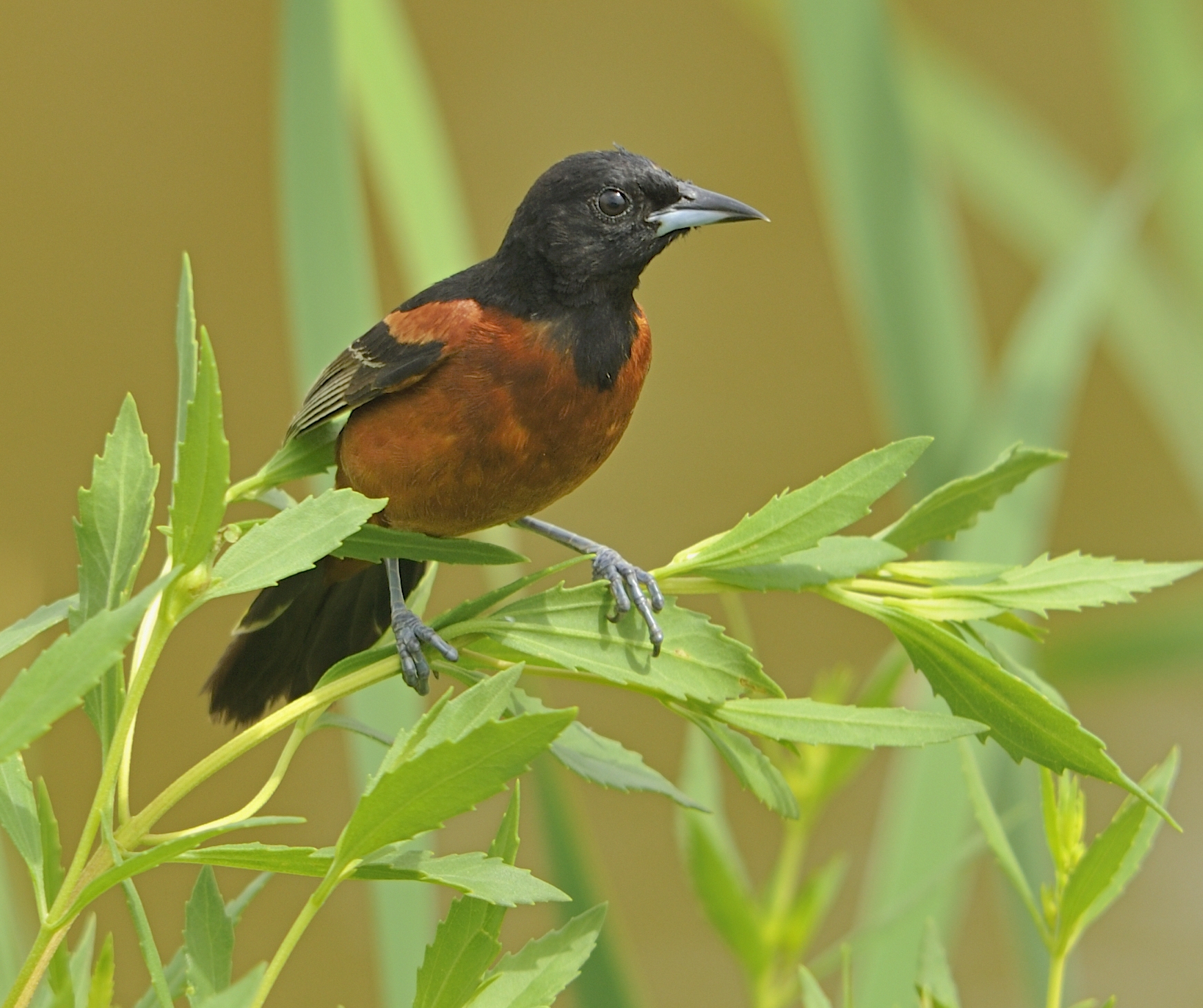
USFWS • The orchard oriole is the smallest member of the oriole family. This species is also notably less showy than some relatives.
Orchard oriole
The Baltimore oriole is an unmistakable bird. The bright orange and black plumage of the male reminded early North American settlers of the livery colors of Cecil Calvert, or Lord Baltimore, an important founder of Maryland and the namesake of the Baltimore oriole. The smaller orchard oriole is a charming bird, but its burnt orange and black plumage lacks the intensity of its better-known relative. The smallest of the orioles, it is outclassed in that regard by its more showy relatives, which include Bullock’s oriole, hooded oriole and Altimara oriole. The orchard oriole can be tempted to feeders that offer sugar water, orange slices or grape jelly, as can many other oriole species.
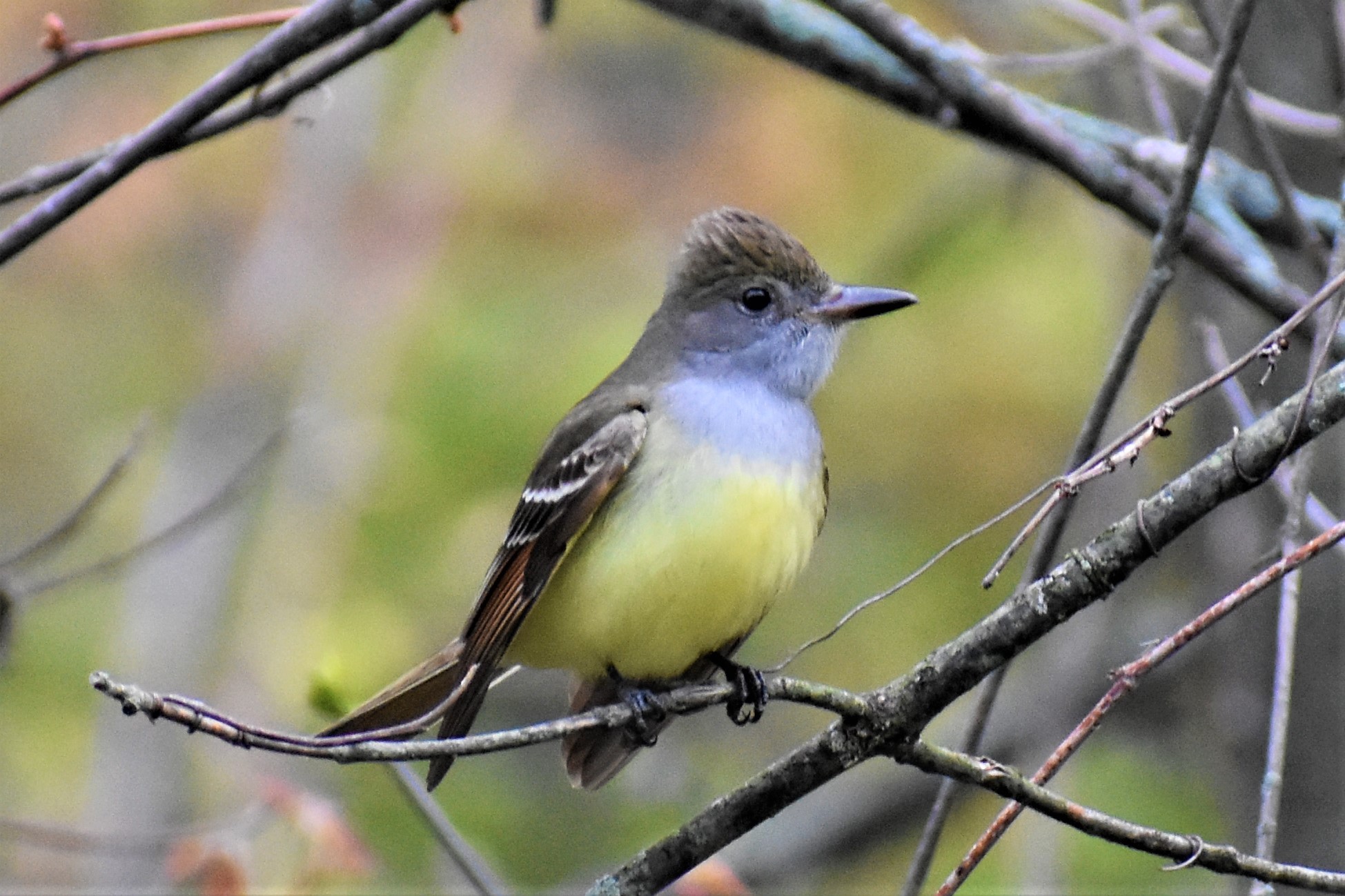
Ryan Dziedzic USFWS • Great crested flycatcher perches on a branch. Despite a grandiose name, this bird is not particularly showy, but it’s definitely an interesting species.
Great crested flycatcher
The largest family of birds, the tyrant flycatchers, consists of about 400 species. Most are drab birds in appearance, but some stand out. The great kiskadee, scissor-tailed flycatcher and vermilion flycatcher offer some “oomph” to a family of birds with plumages dominated by gray, black and white. In appearance, the great crested flycatcher has a shaggy brown crest and yellow and warm brown coloration in its plumage. It’s mostly the expectations of a name like great crested flycatcher that tends to fall flat when people see this attractive but not showy bird. This bird is different than other flycatchers in one respect – a cavity-nester, pairs of great crested flycatchers claim tree cavities or nesting boxes when it comes time build a nest and raise young.
•••
To share a sighting, make a comment or ask a question, email ahoodedwarbler@aol.com.
 Our Fine Feathered Friends