
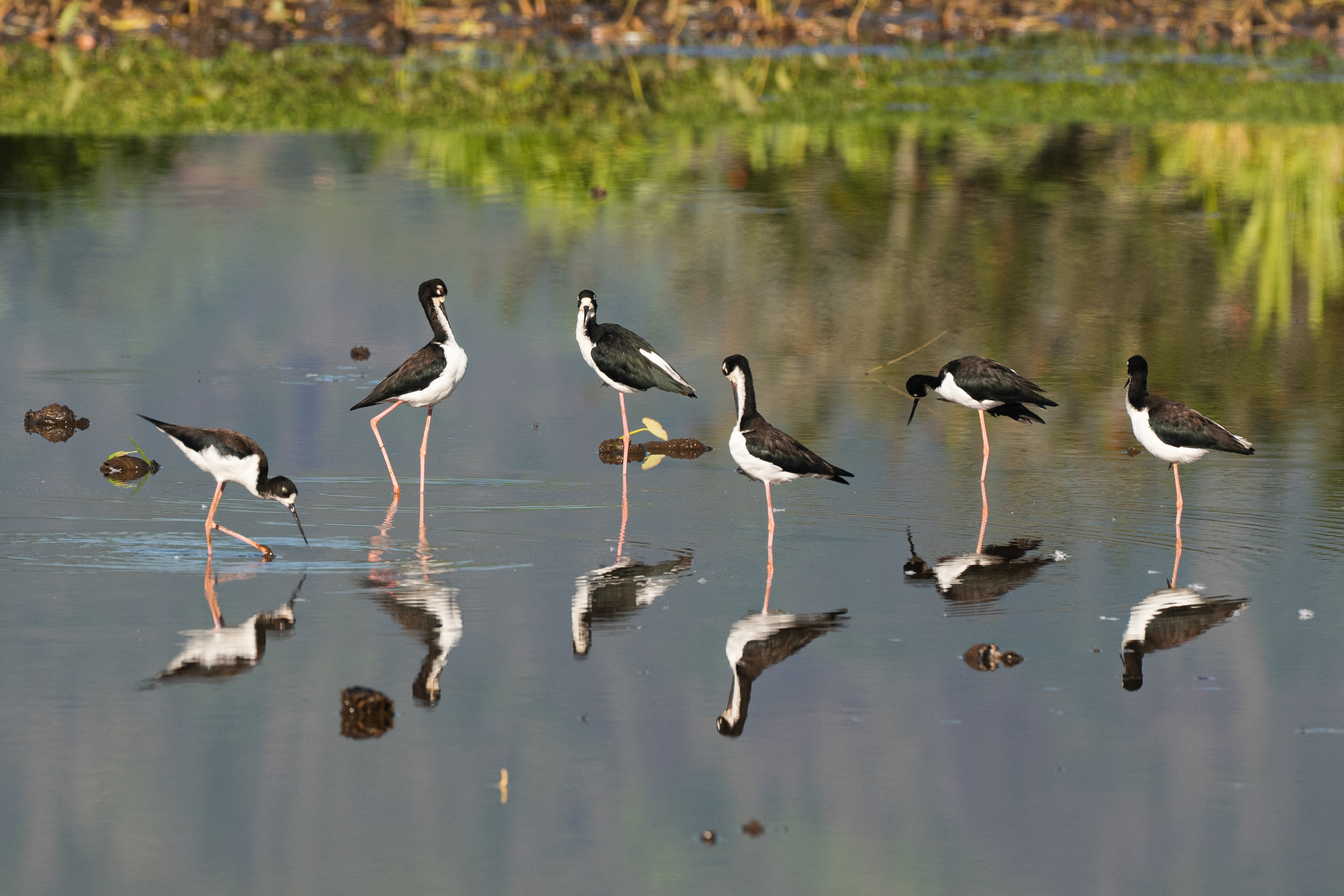
Laurel Smith/USFWS • A group of Hawaiian stilts or ae’o cast their reflections in a wetland at Kilauea Pond National Wildlife Refuge, one of the few freshwater wetlands found on the Hawaiian Islands.
Everyone, including birders, enjoys reading some good news. There have been some recent success stories involving some of the world’s most endangered birds, including hopeful stories about the Hawaiian stilt and Guam kingfisher.
The kingfisher, extinct in the wild, survives in secure facilities around the world and has gradually increased to a population of about 150 birds. That’s a big increase from the 29 birds collected in the wild between 1984 and 1986 as a desperate attempt to preserve the species in captivity. A native name for the kingfisher is “sihek.”
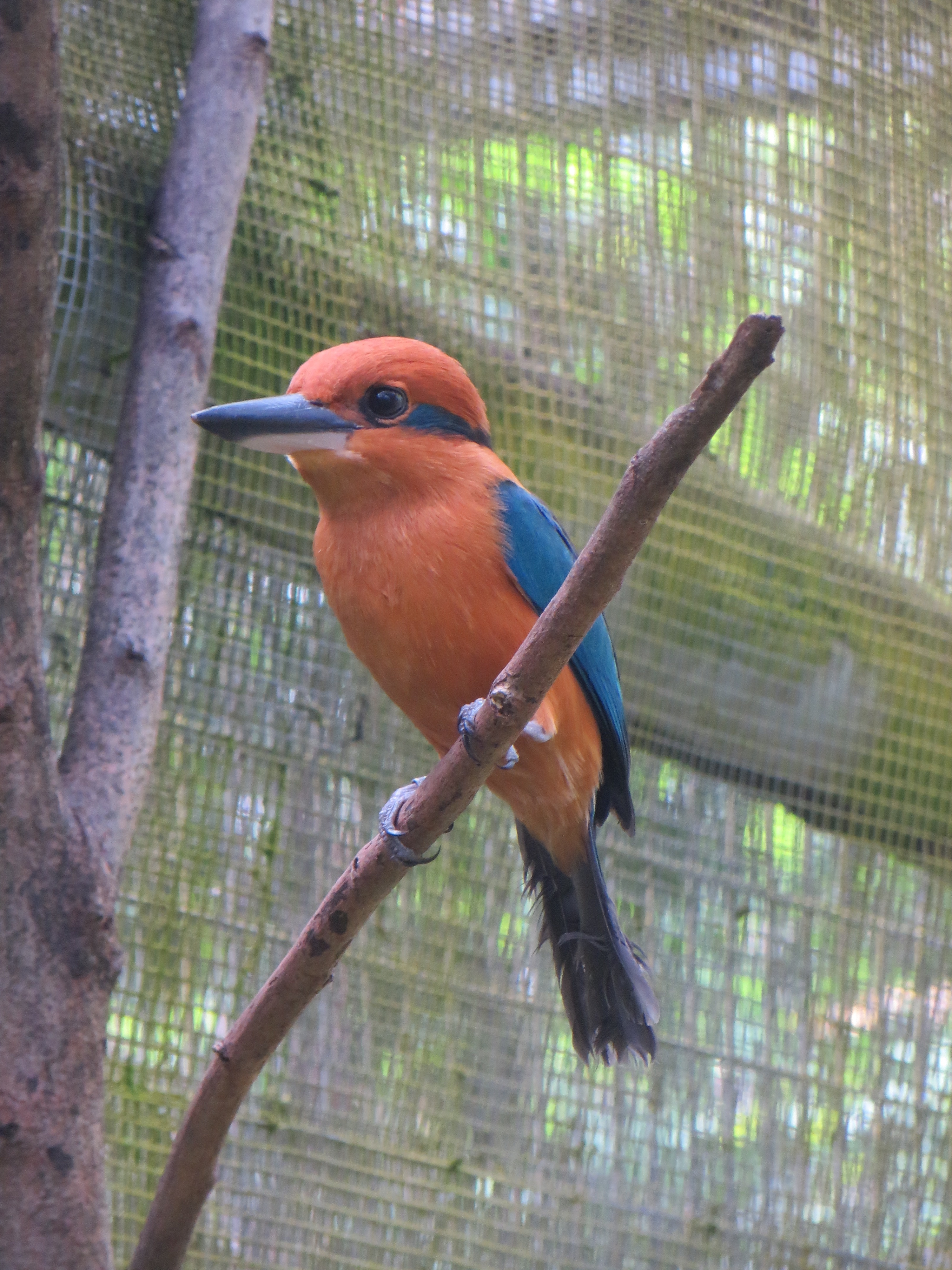
M. Kastner/USFWS • An adult Guam kingfisher in captivity. The entire wild population was taken into captivity as a desperate move to save the population. The move seems to be working.
The kingfisher has made headlines in the past few months. Four chicks hatched at the Smithsonian Conservation Biology Institute in Front Royal, Virginia, in April and May. The hatching of additional chicks took place, also in April and May, at The National Aviary in Pittsburgh, Pennsylvania.
Some of the captive-bred population has been returned successfully to the wild on a predator-free atoll near Hawaii. The Guam kingfisher was eradicated in the wild due to the accidental introduction of the brown tree snake to Guam shortly after World War II.
The stilt has been even more successful, recently being reclassified as threatened instead of endangered. The population now stands at about 1,500 birds, up significantly from the mere 200 alive in 1940.
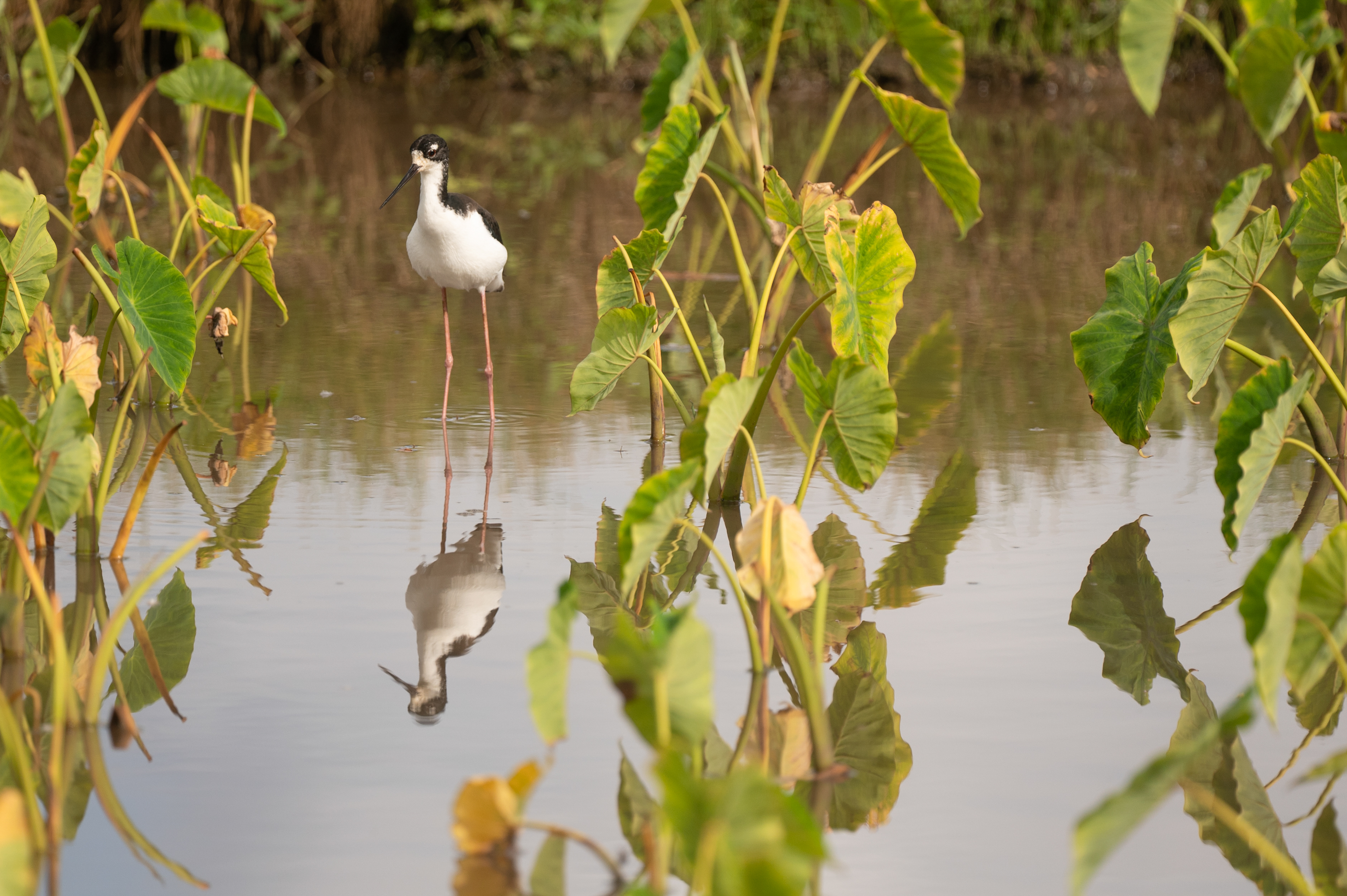
Laurel Smith/USFWS • Ae‘o (Hawaiian stilt) are opportunistic feeders. They prey on chaete worms, crustaceans, insects, tadpoles and small fish in shallow waters or mudflats.
The U.S. Fish and Wildlife Service posted on July 16 a release announcing the downlisting the aeʻo (Hawaiian stilt) from endangered to threatened under the Endangered Species Act.
“The downlisting of aeʻo is a huge achievement,” said Bridget Fahey, the Service’s acting regional director for the Pacific Region. “While there is still more work to be done to sustain the aeʻo’s recovery, today we want to celebrate the efforts of our conservation partners, including the State of Hawaii, the U.S. military, private landowners and local organizations.”
The aeʻo is a wading bird native to all the main Hawaiian Islands except Kahoʻolawe. The aeʻo was originally listed as endangered in 1970 due to destruction and alteration of habitat, hunting, introduced predatory animals and nonnative birds and diseases.
The aeʻo is closely related to the black-necked stilt, as well as the American avocet, another long-legged shorebird. The species are classified together in the family, recurvirostridae. The Hawaiian stilt is considered a sub-species of the black-necked stilt.
It’s time to start looking for shorebirds, a family of birds also known with a little more creative flair as “wind birds” along the region’s rivers, lakes and ponds. They are so named because so many species are capable of incredible long-distance migrations. A range of shorebirds migrate through the region in late summer and into fall.
My last sighting of black-necked stilts took place more than a decade ago in May 2014 during a South Carolina vacation. I observed three black-necked stilts at Huntington Beach State Park while walking on a marsh boardwalk near the park’s Nature Center. They flew toward the causeway, so I got into my car and drove there to try to re-locate them. I did find two of the stilts feeding along the causeway, but I never managed to re-locate the third bird.

Photo by Bryan Stevens
Two Black-necked Stilts forage along the causeway wetland at Huntington Beach State Park in South Carolina.
I watched the two stilts foraging for food in shallow water shared by egrets and alligators. The two birds, despite a somewhat gangly appearance, moved with elegantly efficient strides on their long pink legs.
I have seen this unusual shorebird in Tennessee only once on Oct. 13, 2004, at Austin Springs on Boone Lake in Washington County. The bird, first found by Rick Knight, drew many excited birders to the location for looks at this shorebird before it departed to continue its migration flight south.
As you might imagine, land-locked Tennessee is not an ideal location for finding shorebirds, but spring and fall migration brings a surprising variety of these birds through Northeast Tennessee. Black-necked stilts, however, are a rarity. I have also seen this species of shorebird on Fripp Island, South Carolina, as well as just outside of Wendover, Nevada, on a visit to the Bonneville Salt Flats.
The world of shorebirds has produced many lookalike species, including many of the small sandpipers often collectively labeled as “peeps” by birders. The black-necked stilt, however, is not at all likely to be confused with any other shorebird. It is a slender bird atop a pair of extremely long pink legs. It has a two-tone appearance with black upper parts and white underparts. The black and white dichotomy continues along the bird’s long neck and head. This bird also has a thin, needle-shaped bill that it uses to delicately pluck aquatic insects and other prey from water or mud.
The black-necked stilt’s long pink legs are exceptional. In fact, this species has the second-longest legs in proportion to their bodies of any bird, exceeded only by flamingos, according to the website All About Birds.
•••
To share a sighting, make a comment or ask a question, email me at ahoodedwarbler@aol.com.

