Painting by Nick Blosser • Local artist Nick Blosser transformed a tragic ending for a yellow-billed cuckoo into a reflective and even beautiful work of art.
I got some feedback from readers after I wrote my recent column focused on yellow-billed cuckoos.
In that column, I happened to mention that I’ve probably seen almost as many cuckoos killed in window strikes as I have seen live individuals. That seemed to resonate. Although it is a sad way to get introduced to a species of bird, that appears to happen regularly with cuckoos.
“My husband and I loved your story on the yellow-billed cuckoo,” Mindy Blosser wrote in an email. “Several years ago we witnessed a tragic window strike of a yellow-billed cuckoo at our house in south Johnson City.”
She added, “It is such a beautiful bird.”
She said that her husband, Nick, is an artist and that he completed a watercolor painting to memorialize the bird.
“We thought you might like to see the watercolor,” she said.
They also agreed to let me share Nick’s painting with readers.
The painting, although obviously tragic in nature, manages to transform the moment into something reflective and even beautiful.
I also heard from Susan Peters, an Elizabethton resident, in response to the column on cuckoos.
“I really enjoyed your column on the cuckoo,” Susan wrote in an email. “You mentioned callers who had a bird strike into a window, and I wondered if you remembered the one I called you about. It was years ago at my parents’ home on K Street.”
She reminded me that the cuckoo at her parents’ home hit a big picture window and probably broke its neck.
Like the Blossers, Susan admired the beauty of the cuckoo.
“Such a beautiful bird,” she wrote.
Susan and I have corresponded for years through this column. And her timely email reminded me that I did indeed make arrangements to meet her and collect the cuckoo that died after the window strike. I transported the cuckoo to the biology department at Milligan University, at the time still Milligan College. It was probably one of the last specimens ever added to the collection of freeze-dried specimens maintained by biology professor Gary Wallace. He is now retired and has moved back to his boyhood home in Dover, Tennessee, in Stewart County.
When I gave some of my early programs on birding to local civic organizations, Wallace sent me out well prepared with some fine specimens from the collection. I recall that he loaned me everything from a blue-winged teal to a tiny ruby-throated hummingbird. The specimens were always a big hit with audiences. There’s just something about holding a bird in the hand, even if it is dead and preserved as a freeze-dried skin, that connects people with the long-expired bird and its kin.
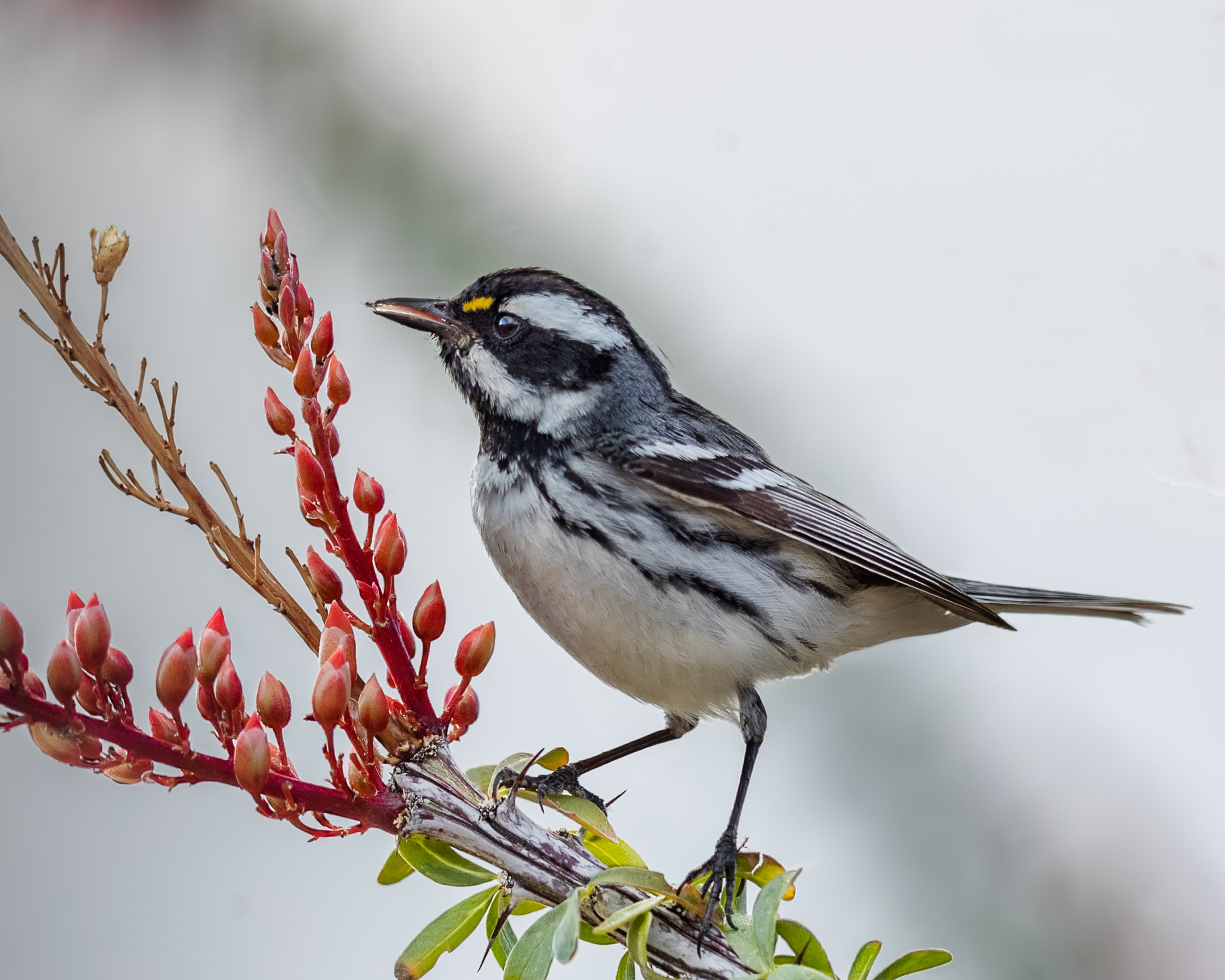
Photo by Patricia White/USFWS • The black-throated gray warbler normally ranges across the western half of North America and Mexico. Its migration route is usually west of the Great Plains, but half a century ago an individual reached Tennessee only to die in a fatal fallout of migrating birds that collided with a communications tower on Holston Mountain Oct. 2, 1972.
When the Elizabethton Bird Club still met on the Milligan campus, Wallace often opened the biology collection to our meetings for programs that basically consisted of our members getting to marvel at the array of birds preserved by the college’s biology department. Some unique specimens included the first black-throated gray warbler ever found in Tennessee. Unfortunately that bird died in a fatal fallout of birds that collided with a communications tower on Holston Mountain on Oct. 2, 1972.
Although housed for many years at Milligan, the black-throated gray warbler was eventually transferred in the summer of 2011 to the Louisiana State University Museum of Natural Science after Milligan’s biology department phased out its own collection.
The black-throated gray warbler normally ranges across the western half of North America and Mexico. The species migrates primarily through the Pacific and Central Flyways, staying strictly west of the Great Plains. Well, usually staying west of the Great Plains! The specimen found on Holston Mountain more than half a century ago proves that even this species has occasionally wandered far beyond its usual range.
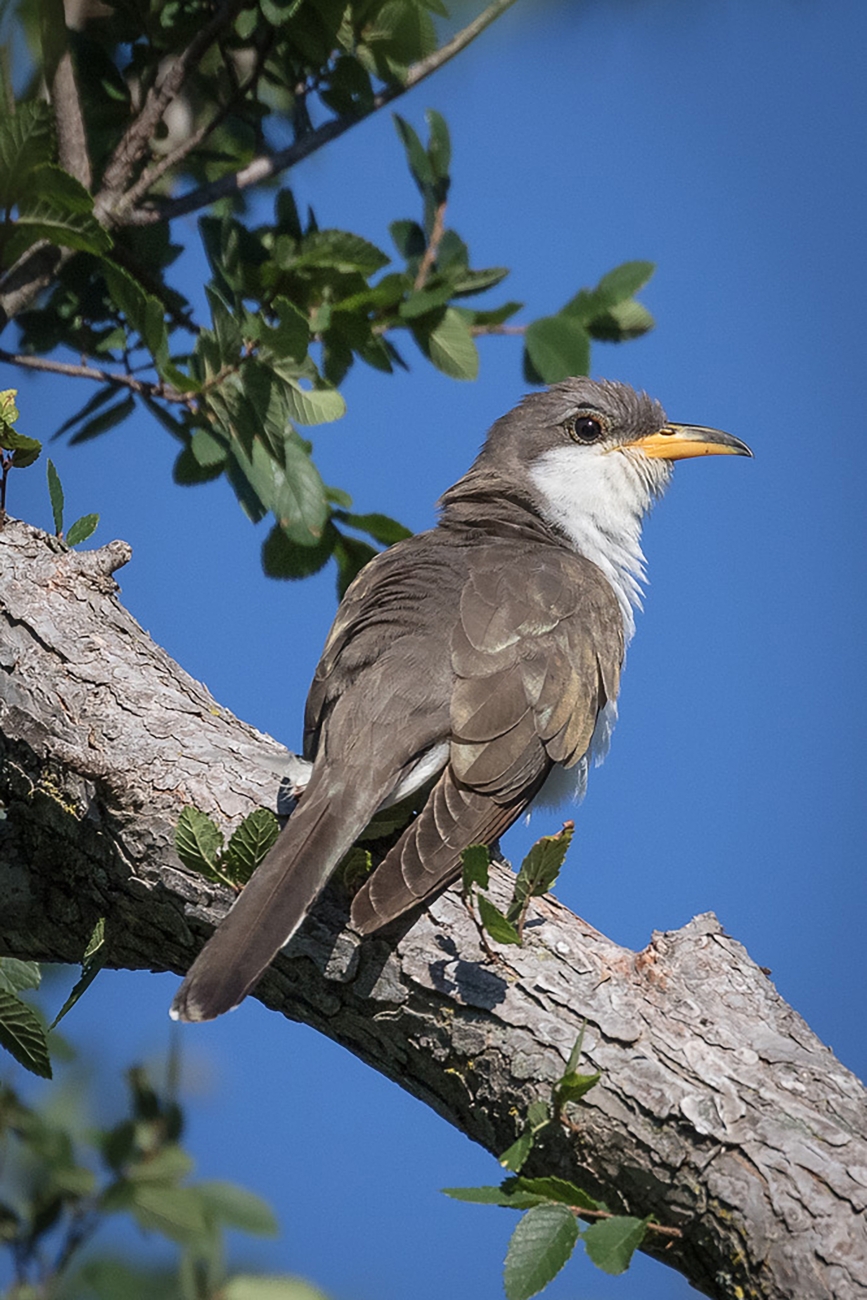
USFWS • A yellow-billed cuckoo perches in the open.
All too often, birds meet with accidents during migration or simply while living their daily lives. According to the ABA Rare Bird Alert network, an injured spotted rail was found and taken to a wildlife rehabilitation center earlier this month. Because the bird was immediately transferred into rehabilitation, its exact initial discovery location has not been publicized, making this mega-rarity not chaseable for Tennessee birders. “Chaseable” simply refers to the fact that many birders would have traveled a great distance to see such an unexpected discovery in order to add it to their life lists.
The spotted rail is a native to the freshwater marshes of Central America, the Caribbean, and South America. In other words, its discovery in Tennessee was extremely surprising.
Experts consider injured rails notoriously difficult to rehabilitate, but if this individual survives the first few stressful days, its chances of recovery should improve.
Birds have wings, and those wings can transport them to some unusual places. Their flights also occasionally take them into danger. It’s all part of the natural cycle. It’s also just one fascinating aspect of the lives of birds that keeps birders coming back for more.

Photo by Bryan Stevens • The waxy tips to the wing feathers are evident in this photograph of a cedar waxwing.
The seasons are beginning to shift. In recent weeks I’ve glimpsed young wild turkeys crossing local roadways. Cedar waxwings are beginning to flock at my home, no doubt lured by the ripening wild cherries in trees around my home. Ruby-throated hummingbirds are still visiting. An Eastern screech-owl has become a reliable serenader in the early evening hours.
Keep watching for unexpected visitors. As always, feel free to email me at ahoodedwarbler@aol.com to share sightings, ask questions or make comments.