
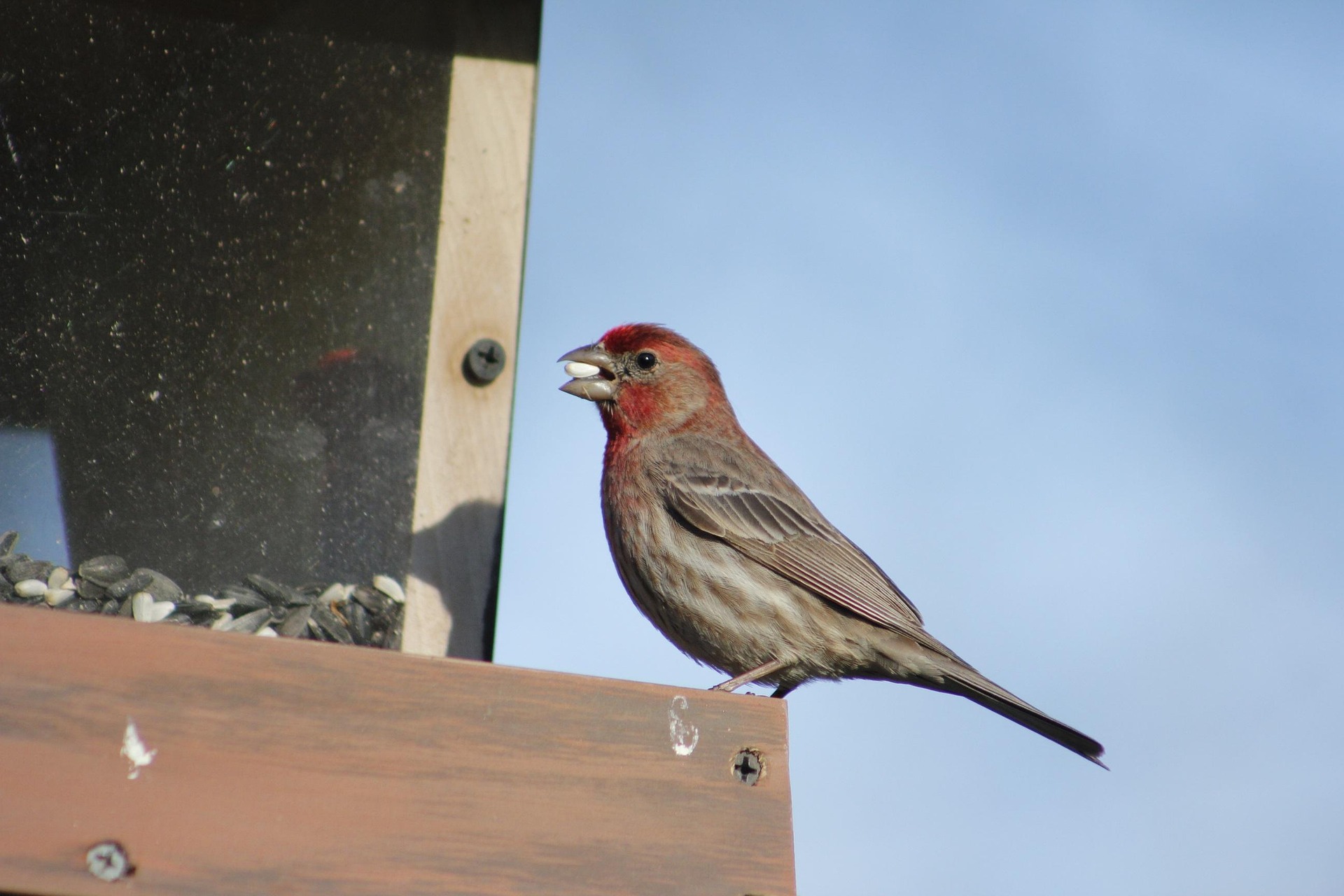
Photo by GeorgiaLens/Pizabay • A male house finch visits a feeder. Flocks of these small finches can become regular feeder visitors. Credit: GEORGIALENS/PIXABAY
I received an email from Unicoi residents Judy and Bill Beckman asking for a reason to explain a sudden absence in house finches at their feeders.
“For a number of weeks now, our house finches have disappeared from our feeders,” they wrote in the email. “They are usually the dominant number of birds. We do not recall this happening before. Any thoughts?”
I answered, explaining that the birds will probably return. Exactly when the finches decide to return to the couple’s yard is more problematic.
In fall and spring, even birds that don’t normally migrate get a bit restless. I suggested that the house finches could just be exploring somewhere else nearby.
My best guess is the finches they will return. As I explained in my answer, the Beckmans have probably provided a generous buffet for the birds. They will remember where the best free lunch is served.

Photo by Bryan Stevens • A male house finch perched on a cable. These finches are native to the western United States but became established in the eastern states thanks to the illicit pet trade.
The house finch is an interesting species. Until the 1980s, this species was not present in Northeast Tennessee. Although this finch is a native North American bird, it is not truly native to the Eastern half of the continent. All the house finches in the Eastern United States are descended from captive birds released into the wild by dealers in the exotic bird trade.
About 1940, the house finch became established in the eastern United States. In violation of federal law, these small finches were being sold in New York City as pet birds described as “Hollywood Finches.” To avoid trouble with authorities, vendors and even some owners released their “Hollywood Finches” into the wild. Finding the area around New York City to their liking, house finches thrived spread. Within a few decades, they were common birds throughout the eastern United States, including Tennessee, Virginia and North Carolina. The house finch had also been introduced into Hawaii about 1870, and is still present today, along with many other species of birds not native to the islands.
As the house finch claimed a new range, the species inevitably encountered the related purple finch. During the winter, both finches are often present at feeders in the region. When both are available for observation, bird enthusiasts should take advantage of the opportunity to compare and contrast these birds.
Personally, I have never had any difficulty distinguishing a purple finch from a house finch. The two species, at least in my eyes, are easily recognized. I can understand why some people might have trouble separating the two birds. The late Roger Tory Peterson once described the purple finch as a bird “dipped in raspberry juice.” Think about that imagery for a moment and you’ve got a good start to distinguishing a male purple finch from a male house finch.
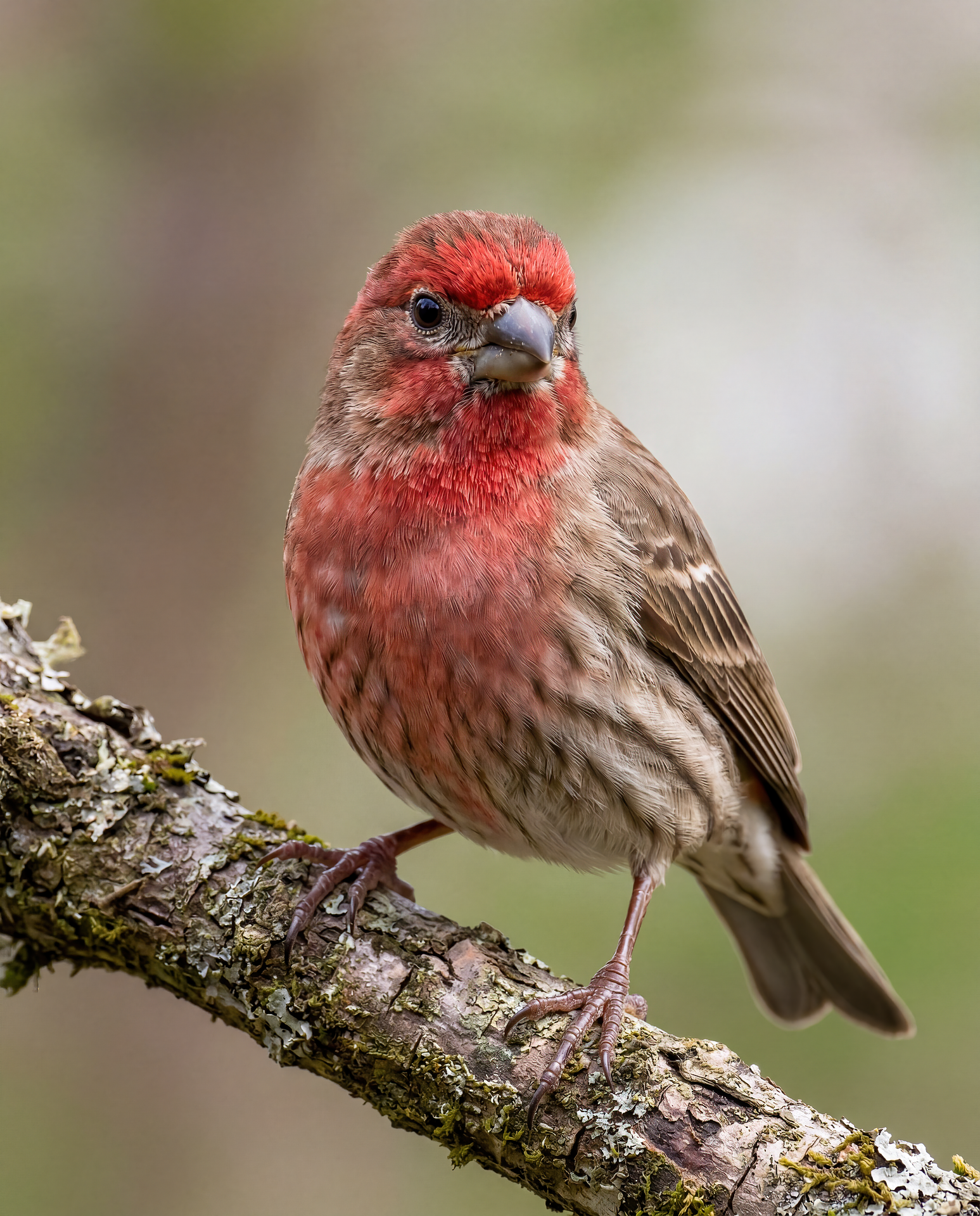
Photo by Ray Shrewsberry • A male house finch perches on a branch. This bird species has been introduced into locations nature never meant for the bird to live.
The females of both species are a different matter. However, purple finch females have a more distinctive facial pattern and a heavier bill than do female house finches. With a little practice, it’s not difficult to identity these two species in the field. In Northeast Tennessee, house finches and purple finches are usually only present together during the winter months when purple finches occasionally flock to our feeders.
In their native range in the western United States, house finches have adapted to a range of habitats, including deserts, grassland, chaparral and open woods. Another related species in the Western United States is Cassin’s finch, which is a species found mostly in high-elevation regions dominated by tall evergreen or coniferous forests.
The house finch is an abundant bird. According to the Partners in Flight, there are an estimated 40 million house finches ranging across North America.
They have also proven resilient. House finches are susceptible to some contagious diseases, including Mycoplasma gallisepticum, a bacterium that causes chronic respiratory disease in chickens and infectious sinusitis in turkeys, chickens, game birds, pigeons and passerine birds. House finch populations in the Eastern United States crashed in the 1990s due to the epidemic prevalence of the bacteria. Their numbers have since stabilized, although the species remains vulnerable to infection from the bacteria. Infection with the bacteria often leads to conjunctivitis characterized by swollen, encrusted, nasal discharges, impaired vision and weight loss. Infected birds usually succumb to slow starvation or predation. House finch conjunctivitis is most frequent during colder months when birds congregate and flock to bird feeders. Anyone who fed birds during the 1990s likely witnessed the disease at their feeders.
They also proved to be a songbird susceptible to West Nile virus, but most house finches and other songbirds recover from this mosquito-borne disease. Crows, ravens and jays, however, are vulnerable to the disease.
Overall, although a strange twist of fate brought the house finch into Tennessee and other parts of the Eastern half of the nation, this bird has become a welcome visitor. Males have a cheery song and bright plumage. By all accounts, it’s also here to stay.
I’m going to have to keep a closer watch over my own feeders. I had a pair that visited regularly at the start of the summer season. It’s time to see if they’re back with a new generation of house finches.
•••
Bryan Stevens has written about birds, birding and birders since 1995. Email him at ahoodedwarbler@aol.com.
 Our Fine Feathered Friends