Tag Archives: Finches

House finch origin story in region has unusual twist

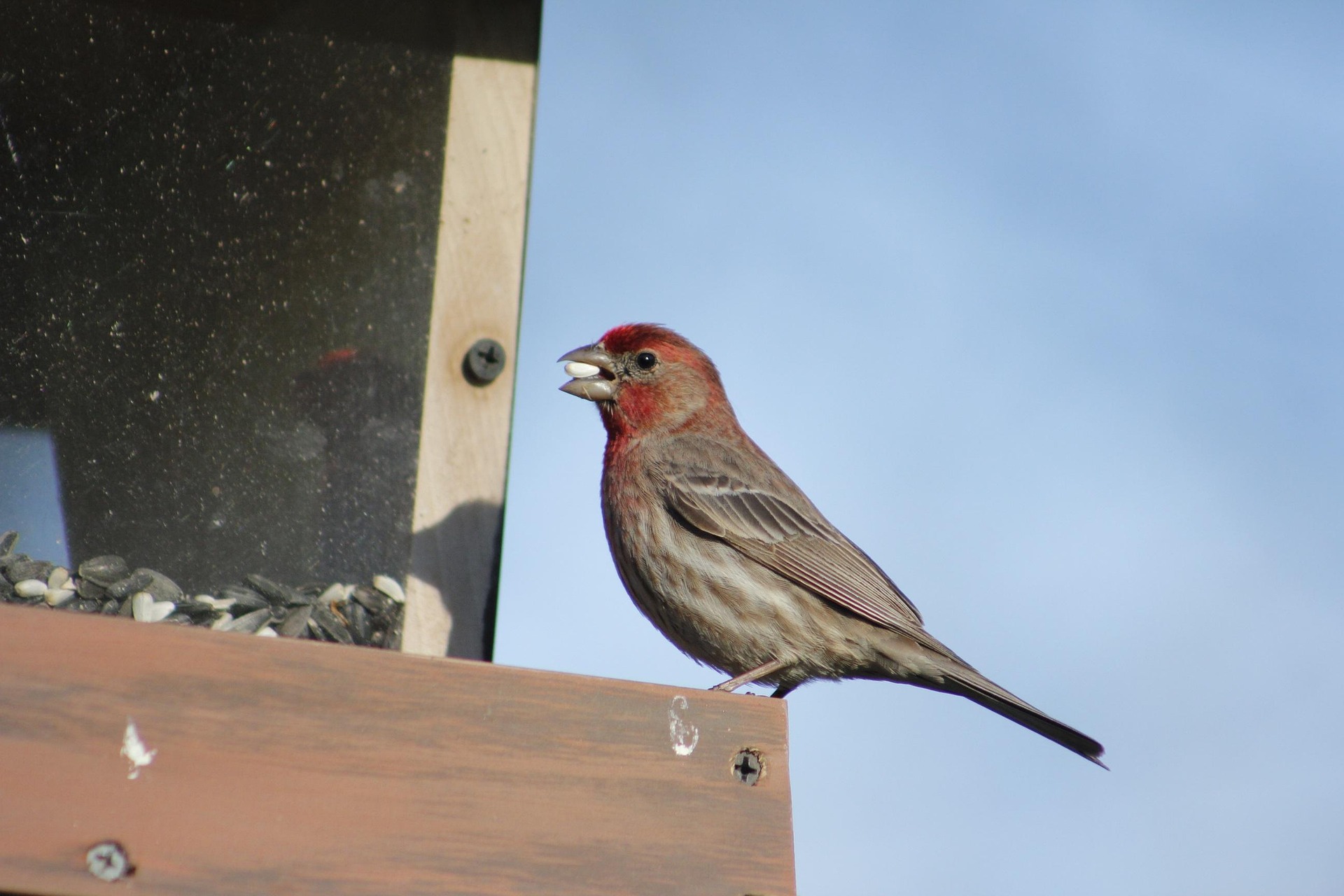
Photo by GeorgiaLens/Pizabay • A male house finch visits a feeder. Flocks of these small finches can become regular feeder visitors. Credit: GEORGIALENS/PIXABAY

I received an email from Unicoi residents Judy and Bill Beckman asking for a reason to explain a sudden absence in house finches at their feeders.

“For a number of weeks now, our house finches have disappeared from our feeders,” they wrote in the email. “They are usually the dominant number of birds. We do not recall this happening before. Any thoughts?”

I answered, explaining that the birds will probably return. Exactly when the finches decide to return to the couple’s yard is more problematic.

In fall and spring, even birds that don’t normally migrate get a bit restless. I suggested that the house finches could just be exploring somewhere else nearby.

My best guess is the finches they will return. As I explained in my answer, the Beckmans have probably provided a generous buffet for the birds. They will remember where the best free lunch is served.

Photo by Bryan Stevens • A male house finch perched on a cable. These finches are native to the western United States but became established in the eastern states thanks to the illicit pet trade.

The house finch is an interesting species. Until the 1980s, this species was not present in Northeast Tennessee. Although this finch is a native North American bird, it is not truly native to the Eastern half of the continent. All the house finches in the Eastern United States are descended from captive birds released into the wild by dealers in the exotic bird trade.

About 1940, the house finch became established in the eastern United States. In violation of federal law, these small finches were being sold in New York City as pet birds described as “Hollywood Finches.” To avoid trouble with authorities, vendors and even some owners released their “Hollywood Finches” into the wild. Finding the area around New York City to their liking, house finches thrived spread. Within a few decades, they were common birds throughout the eastern United States, including Tennessee, Virginia and North Carolina. The house finch had also been introduced into Hawaii about 1870, and is still present today, along with many other species of birds not native to the islands.

As the house finch claimed a new range, the species inevitably encountered the related purple finch. During the winter, both finches are often present at feeders in the region. When both are available for observation, bird enthusiasts should take advantage of the opportunity to compare and contrast these birds.

Personally, I have never had any difficulty distinguishing a purple finch from a house finch. The two species, at least in my eyes, are easily recognized. I can understand why some people might have trouble separating the two birds. The late Roger Tory Peterson once described the purple finch as a bird “dipped in raspberry juice.” Think about that imagery for a moment and you’ve got a good start to distinguishing a male purple finch from a male house finch.
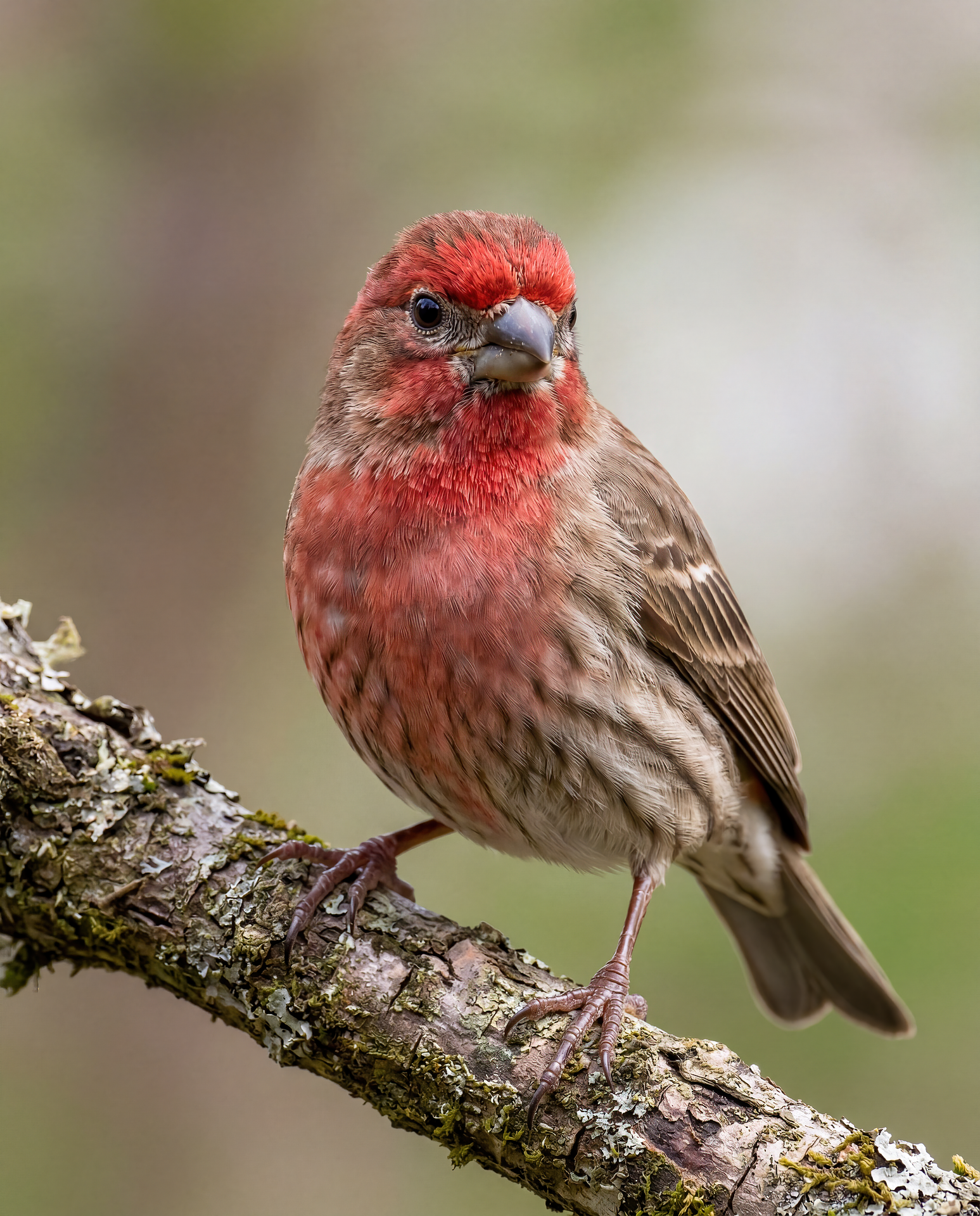
Photo by Ray Shrewsberry • A male house finch perches on a branch. This bird species has been introduced into locations nature never meant for the bird to live.

The females of both species are a different matter. However, purple finch females have a more distinctive facial pattern and a heavier bill than do female house finches. With a little practice, it’s not difficult to identity these two species in the field. In Northeast Tennessee, house finches and purple finches are usually only present together during the winter months when purple finches occasionally flock to our feeders.

In their native range in the western United States, house finches have adapted to a range of habitats, including deserts, grassland, chaparral and open woods. Another related species in the Western United States is Cassin’s finch, which is a species found mostly in high-elevation regions dominated by tall evergreen or coniferous forests.

The house finch is an abundant bird. According to the Partners in Flight, there are an estimated 40 million house finches ranging across North America.

They have also proven resilient. House finches are susceptible to some contagious diseases, including Mycoplasma gallisepticum, a bacterium that causes chronic respiratory disease in chickens and infectious sinusitis in turkeys, chickens, game birds, pigeons and passerine birds. House finch populations in the Eastern United States crashed in the 1990s due to the epidemic prevalence of the bacteria. Their numbers have since stabilized, although the species remains vulnerable to infection from the bacteria. Infection with the bacteria often leads to conjunctivitis characterized by swollen, encrusted, nasal discharges, impaired vision and weight loss. Infected birds usually succumb to slow starvation or predation. House finch conjunctivitis is most frequent during colder months when birds congregate and flock to bird feeders. Anyone who fed birds during the 1990s likely witnessed the disease at their feeders.

They also proved to be a songbird susceptible to West Nile virus, but most house finches and other songbirds recover from this mosquito-borne disease. Crows, ravens and jays, however, are vulnerable to the disease.

Overall, although a strange twist of fate brought the house finch into Tennessee and other parts of the Eastern half of the nation, this bird has become a welcome visitor. Males have a cheery song and bright plumage. By all accounts, it’s also here to stay.

I’m going to have to keep a closer watch over my own feeders. I had a pair that visited regularly at the start of the summer season. It’s time to see if they’re back with a new generation of house finches.

•••

Bryan Stevens has written about birds, birding and birders since 1995. Email him at ahoodedwarbler@aol.com.
American oldfinch much more than another pretty bird

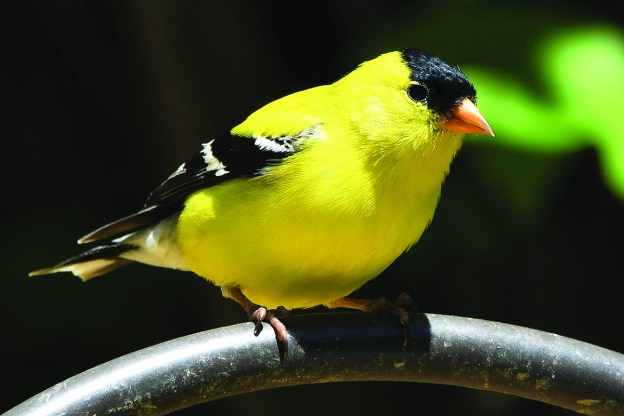
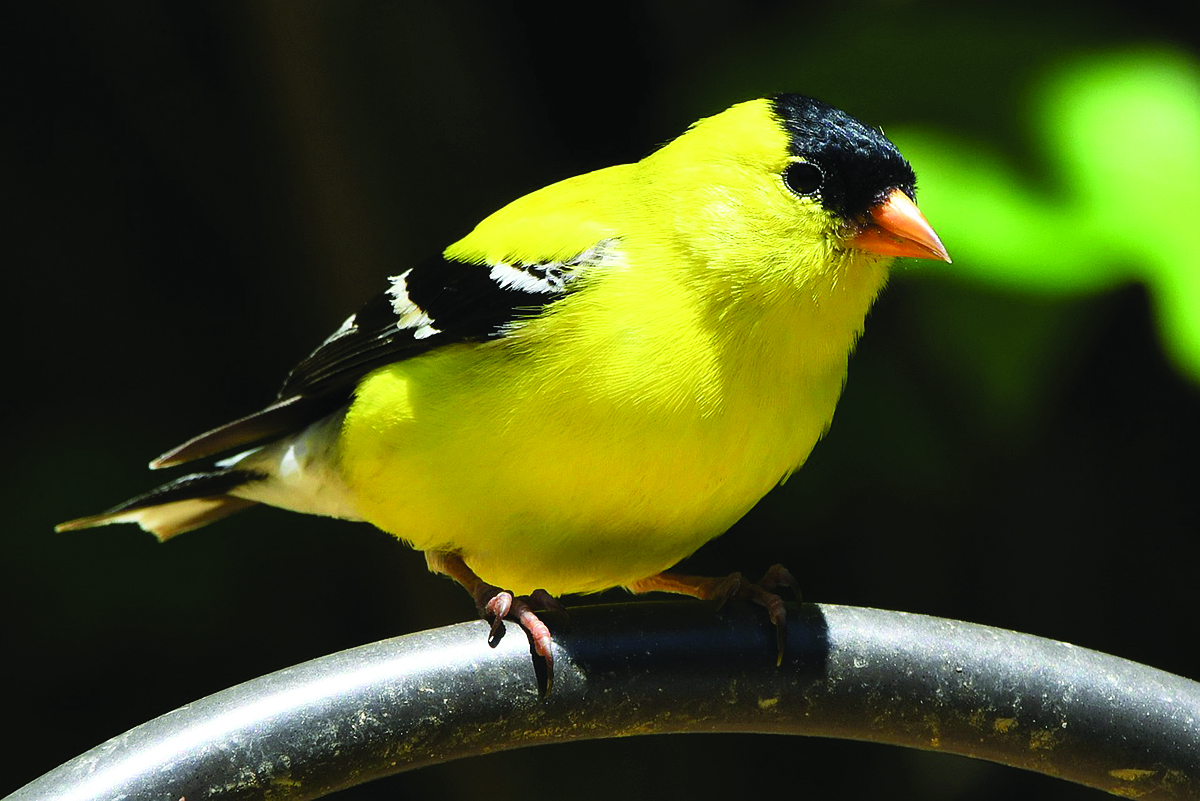
Miles Moody from Pixabay • A male American goldfinch in summer nesting plumage is one of the region’s most vibrant songbirds.

Johnson City resident Jo Wheeler posted a comment on Facebook on July 15 under a weekly posting promoting the “Feathered Friends” weekly column.

“We saw the American goldfinch in out backyard over the weekend,” Jo wrote. “It was amazing.”

I was so pleased to hear Jo’s excitement about the goldfinch. The American goldfinch is a commonplace bird, but once you take a close look at this bird it’s readily apparent that there’s really noting common about it at all.

Goldfinches are extraordinary in appearance, particularly at this time of the year. The plumage of the male goldfinch during the nesting season is a bold pattern of black and white against a backdrop of golden-yellow feathers. These birds also form fussy but sociable flocks that congregate at bird feeders or bird baths in many a backyard.

A sighting of a goldfinch can be memorable. I still retain vivid imagery of these birds from childhood, long before I could identify them by name. They would always appear in late summer, perching atop the three blue spruces in our yard. The trees are no longer standing, but the memories of those colorful yellow and black birds endure.

Photo by Bryan Stevens • A male American goldfinch perches on a barbed wire fence.

Summer is the season of plenty for American goldfinches. Roadside ditches are choked with chicory, evening primrose and other seed-producing plants often dismissed as “weeds.” Simply driving local roads can, and often does, produce sightings of flocks of American goldfinches as they forage for seeds.

These small, colorful finches are also regular visitors to my feeders, although they don’t really need my offering of black oil sunflower seeds to supplement the natural smorgasbord available to them.

Their fondness for seeds has inspired many of the common names for this bird, including lettuce bird, thistle-bird, yellow-bird and wild canary. My late grandmother, Bertha Sneyd, introduced me to the term “lettuce bird” as an alternative name for goldfinch. As she explained, the finches would come to gardens once lettuce had gone to seed.

This fondness and dependence on seeds for its dietary needs has even shaped the nesting habits of this species. The American goldfinch is also one of the last songbirds to nest each season.

According to a profile of the American goldfinch posted at the website for the Tennessee Wildlife Resources Agency, goldfinches don’t even start to think about nesting until late July and early August. Their nesting season is timed deliberately to coincide with this season of natural abundance. Goldfinches feed their young mostly on seeds, as opposed to most songbirds that work so hard to gather insects to feed their young a protein-rich diet.

It’s a satisfying irony that, although brown-headed cowbird females sometimes slip their eggs into a goldfinch nest, any cowbirds hatched in those nests rarely survive. While goldfinch hatchlings are adapted to thrive on a diet of seeds, the fostered young cowbirds fail to thrive on a diet so lacking in the protein derived from insects.

While the male American goldfinch during the breeding season is unmistakable in his bright yellow, black and white plumage, the female goldfinch is more subdued in coloration. Males also sing a bubbly, cheerful song when seeking to win the attention of a potential mate.

According to the profile on the TWRA website, the goldfinch’s song is a variable series of musical trills and twitters, often interspersed with a bay beephrase. The distinctive flight call is described as sounding like “potato chip” or “per chicory.”

For these and other reasons, goldfinches are favorites of many bird lovers. There are actually three species of goldfinches in North America. The two related species are Lawrence’s goldfinch of California and the lesser goldfinch, which ranges through the southwestern United States as well as Central and South America.

Lawrence’s goldfinch was named by John Cassin in 1850 for his colleague George Lawrence, a New York businessman and amateur ornithologist. His enthusiasm for birds must have impressed his colleagues. One bird genus and 20 species were named in his honor. Lawrence’s goldfinch, known by the scientific name Spinus lawrencei, honors him doubly with both the scientific and common names for the bird.

Photo by Bryan Stevens • The male American goldfinch is a striking bird in spring and summer. In late fall and for the winter, these birds have a dull plumage.

The American goldfinch is also known by other common names, including wild canary, yellowbird and willow goldfinch. I’ve also heard the goldfinch referred to as “lettuce bird.” This nickname, which was one my maternal grandmother applied to the bird, relates to the bird’s fondness for seeds. Apparently the goldfinches would flock to lettuce plants in the garden once they had gone to seed.

Come winter, this vibrant American goldfinch undergoes a transformation into a dull, drab bird with grayish feather. In fact, this annual molt usually begins in September. During the fall and winter, the American goldfinch looks almost like an entirely different bird.

It’s understandable why people love to entertain flocks of these finches in their yards and gardens. Three states — Washington, Iowa and New Jersey — have gone so far as to make the American goldfinch their official state bird.

The best strategy for attracting goldfinches is to provide some of their favorite foods. Black oil sunflower seed and the seeds of nyjer thistle are highly favored. The tiny thistle seeds require special feeders. Mesh “socks” can also be used to dispense the thistle seed.

An alternative is to plant a garden that offers an abundance of fresh seeds. A stand of sunflowers will attract goldfinches, as well as other birds such as indigo bunting and house finch. Liatris, also known as gay feather, produces flower spikes that are sought out by goldfinches for their seeds. Other favorites include asters and coneflowers. The bonus is that even after the beautiful blooms are past, the birds can still benefit from the seeds left behind after flowering.

To share an observation, make a comment or ask a question, email me at ahoodedwarbler@aol.com.

Goldfinches much more than another pretty bird

Miles Moody from Pixabay • A male American goldfinch in summer nesting plumage is one of the region’s most vibrant songbirds. 

Johnson City resident Jo Wheeler posted a comment on Facebook on July 15 under a weekly posting promoting the “Feathered Friends” weekly column.

“We saw the American goldfinch in out backyard over the weekend,” Jo wrote. “It was amazing.”

I was so pleased to hear Jo’s excitement about the goldfinch. The American goldfinch is a commonplace bird, but once you take a close look at this bird it’s readily apparent that there’s really noting common about it at all. 

Goldfinches are extraordinary in appearance, particularly at this time of the year. The plumage of the male goldfinch during the nesting season is a bold pattern of black and white against a backdrop of golden-yellow feathers. These birds also form fussy but sociable flocks that congregate at bird feeders or bird baths in many a backyard. 

A sighting of a goldfinch can be memorable. I still retain vivid imagery of these birds from childhood, long before I could identify them by name. They would always appear in late summer, perching atop the three blue spruces in our yard. The trees are no longer standing, but the memories of those colorful yellow and black birds endure.

Summer is the season of plenty for American goldfinches. Roadside ditches are choked with chicory, evening primrose and other seed-producing plants often dismissed as “weeds.” Simply driving local roads can, and often does, produce sightings of flocks of American goldfinches as they forage for seeds.

These small, colorful finches are also regular visitors to my feeders, although they don’t really need my offering of black oil sunflower seeds to supplement the natural smorgasbord available to them.

Their fondness for seeds has inspired many of the common names for this bird, including lettuce bird, thistle-bird, yellow-bird and wild canary. My late grandmother, Bertha Sneyd, introduced me to the term “lettuce bird” as an alternative name for goldfinch. As she explained, the finches would come to gardens once lettuce had gone to seed. 

This fondness and dependence on seeds for its dietary needs has even shaped the nesting habits of this species. The American goldfinch is also one of the last songbirds to nest each season. 

According to a profile of the American goldfinch posted at the website for the Tennessee Wildlife Resources Agency, goldfinches don’t even start to think about nesting until late July and early August. Their nesting season is timed deliberately to coincide with this season of natural abundance. Goldfinches feed their young mostly on seeds, as opposed to most songbirds that work so hard to gather insects to feed their young a protein-rich diet.

It’s a satisfying irony that, although brown-headed cowbird females sometimes slip their eggs into a goldfinch nest, any cowbirds hatched in those nests rarely survive. While goldfinch hatchlings are adapted to thrive on a diet of seeds, the fostered young cowbirds fail to thrive on a diet so lacking in the protein derived from insects.

While the male American goldfinch during the breeding season is unmistakable in his bright yellow, black and white plumage, the female goldfinch is more subdued in coloration. Males also sing a bubbly, cheerful song when seeking to win the attention of a potential mate.  

According to the profile on the TWRA website, the goldfinch’s song is a variable series of musical trills and twitters, often interspersed with a bay beephrase. The distinctive flight call is described as sounding like “potato chip” or “per chicory.”

For these and other reasons, goldfinches are favorites of many bird lovers. There are actually three species of goldfinches in North America. The two related species are Lawrence’s goldfinch of California and the lesser goldfinch, which ranges through the southwestern United States as well as Central and South America.

Lawrence’s goldfinch was named by John Cassin in 1850 for his colleague George Lawrence, a New York businessman and amateur ornithologist. His enthusiasm for birds must have impressed his colleagues. One bird genus and 20 species were named in his honor. Lawrence’s goldfinch, known by the scientific name Spinus lawrencei, honors him doubly with both the scientific and common names for the bird.

The American goldfinch is also known by other common names, including wild canary, yellowbird and willow goldfinch. I’ve also heard the goldfinch referred to as “lettuce bird.” This nickname, which was one my maternal grandmother applied to the bird, relates to the bird’s fondness for seeds. Apparently the goldfinches would flock to lettuce plants in the garden once they had gone to seed.

Photo by Bryan Stevens • A male American goldfinch perched.

Come winter, this vibrant American goldfinch undergoes a transformation into a dull, drab bird with grayish feather. In fact, this annual molt usually begins in September. During the fall and winter, the American goldfinch looks almost like an entirely different bird.

It’s understandable why people love to entertain flocks of these finches in their yards and gardens. Three states — Washington, Iowa and New Jersey — have gone so far as to make the American goldfinch their official state bird.

The best strategy for attracting goldfinches is to provide some of their favorite foods. Black oil sunflower seed and the seeds of nyjer thistle are highly favored. The tiny thistle seeds require special feeders. Mesh “socks” can also be used to dispense the thistle seed.

An alternative is to plant a garden that offers an abundance of fresh seeds. A stand of sunflowers will attract goldfinches, as well as other birds such as indigo bunting and house finch. Liatris, also known as gay feather, produces flower spikes that are sought out by goldfinches for their seeds. Other favorites include asters and coneflowers. The bonus is that even after the beautiful blooms are past, the birds can still benefit from the seeds left behind after flowering.

To share an observation, make a comment or ask a question, email me at ahoodedwarbler@aol.com.