
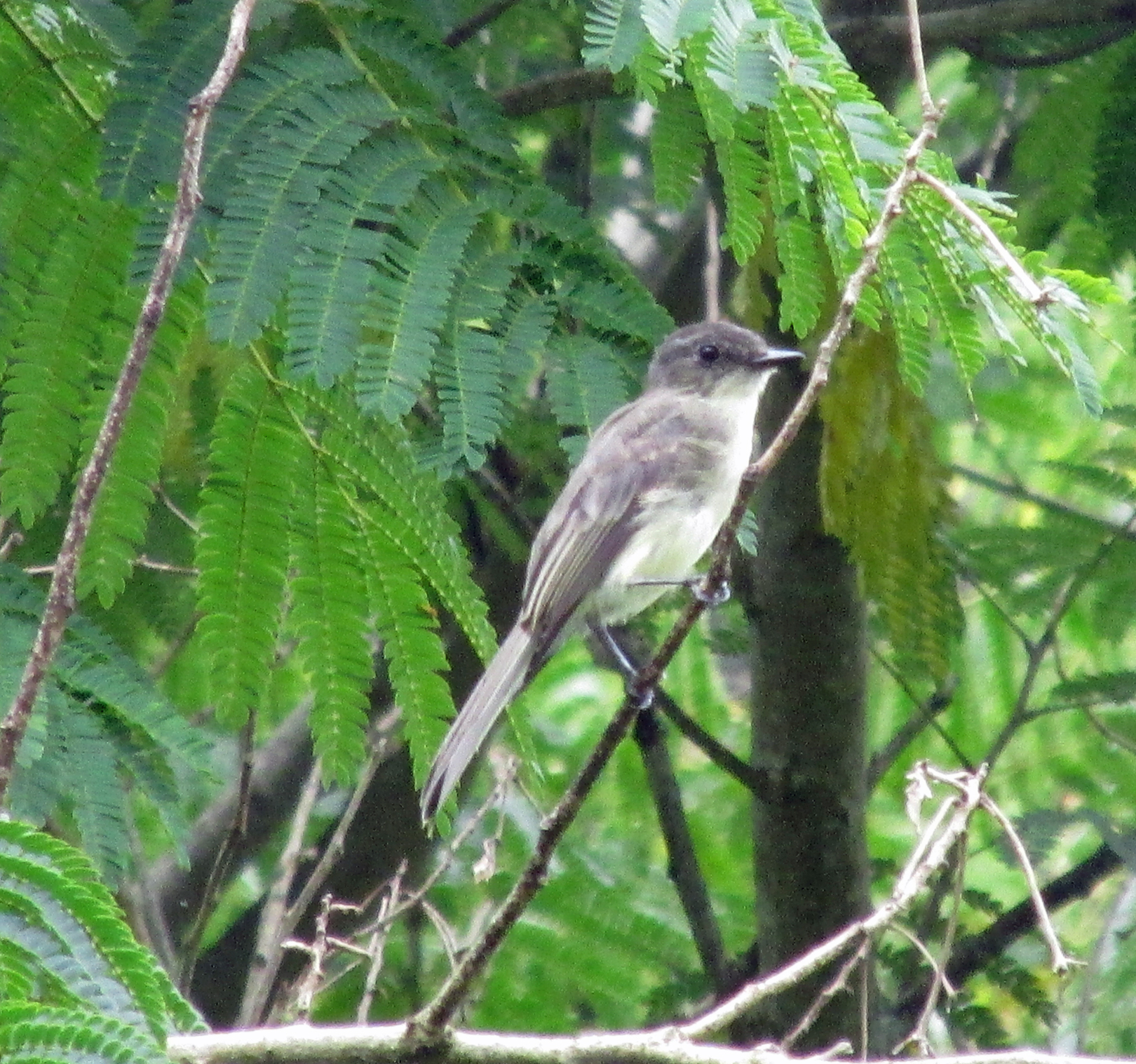
Photo by Bryan Stevens • An Eastern phoebe perches in a mimosa tree.
We’ve reached June, and I can hardly believe it. After a May that veered from cold to unseasonably hot, I’m hoping June can find a happy balance.
The birds haven’t ruffled their feathers about temperature variances, as best as I can tell. Migration is, for the most part, concluded. Some birds have already completed a first nesting, including some Eurasian starlings in downtown Erwin. During a stroll on the Union Street sidewalk, I flustered a fledgling and its parents. I gave them some space as I passed, and it looked like things got back to normal.
Nesting is the main focus of most birds during the spring and summer months, and the process can stretch out until August and early September for species like cedar waxwing and American goldfinches.
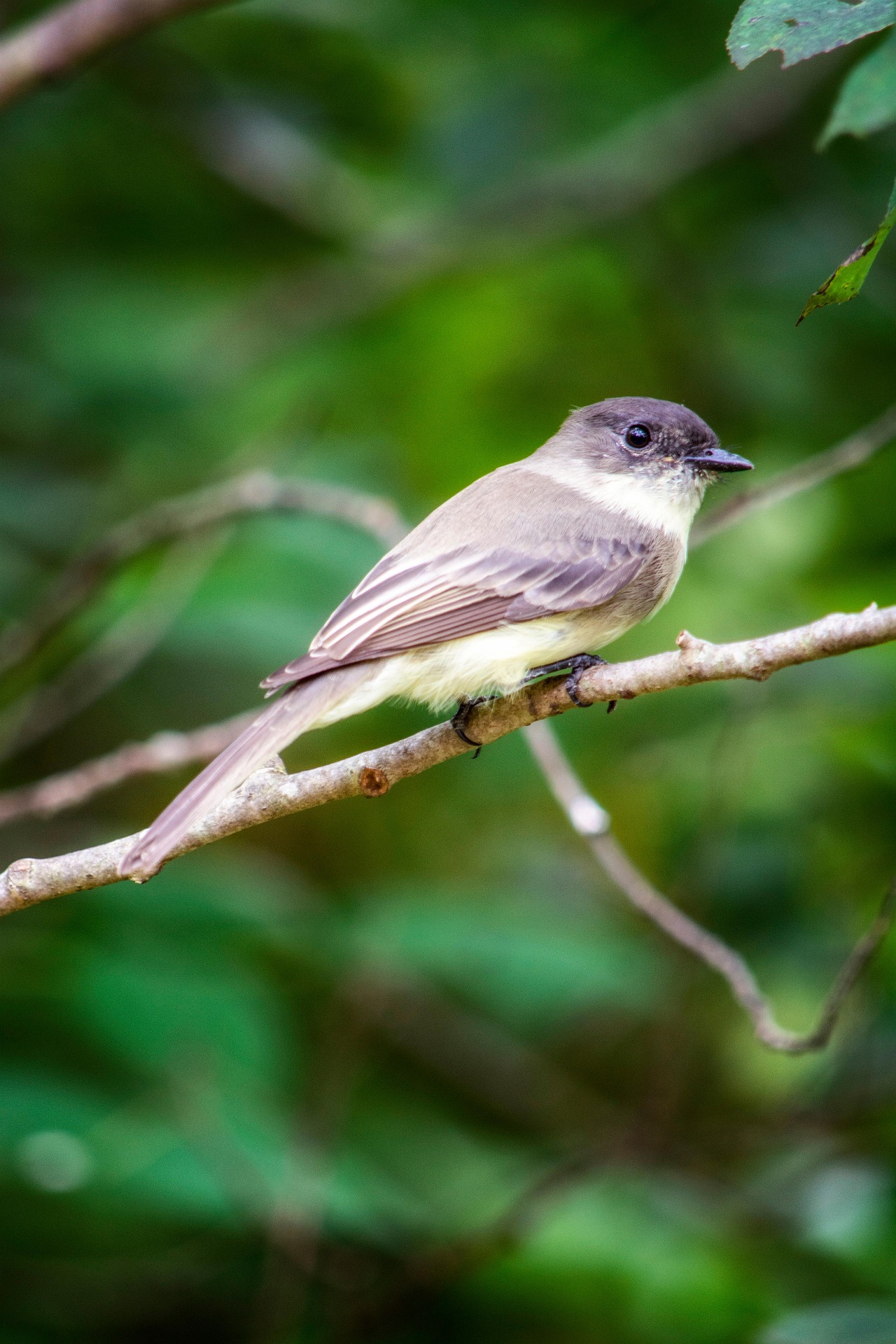
Photo by Megan Zopf/Pixabay • An Eastern phoebe perches on a branch.
Other birds, such as various sparrows, American robin and Eastern bluebird, may attempt to nest multiple times in zealous bids to propagate their species.
I’ve noticed that the old nest on the blades of the porch fan at my house has gotten a bit greener as the Eastern phoebes have done some refurbishment to what has been a popular nest location for this species at my home in recent years.
Actually, it’s probably only the resident female phoebe involved in bringing new moss to the structure and working the material into the foundation of the previous nest. According to the website All About Birds, the female phoebe works solo on all nest-building tasks, although the male may accompany her, perhaps offering the avian equivalent of moral support.
She uses various materials, including mud, moss and leaves, along with grass stems and animal hair, during her construction process. Once she is done with her refurbishment and the nest meets her standards, she will lay two to six eggs. She’ll incubate them for 15 to 16 days. Once hatched, the nestlings will reside in the nest for up to 20 days. Even after the young fledge from the nest, the parents remain attentive as they introduce their brood to the wider world.
John James Audubon, an early naturalist and famed painter of North America’s birds, conducted an experiment with some young phoebes that represents the first-ever bird banding in the United States of America. His novel experiment, which he carried out in 1803, involved tying some silver thread to the legs of the phoebes he captured near his home in Pennsylvania. He wanted to answer a question he had about whether birds are faithful to home locations from year to year.

Photo by Bryan Stevens • A young Eastern phoebe awaits a food delivery from a parent.
The following year, Audubon again captured two phoebes and found the silver thread had remained attached to their legs. Today, ornithologists still conduct bird banding to gather information on birds and the mystery of their migrations. So, that pair of phoebes that returned to your backyard this spring — they just might be the same ones that have spent past summer seasons providing you with an enlightening glimpse into their lives. I’ve wondered myself if the phoebes that nest on my porch ceiling fan are the same two birds that have done so in previous years. I’ve suspected they are or, perhaps, they are related to the original nesting pair.
The Eastern phoebe, known by the scientific name of Sayornis phoebe, has two relatives in the genus Sayornis. The genus is named after Thomas Say, an American naturalist. The Eastern phoebe’s close relatives include the black phoebe and Say’s phoebe. The black phoebe ranges throughout Oregon, Washington and California and as far south as Central and South America. As its name suggests, this bird has mostly black feathers instead of the gray plumage of its relatives. The Say’s phoebe, also named for the man who gave the genus its name, is the western counterpart to the Eastern phoebe.
The phoebes belong to the world’s largest family of birds, which is known collectively as the “tyrant flycatchers.” With more than 400 species, this family of birds consists of species known as tyrannulets, elaenias, pygmy tyrants, tody-flycatchers, spadebills, flatbills, attilas, kingbirds and kiskadees.
Since they belong to the vast family of New World flycatchers, it’s probably no surprise that these phoebes feed largely on insects. The birds will often perch patiently until an insect’s flight brings it within easy range. A quick flight from its perch usually allows the skillful bird to return with a morsel snatched on the wing. In the winter months, the Eastern phoebe also eats berries and other small fruit. Phoebes can even feed on poison ivy berries without risk of ill effects.
The Eastern phoebe is not a colorful bird, but it makes a good neighbor. I’d encourage everyone to welcome this bird whenever they get the chance.
To make a comment, ask a question or share a sighting, email me at ahoodedwarbler@aol.com. I’ve written about birds, birding and birded for 30 years and love hearing from fellow enthusiasts.

