Category Archives: Birdosng

Summer bird count finds 114 species

Hans Toom/Pixabay • A chestnut-sided warbler was one of 18 species of warblers tallied on the annual survey.

The 31st Carter County Summer Bird Count was held on the first day of June with 23 observers in nine parties. The weather was generally favorable, but somewhat cool early in the morning and breezy at times.

Participants tallied 114 species, which is exactly the 30 year average, but slightly below the average of the last decade of 117 species. The all-time high was 123 species in 2017.

Abundant birds included European starling (471), American robin (372), cliff swallow (330), Canada goose (270), song sparrow (240) and American crow, 208.

The list:

Canada goose, 270; wood duck, 5; mallard, 52; and wild turkey, 13.

Photo by Bryan Stevens • Five wood ducks were found on count day.

Rock pigeon, 61; Eurasian collared-dove, 1; mourning dove, 130; yellow-billed cuckoo, 1; and chuck-will’s-widow, 1.

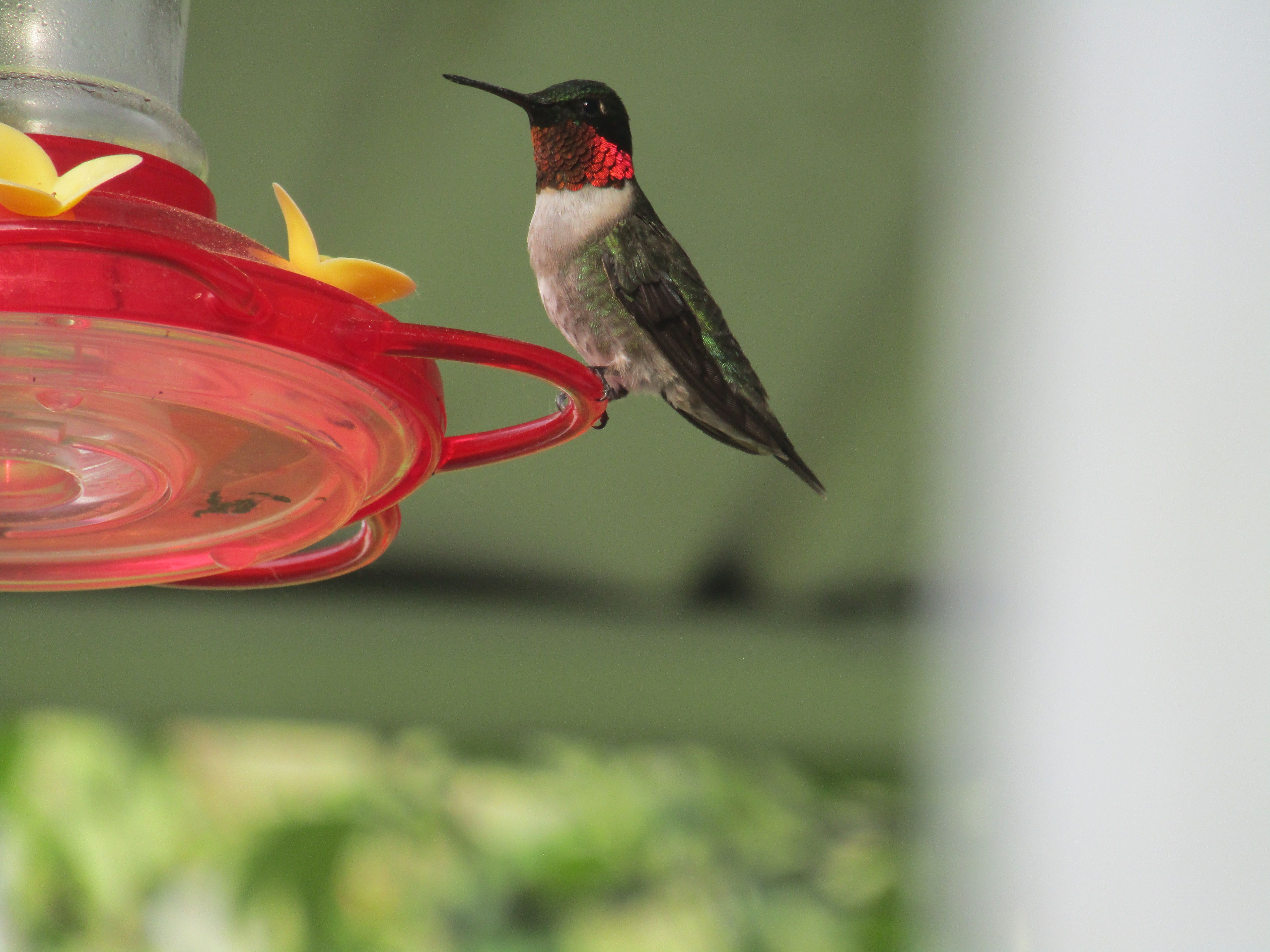
Eastern whip-poor-will, 13; chimney swift, 61; and ruby-throated hummingbird, 15.

Killdeer, 11; American woodcock, 4; double-crested cormorant, 7; great blue heron, 18; and green heron, 4.

Black vulture, 14; turkey vulture, 59; sharp-shinned hawk, 3; Cooper’s hawk, 1; bald eagle, 3; red-shouldered hawk 1; broad-winged hawk, 8; red-tailed hawk, 12; Eastern screech-owl 8; and barred owl, 2.

Belted kingfisher, 11; red-bellied woodpecker, 31; yellow-bellied sapsucker, 6; hairy woodpecker, 6; Northern flicker, 13; pileated woodpecker, 22; and American kestrel, 1.

Great crested flycatcher, 5; Eastern kingbird, 24; Eastern wood-pewee, 28;

Acadian flycatcher, 19; alder flycatcher, 1; least flycatcher, 10; and Eastern phoebe, 65.

White-eyed vireo, 6; blue-headed vireo, 47; warbling vireo, 1; and red-eyed vireo, 205.

Blue jay, 80; American crow, 208; fish crow, 5; and common raven, 14.

Photo by Bryan Stevens • A young titmouse visits a suet feeder.

Carolina chickadee, 49; tufted titmouse, 91; tree swallow, 88; Northern rough-winged swallow, 32; purple martin, 21; barn swallow, 135; and cliff swallow, 330.

Golden-crowned kinglet, 20; cedar waxwing, 58; Red-breasted nuthatch, 16 white-breasted nuthatch, 17; brown creeper, 6; and blue-gray gnatcatcher, 15.

Carolina wren, 126; house wren 48; and winter wren, 7.

Gray catbird, 36; brown thrasher, 34; Northern mockingbird, 62; European starling, 471; Eastern bluebird, 86; veery, 21; hermit thrush, 5; wood thrush, 56; and American robin, 372.

House sparrow, 40; house finch 86; pine siskin, 8; and American goldfinch, 77.

Chipping sparrow, 85; field sparrow, 25; dark-eyed junco, 51; song sparrow, 240; Eastern towhee, 135; yellow-breasted chat, 9; Eastern meadowlark, 9; orchard oriole, 7; Baltimore oriole, 7; red-winged blackbird, 68; brown-headed cowbird, 27; and common grackle, 87.

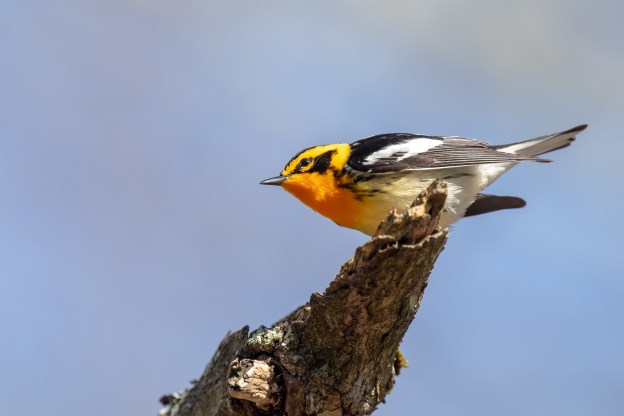
Ovenbird, 73; worm-eating warbler, 12; Louisiana waterthrush, 6; black-and-white warbler, 44; Swainson’s warbler, 9; common yellowthroat, 27; hooded warbler, 145; American redstart, 9; Northern parula, 48; blackburnian warbler, 4; yellow warbler, 5; chestnut-sided warbler, 30; black-throated blue warbler, 61; pine warbler, 4; yellow-rumped warbler, 4; yellow-throated warbler, 18; black-throated green warbler, 50; and Canada warbler, 20.

Scarlet tanager 28; Northern cardinal, 135; rose-breasted grosbeak, 13 blue grosbeak, 4; and indigo bunting, 141.

According to long-time count compiler Rick Knight, a few species were missed on count day, usually because they are very localized in distribution or occur in very low densities. And sometimes, he noted, the birds just don’t cooperate.

Some exciting observations include a family group of four American woodcocks at Carvers Gap on Roan Mountain. In addition, 18 species of warblers were found on the count.

Missed species: Common merganser – although a female with a brood of ducklings was seen the day prior to the count – as well as ruffed grouse, common niighthawkhawk, yellow-crowned night-heron, great horned owl, yellow-throated vireo, grasshopper sparrow, golden-winged warbler, Kentucky warbler, magnolia warbler and prairie warbler.

•••

To share a sighting, ask a question or make a comment, email ahoodedwarbler@aol.com. 


Unicoi County summer bird count finds 109 species

Photo Hans Toom/ Pixabay • The aptly named yellow warbler was one of 18 warbler species found on this year’s Unicoi County Summer Bird Count.

The 11th annual Unicoi County summer bird count was held Saturday, June 8, with 19 observers in seven parties. The count has been conducted yearly since its inception by members of the Elizabethton Bird Club.

I have taken part on this count from the first one held, missing only once when I was out of town. It’s an enjoyable count and, for me, it’s very close to home. This count also provides a reliable snapshot of the birds present in Unicoi County in early summer. 

Counters tallied 109 species which is slightly above the average of 108 species. The all-time high was 112 species in 2016. 

Abundant birds included European starling (314), American robin (246), song sparrow (175), American crow (174), red-eyed vireo (172), Northern cardinal (128) and cliff swallow, 126. Eighteen species of warblers were found, the most abundant being hooded warbler with 84 individuals tallied. 

As always a few low-density or very localized species were missed, including yellow-billed cuckoo, bald eagle, great horned owl, American kestrel, grasshopper sparrow, golden-winged warbler and prairie warbler.

The list:

Canada goose, 18; wood duck, 3; mallard, 20; wild turkey, 7; and ruffed grouse, 1.

Rock pigeon, 61; mourning dove, 56; chuck-will’s-widow,1; Eastern whip-poor-will, 18; chimney swift, 29; and ruby-throated hummingbird, 8.

Killdeer, 8; great blue heron, 3; and green heron, 2.

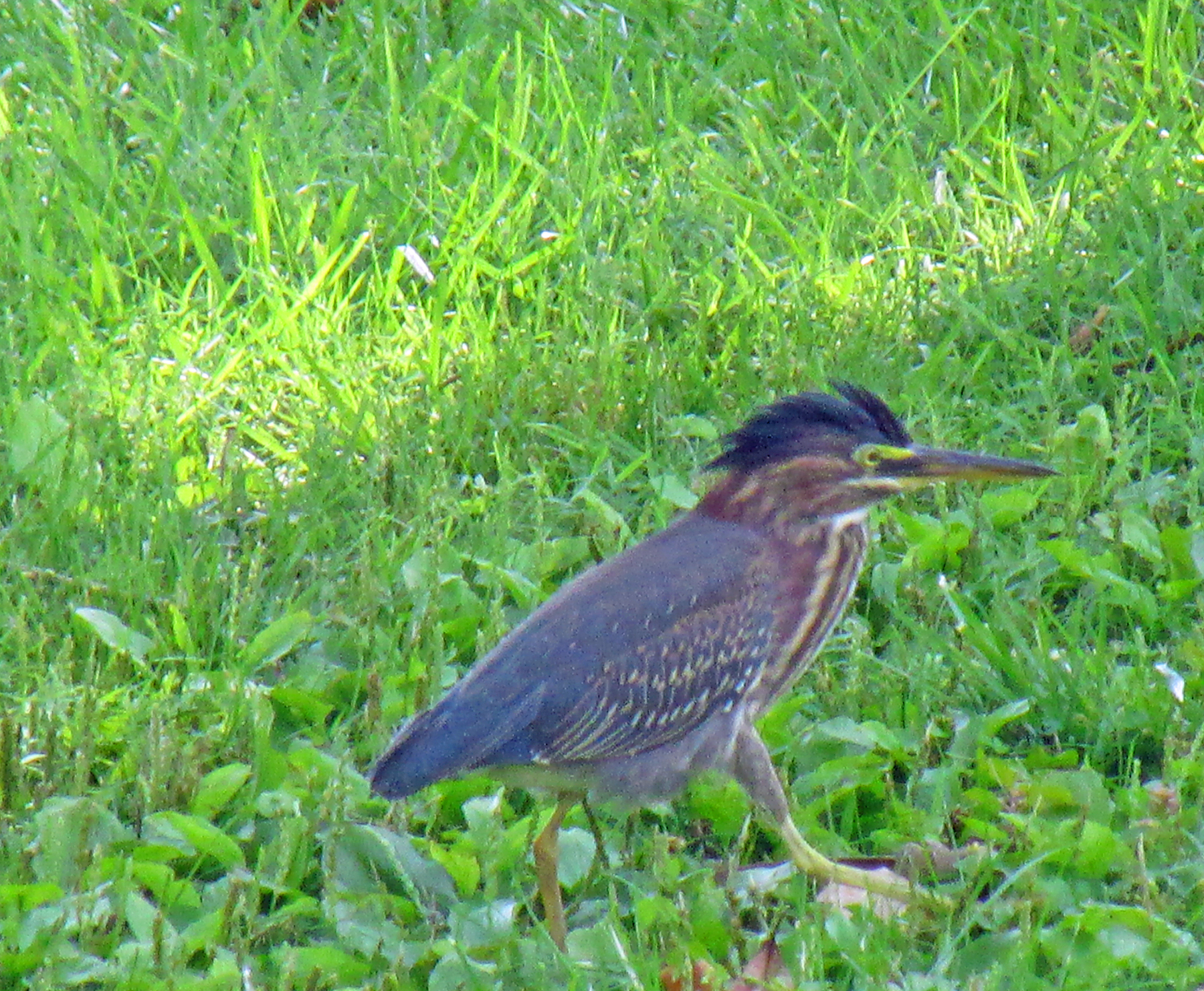
Photo by Bryan Stevens
A green heron elevates a shaggy crest of feathers, a behavior often initiated when the bird feels alarmed.

Black vulture, 1; turkey vulture 37; sharp-shinned hawk, 1;

Cooper’s hawk 3; red-shouldered hawk, 4; broad-winged hawk, 10; red-tailed hawk, 2; Eastern screech-owl, 5; barred owl, 4; and Northern saw-whet owl, 1.

Belted kingfisher, 5; red-bellied woodpecker, 15; yellow-bellied sapsucker, 9;

downy woodpecker, 8; hairy woodpecker, 5; Northern flicker, 10; and pileated woodpecker, 20.

Great crested flycatcher, 3; Eastern kingbird, 11; Eastern wood-pewee, 10; Acadian flycatcher, 32; least flycatcher, 5; and Eastern phoebe, 65.

White-eyed vireo, 3; yellow-throated vireo, 1; blue-headed vireo, 38; warbling vireo, 3; and red-eyed vireo, 172.

Blue jay, 61; American crow, 174; fish crow, 5; common raven, 8; Carolina chickadee, 71; and tufted titmouse, 60.

Photo by Bryan Stevens • A tree swallow visits a nest box to check on young.

Tree swallow, 49; Northern rough-winged swallow, 20; purple martin, 25; barn swallow, 78; and cliff swallow, 126.

Golden-crowned kinglet, 2; cedar waxwing, 36; red-breasted nuthatch, 2; white-breasted nuthatch, 18; brown creeper, 4; and blue-gray gnatcatcher, 23.

Carolina wren, 84; house wren, 31; and winter wren, 3.

Gray catbird, 34; brown thrasher, 14; Northern mockingbird, 17; European starling, 314; Eastern bluebird, 59; veery, 12; hermit thrush, 2; wood thrush, 34; and American robin, 246.

House sparrow, 14; house finch, 33; American goldfinch, 56; chipping sparrow, 54; field sparrow, 6; dark-eyed junco, 20; song sparrow, 175; Eastern towhee, 6; and yellow-breasted chat, 1.

Eastern meadowlark, 14; orchard oriole, 4; Baltimore oriole, 1; red-winged blackbird, 60; brown-headed cowbird, 16; and common grackle, 63.

Ovenbird, 38; worm-eating warbler, 10; Louisiana waterthrush, 10; black-and-white warbler, 19; Swainson’s warbler, 16; Kentucky warbler, 1; common yellowthroat, 6; hooded warbler, 84; American redstart, 12; Northern parula, 41; magnolia warbler, 2; Blackburnian warbler, 10; yellow warbler, 3; chestnut-sided warbler, 17; black-throated blue warbler, 45; yellow-throated warbler, 17; black-throated green warbler, 45; and Canada warbler, 13.

Scarlet tanager, 20; Northern cardinal, 128; rose-breasted grosbeak, 4; blue grosbeak, 1; and indigo bunting, 77.

•••

Bryan Stevens has birded since the early 1990s and has written about birds and birding since 1995. To ask a question, make a comment or share a sighting, email him at ahoodedwarbler@aol.com.


Hooded warbler easily wins fans among birders

Photo by Jean Potter • A male hooded warbler flits through the foliage of a rhododendron thicket.

The woods surrounding my home have been alive with birdsong. We’re almost ready to turn the calendar to June, but there’s been no diminishment in the fervor of the daily chorus.

The main members of the feathered choir are warblers. I’ve heard yellow-throated warbler, black-throated green warbler, black-and-white warbler, Northern parula, ovenbird, common yellowthroat and, my favorite, hooded warbler, morning and evening.

During the winter months when the hooded warbler absents itself from Northeast Tennessee, the species resides in the forests of Mexico, as well as in Belize, Costa Rica and other Central American nations.

Like many of the ruby-throated hummingbirds that make their home in the United States for the summer, the hooded warbler’s seasonal migrations take it across the vast open waters of the Gulf of Mexico. After that amazing crossing, these small songbirds disperse throughout the southeastern United States.

That birds as small as hummingbirds and warblers make this incredible migration twice yearly is one of nature’s most phenomenal feats of endurance. In a presentation by Kenn and Kimberly Kaufman that I attended six years ago, I learned that these tiny birds put on incredible fat reserves to help fuel their valiant Gulf crossings.

The warblers, also known as wood-warblers, are an exclusively New World family, numbering approximately 116 species. About 50 of these species make their home in the eastern United States and Canada for the spring and summer, departing in the fall and returning to tropical wintering grounds. Some are extremely bright and colorful birds. The hooded warbler is somewhere in the middle in a sliding scale that goes from dull to wow.

Other colorful warblers that share similar tastes in range and habitat with the hooded warbler include the American redstart, black-throated blue warbler and black-throated green warbler.

Readers who make it to the end of this weekly column will know that even my email address is a testament to my enthusiasm for the hooded warbler.

Hooded warblers nest in the woodlands around my home. So, from the time my favorite warbler returns in April until the last individual departs in October, I enjoy regular glimpses of this colorful and interesting bird. Like all warblers, the hooded warbler is quite energetic, dashing after tiny insects in the branches of shrubs and trees. Hooded warblers often forage close to the ground, which makes observing them easier.

Of course, birds are free to break the rules. One of my most memorable sightings of a hooded warbler involved a male singing from the upper branches of a dead pine tree. I’d estimate that the bird was at least 40 feet off the ground, singing his little heart out to attract a mate. I was standing on an elevated rise of land while the tree providing the warbler its perch was lower in a gully that actually placed bird and observer on a roughly level playing field.

The bird sang for many moments, which is not always the case with warblers. These birds tend to dash for cover at the slightest disturbance, but this enthusiastic male didn’t seem to pay and heed to the fact that most of its kin prefer to skulk in shrubs and dense rhododendron thickets no more than a few feet off the ground.

Back in the late 1990s, when I had just started out in birding, I observed two adult hooded warblers feeding a couple of young birds only recently out of the nest.

I was enjoying observing the sweet scene as the parent birds carried foods to the young birds, which begged incessantly and loudly when, unexpectedly, a song sparrow wandered into the scene.

The sparrow was brutally beset by the parent warblers, which attacked the intruder from all sides. The poor sparrow, having no clue to the reason for their ire, beat a hasty retreat. Sparrows are no threat, but that didn’t matter to these zealous parents.

When I first began birding, I was only dimly aware there was a family of birds known as warblers, which are now hands-down my overall favorite birds. The hooded warbler was one of the first birds I managed to identify on my own.

It’s one bird unlikely to be mistaken for any other. Every time I behold a hooded warbler, I marvel at the bird’s exquisite appearance. The gold and green feathers seem to glow brightly in the dim light of the shadowy thickets of rhododendron they prefer to inhabit. The black hood and bib surrounding the male’s yellow face stands out by virtue of its stark contrast from the brighter feathers. Large coal-black eyes complete the effect. The appearance of the male bird provides this species with its common name. The female has an identical yellow-green coloration as the male, although she is slightly more drab. She lacks the black hood and bib, although older females may acquire some dark plumage on the head and around the face. Both sexes also show white tail feathers that they constantly fan and flick as they move about in thick vegetation and shrubbery.

The warblers are, in short, an incredible family of birds. I’ve seen all but a handful of the species that reside for part of the year in the eastern United States. I still want to see a Connecticut warbler and cerulean warbler, as well as the endangered Kirtland’s warbler of Michigan and the golden-cheeked warbler of Texas.

I’ve come to think of the hooded warblers at my home as “my warblers.” There may be a kernel of truth to my belief. The website All About Birds in a profile on the species notes that a seven-year study conducted in Pennsylvania gave evidence that male hooded warblers are faithful to nesting territories from previous years. Approximately 50% of banded males were shown to return to the same area to breed again year after year.

So, some of those hooded warblers singing from the rhododendron thickets at my home are probably birds returning for consecutive spring seasons. Some of the warblers that returned back in April could be great-great-great grandchildren of those warblers that attacked the unfortunate song sparrow. At the least, it gives me pleasure to think so.

•••

To share a sighting, ask a question or make a comment, email me at ahoodedwarbler@aol.com, an address that shows my profound fascination for this particular bird.

Photo by Bryan Stevens • A male hooded warbler peers from a tangle of branches.

Sounds of spring remain one of the season’s pleasures

Photo by Bryan Stevens • Blue-headed vireos, such as this bird, are high-elevation summer residents in the region. In the fall, they are also common migrants.

In modern life, it can seem like we’re always looking for ways to relax and de-stress. For me, nothing works quite so well as letting nature’s sounds, as well as sights, provide some measure of relief from stressful situations and anxious thoughts.

I instantly notice when a new vocalization is added to the usual mix. Such occurred on March 26 when I heard the syllabic song of a blue-headed vireo from the upper reaches of a large tree near the fish pond.

The blue-headed vireo’s song has been described as “Hear me! See me! Here I am!” It’s similar to the song of the related red-eyed vireo, but it’s slower and the paired syllables are separated by a brief pause.

În a couple more weeks, the songs of blue-headed vireos will ring out all over the high-elevation forested slopes of many of our local mountains, but these are just starting to get back to the region after an absence during the colder months. Many other feathered singers will be arriving in their wake, including warblers, tanagers and grosbeaks.

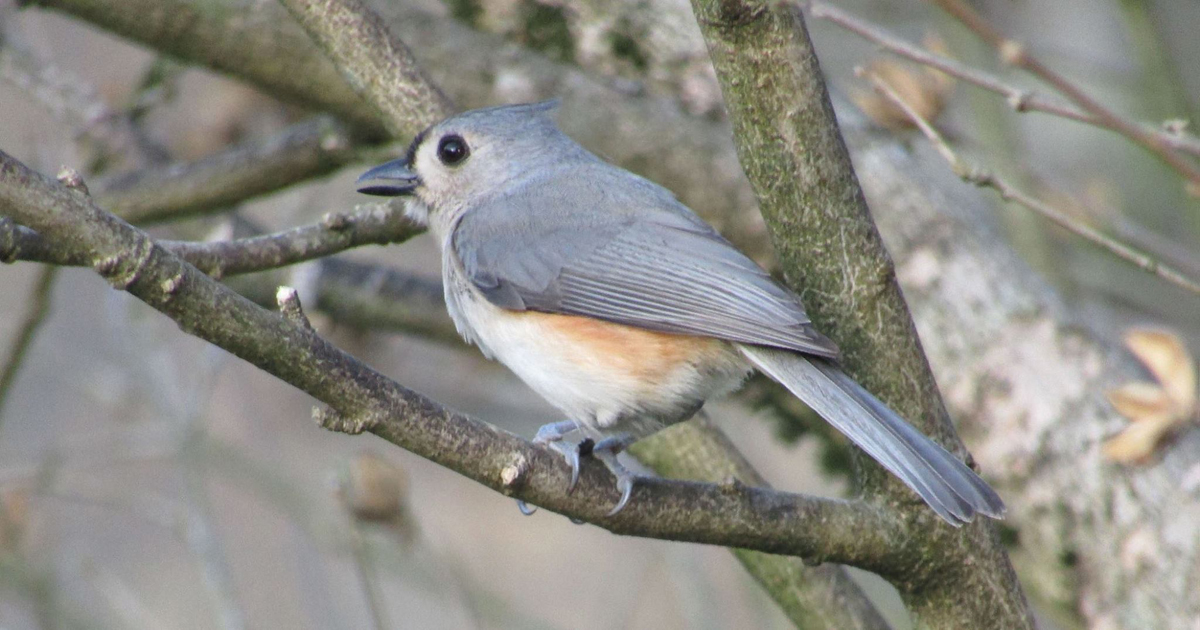
Photo by Bryan Stevens • The tufted titmouse is a backyard bird with an impish personality and a loud song.

The mornings around my home often begin with a loud, insistent “Peter! Peter! Peter!” uttered from the woods or even from shrubbery just outside my bedroom window. Male tufted titmice, little gray relatives of chickadees with a distinctive crest and large, dark eyes, sing their urgent “Peter! Peter! Peter!” as a constant refrain in their efforts to attract mates now that they feel spring in their blood.

A series of rat-a-tat-tats echoes from deeper in the woods as woodpeckers tap their sturdy bills against the trunks of trees. The three most common woodpeckers at my home are red-bellied, downy, and pileated, and they all have their own unique vocalizations, as well.

The pileated woodpecker produces clear, far-carrying resonant piping sounds that can last for a few seconds each blast. The much smaller downy woodpecker produces a whinny of high-pitched notes that descend in pitch toward their conclusion. The red-bellied call is probably the one that stands out the most. The call’s a harsh, rolling “Churr, churr, churr” given almost like an expression of exasperation as they circle tree trunks and explore branches.

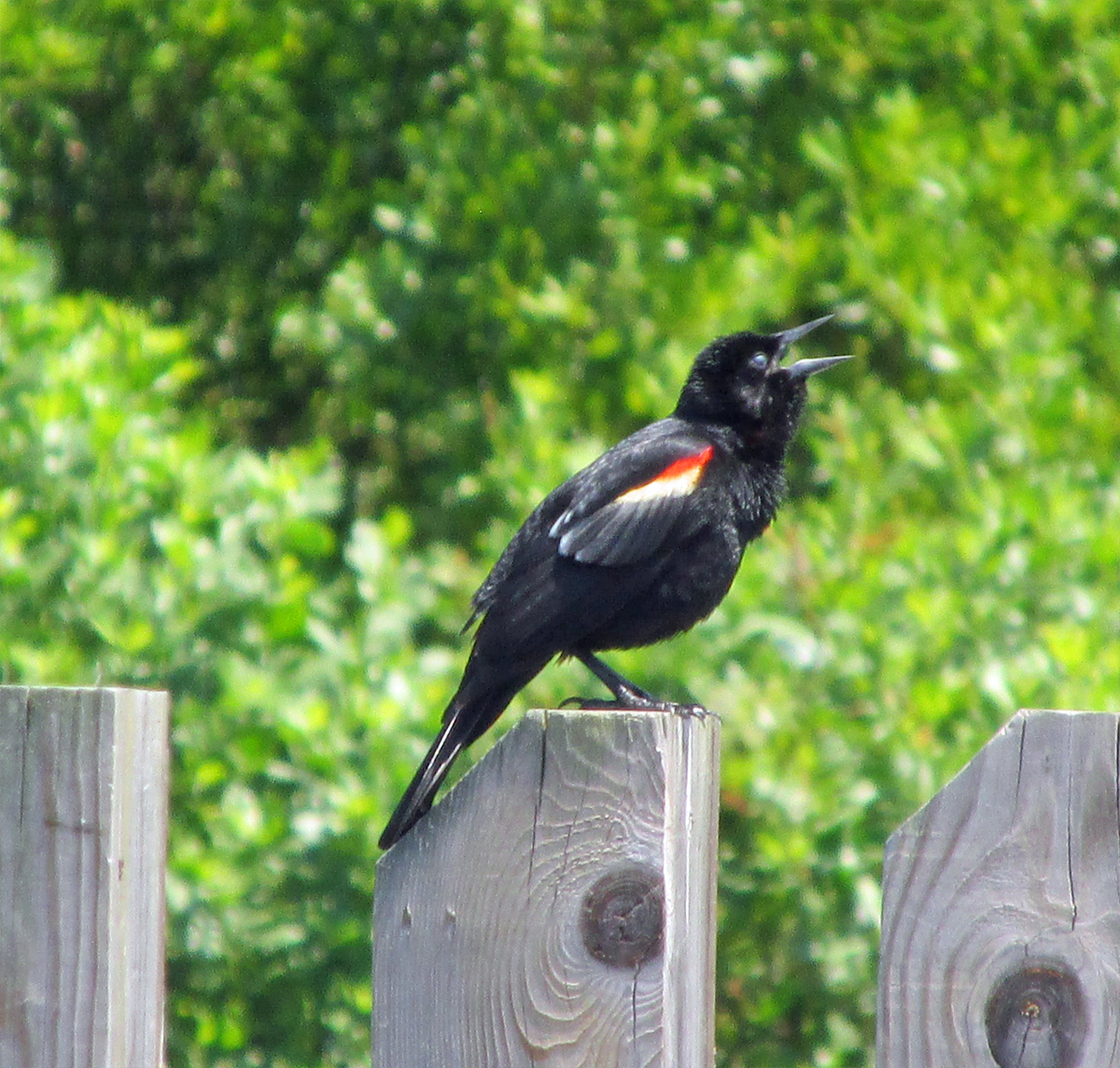
Since their return earlier this month, the resident red-winged blackbirds are often some of the earliest singers these days. According to the website All About Birds, the male red-winged blackbird’s “conk-la-ree!” is a classic sound of wetlands across the continent of North America. According to the website, the one-second song starts with an abrupt note that transforms quickly into a musical trill.

Photo by Bryan Stevens • A male red-winged blackbird sings to attract mates and ward off rivals.

Some birds helpfully introduce themselves with a song that repeats their name. One such common bird is the Eastern phoebe. In recent weeks, a pair has been checking out possible nesting sites. In past years, they have made use of the rafters of my garage and blades on a porch ceiling fan for potential nest sites. The male spends much of the day producing his strident “fee-bee” call, which is a perfect phonetic rendition of the bird’s common name.

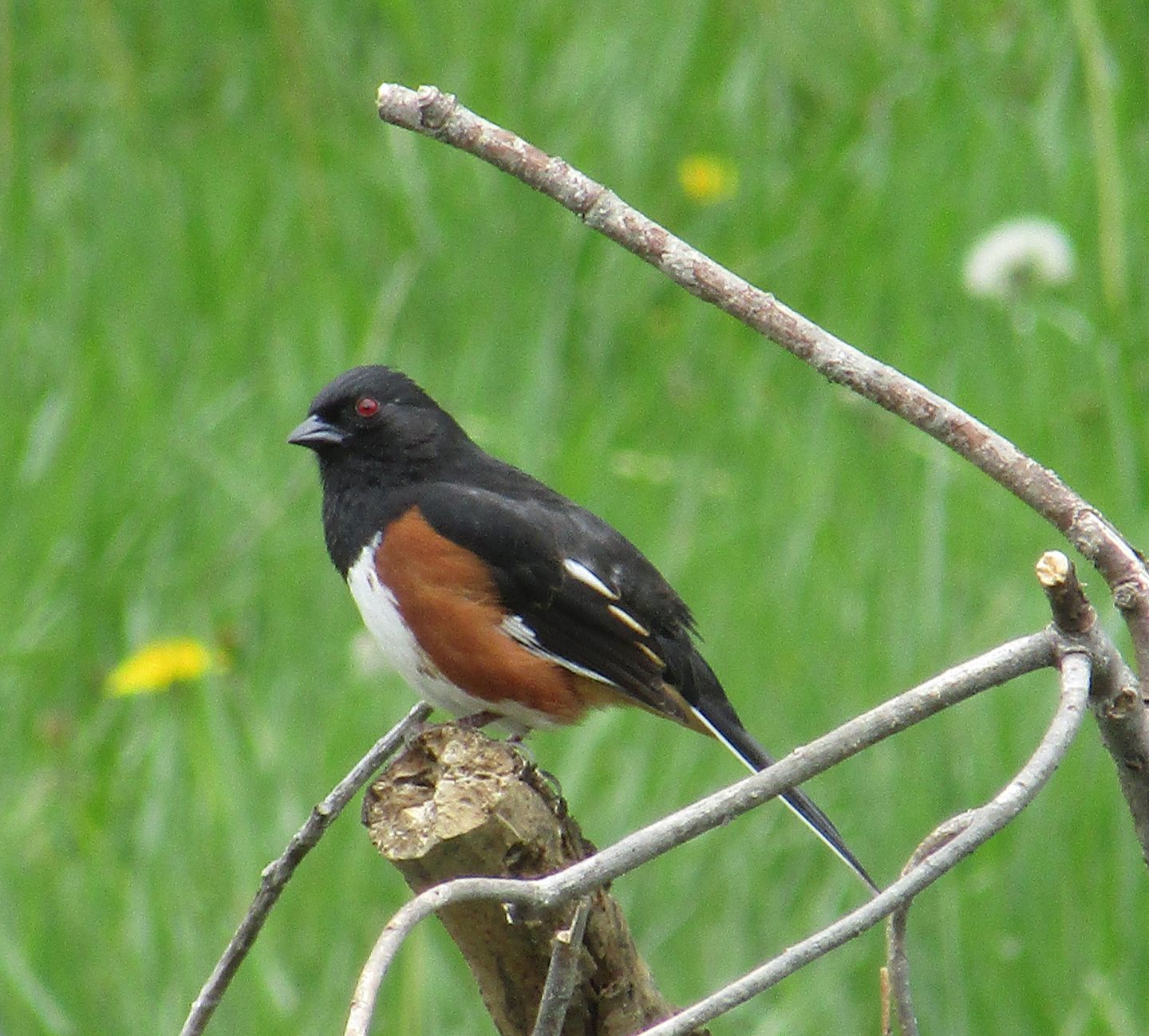
Then there’s one of my favorite songs of spring, which is produced by the Eastern towhee, also known by such common names as “ground robin” and “swamp robin.” These birds, which are actually a species of sparrow, also have some instantly recognizable vocalizations. With the arrival of spring, the males seek elevated perches for extensive singing bouts to attract mates and establish territories. Their song has been interpreted, quite accurately, as “drink your tea!” They also have some alarm notes, such as “€œChew-ink”€ and “€œToe-Hee,” of which the latter provides the basis for this bird’s common name.

Photo by Bryan Stevens • Male Eastern towhees are persistent singers once they establish  a spring territory.

Towhees occasionally spend the winter, but I’ve not noticed any during the winter of 2023-24. They are back now, and have been keeping a high profile for the past couple of weeks.

Of course, other wildlife is keen to join the springtime chorus. I have so many spring peepers at the fish pond and in the wet fields around my house that the noise from these tiny amphibians can reach deafening levels. The chorus is bound to grow more diverse and louder as spring advances. Take some time to enjoy the sounds of nature at your own home.

••••••

To share your own sighting, make a comment or ask a question, send email to ahoodedwarbler@aol.com. I’m also on Facebook.