Category Archives: Birds

Blue jays bold, bossy backyard visitors

Photo by edbo23/Pixabay A blue jay grabs a peanut from a feeder.

At my own home, blue jays have an easy life. They’re so much bigger than most of the other birds that visit my feeders that they can be a little bossy toward their smaller kin. All are welcome, though.

The blue jay is the smallest member of the Corvid family in Tennessee. This bird’s larger relatives in the state include the American crow, fish crow and common raven.

The blue jay, which is typically 10 to 12 inches long, is one of the largest songbirds to visit our feeders. They’re fond of sunflower seed, peanuts, suet and other feeder fare. Blue jays are quite noisy and produce a variety of vocalizations. They’re also capable of mimicry and can mimic in convincing fashion the calls of red-tailed and red-shouldered hawks.

While they are primarily woodland birds, blue ays are very adaptable and capable of thriving in suburban parks and other less wild areas. In the fall, acorns are a favorite food. There are times in autumn when almost every blue jay I see has an acorn n its bill. They also tend to stash food for future days, and this habit has also helped re-forest oak woodlands.

Jays are social birds and form flocks, which offers some protection from predators. It only takes one sharp-eyed bird in a flock to sound an alarm to protect the entire group.
Other birds can also detect blue jay alarm calls and react accordingly.

Accipiter hawks — Northern goshawk, Cooper’s hawk, sharp-shinned hawk — are the primary predators on blue jays. They share some of the same habitat and the agile hawks are usually able to outmaneuver the slower flying jays.

I was a little surprised to discover that the blue jay has never been chosen as an official state bird, although it does serve as the official bird for the province of Prince Edward Island in Canada.

Blue jays are undeniably striking birds. They are bright blue on top and white to gray on its throat, chest and belly. They have white wing bars and black and white banding on the tail. Its bill, legs and feet are black. The bird also has a black collar on its lower throat. At a glance, all blue jays — male and female — look alike. However, experts have determined that the black throat collars are subtly different from bird to bird and may help members of a flock recognize each other.

Larger birds typically have longer life spans than small ones. The medium- sized blue jay will probably live longer than a wren or sparrow. The oldest known wild, banded blue jay was at least 26 years, 11 months old when it was found dead after being caught in fishing gear, according to the website All About Birds. It had been banded in 1989 around Saint Pierre and Miquelon, which is a French archipelago south of the Canadian island of Newfoundland. He dead individual was found in the same area in 2016.

There are other species of jays in the United States, including the Steller’s jay, which is the western counterpart of the bue jay, as well as Western scrub-jay, Florida scrub-jay and pinyon jay. Worldwide, there are about 50 species of jays, which are closely related to crows, magpies and other species in the genus of Corvidae.

Some of the descriptive names for other jays include white-throated magpiejay, gray jay, green jay, purplish jay, azure jay, violaceous jay, turquoise jay, beautiful jay, silvery-throated jay, azure hooded jay and black-headed jay.

The smallest of the world’s jays is, appropriately enough, named the dwarf jay. It is eight to nine inches long and weighs about 1.4 ounces.

During two visits to Salt Lake City in Utah in 2003 and 2006, I added a couple of jays to my life list, including Western scrub-jay and Steller’s jay. I also saw black-billed magpies, a close relative of jays.
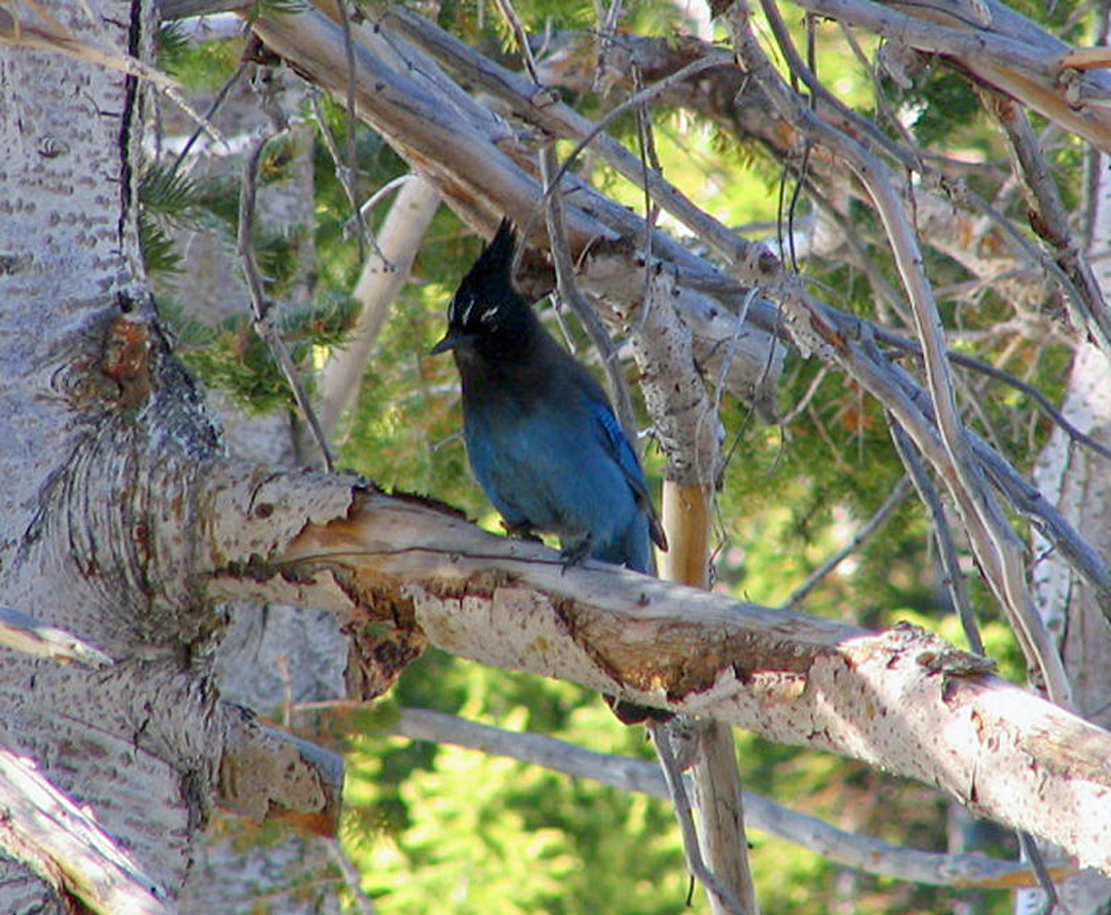
Photo by Bryan Stevens • A Steller’s jay found at Snowbird, a ski resort town near Salt Lake City, Utah.

•••

To share sightings, ask a question or make a comment, email me at ahoodedwarbler@aol.com.
Majestic canvasback among region’s wintering waterfowl

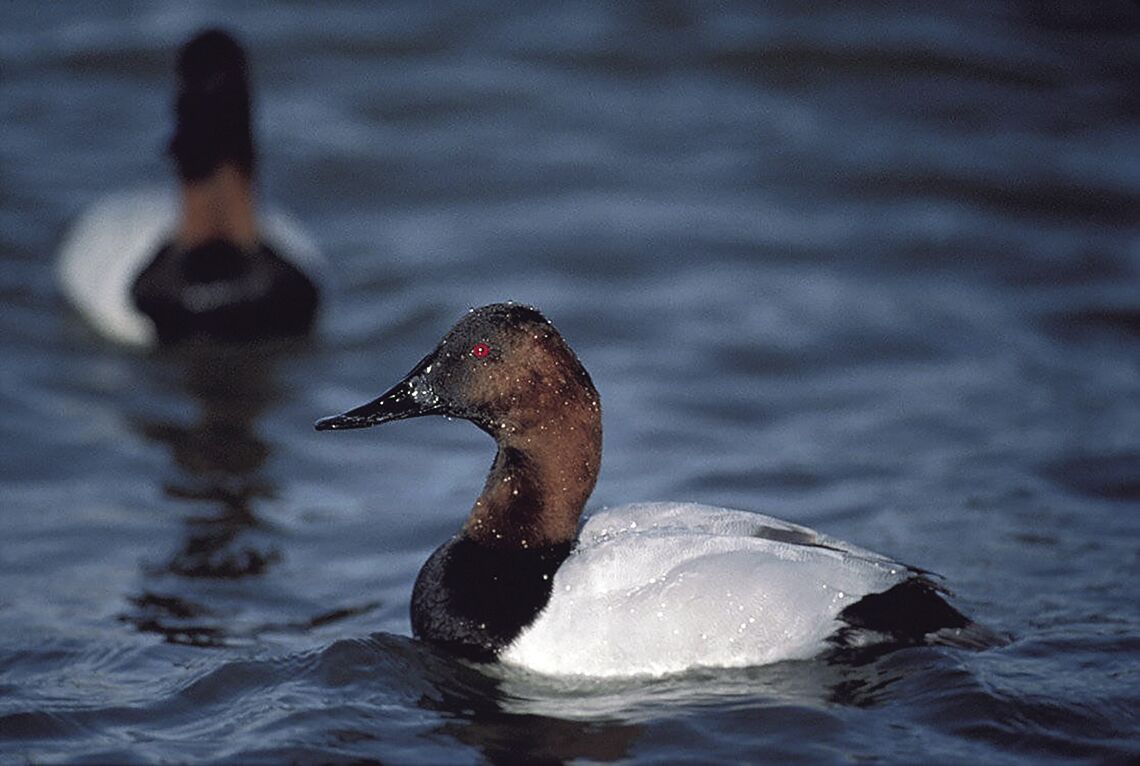
Photo by U.S. Fish & Wildlife/Eugene Hester • The red eye of a male canvasback stands out in as striking a fashion as does the duck’s dark and light plumage.

Erwin resident Joe McGuiness, who is also a fellow member of the Elizabethton Bird Club, alerted me recenntly to the presence of a canvasback drake at a pond along the town’s linear trail.

This duck was with a couple of redheads, also a species of duck, in the pond spanned by a boardwalk in the industrial park on the south side of Erwin. Some birds hold special meaning with me. Although its a natural question for a bird lover to be asked, I have difficulty pinpointing a single bird as my favorite. One of my overall favorite birds is the Northern cardinal. Among the summer-visiting warblers, the hooded warbler has long been my favorite. With shorebirds, the marbled godwit has long been at the top of my rankings. My favorite bird of prey is the American kestrel or, as I first learned of this raptor in the little “Golden Guide to Birds,” the sparrow hawk. Among owls, I have a soft spot for Eastern screech-owls.

I have a favorite duck, too. It’s the canvasback, which is a species of waterfowl that I don’t see very often, which makes observations even more special. I saw my first canvasback in the mid 1990s during a winter visit with my parents to Wilbur Lake near Elizabethton, Tennessee. We always liked visiting this small reservoir during the colder months to view the buffleheads and any other ducks that happened to visit this small mountain lake. On this particular occasion, a flock of redheads had also arrived. While viewing these ducks, we noticed a member of the flock that looked different from the others. Specifically, it was larger and whiter than the redheads. After a brief consultation with my copy of Roger Tory Peterson’s “A Field Guide to the Birds of Eastern and Central North America,” I identified my very first canvasback.

Since that time, I’ve observed canvasbacks at other locations in northeast Tennessee and southwest Virginia. It’s been awhile, but I have observed these ducks at Osceola Island Recreation Area below Holston Dam and at Musick’s Campground at South Holston Lake. Back in January and February of 2014, some canvasbacks took a liking to the pond at Erwin Fishery Park. I’ve also observed canvasbacks on the Watauga River in Elizabethton and on the Holston River in Kingsport. I saw eight canvasbacks on Feb. 22, 2015, on the Watauga River, not very far from where I saw my very first one back in the 1990s. The flock, which consisted of all males, represented a rather high number for this duck in the region.

Recent winter storms that have plowed through the region have brought some unusual ducks. A few days before he notified me of the canvasback, Joe also informed me about a pair of Northern shovelers at Erwin Fishery Park.

A male canvasback is unmistakably regal with a sloping profile that instantly distinguishes it from other ducks. Males, or drakes, have chestnut-red heads, white bodies, black breasts and rears and bright red eyes. The distinctive bill is also black. Females, like many other ducks, are drab and brown but share the distinctive bill, helping to separate them from such relatives as female redheads.

Photo by Bryan Stevens • Canvasbacks on the Watauga River in Elizabethton.

The canvasback is also a fairly large duck with males reaching a body length of 21 inches. Females are only an inch shorter in body length. Drakes weigh an average of 2.7 pounds while hens can weigh 2.5 pounds.

Canvasback breed in prairie potholes in the western United States and Canada. I got the chance to see many of these ducks in their nesting habitat during a trip to Utah in May of 2006. My visit provided very memorable observations of large flocks of these impressive diving ducks. I found them in temporary ponds in flooded fields. Utah had enjoyed abundant rainfall that spring, which was no doubt welcomed by breeding ducks. The trip also yielded observations of such ducks as cinnamon teal, redhead, red-breasted mergansers, ring-necked ducks and gadwalls, as well as other unique wetland-loving species as white-faced ibis, yellow-headed blackbird and Wilson’s phalarope.

During winter, the canvasback usually prefers large open bodies of water, including lakes, ponds and sheltered bays. These ducks are largely vegetarian, although they do consume some animal matter, including insect larvae, snails and other mollusks. This duck’s scientific name, Aythya valisineria, which refers to a species of plant that canvasbacks consume in great quantities. Vallisneria americana, which is often called wild celery or water-celery, doesn’t resemble the vegetable known as celery. These wild plants are long, limp and flat, which led to other common names such as “tape grass” and “eelgrass.”

The canvasback is member of the genus, Aythya, which is comprised of a dozen species of diving ducks. The other members of the genus in North America include greater scaup, lesser scaup, redhead and ring-necked duck. The related tufted duck is a rare visitor to the United States. They’re described diving ducks because they dive under the surface to search for food, rather than dabble around pond edges and shorelines like the ducks known as “dabblers.”

Two members of the genus — Madagascan pochard and Baer’s pochard — are endangered species. In March of 2013, a survey found the population of the Madagascan pochard was about 80 individuals. When surveys found a worldwide population of perhaps fewer than 1,000 individuals, Baer’s pochard was reclassified as “critically endangered” in 2012. The canvasback has never declined to the low levels of these relatives, but it has been a bird that has required some protective oversight from the federal government. At times, this has included exemptions from duck hunting seasons.

Canvasback populations are stronger these days but haven’t been robust for quite some time. According to the Duck Unlimited website, the population of this stately duck has seen some improvement. In 2009, a population survey by the U.S. Department of Fish and Wildlife showed an increase in canvasbacks from 488,000 to 662,000 individuals. According to the Ducks Unlimited website, this population spike took place in the wake of a hunting ban on canvasbacks during the 2008-09 waterfowl season.

•••

To share a sighting, ask a question or make a comment, email me at ahoodedwarbler@aol.com.


Region is home for several species of hawks

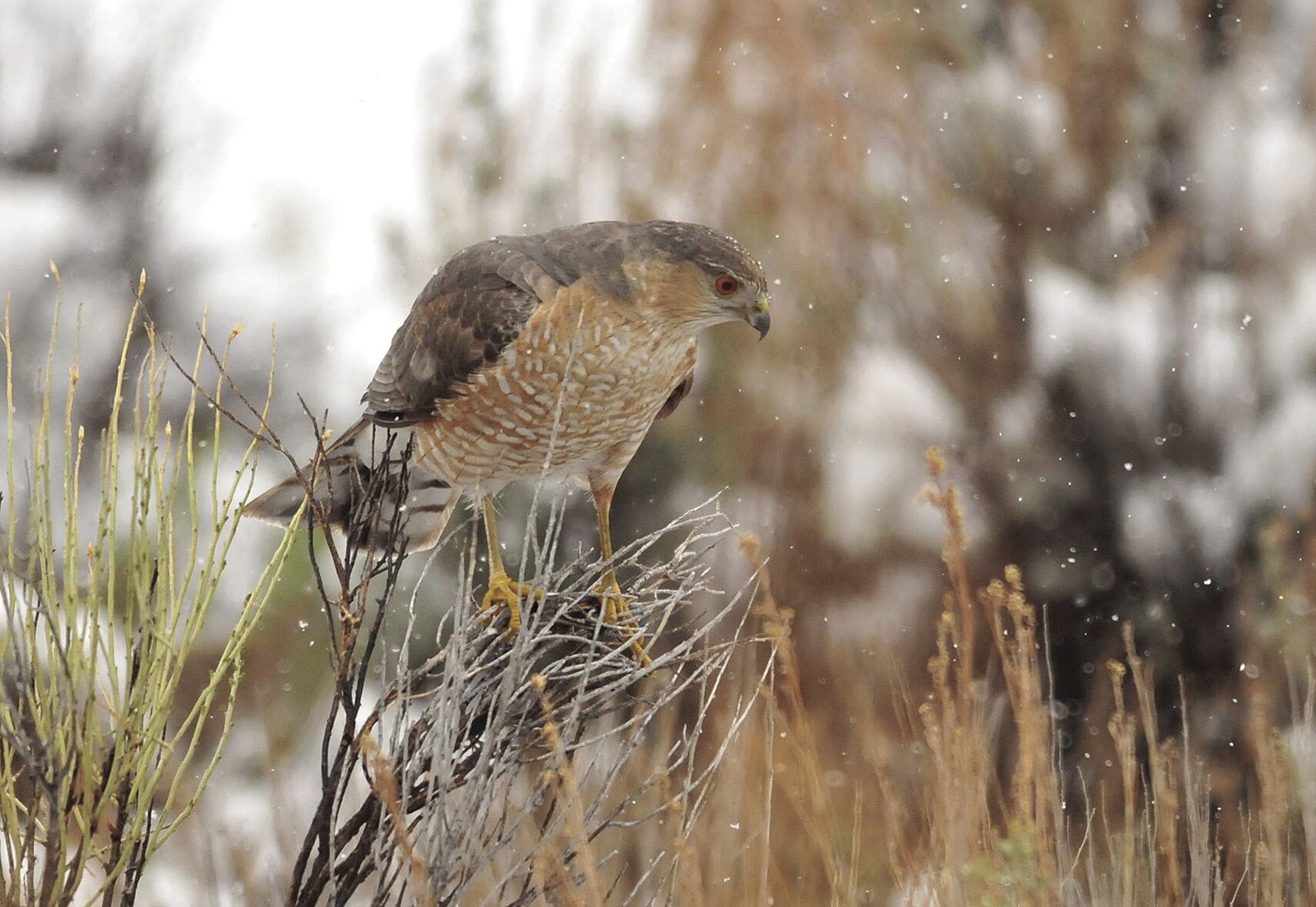
Tom Koerner/USFWS • An adult Cooper’s hawk, such as this individual, is a crow-sized woodland raptor that breeds throughout much of the United States, southern Canada and northern Mexico.

Barbara Lake, a resident in Hampton, emailed me recently to share a sighting of a large hawk in her yard.

“This hawk was in our yard today and flew up to a tree when I opened the door,” she wrote. “(Its) back and the back of the head are black and the rest appears to be white. He didn’t cooperate by turning around.”

Barbara enclosed some photos with her email. I’ve known Barbara for about 20 years. We first met when she invited me to her home to view some nesting bluebirds on a television screen. She had placed nest cams in some of her bluebird nesting boxes, capturing real-time footage of the nesting activity of these songbirds.

I’ve enjoyed some observations of the region’s larger raptors, including red-tailed hawks and red-shouldered hawks, as winter has settled in for the long haul. I’ve also spotted a few American kestrels.

Based on the raptor’s relatively long tail in the photos provided by Barbara, I hazarded a guess that her visiting raptor was a Cooper’s hawk.

Anyone who travels along the region’s Interstate Highway System has probably noticed hawks perched in trees or on utility lines adjacent to the roadway. The section of Interstate 26 that runs between Unicoi and Johnson City is often a productive area for keeping alert for raptors. The raptor I have most often observed along this stretch of road is the red-tailed hawk, although I have also observed Cooper’s hawk, sharp-shinned hawk and American kestrel. In the time of spring and fall migration, it’s also possible to observe broad-winged hawks.

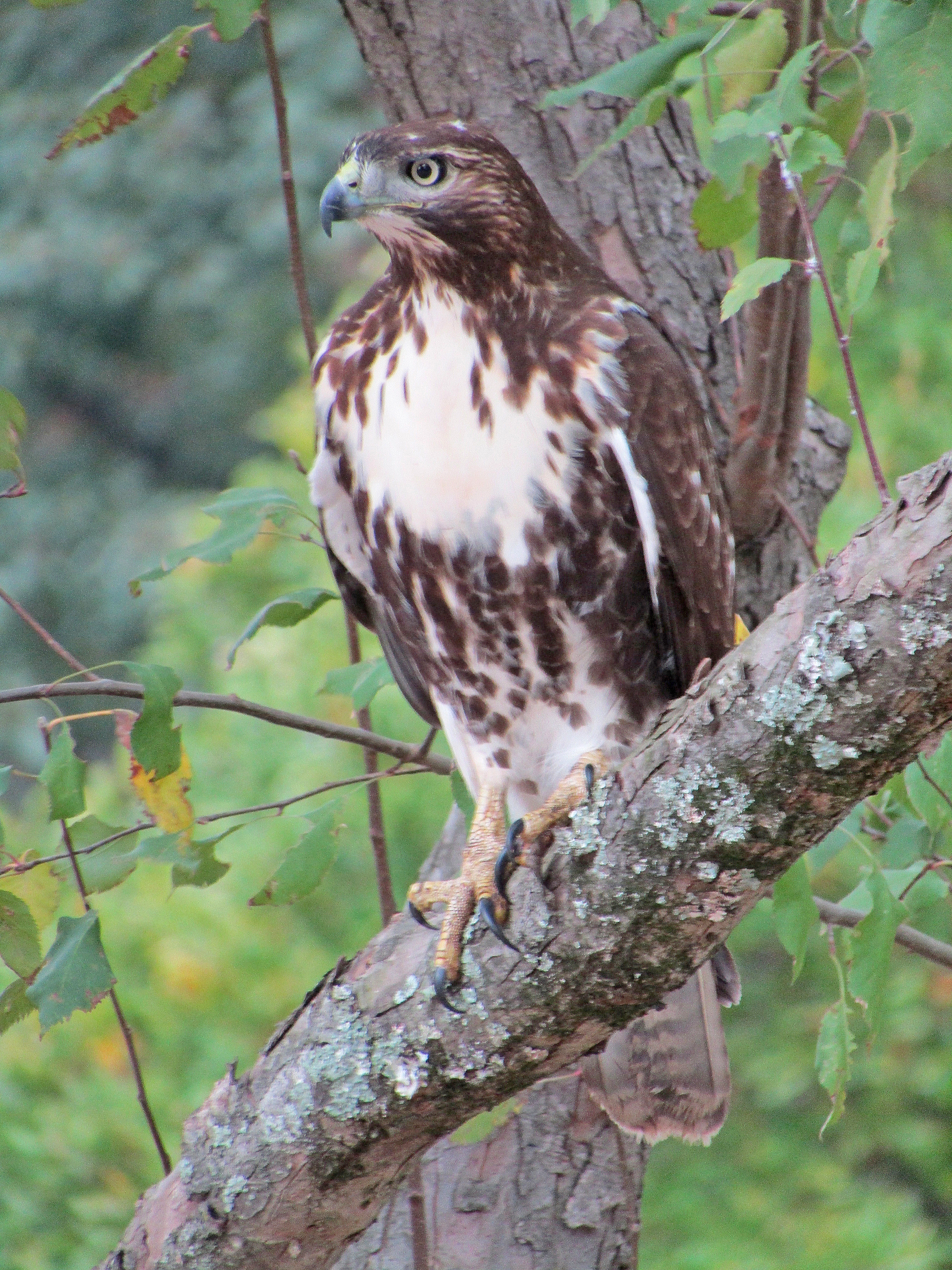
Photo by Bryan Stevens • Raptors, like this red-tailed hawk, are  plentiful oin the region.

The red-tailed hawk is named for its prominent red tail. However, only adults show the characteristic red tail. The affinity red-tailed hawks demonstrate for roadsides is a double-edged sword. Viewing a large hawk from your car is an easy way to watch birds. For inexperienced or careless raptors, however, roadside living is often rife with the chance for a collision with a car or truck. The red-tailed hawk, which prefers open countryside, is attracted to the margins of roads and highways because these locations also attract their favorite prey, which includes rodents like rats, squirrels and mice and other small mammals such as rabbits.

Human behavior contributes to some of the problems that hawks encounter in the zone that brings them too close for comfort to motorized vehicles. When people toss trash from a car, the scent of the litter will lure curious and hungry rodents. In turn, hunting hawks are brought to the edges of roads in search of their preferred prey, increasing the likelihood of colliding with automobiles.

The Cooper’s hawk is a large accipiter hawk. A smaller relative, the sharp-shinned hawk, is also found in the region. The accipiter hawks are graceful and aerodynamic, designed to pursue prey through woodlands. Buteo hawks, such as the red-tailed hawk and red-shouldered hawk, are more of an ambush predator and not designed for the agile maneuvers that the accipiters can use to capture prey.

Some of the buteo species have adapted to life on islands, including the Galapagos hawk and the Hawaiian hawk. Some of these hawks have quite descriptive names, including the white-throated hawk, gray-lined hawk, zone-tailed hawk and short-tailed hawk. Outside the United States, raptors in the buteo genus are often known as “buzzards.” When the first European colonists came to the New World, they applied the term buzzard to types of native vultures as well as the large raptors like Swainson’s hawk and broad-winged hawk that reminded them of the ones back in Europe.

USFWS • An immature Cooper’s hawk perches on a branch in a tree located in the Klamath Basin National Wildlife Refuge Complex.

Accipiter hawks are also widespread. Accipiter is a genus of birds of prey in the family Accipitridae. With 49 recognized species, it is the most diverse genus in its family. Most species are called goshawks or sparrowhawks, although almost all New World species (excepting the Northern goshawk) are simply known as hawks.

Most accipiter hawks, including Cooper’s and sharp-shinned, prey mostly on other birds. The website All About Birds notes that small songbirds are usually safe around a Cooper’s hawk. Medium-sized birds, however, are not. Studies list European starlings, mourning doves and rock pigeons as common prey. Other birds that are often targeted by Cooper’s hawk include American robins, blue jay, Northern flicker, quail, grouse and pheasants. Cooper’s hawks sometimes rob nests and also eat chipmunks, rabbits, mice, squirrels and bats. According to All About Birds, mammals are more common in diets of Cooper’s hawks in the western United States.

Some of the more descriptively named accipiter hawks include crested goshawk, grey-bellied hawk, spot-tailed sparrowhawk, plain-brested hawk and little sparrowhawk.

All too often, our large hawks don’t receive the love they deserve from the public. They may even run afoul of misinformed individuals who may regard all predatory birds as “bad.” The reality is that all hawks are valuable components of a healthy, working ecosystem, with each species filling a certain niche.

•••

To share a sighting, ask a question or make a comment, email me at ahoodedwarbler@aol.com.
 

Red-breasted nuthatch helps couple achieve milestone

Photo by Bryan Stevens • A red-breasted nuthatch clings to the mesh of a feeding tube to get at the peanuts contained within.

Good friends and fellow members of the Elizabethton Bird Club, Brookie and Jean Potter achieved a personal birding milestone at the end of January.

Both Brookie and Jean managed to see 100 birds in the first month of 2024 in the five-county area. Brookie had already accomplished this feat many years ago, but Jean had never been able to do it – until now.

“We did it today on the last day of the month,” she shared in an email.

Brookie ended the month with 101 species of birds, and Jean reached 100.

Their final bird of the month was red-breasted nuthatch. They had to put in some effort to find the species, finally traveling to Carver’s Gap on the state line between North Carolina and Tennessee on Roan Mountain.

“We kept waiting for this bird to come to our feeder, but when it didn’t come, we had to go to Carver’s Gap, which had snow, fog and a temperature of 29 degrees,” she said.

According to Jean, they located two of these little nuthatches close to the parking area.

“The things we do to find birds,” Jean remarked.

If they can find another 100 or more species of birds in the remaining 11 months of 2024, the couple will be eligible for the Howard P. Langridge Award. The Elizabethton Bird Club presents this award to any member who manages to see 200 or more species in a single year in the five-county area. The award commemorates the contributions of the late Langridge to birding in the region. In 2000, Langridge broke the record for most species seen in a single year in Northeast Tennessee. The record was later broken again by Rick Knight.

Photo by Bryan Stevens • A red-breasted nuthatch picks through seeds and peanuts at a feeder.

In our region, the stubby red-breasted nuthatch is another member of a family that often finds its way to our yards. Smaller than the related white-breasted nuthatch and, as far as I can tell, complacent in the company of chickadees and titmice, the red-breasted nuthatch is always a welcome visitor.

This little feeder visitors has a tell-tale “yank yank” call that it produces when excited that sounds very much like a little tin horn. The red-breasted nuthatch, perhaps because it spends so much of the year in more remote areas, can also be amazingly tame when it pays a winter visit.

Both red-breasted and white-breasted nuthatches can be attracted to feeders by offering peanuts, sunflower seeds and suet. They are also cavity-nesting birds, but are more reluctant about accepting a nesting box as a place to rear young. They will gladly accept an old woodpecker hole or other natural cavity in a tree.

The website All About Birds notes that red-breasted nuthatches are common, and their populations have increased throughout most of their range between 1966 and 2019, according to the North American Breeding Bird Survey.

The website also points out that Partners in Flight estimates a global breeding population of 20 million and rates the species a 6 out of 20 on the Continental Concern Score, indicating a species of low conservation concern.

While the red-breasted nuthatch is a small bird, some members of its family aren’t so petite. On the other end of the size scale is the appropriately named giant nuthatch, which reaches a length of almost eight inches. The giant nuthatch ranges through China, Thailand and Burma and is bigger than a downy woodpecker, another of our more common visitors at backyard feeders in our region.

Worldwide, there are about 25 species of nuthatches, some of which have surprisingly descriptive names for birds that spend most of their lives creeping in obscurity along the trunks and branches of trees. Some of the more creative common names for these little birds include beautiful nuthatch, velvet-fronted nuthatch, sulphur-billed nuthatch, chestnut-bellied nuthatch, snowy-browed nuthatch and chestnut-vented nuthatch.

These birds are named “nuthatch” for the habit of some species to wedge a large seed in a crack and hack at it with their strong bills.

In some winters, red-breasted nuthatches can be quite common in the region. That’s not been the case this winter, as shown by the difficulty Brookie and Jean had in locating this bird.

•••

For those interested, there’s a great chance to get outdoors and look for red-breasted nuthatches and other birds. The annual Great Backyard Bird Count will be held Friday, Feb. 16, through Monday, Feb. 19.

It’s easy to take part in this global survey of bird populations all around the planet.

The first step is to choose a location for looking. A favorite park, walking trail or your own back yard will work.

Next, actively watch for birds for 15 minutes or more, at least once over the four days from February 16–19.

You will need to identify all the birds you see or hear within your planned time/location and use the best tool for sharing your bird sightings.

For a beginning bird admirer and those who are new to bird identification, try using the Merlin Bird ID app to pinpoint what birds you are seeing or hearing.

If you have participated in previous GBBCs before and want to record numbers of birds, try the eBird Mobile app or enter your bird list on the eBird website using a desktop/laptop computer.

If you already contribute to Merlin or eBird, continue what you are doing. All entries over the 4-day period count towards GBBC.

For more information on the GBBC, visit http://www.birdcount.org.

•••

To share a sighting, ask a question or make a comment, email me at ahoodedwarbler@aol.com.
 

Pileated woodpecker never fails to make spectacular first impression

Photo by Jason Gillman from Pixabay • The pileated woodpecker is the largest woodpecker in the region, reaching a length of about 19 inches. By comparison, the region’s smallest, the downy woodpecker, is only about 7 inches long.

The ivory-billed woodpecker barely escaped a declaration of extinction in 2023. Whether this woodpecker, the largest in North America, is still alive is a matter for debate, but a slightly smaller relative remains an abundant and rather visible bird.

Over the years, many readers have emailed me about their encounters with pileated woodpeckers, which can be impressive and even startling when a sighting is unexpected.

The pileated woodpecker has actually had an abundance of common names associated with it. English naturalist Mark Catesby, who died in 1749, gave this large bird the name of “large red-crested woodpecker.” The Swedish botanist Carl Linnaeus apparently gave the woodpecker the scientific name of Dryocopus pileatus.

Another English naturalist, John Latham, apparently gave the bird the common name of pileated woodpecker, basing the name on the scientific name established by Linnaeus. Beyond this history of how the bird eventually got the name pileated woodpecker, there are a lot of folk names for this particular bird, including such interesting ones as “king of the woods” and “stump breaker.”

The loud vocalization of this woodpecker has also inspired names such as “wood hen.” Other names along these lines include “Indian hen” and “laughing woodpecker.” If anyone knows of other common names for the pileated woodpecker, I’d enjoy hearing about them.

Depending on whether you believe that the ivory-billed woodpecker still exists somewhere in Cuba, Arkansas or some other remote pocket of its former range, the pileated woodpecker is the largest of North America’s woodpeckers.

Pileated woodpeckers are cavity-nesting birds, and they use their large, stout bills to efficiently excavate their own nesting cavities in dead or dying trees. These cavities can be used in later nesting seasons by other cavity-nesting birds, such as Eastern screech-owls and wood ducks, that are incapable of excavating their own nesting cavities.

Photo by Bryan Stevens • A pileated woodpecker perches on a branch of a walnut tree.

Male pileated woodpecker show a red whisker stripe on the side of the face that is absent in the female. Otherwise, they look similar.

These large woodpeckers — they can reach a length of about 19 inches — often forage close to the ground on old stumps or fallen logs.

The pileated woodpecker is widespread in the United States and Canada, favoring wooded areas in both countries. This woodpecker has proven adaptable, now thriving even in suburban areas offering sufficient woodland habitat.

•••

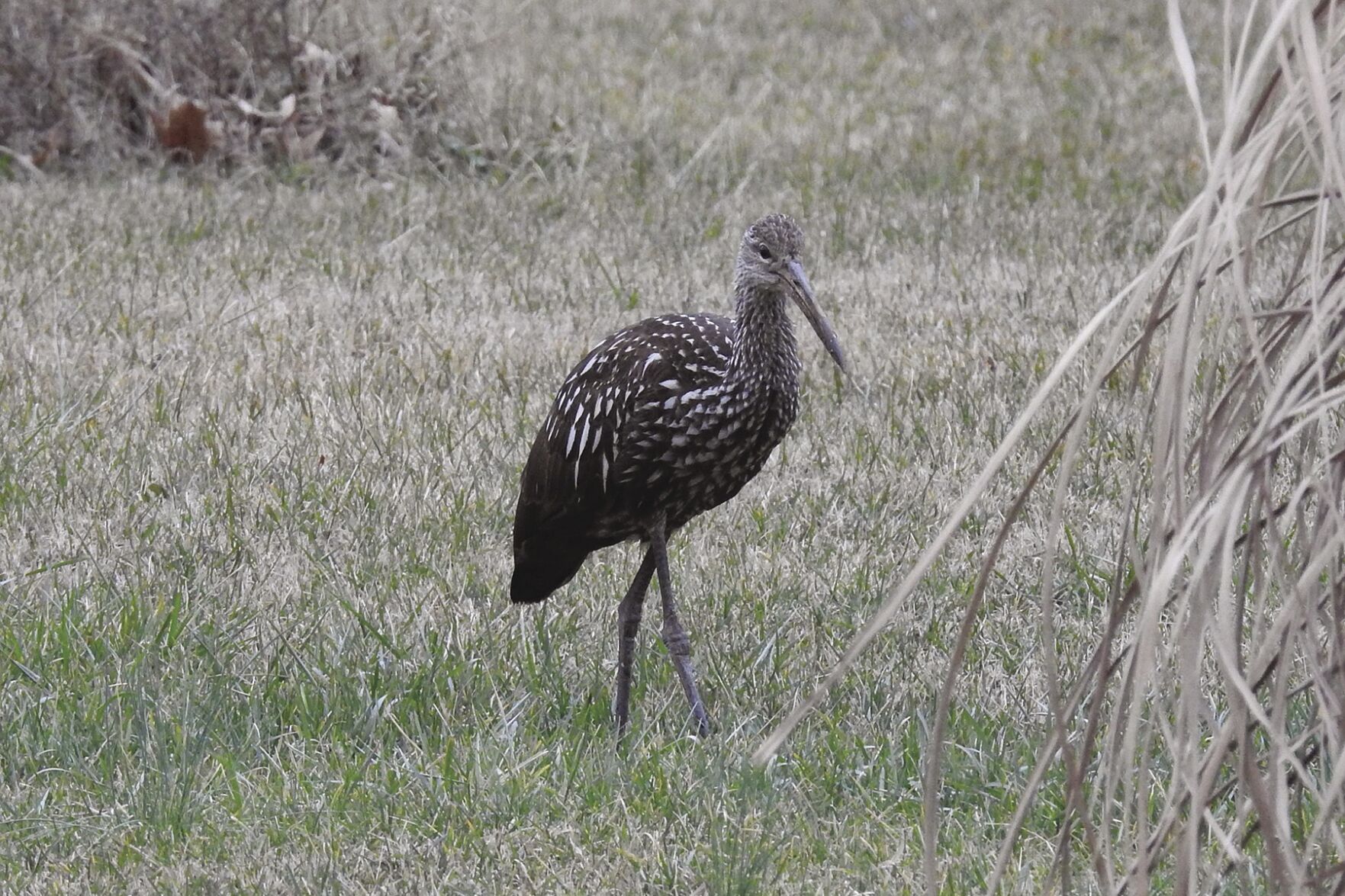
I wrote last week about the limpkin in Hampton. Over the Christmas holiday, I managed to observe this remarkable bird. My mom and I both watched the bird while it foraged for food in a yard at a trailer park. Usually not found beyond Florida, this winter visitor has created quite a sensation in the local birding community. Getting to observe this unusual visitor made our holidays a bit brighter.

•••

Share a sighting, ask a question or make a comment by emailing me at ahoodedwarbler@aol.com.

Photo by Bryan Stevens • A limpkin roams in a yard at the River’s Edge trailer park in Hampton, Tennessee, on Christmas Eve 2023.

Limpkin discovery in December caps off the year in birding

Photo courtesy of Tom and Cathy McNeil • A limpkin in Hampton, Tennessee, stunned the local birding community with its appearance in a most unlikely location.

At the end of the year, it’s a good time to look back. All years deliver some surprises when it comes to bird sightings, but 2023 seemed to truly produce some unusual and totally unexpected sightings for birders in Northeast Tennessee and beyond.

In the waning days of December, one of the biggest local bird surprises of the year took place in Hampton in Carter County when the birding community got word of a limpkin hanging out on the Doe River behind a trailer park. The bird, which usually ranges no farther north than Florida, is not exactly one that would be expected in Northeast Tennessee in the final days before Christmas.


Tom McNeil, a fellow birder, posted the news on his Facebook page.

“A big thanks to my brother, Ed McNeil, for alerting the Hampton community to keep an eye out for this limpkin that has been sneaking around since probably October,” Tom wrote.

Regular readers of this column will recall that Tom and his wife, Cathy, have seen several unusual birds this year, including storm-driven American flamingos in Tennessee and North Carolina, as well as an ancient murrelet at Chickamauga Dam near Chattanooga. Then, just as the year’s winding down, up pops a limpkin practically in their back yard.

According to Tom’s post, David Vines first reported the limpkin in November, but it has remained quite elusive.  However, Ashley Taylor spotted the bird on Dec. 17 and let Tom’s brother know that she saw it at the Rivers Edge community.

“I texted Brookie and Jean Potter,” Tom wrote. “They were on it in no time. Cathy and I rushed down and added it to our Carter County life list.”

Tom credited some awesome networking in the birding community and beyond in bringing the limpkin’s presence to light.

Photo by Bryan Stevens • A limpkin wanders near a canal in Orlando, Fla., in October-November of 2007.

The limpkin, known by the scientific Aramus guarauna, is also called carrao, courlan and crying bird. It’s a large wading bird related to rails and cranes, and the only species in the family Aramidae. Limpkins are found mostly in wetlands in warm parts of the Americas, from Florida to northern Argentina, but has been spotted as far north as Wisconsin.

These birds feed on mollusks, with the diet dominated by apple snails. Its name derives from its “limping” gait when it walks.

I’ve seen and heard limpkins on numerous occasions during visits to Florida. They are unique birds and can become so acclimated to humans that I have observed several limpkins at some of the busy Disney theme parks near Orlando, Florida.

Photo by Bryan Stevens • The limpkin remained present in the River’s Edge trailer park in Hampton on Christmas Eve, 2023. The bird has been spotted in different locations around the small town of Hampton since October.

My mom and I got to see the visiting limpkin on Christmas Eve. On a whim, we drove through the trailer park that had been the location for previous sightings. We drove all the way to the end of the road and were headed back out when we found the bird busy feeding in a yard of one of the trailers.

Why this bird is haunting the Doe River in Carter County, apparently for the past couple of months, is a bit of a mystery. It’s not likely to find apple snails in the Doe, but there are probably crayfish, small fish and plenty of aquatic invertebrates that will keep a limpkin nourished. The recent dip in temperatures hasn’t seemed to affect the bird, although it would not often be exposed to such cold in its usual range.

It’s like I’ve indicated many times in this column. Birds have wings, and they know how to use them. They can show up in some of the most unlikely places. Keep your eyes open and you may be surprised by what you find. Best wishes to all the readers of this column. I hope everyone sees plenty of good birds in 2024.

•••

To share a sighting, make a comment or ask a question, email ahoodedwarbler@aol.com.


Column, which is turning 28 years old, began with a profile on juncos

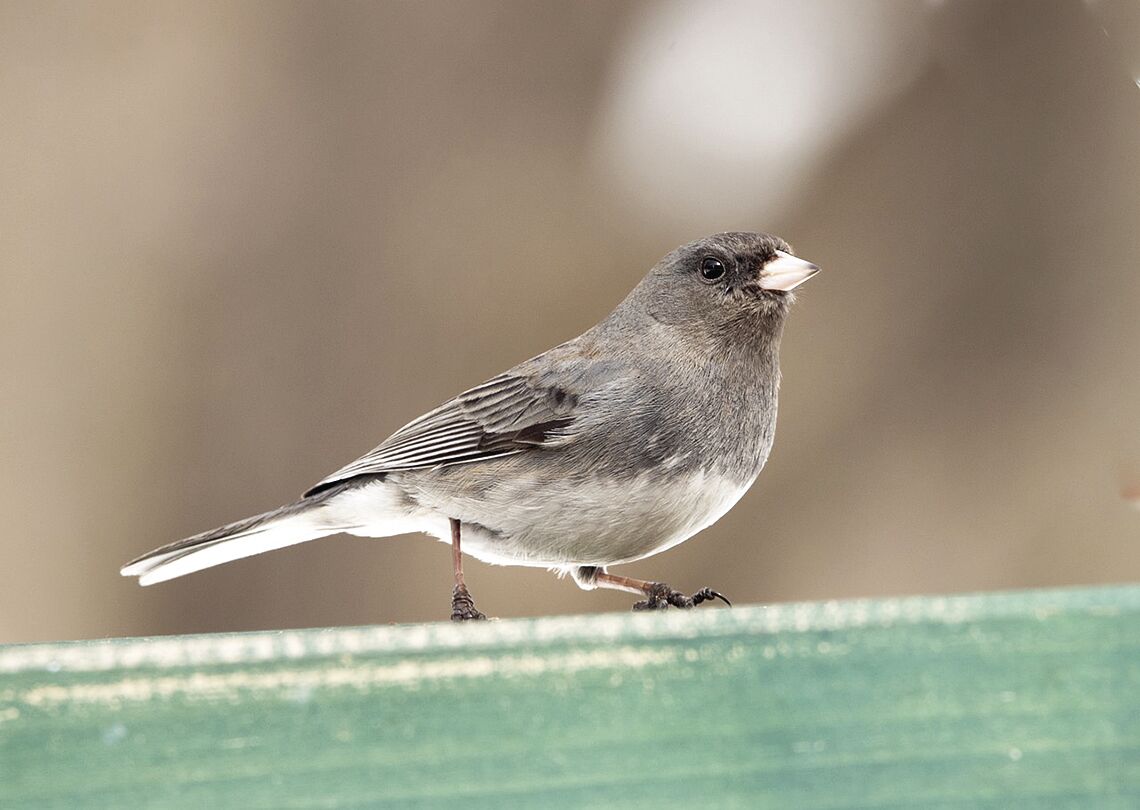
Photo by simardfrancois from Pixabay • The dark-eyed junco is a winter visitor at many bird feeders in the region, but this bird also nests every summer on some high elevation mountains in the region.

I wrote my first bird column on Sunday, Nov. 5, 1995, which means this weekly column is marking its 28th anniversary this week.

This column has appeared in a total of six different newspapers, which I regard as a personal achievement, as well as an accomplishment for our feathered friends. It’s on their behalf that I pen these weekly efforts to promote conservation and good will toward all birds. I have also posted the column as a weekly blog posting since February 2014 at http://www.ourfinefeatheredfriends.com.

I’ve played detective, helping people identify everything from “rain crows,” or cuckoos, to Muscovy ducks, chukars and double-crested cormorants. I’ve observed unusual birds, including white pelicans, brants and roseate spoonbills, in Northeast Tennessee, Southwest Virginia and Western North Carolina and spotlighted them in these columns.

While I’ve had some vision challenges this past year, I still take delight in the kaleidoscopic parade of colorful warblers that pass through the region each spring and fall as well as the fast-paced duel of ruby-throated hummingbirds and the occasional rufous hummingbirds straying through the region.

At my home, I also provide sunflower seed and other supplemental food for the resident birds like Carolina chickadees, white-breasted nuthatches, song sparrows and downy woodpeckers.

Even as I tweak my anniversary column for “Feathered Friends,” parts of the region just experienced the first heavy frost. This prognostication of approaching winter weather is a perfect time to dust off this week’s column, which is a revision of the first bird column I ever wrote. This column focused on a common visitor to yards and feeders during the winter months. In fact, dark-eyed juncos should be returning to the region any day. Here, with some revisions I have made through the years, is that first column.

Photo by Ken Thomas • A dark-eyed junco perches on some bare branches on a winter’s day.

•••

Of all the birds associated with winter weather, few are as symbolic as the dark-eyed junco, or “snow bird.” The junco occurs in several geographic variations.

John V. Dennis, author of “A Complete Guide to Bird Feeding,” captures the essence of the junco in the following description: “Driving winds and swirling snow do not daunt this plucky bird. The coldest winter days see the junco as lively as ever and with a joie de vivre that bolsters our sagging spirits.” The dark-eyed junco’s scientific name, hyemalis, is New Latin for “wintry,” an apt description of this bird.

Most people look forward to the spring return of some of our brilliant birds — warblers, tanagers and orioles — and I must admit that I also enjoy the arrival of these birds. The junco, in comparison to some of these species, is not in the same league. Nevertheless, the junco is handsome in its slate gray and white plumage, giving rise to the old saying “dark skies above, snow below.”

Just as neotropical migrants make long distance journeys twice a year, the junco is also a migrating species. But in Appalachia, the junco is a special type of migrant. Most people think of birds as “going south for the winter.” In a basic sense this is true. But some juncos do not undertake a long horizontal (the scientific term) migration from north to south. Instead, these birds merely move from high elevations, such as the spruce fir peaks, to the lower elevations. This type of migration is known as vertical migration. Other juncos, such as those that spend their breeding season in northern locales, do make a southern migration and, at times, even mix with the vertical migrants.

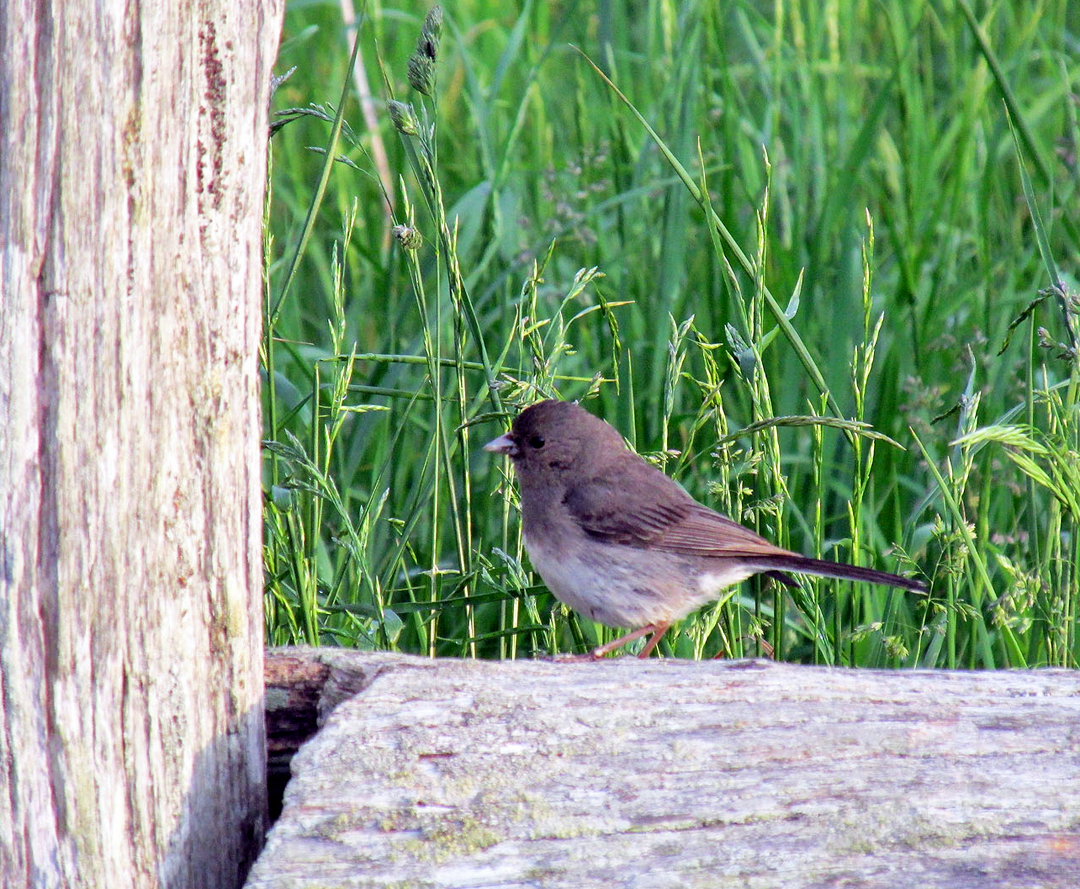
During the summer months, a visit to higher elevations mountaintops is almost guaranteed to produce sightings of dark-eyed juncos. Juncos may nest as many as three times in a season. A female junco usually lays three to six eggs for each nest, which she constructs without any assistance from her mate.

Juncos are usually in residence around my home by early November. Once they make themselves at home I can expect to play host to them until at least late April or early May of the following year. So, for at least six months, the snow bird is one of the most common and delightful feeder visitors a bird enthusiast could want.

Juncos flock to feeders where they are rather mild-mannered — except among themselves. There are definite pecking orders in a junco flock, and females are usually on the lower tiers of the hierarchy. Females can sometimes be distinguished from males because of their paler gray or even brown upper plumage.

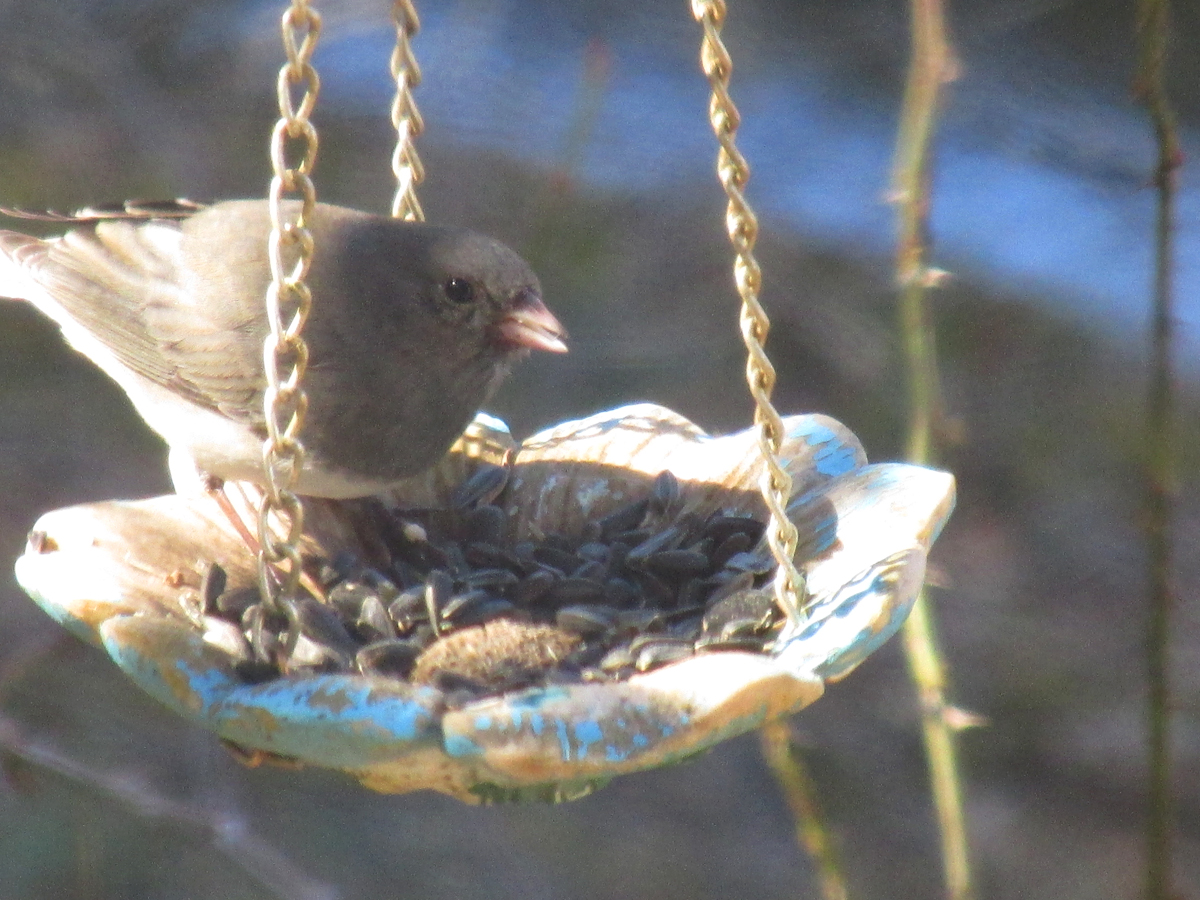
Since juncos are primarily ground feeders they tend to shun hanging feeders. But one winter I observed a junco that had mastered perching on a hanging “pine cone” feeder to enjoy a suet and peanut butter mixture.

Dark-eyed juncos often are content to glean the scraps other birds knock to the ground. Juncos are widespread. They visit feeders across North America. The junco is the most common species of bird to visit feeding stations. They will sample a variety of fare, but prefer such seeds as millet, cracked corn or black oil sunflower.

The juncos are a small branch of the sparrow clan. Some of the other juncos include the endangered Guadalupe junco, yellow-eyed junco, Baird’s junco and volcano junco. The last one on the list is endemic to the Talamancan montane forests of Costa Rica and western Panama. Baird’s junco is named for Spencer Fullerton Baird, an American ornithologist and naturalist.

Photo by Bryan Stevens • A dark-eyed junco visits a hanging feeder.

Baird served as secretary for the Smithsonian Institution from 1878 until his death in 1887. He greatly expanded the natural history collections of the Smithsonian from 6,000 specimens in 1850 to over two million by the time of his death.

I hope you’ve enjoyed this introduction to juncos. There’s something about winter that makes a junco’s dark and light garb an appropriate and even striking choice, particularly against a backdrop of newly fallen snow.

Of course, the real entertainment from juncos come from their frequent visits to our backyard feeders. When these birds flock to a feeder and began a furious period of eating, I don’t even have to glance skyward or tune in the television weather forecast. I know what they know. Bad weather is on the way!

••••

I’ve not seen the first junco of the season, but I did observe a close relative (white-throated sparrow) on the morning of Oct. 24 at my home.

If you’d like to share your first sighting this season of dark-eyed juncos, email me at ahoodedwarbler@aol.com. As always, the column is also a line of communication with fellow bird enthusiasts. I’ve enjoyed sharing stories about birds with countless readers over the past 28 years. I can also be reached on Facebook at https://www.facebook.com/ahoodedwarbler.

Photo by Bryan Stevens • Dark-eyed junco nests on high mountain slopes during the summer month. This dark-eyed junco was photographed at Carver’s Gap on Roan Mountain during the summer nesting season.

Some birds expert at conjuring thrills and chills

Photo from Pixabay • The great tit, a bird related to titmice and chickadees, has acquired a taste for bat brains. Scientists have documented great tits in the mountains of Hungary killing a small species of bat to consume their brains.

NOTE: This column originally ran in November of 2018.

The ultimate coma victim is the fabled zombie, but that’s not likely to afflict any of our feathered friends, right? Well, consider the great tits of Hungary, which are relatives of our tufted titmouse and Carolina chickadee. These birds — at least the Hungarian ones — have apparently acquired a taste for brains.

Not human brains, thankfully. The victims of these brain-hungry great tits are a species of bat — a flying creature often associated with the modern celebration of Halloween, as well as legends about vampires — that shared the habitat of these birds in the Bükk Mountains of Hungary. As it turns out, the tits only hunted bats, in this case a tiny species known as common pippistrelle, out of dire necessity.

Bat ecologists Péter Estók and Björn M. Siemers, after observing the odd behavior of the great tits during some winter seasons, conducted a study to see if great tits are consistent devourers of bats’ brains. They discovered that the birds did hunt the bats and had even learned to detect a special call the bats make as they emerge from hibernation. The ecologists conducted their study over two years and learned that the great tits teach others of their kind the special art of hunting bats. They also learned that the birds made efficient killers, dragging the bats from their roosts and cracking their skulls to get at their brains.

However, when provided with plenty of alternative food, including such favorite items as bacon and sunflower seeds, the great tits chose to eat these items rather than actively hunt bats. The researchers concluded that great tits only resort to harvesting the brains of small bats during times of scarcity during harsh winters. The bizarre story is even featured in the title of a fascinating book by Becky Crew titled “Zombie Birds, Astronaut Fish, and Other Weird Animals.”

So, if humans have nothing to fear from brain-hungry birds, are there any birds that we should fear? Some experts suggest that precautions might be in order if one expects to come into close proximity with a southern cassowary, which is the third-tallest and second-heaviest living bird, smaller only than the ostrich and emu.

The cassowary, a native of New Guinea and northeastern Australia, has developed a reputation as a fearsome bird capable of injuring or killing humans. According to ornithologist Ernest Thomas Gilliard, cassowaries deserve their reputation. In his 1958 book, “Living Birds of the World,” he explained that the second of the three toes of a cassowary is fitted with a long, straight, dagger-like claw which can sever an arm or eviscerate an abdomen with ease. According to Gilliard, there have been many records of natives being killed by this bird.

A thorough study, however, has partly exonerated the cassowary from these misdeeds. In a total of 150 documented attacks against humans, cassowaries often acted in self-defense or in defense of a nest or chicks. The only documented death of a human took place in 1926 when two teenaged brothers attacked a cassowary with clubs. The 13-year-old brother received a serious kick from the bird, but he survived. His 16-year old brother tripped and fell during the attack, which allowed the cassowary to kick him in the neck and sever the boy’s jugular vein.

So we can rest easier knowing that murderous birds that reach a height of almost six feet tall are unlikely to terrorize us should we travel to the lands down under. A more ancient relative of the cassowary, however, might have been a different story had humans lived during the same time period.

Phorusrhacids, also known as “terror birds,” were a group of large carnivorous flightless birds that once had some members reign as an apex predator in South America before they went extinct around two million years ago. The tallest of the terror birds reached a height of almost 10 feet. Titanis walleri, one of the larger species, even ranged into what is now the United States in Texas and Florida.

Terror birds were equipped with large, sharp beaks, powerful necks and sharp talons. Their beaks, which would have been used to kill prey, were attached to exceptionally large skulls. Despite their fearsome appearance, these birds probably fed on prey about the size of rabbits. Perhaps not knowing this, Hollywood has cast these birds as monsters in such films as 2016’s “Terror Birds” and 2008’s “10,000 BC.”

Besides, casting birds as the villains had already been done back in 1963 when Alfred Hitchcock released his film, “The Birds,” based loosely on a short story by Daphne du Maurier. The film, which starred some big Hollywood names such as Rod Taylor, Tippi Hedren, Jessica Tandy, Suzanne Pleshette and Veronica Cartwright, cast a whole new light on a “murder” of crows. Today, the film has achieved the status of a Hollywood classic. I guess it just goes to show that werewolves, zombies and other Halloween monsters have nothing on our fine feathered friends.

Fall Bird Count detects 121 species

Photo by Hans Room/Pixabay • A blackpoll warbler found during the Fall Bird Count represented a rare appearance by this species on the seasonal count, which has been held for 53 consecutive years. A purple gallinule found in Washington County represented another extremely rare find.

The 53rd consecutive Elizabethton Fall Bird Count was held Saturday, Sept. 30, with 30 observers in about 12 parties. The count area included Carter County, as well as the surrounding counties of Johnson, Sullivan, Unicoi and Washington.

The weather was good, with a temperature range between 54 and 82 F. Participants tallied 121 species, plus one unidentified Empidonax species. The Empidonax flycatchers, or “Empids,” as birders fondly lump them, are birds so similar in appearance they cannot reliably identified in the field unless they are vocalizing. Unfortunately, the Empids are largely silent in autumn.

This total is slightly below the recent 30-year average of 125 species, according to longtime compiler Rick Knight. He noted that the all-time high was 137 species in 1993.

Knight said that a count highlight was a lingering immature purple gallinule in Washington County.

The list:

Canada goose, 850; wood duck, 40; mallard, 179; common merganser, 6; northern bobwhite, 3; ruffed grouse, 1; and wild turkey, 37.

Pied-billed grebe, 4; rock pigeon, 362; Eurasian collared dove, 1; and mourning dove,172.

Yellow-billed cuckoo, 5; black-billed cuckoo, 1; common nighthawk, 2; chimney swift, 246; and ruby-throated hummingbird, 17.

Virginia rail, 1; purple gallinule, 1; killdeer, 45; Wilson’s snipe, 1; and spotted sandpiper, 2.

Double-crested cormorant, 84; great blue heron, 34; great egret, 3; green heron, 3; black vulture, 29; and turkey vulture, 141.

Osprey, 7; northern harrier, 1; sharp-shinned hawk, 5; Cooper’s hawk, 4; bald eagle, 7; red-shouldered hawk, 6; broad-winged hawk, 1; and red-tailed hawk,19.

Barn owl, 2; Eastern screech-owl, 17; great horned owl, 4; barred owl, 4; and Northern saw-whet owl, 1.

Belted kingfisher, 26; red-headed woodpecker, 3; red-bellied woodpecker, 69; yellow-bellied sapsucker, 7; downy woodpecker, 39; hairy woodpecker, 12; northern flicker, 54; and pileated woodpecker, 30.

American kestrel, 16; merlin, 1; great crested flycatcher, 1; Eastern wood pewee, 18; Empidonax species, 1; and Eastern phoebe, 97.

Yellow-throated vireo, 2; blue-headed vireo, 31; red-eyed vireo, 5; blue jay, 438; American crow, 505; fish crow, 7; and common raven, 20.

Tree swallow, 220; barn swallow, 1; Carolina chickadee, 195; tufted titmouse, 168; red-breasted nuthatch, 17; white-breasted Nuthatch, 64; and brown creeper, 3.

House wren, 3; Carolina wren, 177; blue-gray gnatcatcher, 1; golden-crowned kinglet, 5; and ruby-crowned kinglet, 4.

Eastern bluebird, 152; veery, 1; gray-cheeked thrush, 6; Swainson’s thrush, 43; wood thrush, 5; and American robin, 113.

Gray catbird, 38; brown thrasher, 9; Northern mockingbird, 80; European starling, 615; cedar waxwing, 106; and house sparrow, 37.

House finch, 42; pine siskin, 2; American goldfinch, 123; chipping sparrow, 95; field sparrow, 11; dark-eyed junco, 83; Savannah sparrow, 3; song sparrow, 84; and Eastern towhee, 62.

Eastern meadowlark, 17; red-winged blackbird, 10; brown-headed cowbird, 2; and common grackle, 10.

https://www.nps.gov/articles/blackpollmigration.htm

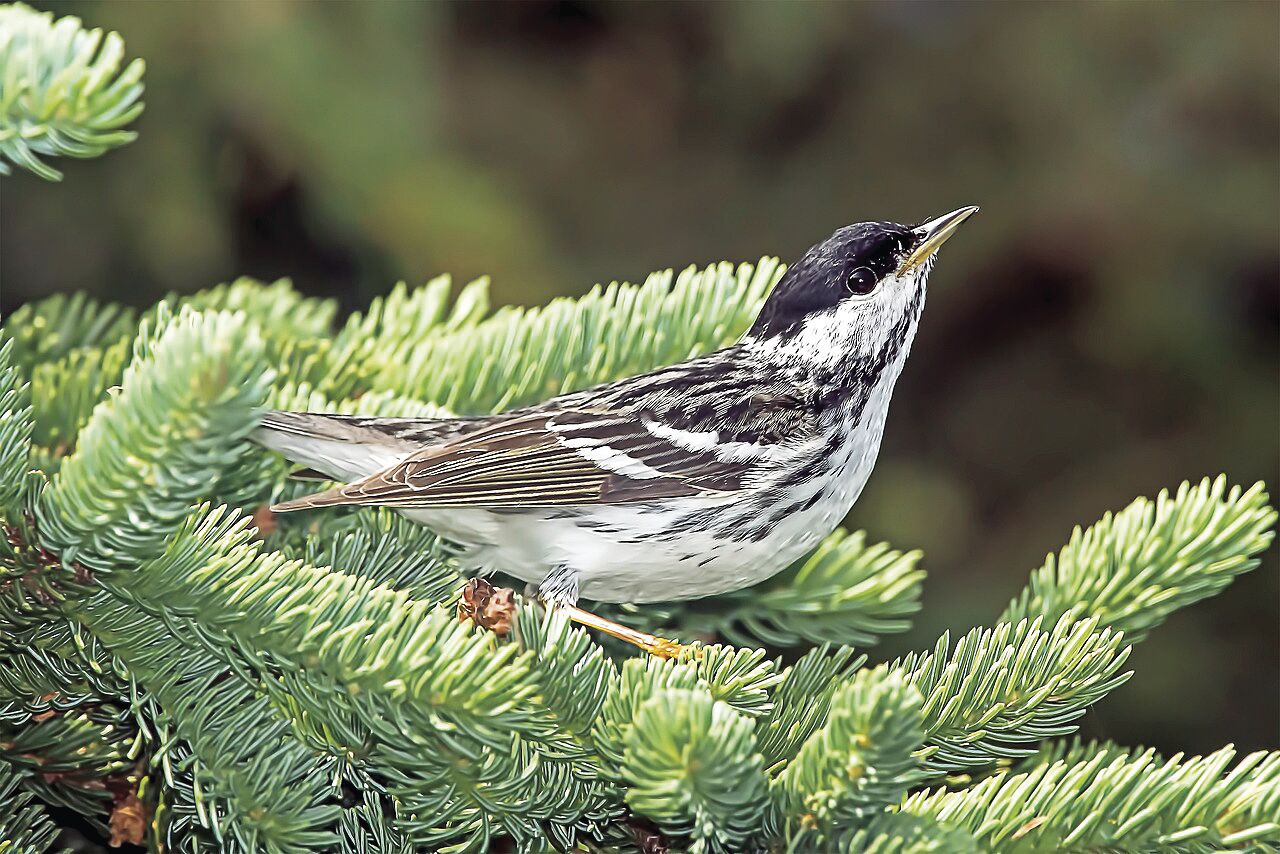
Ovenbird, 6; Northern waterthrush, 3; black-and-white warbler, 2; Tennessee warbler, 73; common yellowthroat, 12; hooded warbler, 13; American redstart, 10; Cape May warbler, 23; northern parula, 11; magnolia warbler, 20; bay-breasted warbler, 28; Blackburnian warbler, 5; chestnut-sided warbler, 6; blackpoll warbler, 1; black-throated blue warbler, 21; palm warbler, 21; pine warbler, 14; yellow-rumped warbler, 6; and black-throated green warbler, 15.

Scarlet tanager, 9; Northern cardinal, 169; rose-breasted grosbeak, 26; blue grosbeak, 3; and indigo bunting, 12.

Observers in this year’s Fall Bird Count included Fred Alsop, Jerry Bevins, Rob Biller, Tammy Bright, Debi and J.G. Campbell, Ron Carrico, Bill and Linda Cauley, Catherine Cummins, Dave Gardner, David and Connie Irick, Rick and Jacki Knight, Roy Knispel, Vern Maddux, Joe McGuiness, Tom McNeil, Alson Ovando, Susan Peters, Brookie and Jean Potter, Lia Prichard, Pete Range, Judith Reid, Judi Sawyer, Bryan Stevens, Kim Stroud and Charlie Warden.

•••

To ask a question, share a sighting or make a comment, email me at ahoodedwarbler@aol.com.

Hummingbird season is approaching its peak

Photo by Bryan Stevens • Keep hummingbirds happy with a sugar water solution of four parts water to one part sugar.

Thomas Hood, who lives near Burnsville, North Carolina, shared a note about his summer hummingbirds.

“We have a bunch of ruby-throated (hummingbirds),” Thomas wrote in an email.

He noted that last year, he hosted as many as 40 individual hummingbirds. This year he estimates he has hosted as many as 20.

“Late visitors this year, but they put on a great airshow,” he added.

He said that he has two feeders up and two handheld ones that he uses to attract hummingbirds to his home in the North Carolina mountains.

Thomas also shared a video of his tiny flying visitors.

In a follow-up email, he noted that the hummingbird population continues to grow.

“We love the entertainment they provide,” he wrote. “After the big storm yesterday, we estimated there are now near 30.”

•••

Thomas’s email was another reminder that it has been a busy season for female hummingbirds. Those that have been successful with their nesting were able to fledge twin hummingbirds and encourage them to spread their wings and leave the nest.

For hummingbirds, it’s invariably two eggs per nest for some good reasons. First, the nest is so small — about the size of a walnut half-shell — that there is barely room for two eggs, let alone more. Second, once the young hatch, the nest has just enough room to accommodate them as they grow, fed well by their mother. Third, feeding two hungry young hummingbirds is a demanding task. A female hummingbird has to find enough food to fuel her own body and help her young in the nest grow and thrive. It’s a full-time job during the daylight hours. She’s pressed hard to succeed at raising two young. Attempting to care for more would most likely prove impossible.

Now that many female hummingbirds have finished the task of bringing forth a new generation of hummingbirds, the leisurely fall migration can begin.

Hummingbirds are not as frantic about moving south in the fall as they are single-minded about heading north every spring. Numbers of these birds always reach a peak in late summer and early fall at my home, and this year’s shaping up to be a repeat of past ones.

Hummingbird species number around 340, making the family second in species only to the tyrant flycatchers in sheer size. Both of these families consist of birds exclusive to the New World.

With so many hummingbird species, people have been hard pressed to give descriptive names to all these tiny gems. Some of the dazzling array of names include little hermit, hook-billed hermit, fiery topaz, sooty barbthroat, white-throated daggerbill, hyacinth visorbearer, sparkling violetear, horned sungem, black-eared fairy, white-tailed goldenthroat, green mango, green-throated carib, amethyst-throated sunangel, green-backed firecrown, wire-crested thorntail, festive coquette, bronze-tailed comet, black-breasted hillstar, black-tailed trainbearer, blue-mantled thornbill, bearded mountaineer, colorful puffleg, marvelous spatuletail, bronzy inca, rainbow starfrontlet, velvet-purple coronet, pink-throated brilliant, coppery emerald, snowcap, golden-tailed sapphire and violet-bellied hummingbird.

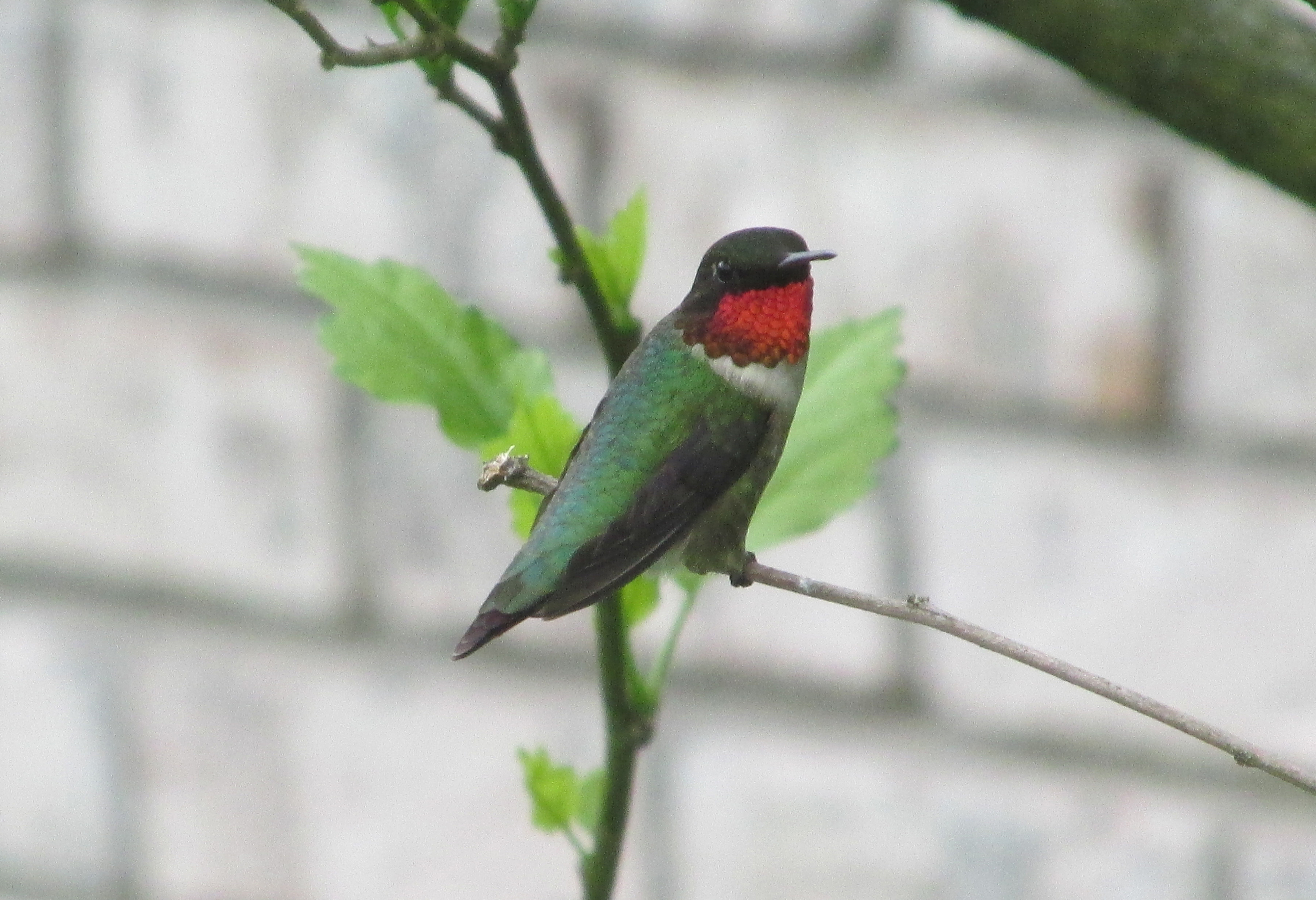
Photo by Bryan Stevens • Male ruby-throated hummingbird show the namesake red throat. The feathers on a male’s throat are iridescent, which means they can change when seen from different angles. In poor light, the ruby-red throat can look almost black.

Our own hummingbird, which we can claim from April through October every year, is the ruby-throated hummingbird. Ruby-throats are remarkable birds that nest throughout the eastern United States, as well as southern Canada. In winter, most ruby-throats withdraw to Central America and Mexico, although a few winter in Florida. They are famous for the amazing feat of crossing the Gulf of Mexico twice each year as they travel to their nesting grounds and then back to their overwintering homes.

The next generation of hummingbirds always helps swell the number of these tiny birds in our yards in late summer and early fall. It’s our duty as hosts to keep them safe as they stop in our yards and gardens during their fall migration. Many of the hummingbirds in the fall will be making their first migration, so they will need all the help we can provide to make a successful journey.

Perhaps consider enhancing your plantings of summer flowers while also continuing to offer multiple sugar water feeders. Keep the sugar water mix at a four parts water to one part sugar ratio. Don’t offer honey in your feeders. When mixed with water, it can spoil and spread fungal diseases.

Remember that hummingbirds don’t subsist on sugar water alone. They also eat numerous tiny insects and spiders to obtain the protein they need for their dietary needs, so don’t use insecticides near feeders or flowers that hummers are likely to visit.

So, until October frosts eventually drive them out of the region, enjoy the ruby-throated hummingbirds while you can.

•••

Bryan Stevens has written about birds since 1995. Share a sighting, make a comment or ask a question by emailing him at ahoodedwarbler@aol.com.

Photo by Bryan Stevens • A ruby-throated hummingbird lifts its wings to shake water droplets off its back.