

Photo by Bryan Stevens Dark-eyed juncos are winter residents in the region.
As I mentioned in last week’s column, I published my first “Feathered Friends” on Sunday, Nov. 5, 1995.
In celebration of that milestone, here’s that first column with a few revisions that have been added over the years.
•••
Of all the birds associated with winter weather, few are as symbolic as the dark-eyed junco, or “snow bird.” The junco occurs in several geographic variations.

The cover of the classic “A Complete Guide to Bird Feeding” by John V. Dennis.
John V. Dennis, author of “A Complete Guide to Bird Feeding,” captures the essence of the junco in the following description: “Driving winds and swirling snow do not daunt this plucky bird. The coldest winter days see the junco as lively as ever and with a joie de vivre that bolsters our sagging spirits.”
The dark-eyed junco’s scientific name, hyemalis, is New Latin for “wintry,” an apt description of this bird.
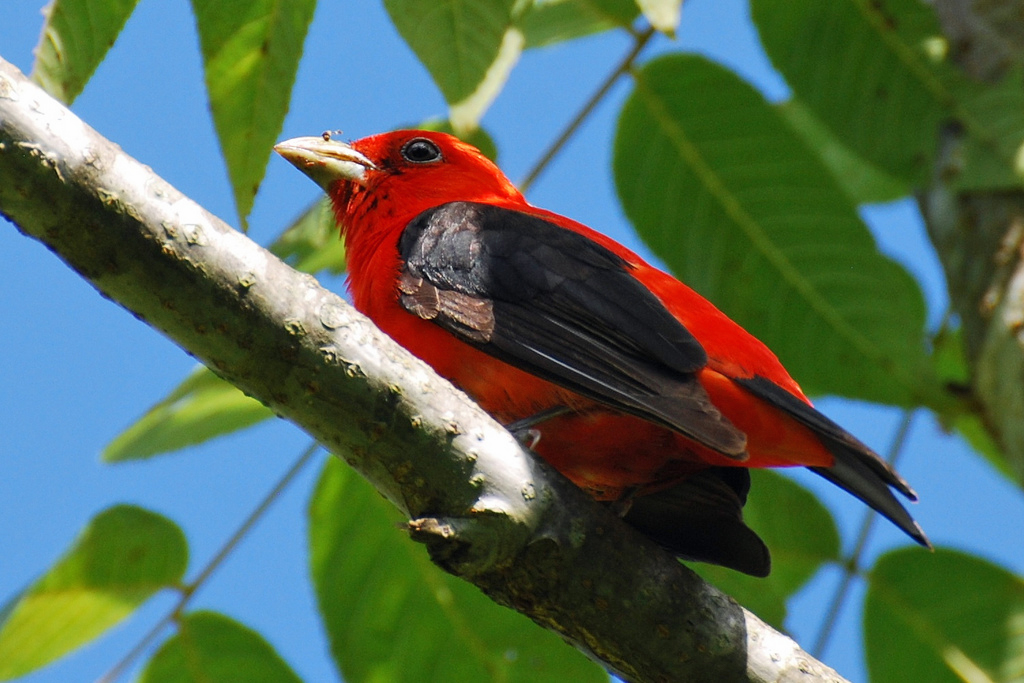
Most people look forward to the spring return of some of our brilliant birds — warblers, tanagers and orioles — and I must admit that I also enjoy the arrival of these birds. The junco, in comparison to some of these species, is not in the same league. Nevertheless, the junco is handsome in its slate gray and white plumage, giving rise to the old saying “dark skies above, snow below.”
Just as neotropical migrants make long distance journeys twice a year, the junco is also a migrating species. But in Appalachia, the junco is a special type of migrant. Most people think of birds as “going south for the winter.” In a basic sense this is true. But some juncos do not undertake a long horizontal (the scientific term) migration from north to south. Instead, these birds merely move from high elevations, such as the spruce fir peaks, to the lower elevations. This type of migration is known as vertical migration. Other juncos, such as those that spend their breeding season in northern locales, do make a southern migration and, at times, even mix with the vertical migrants.
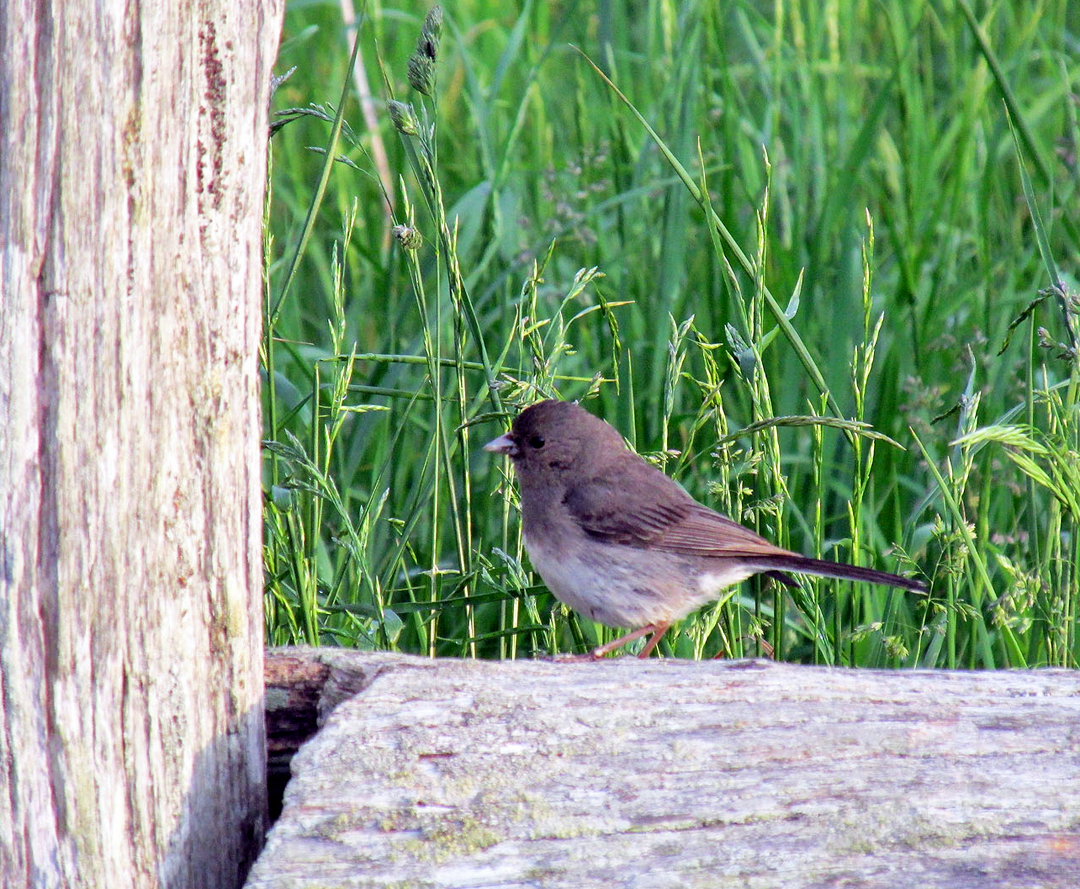
Photo by Bryan Stevens • Dark-eyed junco nests on high mountain slopes during the summer month. This dark-eyed junco was photographed at Carver’s Gap on Roan Mountain during the summer nesting season.
During the summer months, a visit to higher elevations mountaintops is almost guaranteed to produce sightings of dark-eyed juncos. Juncos may nest as many as three times in a season. A female junco usually lays three to six eggs for each nest, which she constructs without any assistance from her mate.
Juncos are usually in residence around my home by early November. Once they make themselves at home I can expect to play host to them until at least late April or early May of the following year. So, for at least six months, the snow bird is one of the most common and delightful feeder visitors a bird enthusiast could want.
Juncos flock to feeders where they are rather mild-mannered — except among themselves. There are definite pecking orders in a junco flock, and females are usually on the lower tiers of the hierarchy. Females can sometimes be distinguished from males because of their paler gray or even brown upper plumage.
Since juncos are primarily ground feeders they tend to shun hanging feeders. But one winter I observed a junco that had mastered perching on a hanging “pine cone” feeder to enjoy a suet and peanut butter mixture.

Photo by Ken Thomas • A dark-eyed junco perches on some bare branches on a winter’s day.
Dark-eyed juncos, widespread across North America, readily visit feeder but are often content to glean the scraps other birds knock to the ground. The junco is the most common species of bird to visit feeding stations. They will sample a variety of fare, but prefer such seeds as millet, cracked corn or black oil sunflower.
The juncos are a small branch of the sparrow clan. Some of the other juncos include the endangered Guadalupe junco, yellow-eyed junco, Baird’s junco and volcano junco.
The last one on the list is endemic to the Talamancan montane forests of Costa Rica and western Panama.
The endangered Guadalupe junco is confined to an island. Recent efforts to eliminate feral goats and cats from the island have shown some positive results for this species.
Baird’s junco is named for Spencer Fullerton Baird, an American ornithologist and naturalist. Baird served as secretary for the Smithsonian Institution from 1878 until his death in 1887. He greatly expanded the natural history collections of the Smithsonian from 6,000 specimens in 1850 to over two million by the time of his death.
I hope you’ve enjoyed this introduction to juncos. There’s something about winter that makes a junco’s dark and light garb an appropriate and even striking choice, particularly against a backdrop of newly fallen snow.
Of course, the real entertainment value of juncos comes from their frequent visits to our backyard feeders. When these birds flock to a feeder and begin a frenzied bout of feeding, I don’t even have to glance skyward or tune in the television weather forecast. I know what they know. Bad weather is on the way!
••••
I’ve not seen the first junco of the season, but I have observed some other late-autumn migrants, including ruby-crowned kinglets and a swamp sparrow.
If you’d like to share your first sighting this season of dark-eyed juncos, email me at ahoodedwarbler@aol.com. As always, the column is also a line of communication with fellow bird enthusiasts. I’ve enjoyed sharing stories about birds with countless readers over the past 30 years. I can also be reached on Facebook at https://www.facebook.com/ahoodedwarbler.
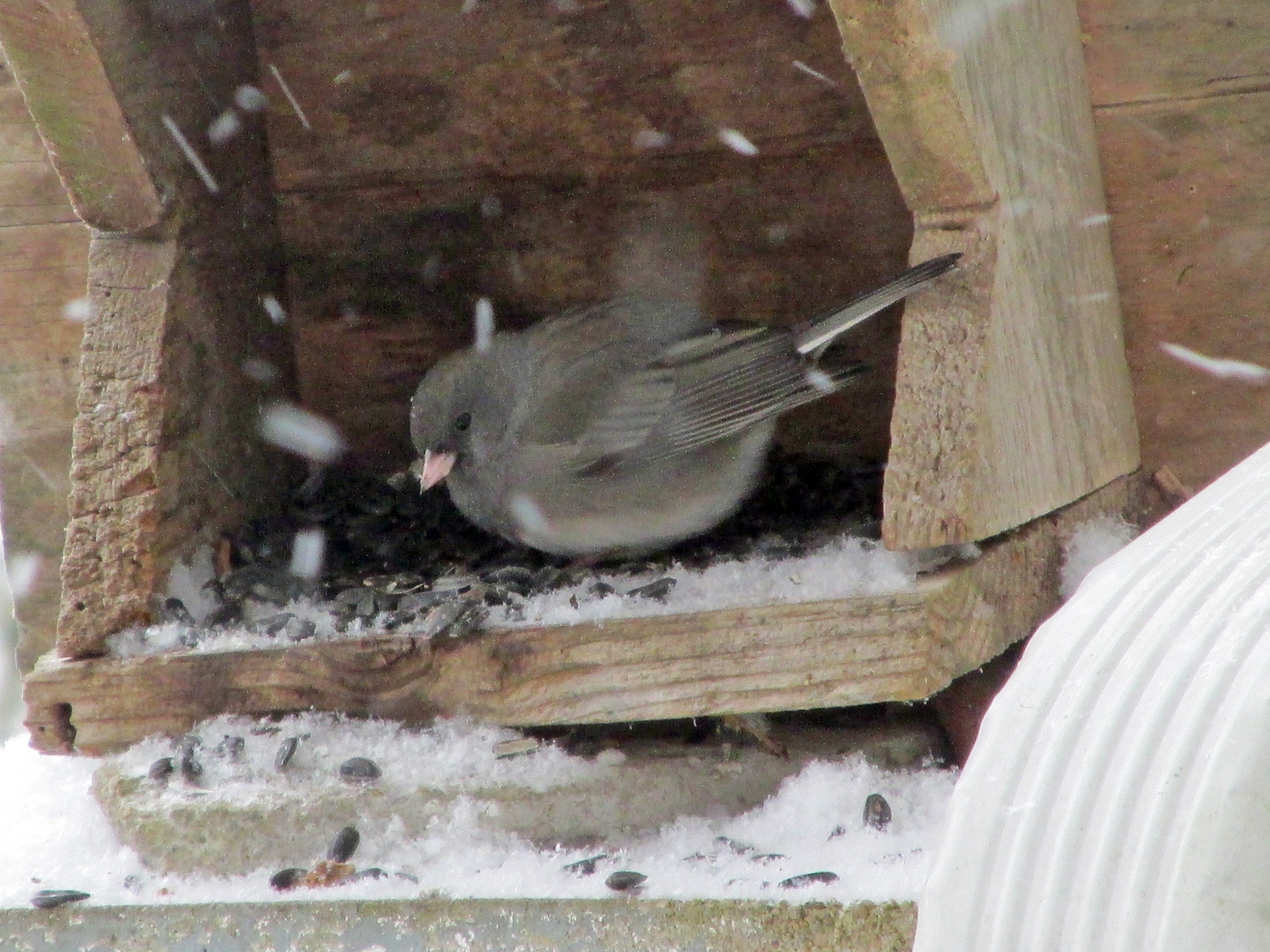
Photo by Bryan Stevens Dark-eyed juncos embrace feeders when weather takes a turn for the worse.








 Our Fine Feathered Friends