Category Archives: Carter County Compass

County’s Summer Bird Count finds 104 species

Members and friends of the Lee & Lois Herndon Chapter of the Tennessee Ornithological Society enjoyed a busy June, conducting its two annual summer bird counts last month. To the satisfaction of everyone involved, these counts encountered normal temperature after a spring count this past May that actually saw some snowfall when it was held on May 6.
IMG_4140

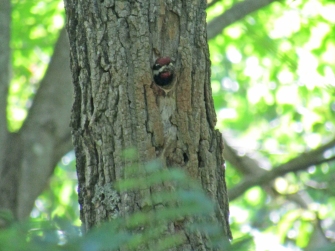
Photo by Bryan Stevens • Nesting Yellow-bellied Sapsuckers can be found at higher elevations in Unicoi County. This woodpecker is usually considered a winter bird in the region, but a few nest in the mountains.

According to long-time compiler Rick Knight, the chapter holds these summer counts in the counties of Carter and Unicoi to provide a set of baseline data on the diversity and numbers of breeding birds in these two local counties. This supplements other summertime data collection projects, such as the long-running Breeding Bird Survey (one route in Carter County) and the Nightjar Survey (three local routes).

The Carter County Summer Bird Count was initiated shortly after the conclusion of the Tennessee Breeding Bird Atlas project. The Unicoi County Summer Bird Count’s origins are more recent, with this survey making its debut in June of 2014. The fourth consecutive Unicoi County Summer Count was held June 17 with 21 observers in five parties looking for birds on Unaka Mountain, as well as such locations as Erwin, Limestone Cove and Flag Pond. Morning weather was favorable, but scattered rain in the afternoon hindered some efforts. A total of 104 species were tallied, down slightly from the three-year average of 111 species. Highlights included a Bald Eagle, Merlin and six Yellow-bellied Sapsuckers, including a nest with young. A total of 20 species of warblers were tallied, including Swainson’s Warbler, Magnolia Warbler, Blackburnian Warbler and Prairie Warbler. Other notable birds include Hermit Thrush and Blue Grosbeak.

I took part on the count, looking for birds in the Limestone Cove area of the county with Brookie and Jean Potter, Charles Moore, and David and Connie Irick. Beyond bird, we saw other wildlife, including skunks, white-tailed deer, rabbits, groundhogs and various butterflies.

IMG_4146

Photo by Bryan Stevens • A young Red-winged Blackbird begs food from its attentive mother.

A highlight of our count took place near the Appalachian Trail along Highway 107 at Iron Mountain Gap where we found a pair of Yellow-bellied Sapsuckers delivering food to young inside a nesting cavity in a tree easily viewed from the roadside. In addition, a singing Chestnut-sided Warbler put on quite a show for a group of admiring birders enchanted with this bird’s dazzling plumage and energetic antics.

The total for the count follows:

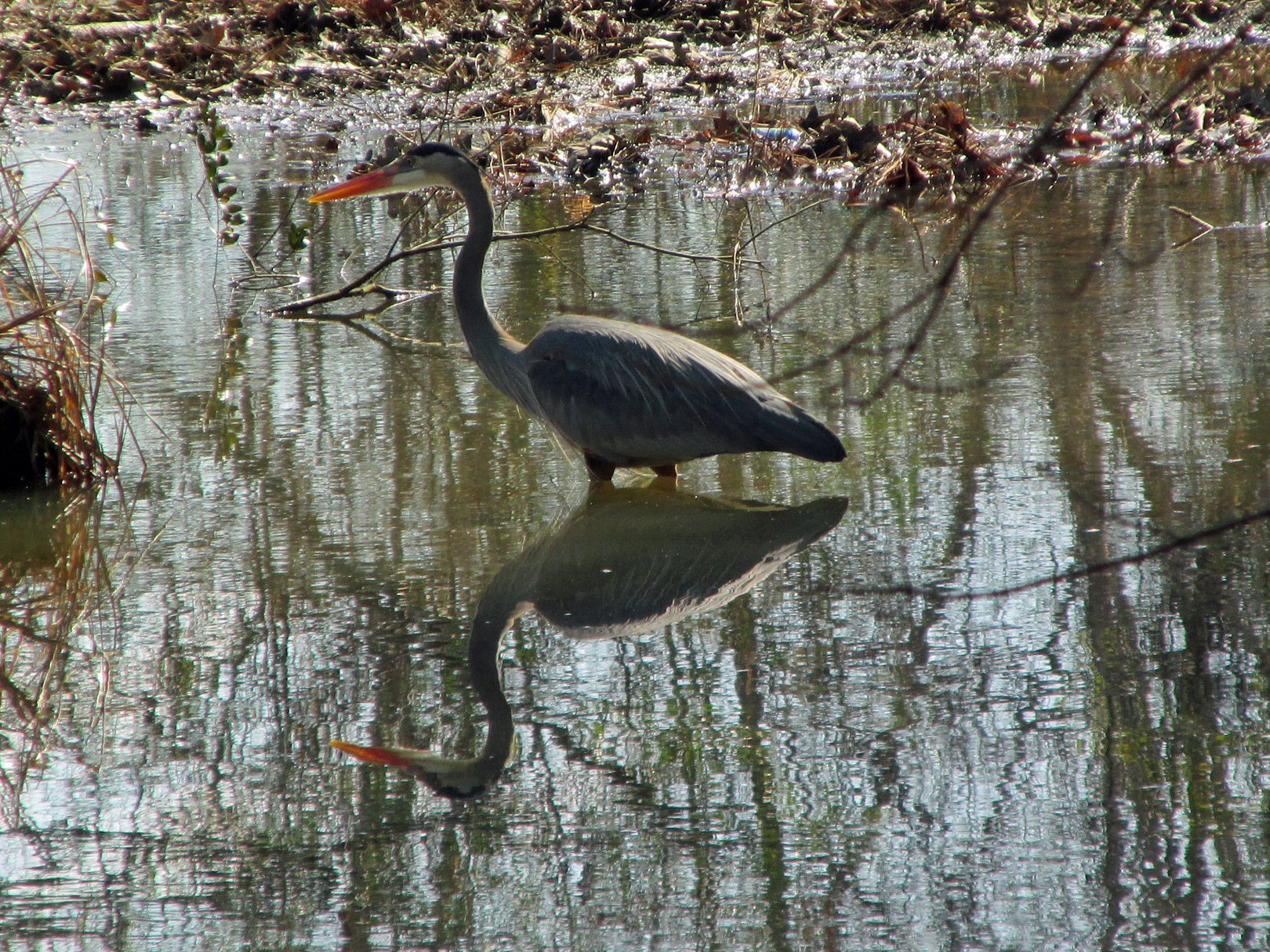
Canada Goose, 73; Wood Duck, 22; Mallard; Wild Turkey, 19; Great Blue Heron, 13; and Green Heron, 3.
Black Vulture, 300; Turkey Vulture, 28; Sharp-shinned Hawk, 2; Cooper’s Hawk, 1; Bald Eagle, 1; Broad-winged Hawk, 7; Red-tailed Hawk, 4; American Kestrel, 2; and Merlin, 1.
Rock Pigeon, 67; Mourning Dove, 87; Great Horned Owl, 1; Barred Owl, 2; Chuck-will’s-Widow, 4; Whip-poor-will, 9; and Chimney Swift, 61.
Ruby-throated Hummingbird, 15; Belted Kingfisher, 4; Red-bellied Woodpecker, 13; Yellow-bellied Sapsucker, 6; Downy Woodpecker, 10; Hairy Woodpecker, 3; Northern Flicker, 7; and Pileated Woodpecker, 8.
Eastern Wood-Pewee, 7; Acadian Flycatcher, 24; Eastern Phoebe, 30; Great Crested Flycatcher, 3; and Eastern Kingbird, 14.
White-eyed Vireo, 4; Yellow-throated Vireo, 1; Blue-headed Vireo, 26; Red-eyed Vireo, 95; Blue Jay, 53; American Crow, 88; Fish Crow, 7; and Common Raven, 7.
Northern Rough-winged Swallow, 36; Purple Martin, 14; Tree Swallow, 70; Barn Swallow, 77; and Cliff Swallow, 149.
Carolina Chickadee, 51; Tufted Titmouse, 43; Red-breasted Nuthatch, 1; White-breasted Nuthatch, 18; Brown Creeper, 3; House Wren, 14; Carolina Wren, 42.
IMG_4172

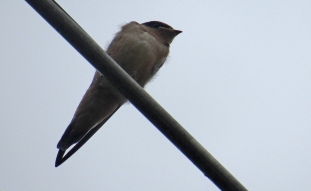
Photo by Bryan Stevens • Most swallows, like this Barn Swallow, have fledged and will join their parents in migrating south in the coming weeks of late summer.

Blue-gray Gnatcatcher, 5; Golden-crowned Kinglet, 7; Eastern Bluebird, 33; Veery, 25; Hermit Thrush, 4; Wood Thrush, 37; American Robin, 281; Gray Catbird, 31; Brown Thrasher, 12; Northern Mockingbird, 24; European Starling, 534; and Cedar Waxwing, 49.
Ovenbird, 29; Worm-eating Warbler, 2; Louisiana Waterthrush, 4; Black-and-white Warbler, 12; Swainson’s Warbler, 6; Common Yellowthroat, 2; Hooded Warbler, 37; American Redstart, 4; Northern Parula, 19; Magnolia Warbler, 3; Blackburnian Warbler, 2; Yellow Warbler, 1; Chestnut-sided Warbler, 15; Black-throated Blue Warbler, 29; Pine Warbler, 1; Yellow-throated Warbler, 3; Prairie Warbler, 3; Black-throated Green Warbler, 16; Canada Warbler, 9; and Yellow-breasted Chat, 2.
Eastern Towhee, 55; Chipping Sparrow, 49; Field Sparrow, 8; Song Sparrow, 120; Dark-eyed Junco, 37; Scarlet Tanager, 27; Northern Cardinal, 83; Rose-breasted Grosbeak, 4; Blue Grosbeak, 2; and Indigo Bunting, 82.
Red-winged Blackbird, 84; Common Grackle, 58; Eastern Meadowlark, 9; Brown-headed Cowbird, 29; and Orchard Oriole, 1.
House Finch, 33; American Goldfinch, 96; and House Sparrow, 17.
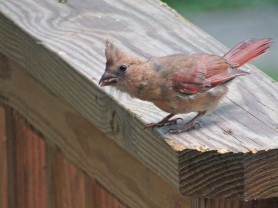
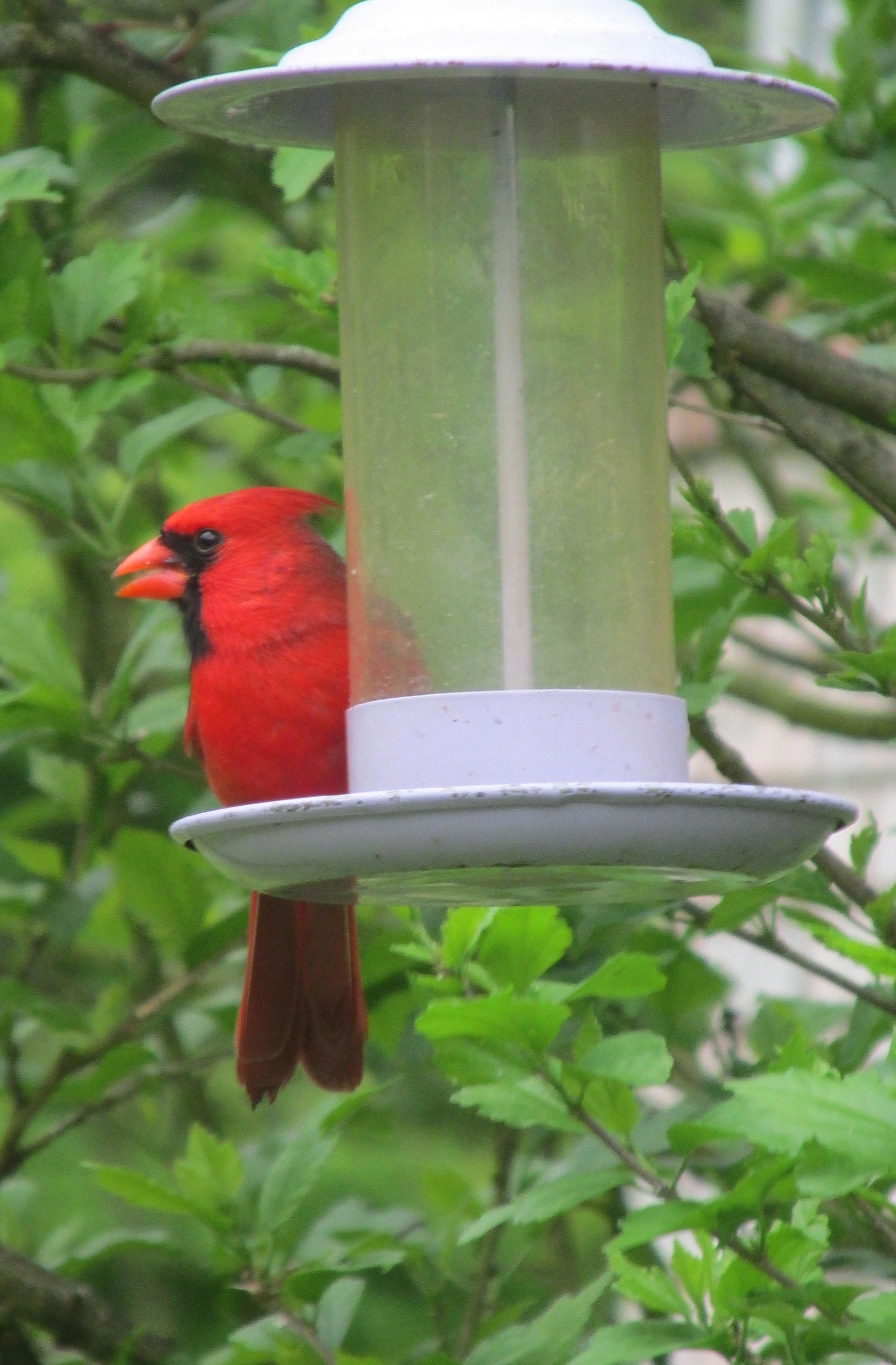
YoungCardinal

Photo by Bryan Stevens • Young birds, like this Northern Cardinal, point to a successful nesting season for most of the region’s birds.

Next week, I’ll post results from the Elizabethton Summer Bird Count.


••••••

To ask a question, make a comment or share a sighting, email ahoodedwarbler@aol.com or friend Stevens on Facebook.

Readers report on robin, purple martin that stand out from other members of their flocks


Albino-Swallow

Photo by Jean Potter • Two barn swallows in typical plumage perch on a wire with an albino individual.

Birds of a feather, as the old saying goes, tend to flock together, but what happens when a member of the flock stands out from the rest? Although conventional wisdom mandates that being conspicuous is not helpful for most wild creatures, some of them can’t help but get attention. Different readers have brought to my attention some birds at their homes that instantly stood out.

Sara and Ed Gschwind, residents of Bristol, Tennessee, have been keeping tabs on an American robin in their yard that is showing an extensive amount of white feathers in its plumage. For the most part, this particular robin has a white head, largely white wings and extensive white in the typically red breast. “My 88-year-old mother, Nora Rockett, suggested I send a photo to you,” Sara wrote in an email.

Robin-PartialAlbino

Photo by Ed Gschwind • A leucistic American robin enjoy time in a bird bath. Albino and leucistic birds are rather rare in nature.

Sara said that her mother, who has lived in Bristol all her life, has never seen anything like it. I replied to Sara’s email, asking for a few more details.

While the robin interacts with others of its kind, the Gschwinds haven’t seen any evidence this particular robin is attempting to nest. Ed took a photograph of the robin enjoying the water in a bird bath in the Gschwind yard.

“The robin bathes every day, and loves the water like all robins do,” Sara wrote. “The robin has been here since the robins returned three months ago. I’m trying to keep it happy.” Since the robin is a regular visitor, I agree that they’re doing a good job keeping the bird happy, since it’s not shown any inclination to leave their yard.

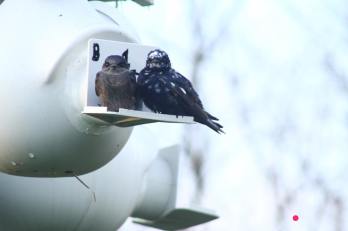
Tom Brake, who lives in Abingdon, Virginia, contacted me through Facebook about a male purple martin with extensive white feathers residing at the purple martin colony he has established at his home.

Purple martins are the largest member of the swallow family in the United States. Like many other swallow species, they nest in colonies. Martins are cavity-nesting birds that readily accept hollow gourds or special purple martin condominiums for nesting.

“Currently I have nests in 43 compartments with 20 being active (eggs having been laid),” Tom wrote. “Last year I had 51 pairs, and I hope to get close to being back to 60 or 70 active pairs this year. The next two weeks will be the busy time for completion of nests and laying.”

PurpleMartin-Albino-TomBrake

Photo by Tom Brake • A leucistic male purple martin perches with its mate, a typical female purple martin, near a hollow gourd they may use for nesting purposes.

As for the bird showing the white feathers, Tom has named him “Leuie” because the bird is an example of leucism, a condition related to albinism.

Albinism is a genetic, or inherited, condition resulting in a complete lack of production of pigmentation. Albino birds are, for the most part, extremely uncommon. I’ve heard of a variety of birds, ranging from hummingbirds and American robins to various ducks and swallows, that have a tendency to produce albino individuals.

Leucism is another genetic mutation that causes affected birds to grow feathers that are pale or whitish overall. A faint pattern may be visible. Leucism is also uncommon, but is more common that albinism. Both the robin in the Gschwind yard and the purple martin at Tom’s home are examples of leucistic birds.

Tom noted that “Leuie” is doing well so far. “He has a mate, but their first clutch of four eggs was either thrown out by a second year male martin or discarded by themselves because they sensed non-viability,” Tom wrote in a Facebook message. “Maybe the cold, wet weather had something to do with the loss.” He noted that the same thing happened recently to two other nests.

“Leuie and mate are still using their gourd, so I expect they will re-clutch,” Tom wrote. The term “re-clutch” means that Leuie’s mate will lay a new batch of eggs and Leuie will be ready to carry out his own paternal duties to help raise any resulting young.

Albinism and leucism are not the only conditions that can affect pigment in a bird’s feathers. Some birds have the opposite problem in that they produce too much pigment, resulting in a much darker bird than what would be typical. The plumage of such affected birds is described as melanistic, which is in stark contrast to an albino bird. With a melanistic bird, the feathers are much darker than usual because of an abundance of pigment. In rare albino birds, the opposite occurs and the lack of pigment in the feathers leave them looking white. Completely albino birds also tend to have red eyes. It’s probably better for a bird to be melanistic. Albino birds tend to stick out like sore thumbs, attracting the attention of predators.

Robins-AlbinoAndRegular

Photo by Ed Gschwind • Compare the leucistic American robin in the bird bath with the typical robin perched in a nearby chair. Albino birds are rather rare in nature.

I’ve only seen a few albino or partial albino birds in person, although I have observed videos and photographs of such birds. During a trip to Salt Lake City, Utah, in 2006, I observed an albino Brewer’s blackbird. An albino blackbird is almost an oxymoron. This particular blackbird had a white upper body and head and a black lower body. At first, I thought it might be a small tern, but closer observation — and identification of the birds with which it was associating — eventually confirmed that it was a Brewer’s blackbird, a common species in Salt Lake City.

Those observations remain my best looks at albino birds in the wild. I’ve also seen partial albinos, including an American Crow with white feathers in its wings that inhabited the woodlands and fields at my home for several years. I’ve also observed a couple of American goldfinches over the years that would probably qualify as leucistic birds.

A few years ago, I saw an albino Red-tailed hawk while driving between Erwin, Tennessee, and Asheville, North Carolina, on Interstate 26. The hawk was often present near the North Carolina Visitors Center. I’ve also heard from readers over the years about birds such as American goldfinches and downy woodpeckers exhibiting albino tendencies.

Albino-Hawk

Photo by Jean Potter • This partial albino red-tailed hawk was spotted for several years near the state line dividing northeast Tennessee and western North Carolina.

These issues involving the absence or abundance of pigment can complicate bird identification. After all, all-white birds, from snowy owls and tundra swans to great egrets and snow geese, do exist in nature. Even in these birds, however, there’s usually some other color present to break up the uniformity of the bird’s plumage. Keep in mind that such rarities as albino individuals of such common species as house finches and American robins can show up at your feeders or in your yard. It’s just another way birds constantly surprise us.

•••••

To learn more about birds and other topics from the natural world, friend him on Facebook at https://www.facebook.com/ahoodedwarbler. He is always posting about local birds, wildlife, flowers, insects and much more.

Spring Bird Count participants deal with unseasonal cold snap

The 74th annual Elizabethton Spring Bird Count was held on Saturday, May 6. A total of 43 observers in nine parties took part in the annual survey, which consists Carter County and parts of adjacent Johnson, Sullivan, Unicoi and Washington counties. In addition to Elizabethton, the count includes territory in such cities as Elizabethton, Erwin, Kingsport, Bristol and Johnson City.

Count-Gobbler

Photo by Bryan Stevens • A male gobbler seeks the attention of hens, as all these Wild Turkeys add to the number of this species found during the count.

The most unusual aspect of this year’s count involved rather cold conditions, according to long-time count compiler Rick Knight. Although held nearly a week into May, this was one of the coldest days ever experienced on a spring count. The temperature range was 36 to 54 degrees. Light rain fell before sunrise; the morning was partly cloudy to cloudy, then the afternoon saw light rain, with light snow showers at the higher elevations and a half-inch accumulation of snow on Roan Mountain.

Knight noted that previous cold spring counts included: 32 to 55 degrees in 1979, 44 to 52 degrees in 1987, and 27 to 54 degrees in 1992. Despite the weather, participants managed to find 148 species, which is exactly the average over the last 30 years, but below the average over the last decade, which stands at 154 species.

The most common species on this year’s Spring Bird Count was the Cliff Swallow with 1,046 individuals — a new record for this species — found this year. Other common species include European Starling (704), American Robin (693) and Tree Swallow (526).

A Stilt Sandpiper found in Washington County represented only the third time this species has been observed during the Elizabethton Spring Bird Count. As always, Knight said there were a few notable misses, such as Northern Bobwhite, Ruffed Grouse, Pied-billed Grebe, Brown Creeper, Winter Wren, Swamp Sparrow and Pine Siskin. In addition, no gulls were found on any of the area lakes.

Count-MaleMartin

Photo by Bryan Stevens • Purple Martins, like this male, were sluggish on the day of the count thanks to cold temperatures and steady rainfall.

In addition, several species of warblers that nest in the region showed rather low numbers. Some of the low numbers for some species may be attributable to the weather. Nevertheless, the count produced observations of 28 different warbler species.

The total is listed below:
Canada Goose, 390; Wood Duck, 27; Mallard, 93; Blue-winged Teal, 5; and Hooded Merganser, 2.
Wild Turkey, 54; Common Loon, 2; Double-crested Cormorant, 42; Great Blue Heron, 115; Great Egret, 1; Green Heron, 13; Yellow-crowned Night-Heron, 8; and Black-crowned Night-heron, 1.
Black Vulture, 74; Turkey Vulture, 108; Osprey, 10; Sharp-shinned Hawk, 1; Cooper’s Hawk, 5; Bald Eagle, 13; Broad-winged Hawk, 5; Red-winged Hawk, 25; and American Kestrel, 11.
Virginia Rail, 4; Killdeer, 35; Spotted Sandpiper, 27; Solitary Sandpiper, 19; Greater Yellowlegs, 1; Lesser Yellowlegs, 1; Stilt Sandpiper, 1; and Least Sandpiper, 6.
Forster’s Tern, 1; Rock Pigeon, 155; Eurasian Collared-Dove, 3; Mourning Dove, 224; Yellow-billed Cuckoo, 4; Black-billed Cuckoo, 1; Eastern Screech-owl, 6; Great Horned Owl, 1; Barred Owl, 2; Common Nighthawk, 1; Chuck-will’s-widow, 2; Whip-poor-will, 10.
Chimney Swift, 66; Ruby-throated Hummingbird, 23; Belted Kingfisher, 23; Red-headed Woodpecker, 5; Red-bellied Woodpecker, 54; Yellow-bellied Sapsucker, 3; Downy Woodpecker, 23; Hairy Woodpecker, 5; Northern Flicker, 30; and Pileated Woodpecker, 34.

Count-NightHeron

Several species of herons, including this Yellow-crowned Night Heron, were found for this year’s Spring Bird Count.

Eastern Wood-pewee, 1; Acadian Flycatcher, 5; Willow Flycatcher, 1; Least Flycatcher, 6; Eastern Phoebe, 42; Great Crested Flycatcher, 13; Eastern Kingbird, 43; and Loggerhead Shrike, 1.
White-eyed Vireo, 5; Yellow-throated Vireo, 10; Blue-headed Vireo, 41; Warbling Vireo, 9; Red-eyed Vireo, 122; Blue Jay, 138; American Crow, 301; Fish Crow, 2; and Common Raven, 22.
Northern Rough-winged Swallow, 345; Purple Martin, 36; Tree Swallow, 526; Barn Swallow, 259; and Cliff Swallow, 1,046.
Carolina Chickadee, 82; Tufted Titmouse, 140; Red-breasted Nuthatch, 3; White-breasted Nuthatch, 13; House Wren, 30; Marsh Wren, 1; Carolina Wren, 99; Blue-gray Gnatcatcher, 39; Golden-crowned Kinglet, 11; and Ruby-crowned Kinglet, 2.
Eastern Bluebird, 136; Veery, 44; Swainson’s Thrush, 5; Hermit Thrush, 1; Wood Thrush, 82; American Robin, 693; Gray Catbird, 35; Brown Thrasher, 51; Northern Mockingbird, 95; European Starling, 704; and Cedar Waxwing, 272.
Ovenbird, 117; Worm-eating Warbler, 19; Louisiana Waterthrush, 18, Northern Waterthrush, 1; Golden-winged Warbler, 3; Black-and-White Warbler, 47; Swainson’s Warbler, 2; Tennessee Warbler, 1; Kentucky Warbler, 1; Common Yellowthroat, 17; Hooded Warbler, 95; American Redstart, 6; Cape May Warbler, 7; Northern Parula, 25; Bay-breasted Warbler, 4; Blackburnian Warbler, 1; Yellow Warbler, 3; Chestnut-sided Warbler, 9; Blackpoll Warbler, 1; Black-throated Blue Warbler, 25; Palm Warbler, 1; Pine Warbler, 15; Yellow-rumped Warbler, 18; Yellow-throated Warbler, 20; Prairie Warbler, 4; Black-throated Green Warbler, 53; Canada Warbler, 1; and Yellow-breasted Chat, 11.

SolitarySandpiper-One

Photo by Bryan Stevens • Migrating shorebirds, such as this Solitary Sandpiper, added diversity to this year’s Spring Bird Count in Northeast Tennessee.

Eastern Towhee, 132; Chipping Sparrow, 67; Field Sparrow, 35; Savannah Sparrow, 4; Grasshopper Sparrow, 1; Song Sparrow, 166; White-throated Sparrow, 4; White-crowned Sparrow, 2; Dark-eyed Junco, 28; Summer Tanager, 2; Scarlet Tanager, 60; Northern Cardinal, 212; Rose-breasted Grosbeak, 19; Blue Grosbeak, 5; Indigo Bunting, 79; Bobolink, 22; Red-winged Blackbird, 271; Eastern Meadowlark, 89; Common Grackle, 327; Brown-headed Cowbird, 97; Orchard Oriole, 21; Baltimore Oriole, 16; House Finch, 64; American Goldfinch, 228; and House Sparrow, 52.

•••••

To learn more about birds and other topics from the natural world, friend Stevens on Facebook at https://www.facebook.com/ahoodedwarbler. He is always posting about local birds, wildlife, flowers, insects and much more. If you have a question, wish to make a comment or share a sighting, email ahoodedwarbler@aol.com.

Count-IndigoBunting

Photo by Bryan Stevens • Newly-returned neotropical migrants, such as this Indigo Bunting, increased the total number of species for the annual spring count.

Get ready to welcome spring’s returning hummingbirds

All bird enthusiasts have their personal favorites among our feathered friends. Cardinals, bluebirds, robins and chickadees would certainly find a place in any Top 10 lists. What bird would top the list? I have no qualms predicting that the ruby-throated hummingbird would be a frontrunner for such a ranking.

rubythroated_hummingbird

A male Ruby-throated Hummingbird seeks nectar at tiny blooms. — Photo by U.S. Fish & Wildlife Service


The popularity of hummingbirds in general, and the ruby-throated hummingbird specifically, is simple to understand. These tiny birds are perfectly willing to insert themselves into our lives, offering hours of fascinating entertainment as they visit our gardens, duel at our sugar water feeders and occasionally even nest in trees and shrubs in our yards.

Individuals who feed birds know that it can be an expensive undertaking. The cost of providing sunflower seeds and suet cakes for hungry flocks during the winter months can nibble at the monthly budget, but hardly anyone would begrudge the sparrows, finches, wrens and woodpeckers. After all, they return the favor, putting on daily shows just outside our windows.

Attracting hummingbirds is generally much less expensive than feeding other birds. After all, you need only a mixture of sugar water — four parts water to one part sugar — to fill a feeder and catch the attention of a visiting hummer. A few pounds of sugar will last a lot longer than that bag of sunflower seeds and it’s much less expensive to purchase at the grocery store.

If you do want to take extra steps to attract these diminutive, feathered saccharine junkies, consider supplementing your landscape with a variety of flowering plants. To explore some of the best choices for flowers to tempt hummingbirds, visit the website of The Hummingbird Society at http://www.hummingbirdsociety.org.

Hummer-CloserUp

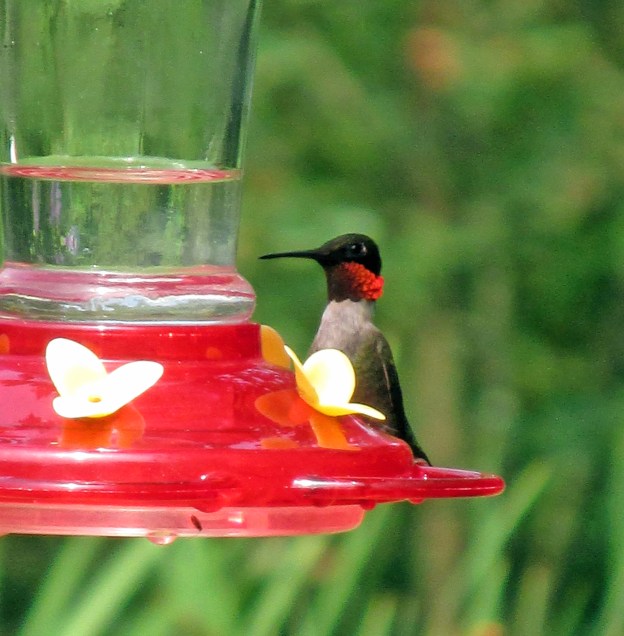
A male ruby-throated hummingbird surveys his territory from a convenient perch. — Photo by Bryan Stevens

Nevertheless, few bird enthusiasts are truly frugal when it comes to our feathered friends. Even if the cost of bringing hummingbirds and other birds was much higher, I don’t think we would abandon the undertaking. Quite simply, the birds mean too much to us. They fascinate us with their speed and agility, their pugnacious relations with each other, and of course their tiny size. The irony is that, although hummingbirds are so small, they don’t seem to recognize that fact as they zig and zag through yard and garden.

While the ruby-throated hummingbird is the only hummer that nests in the eastern United States, which is what brings these tiny birds into our lives every year from April to October, there are more than 300 species of hummingbirds. Much creativity has gone into giving each of these hummingbirds a descriptive common name.

Sometimes, words fail. Mere adjectives are somewhat inadequate in providing common names for many of the world’s more than 300 hummingbirds, but that doesn’t keep us from trying to give descriptive names to each hummingbird species. For instance, we have the beautiful hummingbird of Mexico; the charming hummingbird of Costa Rica and Panama; the festive coquette of northwestern South America; and the magnificent hummingbird of the southwestern United States.

Other names are even more elaborate and occasionally outlandish, such as the white-tufted sunbeam of Peru; the violet-throated metaltail of Ecuador; the violet-throated starfrontlet of Peru and Bolivia; the hyacinth visorbearer of Brazil; and the rainbow-bearded thornbill of Colombia and Ecuador.

RT-Male-April15

A male ruby-throated hummingbird ignores honeybees for a sip of sugar water. — Photo by Bryan Stevens

It would seem then that our own ruby-throated hummingbird is in good company. After spending the winter months in Central America, ruby-throated hummingbirds are already streaming north. Just to reach the United States, these tiny birds undertake an arduous journey. Most of these tiny birds, which are barely four inches long, make a non-stop flight of more than 500 miles across the Gulf of Mexico. The journey can take almost an entire day!

Sightings are already being reported, and ruby-throats typically arrive in the region in early April. In fact, a male ruby-throated hummingbird showed up at my feeders on Saturday, April 15.

If you don’t have your feeders outdoors and waiting for them, it’s time to do so. As always, I love to hear from readers about their first hummingbird sighting of the year. Jot down the time and date and contact me by email at ahoodedwarbler@aol.com. I can hardly wait for one of our favorite birds to get back. Let’s give them a hearty welcome.

••••••

To learn more about birds and other topics from the natural world, friend Bryan Stevens on Facebook at https://www.facebook.com/ahoodedwarbler. He is always posting about local birds, wildlife, flowers, insects and much more.


Origins of the name of Muscovy duck shrouded in mystery

Joan Stenger sent me an email recently about an unusual waterfowl observation. On a recent  Saturday, she visited downtown Bristol where the creek widens a bit near the fire station and beside the park. Joan wrote that she saw a flock of ducks and Canada geese and enjoyed watching them.

muscovy-ducks

Photo by Bryan Stevens                                                             Muscovy ducks seen outside of Texas are domesticated versions of the wild waterfowl. Male Muscovy ducks sport red carbuncles around their bills.

“One fellow stood on the opposite bank and had bright red marks on his face,” she added. “My daughter and I went over the bridge and into the park to get closer and hopefully get a better view.”

Joan described the odd duck as larger than the other ducks but not as big as the geese. “Its back was dark dark blue with teal,” she wrote. “I had never seen such a duck! “
She said they continued to watch the flock of Canada geese and then returned home.  There she consulted her bird books and only found one small mention and picture of a Muscovy duck. Armed with that information, she conducted an online search for more information about Muscovy ducks.
 “Have you seen many of these fellows?” Joan asked in her email.
In my reply to her email, I informed Joan that Muscovy ducks are becoming more common. However, outside of Texas, most Muscovy Ducks seen are “feral” domesticated versions of the wild bird. Many people have probably also seen feral mallards that are content to reside year-round with us. The Muscovy ducks have probably decided the same thing.
In southern Texas, it is possible to observe wild Muscovy ducks, but sightings of these ducks outside of the Lonestar State involve domesticated ducks. Like mallards, Muscovy ducks have long been domesticated, and some of the domesticated individuals have gone feral. These ducks, descendants of their wild ancestors, have become more common, both nationwide and locally.

I’ve heard from other curious people over the years about encounters with Muscovy ducks. The birds behave unusually for a duck. For instance, they often pant like a dog and strut around more like a wild turkey than a typical duck. Most of these feral Muscovy ducks are also relatively tame in association with people, long ago having learned to connect humans with free handouts of bread, popcorn and other foods.

muscovy-three

Photo by Bryan Stevens                                                            Wild Muscovy ducks are dark waterfowl with white wing patches. Domesticated Muscovy ducks exhibit a wide variety of plumage colors, including brown and white feathers.

In the wild, Muscovy ducks are native to Mexico, as well as Central and South America. Before Christopher Columbus reached the New World in 1492, natives had long domesticated this duck. When Columbus first visited the New World, he even took back to Europe some of these ducks.
The term “Muscovy” is a reference to the Russian city of Moscow, but the reasons behind the connection of this duck’s common name to Moscow are obscure. One theory is that the duck acquired the name in association with the Company of Merchant Adventurers to New Lands, later shortened to the Muscovy Company. Perhaps this chartered trading outfit sold some of these ducks to European customers in the 1500s.
After all, Columbus and early explorers named the wild turkey for the faraway country of Turkey, mistakenly believing that the New World provided a more direct route to this realm so important to trade. Perhaps the Muscovy duck also acquired a name connected with Moscow for no better reason. It does appear that the origins of the name are one of history’s odd mysteries.
Adding to the mystery is the fact that the duck’s scientific name also refers to a city — Cairo in Egypt — far from this bird’s native home. Translated, the Muscovy duck’s scientific name means “musky bird from Cairo.” Another common name for the duck is Barbary duck, which refers to a region of Africa home to modern-day Libya.

While the wild Muscovy duck is a tropical bird, the domestic ones are perfectly capable of weathering cold temperatures as low as 10 degrees Fahrenheit.

muscovy-two

Photo by Bryan Stevens                                                       Domesticated and feral Muscovy ducks are widespread across North America. These ducks were first discovered by Europeans arriving in the New World, although native tribes had long raised them as domestic animals.

The Muscovy Duck has only one other close relative, the white-winged wood duck of India and Bangladesh, One of the world’s largest ducks, the white-winged wood duck is a seriously endangered species. One curious fact about this duck is its tendency to only forage for food after dark.

Wild Muscovy ducks are large waterfowl with a black plumage accented with big white wing patches. They can be almost 34 inches long and weigh as much as nine pounds. It’s the heads of these ducks that really make them stand apart. Both sexes have bare black-and-red or all-red faces. Males also sport pronounced caruncles at the base of the bill, as well a a slight crest of feathers. The appearance of domestic Muscovy ducks is quite variable, with some birds sporting almost entirely white plumage.
Muscovy ducks and mallards will also hybridize, producing sterile offspring that are known as “mullards.” I’ve observed both domestic Muscovy ducks and “mullard” hybrids at local parks, but I haven’t yet seen any wild Muscovy ducks. The domestic version of this duck has also established feral populations around the globe in locations such as Europe, New Zealand, Canada and Australia.henry_charles_bryant00
•••••••
In addition to asking her question about Muscovy ducks, Joan shared a story about bluebirds at her home.
“We feed the birds year round and enjoy their antics at the feeders,” she reported. “We were pleased to have bluebirds raise a nest full of babies this year, although I was told that we would not have bluebirds because we live in town.” Apparently “no one told the bluebirds,” Joan joked.
Because of her feeders and the bird baths, she receives visits from a good variety of birds, mostly dominated by the cardinals.


Regional spring bird count sets several new records

IndigoBunt

Photo by Bryan Stevens                                  Newly-arrived migrant birds such as Indigo Bunting were well represented on the 73rd annual Elizabethton Spring Bird Count.

The 73rd consecutive Elizabethton Spring Bird Count, which was held Saturday, April 30, set numerous records for this long-running survey of the region’s birds. The 59 observers in 13 parties (both representing record highs for participation) enjoyed favorable weather over the coverage area, which included Carter County and parts of adjacent Johnson, Sullivan, Unicoi and Washington Counties.


Rose-breastedGrosbeak

Photo Courtesy of Jean Potter                              A total of 166 species of birds, including Rose-breasted Grosbeak, pictured, helped participants in the Elizabethton Spring Bird Count, establish a new record high for this annual survey. The old record of 161 species was set back in 2005.

Long-time count compiler Rick Knight announced that the annual count tallied 166 species, eclipsing the previous record of 161 set in 2005. By comparison, the average number over the last 30 years has been 147 species.

Highlights for this year’s Spring Bird Count included American Golden-Plover and Fish Crow, which were new to this annual survey of birds in the region.

Heron-CandlerMurphy

Photo by Bryan Stevens                           The presence of several nesting colonies of Great Blue Herons could help explain a new record-high for this species on this year’s count.

Other notable find included Hooded Merganser (a hen with two young), a lingering pair of Common Mergansers, Virginia Rail, Black-billed Cuckoo, Northern Saw-whet Owl, Peregrine Falcon, Sedge Wren and Cerulean Warbler.

Amazingly, given the long history of this count, 21 species occurred in record high numbers this year. Knight said the increased number of observers and parties certainly contributed to this.

Sora-Jean

Photo Courtesy of Jean Potter                      Although the Sora is rarely found during this annual count, the four individuals found this year represented an all-time high for the species on this yearly survey.

The record highs were for the following species:  Canada Goose (653), Mallard (332), Wild Turkey (57), Great Blue Heron (107), Yellow-crowned Night-Heron (14), Black Vulture (152), Spotted Sandpiper (83), Barred Owl (12), Belted Kingfisher (30), Red-bellied Woodpecker (97), Warbling Vireo (20), Red-eyed Vireo (257), Ovenbird (244), Worm-eating Warbler (39), Yellow-throated Warbler (44), Eastern Towhee (222), Scarlet Tanager (82), and Baltimore Oriole (38). Three species — Orchard Oriole (42), Northern Saw-whet Owl (3) and Sora (4) — tied previous high counts.

Several of these good finds were made by observers counting in Unicoi County at such locations as Rock Creek Recreation Area and Unaka Mountain. The final total follows:

Cardinal_CloseCrop

Photo by Bryan Stevens Common backyard birds, such as Northern Cardinal, were among the record-high 166 species found.

Canada Goose,  653; Wood Duck, 85; American Wigeon, 2; Mallard, 332; Blue-winged Teal, 6; Bufflehead, 5; Hooded Merganser, 3; and Common Merganser, 2.
Northern Bobwhite, 1; Ruffed Grouse, 1; Wild Turkey, 57; Common Loon, 1; Pied-billed Grebe, 5; Horned Grebe, 1; and Double-crested Cormorant, 65.
Great Blue Heron, 107; Green Heron, 16; Black-crowned Night-heron, 1; Yellow-crowned Night-Heron, 14; Black Vulture,  152; and Turkey Vulture,  212.
Osprey,  15; Bald Eagle, 10; Sharp-shinned Hawk,  2; Cooper’s Hawk, 7; Broad-winged Hawk, 16; and Red-tailed Hawk,  38.
Virginia Rail,  1; Sora , 4; American Coot, 3; American Golden-Plover, 1; Killdeer,  46; Spotted Sandpiper,  83; Solitary Sandpiper,  34; Greater Yellowlegs,  2; Lesser Yellowlegs , 2; Least Sandpiper, 5; and Pectoral Sandpiper, 2.
Bonaparte’s Gull, 1; Ring-billed Gull, 7; Forster’s Tern, 7; Rock Pigeon, 166; Eurasian Collared-Dove,  3; Mourning Dove,  254; Yellow-billed Cuckoo,  9; and Black-billed Cuckoo, 1.
Eastern Screech-Owl, 10; Great Horned Owl,  6; Barred Owl,  12; Northern Saw-whet Owl, 3; Common Nighthawk, 1; Chuck-will’s-widow, 10; Eastern Whip-poor-will, 32; Chimney Swift , 209; Ruby-throated Hummingbird, 31; and Belted Kingfisher, 30.
Red-headed Woodpecker, 2; Red-bellied Woodpecker,  97; Yellow-bellied Sapsucker, 4; Downy Woodpecker,  37; Hairy Woodpecker, 10; Northern Flicker,  33; Pileated Woodpecker, 43; American Kestrel, 19; and Peregrine Falcon, 1.
Eastern Wood-Pewee,  7; Acadian Flycatcher, 12; Least Flycatcher, 6; Eastern Phoebe, 77; Great Crested Flycatcher, 15; and Eastern Kingbird, 57.
Loggerhead Shrike, 1; White-eyed Vireo, 12; Yellow-throated Vireo, 9; Blue-headed Vireo,  78; Warbling Vireo, 20; Red-eyed Vireo,  257; Blue Jay, 320; American Crow, 338; Fish Crow, 1; Common Raven,  and 14; Horned Lark,  2.
Purple Martin, 81; Tree Swallow, 426; Northern Rough-winged Swallow, 133; Barn Swallow, 217; and Cliff Swallow, 807.
Carolina Chickadee,  173; Tufted Titmouse, 166; Red-breasted Nuthatch, 16; White-breasted Nuthatch, 26; and Brown Creeper,  4.
House Wren,  45; Winter Wren, 4; Sedge Wren, 1; Carolina Wren,  129; Blue-gray Gnatcatcher,  97; Golden-crowned Kinglet, 5; and Ruby-crowned Kinglet, 4.

RedeyedVireo-Jean

Photo Courtesy of Jean Potter                        Vireos, such as this Red-eyed Vireo on a nest, were quite abundant. The numbers of Red-eyed Vireos and Warbling Vireos set all-time highs for the count.

Eastern Bluebird, 157; Veery, 13; Swainson’s Thrush,  2; Wood Thrush, 138; American Robin,  888; Gray Catbird, 55; Brown Thrasher, 45; Northern Mockingbird, 122; European Starling,  986; and Cedar Waxwing, 44.
Ovenbird, 244; Worm-eating Warbler, 39; Louisiana Waterthrush, 32; Golden-winged Warbler, 2; Black-and-white Warbler, 90; Swainson’s Warbler, 6; Nashville Warbler, 1; Kentucky Warbler, 5; Common Yellowthroat, 27; Hooded Warbler, 208; American Redstart, 21; Cape May Warbler, 4; Cerulean Warbler, 2; Northern Parula, 56; Magnolia Warbler, 3; Bay-breasted Warbler, 2; Blackburnian Warbler, 7; Yellow Warbler, 15; Chestnut-sided Warbler, 36; Blackpoll Warbler, 1; Black-throated Blue Warbler, 85; Palm Warbler, 8; Pine Warbler, 10; Yellow-rumped Warbler, 62; Yellow-throated Warbler, 44; Prairie Warbler, 5; Black-throated Green Warbler, 81; Canada Warbler, 44; and Yellow-breasted Chat, 8.
Eastern Towhee, 222; Chipping Sparrow, 126; Field Sparrow, 72; Savannah Sparrow, 1; Grasshopper Sparrow, 4; Song Sparrow, 276; Swamp Sparrow, 5; White-throated Sparrow, 13; White-crowned Sparrow, 11; and Dark-eyed Junco, 63.

Hairy_Male

Photo by Bryan Stevens While some species set record highs, only 10 Hairy Woodpeckers, like this male, were found by participants in the annual Elizabethton Spring Bird Count.

Summer Tanager, 1; Scarlet Tanager, 82; Northern Cardinal, 299; Rose-breasted Grosbeak, 30; Blue Grosbeak, 6; and Indigo Bunting, 126.
Bobolink, 1; Red-winged Blackbird,  480; Eastern Meadowlark, 142; Rusty Blackbird, 2; Common Grackle, 477; Brown-headed Cowbird, 91; Orchard Oriole, 42; and Baltimore Oriole, 38.
House Finch, 56; Pine Siskin, 59; American Goldfinch, 354; and House Sparrow, 80.
•••••

To learn more about birds and other topics from the natural world, friend Stevens on Facebook at https://www.facebook.com/ahoodedwarbler. He is always posting about local birds, wildlife, flowers, insects and much more. If you have a question, wish to make a comment or share a sighting, email ahoodedwarbler@aol.com.

Woodpecker’s ‘red belly’ often obscured from view, but ‘redhead’ name often goes to wrong bird


In recent posts I have discussed the smallest and largest of the woodpeckers in the region, as well as focused a spotlight on the oddball yellow-bellied sapsucker and the medium-sized Northern flicker. This week’s post will focus on one of the most common, although ridiculously misnamed, woodpeckers, as well as one of its rather uncommon relatives.

OLYMPUS DIGITAL CAMERA

Photo by Ken Thomas                                            Just as acrobatic as its relatives, the red-bellied woodpecker ranks as a popular visitor to feeders. This photograph shows off the splash of red on the belly that gives this particular woodpecker its name.

Among the woodpecker family, the red-bellied and red-headed woodpeckers are close cousins, belonging to a genus of those tree-clinging birds known as Melanerpes. The term, translated from Latin, means “black creeper.” Indeed, many of the two dozen members of the Melanerpes genus have an extensive amount of black feathers in their plumage. Other members of the genus include woodpeckers from the Caribbean, as well as from Central and South American. Some of them have quite colorful names, such as yellow-tufted woodpecker, golden-cheeked woodpecker and the accurately named beautiful woodpecker, a native of Colombia.

1966266_10205839301334114_1762688218168201429_o

Photo by Bryan Stevens                                  When climbing the trunks of trees, red-bellied woodpeckers don’t often reveal the faint reddish wash on the feathers covering their stomachs. This photo, however, is an exception and shows the trait that gives this medium-sized woodpecker its common name.

The red-bellied woodpecker is one of the most widespread members of this genus with a range that extends from southern Canada to northeastern Mexico, as well as the eastern United States as far south as Florida and as far west as Texas. A century ago the red-bellied woodpecker was almost exclusively a southeastern bird, but it has expanded its range northward and westward considerably in the last 100 years. Its southern origins are hinted at in its scientific name of Melanerpes carolinus, which can be roughly translated as “black creeper of the Carolinas.”

It’s also named for a characteristic of its appearance that is not particularly prominent and not easy to observe. The faint tint of red that tinges the white belly feathers is extremely difficult to observe when this woodpecker is hitching up the trunk of a large tree. Because males, and females to a certain extent, have a red cap, the species has been erroneously referred to as a “red-headed woodpecker” by many casual observers. The true red-headed woodpecker, however, has an entirely red head and a plumage pattern that, considering its color trio of red, white and blue-black, is downright patriotic. The red-headed woodpecker (Melanerpes erythrocephalus) is about the same size as the red-bellied woodpecker.

Redheaded_woodpecker

Photo by Dave Menke/U.S. Fish and Wildlife Service                  The uncommon red-headed woodpecker deserves its common name because it, and not the related red-bellied woodpecker, has an entirely red head.

All woodpeckers are noisy when the mood strikes them, but the red-headed and red-bellied have always struck me as rather more clamorous than some of their relatives. The most common call of the red-bellied woodpecker is a sort of rolling “churr” repeated frequently while the bird is on the move from tree to tree.

To enjoy close views of the red-bellied woodpecker, provide plenty of peanuts, sunflower seeds and suet cakes. If there are any of them in the woods nearby, they will find these food offerings in short order. All my research indicates the same is true of red-headed woodpeckers, but I’ve never observed this woodpecker at my home. I’ve seen red-headed woodpeckers in Tennessee, Virginia and South Carolina, but their populations are somewhat localized. Woodlands dominated by oak trees are often inhabited by both these woodpeckers, which are fond of the acorns produced by these trees.

Female-Redbellied

Photo by Bryan Stevens           A female red-bellied woodpecker peers around a tree trunk.

One reason the red-headed woodpecker may be less common than its cousin relates to its fondness for hawking for flying insects along roadsides. The woodpeckers are frequently struck by cars when swooping after their winged prey. Historically, the American chestnut and beech trees also provided much of the mast crops consumed by these birds. With the extermination of the chestnut and the scarcity of beech in some locations, the red-headed woodpecker now depends on oaks and acorns. In fact, this woodpecker is rarely encountered outside of woodlands with an abundance of oak trees.

At feeders, red-bellied woodpeckers are prickly customers that often refuse to play nice with other birds. I’ve seen them stare down other large feeder birds, including blue jays, mourning doves and evening grosbeaks. With its large bill, the red-bellied woodpecker commands some respect.

10974570_10204879280134184_5728419233300989270_o

Photo by Bryan Stevens                                Although once considered a bird of the southeastern United States, the red-bellied woodpecker has expanded its range north and west during the past century.

Anyone who has hosted these birds knows they are a welcome visitor to any yard. Who knows? Some day I may even get a visit from the elusive red-headed woodpecker, which is the only woodpecker resident in the region to thus far avoid my yard.

••••••

1655770_10205115222432594_4327567867962744958_o

Photo by Mark Stevens     A promotional sign for Brookgreen Gardens in South Carolina bears the image of a red-bellied woodpecker.

To learn more about birds and other topics from the natural world, friend Stevens on Facebook at https://www.facebook.com/ahoodedwarbler. He is always posting about local birds, wildlife, flowers, insects and much more. If you have a question, wish to make a comment or share a sighting, email him at ahoodedwarbler@aol.com.

Region’s largest woodpecker always makes big impression

Downy-Male 3

Photo by Bryan Stevens                         The downy woodpecker is the smallest of its kind in the region. Its largest relative is the crow-sized pileated woodpecker.

In recent posts, I’ve discussed the yellow-bellied sapsucker, a definite oddball among the region’s woodpeckers, as well as the downy woodpecker, which is the smallest member of this clan of tree-hugging birds. This week I’d like to discuss the pileated woodpecker. On the other end of the size scale from the downy, the pileated woodpecker ranks as the largest member of this family of birds to make its home in the United States.

Pileated_Woodpecker-27527

Photo by Ken Thomas                                                     The pileated woodpecker, despite its size and noisy personality, is a rather shy bird.

The large pileated woodpecker — it’s the size of a crow — never fails to impress. This bird has a loud, raucous cackling call, which is often heard before the bird is observed. This woodpecker spends a good amount of its time low to the ground, so when one takes flight unexpectedly, often calling loudly as its powerful wing beats carry it away from an observer, the moment can be somewhat startling. These experiences of sudden and unexpected sightings of one of these woodpeckers is often accompanied by exclamations of surprise. Hence common names such as “wood-hen” and “Lord God Bird” have been adopted for these woodpeckers. Other names for the pileated have included carpenter bird, cock-of-the-woods and wood-hen.

PileatedWP-BRISTOL

Photo by U.S. Fish & Wildlife Service                                              The pileated woodpecker, if the ivory-billed woodpecker is truly extinct, reigns as the largest woodpecker in the United States.

At one point, the pileated woodpecker was relegated to second place when it came to the size of native woodpeckers. The often inaccessible swampy woodlands and river bottoms of the American south were home to the former title holder, the ivory-billed woodpecker. With the unsettled status of the ivory-billed woodpecker — is it extinct or is it still lingering in an Arkansas swamp? — the pileated woodpecker is considered the largest woodpecker in the United States. If incontrovertible evidence of the existence of ivory-billed woodpeckers should emerge in the future, the pileated woodpecker would once again find itself overshadowed by this dramatically larger relative.

Although the pileated woodpecker can reach a length of 19 inches, the bird weighs only about 11 ounces. Male and female look similar with a black and white body and a bright red crest. Males show a red stripe — or mustache — on the cheek that is not present in females.

John_James_Audubon_-_Pileated_Woodpecker

Early naturalist and painter John James Audubon painted these pileated woodpeckers in the process of foraging for food.

As mentioned earlier, the pileated woodpecker often can be found low to the ground, foraging on tree stumps and fallen logs, as well as in taller, living trees. The reason for this behavior rests with one of its favorite foods — the humble carpenter ant. The pileated is not the only woodpecker that supplements its diet with ants. For instance, the Northern flicker is also fond of dining on these insects. Studies conducted on the dietary preferences of pileated woodpeckers have revealed that as much as 40 percent of the diet is made up of ants. Some pileated woodpeckers appear to have developed quite an addiction for ants with some individuals dining almost exclusively on ants. These woodpeckers also eat wild fruits and nuts, as well as other insects and their larvae. The pileated woodpecker will occasionally visit a feeder for suet or seeds, but I’ve not had much luck overcoming their instinctive wariness.

Pileated woodpeckers — usually a mated pair — have been among my wild neighbors for years, but they are shy, retiring birds. Despite their bold appearance and capacity for making quite a racket, the pileated woodpecker usually goes out of its way not to attract attention to itself. Because of this, close-up observations of the largest of our woodpeckers are experiences to savor.

10847689_10205532193376607_2833698272038797483_o

Photo by Bryan Stevens                                This pileated woodpecker was photographed at Brookgreen Gardens in South Carolina in 2015.

The bird’s enthusiastic ability to excavate cavities in rotten trees is a boon to other species of birds. Certain species of ducks as well as owls, bats, squirrels and other species of wildlife will often make use of cavities created by pileated woodpeckers for roosting locations or to raise their own young.

Worldwide, there are about 180 different woodpeckers, but the family is conspicuous in its absence from Australia, Madagascar and New Zealand. The pileated woodpecker ranges across the continent, with birds present in the forests across Canada and the eastern United States as well as certain areas along the Pacific coast.

••••••

To learn more about birds and other topics from the natural world, friend Stevens on Facebook at https://www.facebook.com/ahoodedwarbler. He is always posting about local birds, wildlife, flowers, insects and much more. If you have a question, wish to make a comment or share a sighting, email ahoodedwarbler@aol.com.

Elizabethton Christmas Bird Count tallies 73 species

Cardinal-Blur

A blur of red feather signals the arrival of a male Northern Cardinal at a feeder. A total of 123 cardinals were found on the recent Elizabethton CBC.

The 73rd consecutive Elizabethton Christmas Bird Count was held on Saturday, Dec. 19, with 24 observers in six parties plus one feeder watcher.  A total of 73 species was tallied, with an additional four count-week species. This is slightly above the recent 30-year average of 71.7 species. The all-time high for this CBC was 80 species in 2012.

Long-time count compiler Rick Knight noted that some of the highlights from this year’s Elizabethton CBC included: five Blue-winged Teal, which represented only the fourth time this duck has been found for this count, as well as  Northern Shoveler and Greater Scaup.

BaldEagle-Sunning

Bald Eagle was represented by five individual birds on the recent CBC conducted by members of the Elizabethton Bird Club.

Other highlights included Bald Eagle, Eurasian Collared-Dove, Red-breasted Nuthatch, American Pipit and Palm Warbler.

The 72 Chipping Sparrows found during the CBC represented the most individuals of this species ever tallied for this count.

A few winter finches have also arrived in the area, based on the Purple Finch and Pine Siskins detected during the CBC.

Red-breastedNutHatchYAHOO

A single Red-breasted Nuthatch was found, assuring that this species made it onto the annual survey of bird populations in Elizabethton, Tennessee.

The European Starling was the most common bird with a total of 1,707 individual starlings represented on the count. Other common birds included American Crow (987), Canada Goose (511) and American Robin (450).

The total for the 2015 Elizabethton CBC follows:

Canada Goose, 511; Mallard, 129; Blue-winged Teal, 5; Northern Shoveler, 12; Greater Scaup, 2; Lesser Scaup, 1; Bufflehead, 172; and Hooded Merganser, 10.

Wild Turkey, 30; Pied-billed Grebe, 15; Horned Grebe, 10; and Great Blue Heron, 13.

Black Vulture, 16; Turkey Vulture, 26; Sharp-shinned Hawk, 2; Cooper’s Hawk, 5; Bald Eagle, 5; Red-shouldered Hawk, 2; Red-tailed Hawk, 22; and American Kestrel, 18.

American Coot, 7; Killdeer, 5; Ring-billed Gull, 65; Rock Pigeon, 349; Eurasian Collared Dove, 7; and Mourning Dove, 114.

Eastern Screech-Owl, 7; Great Horned Owl, 4; Barred Owl, 1; Belted Kingfisher, 13; Red-bellied Woodpecker, 27; Yellow-bellied Sapsucker, 7; Downy Woodpecker, 23; Hairy Woodpecker, 3; Northern Flicker, 11; and Pileated Woodpecker, 10.

Eastern Phoebe, 7; Blue Jay, 76; American Crow, 987; Common Raven, 6; Carolina Chickadee, 111; and Tufted Titmouse, 110.

Red-breasted Nuthatch, 1; White-breasted Nuthatch, 31; Brown Creeper, 2; Winter Wren, 3; and Carolina Wren, 60.

IMG_8437

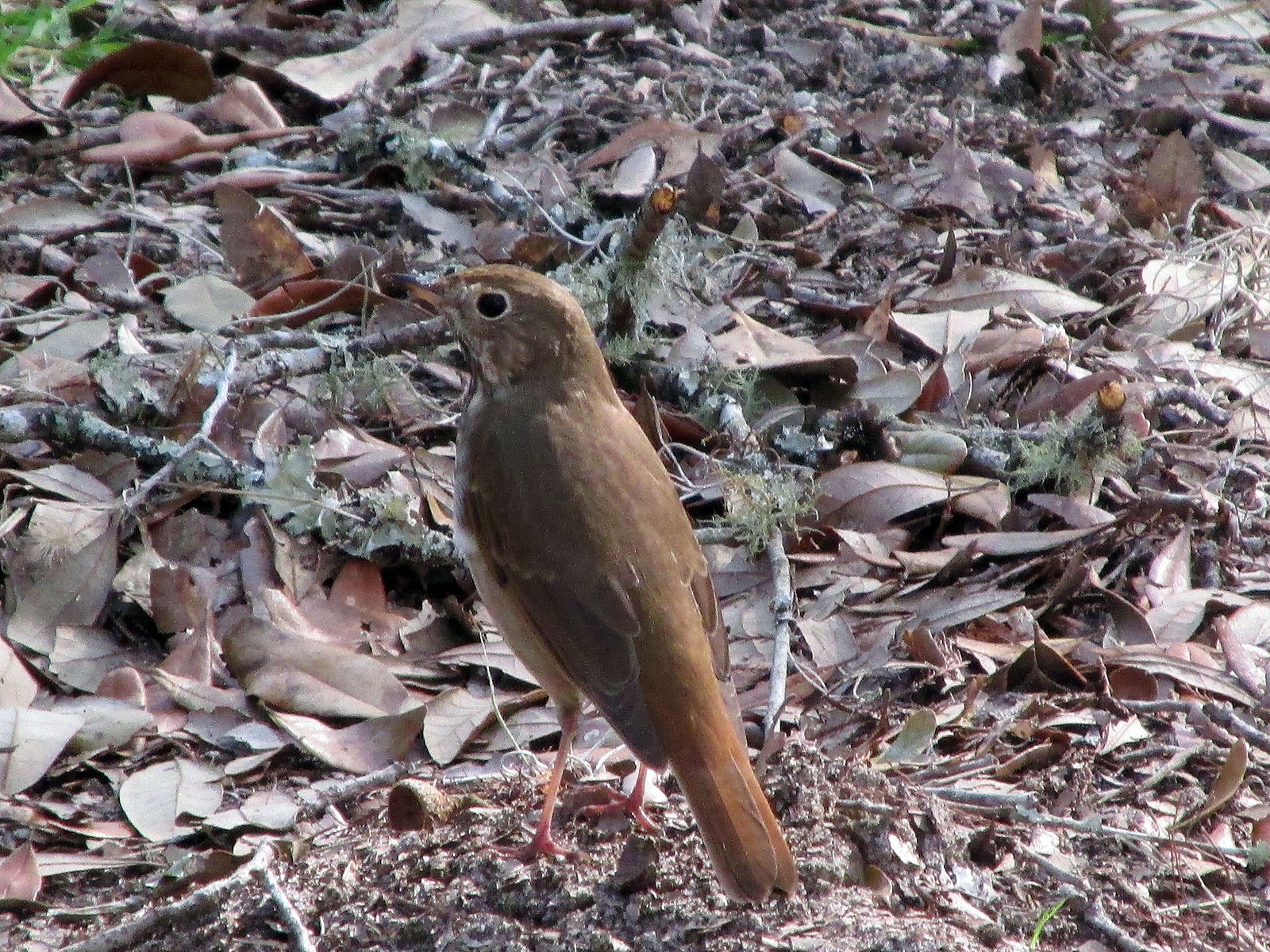
Five Hermit Thrushes were among the many species found during the Elizabethton CBC.

Golden-crowned Kinglet, 32; Ruby-crowned Kinglet, 2; Eastern Bluebird, 114; Hermit Thrush, 5; American Robin, 450; and Northern Mockingbird, 27.

European Starling, 1,707; American Pipit, 40; Cedar Waxwing, 116; Palm Warbler, 3; and Yellow-rumped Warbler, 106.

Eastern Towhee, 12; Chipping Sparrow, 72; Field Sparrow, 31; Fox Sparrow, 3; Song Sparrow, 104; Swamp Sparrow, 104; White-throated Sparrow, 78; and Dark-eyed Junco, 74.

Northern Cardinal, 123; Eastern Meadowlark, 4; House Finch, 51; Purple Finch, 1; Pine Siskin, 25; American Goldfinch, 101; and House Sparrow, 41.

•••••

Fall-Yellowthroat

A Common Yellowthroat is a rare bird in Northeast Tennessee during the winter months.

It was strange to walk outside in short sleeves this past Christmas. This weird winter weather has also led to some unexpected bird sightings. I saw my first-ever winter warbler (other than Yellow-rumped Warbler) at home ton Dec. 30. The warbler was a male Common Yellowthroat lurking in the cattails near the fish pond. Several years ago, I found a female Common Yellowthroat at Wilbur Lake on a Christmas Bird Count. In addition to the yellowthroat, I found a Swamp Sparrow in the cattails. I also had a flock of Dark-eyed Juncos (as opposed to just one bird) in the backyard that same day.

I am pleased to find that the winter birds are gradually arriving. Now that it looks like more typical winter temperatures might prevail for awhile, I expect activity to increase at my feeders.

•••••

To learn more about birds and other topics from the natural world, friend Stevens on Facebook at https://www.facebook.com/ahoodedwarbler. He is always posting about local birds, wildlife, flowers, insects and much more. If you have a question, wish to make a comment or share a sighting, email ahoodedwarbler@aol.com.

••••••

This week’s post is dedicated to Sassy, a one-of-a-kind cat that shared my life from the summer of 2002 until Dec. 26, 2015.Sassy

Departures, new arrivals signal approach of winter

October represented a transitional time for the region’s birds. Many of our summer birds have now departed for wintering grounds, which means we won’t be seeing them again until April or May of 2016.

Hummer-Oct17

The last Ruby-throated Hummingbird of 2015.

I saw hummingbirds daily in my yard during October through the 17th day of the month, when I saw only a single bird at the feeders. The following day no hummingbirds appeared in the yard.
I am still hanging sugar water feeders in the unlikely chance I might attract a visit from one of the Selasphorus hummingbirds, a genus of these tiny birds that spends the nesting season in the western United States. A few of these species appear to migrate through the southeastern United States each fall and early winter. Rufous hummingbird is the species most likely to make an appearance, but other species — Allen’s hummingbird and black-chinned hummingbird — are a possibility.

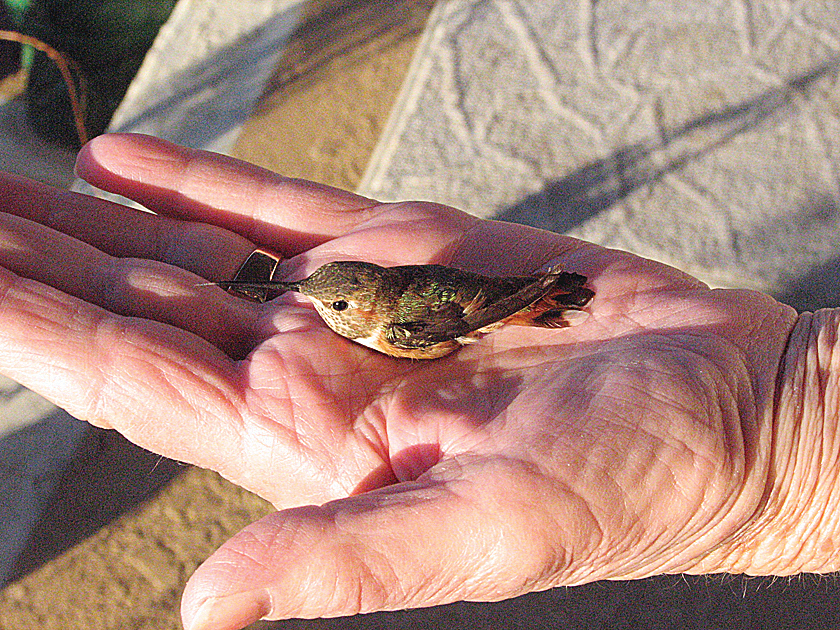
Rufous-BettyKirby-Three-Program

A Rufous Hummingbird I observed being banded several years ago in Hampton, Tennessee.

These “winter” hummingbirds are easy to recognize. Their plumage is more brown than green, making them quite distinguishable from the usual ruby-throated hummingbird, which is not usually present in the region after the end of October.
•••••
Most of the warblers have also departed. I saw a couple of common yellowthroats on Oct. 10, but they represented the last gasp of warbler migration. Most of the warblers winter in Central America or the Caribbean, although a few travel only as far as Florida.


Yellow-Rump-Frippy

The Yellow-rumped Warbler is one of the few warblers that remains in the region for the winter months.

Of course, there’s always an exception to the rule. The aptly-named yellow-rumped warbler is a winter resident throughout much of Virginia and Tennessee. I had a couple of yellow-rumped warblers in the yard on Oct. 25. The winter diet of this warbler includes the berries of poison ivy, so the bird helps with the spread of this noxious plant.
••••••
I often think of October as the season for sparrows, and this year proved no exception. Three different species marked their return during October.
Of all the birds associated with winter weather, few are as symbolic as the dark-eyed junco, or “snow bird.” The junco occurs in several geographic variations.
John V. Dennis, author of “A Complete Guide to Bird Feeding,” captures the essence of the junco in the following description: “Driving winds and swirling snow do not daunt this plucky bird. The coldest winter days see the junco as lively as ever and with a joie de vivre that bolsters our sagging spirits.” The dark-eyed junco’s scientific name, hyemalis, is New Latin for “wintry,” an apt description of this bird.
Most people look forward to the spring return of some of our brilliant birds — warblers, tanagers and orioles — and I must admit that I also enjoy the arrival of these birds. The junco, in comparison to some of these species, is not in the same league. Nevertheless, the junco is handsome in its slate gray and white plumage, giving rise to the old saying “dark skies above, snow below.”
The first junco showed up this year on Halloween. Sheila Boyd, a Facebook friend who lives in Marion, North Carolina, sent me a message to let me know she saw her first juncos on Oct. 29.


Swamp_Sparrow

The Swamp Sparrow is most often found in wetland habitats.

My junco sighting on Oct. 31 followed observations earlier in the month of some other wintering sparrows. I have allowed a stand of cattails to grow unmolested on my property, and now my action is paying dividends. I’ve seen numerous swamp sparrows in my small cattail marsh, beginning with one that I saw on Oct. 11.
The cattails also persuaded a marsh wren to pay a visit on Oct. 4. Marsh wrens and swamp sparrows are not the only birds fond of cattails. These plants also attract birds as diverse as rails and snipes, as well as red-winged blackbirds, common yellowthroats and various waterfowls.
White-throated sparrows showed up on Oct. 15, which is fairly typical for this winter resident. The numbers of this attractive sparrow have been increasing since that date.


White-throated_Sparrow-27527

Photo by Ken Thomas                                            A White-throated Sparrow shows off its namesake white throat.

While I have learned to associate this bird with winter’s arrival, some Native American tribes connected the white-throated sparrow with the annual return of spring. According to Laura C. Martin, author of “The Folklore of Birds,” the Blackfoot Indians called the white-throated sparrows “summer-bringers.” The members of this tribe believed that the message of the sparrow’s song was “the leaves are budding and summer is coming.”
The song of the white-throated sparrow has also earned distinctive translations among the residents of Canada and the United States. Those translations can be described as “Oh sweet Canada, Canada, Canada” or “Old Sam Peabody, Peabody, Peabody.”
While the shy swamp sparrows usually maintain a reclusive presence in the cattails, white-throated sparrows and dark-eyed juncos are regular visitors at my feeders once they arrive. Both the junco and the white-throated sparrow prefer to feed on the ground beneath the feeders. A few other sparrows will visit feeders, including song sparrow, field sparrow, chipping sparrow and white-crowned sparrow.


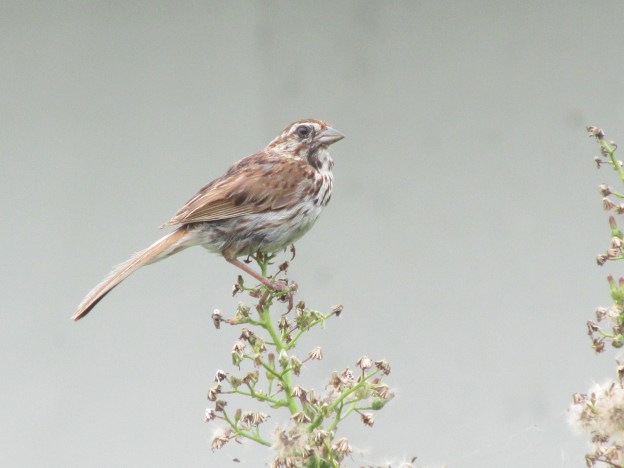
SongSparrow-Cattailss

A Song Sparrow perches on a dry cattail stalk.

Of course, the real entertainment from our sparrows comes from their frequent visits to our backyard feeders. When these birds flock to a feeder and began a furious period of eating, I don’t even have to glance skyward or tune in the television weather forecast. I know what they know. Bad weather is on the way!


With our winter birds beginning to arrive, I’d love to hear what readers are seeing at their own feeders. Send me an email at ahoodedwarbler@aol.com to ask questions, share observations or makes a comment.