Category Archives: Catbirds

Hummingbirds, other summer birds get ready to depart

Photo by Bryan Stevens • A ruby-throated hummingbird visits a feeder for a sip of sugar water.

I always feel some reluctance and regret when I turn the calendar page from August to September.

I don’t have anything against fall – it’s my favorite season. But I know that our ruby-throated hummingbirds, which returned only five months ago in early April, will soon be departing.

It won’t be only the hummingbirds. Warblers, orioles, tanagers and other migrants will also fly south to spend the winter season somewhere more hospitable.

Most of the hummingbirds that visited our gardens over the summer are getting ready to migrate back to their winter homes in Central America.

I’m seeing only a few adult male hummingbirds with the namesake red throat. They are outnumbered by females and young hummingbirds that hatched in late spring and throughout the summer. It’s fun to watch young hummingbirds. They often have something to prove. In many ways, they’re even more feisty than adult birds.

Photo by Bryan Stevens • A male ruby-throated hummingbird perches at a feeder for a sip of sugar water.

In any given year, the numbers of hummingbirds passing thorough is going to fluctuate. Some years, these tiny flying gems will be present in good numbers on an almost daily basis. Other years, hummingbirds can become quite scarce.

I usually enjoy my best hummingbird numbers in the fall as these little birds begin their leisurely journey back south. Late August and the month of September is usually a great time to watch hummingbirds.

During August, the feeders at my home and my mother’s home saw a great deal of activity. Blooms of wildflowers and cultivated flowers also attracted them. Earlier in the summer the hummingbirds went gaga for the crocosmia blooms and the flowering bee balm. For the past month, the tube-shaped flowers of orange jewelweed has kept them coming back for more.

The New World is home to about 360 species of hummingbirds. We’ve expended many adjectives in finding names of them all. Sometimes, words fail. Mere adjectives are somewhat inadequate in providing common names for many of the world’s more hummingbirds, but that doesn’t keep us from trying to give descriptive names to each hummingbird species. For instance, we have the beautiful hummingbird of Mexico; the charming hummingbird of Costa Rica and Panama; the festive coquette of northwestern South America; and the magnificent hummingbird of the southwestern United States.
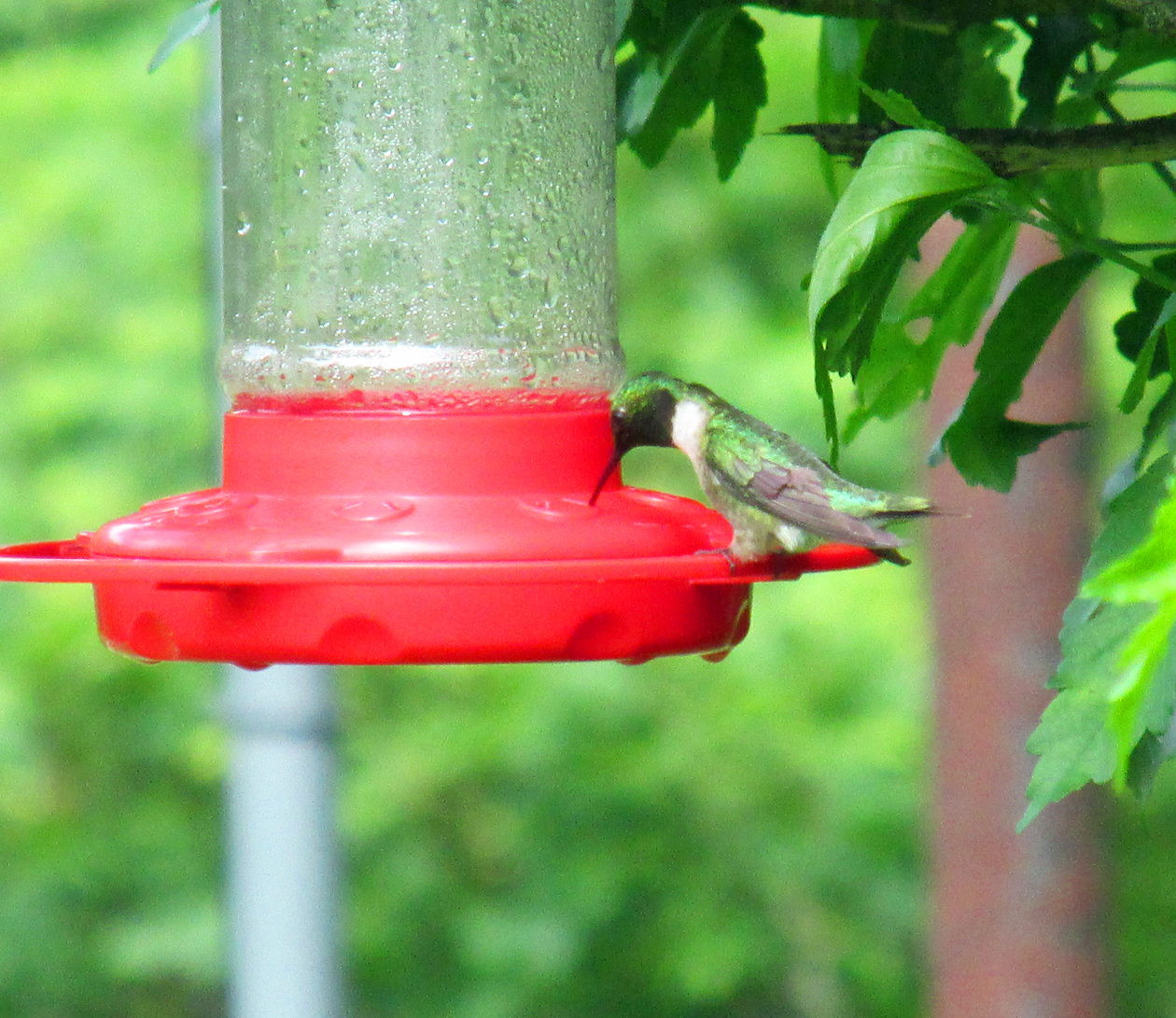
Photo by Bryan Stevens • A ruby-throated hummingbird sips from a sugar water feeder.

Other names are even more elaborate and occasionally outlandish, such as the white-tufted sunbeam of Peru; the violet-throated metaltail of Ecuador; the violet-throated starfrontlet of Peru and Bolivia; the hyacinth visorbearer of Brazil; and the rainbow-bearded thornbill of Colombia and Ecuador.

As for our own ruby-throated hummingbirds, wish them well as they begin that long trek back to their wintering grounds. For the young birds, this will be their first epic crossing of the Gulf of Mexico, something the species must do twice a year to get to and from their summer home in eastern North America.

•••

Bryan Stevens has written about birds, birding and birders since 1995.
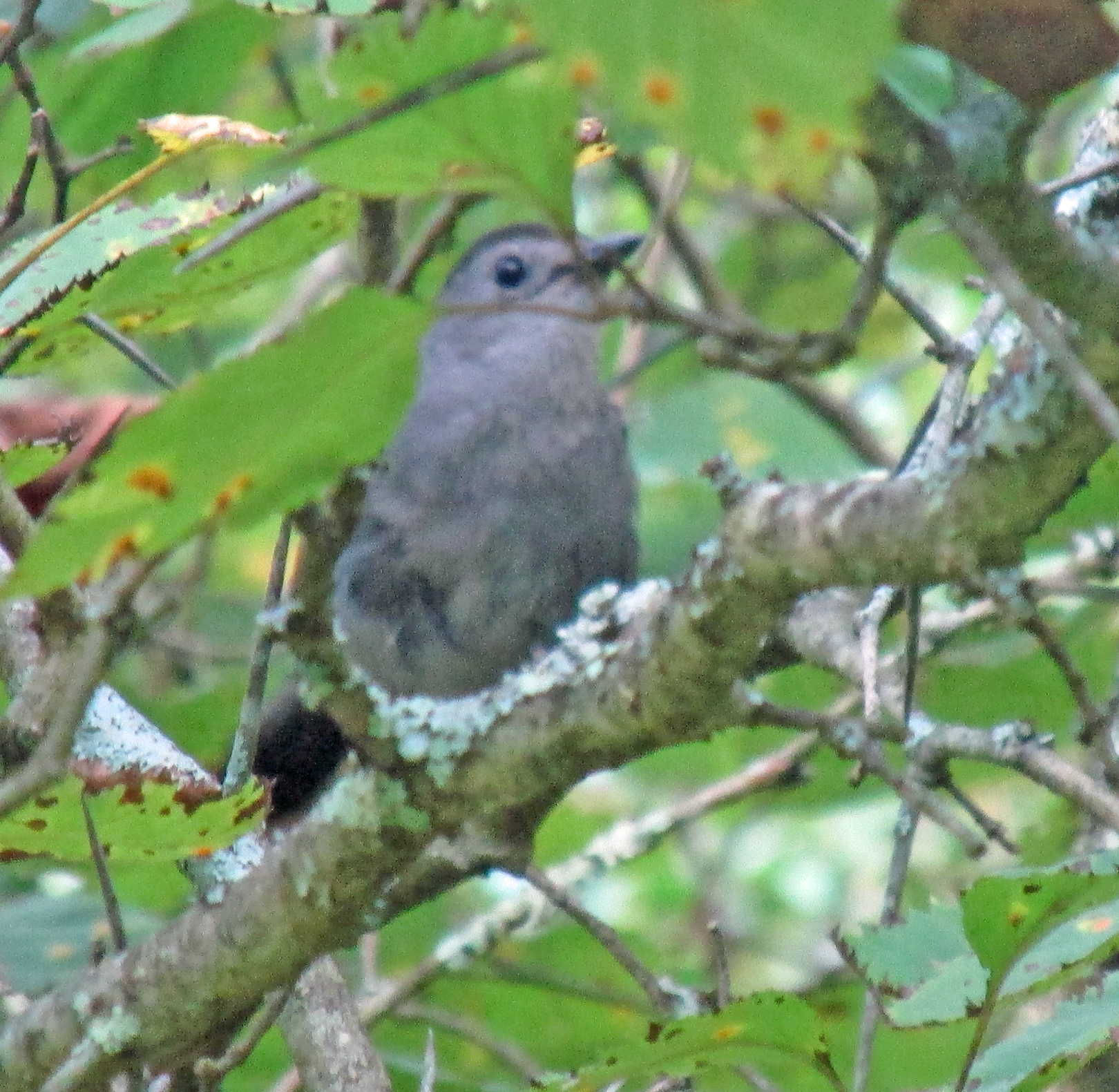
Catbirds make noisy neighbors during the warmer months

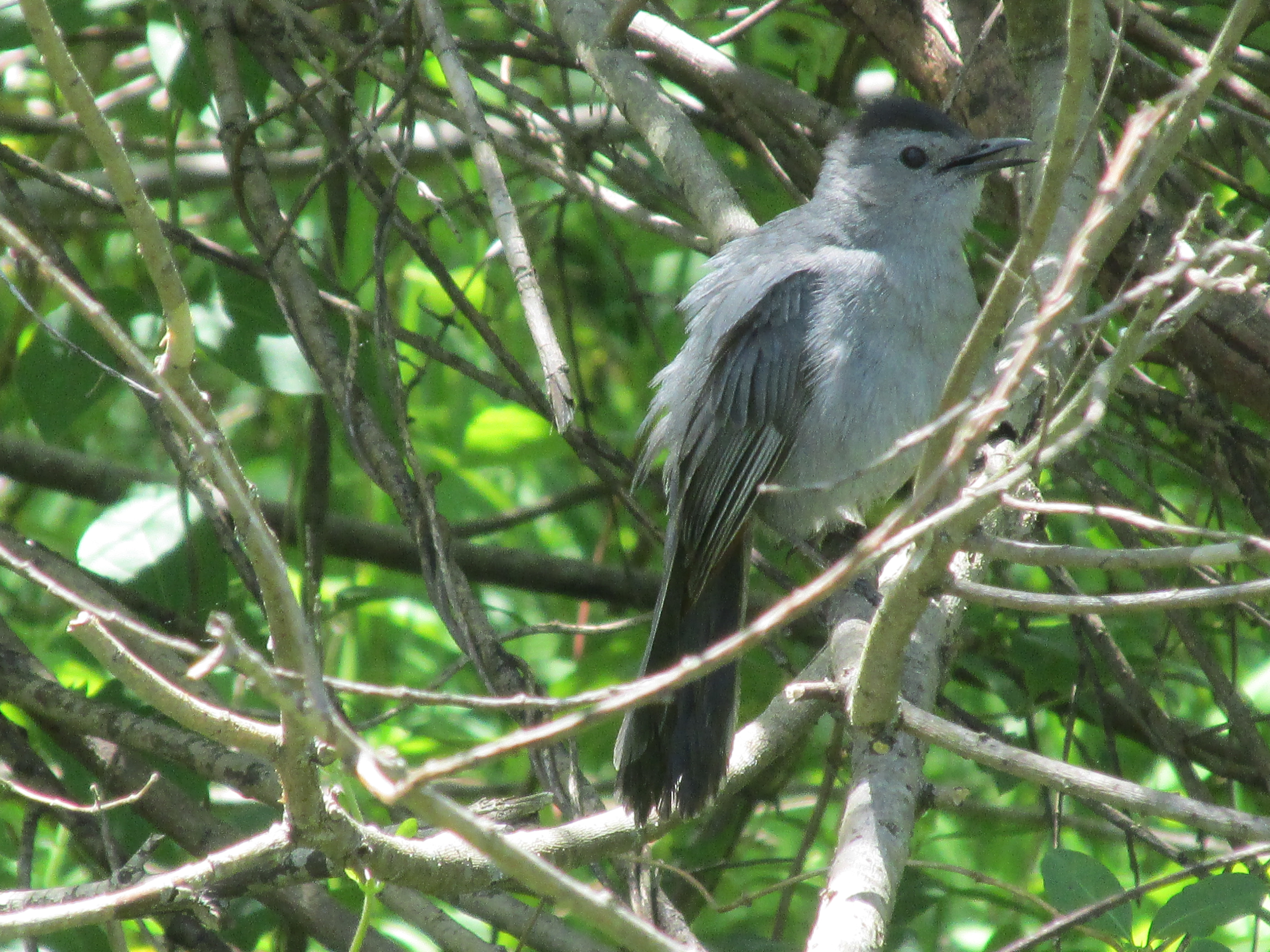
Photo by Bryan Stevens A curious Gray Catbird peeks from dense cover. Attendees at the fall rally can look for catbirds and other species at any of the offered bird hikes.

(NOTE: Hurricane Helene disrupted my weekly posting. I’ve still been writing, so catching up now on the posting.)

I wrote last week about brown thrashers. This week I’m turning the spotlight on a close relative of the thrashers, the gray catbird.

As summer has waned and autumn’s approach has become more inevitable with each passing day, I’ve become more aware of both thrashers and catbirds skulking around the edges of the yard and the nearby woodlands.

These birds have been lured closer by polk berries, wild grapes and pin cherries. Both thrasher and catbirds are fond of fruit. One summer my mom and I “trained” a catbird to come to the discards left behind when strawberries are “capped.” Not as picky as people, the catbird thought the discarded scraps of strawberries provided an unexpected treat.

Catbirds are part of a family related to thrushes that are known as “mimic thrushes.” Besides its surprisingly accurate rendition of a feline, the catbird has several other common vocalizations. Despite their shy nature, they’re extremely curious. Imitating their calls or simply producing a squeaky sound will usually persuade the bird to move out of cover and search for the source of the noise.

Catbirds are part of the annual fall exodus that includes species like rose-breasted grosbeaks, scarlet tanagers, Baltimore orioles and indigo buntings, but because they lack the brilliant plumages of these other birds their passage would probably go unnoticed if not for the fact they are extremely noisy.

Catbirds do get quieter during the nesting season when they take up the serious business of raising young, but after that annual task is completed they immediately slide back into their crotchety vocal habits.

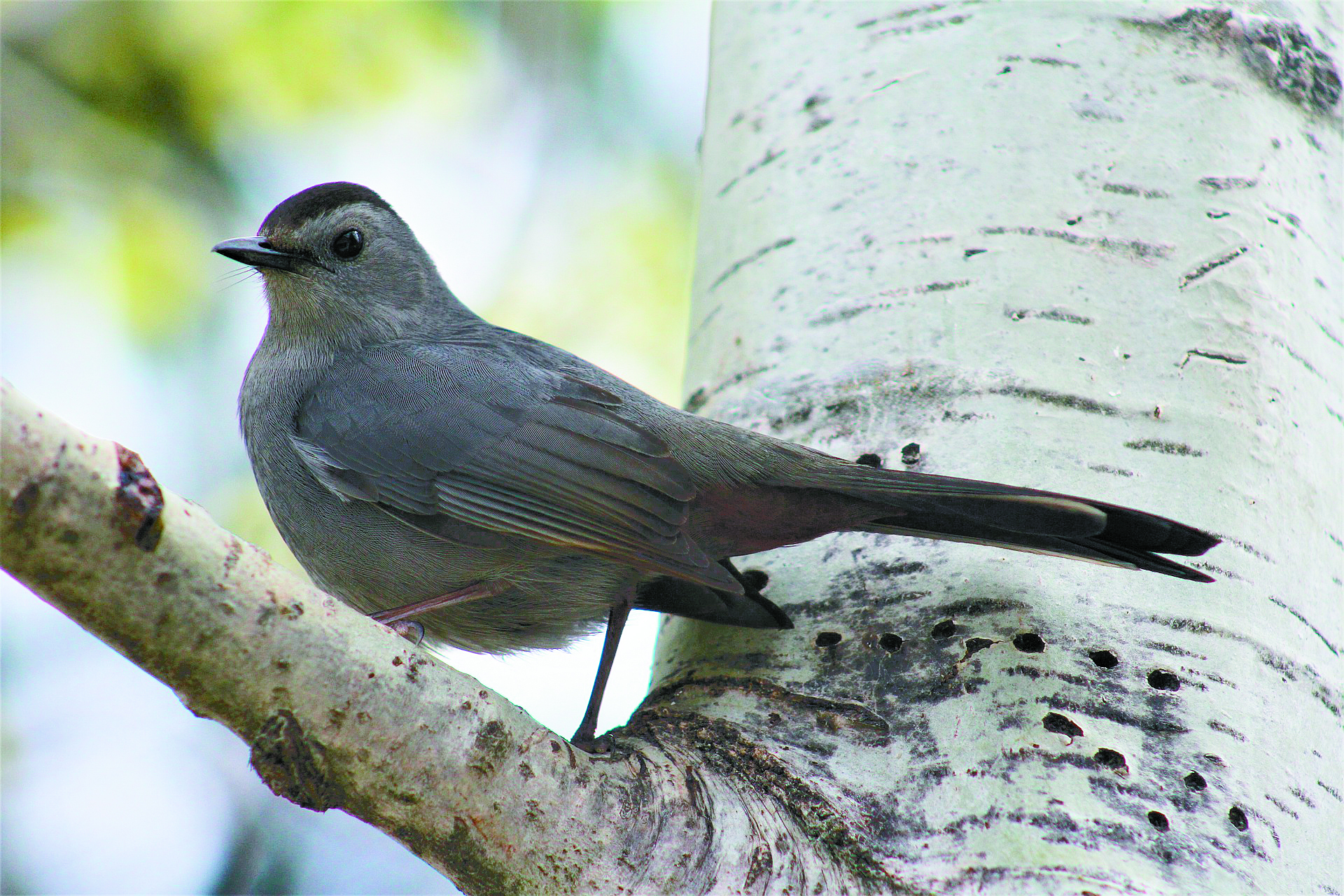
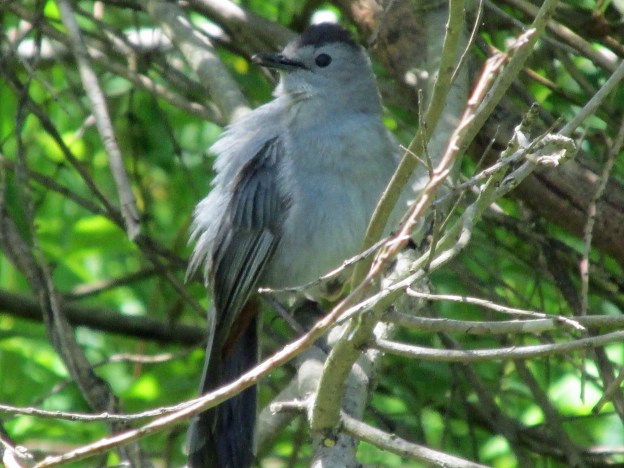
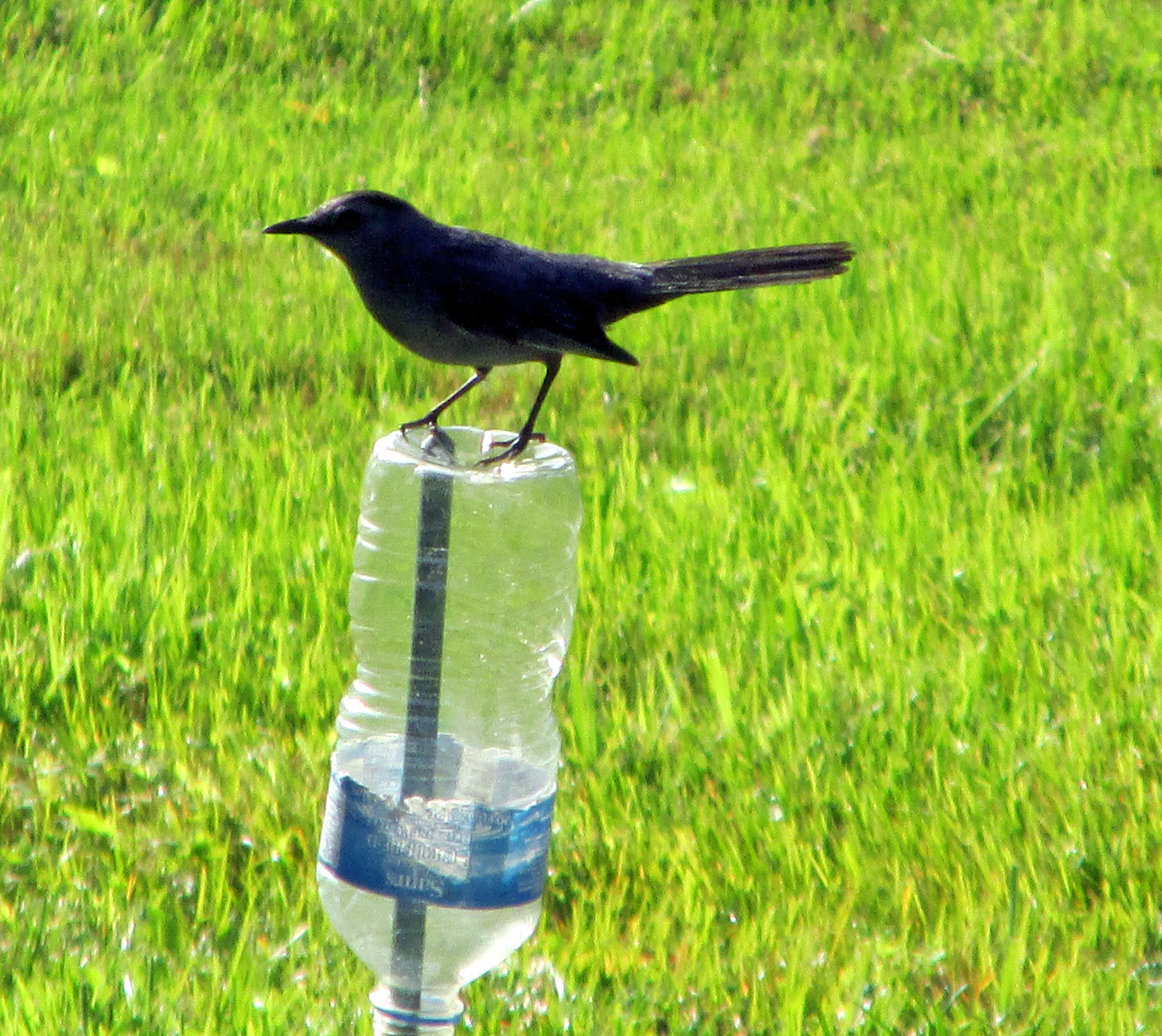
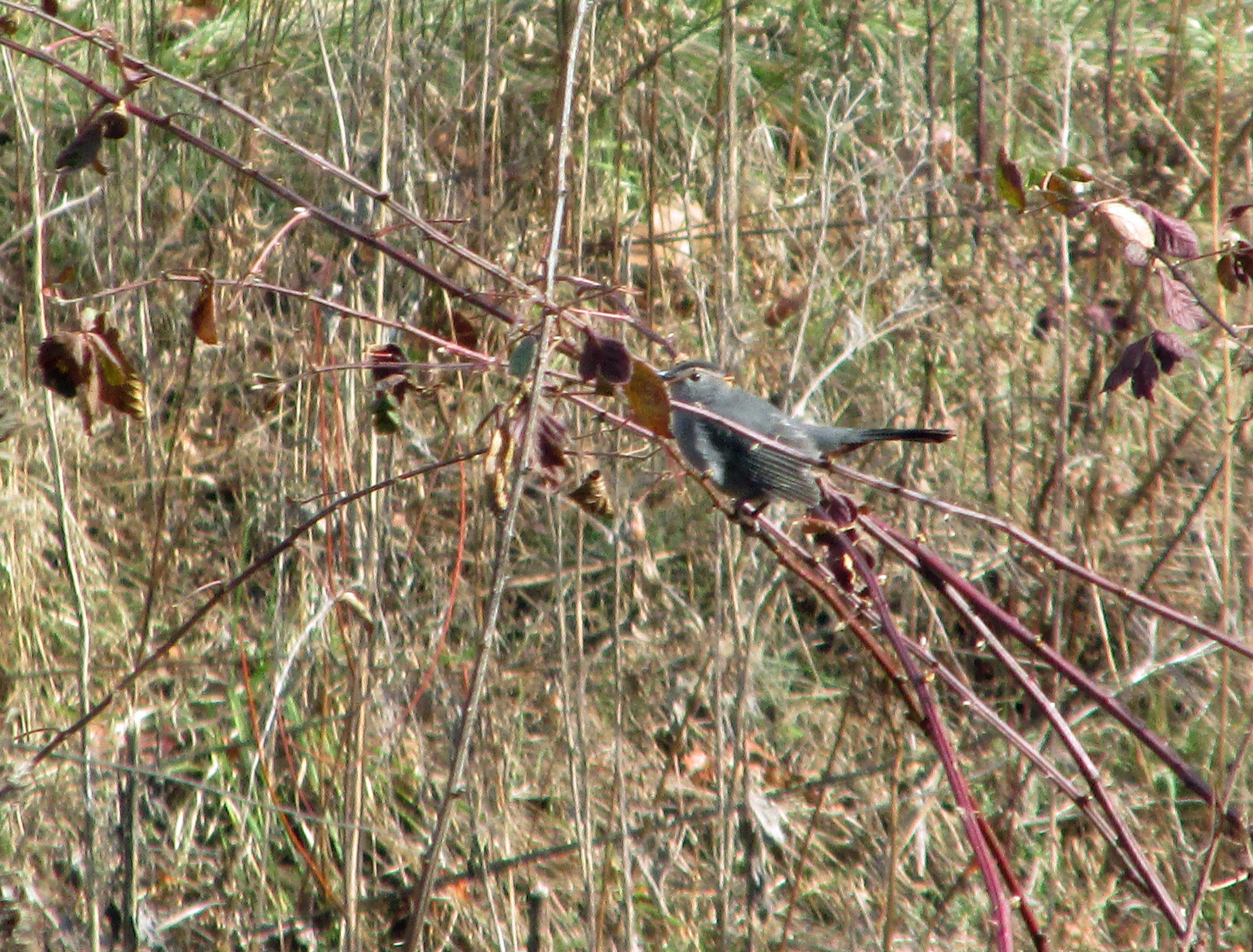
Catbirds are experts at concealing themselves from prying eyes. The bird’s charcoal gray plumage, unbroken except for a patch of maroon feathers beneath the tail, blends into the shadowy sections of the tangles and thickets where they like to lurk. However, even when gray catbirds are reluctant to be seen, they’re almost eager to be heard. As indicated, the catbird is extremely vocal with several calls and songs in its repertoire, including the rather faithful rendering of a fussy cat’s meow that provides this bird its common name.

They are related to thrashers and mockingbirds, but scientists find them just different enough to warrant placing the gray catbird in its own genus.

A relative known as the black catbird, which ranges throughout the Yucatan Peninsula of Mexico as well as northern Guatemala and northern Belize, also belongs to a genus of its own. Both catbirds are classified as “mimic thrushes,” or Mimidae, of which there are about 30 species in the New World.

There is also a totally unrelated family of catbirds that ranges through Australia, Asia and parts of Africa. Some of these birds include the ochre-breasted catbird, tooth-billed catbird and spotted catbird.

The gray catbird is not as an accomplished mimic as some of its relatives, such as the Northern mockingbird. Nevertheless, experts have documented that the gray catbird can produce more than 100 different sounds. Males have motivation to constantly expand their repertoire, however, as doing so increases the likelihood of attracting a mate. They imitate other birds, but some have been recorded imitating frogs and other non-avian singers.

An occasional catbird enjoys surprising longevity. The oldest known gray catbird was at least 17 years, 11 months old when it was recaptured and rereleased during banding operations in New Jersey in 2001, according to the website All About Birds. That individual had been banded originally in Maryland in 1984.

I will miss the catbirds once they depart farther south for the winter, although occasionally a few hardy individuals linger into November and December in the region.

Other birds, including warblers, hummingbirds and most flycatchers will soon take their leave until next spring. Try to enjoy them before they decamp.

•••

To share a sighting, ask a question or make a comment, please email me at ahoodedwarbler@aol.com.


Raucous ravens, hooting owls and more contribute to the autumn soundscape

Photo by LoggaWiggler from Pixabay • Ravens are extremely vocal birds. Captive-raised ravens have even learned words.

The spring bird chorus is deservedly famous, but the birds don’t exactly go silent in the autumn.

Although recent mornings have started out with a definite chill over the past couple of weeks since the calendar officially turned the page into fall, the birds have simply fluffed their feathers and continued with business as usual.

The birds have been active despite these morning chills that I have been somewhat reluctant to acknowledge. Carolina wrens scold from tangles of vines and weeds. As of Oct. 5, I am still hearing the soft whirr of hummingbird wings, too, although I know that the curtain’s closing on their yearly stay. Other vocalizations I’ve detected early in the day have included the rattle of a belted kingfisher at the fish pond, the quarrelsome mews of a gray catbird plucking pokeberries one at a time from an overladen plant and a vigorous Eastern Phoebe repeating its “fee-bee” name continuously from the edge of the woods.

Some other birds also make their presence known while remaining concealed from direct visual observation, including a great horned owl that regularly produces resonant, distant hoots from a nearby ridge. From the ridge behind my home, the croaks of common ravens have added a bit of a spooky vibe to fog-shrouded mornings.

Photo by Bryan Stevens • A great horned owl grasps a post with its talons. This bird was part of a show at Callaway Gardens in Georgia featuring rehabilitated raptors.

Ravens are extremely vocal birds. In addition to the harsh croaks usually associated with these birds, raven can also produce an uncanny imitation of a tinkling bell.

I’m not pulling any legs. Among their vocal repertoire, ravens can produce, usually in flight, a “bell” call. I’m not sure if this is a common vocalization. I only remember ever hearing a raven’s “bell” on a few occasions. I was with a group of more established birders at Roan Mountain State Park when a raven flew overhead. Someone called out, “Listen to that.” I listened and heard my first raven “bell” call.

The strange thing is that I can find little about this unusual vocalization when I researched the subject. According to the website All About Birds, common ravens calls vary from a low, gurgling croak to harsh grating sounds and shrill alarm calls. Scientists have placed their vocalizations into as many as 33 different categories based on sound and context. The most commonly heard is the classic gurgling croak, rising in pitch and seeming to come from the back of the throat.

The croak is their standby vocalization, which they produce often. The raven’s croak can be heard from a mile away. And, in defense of the poet Edgar Allan Poe and his “ominous bird of yore,” ravens are accomplished mimics. According to All About Birds, ravens can imitate other birds. Raven raised in captivity can even learn words. “Nevermore?”

This is the time of year when departures appear to outpace new arrivals, but there are some birds that will soon make their return after a lengthy absence, including white-throated sparrows, dark-eyed juncos and winter wrens. The local ravens, on the other hand, appear to have chosen to reside near my home year-round.

From the opening refrain of “once upon a midnight dreary” in his poem, “The Raven,” Edgar Allan Poe established a somber mood and also helped cement the dark reputation of one of North America’s most misunderstood birds. Poe describes the bird that provides the title of his famous poem with adjectives such as “grim, ungainly, ghastly, gaunt and ominous.” His raven also speaks, although it has the limited vocabulary of a single word, “Nevermore.”

How else does the real common raven resemble the “bird of yore” in Poe’s classic poem? For starters, the raven is an intelligent bird. Authors of a scientific study conducted about 15 years ago posited the claim that ravens and crows are just as intelligent as some of the great apes. Although parrots are more famous for the ability to mimic human speech, captive ravens have proven capable of learning more words than even the most impressive vocabulary-endowed parrots. So, Poe was not wide of the mark when he gave the gift of gab to the raven in his poem.

The sounds of autumn are definitely richer for having the croaking calls of ravens in the mix. Keep your eyes (and ears) open for new arrivals as the transition of seasons continues.

•••

To share a sighting, ask a question or make a comment, email me at ahoodedwarbler@aol.com.

Among feathered friends, catbirds are individuals

Photo by Bryan Stevens • Although often considered shy, skulking birds, some catbirds show a great deal of curiosity about and trust in humans.

I received an email on June 15 from Linda Durette, who lives in Townsend, Massachusetts, which is on the New Hampshire border.

“I live in a country environment with thickets and fields,” she noted.

Linda informed me that she had run across an article I wrote in 2019 about gray catbirds.
“I have always been mildly intrigued by the catbird,” she wrote. ‘Working around the yard and having a cat myself, I always got a kick out of their vocal annoyance with my cat.”

She said the catbirds begin squawking at her cat the minute he steps out the door.

Photo by by Jennifer Beebe from Pixabay • Gray catbirds have a reputation for being either shy skulkers or bold scolders. In fact, these birds are known for being individuals with unique and distinctive personalities. Like mockingbirds and thrashers, the gray catbird is considered a mimic thrush and can imitate snippets of the songs of other birds.

“I always kept him away from any nesting area, although he isn’t a particularly adventurous cat, anyway,” she noted.

“This year was the same,” she said. “My cat seemed to almost ignore the bird. He just sat there and allowed the bird to squawk loudly. I think the bird was miffed.”

She said she finally put her cat back in the house.

“But I have been noticing that the bird comes very close to me,” she wrote.

She wrote that the catbird appears to watch what she does when she is outdoors.

“I have been talking with him, chattering while I garden,” she wrote. “It’s a riot. He lands on the wheelbarrow handle after I walk away or allows me to walk pretty close to him as he watches.”
Linda concluded that this individual catbird, at least, seems to have quite the personality.
I’d mentioned in my previous column on catbirds about the fondness of these birds for fruit and how I occasionally offered berries to them.

“I will attempt some fruit, too,” she said. “It is so interesting. We’ll see what happens.”
Perhaps readers will recall the folksy expression “sitting in the catbird’s seat” that denotes self-satisfaction and perhaps a degree of smugness. As expressions go, it’s not a bad fit for this charming, somewhat eccentric bird.

Photo by Bryan Stevens A curious Gray Catbird peeks from dense cover. Attendees at the fall rally can look for catbirds and other species at any of the offered bird hikes.

The gray catbird is a baffling bird with a personality that runs the gamut from introverted to extroverted, sometimes depending on the season and at other times seemingly just on a whim. With some gentle persuasion, however, people can gain a catbird’s trust – as Linda has done with the bird in her Massachusetts garden – and develop a fun friendship with these clever songbirds.

One summer, all I needed to do to win over the catbirds was to offer some less-than-perfect strawberries and blueberries. A few blemishes on the fruit didn’t bother the resident catbirds at all, and they soon became accustomed to receiving such treats.

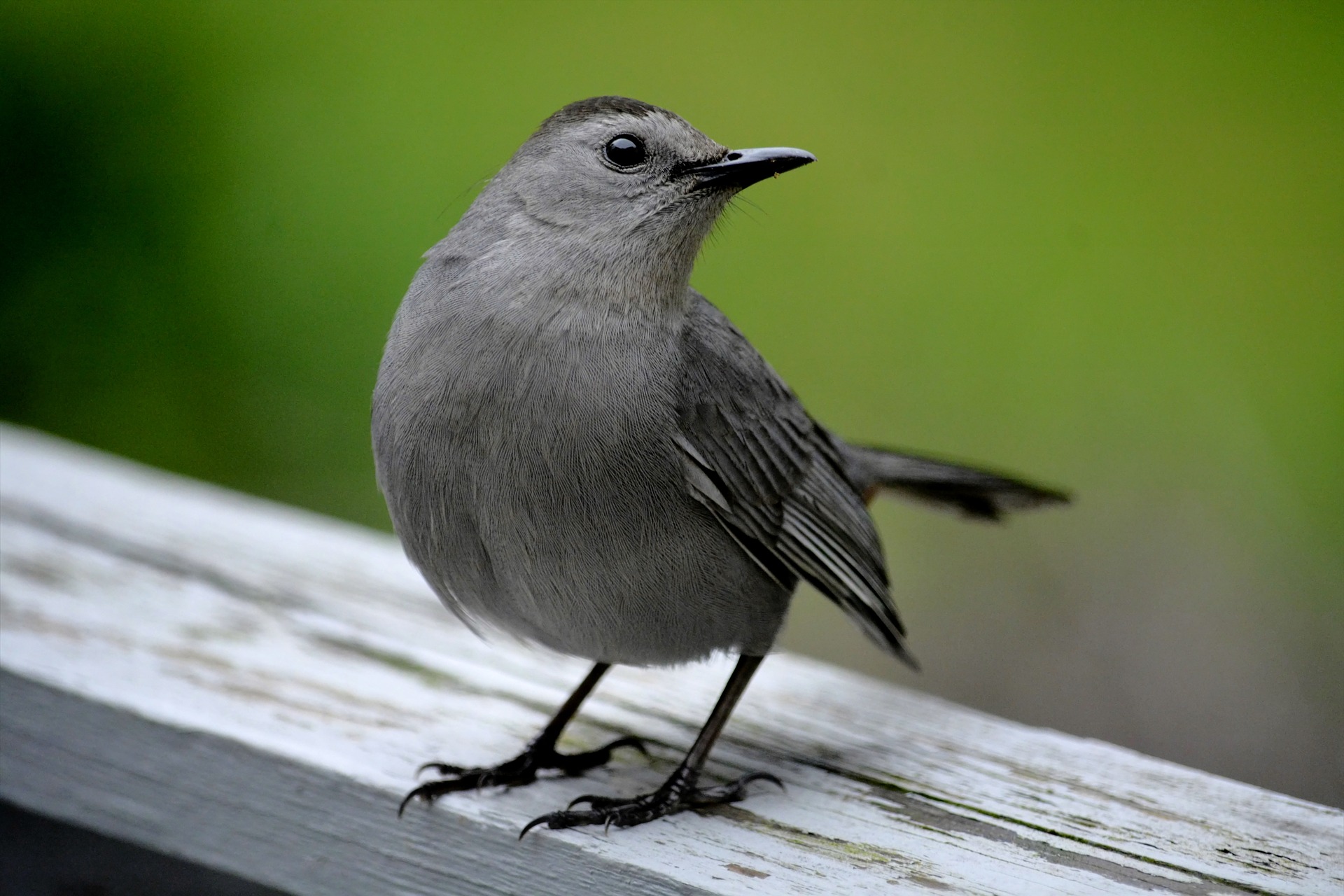
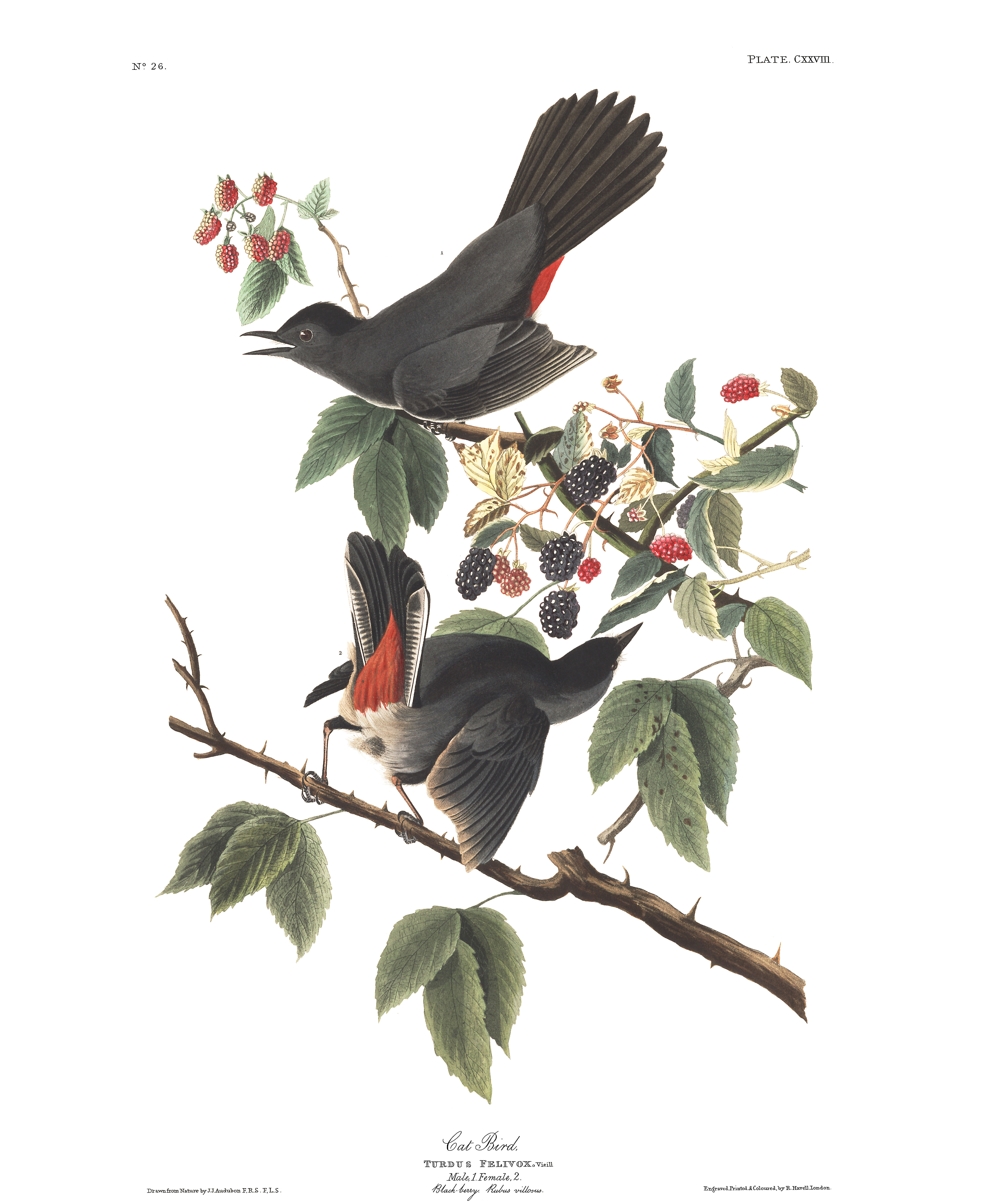
A person’s first introduction to the catbird is likely going to occur when one hears what sounds like an irritable feline hiding in a hedge, thicket or dense shrub. Upon closer examination, observers may get a glimpse of a charcoal gray bird roughly the shape of a Northern mockingbird but smaller. A black cap and a patch of rusty-red feathers under the tail are the only exceptions to this bird’s overall gray plumage.

The catbird is related to thrashers and mockingbirds, but scientists find the gray catbird just different enough to warrant placing it in its own genus. The genus name Dumetella means “small thicket.” It’s an apt name for this secretive skulker. Catbirds only feel secure in dense cover such as hedges, brush piles and dense thickets.

A relative known as the black catbird, which ranges throughout the Yucatan Peninsula of Mexico, as well as northern Guatemala and northern Belize, also belongs to a genus of its own. The genus name Melanoptila for this close relative is a compound word created from two Greek words: melas, meaning “black” and ptilon, meaning “plumage.” Both of these catbirds are classified as “mimic thrushes,” or Mimidae, of which there are about 30 species in the New World. There is a totally unrelated family of catbirds that ranges through Australia, Asia and parts of Africa.

The gray catbird is not as an accomplished mimic as some of its relatives, such as the Northern mockingbird. Males have motivation to constantly expand their repertoire, however, as doing so increases the likelihood of attracting a mate. They imitate other birds, but some have been recorded imitating frogs and other non-avian singers.

The website All About Birds also offers some helpful advice for attracting gray catbirds. To entice these birds, plant native fruit-bearing trees and shrubs such as dogwood, winterberry and serviceberry.

While the closely related brown thrasher and Northern mockingbird have both been honored with recognition as official state birds, this designation has never been bestowed on the gray catbird.

The female catbird constructs the nest, but her mate may helpfully provide some of the nesting materials. She may spend as long as a week building a rather bulky nest. She usually lays one to six eggs, which require an incubation period of about two weeks. Once the young hatch, both parents are kept busy bringing food to the young. Hatchlings will remain in the nest for about 10 days, but parents continue to care for and feed young even after they have fledged and departed the nest. Catbirds nest two or three time in a season.

According to the website All About Birds, the oldest known gray catbird was at least 17 years and 11 months old when it was recaptured and rereleased during banding operations in New Jersey in 2001. That individual had been banded in Maryland in 1984. So, if you do manage to strike up your own friendship with a catbird, there’s a good possibility that it could become a long-term relationship, especially since many birds like to return to a home territory year after year.

To share an observation, make a comment or ask a question, please send email to ahoodedwarbler@aol.com. I enjoy hearing from readers about shared interests in birds.

Gray catbirds require some gentle coaxing to give up shy habits

The gray catbird is a baffling bird with a personality that runs the gamut from introverted to extroverted, sometimes depending on the season and at other times seemingly just on a whim. With some gentle persuasion, however, people can gain a catbird’s trust and develop a fun friendship with these clever songbirds.

One summer, all I needed to do to win over the catbirds was to offer some less-than-perfect strawberries and blueberries. A few blemishes on the fruit didn’t bother the resident catbirds at all, and they soon became accustomed to receiving such treats.

Your first introduction to the catbird is likely going to occur when you hear what sounds like an irritable feline hiding in a hedge, thicket or dense shrub. Upon closer examination, you may get a glimpse of a charcoal gray bird roughly the shape of a Northern mockingbird but smaller. A black cap and a patch of rusty-red feathers under the tail are the only exceptions to this bird’s overall gray plumage.

Photo by Bryan Stevens A curious Gray Catbird peeks from dense cover. Attendees at the fall rally can look for catbirds and other species at any of the offered bird hikes.

Catbirds are experts at concealing themselves from prying eyes. The gray plumage blends into the shadowy sections of the tangles and thickets where the bird likes to hide itself. However, even when gray catbirds are reluctant to be seen, they’re almost eager to be heard. The catbird is extremely vocal, with several calls and songs in its repertoire, including the rather faithful rendering of a fussy cat’s meow that provides this bird its common name.

They’re part of a family related to thrushes that are known as “mimic thrushes.” Besides its surprisingly accurate rendition of a feline, the catbird has several other common vocalizations. Despite their shy nature, they’re extremely curious. Imitating their calls or simply producing a squeaky sound will usually persuade the bird to move out of cover and search for the source of the noise.

Catbirds are part of the parade of returning birds each spring that includes species like rose-breasted grosbeaks, scarlet tanagers, Baltimore orioles and indigo buntings, but because they lack the brilliant plumages of these other birds their arrival would probably go unnoticed if not for the fact they are extremely noisy for the first few weeks they are back. Then they go silent again and remain quieter as they take up the serious business of raising young.

However, in a mood that appears to swing with the seasons, gray catbirds emerge again in late summer and early fall when they feast on such fruit as elderberries and wild cherries while making their whiny cacophony of calls from any tangle or thicket where they happen to be.

The catbird belongs to the genus Dumetella. The name is based upon the Latin term dūmus, which roughly translated means “thorny thicket.” Dumetella, in turn, means “dweller in the thornbushes” or “small bird of the thornbushes.” It’s a rather apt description for a bird fond of habitats often dominated by thorny vegetation. Older common names for the gray catbird included cat thrush and slate-colored mockingbird.

They are related to thrashers and mockingbirds, but scientists find them just different enough to warrant placing the gray catbird in its own genus. A relative known as the black catbird, which ranges throughout the Yucatan Peninsula of Mexico, as well as northern Guatemala and northern Belize, also belongs to a genus of its own. Both catbirds are classified as “mimic thrushes,” or Mimidae, of which there are about 30 species in the New World. There is a totally unrelated family of catbirds that ranges through Australia, Asia and parts of Africa.

The gray catbird is not as an accomplished mimic as some of its relatives, such as the Northern mockingbird. Males have motivation to constantly expand their repertoire, however, as doing so increases the likelihood of attracting a mate. They imitate other birds, but some have been recorded imitating frogs and other non-avian singers.

While not generally considered a bird to visit feeders, people have succeeded in attracting catbirds to feeders designed to offer grape jelly or orange slices. Planting fruit-bearing shrubs and trees is the best means of attracting these fascinating birds to your yard and garden.