Category Archives: Christmas Bird Count

Chapter’s Roan Mountain Christmas Bird Count finds 52 species

Siskin-PairAtFeeders

An abundance of Pine Siskins on the slopes of Roan Mountain made this small finch the most numerous bird on the recent Roan Mountain CBC.

The 62nd Roan Mountain Christmas Bird Count was held Sunday, Dec 20, with nine observers in two parties. The yearly count is conducted by the Lee and Lois Herndon Chapter of Tennessee Ornithological Society, otherwise known as the Elizabethton Bird Club.


A total of 52 species was tallied, which is is above the recent 30-year average of 45.4 species. The all-time high was 55 species in 1987.
Highlights included: Ruffed Grouse, 1; Peregrine Falcon, 1; Red-breasted Nuthatch, 24; Gray Catbird, 1; Chipping Sparrow, 4; Purple Finch, 2; and Pine Siskin, 282.
The most numerous bird on the count was Pine Siskin, with a total of 282 individuals found, followed by Dark-eyed Junco, 172; American Crow, 93; and European Starling, 57.


11265198_10205657576911117_8122867075059637054_o

Usually a summer bird in the region, a single Gray Catbird was found during the recent Roan Mountain CBC.

Compared to the mild weather for most of December, cold temperatures moved in ahead of the counts for Elizabethton and Roan Mountain were held. As a result, near normal temperatures reigned on the days the counts were conducted. There was even about an inch of snow on top of Roan Mountain.

Female-Redbellied

More common at low elevations, only a single Red-bellied Woodpecker was counted during the Roan Mountain CBC.

Species found on the Roan Mountain CBC follow:
Bufflehead, 11; Ruffed Grouse, 1, Wild Turkey, 1; Great Blue Heron, 1; Turkey Vulture, 1; Sharp-shinned Hawk, 1; Cooper’s Hawk, 1; Red-shouldered Hawk, 2; Red-tailed Hawk, 7; American Kestrel, 1; and Peregrine Falcon, 1.
Rock Pigeon, 23; Mourning Dove, 13; Eastern Screech-Owl, 1; and Barred Owl, 1.
Belted Kingfisher, 3; Red-bellied Woodpecker, 1; Yellow-bellied Sapsucker, 1; Downy Woodpecker, 7; Hairy Woodpecker, 2; and Pileated Woodpecker, 4.
Blue Jay 13; American Crow, 93; Common Raven, 15; Carolina Chickadee, 20, Tufted Titmouse, 13; Red-breasted Nuthatch, 24; White-breasted Nuthatch, 11; and Brown Creeper, 2.
Winter Wren, 6; Carolina Wren, 8; Golden-crowned Kinglet, 16; Eastern Bluebird, 5; American Robin, 19; Gray Catbird, 1; and Northern Mockingbird, 2.
European Starling, 57; Cedar Waxwing, 22; Eastern Towhee, 2; Chipping Sparrow, 4; Field Sparrow, 1; Song Sparrow, 43; Swamp Sparrow, 1; White-throated Sparrow, 6; and Dark-eyed Junco, 172.
Northern Cardinal, 15; House Finch, 2; Purple Finch, 2; Pine Siskin, 282; American Goldfinch, 14; and House Sparrow, 55.
••••••


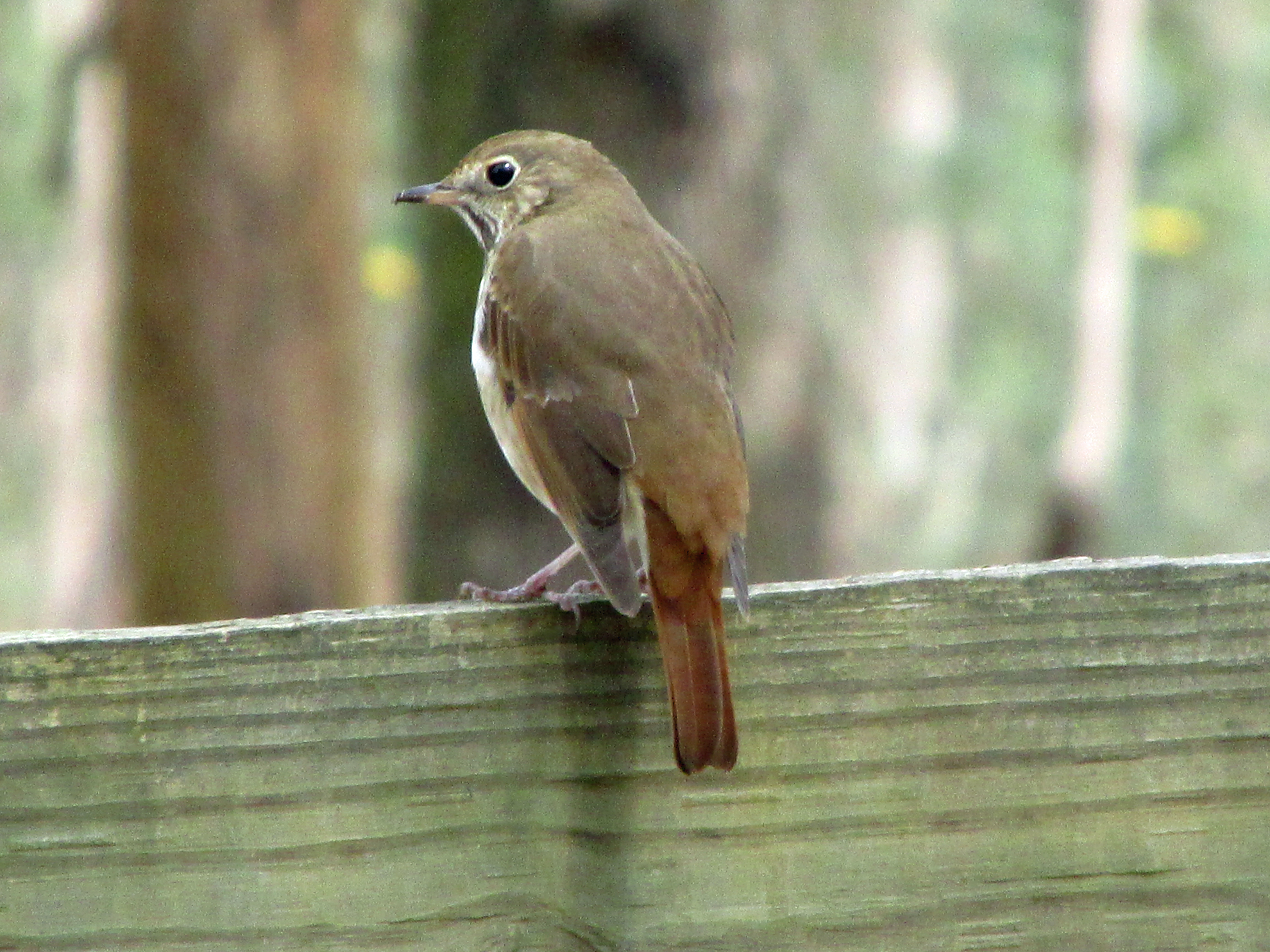
HermitThrush-April

A Hermit Thrush along Simerly Creek was the last bird found on my personal quest for 100 birds in my yard in 2015. This individual was photographed this past March in South Carolina.

My own personal Big Yard Year ended on Dec. 31, 2015. I found my last bird species of the year — Hermit Thrush — lurking in a tangle of rhododendrons on a slope overlooking Simerly Creek. The thrush was the 90th bird I found in my yard in 2015, which brought my quest to an end still shy 10 species of reaching my goal of 100 species in a calendar year.
The Hermit Thrush is the only brown thrush likely to remain in Northeast Tennessee during the winter months. Others, like the Wood Thrush and Veery, winter in the American tropics and return to the United States and Canada each spring for the summer nesting season.
The Hermit Thrush is well known for its song, which consists of a series of clear, musical notes, each on a different pitch, consisting of a piping introductory note and a reedy tremolo. The birds don’t usually sing in winter, but they do produce a call note when disturbed or alarmed that is described as a low “chuck.”
In the summer, the Hermit Thrush feeds on a variety of insects and spiders, but this bird switches to a diet of fruit and berries during the winter months.
The well-known American poet Walt Whitman used a Hermit Thrush as a powerful symbol in his famous poem, “When Lilacs Last in the Dooryard Bloom’d.” Whitman introduces the bird in his poem with the lines, “In the swamp in secluded recesses/A shy and hidden bird is warbling a song/Solitary the thrush/The hermit withdrawn to himself, avoiding the settlements/ Sings by himself a song.”


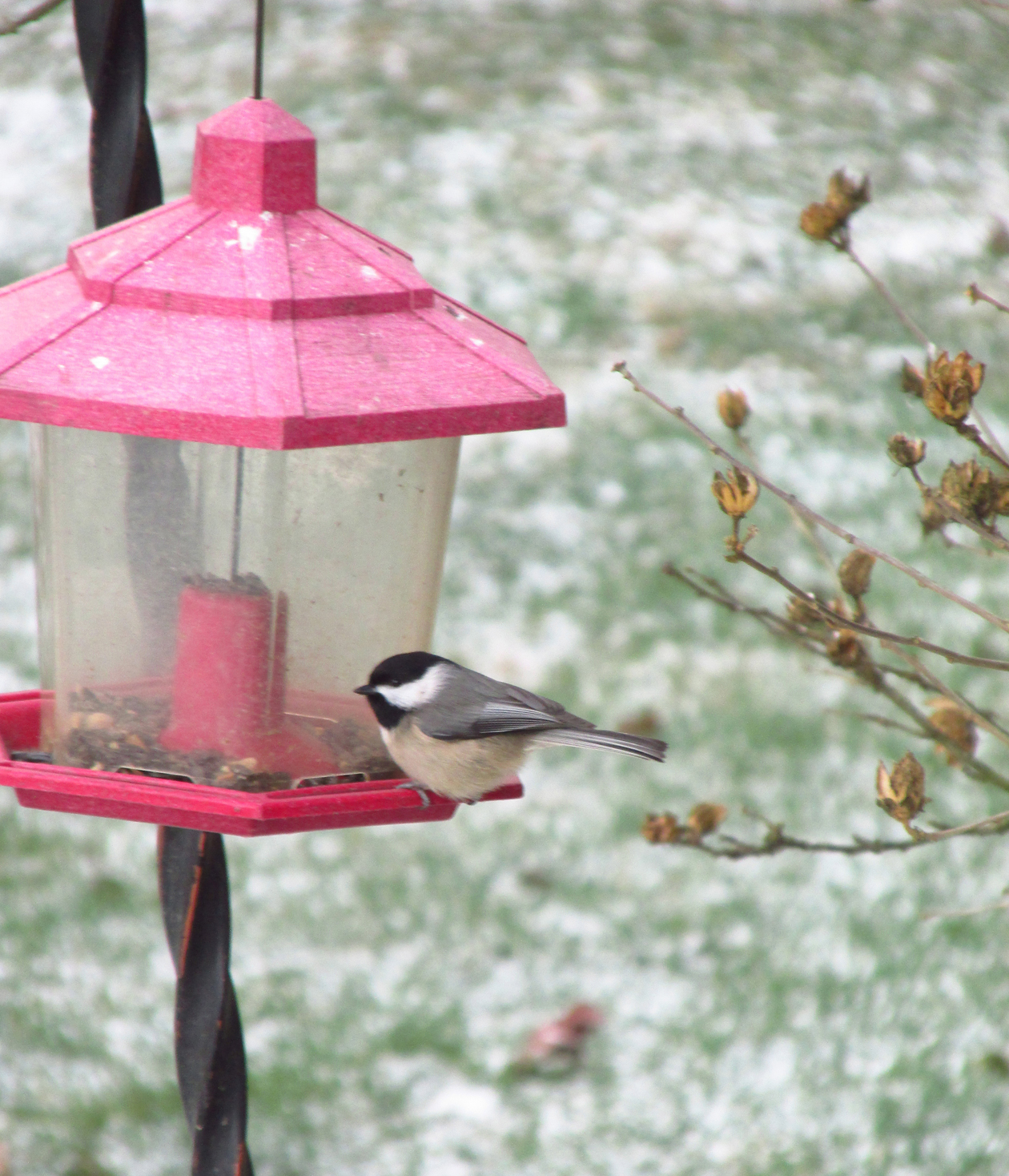
Winterchickadee

Many birds, such as Carolina Chickadees, are almost daily visitors to my yard.

Overall, I am quite pleased with finding the 90 species in my yard. After all, it broke my old record. I can’t help but think on those species that I missed. Winter species like Yellow-bellied Sapsucker and Brown Creeper, which have been relatively rare in my yard, simply didn’t make an appearance in 2015. House Wren was one bird that I had really expected to find. For some reason, however, no House Wrens took up residence at my home in 2015. Other birds that occasionally make migration stops but didn’t visit last year included Vesper Sparrow, Blue-winged Warbler, Kentucky Warbler, and Canada Goose.
I saw most of my birds in January, ending the first month of the year with 26 species. I also saw 14 species in both April and September, which testified to the strength of my yard to attract migrant birds.


Peregrine_Falcon (1)

Photo by U.S. Fish and Wildlife Service This Peregrine Falcon is a captive bird, unlike the one found during the Roan Mountain CBC.

I haven’t decided if I am setting any birding goals for 2016. I may simply enjoy birds without any specific aims. However, the year is still young. If I decide otherwise, I will announce it on my weekly blog.

Elizabethton Christmas Bird Count tallies 73 species

Cardinal-Blur

A blur of red feather signals the arrival of a male Northern Cardinal at a feeder. A total of 123 cardinals were found on the recent Elizabethton CBC.

The 73rd consecutive Elizabethton Christmas Bird Count was held on Saturday, Dec. 19, with 24 observers in six parties plus one feeder watcher.  A total of 73 species was tallied, with an additional four count-week species. This is slightly above the recent 30-year average of 71.7 species. The all-time high for this CBC was 80 species in 2012.

Long-time count compiler Rick Knight noted that some of the highlights from this year’s Elizabethton CBC included: five Blue-winged Teal, which represented only the fourth time this duck has been found for this count, as well as  Northern Shoveler and Greater Scaup.

BaldEagle-Sunning

Bald Eagle was represented by five individual birds on the recent CBC conducted by members of the Elizabethton Bird Club.

Other highlights included Bald Eagle, Eurasian Collared-Dove, Red-breasted Nuthatch, American Pipit and Palm Warbler.

The 72 Chipping Sparrows found during the CBC represented the most individuals of this species ever tallied for this count.

A few winter finches have also arrived in the area, based on the Purple Finch and Pine Siskins detected during the CBC.

Red-breastedNutHatchYAHOO

A single Red-breasted Nuthatch was found, assuring that this species made it onto the annual survey of bird populations in Elizabethton, Tennessee.

The European Starling was the most common bird with a total of 1,707 individual starlings represented on the count. Other common birds included American Crow (987), Canada Goose (511) and American Robin (450).

The total for the 2015 Elizabethton CBC follows:

Canada Goose, 511; Mallard, 129; Blue-winged Teal, 5; Northern Shoveler, 12; Greater Scaup, 2; Lesser Scaup, 1; Bufflehead, 172; and Hooded Merganser, 10.

Wild Turkey, 30; Pied-billed Grebe, 15; Horned Grebe, 10; and Great Blue Heron, 13.

Black Vulture, 16; Turkey Vulture, 26; Sharp-shinned Hawk, 2; Cooper’s Hawk, 5; Bald Eagle, 5; Red-shouldered Hawk, 2; Red-tailed Hawk, 22; and American Kestrel, 18.

American Coot, 7; Killdeer, 5; Ring-billed Gull, 65; Rock Pigeon, 349; Eurasian Collared Dove, 7; and Mourning Dove, 114.

Eastern Screech-Owl, 7; Great Horned Owl, 4; Barred Owl, 1; Belted Kingfisher, 13; Red-bellied Woodpecker, 27; Yellow-bellied Sapsucker, 7; Downy Woodpecker, 23; Hairy Woodpecker, 3; Northern Flicker, 11; and Pileated Woodpecker, 10.

Eastern Phoebe, 7; Blue Jay, 76; American Crow, 987; Common Raven, 6; Carolina Chickadee, 111; and Tufted Titmouse, 110.

Red-breasted Nuthatch, 1; White-breasted Nuthatch, 31; Brown Creeper, 2; Winter Wren, 3; and Carolina Wren, 60.

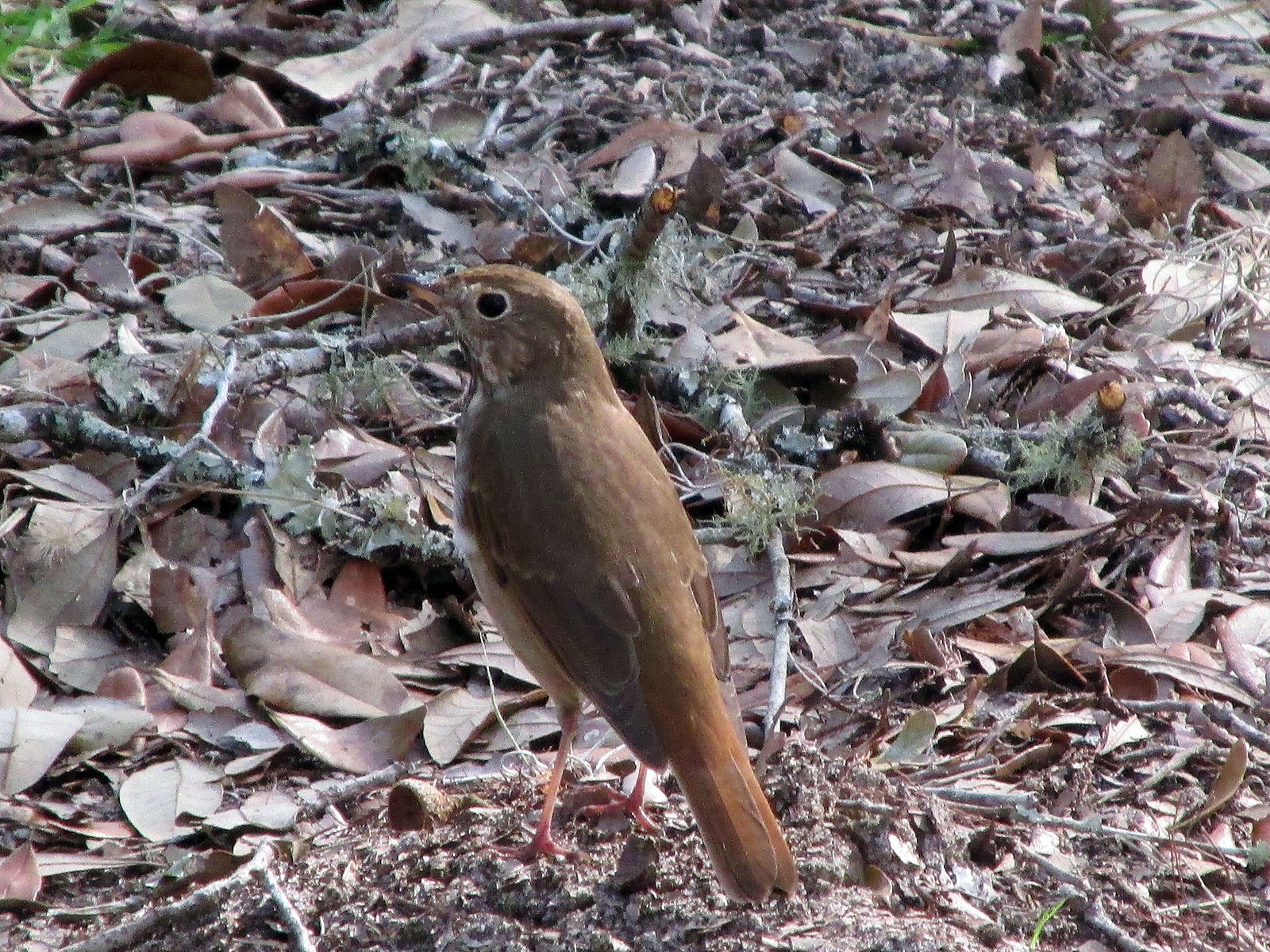
IMG_8437

Five Hermit Thrushes were among the many species found during the Elizabethton CBC.

Golden-crowned Kinglet, 32; Ruby-crowned Kinglet, 2; Eastern Bluebird, 114; Hermit Thrush, 5; American Robin, 450; and Northern Mockingbird, 27.

European Starling, 1,707; American Pipit, 40; Cedar Waxwing, 116; Palm Warbler, 3; and Yellow-rumped Warbler, 106.

Eastern Towhee, 12; Chipping Sparrow, 72; Field Sparrow, 31; Fox Sparrow, 3; Song Sparrow, 104; Swamp Sparrow, 104; White-throated Sparrow, 78; and Dark-eyed Junco, 74.

Northern Cardinal, 123; Eastern Meadowlark, 4; House Finch, 51; Purple Finch, 1; Pine Siskin, 25; American Goldfinch, 101; and House Sparrow, 41.

•••••

Fall-Yellowthroat

A Common Yellowthroat is a rare bird in Northeast Tennessee during the winter months.

It was strange to walk outside in short sleeves this past Christmas. This weird winter weather has also led to some unexpected bird sightings. I saw my first-ever winter warbler (other than Yellow-rumped Warbler) at home ton Dec. 30. The warbler was a male Common Yellowthroat lurking in the cattails near the fish pond. Several years ago, I found a female Common Yellowthroat at Wilbur Lake on a Christmas Bird Count. In addition to the yellowthroat, I found a Swamp Sparrow in the cattails. I also had a flock of Dark-eyed Juncos (as opposed to just one bird) in the backyard that same day.

I am pleased to find that the winter birds are gradually arriving. Now that it looks like more typical winter temperatures might prevail for awhile, I expect activity to increase at my feeders.

•••••

To learn more about birds and other topics from the natural world, friend Stevens on Facebook at https://www.facebook.com/ahoodedwarbler. He is always posting about local birds, wildlife, flowers, insects and much more. If you have a question, wish to make a comment or share a sighting, email ahoodedwarbler@aol.com.

••••••

This week’s post is dedicated to Sassy, a one-of-a-kind cat that shared my life from the summer of 2002 until Dec. 26, 2015.Sassy

Northern cardinal brightens holiday season and every other day of the year


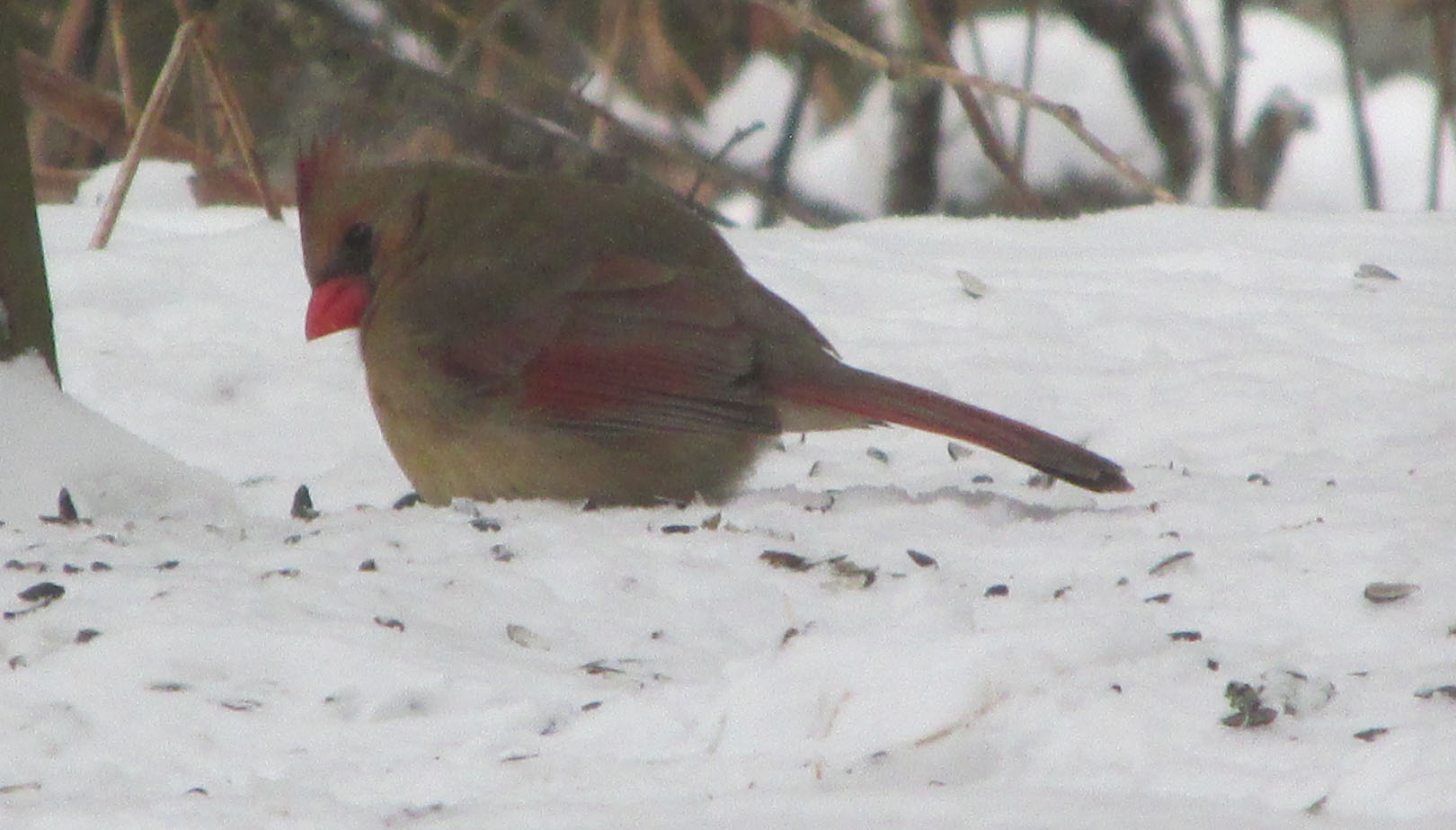
Froze-FemCardinal

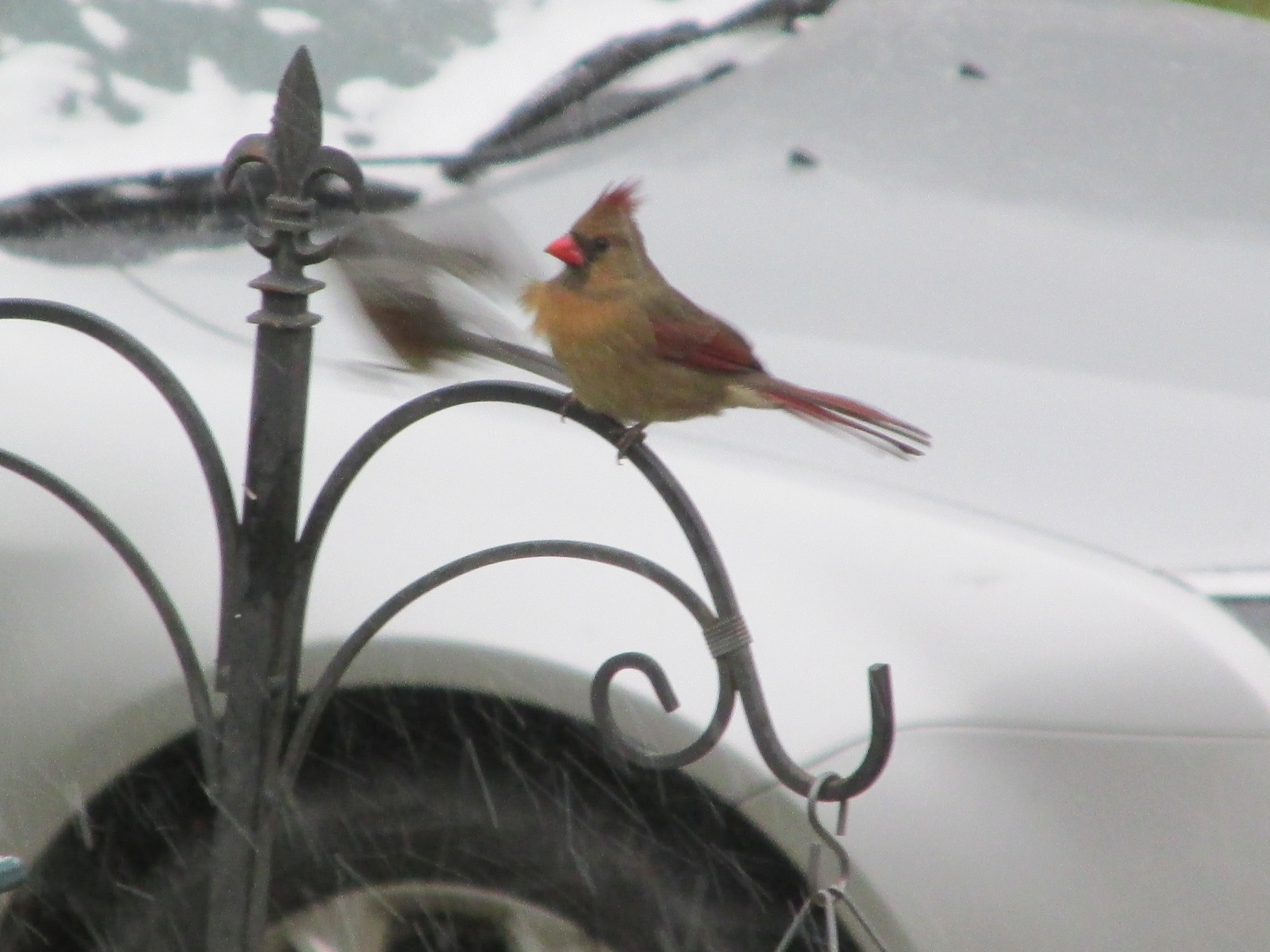
Photos by Bryan Stevens                                        A female Northern Cardinal visits a feeder during a snowstorm.

The shopping days before Christmas are getting fewer, so I hope everyone has had time to find gifts for everyone on their lists. My own sincere wish to readers is that everyone gets to enjoy a great holiday that just might also include watching some birds.


Cardinal-MorePlease

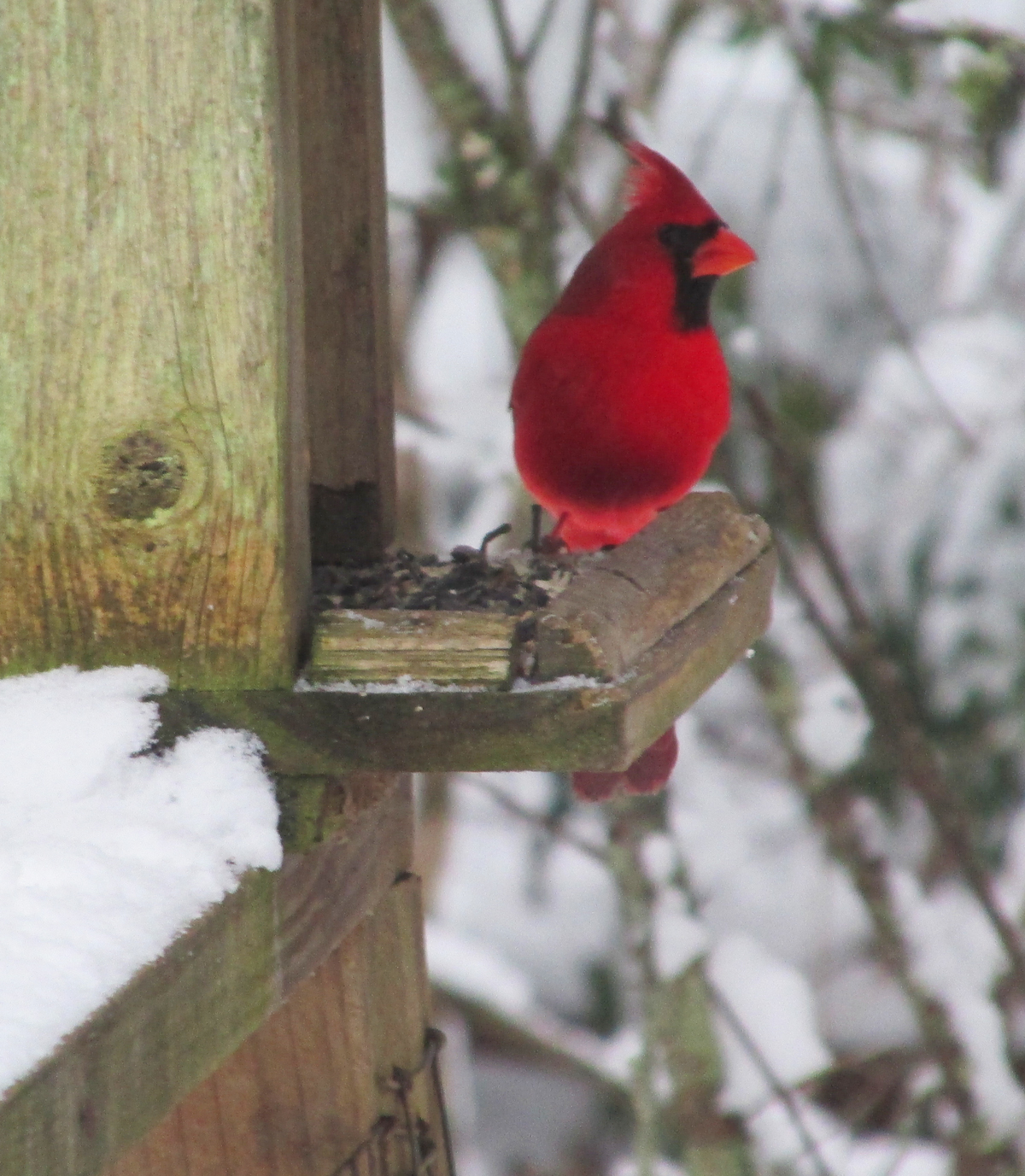
A male cardinal investigates a feeder.

Although I hate to see the colorful birds of spring and summer — scarlet tanagers, Baltimore orioles, indigo buntings, rose-breasted grosbeaks — depart every fall, the winter season offers some compensation.
Often, when we think of the birds of the winter season, our thoughts focus on some of the less-than-colorful feeder visitors — the brown sparrows and wrens, the black and white chickadees, the drab American goldfinches so unlike their summer appearance.


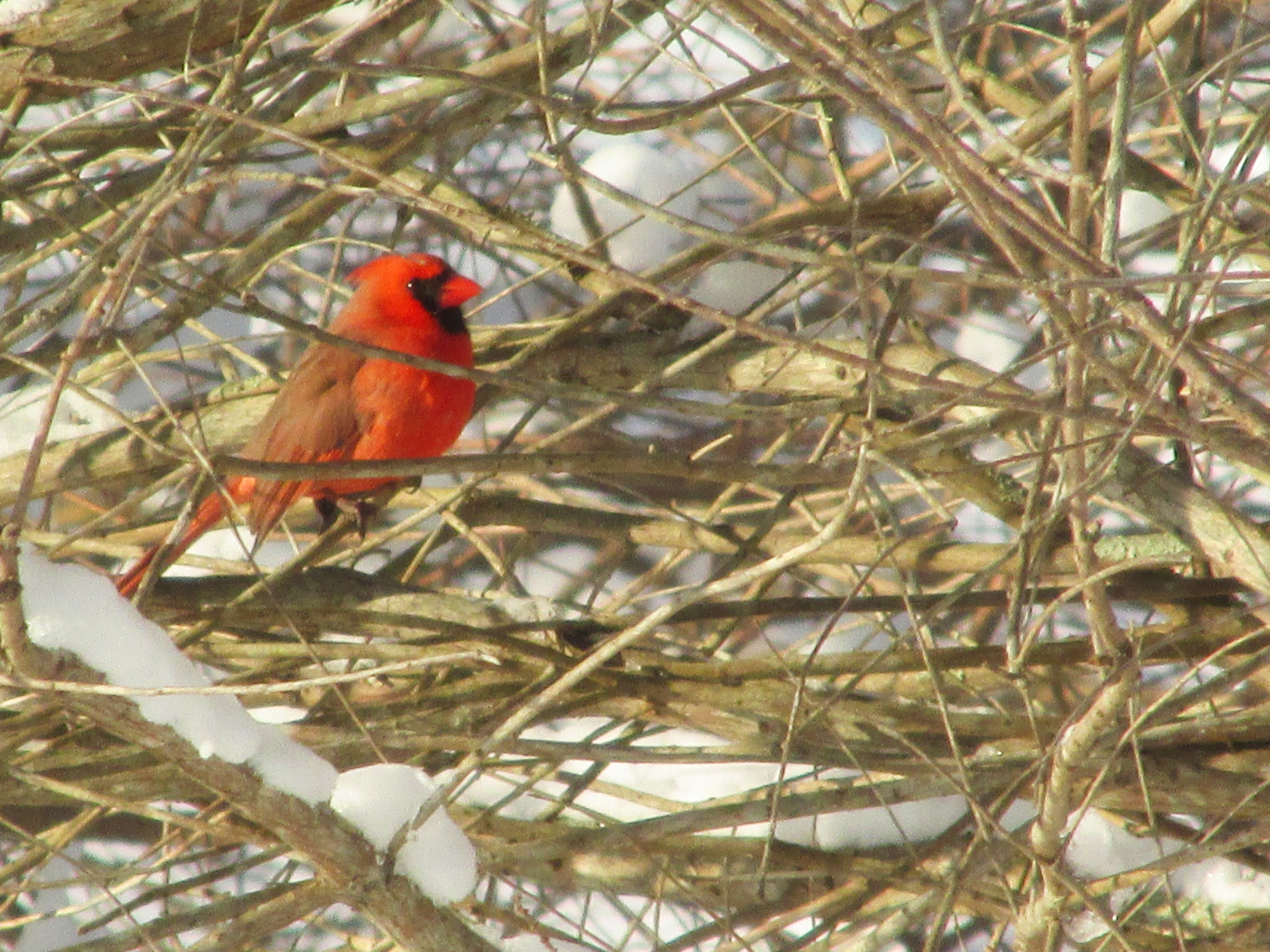
Cardinal-Enclosed

A male cardinal stays concealed within a thicket.

There’s one bird, however, that makes an impression in any season. The Northern cardinal, especially the brilliant red male, stands out against a winter backdrop of snow white, deep green or drab gray.
Over the years, the Northern cardinal has also become associated with the Christmas season. How many Christmas cards have you received this holiday season with a cardinal featured in the artwork? I’d wager that at least a few cards in any assortment of holiday greetings will feature the likeness of a bright red cardinal.


il_fullxfull.56973554

Early naturalist and artist John James Audubon painted the Northern Cardinal.

Cardinals, also known by such common names as redbird and Virginia nightingale, are easily recognized backyard birds. I never tire of observing these colorful birds. Cardinals are easily lured to any backyard with plentiful cover to provide a sense of security and a generous buffet of sunflower seed.
Cardinals accept a wide variety of food at feeders. Sunflower seed is probably their favorite, but they will also sample cracked corn, peanuts, millet, bakery scraps and even suet. The cardinal is also one of only a few birds that I have noticed will consistently feed on safflower seed.
While we may get the idea that cardinals feed largely on seed, that is a misconception based on our observation of the birds at our feeders. When away from our feeders, cardinals feed on insects and fruit, including the berries of mulberry, holly, pokeberry, elderberry, Russian olive, dogwood and sumac.


Cardinal-Blur

A flash of red signal a visit from a male Northern cardinal.

There’s no difficult in identifying a cardinal. The male boasts crimson plumage, a crest, a black face and orange bill. The female, although less colorful, is also crested. Female cardinals are soft brown in color, with varying degrees of a reddish tinge in their feathers, particularly in their wings. Immature cardinals resemble females except young cardinals have dark bills.


Cardinal-Two 2

A male Northern cardinal perches on a feeder.

Cardinals are a widespread species, ranging westward to the Dakotas and south to the Gulf Coast and Texas. The southeastern United States was once the stronghold of the cardinal population. In the past century, however, cardinals have expanded their range into New England and Canada.
At feeders, cardinals mingle with a variety of other birds. Their preference for dense, tangled habitat is one they share with such birds as brown thrashers, Eastern towhees, Carolina wrens and song sparrows. In general, however, cardinals directly associate only with their own kind. Cardinals will form loose flocks during the winter, but these flocks are never as cohesive as those of such flocking birds as American goldfinches. Cardinals are more often observed in pairs.
For such a bright bird, the male cardinal can be surprisingly difficult to detect as he hides in the thick brush that conceals his presence. Cardinals are nervous birds, however, and usually betray their presence with easily recognized chip notes.


Cardinales

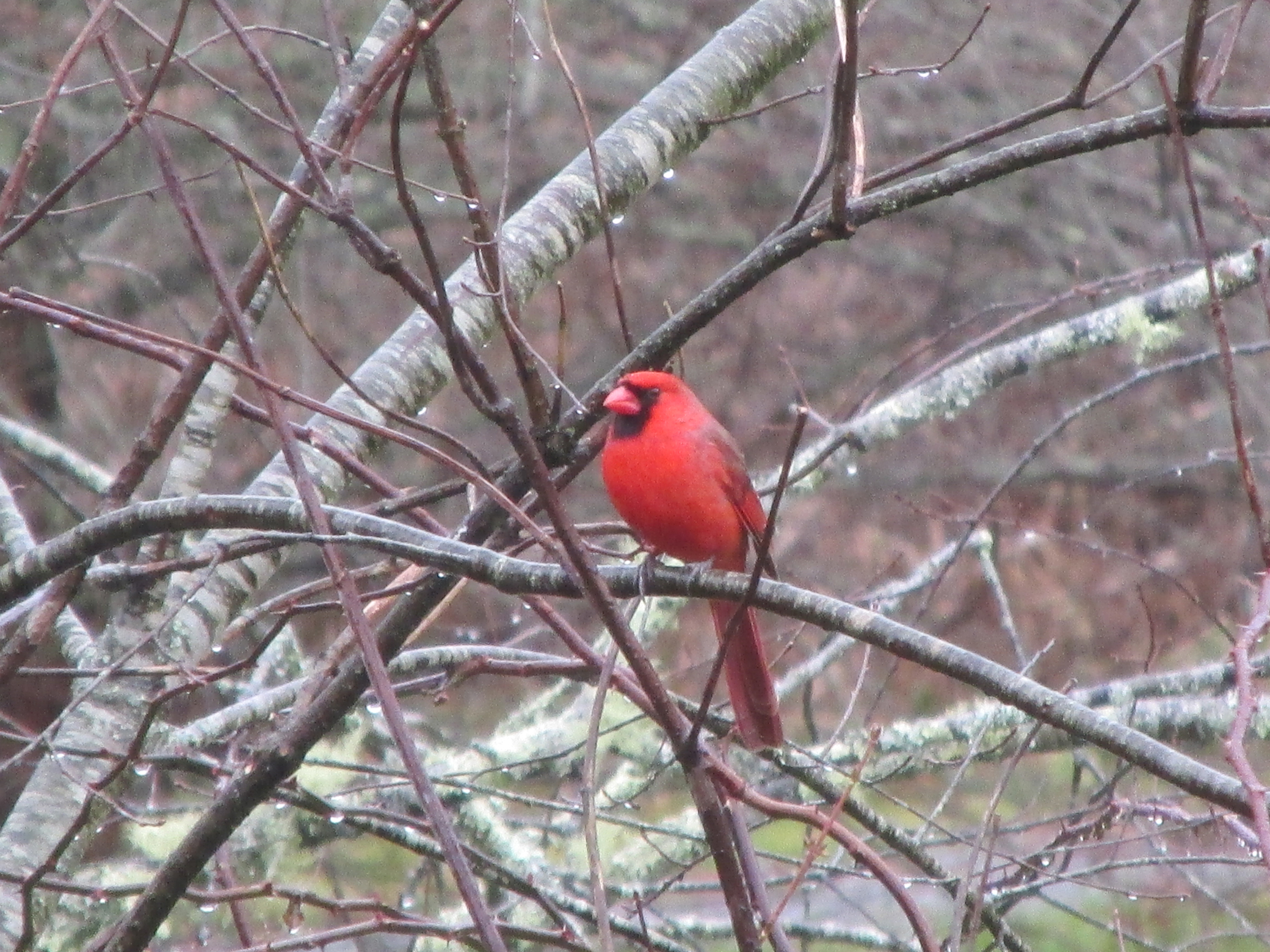
A male Northern cardinal on a gray December day.

It’s not surprising that such a popular bird has also become associated with many trappings of the Christmas season. “You see cardinals on greeting cards, stationery, paper plates, paper napkins and tablecloths, doormats, light switch plates, candles, candle holders, coffee mugs, plates, glasses, Christmas tree ornaments and lights, bookmarks, mailboxes, Christmas jewelry,” writes June Osborne in her book The Cardinal. “And the list goes on. Cardinals have become an integral part of the way that many people celebrate the holiday season.”

IMG_2431

Female cardinal grasps a perch on a blustery afternoon.

I can be included among such people. My Christmas decorations include an assortment of cardinal figurines and ornaments. There are other birds — doves and penguins for example — associated with the holiday season, but for me the holidays magnify the importance of one of my favorite birds. The cardinal, in its festive red plumage, appears made to order for a symbol of the holiday season.

 
There’s additional evidence to put forward as testimony to the popularity of the Northern cardinal. It’s the official state bird of seven states: Virginia, North Carolina, West Virginia, Ohio, Illinois, Indiana and Kentucky. Only the Northern mockingbird, which represents five states as official state bird, even comes close to the Northern cardinal in this respect.
Even once the holidays are past, there’s nothing like a glimpse of a Northern cardinal to add some cheer to a bleak winter day.
•••••
To learn more about birds and other topics from the natural world, friend Stevens on Facebook at https://www.facebook.com/ahoodedwarbler. He is always posting about local birds, wildlife, flowers, insects and much more. If you have a question, wish to make a comment or share a sighting, email ahoodedwarbler@aol.com.

Annual Christmas Bird Counts offer some surprises

The Lee and Lois Herndon Chapter of Tennessee Ornithological Society held its 72nd consecutive Elizabethton Christmas Bird Count on Sunday,  Dec. 14. A total of 25 observers in six parties tallied 69 species. Inn addition, counters observed another three species during Count Week.

Female-Downy1

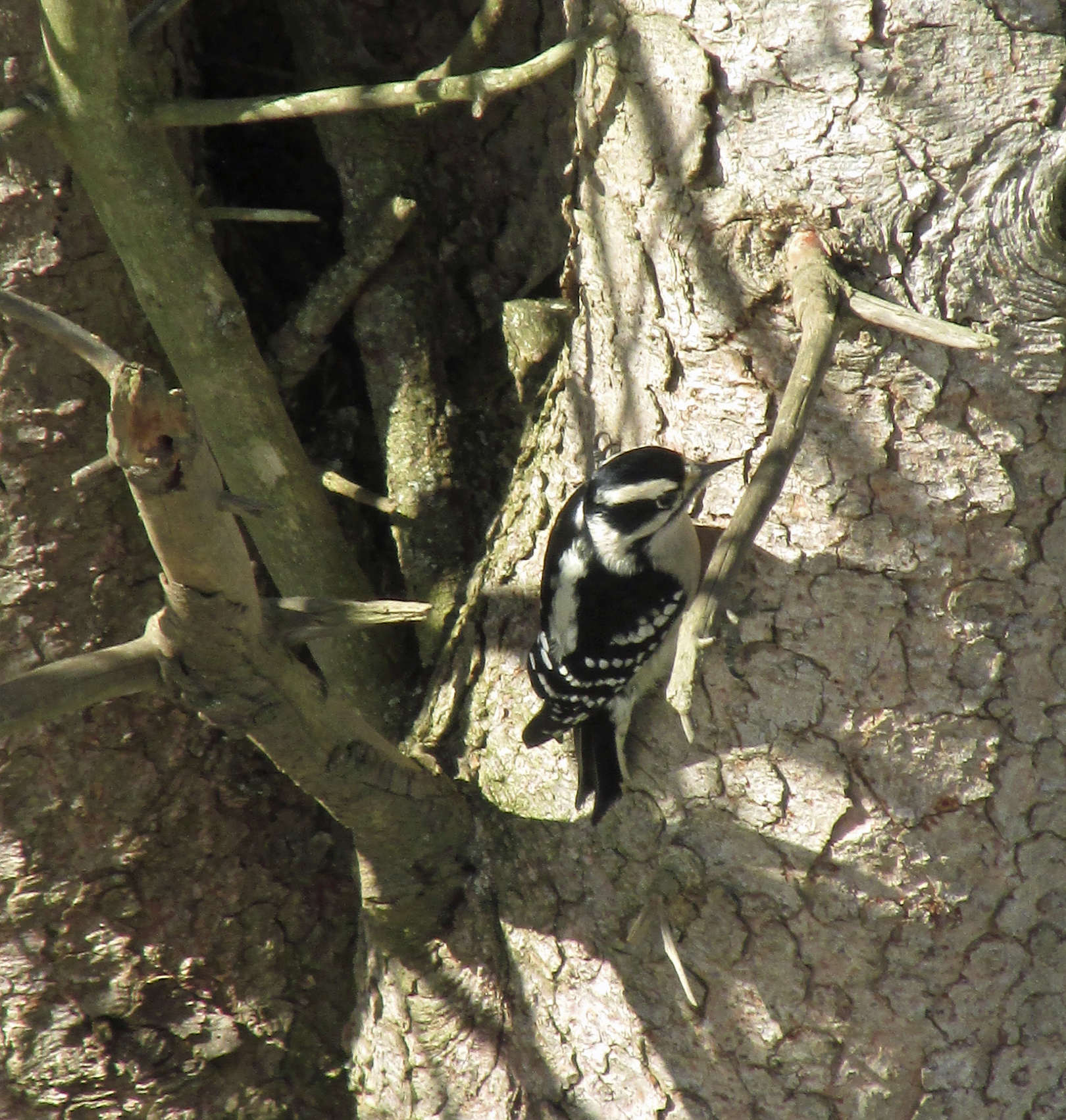
Photo by Bryan Stevens                              Downy Woodpecker, such as this female, were found on both the Elizabethton and Roan Mountain Christmas Bird Counts.

According to long-time count compiler Rick Knight, this year’s total was slightly below the recent 30-year average of 72 species. The all-time high for the Elizabethton CBC took place in 2012 when a total of 80 species was recorded.

Highlights from this year’s Elizabethton CBC included a Greater White-fronted Goose, American Woodcock and Palm Warbler. Other notable finds include five Purple Finches and 18 Pine Siskins. Notable absences included Red-breasted Nuthatch, Ruby-crowned Kinglet and Eastern Meadowlark.

Photo by Bryan Stevens

Photo by Bryan Stevens                                     A Greater White-fronted Goose and Canada Goose forage in a field during the Elizabethton Christmas Bird Count.

•••••

The 62nd Roan Mountain CBC took place Monday, Dec. 15. A total of eight observers in two parties found 53 species. This was above the recent 30-year average of 45 species and the most since 1995 when 54 species was recorded for this count.

According to Knight, an immature Northern Goshawk proved the highlight of this year’s Roan Mountain CBC. Other notable finds included Red-breasted Nuthatch, Purple Finch and Pine Siskin.

Knight also noted that Common Ravens were found on both counts. A total of 11 Common Ravens was found on the Elizabethton CBC with 24 Common Ravens found during the Roan Mountain CBC.

•••••

The 2,050 European Starlings reported on the Elizabethton CBC represented the most common species on this survey. Other common birds on the Elizabethton CBC included American Crow (725), Canada Goose (526) and Rock Pigeon (467).

CBC-Snipes

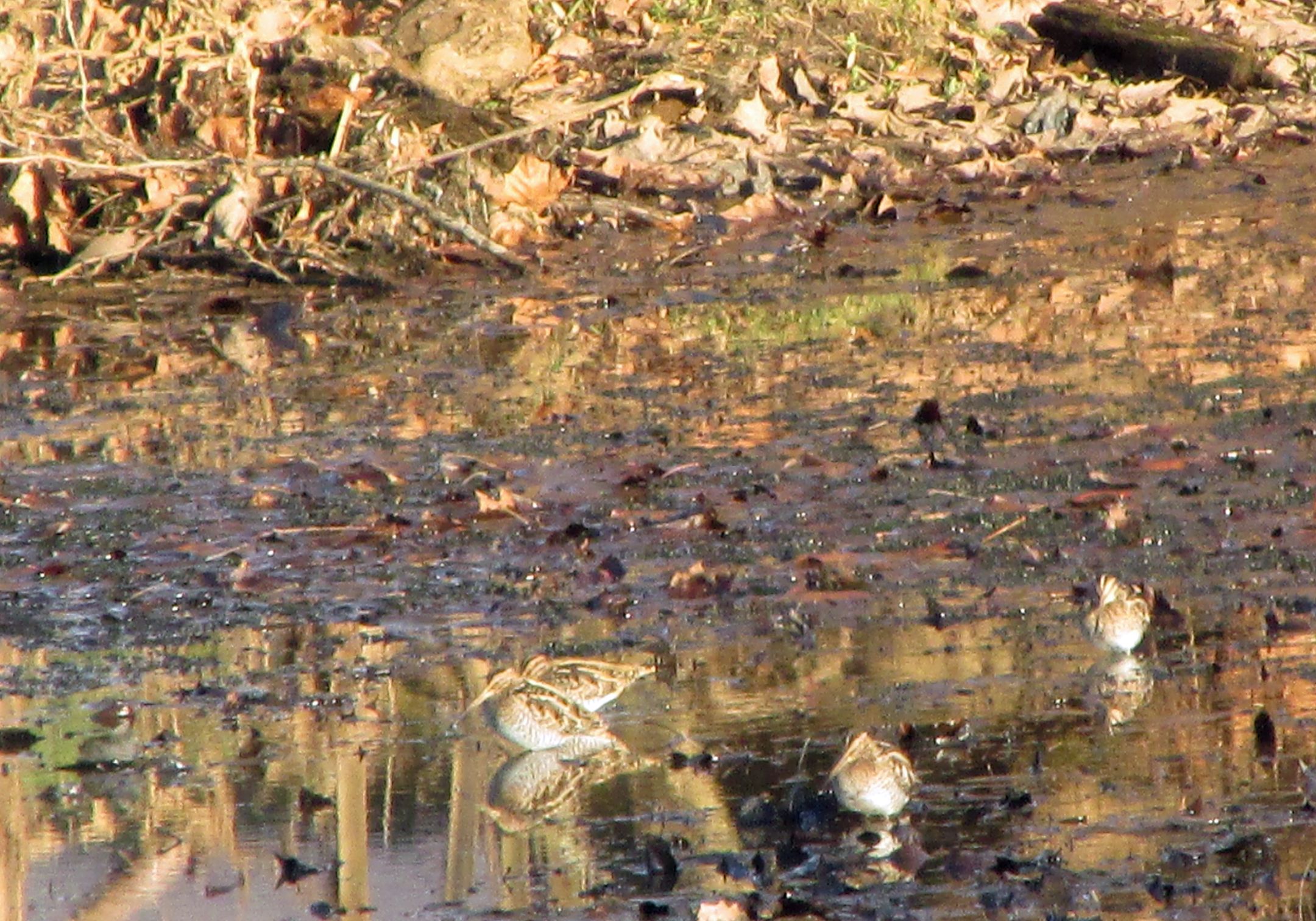
Photo by Bryan Stevens                            Wilson’s Snipes were found along the Watauga River during the Elizabethton Christmas Bird Count.

The American Crow, with 146 individuals found, ranked as the most abundant species on the Roan Mountain CBC. Only 47 European Starlings were tallied for this count. Other common birds for the Roan Mountain CBC included Song Sparrow (80), Mourning Dove (46) and Carolina Chickadee (42).

••••••

The results for the Elizabethton CBC follows:

Greater White-fronted Goose, 1; Canada Goose, 526; Mallard, 302; Ring-necked Duck, 2; Bufflehead, 251; and Hooded Merganser, 12.

Wild Turkey, 106; Common Loon, 2; Pied-billed Grebe, 10; Horned Grebe, 8; and Great Blue Heron, 23.

Black Vulture, 6; Turkey Vulture, 6; Bald Eagle, 1; Sharp-shinned Hawk, 4; Cooper’s Hawk, 9; Red-tailed Hawk, 23; and American Kestrel, 12.

American Coot, 3; Killdeer, 3; Wilson’s Snipe, 7; American Woodcock, 1; and Ring-billed Gull, 36.

Rock Pigeon, 467; Mourning Dove, 282; Eastern Screech-Owl, 14; Great Horned Owl, 4; and Barred Owl, 1.

Belted Kingfisher, 17; Red-bellied Woodpecker, 46; Yellow-bellied Sapsucker, 10; Downy Woodpecker, 34; Hairy Woodpecker, 5; Northern Flicker, 42; and Pileated Woodpecker, 28.

Eastern Phoebe, 9; Blue Jay, 237; American Crow, 725; Common Raven, 11; Carolina Chickadee, 137; Tufted Titmouse, 74; White-breasted Nuthatch, 29; and Brown Creeper, 1.

Count-Thrush

Photo by Bryan Stevens                                        Hermit Thrushes were found during both the Elizabethton and Roan Mountain Christmas Bird Counts.

Carolina Wren, 121; Winter Wren, 8; Golden-crowned Kinglet, 17;  Eastern Bluebird, 140; Hermit Thrush, 9; and American Robin, 28.

Northern Mockingbird, 84; European Starling, 2,050; Cedar Waxwing, 27; Palm Warbler, 1; and Yellow-rumped Warbler, 73.

Eastern Towhee, 22; Chipping Sparrow, 12; Field Sparrow, 16; Fox Sparrow, 1; Song Sparrow, 168; Swamp Sparrow, 1; White-throated Sparrow, 115; White-crowned Sparrow, 23; and Dark-eyed Junco, 129.

Northern Cardinal, 231; Purple Finch, 5; House Finch, 33; Pine Siskin, 18; American Goldfinch, 107; and House Sparrow, 96.

••••••

The results for the Roan Mountain CBC follows:

Mallard, 3; Bufflehead, 12; Hooded Merganser, 4; Wild Turkey, 7; Pied-billed Grebe, 2; and Great Blue Heron, 3.

Northern Goshawk, 1; Turkey Vulture, 4; Sharp-shinned Hawk, 2; Cooper’s Hawk, 1; Red-shouldered Hawk, 1; Red-tailed Hawk, 7; and American Kestrel, 1.

Rock Pigeon, 3; Mourning Dove, 46; Eastern Screech-Owl, 1; Barred Owl, 3; and Belted Kingfisher, 2.

Red-bellied Woodpecker, 1; Yellow-bellied Sapsucker, 3; Downy Woodpecker, 13; Hairy Woodpecker, 3; Northern Flicker, 5; and Pileated Woodpecker, 7.

Eastern Phoebe, 2; Blue Jay, 22; American Crow, 146; and Common Raven, 24.

CBC-Bufflehead

Photo by Bryan Stevens                        Bufflehead was one of the few ducks found on both the Elizabethton and Roan Mountain Christmas Bird Counts.

Carolina Chickadee, 42; Tufted Titmouse, 29; Red-breasted Nuthatch, 1; White-breasted Nuthatch, 15; and Brown Creeper, 1.

Carolina Wren, 25; Winter Wren, 3; Golden-crowned Kinglet, 10; Eastern Bluebird, 16; Hermit Thrush, 1; and Northern Mockingbird, 6.

European Starling, 47; Eastern Towhee, 2; Field Sparrow, 15; Fox Sparrow, 3; Song Sparrow, 80; White-throated Sparrow, 8; White-crowned Sparrow, 5; and Dark-eyed Junco, 24.

Count-Coot

Photo by Bryan Stevens                         Common Coots were found at only one location on this year’s Elizabethton Christmas Bird Count.

Northern Cardinal, 16; Purple Finch, 2; House Finch, 4; Pine Siskin, 4; American Goldfinch 30; and House Sparrow, 31.

•••••

According to the website of the National Audubon Society, the annual Christmas Bird Count evolved from another holiday tradition. In the 1800s, people engaged in a holiday custom known as the Christmas “Side Hunt.” This event saw participants choose sides and go afield with their guns; whoever brought in the biggest pile of feathered (and furred) quarry won.

Conservation was in its beginning stages around the turn of the 20th century, and many observers and scientists were becoming concerned about declining bird populations. Beginning on Christmas Day 1900, ornithologist Frank M. Chapman, an early officer in the then budding Audubon Society, proposed a new holiday tradition — a “Christmas Bird Census” — that would count birds during the holidays rather than hunt them.

Frank Chapman organized the very first Christmas Bird Count back in

Frank Chapman organized the very first Christmas Bird Count back in 1900.

Thanks to Chapman’s inspiration and the enthusiasm of 27 dedicated birders, 25 Christmas Bird Counts were held that day. The locations ranged from Toronto, Ontario to Pacific Grove, California with most counts in or near the population centers of northeastern North America. Those original 27 Christmas Bird Counters tallied 89 species on all the counts combined. Some of the birds found included such common birds as Northern cardinal, dark-eyed junco, turkey vulture and killdeer. It also included some somewhat unusual species such as Townsend’s warbler, pine grosbeak, Anna’s hummingbird, greater prairie-chicken and white-headed woodpecker.