Category Archives: Eastern Towhee

What’s in a name? Many American birds will get renamed by AOS

Photo by Veronika Andrews from Pixabay • Anna’s hummingbird, a species of hummingbird native to the coastal regions of western North America, is named after a 19th-century duchess. The bird, as well as almost 80 other species, will be renamed by the American Ornithological Society in the future.

What’s in a name? To paraphrase the Bard, a bird’s tweet would still sound as sweet, regardless of the name of the bird.

That theory’s about to get tested. The American Ornithological Society has decided to rename about 80 species of birds named for people. The birds, which can be found in the United States and Canada, range from songbirds to shorebirds, as well as woodpeckers and jays.

The best I can determine after some research is that the new names for some of our birds will be based on appearance or habitat preferences. I’d be more optimistic if it wasn’t the AOS that gave us the boring name of Eastern towhee and took away the accurate and descriptive name of rufous-sided towhee for a familiar backyard bird.

The towhee was renamed in 1995. Some of my birding friends have long memories, because I still hear people refer to this bird as “rufous-sided towhee.”

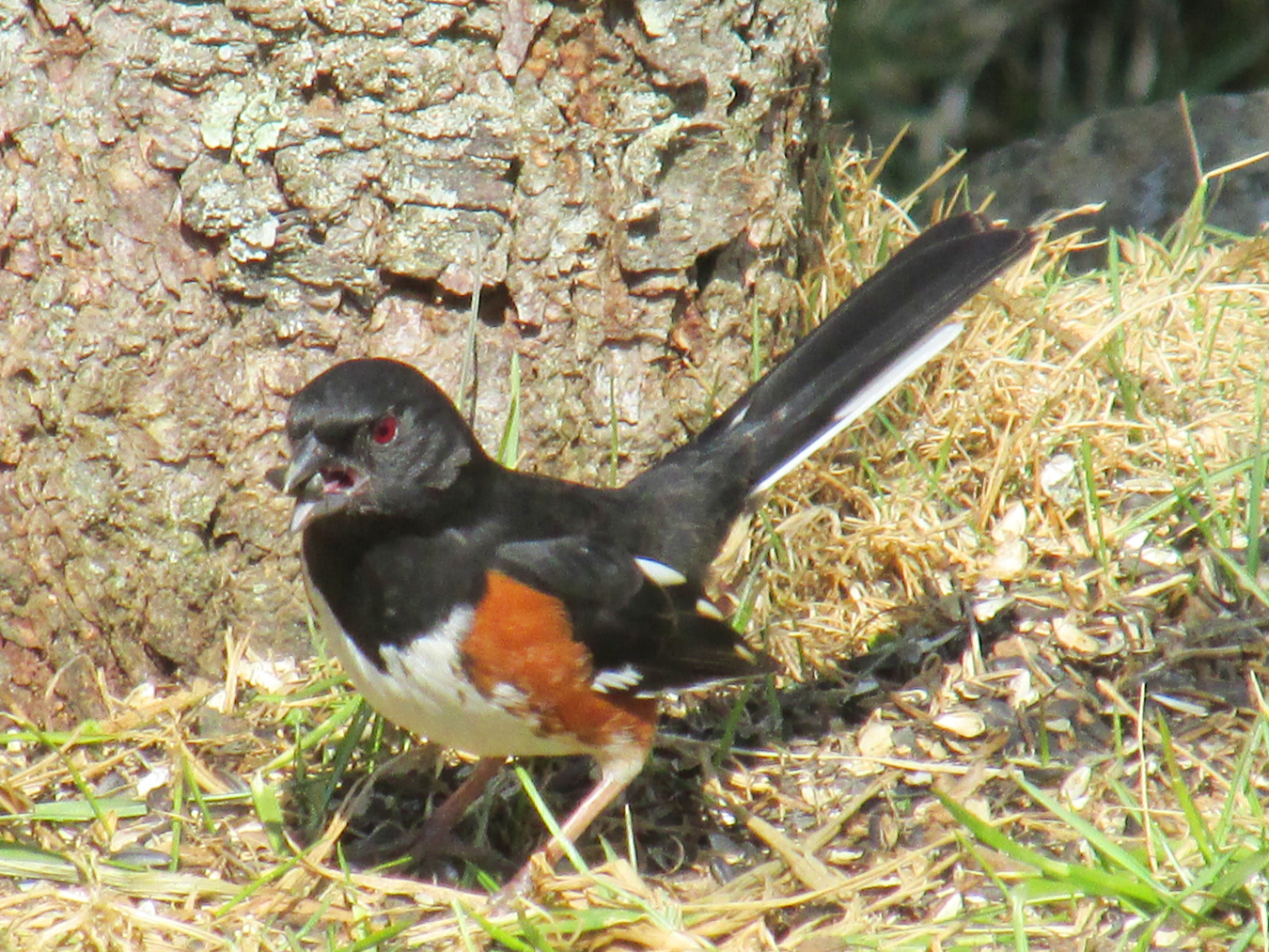
Photo by Bryan Stevens • A male Eastern towhee forages in the grass beneath a feeder.

I’m sure I will miss some of the former names. I’ll be waiting to see what name is given to Anna’s hummingbird, a species named for Anna Masséna, Duchess of Rivoli. As far as I can determine, the duchess had no particular strikes against her character. A French princess, the duchess was married to amateur ornithologist Prince Victor Masséna, the owner of an impressive collection of bird specimens.

Even royalty needs its hobbies, and birding’s certainly a worthy pursuit in my eyes. I do think the trivia associated with birds named for people can make interesting reading. For example, the duchess served as the Mistress of Robes for the Empress Eugénie, wife of Napoleon III.

Be careful what you find when doing online research. I found one article claiming that the duchess met John James Audubon, the famous American naturalist and painter, in Paris in 1882.

If true, it would have been quite the feat as Audubon died in 1857 in New York.

Then there’s Nuttall’s woodpecker. As explained on the website All About Birds, William Gambel named the small black-and-white woodpecker after Thomas Nuttall, an English botanist and ornithologist, back in 1843.

Photo by Bryan Stevens • The Wilson’s snipe is one of many birds likely to be renamed in the near future.

Nuttall was perhaps better known as a botanist, according to All About Birds, but he also published an early field guide on birds titled “A Manual of the Ornithology of the United States and Canada.”

All About Birds also notes that Nuttall’s book and his passion for nature also inspired the formation of the first organization in North America dedicated to birds in 1873, the Nuttall Ornithological Club.

It seems a shame to me to remove the woodpecker’s name when it honors such a relevant figure in the early history of birding.

Even birds — Clark’s nutcracker and Lewis’s woodpecker — named for the famed Meriwether Lewis and William Clark of the historic Lewis and Clark Expedition will likely lose their long-standing names.

Gambel’s quail also faces renaming. This small desert quail is named for William Gambel, an American naturalist, ornithologist and botanist from Philadelphia. As a young man Gambel worked closely with the renowned naturalist Thomas Nuttall, basically becoming an apprentice to the older man.

Photo by AZArtist from Pixabay • Gambel’s quail is named after William Gambel, an American naturalist, ornithologist and botanist from Philadelphia.

At the age of 18, Gambel traveled to California, becoming the first botanist to collect specimens in Santa Fe, New Mexico, as well as many parts of California. In late 1838, Gambel and Nuttall traveled together on a collecting trip to the Carolinas and the southern Appalachians.

Gambel accomplished a lot in his short lifespan. He tried unsuccessfully to establish a medial practice in Philadelphia and decided, like many Americans, to head west. Shortly after reaching California, he tried to help miners afflicted with typhoid at a camp along the Yuba River. He became sick himself and died Dec. 13, 1849, at age 26.

Animals named in the young man’s honor include Gambel’s quail and Gambelia, a genus of lizards. Also in 1848, a genus of flowering plants, Gambelia, native to California and Mexico, was named after him.

I feel that Shakespeare had it right. The names may change, but the stories of the birds and their namesakes will still be there for anyone who wants to do a little digging.

Some of the stories you might uncover make for interesting reading.

•••

Email Bryan Stevens at ahoodedwarbler@aol.com to share a bird sighting, ask a question or make a comment.
Welcoming Eastern towhees into yards, gardens easy to accomplish

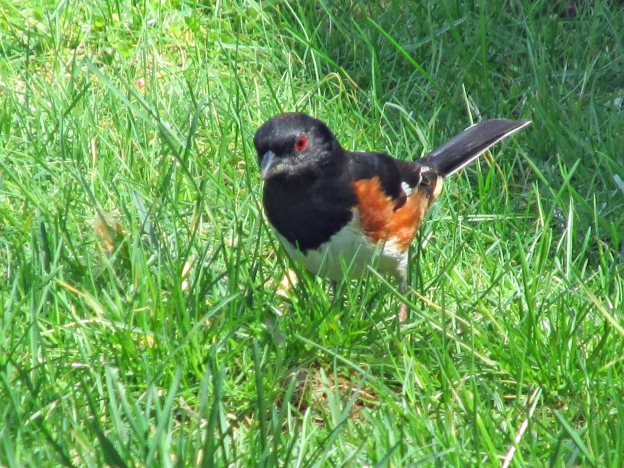
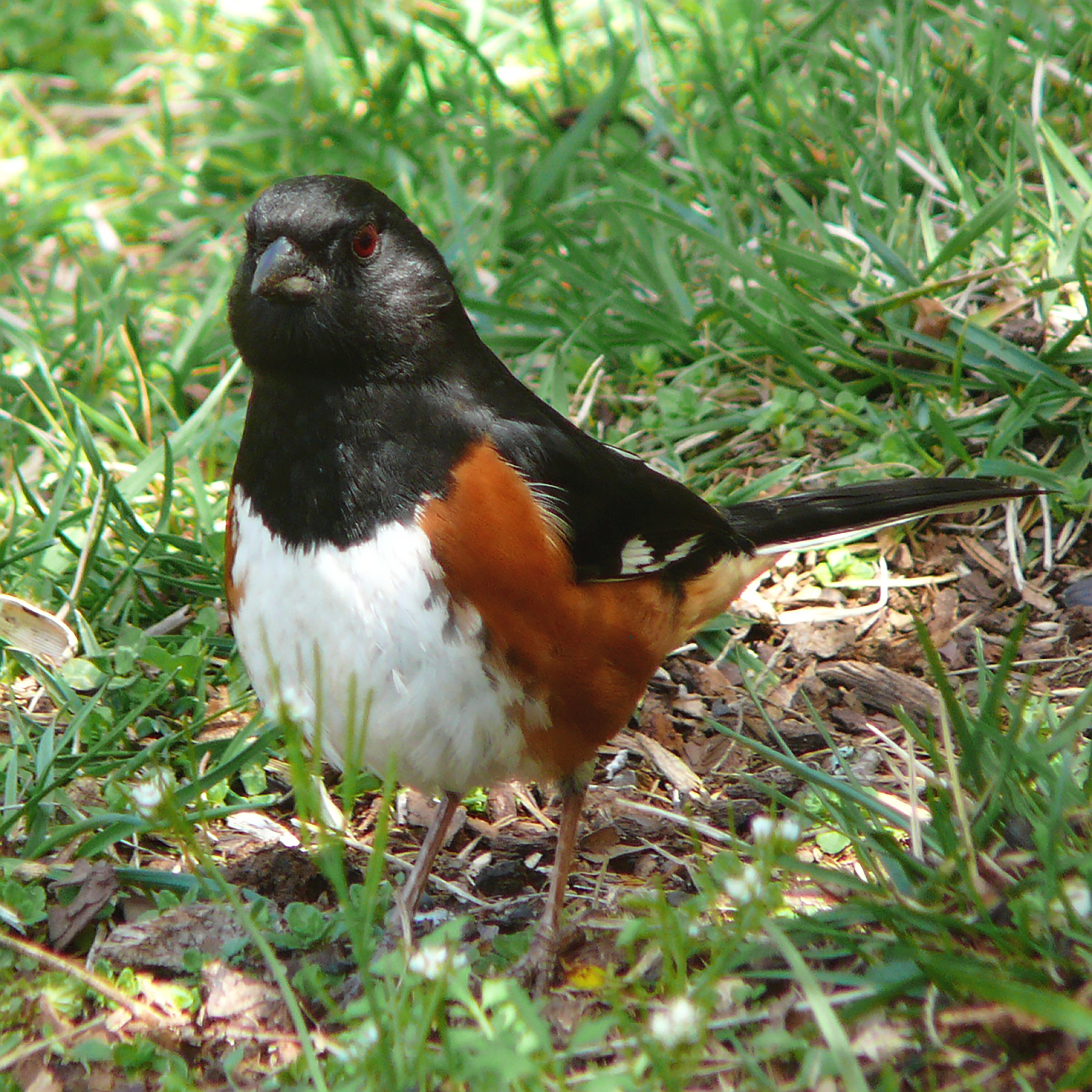
Photo by Ken Thomas • A male Eastern towhee forages for food in the grass beneath a feeder.

It’s the time of year when young birds start making their first forays to feeders, usually accompanied by their parents and siblings. In recent weeks, I’ve seen everything from young brown thrashers and tufted titmice to ruby-throated hummingbirds and Eastern bluebirds.

Ann Windsor posted an interesting photo on my Facebook page last month that illustrates this emergence of a new generation of feathered friends. Her photo showed a male Eastern towhee escorting one of his offspring to a feeder on the deck of Ann’s home in Selmer, Tennessee.

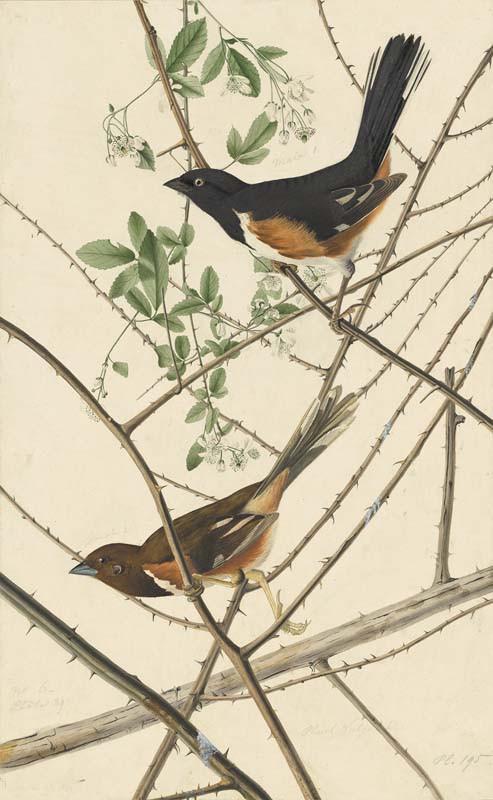
Early naturalist and artist John James Audubon painted these Eastern towhees.

Her post followed up a video she had posted of a pair of towhees visiting her feeder.

“I wanted to share with you about our towhee bird,” Ann noted in her post. “We call him ‘pretty boy,’ and he has been coming to our feeder now for two years or more.”

Back in early June, the male towhee showed up with a female for the first time. “She was more comfortable around us and got in the feeder with him,” Ann wrote. “We have so enjoyed him.”

Ann has made some interesting observations about the male towhee. “When he is in the little feeder dish, he’s the boss,” she wrote. “Any other birds come along, even the blue jays, and he runs them off.”

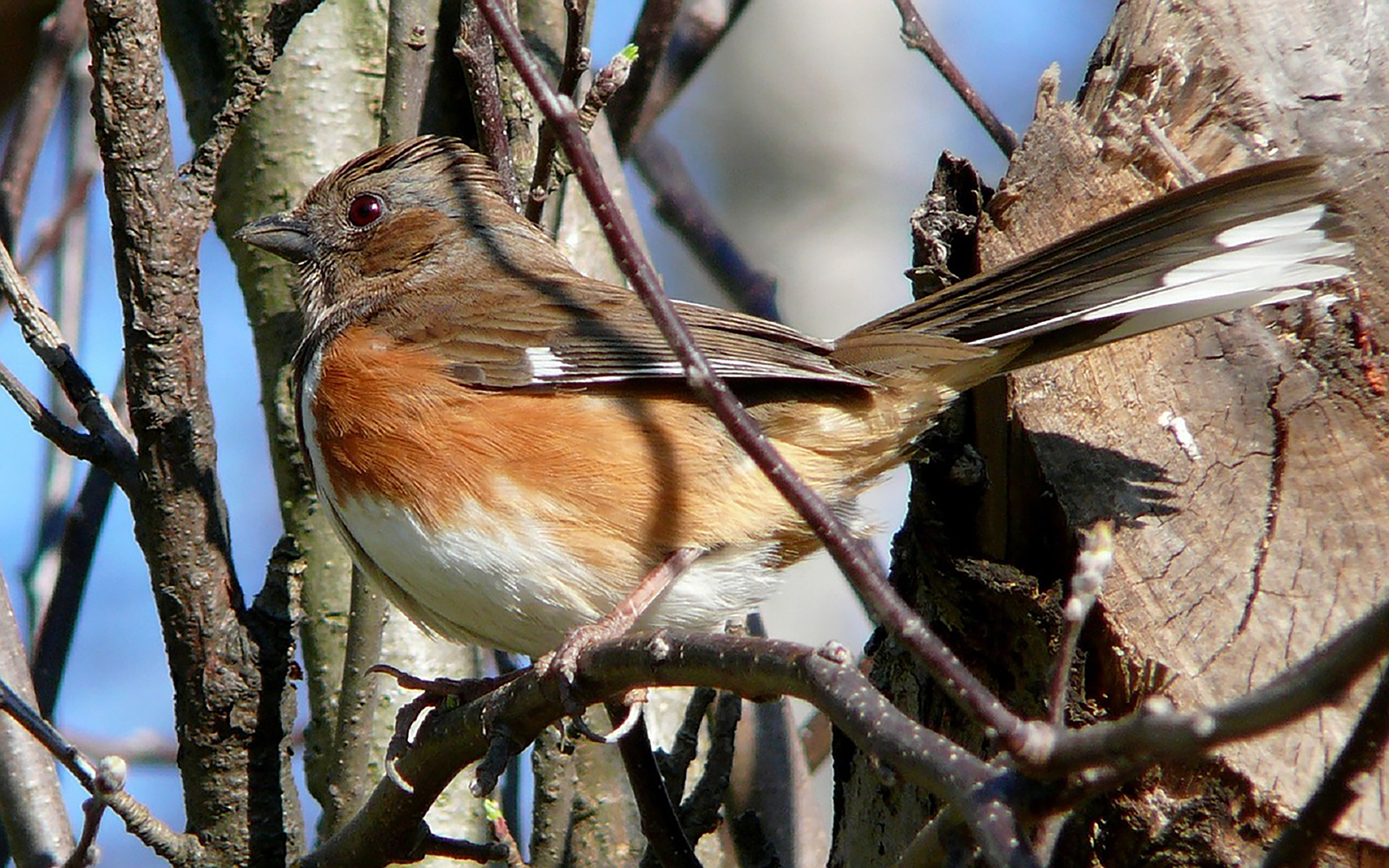
Photo by Pixabay.com • Female Eastern towhees are retain the male’s white and rusty-orange plumage, but they are brown instead of black like their male counterparts.

Ann’s day-to-day encounters with the towhees has turned into a “fun relationship” as the birds have learned to trust her enough that they don’t fly away when she’s in the yard.

I mentioned in a response to her first posting that the towhees would likely bring their young to her feeders once they left the nest. Indeed, about a month later, Ann posted another photo. In this particular picture, the male towhee arrives at the feeder with one of his recently fledged young.

“We have seen three so far,” Ann noted. She added that the young towhee in the photo loves to get up in one of the flower pots and dig around.

“I was wondering, as the young ones grow up, do they stay in the area, or do they go off to find their own territory?” Ann asked at the end of her post.

In my response, I told Ann that many birds have fidelity to the place where they were born, but things could get crowded if the adult birds also stay put. The parent towhees will probably “encourage” the young birds to strike out on their own and establish their own territories as adults. They might, however, become “neighbors” and choose a location not too far from her home.

Photo by Bryan Stevens • A male Eastern towhee scratches for seeds on the ground beneath a feeder.

Eastern towhees spend a considerable amount of time on the ground and hidden in thickets and hedges. Other common names for this bird includes “ground robin” and “swamp robin.”€ They are one of the larger members of the sparrow family, however, and not related to the thrush family, which includes such birds as American robin, Eastern bluebird and wood thrush.

Unlike the many “€œbrown”€ members of the sparrow family, the Eastern Towhee is a brightly colored bird. Males have a black hood. The black coloration extends into the back and tail. The belly is white, and the sides are flanked with a rusty-red orange. In flight, their black tails are bordered with white feathers, which produces a dramatic flash of contrasting colors. The female Eastern Towhee is an attractive bird in her own right. She shares the rufous sides and white coloration that are present in the male’s plumage. However, the male’€™s black feathers are replaced by a warm, chocolate brown plumage in the female.

Photo by Bryan Stevens • A young Eastern Towhee visits a feeder in July. The chance to see young birds is a great reason to offer food during the summer, but some precautions should be taken to minimize uninvited guests.

The Eastern towhee is one of my favorite yard birds, but not just because of its dramatic appearance. These birds also have some instantly recognizable vocalizations. With the arrival of spring, the males will seek elevated perches for extensive singing bouts to attract mates and establish territories. Their song has been interpreted, quite aptly, as “Drink your tea!” They also have some alarm notes, such as “€œChew-ink”€ and “€œToe-Hee,” which is the basis for this bird’s common name.

The sparrows known as towhees are spread across two different genuses and consist of Abert’s towhee, California towhee and canyon towhee in the Melozone genus and the Eastern towhee, spotted towhee, green-tailed towhee, and collared towhee in the genus Pipilo. The genus name Pipilo is derived from Latin and roughly translates as “the chirping bunting.”

Keep watching your feeders. At this time of year, they provide one of the best venues for observing quality family time among our feathered friends.

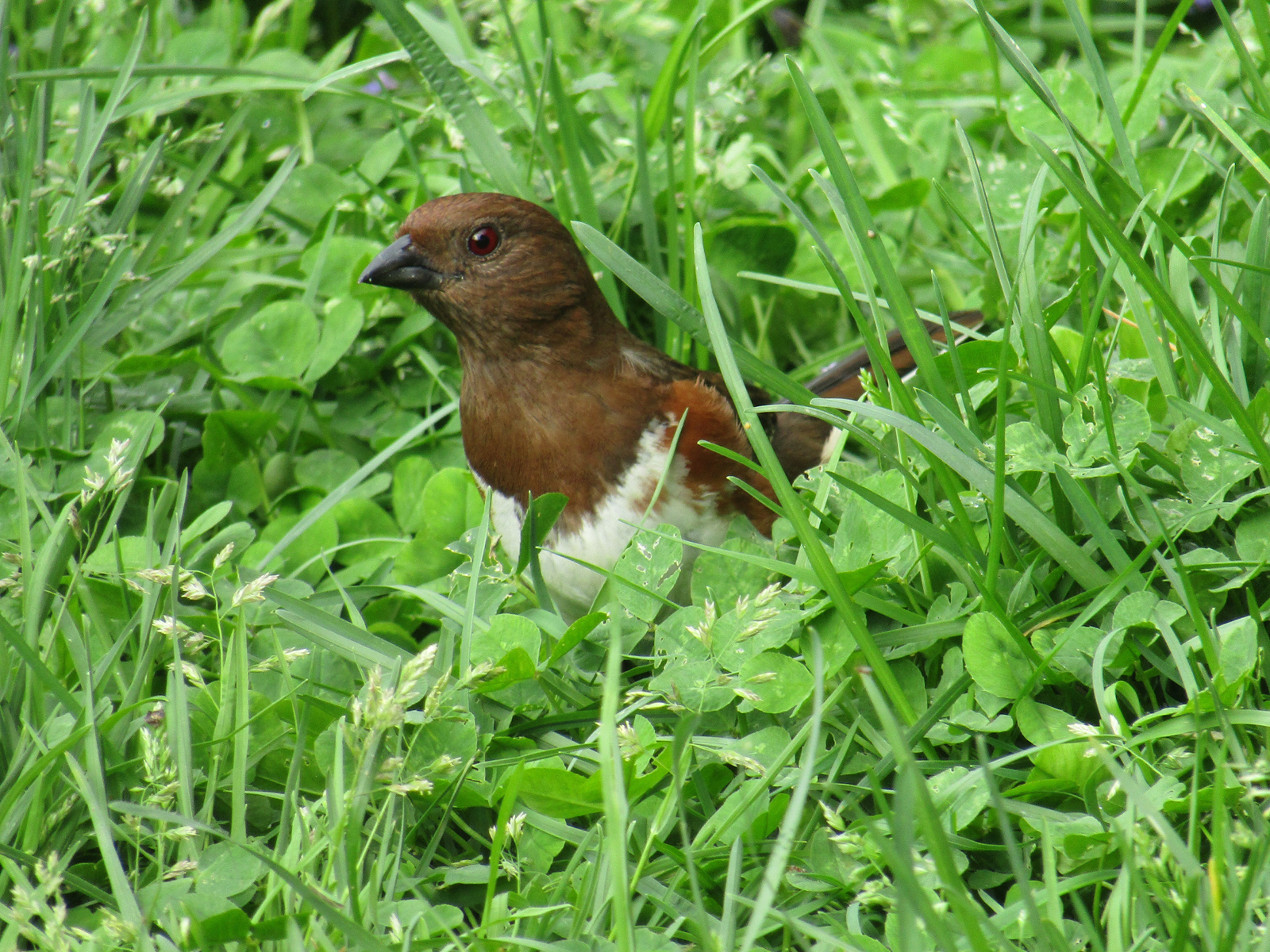
Photo by Bryan Stevens • A female Eastern towhee peeks from the grass as she forages on the ground.