Category Archives: Fall migration

Lawn chair birding entries

Chestnut-sided

Photo by Bryan Stevens                                                        A young Chestnut-sided Warbler conceals itself in a holly tree.

The following are all Facebook posts about my annual lawn chair birding experiences. My mom and I have made lawn chair birding an annual tradition every fall. It’s a great way to enjoy the warblers and other migrants that stream through the yard in late August, September and October. For the most part, you can even avoid the neck sprain that comes with long period of scanning the treetops for glimpses of energetic and evasive warblers.


Aug. 20

Fall-AmRedstart

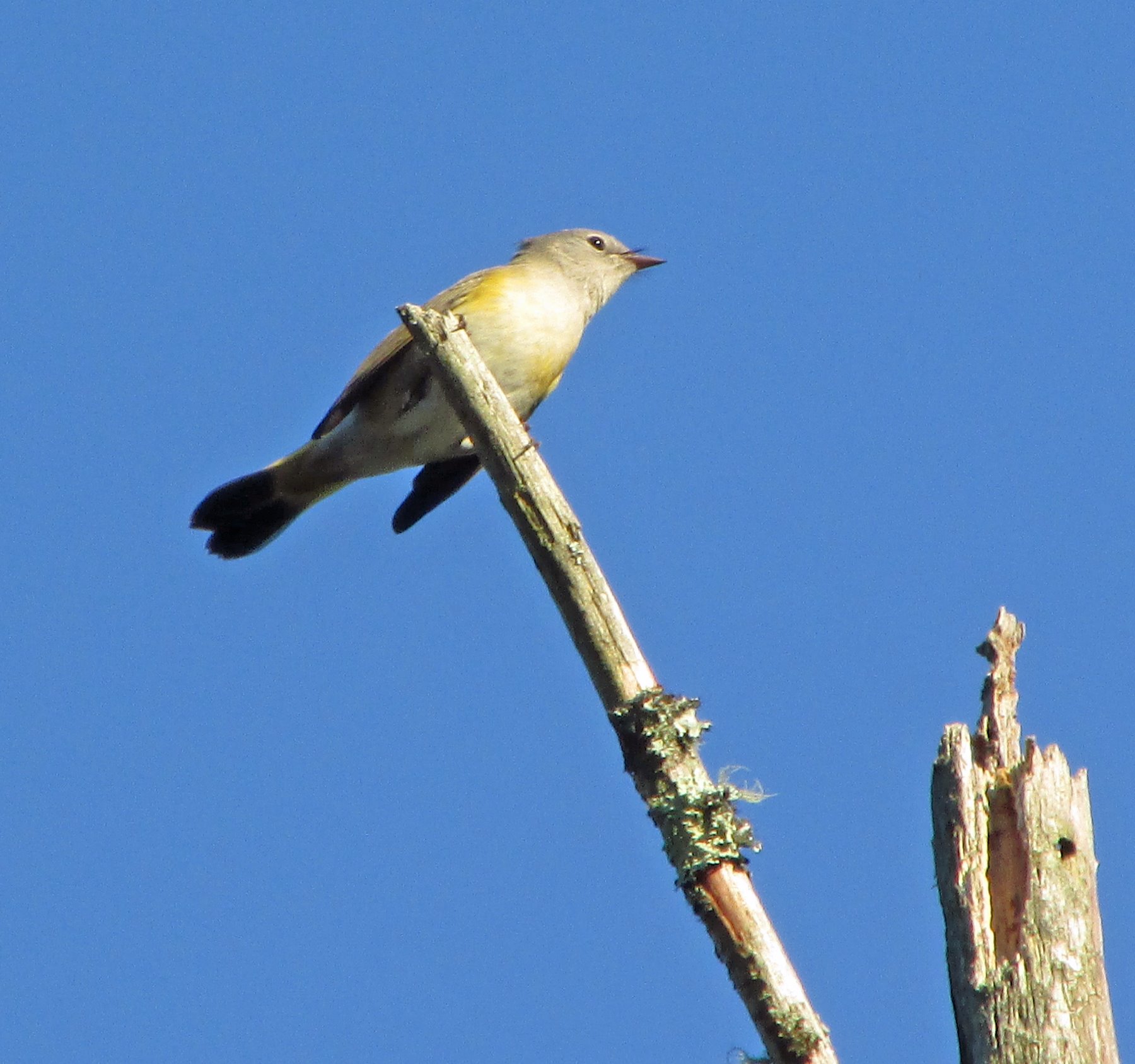
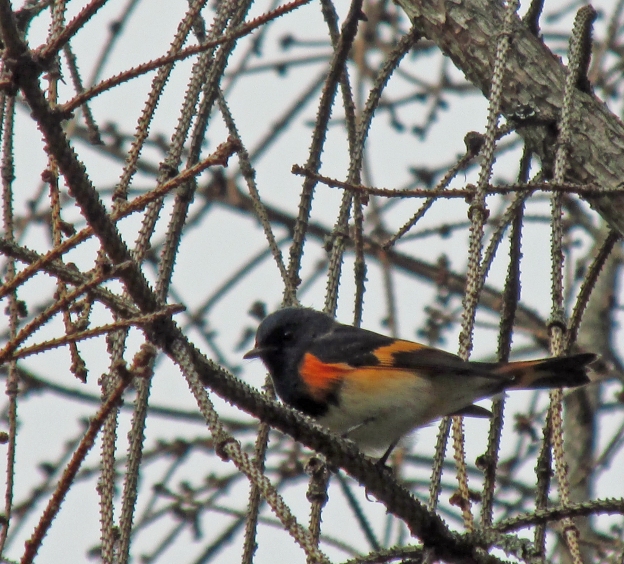
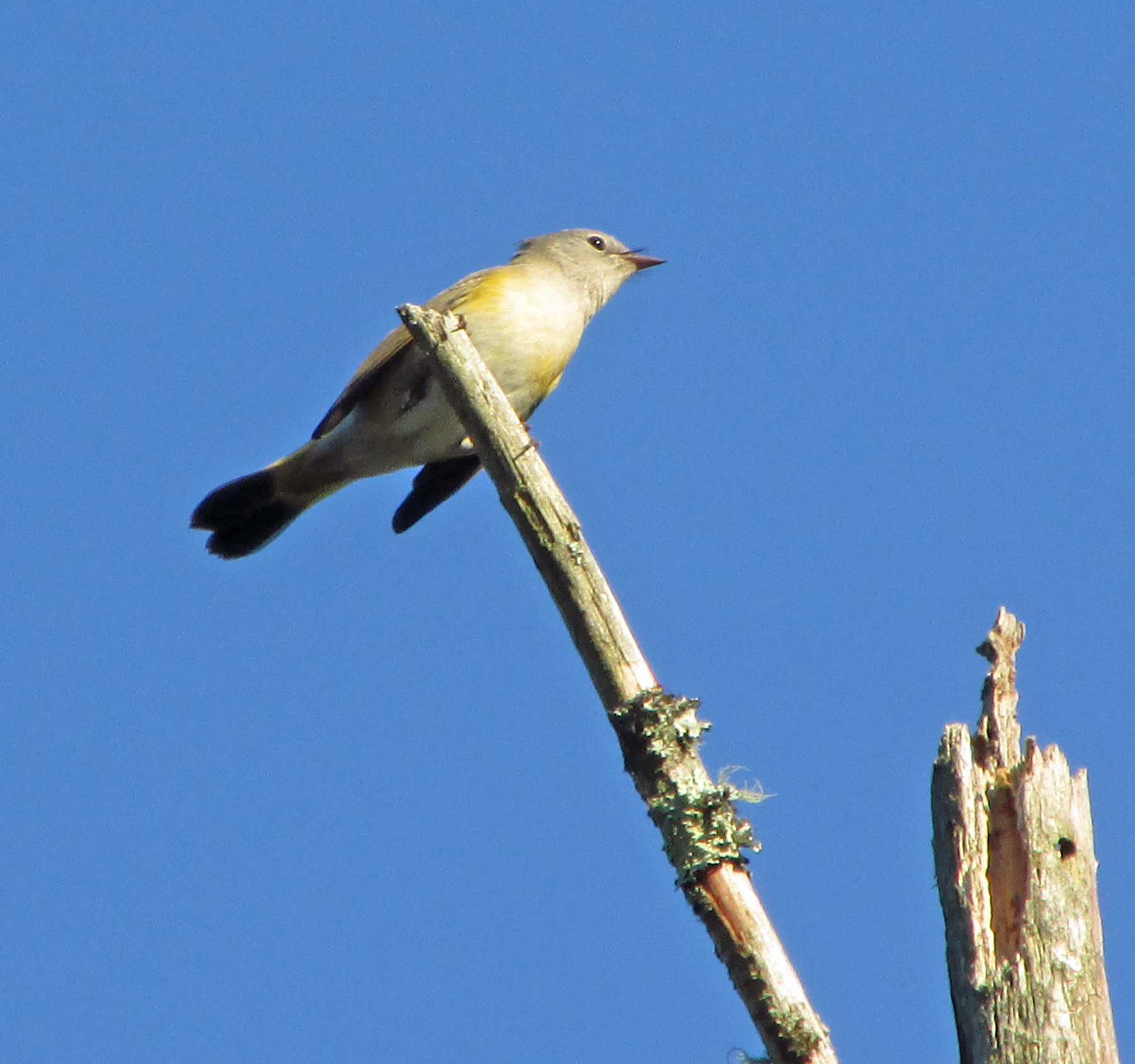
Photo by Bryan Stevens                                                  A young American Redstart selects a perch.

It’s been almost three months since I added a new species to my 2015 yard list. I had last added Chimney Swift back on May 29 and Yellow-billed Cuckoo on June 2. This evening I added White-eyed Vireo as Bird No. 60 for the year. I also saw a pair of Indigo Buntings, two Black-throated Green Warblers, three Blue-gray Gnatcatchers and several Ruby-throated Hummingbirds. I think fall migration must be underway.

Aug. 26

MommyHummer

Photo by Bryan Stevens                                       A Ruby-throated Hummingbird perches on a feeder.

Two new birds for the yard list made appearances today. I have heard a Common Raven calling several times today. Around 7 p.m. my mom called and alerted me to a flock of Wild Turkeys (two adults and eight young birds) in the field. The raven and turkeys are No. 62 and No. 63, respectively, on the list for Yard Birds in 2015.

Aug. 28

The first fall warbler — a young American redstart — showed up this evening, and it’s also a new bird for my 2015 Yard List. The redstart is No. 64 for the year. I also saw Blue-gray Gnatcatcher, Chimney Swifts and Ruby-throated Hummingbirds.

Aug. 29

3936410366_ae853e10a0_o

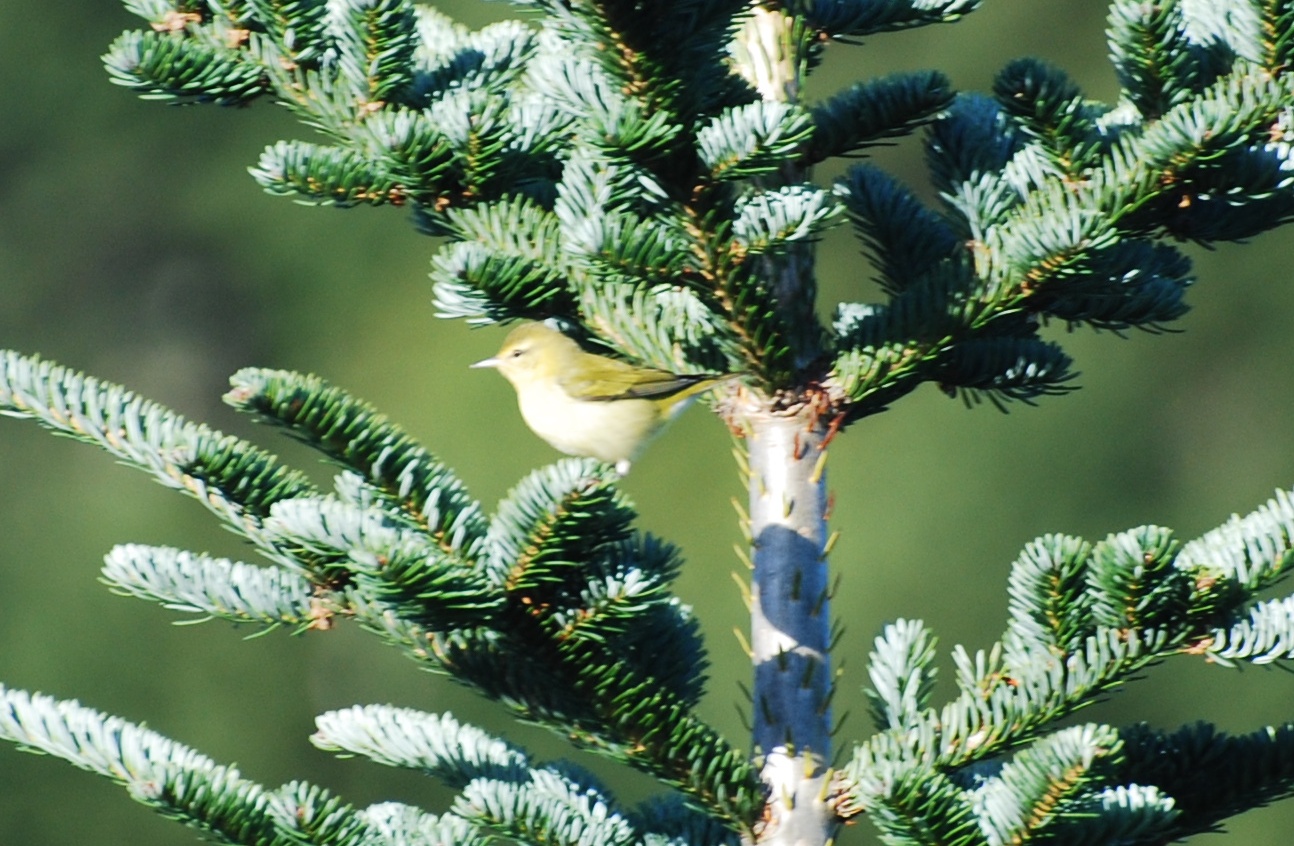
Photo by Jean Potter                                                                A Tennessee Warbler makes a fall migration stop.

Just got in from lawn chair birding with my mom. We enjoyed several warbler sightings, including some new yard birds for 2015. A gorgeous male Canada Warbler treated us to some great views and became Bird No. 65 in the yard this year. Three young Chestnut-sided Warblers will represent Bird No. 66. Finally, a Cape May Warbler is Bird No. 67 for the yard this year. We also saw Black-throated Green Warblers, American Redstarts, Red-eyed Vireos, Ruby-throated Hummingbirds, Blue-gray Gnatcatchers and an Eastern Phoebe. I managed photos of the Cape May and the American Redstart.

Aug. 30

BG-Gnat-April25

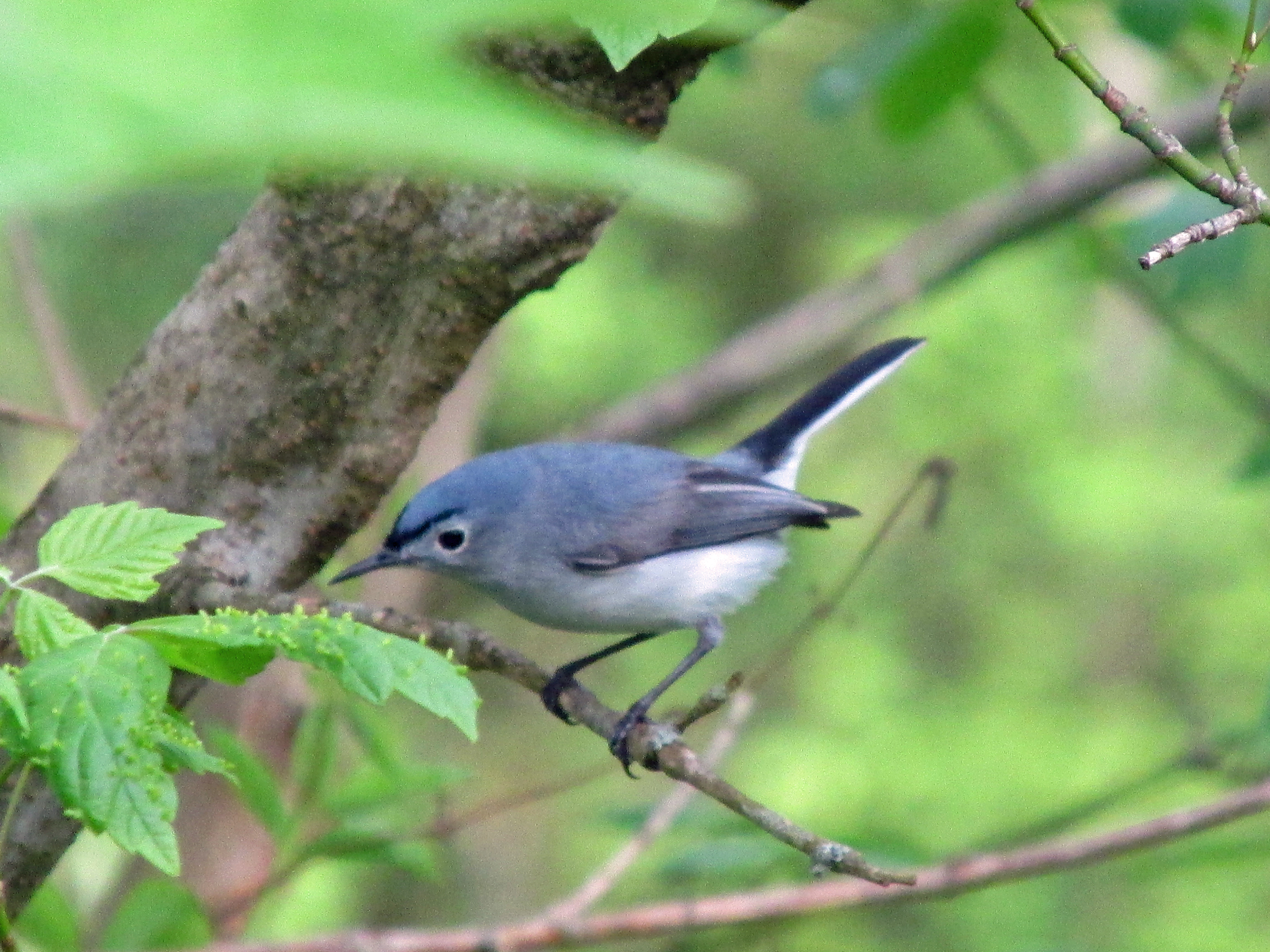
Photo by Bryan Stevens                Blue-gray Gnatcatchers are common during fall migration.

I’m closing in on 70 yard birds for the year. This evening, while lawn chair birding with my mom, I added two more new ones. The Magnolia Warbler was Bird No. 68, while the Eastern Wood-Pewee was Bird No. 69 for 2015. I didn’t get photos of the new birds, but I did photograph a young Chestnut-sided Warbler, a young Ruby-throated Hummingbird and a Chipping Sparrow.

Sept. 2

CapeMay-Aug29

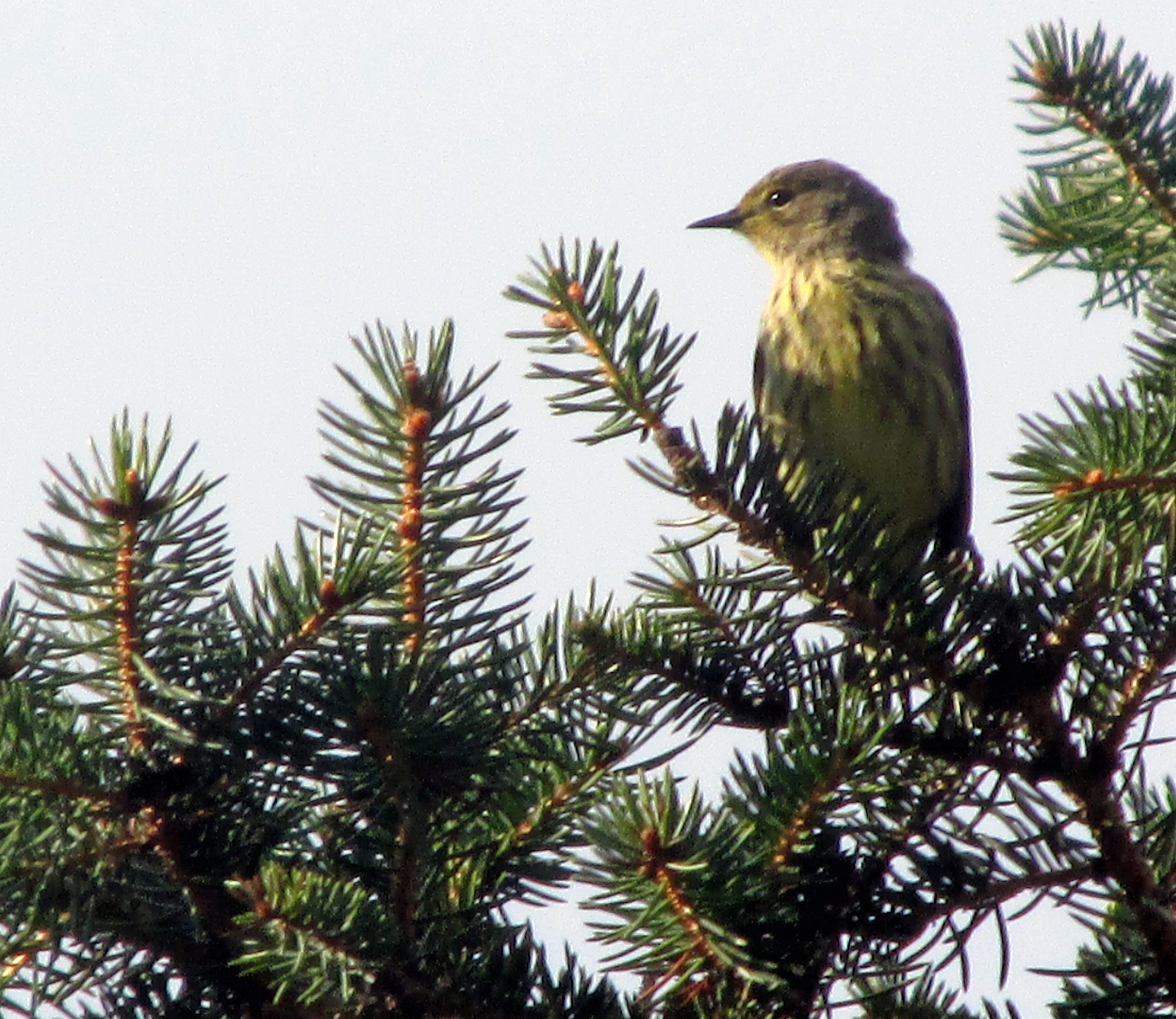
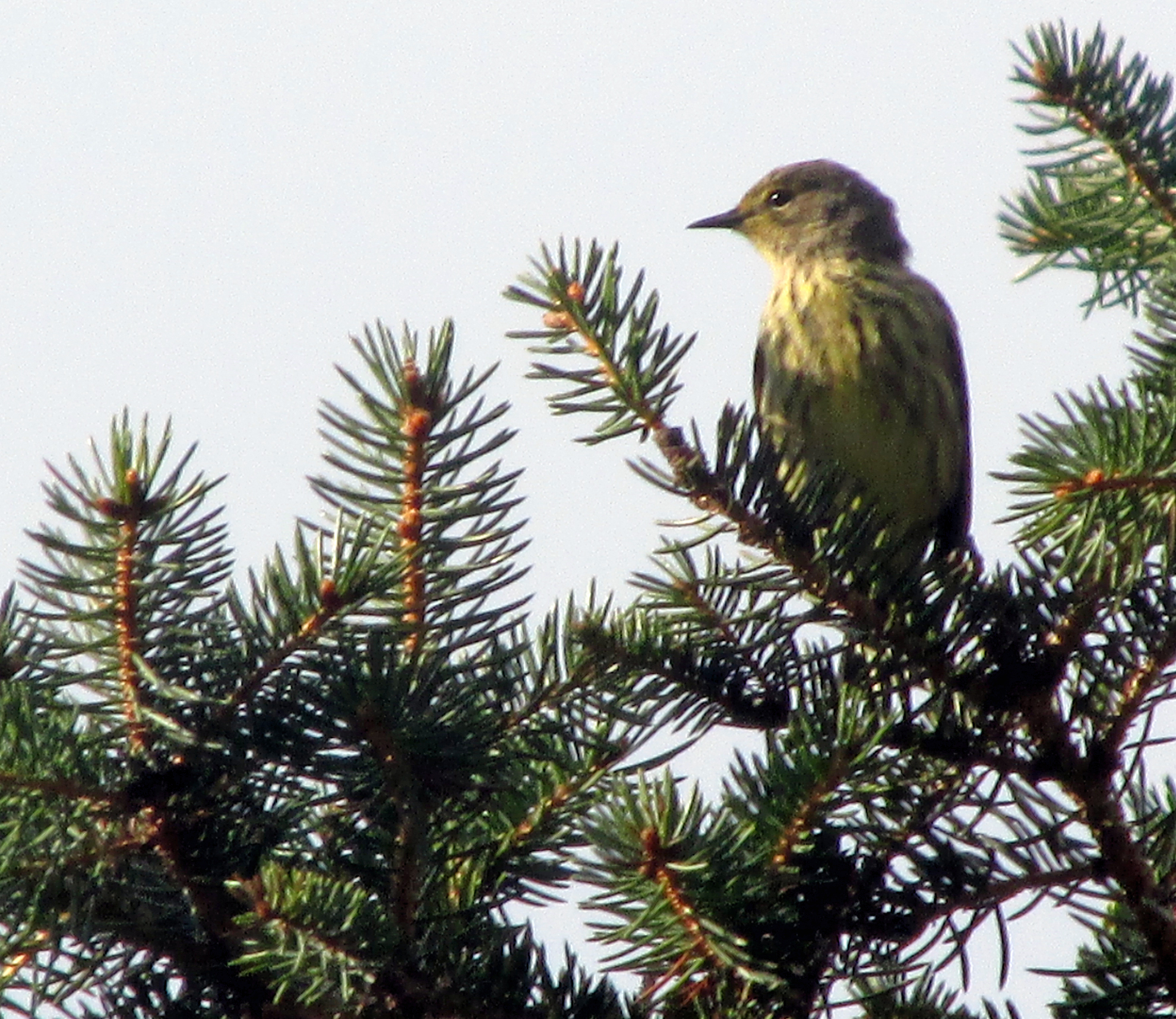
Photo by Bryan Stevens                                      A Cape May Warbler perches in a spruce tree.

No new yard birds this evening, but lawn chair birding with mom wasn’t entirely uneventful. We got a look at a Scarlet Tanager, saw several hummingbirds, including an adult male, and Blue-gray Gnatcatchers. Earlier today, mom said she spotted a yellowish warbler but the bird didn’t make a second appearance.

Sept. 5

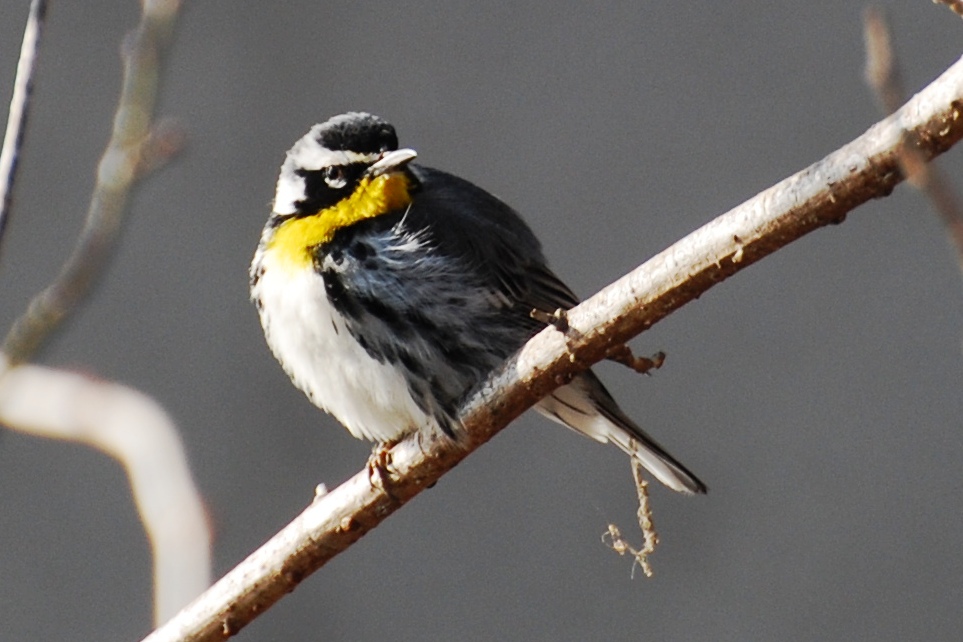
Lawn chair birding today has produced three new birds for the 2015 yard list. They’re all warblers! Bird No. 70 for the year is a Blackburnian Warbler. Bird No. 71 was a Tennessee Warbler, while Bird No. 72 was an impressive Yellow-throated Warbler. Evening’s still young, so may be some others show up. I also saw a Scarlet Tanager, Ruby-throated Hummingbirds and a Red-eyed Vireo.

3262118976_31abee6bae_o

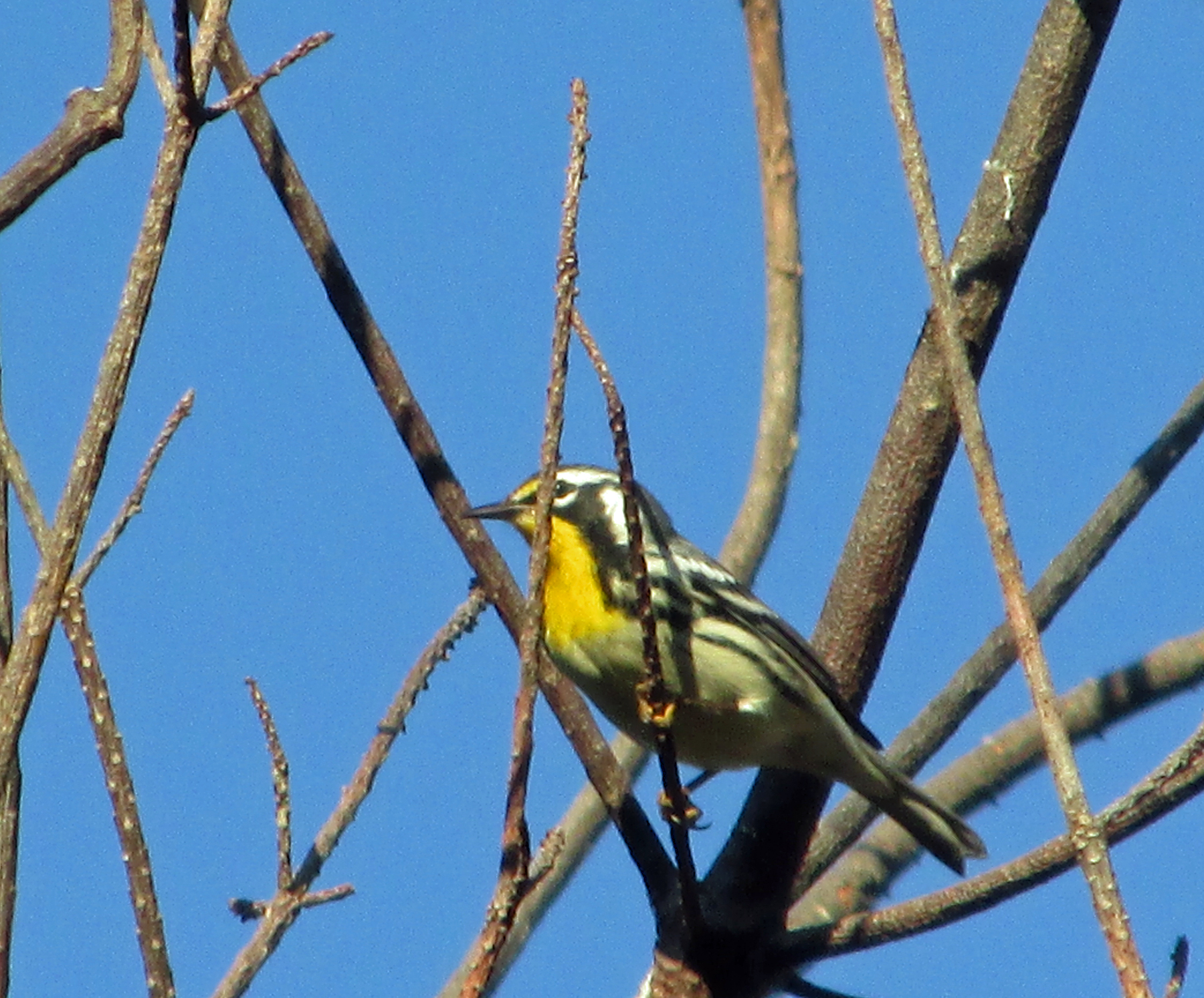
Photo by Jean Potter                                                                                                                              A Yellow-throated Warbler sits on a twig perch.


Annual rally will feature programs by educators from Cornell, ETSU


WoodyNymph

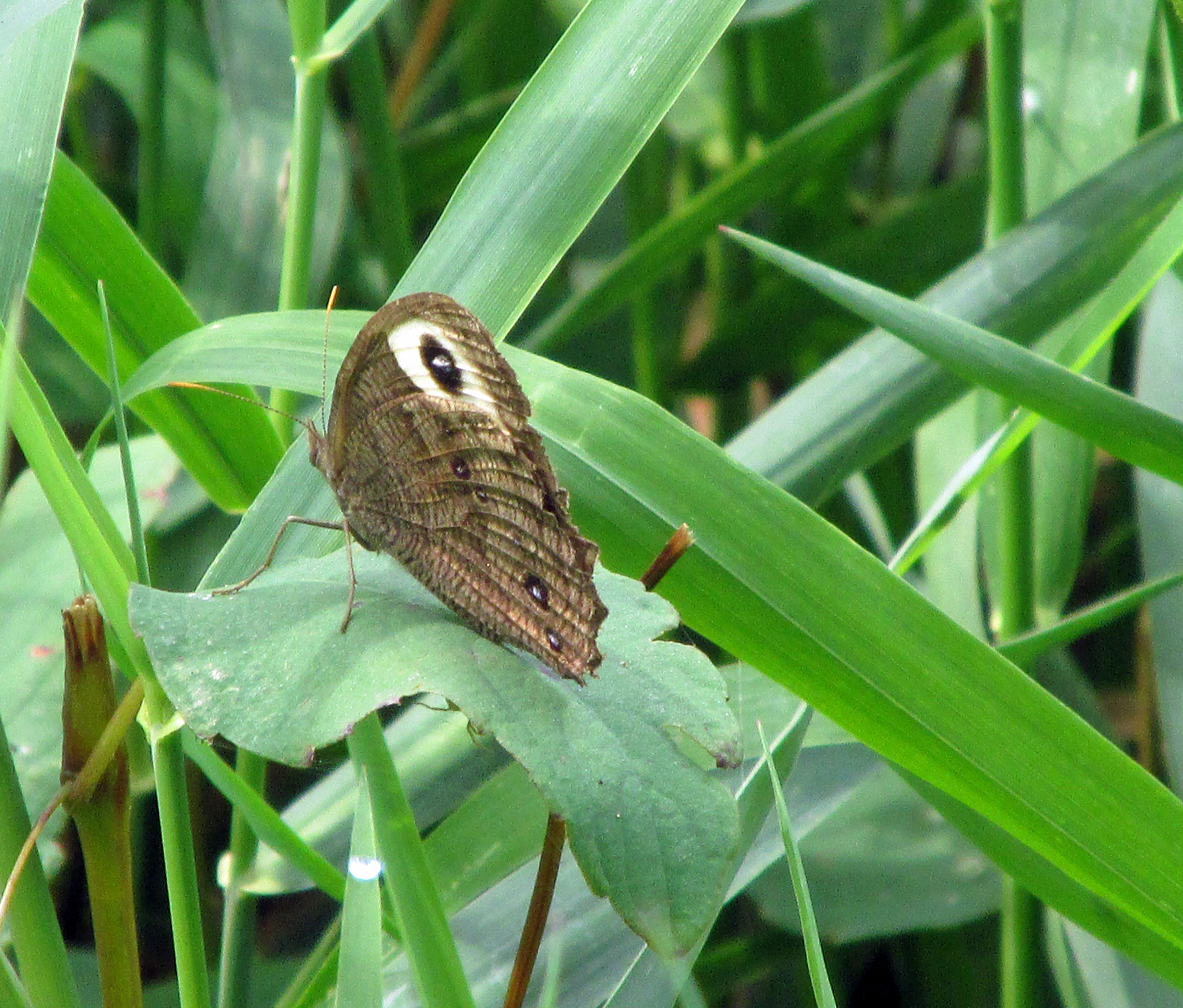
A Common Wood-Nymph photographed in late August in Roan Mountain State Park.

For many naturalists in Northeast Tennessee, heading to Roan Mountain has become an annual trek every September.

Gary Barrigar, long-time director of the Roan Mountain Fall Naturalists Rally, knows that after more than half a century the annual event has become a tradition for many people. For 53 years the Fall Naturalists’ Rally has drawn nature enthusiasts from far and wide to Roan Mountain on the weekend after Labor Day.Top naturalists volunteer their time and energy to make the event both enjoyable and educational for people of all ages.

143_150

Charles Smith

Barrigar said this year’s fall rally will continue to celebrate the natural world by providing two top speakers, retired Cornell naturalist and educator Charles R. Smith and T.J. Jones, an ETSU Behavioral Ecology, Neuroethology and Science educator.


Because of the continued support of the Friends of Roan Mountain, all the Naturalists’ Rallies have the resources they need to prosper and grow and the FORM provides support for research and restoration projects on the Roan. Consider joining the Friends of Roan Mountain, if you are not a member. Members get free admission to all Naturalists’ Rally events and our newsletter, “Friends of Roan Mountain.”

EComma-August

An Eastern Comma suns near a picnic shelter in Roan Mountain State Park.

Barrigar added that many thanks are due to Roan Mountain State Park for its long standing support of the Naturalists’ Rallies, as well as the speakers and the trip leaders who donate their time and expertise.

Evening and lunch programs will take place in Roan Mountain State Park’s Conference Center and field trips will leave from the field on the left before the cabins in the park.

Charles R. Smith will present “This View of Life,” the program for Friday evening. Charles R. “Charlie” Smith was born and raised in Carter County, near Milligan College. He is a naturalist, educator, and conservationist who lives with his wife, Claudia Melin, and their Border Terrier, Brodie, near Ithaca, N.Y. His serious study of natural history did not begin until he was 15 years old, when he joined the Tennessee Ornithological Society, after studying birds on his own for several years.


RedSalamander

Fall rallies offer hikes on a variety of topics from salamanders and mushrooms to butterflies and birds.

About that time, he decided he wanted to attend Cornell University. He earned his undergraduate degree at East Tennessee State University, with a double major in botany and zoology and minor studies in geology, meteorology, physical geography, and photography. Graduate studies at Cornell University concluded with his Ph.D. in wildlife ecology. He retired in 2012 from Cornell University, where he served in various administrative, research, and teaching capacities, including Executive Director of the Laboratory of Ornithology, for nearly 40 years. As an advisor and collaborator on science-based conservation, Smith has worked with a number of state and federal agencies. Though an ornithologist for most of his career, his current interests as a naturalist include studying dragonflies, damselflies, butterflies, and vascular plants; and nature photography. Some of his photographs of butterflies were published in Smokies Life magazine in 2012. Currently he is working with a former student on a field guide to the butterflies of Great Smoky Mountains National Park and the southern Appalachians.

Smith offered his own description for the yearly brochure put out by organizers of the rally to promote his Friday evening program. “A naturalist can be described as a person whose curiosity about nature is boundless,” he said. “This presentation will examine the history, philosophy, and practice of natural history studies from a number of perspectives.”

Now is a great time to be a naturalist, according to Smith.

“Today, we have more good field guides to help us identify plants and animals than ever before,” he added. “With time, persistence, and self-discipline, detailed knowledge of a group of plants or animals is possible for most of us.”

In addition to the personal satisfaction they provide, Smith noted that natural history studies can guide conservation.

CapeMay-Aug29

Cape May atop a spruce tree in Hampton, Tennessee, during fall migration.

“Unless we know what a plant or animal is, where it is found, and how much of it we have, preserving and protecting it can be difficult, if not impossible,” he explained. “We can go beyond just knowing what it is, however, to understanding how plants and animals live, what are their needs, and how we might contribute to their long-term conservation for future generations to enjoy and appreciate.”

He is disappointed by one recent trend in the field of science.

“Ironically, at a time when knowledge and understanding of the needs of plants and animals is more important than ever, it is disappointing that colleges and universities are abandoning the teaching of natural history in the field, and few real field biologists are being schooled,” he said.

Smith said his talk will offer suggestions to help attendees become better naturalists or even be inspired to become a new naturalist. Some of Smith’s photographs will be used to illustrate the talk, and the origin of the title, “This View of Life,” will be revealed at the end of the presentation.


TJ

Thomas “T.J.” Jones

Thomas “T.J.” Jones will present “Elegance and Efficiency: Spiders of Southern Appalachia” as the Saturday evening program. Jones also elaborated on his program for the annual brochure on the rally.

“When I was very young I remember my mother carefully catching a spider that had gotten into the house and tossing it onto the back patio, only to have a bird immediately fly down and carry it off.”

The incident was traumatic for a young boy. “My mother comforted me by explaining that the bird was probably going to use it to feed its babies,” he remembered. “Perhaps that was foreshadowing of my future career studying how spiders negotiate the challenges of world in which they are both predators and prey. I have always been fascinated by animal behavior, and through high school and college worked at zoos, aquariums, and even Sea World.”

Jones has bachelor’s and master’s degrees from Cleveland State University, where he did research on the morphology of ciliated protists and physiological ecology of garter snakes.

“From there I went on to get a PhD from Ohio State University studying the evolution of social behavior in spiders. I continued that work as a post-doc at The University of Tennessee which is where I fell in love with the southern Appalachians, and I am now on the faculty at East Tennessee State University.”

Jones said his research group takes an integrated approach to studying aggression-related behaviors in spiders.
“We are studying how brain chemistry and circulating hormones regulate behaviors, and how these behaviors affect the spider’s success in nature,” he explained. “We currently have projects exploring social behavior, circadian rhythm, and the effect of environmental contaminates on behavior.

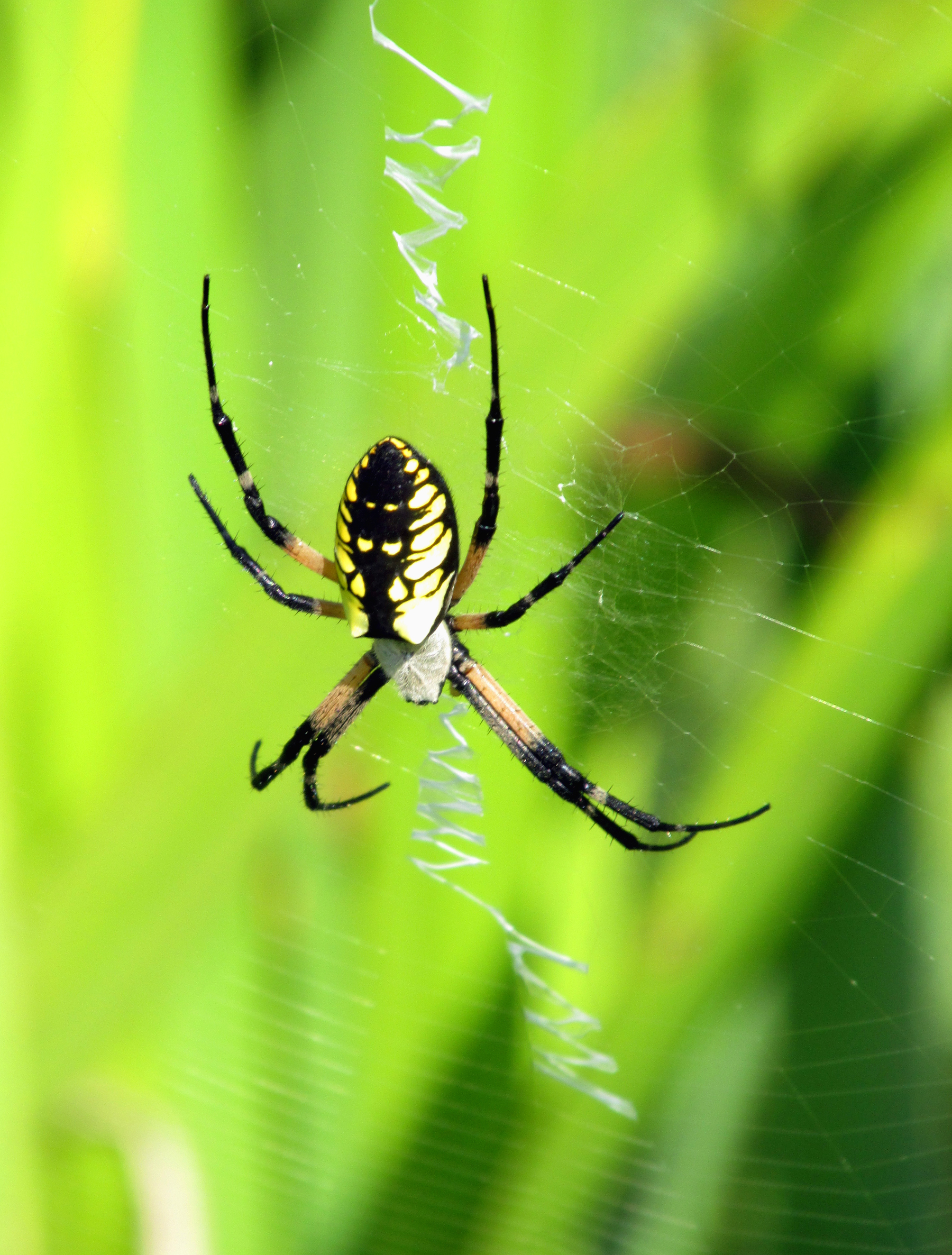
Orb-Weaver-August

Spiders will provide the focus for the Saturday evening program by T.J. Jones.

He offered a brief description of his program, which is admittedly about a creature that gives some people the shivers.
“Some say they are beautiful, some say they are terrifying, but most would agree that spiders are fascinating,” Jones said. “Spiders are among the oldest and most diverse group of predators; this is because they are extremely good at what they do.”

His evening program will provide general information on the biology and ecology of spiders including how they use their key adaptations of silk and venom. He will discuss species commonly found in southern Appalachia, including some interesting species which are only found here. Along with photos, there will be live specimens on hand and a guided night hike to follow.

“My hope is that the program will foster appreciation, and perhaps love, for this amazing group of animals,” Jones said.

Redstart-Aug29

An American Redstart photographed in Hampton, Tennessee, during fall migration.

Buffet meals will be served on Friday and Saturday at 6:30 p.m., followed by the evening programs. Reservations are necessary for the meals, which cost $9.50 for adults and $5 for children 12 and under. Deadline for reservations is Tuesday, Sept. 8. For more information, call Barrigar at 423-543-7576 or email him at gbarrigar@friendsofroanmtn.org.

Mail prepaid meal reservations to: Nancy Barrigar, Treasurer, 708 Allen Avenue, Elizabethton, TN 37643.

For a detailed schedule of hikes, programs and other rally activities, visit http://www.friendsofroanmtn.org/Fall%20Rally%20Brochure%20web%202015.pdf

October Saturday Bird Walks at Sycamore Shoals producing interesting sightings

Yellowthroated

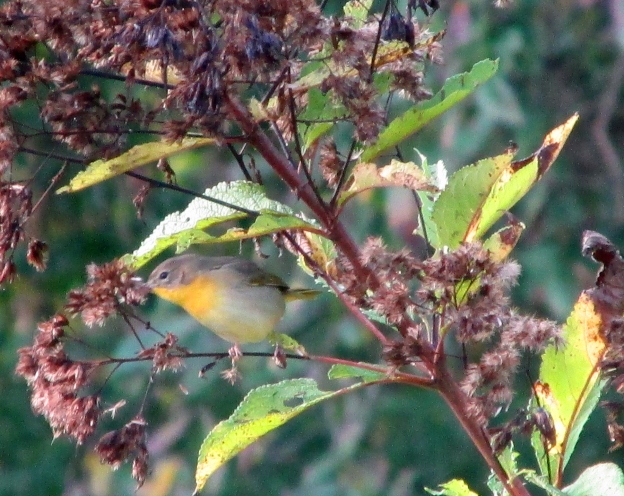
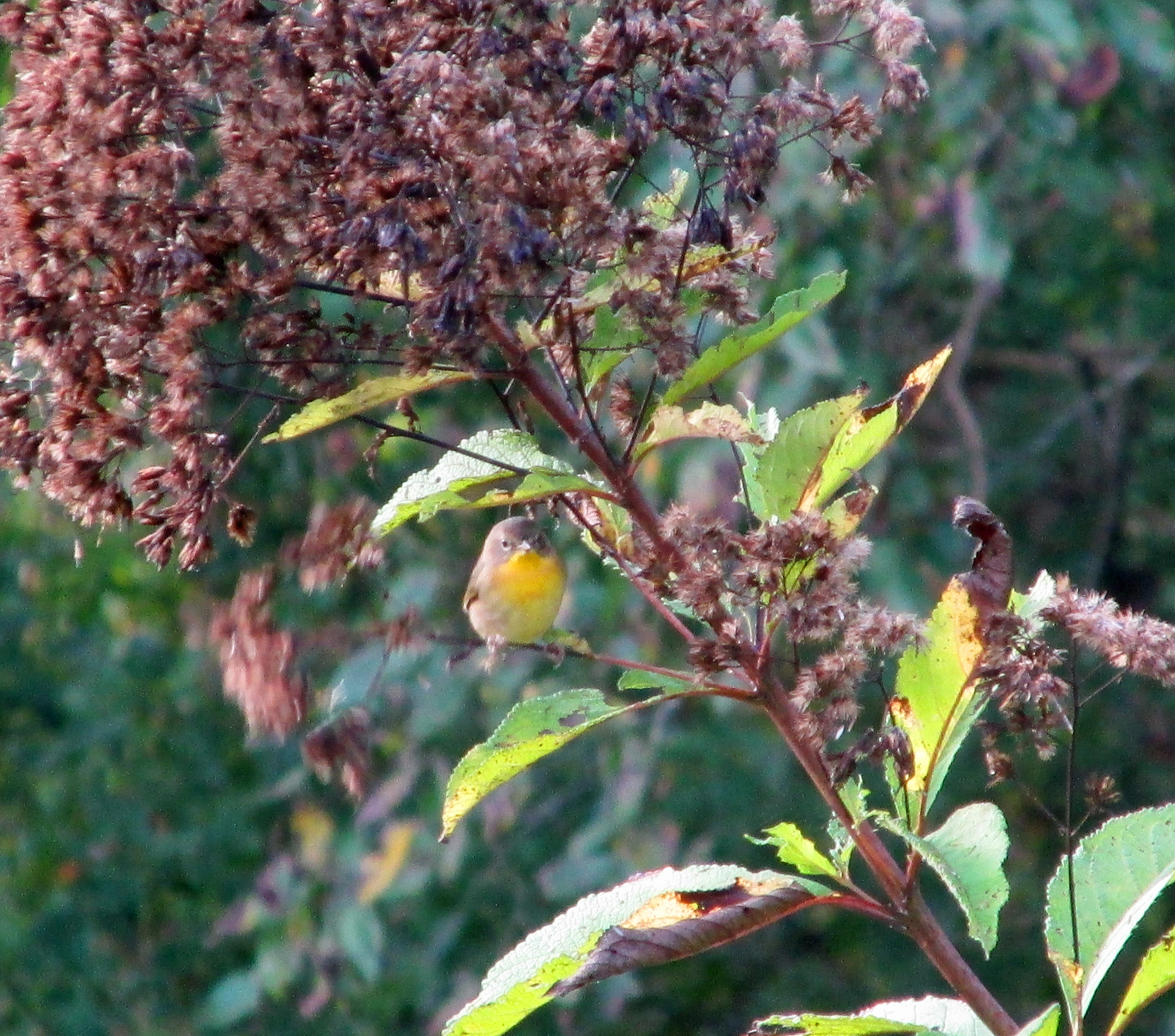
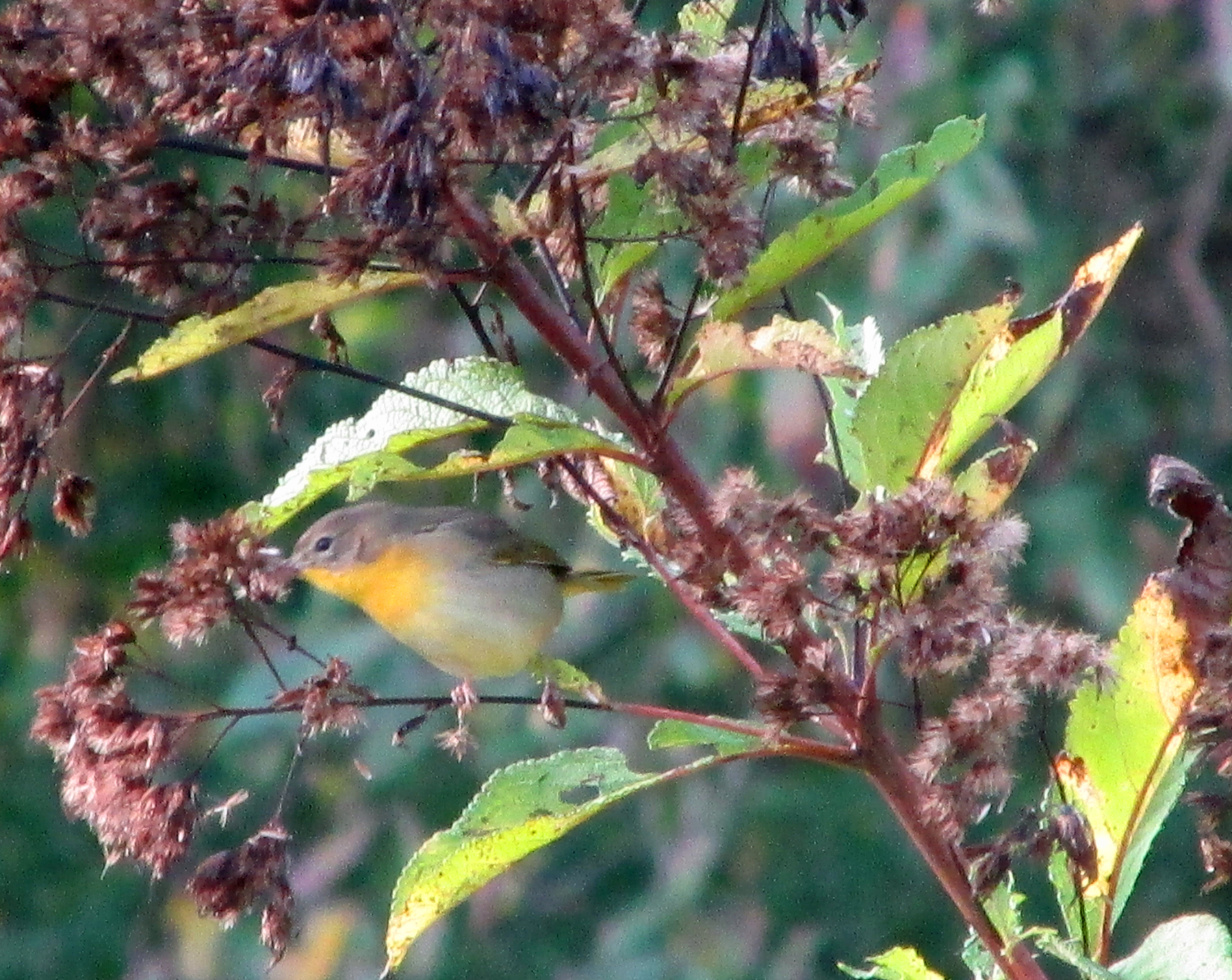
Photo by Bryan Stevens                                                                    A female Common Yellowthroat entertained bird walk attendees as she foraged among Joe-Pye Weed in the butterfly garden at Sycamore Shoals State Historic Park.

It’s funny how you can go most of the year without seeing a certain bird. Then, the drought ends and you enjoy a spike in the numbers of sighting within a short amount of time.

A female Common Yellowthroat became a highlight of the first of this year’s October bird walks at Sycamore Shoals State Historic Park, which was well attended with nine participants. The bird was foraging in the flower heads of Joe-Pye Weed in the butterfly garden at the park.

The Elizabethton Bird Club has offered these hikes for more than a decade at the park. Prior to conducting the walks at Sycamore Shoals, the club also led October hikes at Winged Deer Park in Johnson City and along the linear walking trail in Erwin.

BWteal-Flock

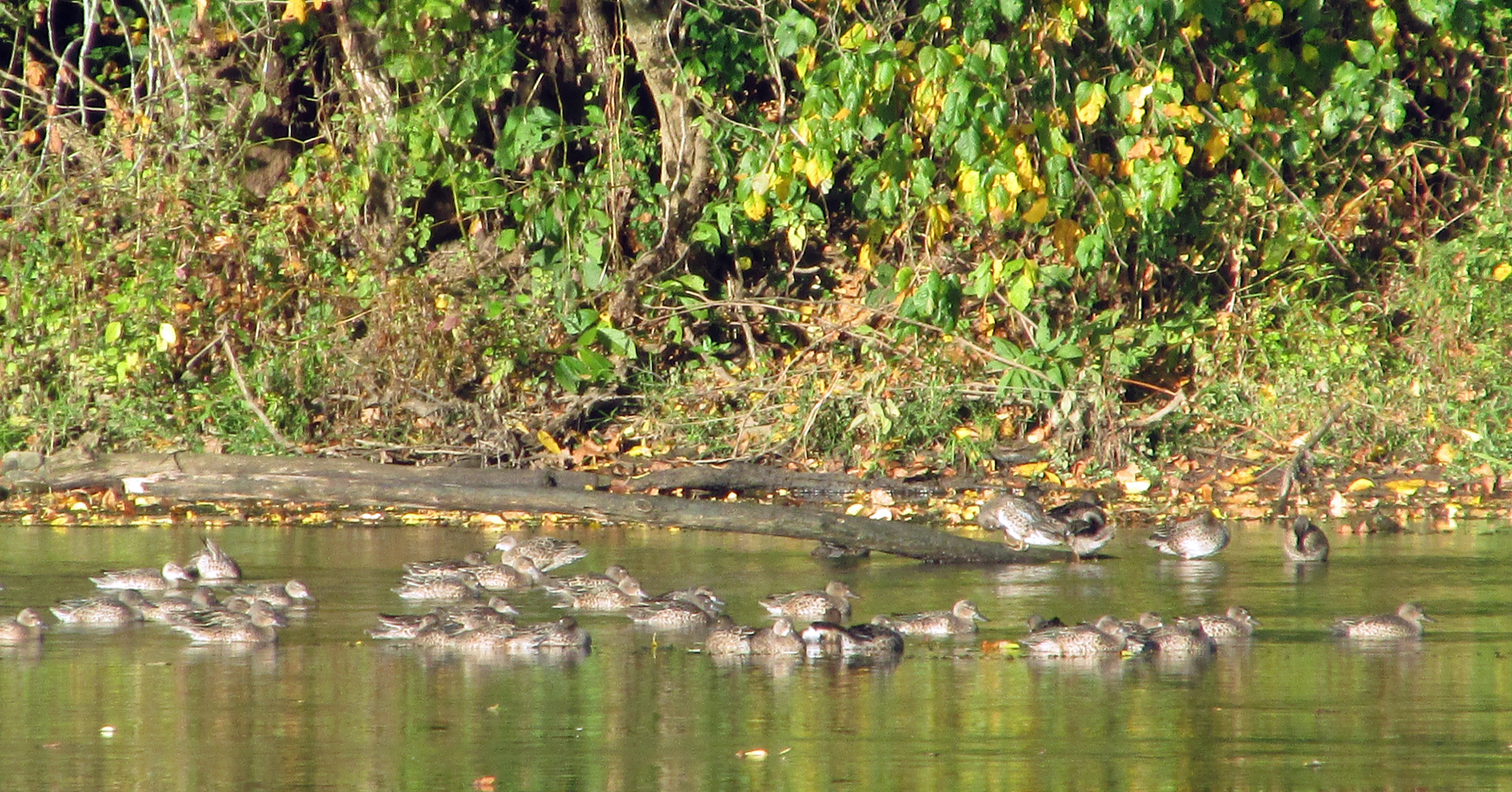
Photo by Bryan Stevens                                                 A portion of the flock of 104 Blue-winged Teal found on the first of this year’s October Saturday Bird Walks.

Tess Cumbie, a former resident of Buladean, N.C., came up with the idea for the walks back in the late 1990s.

The first of this year’s walks at Sycamore Shoals took place on Saturday, Oct. 4. A raft of 104 Blue-winged Teal on the Watauga River ranked as another highlight of that morning’s bird walk. Pied-billed Grebes, Mallards, Wood Ducks and Canada Geese were also present on the river.

1618145_10203999628743449_4835781711182007808_o

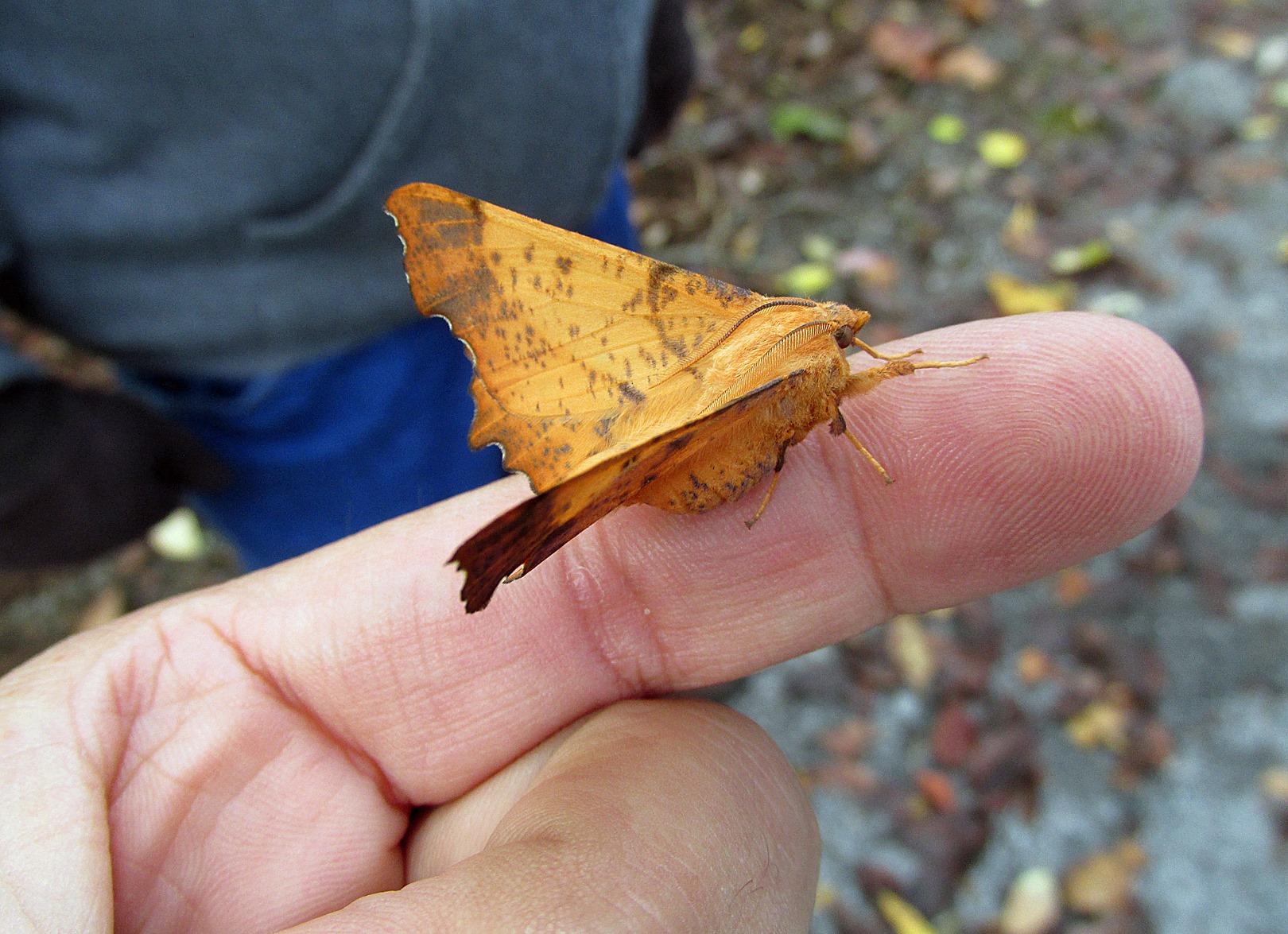
Photo by Bryan Stevens                                     A Maple Spanworm Moth warms itself during the chilly morning bird walk.

Other birds found included  Black Vulture, Turkey Vulture, Chimney Swift, Red-bellied Woodpecker, Yellow-bellied Sapsucker, Downy Woodpecker, Northern Flicker, Eastern Wood-Pewee, Blue Jay, American Crow, Carolina Chickadee, Tufted Titmouse, Carolina Wren, Eastern Bluebird, Swainson’s Thrush, American Robin, Gray Catbird,  European Starling, Cedar Waxwing, Magnolia Warbler,  Song Sparrow, Northern Cardinal, Rose-breasted Grosbeak, Indigo Bunting, Eastern Meadowlark, House Finch and American Goldfinch.

When not looking at birds, participants enjoyed diversions such as the Maple Spanworm Moth blending with the fallen leaves on the gravel walking trails. I had never seen this particular moth, which spent some time warming itself on one of my fingers.

Although well attended by participants from as far as Abingdon, Va., the weather that greeted us was quite frigid. The cold appeared to bother us more than it affected the birds.

••••••

A male Wood Duck landed, briefly, on the fish pond on the morning of Oct. 5. If I hadn’t been outdoors at the time, he might have stayed longer. When I moved, he flew. It’s the first visit here at home from a Wood Duck in several years. Coincidentally, the last visit also took place in early October.

Flower-bed

Photo by Bryan Stevens              This densely-planted flower bed on the ETSU campus provided cover for a migrating Common Yellowthroat.

••••••

I am beginning to find that the campus at East Tennessee State University can produce some fun bird sightings. After witnessing a Cooper’s Hawk nearly catch a squirrel from the top branches of a tall tree near Gilbreath Hall, I have been paying closer attention to those feathered friends that visit the campus.

During a Sunday evening stroll on Oct. 6, I found a Common Yellowthroat in a well-planted flower bed. So, I have added my first warbler to my ETSU list. I also saw a Red-bellied Woodpecker flying over the Culp Center during the same walk.

It also got me to thinking about how many Common Yellowthroats I have been seeing this fall.

When I posted about the sighting on Facebook, Cathy Myers commented and informed me that she had recently observed a Rose-breasted Grosbeak on the campus.

•••••••

Catbird

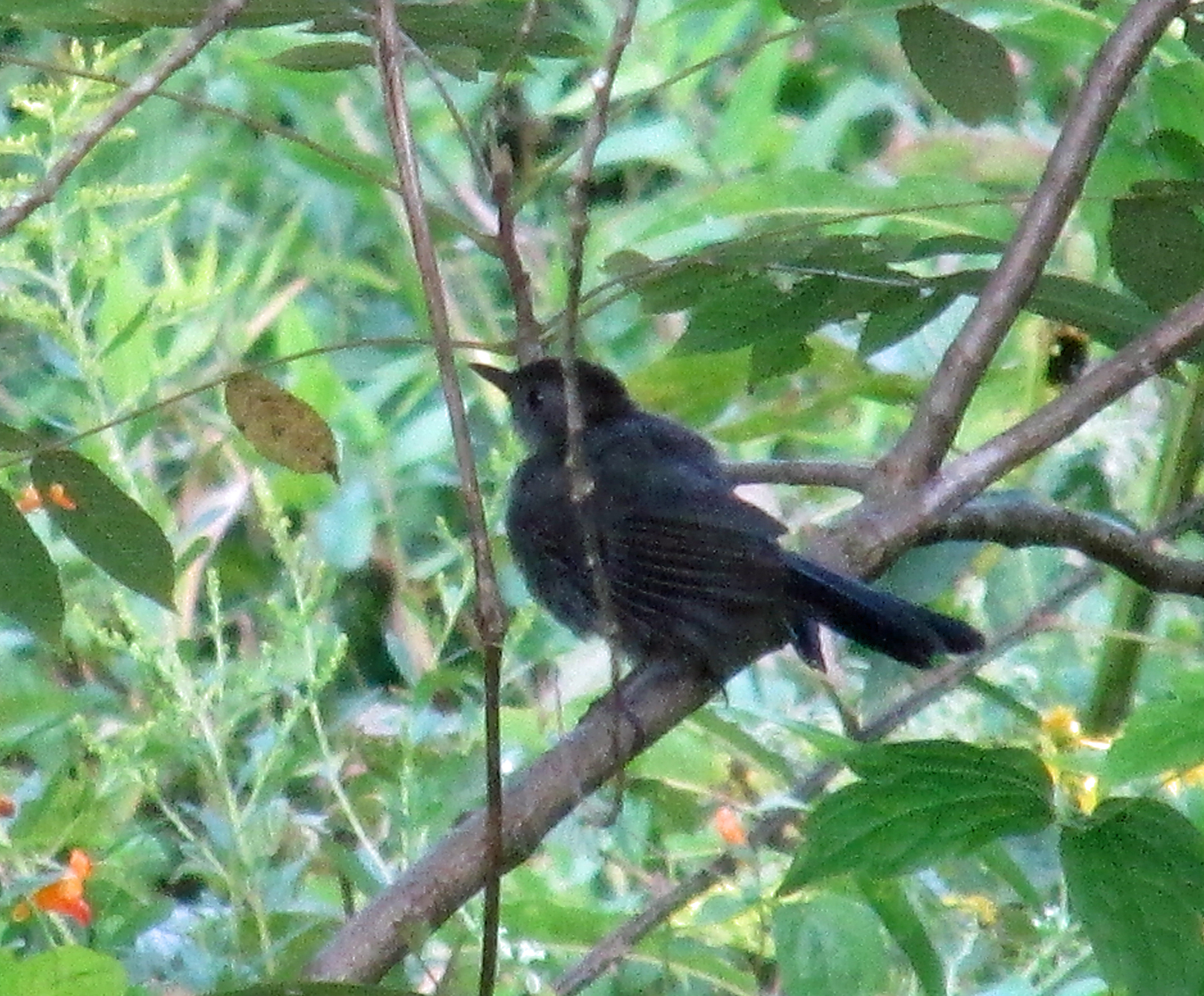
Photo by Bryan Stevens                                          Gray Catbirds, such as this one, have been found on the first of the Saturday Bird Walks this October at Sycamore Shoals.

At the second of the four Saturday Bird Walks scheduled this October, rain threatened to impede the stroll. Fortunately, the showers held off until after the walk on Oct. 11 concluded at about 9:30 a.m.

The second of the October Saturday Bird Walks produced several highlights, including a duel between an Osprey and an adult Bald Eagle over the Watauga River, as well as four species of warblers — Tennessee, Bay-breasted, Palm and Yellow-rumped — and other birds, including Chimney Swift, Mockingbird, Starling, Northern Flicker, Blue Jay, Carolina Wren, Mourning Dove, Eastern Bluebird, Mallard, Carolina Chickadee, Canada Goose, Goldfinch, Red-tailed Hawk, Red-bellied Woodpecker, Crow, Yellow-bellied Sapsucker, American Robin, Northern Cardinal, Song Sparrow and Downy Woodpecker.

Although we had fewer participants on this walk, we enjoyed better observations of the birds. One exciting moment involved the flock of irate Blue Jays gathered to scold a Red-tailed Hawk that had flown too close for comfort.

••••••

Two more Saturday Bird Walks remain during October. They will be held on Oct. 18 and Oct. 25. The public is welcome to these free strolls along the walking trails at Sycamore Shoals State Historic Park. Bring binoculars to increase your viewing enjoyment.

••••••

Common_Yellowthroat (1)

Photo by U.S. Fish & Wildlife Service                                                  A male Common Yellowthroat surveys his surroundings from a prominent perch.

The Common Yellowthroat is a warbler that is quite fond of weedy, damp habitats. Marshes and other wetlands are preferred habitat during the nesting season, although a few of these birds are also present in more dry habitats.

In migration, any weedy corner might attract one of these warblers. In fact, the one I found on the ETSU campus remained elusive in a raised concrete bed containing a thick planting of flowers and shrubs.

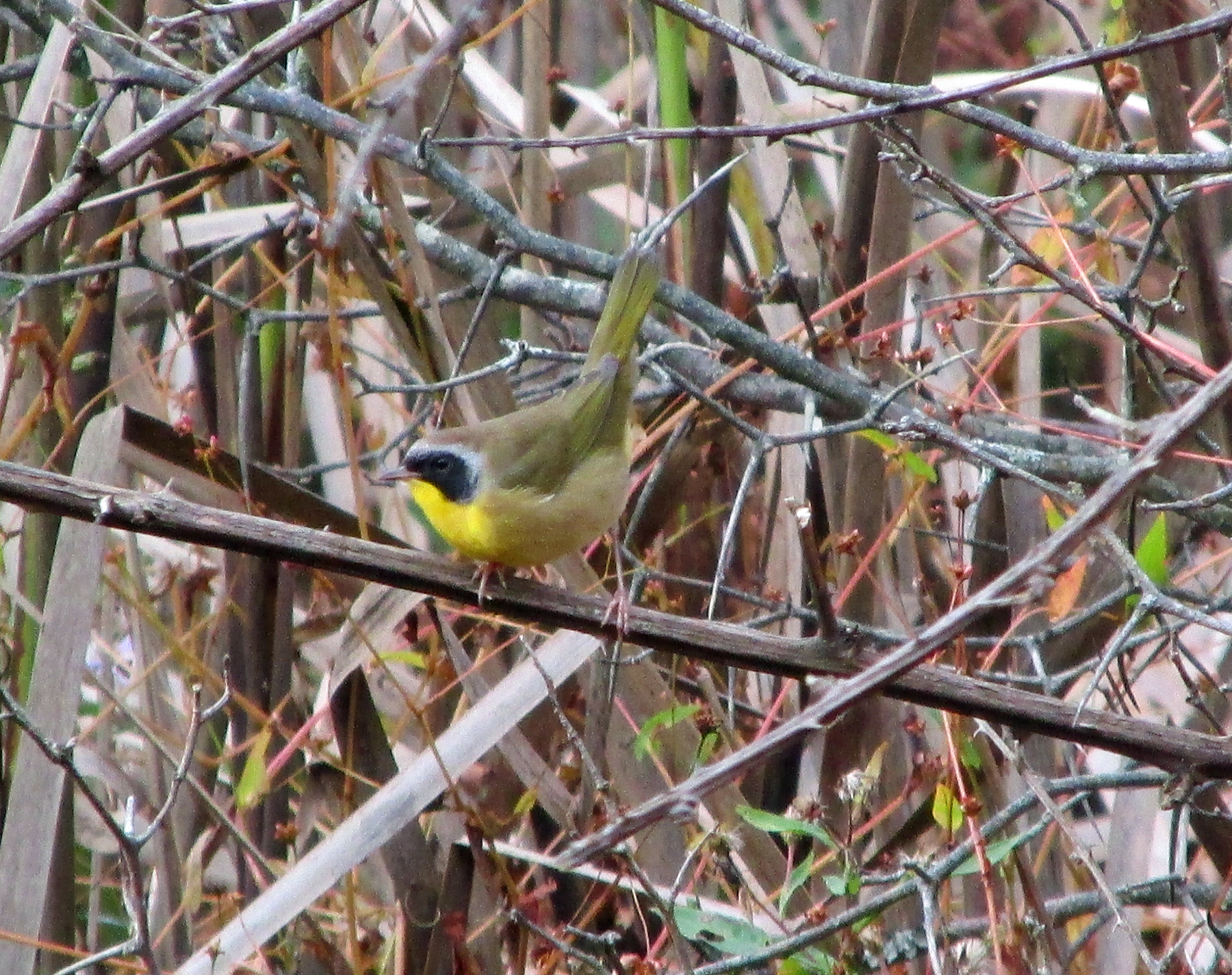
Photo by Bryan Stevens A male Common Yellowthroat visits an overgrown thicket during fall migration. Photo by Bryan Stevens A male Common Yellowthroat visits an overgrown thicket during fall migration.

Photo by Bryan Stevens
A male Common Yellowthroat visits an overgrown thicket during fall migration.

The Common Yellowthroat belongs to the genus of warblers known as Geothlypis, which also includes the related Bahama Yellowthroat, Hooded Yellowthroat, Masked Yellowthroat, Black-polled Yellowthroat and Gray-crowned Yellowthroat. These other species are found in Central and South America, as well as the Caribbean.

Recent classification of the Geothlypis warblers has led to the inclusion of three other warblers — MacGillivray’s, Mourning and Kentucky — being shuffled into this genus.

Although fond of skulking in deep vegetation, most Common Yellowthroats are curious birds and will allow brief glimpses. The males also betray their presence with a loud, easily recognized song that sounds very much like “Witchety, Witchety, Witchety, Witch.”

Yellowthroat-PyeWeeDForage

Photo by Bryan Stevens                                                    The female Common Yellowthroat lacks the male’s black face mask.

Male and female yellowthroats show a bright, yellow throat. Males also sport a black mask bordered with a silvery-white line, and the male’s throat is usually a brighter yellow. Although males will sing in the open during the nesting season, these birds usually prefer to remain hidden from view as they go about their daily routines.

••••••

To learn more about birds and other topics from the natural world, friend Stevens on Facebook at https://www.facebook.com/ahoodedwarbler. He is always posting about local birds, wildlife, flowers, insects and much more. If you have a question, wish to make a comment or share a sighting, email ahoodedwarbler@aol.com.

Photo by Bryan Stevens

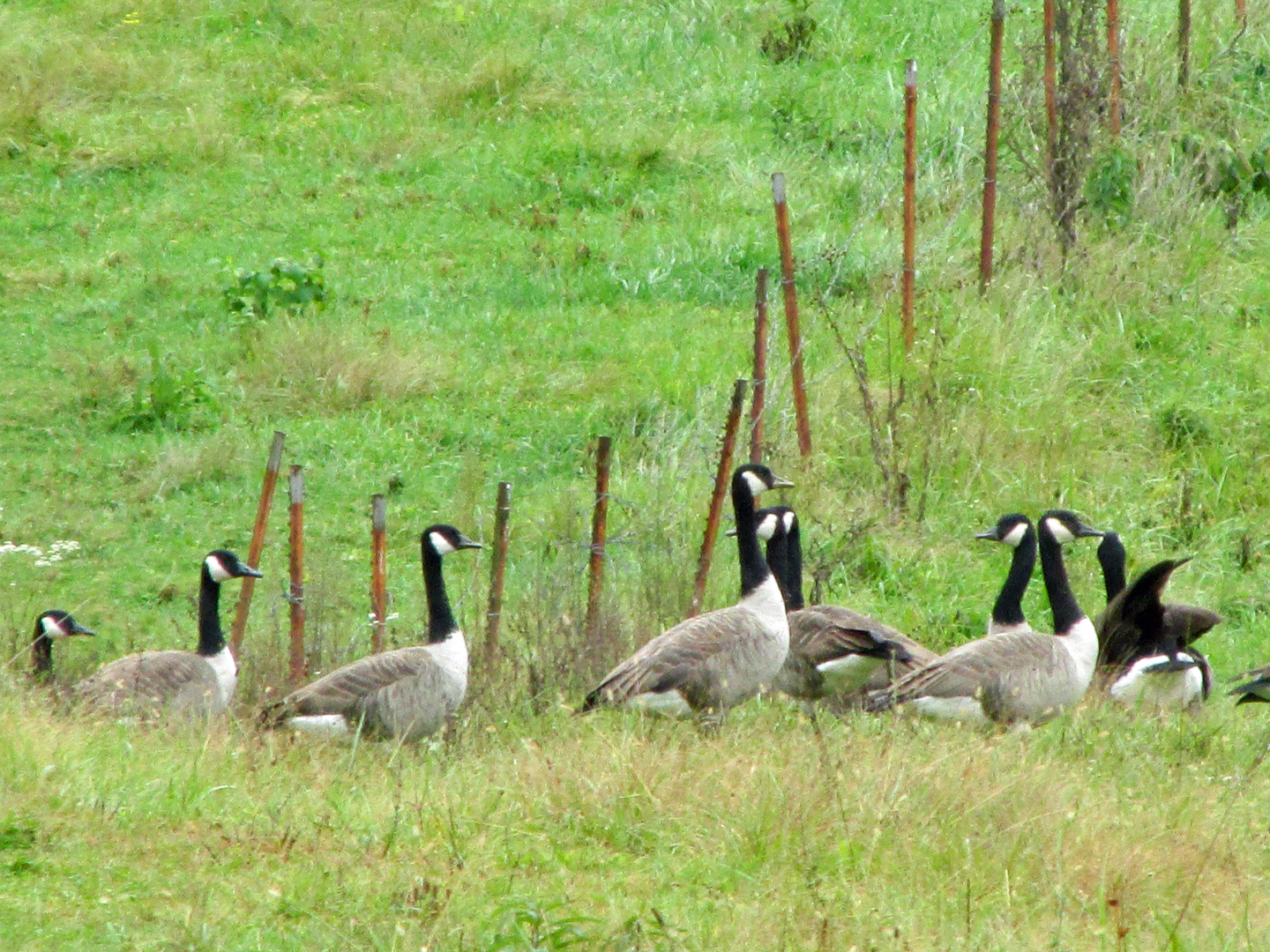
Photo by Bryan Stevens                                                                                                                            A flock of Canada Geese forage in a field near the Bell Cemetery in the Limestone Cove community of Unicoi County on a recent October afternoon.

As September draws to a close, time to reflect on month of migrants

As September comes to a close this week, I decided to look back and see how the pace of fall migration proceeded throughout the month here at my home in Hampton, Tennessee.

On the first day of September, which doubled as Labor Day this year, I saw a single Common Nighthawk, as opposed to the flock of 50 nighthawks I observed on the final day of August. I only saw one warbler, but it was a Chestnut-sided Warbler and different than the three species — Yellow-throated Warbler, Northern Parula and Magnolia Warbler — I saw on the final day of August.
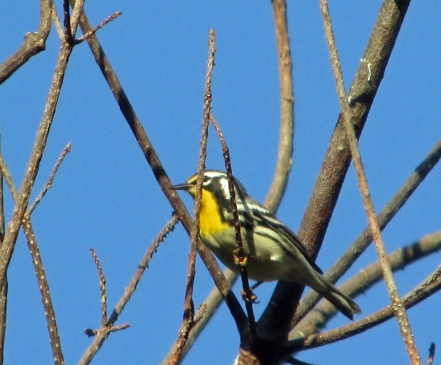
Photo by Bryan Stevens  A Yellow-throated Warbler makes a migratory stop in my yard on the first day of September.

Photo by Bryan Stevens                                                                                                           A Yellow-throated Warbler makes a migratory stop in my yard on the first day of September.

Other birds that helped me welcome September included several Gray Catbirds and Blue-gray Gnatcatchers, Eastern Wood-Pewee, Brown Thrasher and family flocks of American Goldfinches and House Finches. Earlier in the day, I also watched and listened as a Common Raven flew overhead. The Ruby-throated Hummingbirds are also still numerous.

I tried to carve out some time each day in September to look for migrants visiting my yard, but the weather and my work schedule didn’t always make that possible. Nevertheless, I spent a good amount of time scanning for migrants at every opportunity this past month.

I call my “migrant watching” my “lawn chair birding” because some of the time I am seated in a plastic lawn chair scanning trees and shrubs for any sign of movement. I spent a lot of time on my feet, however, since a flash of color or an unknown chip note sends me searching. My mother joins me much of the time, and she has a welcome ability to detect movement among the green leaves of the trees.
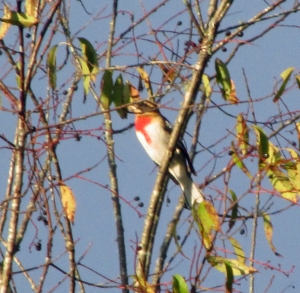
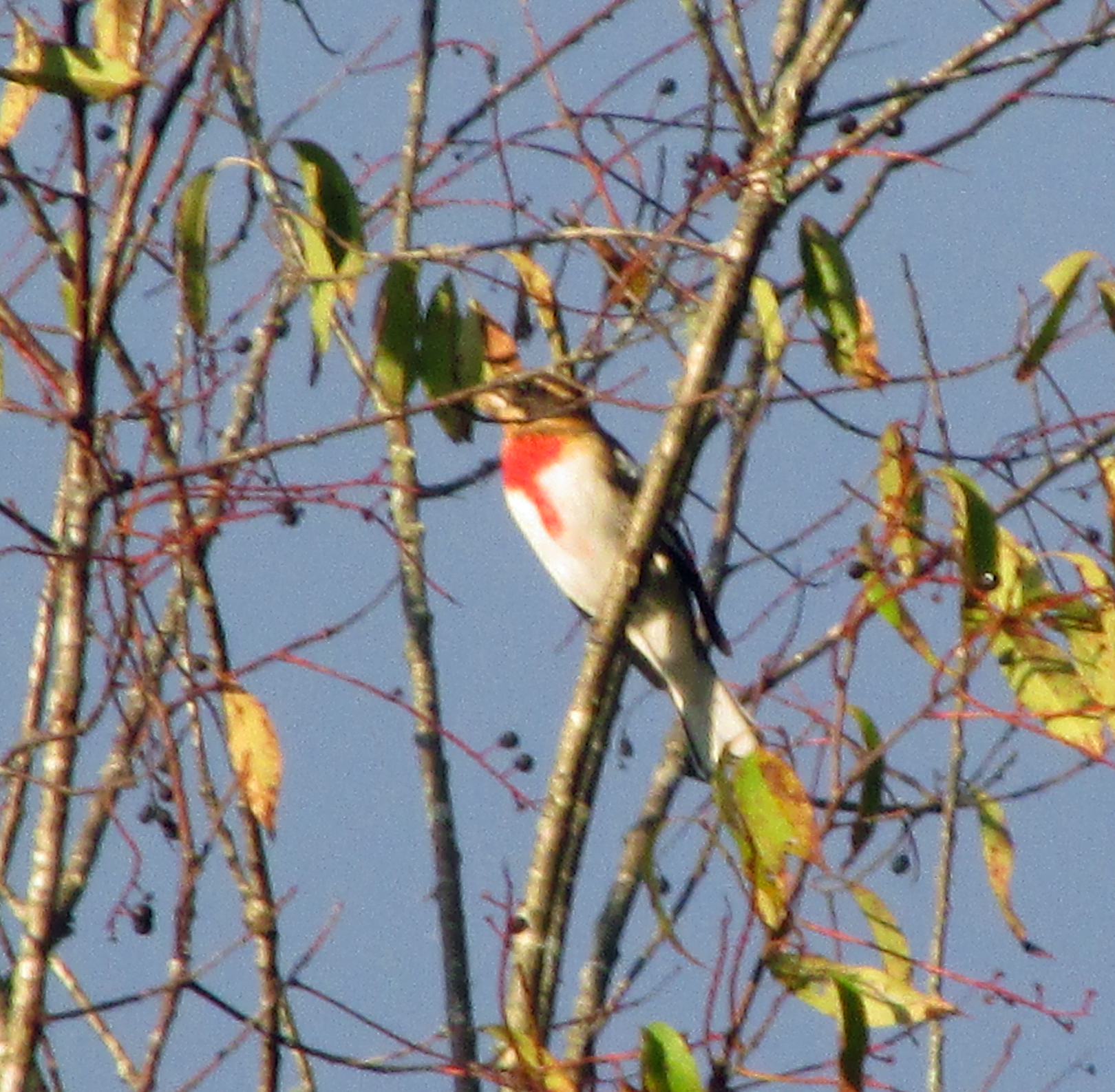
Photo by Bryan Stevens Some of the Rose-breasted Grosbeaks migrating through this fall still retain some of their rosy color.

Photo by Bryan Stevens
Some of the Rose-breasted Grosbeaks migrating through this fall still retain some of their rosy color.

One particular spot in the yard seems better than others for detecting migrating visitors. Some hawthorn and willow trees, as well as an American holly and wild cherry trees, line the creek that flows past the yard. On the other side, the fish pond borders these trees. The branches of dead conifers offer attractive perches for such birds as Eastern Wood-Pewees and Cedar Waxwings, as well as the occasional warbler.

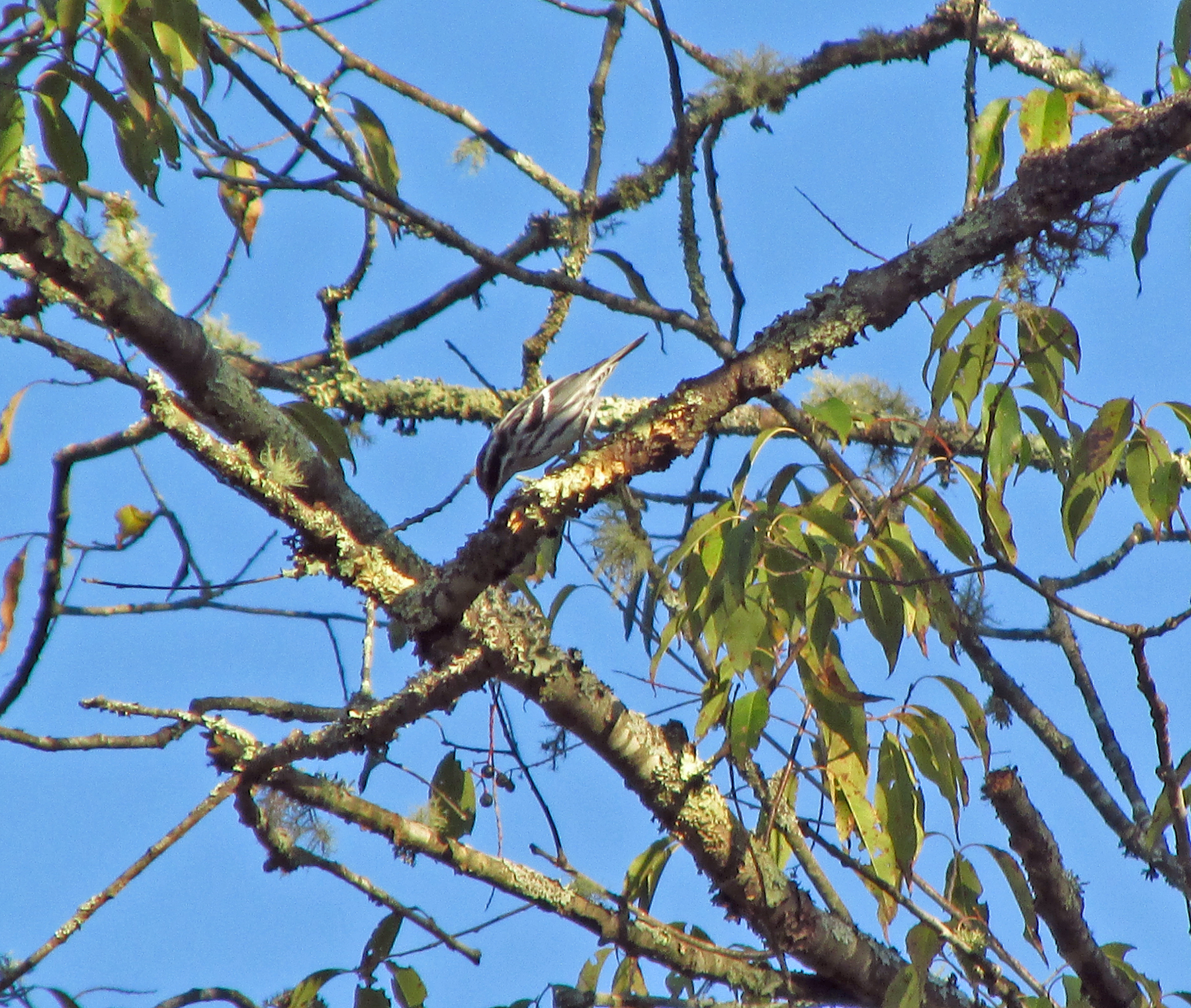
On Sept. 5, I enjoyed another good evening of lawn chair birding, adding a few new warblers for the fall to my list. I saw four species, but two of them — immature Black-and-White Warbler and Black-throated Green Warbler — were new for the fall. I also saw Chestnut-sided Warbler and Northern Parula. A sizable flock of at least 50 Common Nighthawks passed overhead at one point in the evening. Other sightings included Eastern Phoebe, Brown Thrasher, Gray Catbirds, Wood Thrush, Pileated Woodpecker, Red-eyed Vireo and Ruby-throated Hummingbirds. All the resident feeder birds have enjoyed a good nesting seasons. The numbers of Song Sparrows in the yard are showing a definite increase. Three Mallards, which often spend the winter on the creek and fish pond, also made their return on Sept. 5 after an absence of a couple of months.
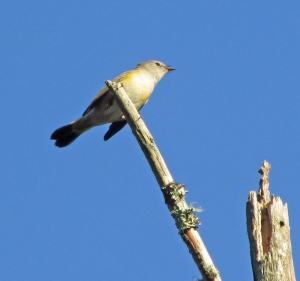
Redstart-Perch

Photo by Bryan Stevens                                                              A young American Redstart perches on high to hawk for insects.

On Sept. 6, I saw a Cape May Warbler (young male) feeding low in vegetation in the swampy area near the old rock springhouse in the backyard. It might seem odd to find a Cape May feeding so low to the ground, but it was at the base of the large Norway Spruce growing in my shady backyard. This is a new warbler for the fall migration season. The day also brought sightings of Magnolia Warblers and a Northern Parula. An Eastern Phoebe spent a lot of time snapping up flying insects. A few Common Nighthawk returned, and were joined in their soaring overhead by Chimney Swifts.

Sept. 8 was a little slow as far as migration goes, but I did manage to glimpse an American Redstart and a Cape May Warbler, as well as a Blue-gray Gnatcatcher. The biggest excitement of the evening came with the discovery of a hatchling Snapping Turtle that had dug its way out of the nest that the mother turtle dug back in June.

Before a deluge of rain arrived on Sept. 11, my mom and I did some lawn chair birding and found six warblers — Wilson’s, Tennessee, Magnolia, Cape May, Chestnut-sided and Hooded — as well as a female Rose-breasted Grosbeak, a flock of five Chimney Swifts, Gray Catbirds, Brown Thrasher, Ruby-throated Hummingbirds and all our feeder birds.
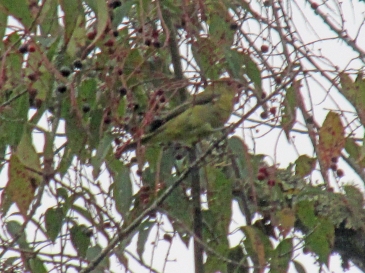
Photo by Bryan Stevens A Scarlet Tanager feeds on wild cherries.

Photo by Bryan Stevens
A Scarlet Tanager feeds on wild cherries.

The Wilson’s Warbler, a male, was only the third of its kind that I have seen here at home. This was also the second male; a female Wilson’s also visited one fall.

I didn’t have a lot of time for lawn chair birding on Sept. 12, but I did enjoy observations of Gray Catbirds, Chimney Swift, Ruby-throated Hummingbirds and a Brown Thrasher.

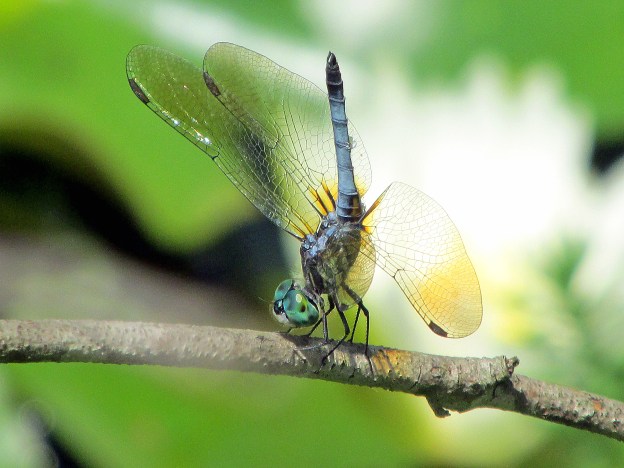
In addition, I encountered a large flock of Common Nighthawks over Bell Cemetery in Limestone Cove, Unicoi County. I also encountered a “swarm” of dragonflies over the now-closed swimming pool at Erwin Fishery Park. The swarm didn’t consist of just dozens or hundreds of these insects. There must have been thousands of dragonflies. I think the majority of them were Green Darners. They were harvesting some sort of flying gnats. At the same time, Chimney Swifts were plunging through the swarm, but I think the swifts were after the same gnats as the dragonflies. A flock of Cedar Waxwings also got joined the scene for awhile.

The rain brought out the warblers and other migrants on Sept. 13. I observed two Cape May Warblers, a Chestnut-sided Warbler, male Black-throated Blue Warbler, male Hooded Warbler, Tennessee Warbler and an American Redstart. I also watched Cedar Waxwings, Brown Thrashers, Gray Catbirds, Ruby-throated Hummingbirds, Blue-gray Gnatcatchers, Downy Woodpecker, Pileated Woodpecker, American Goldfinches, House Finches, Song Sparrows, Eastern Towhees, Carolina Wren, Carolina Chickadees, Tufted Titmice, White-breasted Nuthatches and probably a few other birds. I guess that it’s true that foul weather brings out the birds. This makes sense. Under conditions such as bad weather, the birds probably have to work harder to find enough food.

On Sept. 14 — an overcast Sunday — I had time to do a little lawn chair birding before leaving for work. A new warbler for the fall list, a female Common Yellowthroat, put in an appearance, joined by a Cape May Warbler and two American Redstarts. A Belted Kingfisher also stopped by the fish pond.

I had time to do two sessions of lawn chair birding on Sept. 15. The afternoon session of lawn-chair birding with my mom really paid off. New for the fall was a Swainson’s Thrush. Warblers included three American Redstarts (including an adult male), as well as Tennessee Warbler, Magnolia Warbler and Chestnut-sided Warbler. We also observed were Indigo Buntings, Brown Thrashers, Gray Catbirds, Rose-breasted Grosbeaks, Cedar Waxwings and an Eastern Phoebe. I hope to go back out for another session before dark.
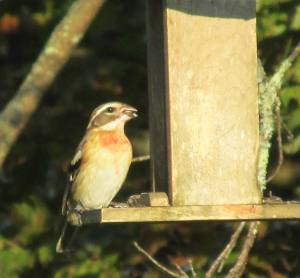
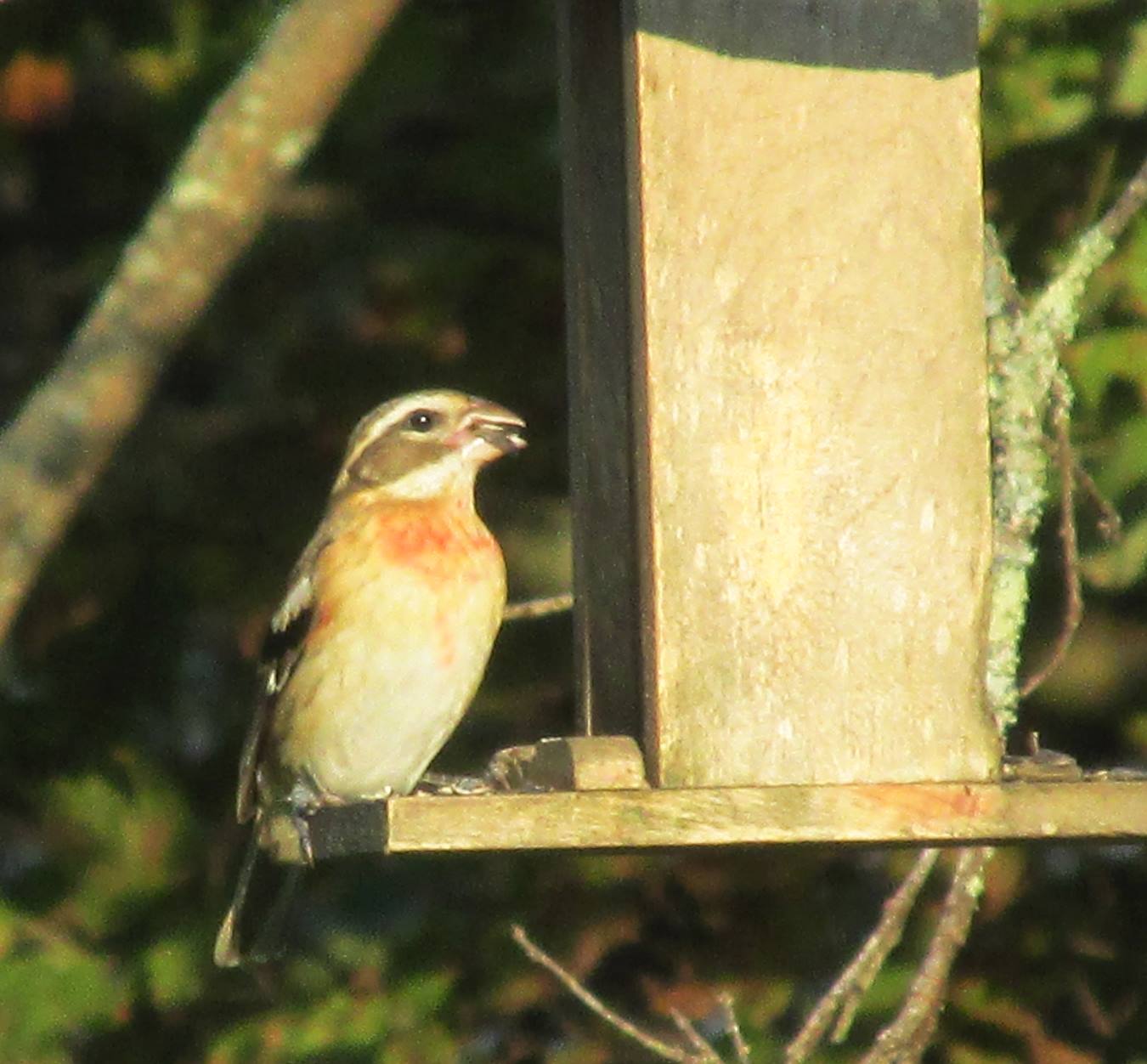
Photo by Bryan Stevens A young male Rose-breasted Grosbeak visits a feeder in September of 2013. Young males resemble females but show a splash of orange on the breast that will be replaced the following spring by the familiar rosy-red patch.

Photo by Bryan Stevens
A young male Rose-breasted Grosbeak visits a feeder in September of 2013. Young males resemble females but show a splash of orange on the breast that will be replaced the following spring by the familiar rosy-red patch.

The evening session of lawn-chair birding on Sept. 15 delivered some results, too. Male Hooded Warbler and Black-throated Blue Warbler showed up, as did a rather drab Cape May Warbler. A Scarlet Tanager showed up to compete with the Gray Catbirds, Rose-breasted Grosbeaks and Cedar Waxwings for wild cherries.

I also had a close encounter with a young Ruby-throated Hummingbird, which hovered in front of me as it turned the tables and observed me for a moment. I wanted to try for a photo, but was sure if I moved I would scare it off. I did manage to get photos of the Hooded Warbler, a Rose-breasted Grosbeak and a pair of “kissing” American Goldfinch. Actually, it’s a photo of a female goldfinch feeding one of her insistently begging young. A nearby male goldfinch was besieged by six hungry youngsters.

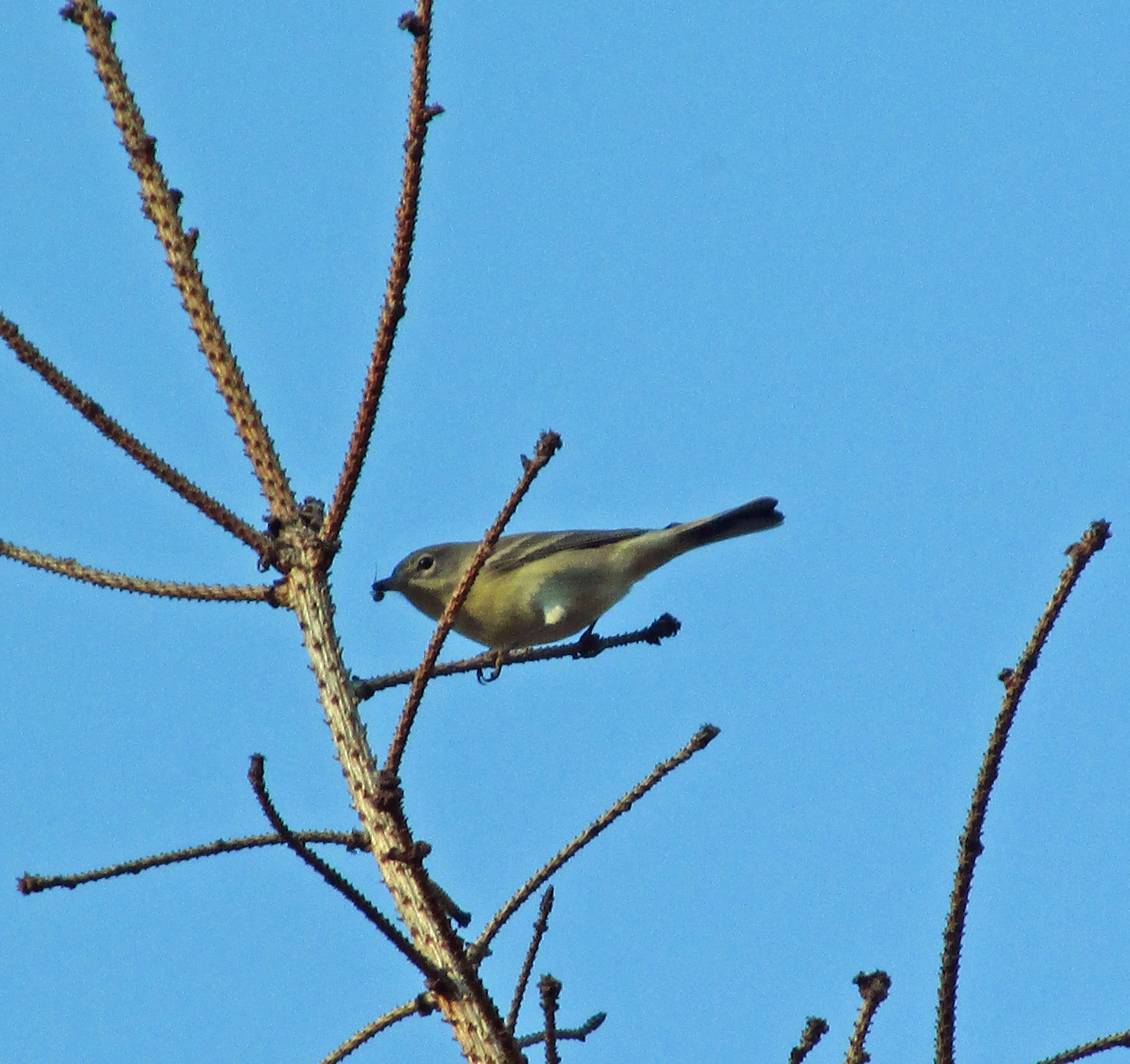
This evening of Sept 20 will likely prove the peak for warbler migration in the yard this fall. We’ll see if any of September’s remaining days can top it. New migrants for the fall season included a Bay-breasted Warbler, Summer Tanager and a Blue-headed Vireo. The other warblers for an evening of lawn chair birding with my mom included Tennessee, Magnolia, Northern Parula, Chestnut-sided, Cape May, Black-throated Blue, Black-throated Green, Yellow-throated, Black-and-White and American Redstart. So, 10 species in one evening is rather good! In addition, we watched Rose-breasted Grosbeaks, Gray Catbirds, Ruby-throated Hummingbirds, Cedar Waxwings and three Common Nighthawks soaring overhead. There was also an Eastern Wood-Pewee and, calling but not seen, a Red-eyed Vireo. All the feeder birds were present, too. We had Northern Cardinals, Eastern Towhees (including two recently fledged young), American Goldfinches, House Finches, Carolina Chickadees, Tufted Titmice, Carolina Wrens, White-breasted Nuthatches, Mourning Doves, Blue Jays, Downy Woodpecker and a Pileated Woodpecker calling on the ridge.
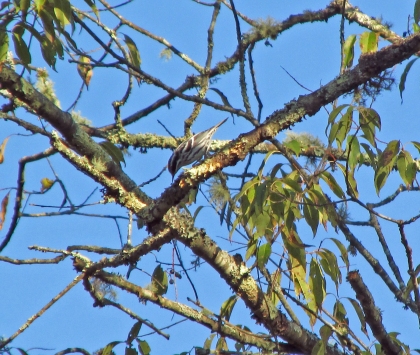
Photo by Bryan Stevens A Black-and-white Warbler forages along a branch.

Photo by Bryan Stevens
A Black-and-white Warbler forages along a branch.

Lawn chair birding was interrupted by rain on Sept. 21, but before then I did see some Rose-breasted Grosbeaks, a Brown Thrasher, Ruby-throated Hummingbirds, Gray Catbirds and a Tennessee Warbler. I have a feeling there would have been more to see if not for the rain.

The chill in the air on Sept. 22 ensured that fall’s imminent arrival would bring some cooler temperatures. The birds were rather active during lawn chair birding, but the diversity had decreased. I did see Tennessee Warbler, Magnolia Warbler and American Redstart, as well as Cedar Waxwings, Rose-breasted Grosbeaks, Gray Catbirds, Ruby-throated Hummingbirds and assorted feeder visitors.

Lawn chair birding on Sept. 23 produced one new species — Palm Warbler — for the first day of fall. Other warblers included several Tennessee Warblers, well-marked Bay-breasted Warblers, American Redstart and Magnolia Warbler. I also saw Indigo Buntings, Rose-breasted Grosbeaks (including males still showing quite a bit of color), Cedar Waxwings, Gray Catbirds, Eastern Phoebe, Eastern Towhee and more. I also observed a male American Goldfinch taking some of his young to a sunflower head for a do-it-yourself snack. Young goldfinches must be very experimental in their tastes. This afternoon, I watched some clinging to branches over the pond so they could feed on pond slime/algae. Unless they were extracting bugs from the stuff, it seemed like an odd behavior to me.
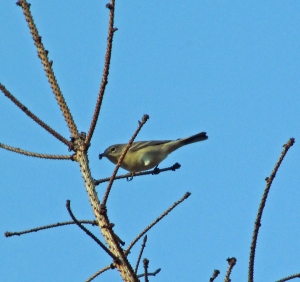
Photo by Bryan Stevens  A migrating Blue-headed Vireo has captured a prey item for a quick snack.

Photo by Bryan Stevens                                                              A migrating Blue-headed Vireo has captured a prey item for a quick snack.

Bird activity was subdued on Sept. 26, but during lawn chair birding I did get a new fall arrival with the Palm Warbler in the gnarled remains of a peach tree. I also saw a Tennessee Warbler, Chestnut-sided Warbler, Cedar Waxwings, Downy Woodpecker, Eastern Phoebe, White-breasted Nuthatches, American Goldfinches, Eastern Towhee, Carolina Wrens, Carolina Chickadees and Tufted Titmice.

On Sept. 27, I took part in the annual Fall Bird Count conducted by the Lee and Lois Herndon Chapter of Tennessee Ornithological Society. The day produced some warblers, especially along the linear walking trail adjacent to the Watauga River. The species include Magnolia, Common Yellowthroat, Cape May and Northern Parula. You shoulI got home in time to add a few warbler species from my own yard, including Tennessee Warbler and Magnolia Warbler.

••••••

Michael Briggs of Erwin asked me via Facebook when he should curtail feeding hummingbirds for the season.

I informed Michael that I usually keep feeders up through at least late November, hoping to attract western “stray” hummers such as Rufous and Allen’s that come through in late fall and early winter. Depending on temperatures, I may keep at least one feeder available even later.
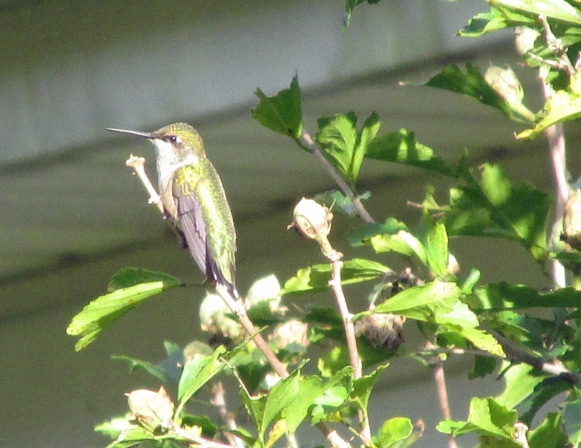
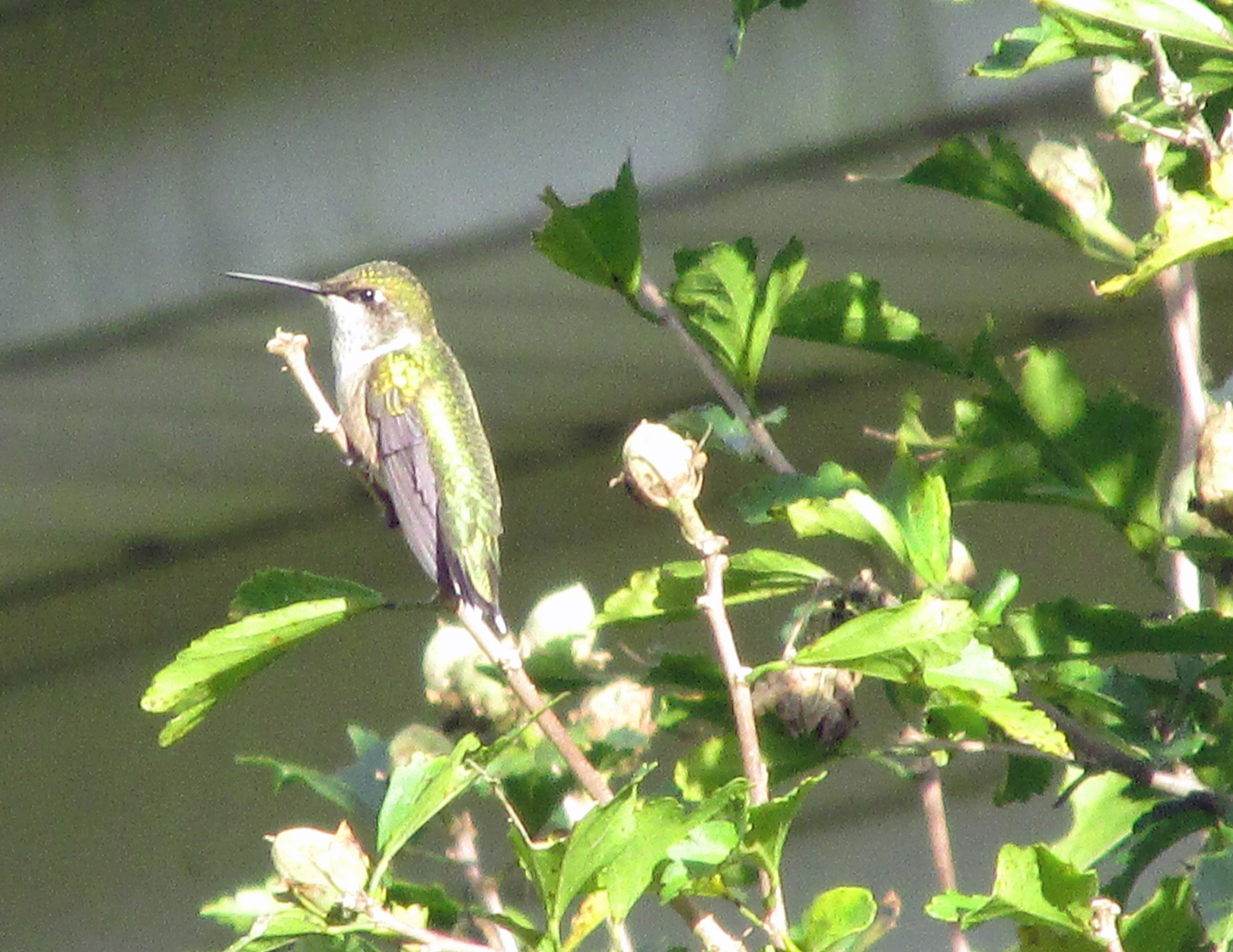
Photo by Bryan Stevens Although Ruby-throated Hummingbirds usually depart in early October, keep your feeders available to benefit stragglers and to attract western species of hummingbirds that migrate through the region.

Photo by Bryan Stevens
Although Ruby-throated Hummingbirds usually depart in early October, keep your feeders available to benefit stragglers and to attract western species of hummingbirds that migrate through the region.